Search results
Search for "EDC" in Full Text gives 56 result(s) in Beilstein Journal of Organic Chemistry.
Amino acid-based surfactants: sustainable synthesis and antimicrobial mechanisms
Beilstein J. Org. Chem. 2026, 22, 1067–1085, doi:10.3762/bjoc.22.85
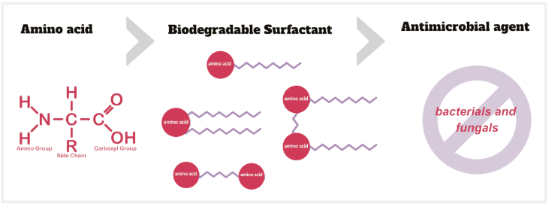
- conditions [36]. Carboxylic acid activation and amide bond formation are commonly performed using acyl chlorides in Schotten–Baumann-type reactions or carbodiimide-mediated coupling agents such as DCC or EDC, providing high conversions under relatively mild conditions [3][6]. Reported yields generally range


Synthesis of a HDAC inhibitor–nanogold probe for cryo-EM visualization in class I HDAC co-repressor complexes
Beilstein J. Org. Chem. 2026, 22, 480–485, doi:10.3762/bjoc.22.35
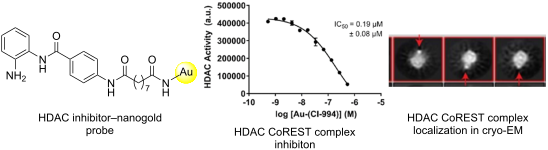
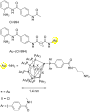
- , 67%; e) TFA, DCM, 0 °C to rt, 20 h; (f) MP-carbonate resin, MeOH, rt, 3 h, 95%; g) benzyl bromide, 1,4-dioxane/DMF 1:1, 90 °C, 19 h, 45%; h) 3, 5, HATU, DIPEA, DMF, 0 °C to rt, 40 h, 59%; i) H2, 10% Pd/C, THF, rt, 19 h, 99%; j) N-hydroxysuccinimide, EDC, DMF, 0 °C to rt, 16 h, 90%; k) TFA, DCM, 0 °C



Recent advances in total synthesis of illisimonin A
Beilstein J. Org. Chem. 2025, 21, 2571–2583, doi:10.3762/bjoc.21.199
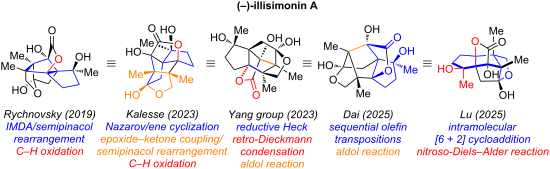
- as “illisimonane skeleton”. The absolute configuration of (−)-illisimonin A was determined to be 1R,4R,5R,6R,7S,9S,10S by comparing the calculated electronic circular dichroism (EDC) spectrum with experimental CD data (Figure 2). Biological evaluation revealed that illisimonin A exhibits






Convenient alternative synthesis of the Malassezia-derived virulence factor malassezione and related compounds
Beilstein J. Org. Chem. 2025, 21, 1730–1736, doi:10.3762/bjoc.21.135

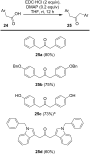
- receptor agonist and potential glucokinase activator, we developed a convenient synthetic route from commercially available indole-3-acetic acid. Treatment of the N-Boc-protected indole-3-acetic acid with N-ethyl-N′-(3-dimethylaminopropyl)carbodiimide (EDC) in the presence of DMAP generates the N,N′-Boc
- . 5%. Furthermore, the present method may also be used to prepare related compounds. Keywords: bis(aryl/heteroaryl)ketones; EDC; indole alkaloids; malassezione; Introduction Lipophilic yeasts of the genus Malassezia are commensal fungi that constitute the normal skin microbiota; however, when they
- easier purification. The N-Boc-protected indole-3-acetic acid was subsequently treated with N-ethyl-N′-(3-dimethylaminopropyl)carbodiimide (EDC) [29] in the presence of DMAP to generate the N,N′-Boc-protected malassezione (23). Use of EDC greatly facilitated the purification since the resulting urea


Recent advances in synthetic approaches for bioactive cinnamic acid derivatives
Beilstein J. Org. Chem. 2025, 21, 1031–1086, doi:10.3762/bjoc.21.85
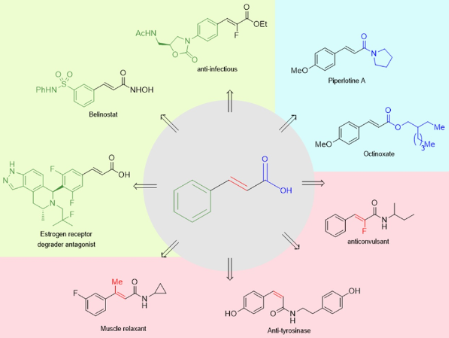
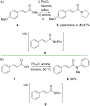
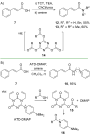
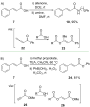
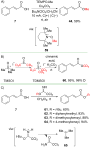
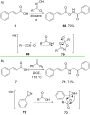
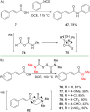
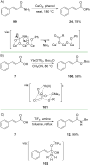
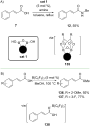
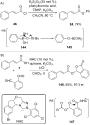
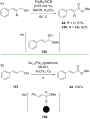
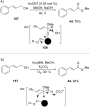
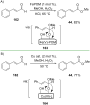
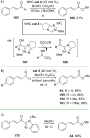
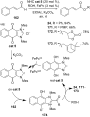
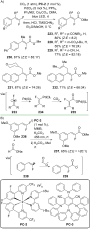
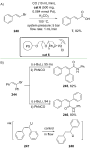
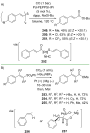
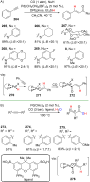
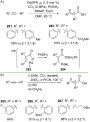
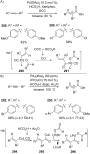
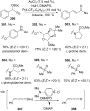
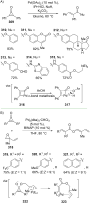
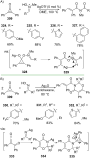
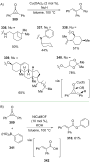
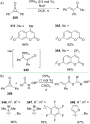
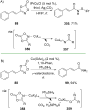
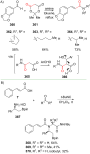
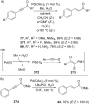
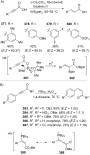
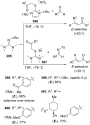
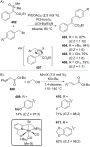
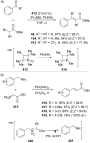
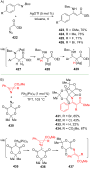
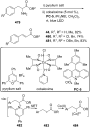
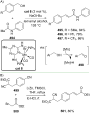
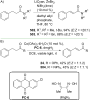
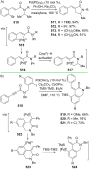
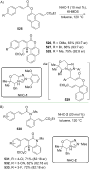
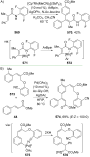
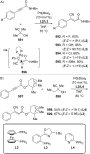
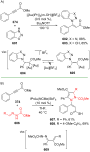
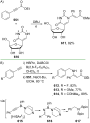
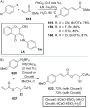
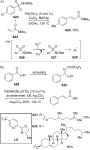
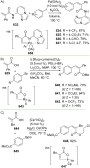
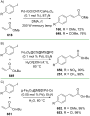
- reagent (Scheme 7) [38]. By mimicking the electrophilic sp-carbon center of common coupling reagents (e.g., DCC, EDC), Zhao and co-workers (2021) employed allenone 22 as a coupling reagent for amidation [39]. Herein, cinnamic acid was smoothly converted to its corresponding amide 10 in a one-pot two-step




































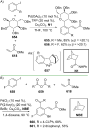
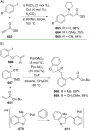

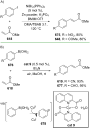
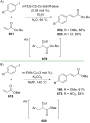





Derivatives of benzo-1,4-thiazine-3-carboxylic acid and the corresponding amino acid conjugates
Beilstein J. Org. Chem. 2022, 18, 1195–1202, doi:10.3762/bjoc.18.124
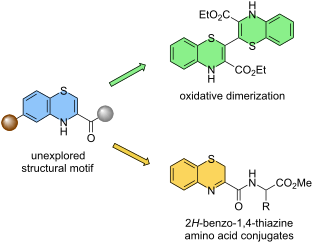
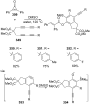
- . Several attempts were made to combine the benzothiazine motif with amino acid methyl esters (Scheme 4) using coupling agents (EDC, COMU, T3P®, etc.) or through acid chloride (SOCl2 and (COCl)2) in a flask with stirring or under ball-milling conditions. However, we were unable to isolate the desired amides
Diametric calix[6]arene-based phosphine gold(I) cavitands
Beilstein J. Org. Chem. 2022, 18, 190–196, doi:10.3762/bjoc.18.21
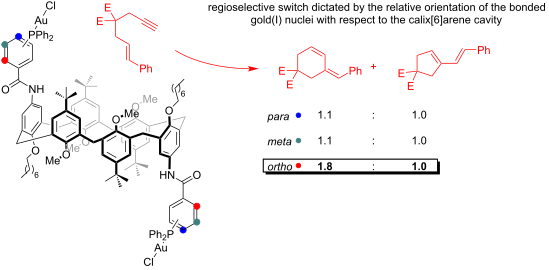
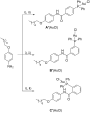
- identifies the phenolic ring substituted with the octyloxy chains, while the circle identifies those with methoxy groups. Stacked plot 1H NMR (tetrachloroethane-d2) of A(AuCl)2 at variable temperature. i) NH2NH2∙H2O, Pd/C in EtOH, 80 °C (quant.); ii) diphenylphosphinobenzoic acid, EDC∙HCl, DMAP (cat
- .), CH2Cl2, 0 °C to rt [A, 60%; B, 55%, C, 53%); iii) (Me2S)AuCl in CH2Cl2, 0 °C to rt (A(AuCl)2, 93%; B(AuCl)2, 74%; C(AuCl)2, 69%). Synthesis of the monomeric gold catalyst analogues A’,B’,C’(AuCl). Conditions: i) diphenylphosphinobenzoic acid, EDC∙HCl, DMAP (cat.), CH2Cl2, 0 °C to rt (A’, 71%; B’, 76%; C


Optical detection of di- and triphosphate anions with mixed monolayer-protected gold nanoparticles containing zinc(II)–dipicolylamine complexes
Beilstein J. Org. Chem. 2020, 16, 2687–2700, doi:10.3762/bjoc.16.219
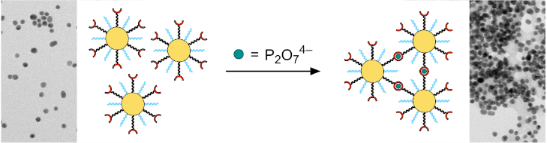
- . Conditions: i) potassium phthalimide, DMF, 25 °C, 18 h, 67%; ii) 2,2'-dipicolylamine, K2CO3, KI, acetone, reflux 14 h, 50%; iii) N2H4⋅H2O, ethanol, 25 °C, 16 h, 56%; iv) (R)-lipoic acid, EDC⋅HCl, DMAP, CH2Cl2, 25 °C, 18 h, 52%. Minimum salt concentrations required to precipitate and to subsequently


Synthesis of 1,4-benzothiazinones from acylpyruvic acids or furan-2,3-diones and o-aminothiophenol
Beilstein J. Org. Chem. 2020, 16, 2322–2331, doi:10.3762/bjoc.16.193
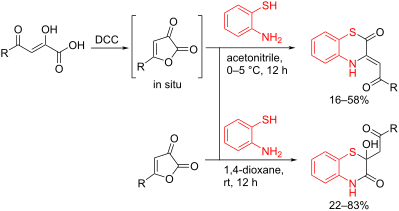
- tertiary amines and should only be carefully treated with reagents containing tertiary amino groups. Because of this, we were encouraged to examine EDC as a carbodiimide in the developed procedure (Table 1, entry 30). As expected, we found that the utilization of EDC in this reaction resulted in the
- formation of a complex mixture containing no target products 3a and 4a. So, EDC cannot be utilized as an activating additive in the studied reaction, while DCC and DIC could be used equally. Taking these results into account, we examined the direct reaction of furandione 5a with o-aminothiophenol (1a) in



Synthesis of monophosphorylated lipid A precursors using 2-naphthylmethyl ether as a protecting group
Beilstein J. Org. Chem. 2020, 16, 1955–1962, doi:10.3762/bjoc.16.162

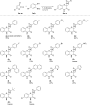
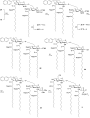
- with (R)-3-(2-naphthylmethoxy)tetradecanoic acid (7) using 1-ethyl-3-(3-dimethylaminopropyl)carbodiimide (EDC) and 4-dimethylaminopyridine (DMAP) as the activation reagents [14] to give the key/common building block 15 in good yield (Scheme 2). Glycosyl acceptor 18 and donor 20 were thus conveniently
- , the free amine was immediately acylated with (R)-3-(2-naphthylmethoxy)tetradecanoic acid (7) using EDC and DMAP as the activation reagents to give the diacylated compound 21 in good yield. The anomeric TBS ether of 21 was then cleaved with HF, and the resulting anomeric hydroxy group was
- -reducing end) was first removed using Zn dust in acetic acid, and the resulting free amine was immediately acylated with (R)-3-(2-naphthylmethoxy)tetradecanoic acid (7) using EDC and DMAP as the coupling reagents to afford triacylated disaccharide 26. Then, the N-Fmoc group (reducing end) in 26 was removed


Recent applications of porphyrins as photocatalysts in organic synthesis: batch and continuous flow approaches
Beilstein J. Org. Chem. 2020, 16, 917–955, doi:10.3762/bjoc.16.83
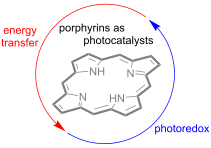
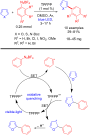
- mediated by 1-(3-dimethylaminopropyl)-3-ethylcarbodiimide hydrochloride (EDC) and N-hydroxysuccinimide (NHS). The CNH was then applied as photocatalyst in the photoinduced sulfonation of styrene with p-methylbenzenesulfinic acid. The corresponding β-ketosulfone was obtained in 94% yield. However, the yield






Chemical synthesis of tripeptide thioesters for the biotechnological incorporation into the myxobacterial secondary metabolite argyrin via mutasynthesis
Beilstein J. Org. Chem. 2019, 15, 2922–2929, doi:10.3762/bjoc.15.286
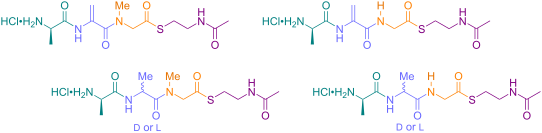
- benzyl protected serine at the Dha site. Following hydrogenolytic deprotection, in situ produced serine EDC adduct was subjected to copper(I) chloride-mediated elimination to give the dehydroalanine derivatives 34a and 34b in good yields. Deprotection of the ester protecting group also proceeded in good
- -ᴅ-Ala (16) was coupled to O-benzylserine ethyl ester 37 to give dipeptide 38, hydrogenolytic debenzylation gave the substrate 39 for the copper(I)-mediated elimination of the carbodiimide formed in situ using EDC, and then yielded the dipeptide Boc-ᴅ-Ala-Dha ester 40 in good yields. Lithium
- permeability of the mutasynthons. Experimental Protocols and methods can be found in Supporting Information File 1. Abbreviations Boc: tert-Butyloxycarbonyl, BOP-Cl: bis(2-oxo-3-oxazolidinyl)phosphinic chloride, CDI: carbonyldiimidazole, DIPEA: diisopropylethylamine, EDC: N-(3-Dimethylaminopropyl)-N



Influence of the cis/trans configuration on the supramolecular aggregation of aryltriazoles
Beilstein J. Org. Chem. 2019, 15, 2881–2888, doi:10.3762/bjoc.15.282
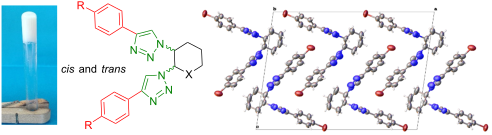
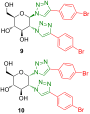
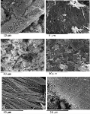
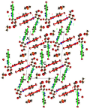
- - and cis-1,2-glucopyranosyl and cyclohexyl ditriazoles, synthesized by CuAAC "click" chemistry, to form gels was studied, their physical properties determined, and the self-aggregation behavior investigated by SEM, X-ray, and EDC studies. The results revealed that self-assembly was driven mainly by π–π
- . In addition, compound 10 (cis), with free hydroxy groups, formed hydrogen bonds between the hydroxymethyl groups in position 6 and DMSO molecules while in a gg rotamer conformation. The different types of EDC spectra obtained for compound 10 in solution (exciton) and in gel (non-exciton), using DMSO







Design, synthesis and biological evaluation of immunostimulating mannosylated desmuramyl peptides
Beilstein J. Org. Chem. 2019, 15, 1805–1814, doi:10.3762/bjoc.15.174

- racemic Boc-protected (adamant-1-yl)glycine [32] 2 using the carbodiimide EDC/HOBt method [21]. The obtained mixture of BocAdGly-ʟ-Ala-ᴅ-isoGlnOBn diastereoisomers was treated with trifluoroacetic acid in order to remove the Boc protecting group while the diastereoisomer 4 with ᴅ-ʟ-ᴅ amino acid sequence
- described [34]. Condensations of peptides 1, 4 and 7 with carboxy-functionalized mannosides containing a (R)-hydroxyisobutyryl and glycolyl linker are shown in Scheme 4 and Scheme 5, respectively. For the amide bond formation between mannose and peptide part, an optimized EDC/HOBt method was used in each


N-doped carbon dots covalently functionalized with pillar[5]arenes for Fe3+ sensing
Beilstein J. Org. Chem. 2019, 15, 1262–1267, doi:10.3762/bjoc.15.123
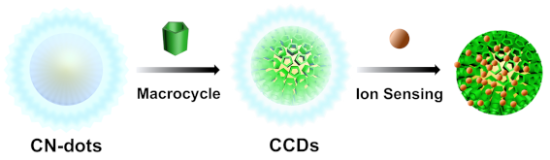
- ) through covalent bonds formed by EDC-NHS coupling reaction. The comparison of CCDs with single CN-dots without CP[5], revealed that the CCDs exhibit a higher selectivity for Fe3+ detection (Scheme 1). Fe3+ ions play an important role in the living organism and is related to many diseases, thus it is vital
- surface of CN-dots via EDC-NHS coupling reaction. Compared with unmodified CN-dots, CCDs demonstrated novel properties after the introduction of CP[5], and showed a higher selective sensing ability for Fe3+ ions. Hopefully, this strategy will inspire the design of new fluorescent chemical sensors toward


A chemically contiguous hapten approach for a heroin–fentanyl vaccine
Beilstein J. Org. Chem. 2019, 15, 1020–1031, doi:10.3762/bjoc.15.100

- -alkylation of the heroin domain via reductive amination. For the remaining drug–haptens, the use of repeated amide bonds naturally led us to employ EDC-mediated coupling to join the heroin and fentanyl domains. For the sake of brevity, detailed synthetic procedures, and structures of all intermediates can be
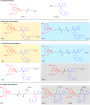
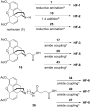
- (Scheme 4). Intermediate 33 was then deprotected to give 34, leading to facile EDC-mediated coupling with 36 to give HF-6 (Scheme 4). Heroin and fentanyl epitope coupling With the various drug-like domains prepared, we set to work forging them into a single epitope by employing our proposed strategies. HF
- . After screening acid catalysts (Figure S1, Supporting Information File 1), successful 1,4-addition of heroin intermediate 1 to fentanyl intermediate 10 yielded HF-2 (Scheme 5). Heroin intermediate 16 gave access to the phenylamide-linked haptens HF-3, HF-5, HF-8 via EDC-mediated coupling to their







N-Acylated amino acid methyl esters from marine Roseobacter group bacteria
Beilstein J. Org. Chem. 2018, 14, 2964–2973, doi:10.3762/bjoc.14.276
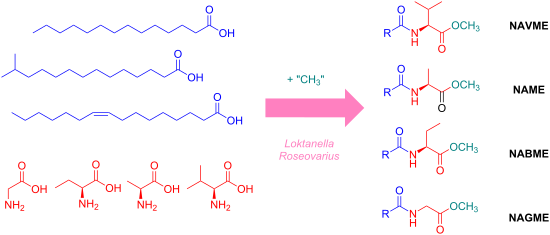
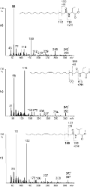
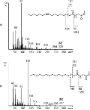
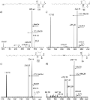
- -16OH-C16:1-NAME with [M + H − H2O]+ 356, b) Z9-C16:1-NABME (8) with [M + H]+ 354, c) Z9-C16:1-NAVME (9) with [M + H]+ 368, and d) Z9-C16:1-NAGME (11) with [M + H]+ 326. Synthesis of iso-C15:0-NAME (6). DMAP: 4-dimethylaminopyridine, EDC: 1-ethyl-3-(3-dimethylaminopropyl)carbodiimide hydrochloride, L





Enzyme-free genetic copying of DNA and RNA sequences
Beilstein J. Org. Chem. 2018, 14, 603–617, doi:10.3762/bjoc.14.47
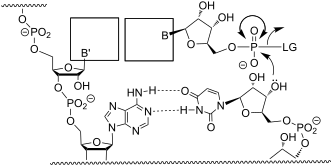
- assay is another approach to avoid stalling due to inhibition. As mentioned in the Introduction, ligation reactions had been achieved by Naylor and Gilham in aqueous media in presence of a water-soluble carbodiimide as condensing reagent [7]. Likewise, Sulston et al. had used EDC to oligomerize AMP in
- , and high yielding extension even with poorly binding UMP, all under the same conditions. We dubbed these conditions "general condensation buffer". The optimized buffer contains 500 mM HEPES, 800 mM EDC, 80 mM MgCl2, and 150 mM 1-EtIm. Assays are usually performed at 0 °C to shift the binding
- ". This first step may either occur in solution, or while the nucleotide is already bound to the primer–template duplex. We have not been able to observe a signal for the "EDC adduct" in the NMR spectra, and the binding equilibrium establishes itself quickly. We assume that the on- and off-rate are much


Aminosugar-based immunomodulator lipid A: synthetic approaches
Beilstein J. Org. Chem. 2018, 14, 25–53, doi:10.3762/bjoc.14.3






A mechanochemical approach to access the proline–proline diketopiperazine framework
Beilstein J. Org. Chem. 2017, 13, 2169–2178, doi:10.3762/bjoc.13.217
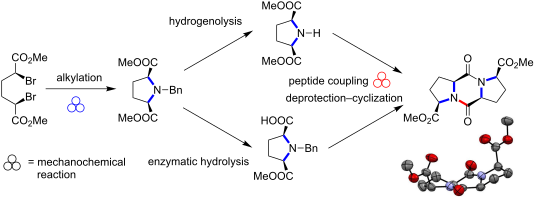
- -3-(3-dimethylaminopropyl)carbodiimide (EDC), ethyl cyano(hydroxyimino)acetate (oxyma) in the presence of a base and a liquid additive, were adapted to the preparation of Z–Pro–Pro–OMe (7) and Boc–Pro–Pro–OMe (8, Table 1). It consisted in ball milling the two amino acid derivatives 5 or 6 with 2 in
- the presence of EDC (coupling agent), a base and a small amount [29] of EtOAc as liquid grinding assistant. The role of oxyma was mainly to suppress amino acid epimerization during the coupling, a limited problem in the case of proline. Consequently, our first experiments did not involve this reagent


Peptide synthesis: ball-milling, in solution, or on solid support, what is the best strategy?
Beilstein J. Org. Chem. 2017, 13, 2087–2093, doi:10.3762/bjoc.13.206
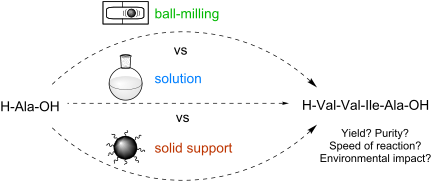
- NaH2PO4 (4.0 equiv) and the coupling agent N-(3-dimethylaminopropyl)-N′-ethylcarbodiimide (EDC, 1.2 equiv) in the presence of small amounts of EtOAc as the liquid grinding assistant (Scheme 1). Conventional post-treatments based on acid/base extractions and washings were sufficient to furnish the desired
- ), Boc-AA-OH (1.2 equiv), the coupling additive Oxyma (1.2 equiv) and the base N,N-diisopropylethylamine (DIPEA, 1.2 equiv) were dissolved in the minimal amount of DMF at room temperature, and then reacted with the coupling agent EDC (1.2 equiv) (Scheme 2). As described for the ball-milling approach


Mechanochemical synthesis of thioureas, ureas and guanidines
Beilstein J. Org. Chem. 2017, 13, 1828–1849, doi:10.3762/bjoc.13.178
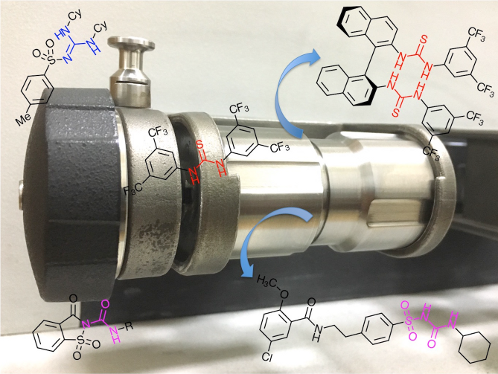
- sulfonamide–isocyanate coupling. The mechanochemical EDC-mediated amide bond formation [50] was successful and provided the intermediate 43 in 74% yield. In the second step, coupling of the sulfonamide intermediate 43 with 1.2 equivalents of cyclohexyl isocyanate in the presence of 5 mol % of CuCl and






Fluorescent carbon dots from mono- and polysaccharides: synthesis, properties and applications
Beilstein J. Org. Chem. 2017, 13, 675–693, doi:10.3762/bjoc.13.67
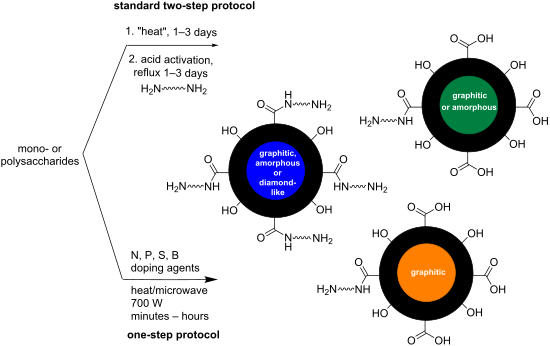
- treat various types of cancer including lung cancer, was then conjugated via EDC-mediated amide coupling chemistry (Scheme 6) [37]. The MTX-CDs were internalised into H157 lung cancer cells and compared with cells exposed to unfunctionalised amine-bearing CDs. While the amine-CDs showed no cellular


Continuous-flow synthesis of highly functionalized imidazo-oxadiazoles facilitated by microfluidic extraction
Beilstein J. Org. Chem. 2017, 13, 239–246, doi:10.3762/bjoc.13.26
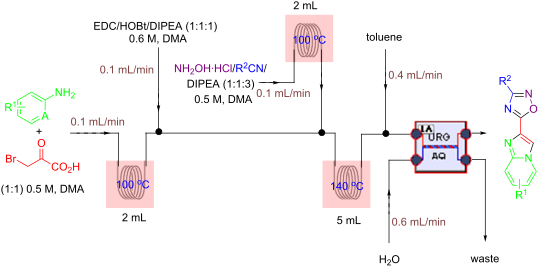
- reaction conditions using a single microreactor we found that the combination of EDC/HOBt/DIPEA (1:1:1) for 10 min at 150 °C provided the best conditions for complete conversion of 3-bromobenzoic acid to the corresponding 1,2,4-oxadiazole derivative (Table 1, entry 5). The use of N,N-dimethylformamide (DMF
- combined with EDC/HOBt/DIPEA (1:1:1) in a T-mixer. The synthesis of amidoxime was achieved by placing a second reactor (250 μL glass chip) in a heated silicone oil bath at 100 oC. The product stream was next introduced into a third reactor (1000 μL) and mixed with the stream exiting from the T-mixer at 150
- using a Syrris AFRICA apparatus or a Vapourtec R Series Flow Chemistry System. General procedure for the optimization of the flow synthesis of 1,2,4-oxadiazoles (Table 1) The reaction was conducted in a glass reactor consisting of a 1.0 mL retention unit and three inlets. Streams of EDC/HOBt/DIPEA (1:1


Identification, synthesis and mass spectrometry of a macrolide from the African reed frog Hyperolius cinnamomeoventris
Beilstein J. Org. Chem. 2016, 12, 2731–2738, doi:10.3762/bjoc.12.269
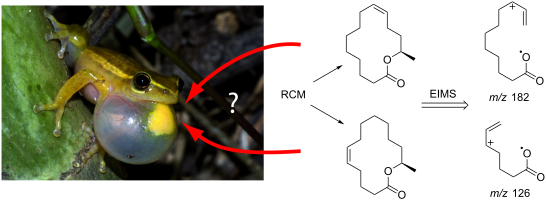
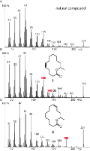
- , followed by esterification with 9-decenoic acid (8) using 1-ethyl-3-(3-dimethylaminopropyl)carbodiimide (EDC) and 4-(dimethylamino)pyridine (DMAP) [24][25]. The following RCM was performed using Grubbs–Hoveyda II catalyst (11) and hexafluorobenzene as an additive [26]. During the reaction isomerization