


Search results
Search for "Parkinson" in Full Text gives 14 result(s) in Beilstein Journal of Organic Chemistry.
Multicomponent reactions driving the discovery and optimization of agents targeting central nervous system pathologies
- Lucía Campos-Prieto,
- Aitor García-Rey,
- Eddy Sotelo and
- Ana Mallo-Abreu
Beilstein J. Org. Chem. 2024, 20, 3151–3173, doi:10.3762/bjoc.20.261
- to the authors whose important contributions may not be included. By concentrating on these pivotal studies, we strive to offer a clear and concise perspective on current research trends and breakthroughs in this field. Keywords: Alzheimer; depression; epilepsy; multicomponent reactions; Parkinson
- benzodioxepinones 12 in all cases (Scheme 11). The synthesized compounds demonstrated excellent drug-like features. Parkinson disease (PD) Knoevenagel–Michael addition/cyclization (MCR 3 + 2): Sirtuins, a group of enzymes that rely on NAD+ to function as protein deacetylases, have garnered attention across multiple

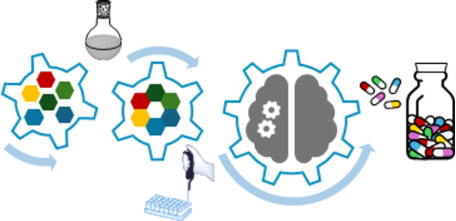
Graphical Abstract

Figure 1: Classical MCRs.

Figure 2: Different scaffolds that can be formed with the Ugi adduct.

Scheme 1: Oxoindole-β-lactam core produced in a U4C-3CR.

Figure 3: Most active oxoindole-β-lactam compounds developed by Brãndao et al. [33].

Scheme 2: Ugi-azide synthesis of benzofuran, pyrazole and tetrazole hybrids.

Figure 4: The most promising hybrids synthesized via the Ugi-azide multicomponent reaction reported by Kushwa...

Scheme 3: Four-component Ugi reaction for the synthesis of novel antioxidant compounds.

Figure 5: Most potent antioxidant compounds obtained through the Ugi four-component reaction developed by Pac...

Scheme 4: Four-component Ugi reaction to synthesize β-amiloyd aggregation inhibitors.

Figure 6: The most potential β-amiloyd aggregation inhibitors generated by Galante et al. [37].

Scheme 5: Four-component Ugi reaction to obtain FATH hybrids and the best candidate synthesized.

Scheme 6: Four-component Ugi reaction for the synthesis of FATMH hybrids and the best candidate synthesized.

Scheme 7: Petasis multicomponent reaction to produce pyrazine-based MTDLs.

Figure 7: Best pyrazine-based MTDLs synthesized by Madhav et al. [40].

Scheme 8: Synthesis of BCPOs employing a Knoevenagel-based multicomponent reaction and the best candidate syn...

Scheme 9: Hantzsch multicomponent reaction for the synthesis of DHPs as novel MTDLs.

Figure 8: Most active 1,4-dihydropyridines developed by Malek et al. [43].

Scheme 10: Chromone–donepezil hybrid MTDLs obtained via the Passerini reaction.

Figure 9: Best CDH-based MTDLs as AChE inhibitors synthesized by Malek et al. [46].

Scheme 11: Replacement of the nitrogen in lactams 11 with an oxygen in 12 to influence hydrogen-bond donating ...

Scheme 12: MCR 3 + 2 reaction to develop spirooxindole, spiroacenaphthylene, and bisbenzo[b]pyran compounds.

Figure 10: SIRT2 activity of best derivatives obtained by Hasaninejad et al. [49].

Scheme 13: Synthesis of ML192 analogs using the Gewald multicomponent reaction and the best candidate synthesi...

Scheme 14: Development of 1,5-benzodiazepines via Ugi/deprotection/cyclization (UDC) approach by Xu et al. [59].

Scheme 15: Synthesis of polysubstituted 1,4-benzodiazepin-3-ones using UDC strategy.

Scheme 16: Synthetic procedure to obtain 3-carboxamide-1,4-benzodiazepin-5-ones employing Ugi–reduction–cycliz...

Scheme 17: Ugi cross-coupling (U-4CRs) to synthesize triazolobenzodiazepines.

Scheme 18: Azido-Ugi four component reaction cyclization to obtain imidazotetrazolodiazepinones.

Scheme 19: Synthesis of oxazolo- and thiazolo[1,4]benzodiazepine-2,5-diones via Ugi/deprotection/cyclization a...
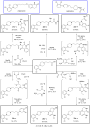
Scheme 20: General synthesis of 2,3-dichlorophenylpiperazine-derived compounds by the Ugi reaction and Ugi/dep...

Figure 11: Best DRD2 compounds synthesized using a multicomponent strategy.

Scheme 21: Bucherer–Bergs multicomponent reaction to obtain a key intermediate in the synthesis of pomaglumeta...

Scheme 22: Ugi reaction to synthesize racetam derivatives and example of two racetams synthesized by Cioc et a...
2-Heteroarylethylamines in medicinal chemistry: a review of 2-phenethylamine satellite chemical space
- Carlos Nieto,
- Alejandro Manchado,
- Ángel García-González,
- David Díez and
- Narciso M. Garrido
Beilstein J. Org. Chem. 2024, 20, 1880–1893, doi:10.3762/bjoc.20.163
- for the treatment of Parkinson´s symptoms like rigidity, tremor, and bradykinesia [73]. Mierau et al. [74] showed that the compound has a high affinity for the dopamine D3 receptor (Scheme 15). Jonczyk and co-workers [75] evaluated a series of 1-[2-thiazol-5-yl-(2-aminoethyl)]-4-N-propylpiperazine and
Graphical Abstract

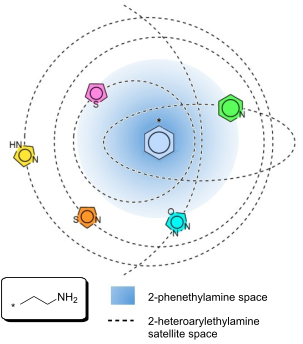
Scheme 1: Description of the 2-heteroarylethylamine scope of the present review featuring appropriate heteroa...

Scheme 2: 2-Aminoethylpyridine derivatives with therapeutic activity.

Scheme 3: 2-Aminoethylfuran derivatives with therapeutic activity.

Scheme 4: 2-Aminoethylthiophene derivatives with therapeutic activity, part 1.

Scheme 5: 2-Aminoethylthiophene derivatives with therapeutic activity, part 2.

Scheme 6: 2-Aminoethylthiophene derivatives with therapeutic activity, part 3.

Scheme 7: 2-Aminoethylpyrrole derivatives with therapeutic activity.

Scheme 8: Histamine metabolic pathway.

Scheme 9: 2-Aminoethylimidazole derivatives with therapeutic activity, part 1. Krel is referred as histamine ...

Scheme 10: Conformationally restricted 2-aminoethylimidazole derivatives with therapeutic activity, part 2.
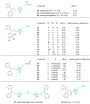
Scheme 11: 2-Aminoethylimidazole derivatives with therapeutic activity, part 3.

Scheme 12: 2-Aminoethylimidazole derivatives with therapeutic activity, part 4.

Scheme 13: 2-Aminoethylpyrazole derivatives with therapeutic activity.

Scheme 14: 2-Aminoethylisoxazole derivatives with therapeutic activity.

Scheme 15: 2-Aminoethylthiazole derivatives with therapeutic activity.

Scheme 16: 2-Aminoethyloxadiazole derivatives with therapeutic activity.

Scheme 17: 2-Aminoethyltriazole derivatives with therapeutic activity.

Scheme 18: 2-Aminoethyloxadiazole derivatives with therapeutic activity.
A Diels–Alder probe for discovery of natural products containing furan moieties
- Alyssa S. Eggly,
- Namuunzul Otgontseren,
- Carson B. Roberts,
- Amir Y. Alwali,
- Haylie E. Hennigan and
- Elizabeth I. Parkinson
Beilstein J. Org. Chem. 2024, 20, 1001–1010, doi:10.3762/bjoc.20.88
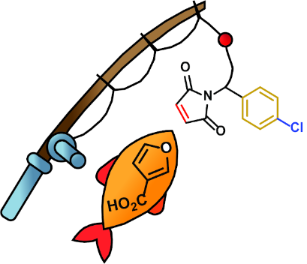
- Alyssa S. Eggly Namuunzul Otgontseren Carson B. Roberts Amir Y. Alwali Haylie E. Hennigan Elizabeth I. Parkinson Department of Chemistry, Purdue University, West Lafayette, Indiana 47906, United States Department of Medicinal Chemistry and Molecular Pharmacology, Purdue University, West Lafayette

Graphical Abstract

Figure 1: A) Bioactive natural products containing a furan ring (blue) or 3-furoic acid moiety (red): plakors...
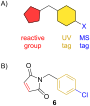
Figure 2: A) A diagram of an example of a molecular probe. B) The maleimide-based probe (6) for furans.
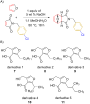
Figure 3: A) General Diels–Alder reaction scheme. B) MMF derivatives explored in this reaction.

Figure 4: A. Reaction scheme. B. Representative mass spectra of MMF5 cycloadduct 24 with 3:1 isotopic ratio p...

Figure 5: A. The UV trace (254 nm) for M145 control, M145 + probe 6, W75 control, and W75 + probe 6. M145 con...
Chemoenzymatic synthesis of macrocyclic peptides and polyketides via thioesterase-catalyzed macrocyclization
- Senze Qiao,
- Zhongyu Cheng and
- Fuzhuo Li
Beilstein J. Org. Chem. 2024, 20, 721–733, doi:10.3762/bjoc.20.66
- -acetylcysteamine. Via bioinformatics analysis, Parkinson and co-workers most recently reported the characterization of Ulm16, the PBP-TE predicted to cyclize ulleungymycin. Compared with previously studied PBP-TEs, Ulm16 showed much higher efficiency and broader substrate scope, producing a variety of ullemgymycin

Graphical Abstract

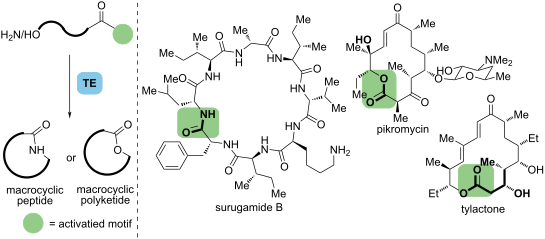
Scheme 1: Brief introduction of thioesterase (TE) domain. (a) NRPS and PKS assembly lines. (b) Mechanism of T...

Scheme 2: Chemoenzymatic synthesis of tyrocidine A and its analogs. (a) First-gen chemoenzymatic synthesis of...

Scheme 3: Representative examples of NAC-activated thioesters-mediated biocatalytic macrolactamization.

Scheme 4: Chemoenzymatic synthesis of CDA, daptomycin and their analogs. (a) Biocatalytic macrocyclization of...

Scheme 5: Chemoenzymatic synthesis of surugamide B and related natural products. (a) Three synthetic strategi...

Scheme 6: Chemoenzymatic synthesis of the pikromycins. (a) Macrocyclization of 10-deoxymethynolide catalyzed ...

Scheme 7: Chemoenzymatic synthesis of the juevnimicins.

Scheme 8: Chemoenzymatic synthesis of the cryptophycins.
Synthesis of ether lipids: natural compounds and analogues
- Marco Antônio G. B. Gomes,
- Alicia Bauduin,
- Chloé Le Roux,
- Romain Fouinneteau,
- Wilfried Berthe,
- Mathieu Berchel,
- Hélène Couthon and
- Paul-Alain Jaffrès
Beilstein J. Org. Chem. 2023, 19, 1299–1369, doi:10.3762/bjoc.19.96
- Parkinson disease [18], breast cancer [19] and in rectal adenocarcinoma [20] (in the last case by measuring lysophosphatidylcholine plasmalogen). Low levels of ether lipids are reported in inherited peroxisomal disorders (e.g., rhizomelic chondrodysplasia punctata or Zellweger syndrome) [21]. The severity

Graphical Abstract

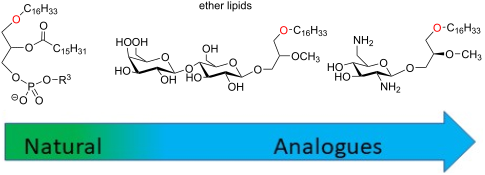
Figure 1: Chemical structure of some natural ether lipids (ELs).

Figure 2: Synthesis of lyso-PAF and PAF from 1-O-alkylglycerol [64].

Figure 3: Synthesis of lyso-PAF from 1,3-benzylideneglycerol 3.1 [69].
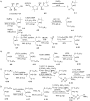
Figure 4: A) Synthesis of the two enantiomers of octadecylglycerol (4.6 and 4.10) from ᴅ-mannitol (4.1); B) s...

Figure 5: Four-step synthesis of PAF 5.6 from (S)-glycidol [73].

Figure 6: Synthesis of 1-O-alkylglycerol A) from solketal, B) from ᴅ- or ʟ-tartaric acid and the intermediate ...

Figure 7: Synthesis of EL building blocks starting from substituted glycidol 7.1a–c [82].

Figure 8: Synthesis of PAF 8.5 by using phosphoramidite 8.2 [86].

Figure 9: Synthesis of oleyl-PAF 9.7 from ʟ-serine [88].

Figure 10: Synthesis of racemic analogues of lyso-PAF 10.8 and PAF 10.9 featuring a phenyl group between the g...

Figure 11: Synthesis of racemic deoxy-lyso-PAF 11.7 and deoxy-PAF 11.8 [91].

Figure 12: Synthesis of racemic thio-PAF 12.8 [93].

Figure 13: Racemic synthesis of 13.6 to illustrate the modification of the glycerol backbone by adding a methy...

Figure 14: Racemic synthesis of 14.5 as an illustration of the introduction of methyl substituents on the glyc...

Figure 15: Synthesis of functionalized sn-2-acyl chains of PC-EL; A) Steglich esterification or acylation reac...

Figure 16: Synthesis of racemic mc-PAF (16.3), a carbamate analogue of PAF [102].

Figure 17: A) Synthesis of (R)-17.2 and (S)-17.6 starting from (S)-solketal (17.1); B) synthesis of N3-PAF (17...

Figure 18: Modification of the phosphocholine polar head to produce PAF analogues [81].

Figure 19: Racemic PAF analogues 19.3 and 19.5 characterized by the absence of the phosphate group [107].

Figure 20: Synthesis of PIP3-PAF (20.7) [108].

Figure 21: Large-scale synthesis of C18-edelfosine (21.8) [116].

Figure 22: Synthesis of C16-edelfosine (22.10) starting from isopropylidene-ʟ-glyceric acid methyl ester (22.1...

Figure 23: Phosphocholine moiety installation by the use of chlorophosphite 23.2 as key reagent [119].

Figure 24: Synthesis of rac-1-alkyl-2-O-methylglycerol (AMG) [120].

Figure 25: Synthesis of stereocontrolled 1-alkyl-2-O-methyl glycerol 25.9 (AMG) from dimethyl ᴅ-tartrate [81].

Figure 26: A) Racemic synthesis of thioether 26.4 [129,130], B) structure of sulfone analogue 26.5 [129].

Figure 27: Stereocontrolled synthesis of C18-edelfosine thioether analogue 27.8 [118].

Figure 28: Synthesis of thioether 28.4 that include a thiophosphate function [134].

Figure 29: Synthesis of ammonium thioether 29.4 and 29.6 [135].

Figure 30: Synthesis of the N-methylamino analogue of edelfosine 30.6 (BN52211) [138].

Figure 31: Synthesis of 1-desoxy analogues of edelfosine; A) with a saturated alkyl chain; B) synthesis of the...

Figure 32: Stereocontrolled synthesis of edelfosine analogue (S)-32.8 featuring a C18:1 lipid chain [142].

Figure 33: Synthesis of edelfosine analogues with modulation of the lipid chain; A) illustration with the synt...

Figure 34: Synthesis of phospholipid featuring a carbamate function to link the lipid chain to the glycerol un...

Figure 35: Synthesis of sesquiterpene conjugates of phospho glycero ether lipids [148].

Figure 36: Racemic synthesis of methyl-substituted glycerol analogues 36.7 and 36.10: A) synthesis of diether ...

Figure 37: Racemic synthesis of ilmofosine (37.6) [155,156].

Figure 38: A) Stereoselective synthesis of 38.5 via a stereoselective hydroboration reaction; B) synthesis of ...

Figure 39: Racemic synthesis of SRI62-834 (39.6) featuring a spiro-tetrahydrofurane heterocycle in position 2 ...

Figure 40: Racemic synthesis of edelfosine analogue 40.5 featuring an imidazole moiety in sn-2 position [160].

Figure 41: Racemic synthesis of fluorine-functionalized EL: A) Synthesis of 41.6 and B) synthesis of 41.8 [161-163].

Figure 42: A) Synthesis of the β-keto-ester 42.6 that also features a decyl linker between the phosphate and t...

Figure 43: Synthesis of phosphonate-based ether lipids; A) edelfosine phosphonate analogue 43.7 and B) thioeth...

Figure 44: Enantioselective synthesis of phosphonates 44.3 and 44.4 [171].

Figure 45: Racemic synthesis of phosphinate-based ether lipid 45.10 [172].

Figure 46: Racemic synthesis of edelfosine arsonium analogue 46.5 [173].

Figure 47: Synthesis of edelfosine dimethylammonium analogue 47.2 [118].

Figure 48: Synthesis of rac-C18-edelfosine methylammonium analogue 48.4 [176].

Figure 49: A) Synthesis of edelfosine N-methylpyrrolidinium analogue 49.2 or N-methylmorpholinium analogue 49.3...

Figure 50: A) Synthesis of edelfosine’s analogue 50.4 with a PE polar group; B) illustration of a pyridinium d...

Figure 51: A) Synthesis of 51.4 featuring a thiazolium cationic moiety; B) synthesis of thiazolium-based EL 51...

Figure 52: Synthesis of cationic ether lipids 52.3, 52.4 and 52.6 [135,183].

Figure 53: Synthesis of cationic carbamate ether lipid 53.5 [184].

Figure 54: Synthesis of cationic sulfonamide 54.5 [185].

Figure 55: Chemical structure of ONO-6240 (55.1) and SRI-63-119 (55.2).

Figure 56: Synthesis of non-ionic ether lipids 56.2–56.9 [188].

Figure 57: Synthesis of ether lipid conjugated to foscarnet 57.6 [189].

Figure 58: A) Synthesis of ether lipid conjugated to arabinofuranosylcytosine; B) synthesis of AZT conjugated ...

Figure 59: Synthesis of quercetin conjugate to edelfosine [191].

Figure 60: Synthesis of 60.8 (Glc-PAF) [194].

Figure 61: A) Synthesis of amino ether lipid 61.7 functionalized with a rhamnose unit and its amide analogue 6...

Figure 62: A) Synthesis of glucose ether lipid 62.4; B) structure of ether lipid 62.5 possessing a maltose uni...

Figure 63: A) Synthesis of glucuronic methyl ester 63.8; B) structure of cellobiose 63.9 and maltose 63.10 ana...

Figure 64: A) Synthesis of maltosyl glycerolipid 64.7; B) structure of lactose analogue 64.8 prepared followin...

Figure 65: A) Asymmetric synthesis of the aglycone moiety starting from allyl 4-methoxyphenyl ether; B) glycos...

Figure 66: A) Synthesis of ohmline possessing a lactose moiety. B) Structure of other glyco glycero lipids pre...

Figure 67: A) Synthesis of lactose-glycerol ether lipid 67.5; B) analogues possessing a maltose (67.6) or meli...

Figure 68: Synthesis of digalactosyl EL 68.6, A) by using trityl, benzyl and acetyl protecting groups, B) by u...

Figure 69: A) Synthesis of α-ohmline; B) structure of disaccharide ether lipids prepared by using similar meth...

Figure 70: Synthesis of lactose ether lipid 70.3 and its analogue 70.6 featuring a carbamate function as linke...

Figure 71: Synthesis of rhamnopyranoside diether 71.4 [196].

Figure 72: Synthesis of 1-O-hexadecyl-2-O-methyl-3-S-(α-ᴅ-1'-thioglucopyranosyl)-sn-glycerol (72.5) [225].

Figure 73: A) Preparation of lipid intermediate 73.4; B) synthesis of 2-desoxy-C-glycoside 73.10 [226].

Figure 74: Synthesis of galactose-pyridinium salt 74.3 [228].

Figure 75: Synthesis of myo-inositol derivative Ino-C2-PAF (75.10) [230].

Figure 76: A) Synthesis of myo-inositol phosphate building block 76.7; B) synthesis of myo-inositolphosphate d...

Figure 77: A) Synthesis of phosphatidyl-3-desoxy-inositol 77.4; B) synthesis of phosphono-3-desoxyinositol 77.9...

Figure 78: A) Structure of diether phosphatidyl-myo-inositol-3,4-diphosphate 78.1; B) synthesis of phosphatidy...

Figure 79: A) Synthesis of diether-phosphatidyl derivative 79.4 featuring a hydroxymethyl group in place of a ...

Figure 80: Synthesis of Glc-amine-PAF [78].

Figure 81: Synthesis of glucosamine ether lipid 81.4 and its analogues functionalized in position 3 of the ami...

Figure 82: Synthesis of fully deprotected aminoglucoside ether lipid 82.5 [246].

Figure 83: Synthesis of C-aminoglycoside 83.12 using Ramberg–Bäcklund rearrangement as a key step [250].

Figure 84: A) List of the most important glyco lipids and amino glyco lipids included in the study of Arthur a...

Figure 85: Synthesis of mannosamine ether lipid 85.6 [254].
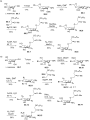
Figure 86: A) Synthesis of glucosamine ether lipids with a non-natural ʟ-glucosamine moiety; B) synthesis of e...
Figure 87: A) Structure of the most efficient anticancer agents 87.1–87.4 featuring a diamino glyco ether lipi...

Figure 88: A) Synthesis of diamino glyco ether lipid 87.4; B) synthesis of bis-glycosylated ether lipid 88.10 [256]....

Figure 89: Synthesis of triamino ether lipid 89.4 [260].

Figure 90: Synthesis of chlorambucil conjugate 90.7 [261].

Figure 91: Three main methods for the preparation of glycerol ether lipid 91.3; A) from solketal and via a tri...

Figure 92: Four different methods for the installation of the phosphocholine polar head group; A) method using...

Figure 93: Illustration of two methods for the installation of saccharides or aminosaccharides; A) O-glycosyla...
Me3Al-mediated domino nucleophilic addition/intramolecular cyclisation of 2-(2-oxo-2-phenylethyl)benzonitriles with amines; a convenient approach for the synthesis of substituted 1-aminoisoquinolines
- Krishna M. S. Adusumalli,
- Lakshmi N. S. Konidena,
- Hima B. Gandham,
- Krishnaiah Kumari,
- Krishna R. Valluru,
- Satya K. R. Nidasanametla,
- Venkateswara R. Battula and
- Hari K. Namballa
Beilstein J. Org. Chem. 2021, 17, 2765–2772, doi:10.3762/bjoc.17.186
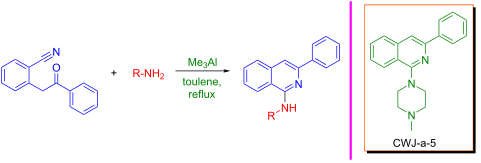
- applications in medicinal chemistry such as antimalarial, anti-Parkinson and antitumor activity (Figure 1) [13][14][15][16][17]. They also display remarkable enzymatic inhibitory activities on topoisomerase I, [18] mutant B-Raf [19] and exhibit antagonistic activities towards adenosine A3 [20] and PDE4B [21

Graphical Abstract

Figure 1: Biologically active 1-aminoisoquinolines.
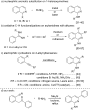
Scheme 1: Comparison of our work with the previous approaches for the synthesis of 1-aminoisoquinolines.
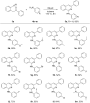
Scheme 2: Substrate scope of anilines for the synthesis of 1-aminoisoquinolines (5a–m). Reaction conditions: 3...

Scheme 3: Substrate scope of 2-(2-oxo-2-phenylethyl)benzonitrile (3b–e) for the synthesis of 1-aminoisoquinol...

Scheme 4: Substrate scope of aliphatic amines for the synthesis of 1-aminoisoquinolines (5v–x), gram-scale sy...

Scheme 5: Proposed mechanism for the synthesis of 1-aminoisoquinoline 5a.
Synthesis of dibenzosuberenone-based novel polycyclic π-conjugated dihydropyridazines, pyridazines and pyrroles
- Ramazan Koçak and
- Arif Daştan
Beilstein J. Org. Chem. 2021, 17, 719–729, doi:10.3762/bjoc.17.61
- , antihypertensive, anti-Parkinson, anti-inflammatory, anticonvulsant, vasodilatory, antidiabetic, antitubercular, antifungal, and antibacterial activities [32][33][34][35][36][37][38], pH-sensing [39], OLEDs [40], chemiluminescent materials [41][42], metal complexes (Figure 1) [43][44][45][46], liquid crystal [47

Graphical Abstract

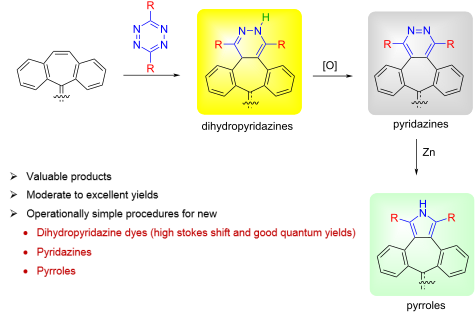
Figure 1: Structures of dibenzosuberenone 1 and pyridazine and pyrrole derivatives.

Figure 2: Structures of s-tetrazines 2a–l.

Scheme 1: Inverse electron-demand Diels–Alder reactions of dibenzosuberenone (1) with tetrazines 2a–l.

Scheme 2: Inverse electron-demand Diels–Alder reactions between dibenzosuberenone 1 and tetrazines 2ka and 2lb...
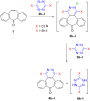
Scheme 3: Proposed reaction mechanism for the formation of dibenzosuberenone derivatives 3 and 4.

Scheme 4: Proposed mechanism for the formation of 5l.

Scheme 5: Oxidation of dihydropyridazines 3a–f. All reactions were carried in CH2Cl2 at room temperature (4e:...

Scheme 6: Synthesis of pyrrole 10a. a1.34 mmol 4a, Zinc (for 10aa: 6.68 mmol, for 10ab: 13.36 mmol), 10 mL gl...

Scheme 7: Synthesis of pyrrole 10b. a1.21 mmol 4b, 12.10 mmol Zinc, 118 °C, 2 h. b1.13 mmol 10ba, 1.69 mmol K...

Scheme 8: Synthesis of p-quinone methides 13–16. a1.77 mmol 11, 1.77 mmol 2, 5 mL toluene, 80 °C (13a: overni...

Scheme 9: Proposed mechanism for the formation of 13.

Figure 3: UV–vis spectra of 3c–f and 3k in CH3CN at rt (c = 5 μM).

Figure 4: Fluorescence spectra of 3c–f and 3k in CH3CN at rt (c = 5 μM).
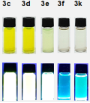
Figure 5: Ambient (top) and fluorescence (bottom, under 365 nm UV light) images of 3c–f and 3k in CH3CN.
Selected peptide-based fluorescent probes for biological applications
- Debabrata Maity
Beilstein J. Org. Chem. 2020, 16, 2971–2982, doi:10.3762/bjoc.16.247

- involved in a variety of human diseases like cancer, Alzheimer’s, and Parkinson diseases etc. [46]. Therefore, the Schmuck group in collaboration with the Ottmann group sought to develop fluorescent probes (7 and 8) for monitoring of 14-3-3 proteins (Figure 7) [47]. These probes contain two symmetric GCP

Graphical Abstract
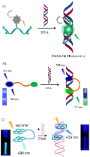
Figure 1: Three different type of peptide-based fluorescent probes and their interaction with nucleic acids a...
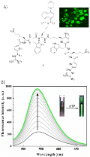
Figure 2: A) Molecular structure of peptidic probe 1, Inset: HeLa cells incubated with peptide 1 (50 μM), sho...
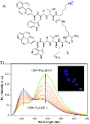
Figure 3: A) Molecular structure of probe 2; B) fluorescence emission spectra for the titration of a 10 μM so...
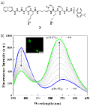
Figure 4: A) Molecular structure of 3; B) fluorescence emission spectra for the titration of a 10 μM solution...
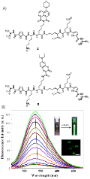
Figure 5: A) Molecular structure of 4 and 5; B) fluorescence spectra for the titration of a 0.5 μM solution o...
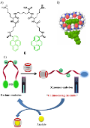
Figure 6: A) Molecular structure of 6; B) possible binding mode of pyrene termini of 6 to CB[8] according to ...
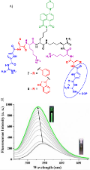
Figure 7: A) Molecular structure of peptidic probes 7 and 8; B) fluorescence emission spectra of probe 7 (5.0...

Figure 8: Top: Molecular structure of 9; bottom: A) fluorescence response of 9 (500 nM) upon addition of β-tr...

Figure 9: Top: Molecular structures of 10 and 11; bottom: A) fluorescence emission spectra of 10 (1.0 µM, λex...
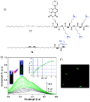
Figure 10: A) Structure of two peptide amphiphiles 12 and 13; B) fluorescent spectra (λex = 400 nm) from a tit...

Figure 11: a) Molecular structure of peptide 14; b) the coordinate represents the states of sensor at differen...
Synthesis of nonracemic hydroxyglutamic acids
- Dorota G. Piotrowska,
- Iwona E. Głowacka,
- Andrzej E. Wróblewski and
- Liwia Lubowiecka
Beilstein J. Org. Chem. 2019, 15, 236–255, doi:10.3762/bjoc.15.22
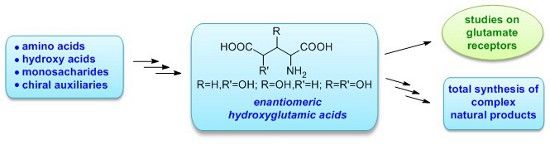
- several neurodegenerative diseases (Alzheimer [8], Huntington [9], Parkinson [10]) as well as to stroke [11] and epilepsy [12]. Two main classes of receptors, each of them containing three subclasses which are further divided into subtypes have been established for glutamic acid. To understand the

Graphical Abstract

Figure 1: Structure of L-glutamic acid.

Figure 2: 3-Hydroxy- (2), 4-hydroxy- (3) and 3,4-dihydroxyglutamic acids (4).

Figure 3: Enantiomers of 3-hydroxyglutamic acid (2).

Scheme 1: Synthesis of (2S,3R)-2 from (R)-Garner's aldehyde. Reagents and conditions: a) MeOCH=CH–CH(OTMS)=CH2...

Scheme 2: Synthesis of (2S,3R)-2 and (2S,3S)-2 from (R)-Garner’s aldehyde. Reagents and conditions: a) H2C=CH...

Scheme 3: Two-carbon homologation of the protected L-serine. Reagents and conditions: a) Fmoc-succinimide, Na2...

Scheme 4: Synthesis of di-tert-butyl ester of (2R,3S)-2 from L-serine. Reagents and conditions: a) PhSO2Cl, K2...

Scheme 5: Synthesis of (2R,3S)-2 from O-benzyl-L-serine. Reagents and conditions: a) (CF3CH2O)2P(O)CH2COOMe, ...

Scheme 6: Synthesis of (2S,3R)-2 employing a one-pot cis-olefination–conjugate addition sequence. Reagents an...

Scheme 7: Synthesis of the orthogonally protected (2S,3R)-2 from a chiral aziridine. Reagents and conditions:...

Scheme 8: Synthesis of N-Boc-protected (2S,3R)-2 from D-phenylglycine. Reagents and conditions: a) BnMgCl, et...

Scheme 9: Synthesis of (2S,3R)-2 employing ketopinic acid as chiral auxiliary. Reagents and conditions: a) Br2...

Scheme 10: Synthesis of dimethyl ester of (2S,3R)-2 employing (1S)-2-exo-methoxyethoxyapocamphane-1-carboxylic...

Scheme 11: Synthesis of N-Boc-protected dimethyl ester of (2S,3R)-2 from (S)-N-(1-phenylethyl)thioacetamide. R...

Scheme 12: Synthesis of N-Boc-protected dimethyl ester of (2S,3R)-2 via Sharpless epoxidation. Reagents and co...

Scheme 13: Synthesis of (2S,3S)-2 from the imide 51. Reagents and conditions: a) NaBH4, MeOH/CH2Cl2; b) Ac2O, ...

Scheme 14: Synthesis of (2R,3S)-2 and (2S,3S)-2 from the acetolactam 55 (PMB = p-methoxybenzyl). Reagents and ...

Scheme 15: Synthesis of (2S,3R)-2 from D-glucose. Reagents and conditions: a) NaClO2, 30% H2O2, NaH2PO4, MeCN;...

Figure 4: Enantiomers of 3-hydroxyglutamic acid (3).

Scheme 16: Synthesis of (4S)-4-hydroxy-L-glutamic acid [(2S,4S)-3] by electrophilic hydroxylation. Reagents an...

Scheme 17: Synthesis of all stereoisomers of 4-hydroxyglutamic acid (3). Reagents and conditions: a) Br2, PBr5...

Scheme 18: Synthesis of the orthogonally protected 4-hydroxyglutamic acid (2S,4S)-73. Reagents and conditions:...

Scheme 19: Synthesis of (2S,4R)-4-acetyloxyglutamic acid as a component of a dipeptide. Reagents and condition...

Scheme 20: Synthesis of N-Boc-protected dimethyl esters of (2S,4R)- and (2S,4S)-3 from (2S,4R)-4-hydroxyprolin...

Scheme 21: Synthesis of orthogonally protected (2S,4S)-3 from (2S,4R)-4-hydroxyproline. Reagents and condition...

Scheme 22: Synthesis of the protected (4R)-4-hydroxy-L-pyroglutamic acid (2S,4R)-87 by electrophilic hydroxyla...

Figure 5: Enantiomers of 3,4-dihydroxy-L-glutamic acid (4).

Scheme 23: Synthesis of (2S,3S,4R)-4 from the epoxypyrrolidinone 88. Reagents and conditions: a) MeOH, THF, KC...

Scheme 24: Synthesis of (2S,3R,4R)-4 from the orthoester 92. Reagents and conditions: a) OsO4, NMO, acetone/wa...

Scheme 25: Synthesis of (2S,3S,4S)-4 from the aziridinolactone 95. Reagents and conditions: a) BnOH, BF3·OEt2,...

Scheme 26: Synthesis of (2S,3S,4R)-4 and (2R,3S,4R)-4 from cyclic imides 106. Reagents and conditions: a) NaBH4...

Scheme 27: Synthesis of (2R,3R,4R)-4 and (2S,3R,4R)-4 from the cyclic meso-imide 110. Reagents and conditions:...

Scheme 28: Synthesis of (2S,3S,4S)-4 from the protected serinal (R)-23. Reagents and conditions: a) Ph3P=CHCOO...

Scheme 29: Synthesis of (2S,3S,4S)-4 from O-benzyl-N-Boc-D-serine. Reagents and conditions: a) ClCOOiBu, TEA, ...

Scheme 30: Synthesis of (2S,3S,4R)-127 by enantioselective conjugate addition and asymmetric dihydroxylation. ...

Figure 6: Structures of selected compounds containing hydroxyglutamic motives (in blue).
Effect of the ortho-hydroxy group of salicylaldehyde in the A3 coupling reaction: A metal-catalyst-free synthesis of propargylamine
- Sujit Ghosh,
- Kinkar Biswas,
- Suchandra Bhattacharya,
- Pranab Ghosh and
- Basudeb Basu
Beilstein J. Org. Chem. 2017, 13, 552–557, doi:10.3762/bjoc.13.53

- (MAO) type B inhibitors [6] often used for the treatment of neuropsychiatric disorders such as Alzheimer’s and Parkinson diseases. These alkynylamines are also important building blocks for the synthesis of N-bearing compounds such as β-lactams [7][8], pyrroles [9], pyrrolidines [10], pyrrolophanes [11

Graphical Abstract

Scheme 1: Representative examples of bioactive compounds bearing a propargylamine moiety and synthesis of var...

Scheme 2: Various metal-catalyzed methods for the synthesis of propargylamine.

Figure 1: Synthesis of various propargylamines from various salicylaldehydes under metal-catalyst-free condit...

Scheme 3: Plausible mechanism for the metal-free A3 coupling from salicylaldehyde.
Biocatalysis for the application of CO2 as a chemical feedstock
- Apostolos Alissandratos and
- Christopher J. Easton
Beilstein J. Org. Chem. 2015, 11, 2370–2387, doi:10.3762/bjoc.11.259
- enzyme reported to catalyse both formate oxidation and CO2 reduction under appropriate conditions, using substrate amounts of NAD+/NADH [119]. This enzyme was later used in the seminal work of Parkinson and Weaver [120], where electrons were supplied through a semiconductor photoelectrode using light in

Graphical Abstract

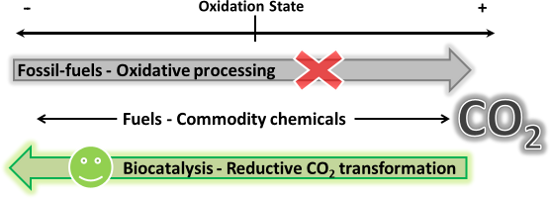
Figure 1: Biocatalytic routes for conversion of CO2 into compounds with carbon in the reduced oxidation state...

Figure 2: Carbonic anhydrase-catalysed rapid interconversion of CO2 and HCO3− in living systems.

Scheme 1: The Calvin cycle for fixation of CO2 with RuBisCO.

Scheme 2: The reductive TCA cycle with CO2 fixation enzymes designated.
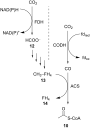
Scheme 3: The Wood–Ljungdahl pathway for generation of acetyl-CoA through reduction of CO2 to formate and CO....

Scheme 4: The acyl-CoA carboxylase pathways for autotrophic CO2 fixation. ACC: acetyl-CoA/propionyl-CoA carbo...

Figure 3: RuBisCO CO2-fixing bypass installed in E. coli and S. cerevisiae to increase carbon flux toward pro...

Scheme 5: Integrated biocatalytic system for carboxylation of phosphoenolpyruvate (19), using PEPC and carbon...
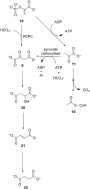
Scheme 6: PEPC and pyruvate carboxylase catalysed carboxylation of pyruvate backbone for the generation of ox...

Scheme 7: Decarboxylase catalysed carboxylation of (a) phenol derivatives, (b) indole and (c) pyrrole.

Figure 4: Formate dehydrogenase (FDH) catalysed reversible reduction of CO2 to formate with electron donor re...

Figure 5: Sequential generation of formate, formaldehyde and methanol from CO2 using reducing equivalents sou...

Figure 6: Hydrogen storage as formic acid through biocatalytic hydrogenation of CO2 and subsequent on-demand ...

Figure 7: Schematic showing required flow of reducing equivalents for CO2 fixation through biotechnological a...
Half-sandwich nickel(II) complexes bearing 1,3-di(cycloalkyl)imidazol-2-ylidene ligands
- Johnathon Yau,
- Kaarel E. Hunt,
- Laura McDougall,
- Alan R. Kennedy and
- David J. Nelson
Beilstein J. Org. Chem. 2015, 11, 2171–2178, doi:10.3762/bjoc.11.235
- the following specialists and technical staff for their assistance: Mr Craig Irving, Dr John Parkinson (NMR spectroscopy), Mr Alexander Clunie (elemental analyses), Ms Patricia Keating (GC and GC–MS), and Mr Gavin Bain (solvent purification system). We thank Professors Peter Skabara and Nicholas

Graphical Abstract

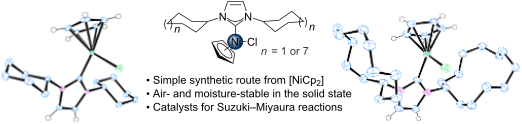
Scheme 1: Synthesis of [Ni(η1-Cp)(η5-Cp)(IMes)] (1) and [NiCl(Cp)(IMes)] (2).

Scheme 2: Synthesis of [NiCl(Cp)(ICy)] using conventional heating.

Scheme 3: Synthesis of (a) [NiCl(Cp)(ICy)] (3) and (b) [NiCl(Cp)(IDD)] (4) with microwave heating.

Figure 1: Molecular structures of complexes [NiCl(Cp)(ICy)] (3) (left) and [NiCl(Cp)(IDD)] (4) (right) as det...

Scheme 4: Model Suzuki–Miyaura reaction for the evaluation of the new complexes as cross-coupling pre-catalys...
Multigramme synthesis and asymmetric dihydroxylation of a 4-fluorobut-2E-enoate
- James A. B. Laurenson,
- John A. Parkinson,
- Jonathan M. Percy,
- Giuseppe Rinaudo and
- Ricard Roig
Beilstein J. Org. Chem. 2013, 9, 2660–2668, doi:10.3762/bjoc.9.301
- James A. B. Laurenson John A. Parkinson Jonathan M. Percy Giuseppe Rinaudo Ricard Roig WestCHEM Department of Pure and Applied Chemistry, University of Strathclyde, Thomas Graham Building, 295 Cathedral Street, Glasgow G1 1XL, United Kingdom Carbosynth Ltd., 93 Innovation Drive, Milton Park

Graphical Abstract

Scheme 1: Key steps from the synthesis of 6-fluoro-D-olivose (6) from D-glucose (1).

Scheme 2: De novo asymmetric syntheses of 6-deoxy-6-fluorohexoses [13].

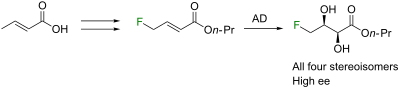
Scheme 3: Fluorobutenoate building block 14, and related species 16 and 19 from the literature [14-16].

Scheme 4: Fluorobutenoate building blocks 25 and 26 prepared from crotonic acid.

Figure 1: Side product 27 isolated from attempted fluorination.

Figure 2: The ligand panel used in the asymmetric dihydroxylation studies. The bold oxygen shows the point of...

Scheme 5: Typical AD procedure; see Table 1 for outcomes.

Scheme 6: Conversion of enantiomerically-enriched diols to dibenzoates for HPLC analysis.

Figure 3: Diisopropyl L-tartrate (30) used as a chiral modifier for NMR determination of ee.
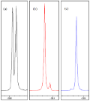
Figure 4: Partial 19F{1H} NMR spectra (376 MHz, L-(+)-DIPT/CDCl3, 300 K) spectra of (a) racemate 28c, (b) dio...

Figure 5: Partial 19F{1H} NMR (400 MHz, L-(+)-DIPT/CDCl3, 300 K) spectra of 28b and 28a using optimised condi...
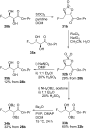
Scheme 7: Applying cyclic sulfate methodology to gain access to anti-diastereoisomers (transformations were d...

Scheme 8: Protecting and chain extending the educts of asymmetric dihydroxylation.
Reduction of arenediazonium salts by tetrakis(dimethylamino)ethylene (TDAE): Efficient formation of products derived from aryl radicals
- Mohan Mahesh,
- John A. Murphy,
- Franck LeStrat and
- Hans Peter Wessel
Beilstein J. Org. Chem. 2009, 5, No. 1, doi:10.3762/bjoc.5.1
- .; EPSRC for funding; EPSRC National Mass Spectrometry Service, Swansea for the mass spectral analysis and Dr. John A. Parkinson, University of Strathclyde for NOE NMR experiments.

Graphical Abstract

Scheme 1: Aza- and thia-substituted electron donors.

Scheme 2: Radical-polar crossover reaction of arenediazonium salts by TTF.

Scheme 3: Studies on the reductive radical cyclization of arenediazonium salt 16 by TDAE.

Scheme 4: Preparation of the arenediazonium salts 31a–d. Reagents and conditions: (a) 23, NaH, THF, 0 °C, 0.5...

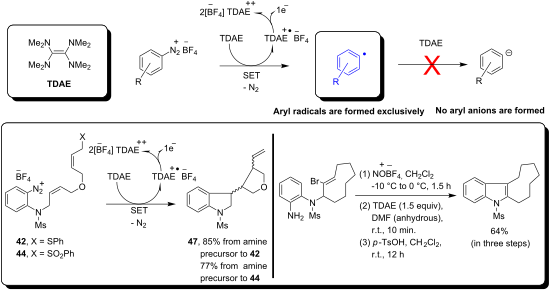
Scheme 5: Cascade radical cyclizations of arenediazonium salts 42 and 44 by TDAE. Reagents and conditions: (a...

Scheme 6: TDAE-mediated radical based addition-elimination route to indoles.

Scheme 7: Cyclization of the arenediazonium salts 49b–d by TDAE. Reagents and conditions: (a) NOBF4, CH2Cl2, ...

Scheme 8: Cyclization of the arenediazonium salt 62 by TDAE. Reagents and conditions: (a) 2-Nitrobenzenesulfo...

Scheme 9: Mechanism for the formation of the tetracyclic sulfonamide 65.

Scheme 10: Possible mechanism for the formation of indole (63) and indole sulfonamide 64.



