


Search results
Search for "azlactones" in Full Text gives 18 result(s) in Beilstein Journal of Organic Chemistry.
New advances in asymmetric organocatalysis II
- Radovan Šebesta
Beilstein J. Org. Chem. 2025, 21, 766–769, doi:10.3762/bjoc.21.60
- contributions in stereoselective organocatalytic transformations. The collection contains nine articles featuring various aspects of asymmetric organocatalysis. In the first contribution, Waser et al. examined how chiral phase-transfer catalysts promote β-selective additions of azlactones to allenoates. Maruoka
- ´s quaternary ammonium salts provided the corresponding substituted azlactones comprising a quaternary stereogenic center with the highest enantiomeric purity [21]. A contribution by Chowdhury and Dubey further underscored the importance of heterocyclic moieties in chiral compounds. Their article

Figure 1: TreeMap chart of the top 15 Web of Science categories for 6,700 articles containing the keywords “a...
Non-covalent organocatalyzed enantioselective cyclization reactions of α,β-unsaturated imines
- Sergio Torres-Oya and
- Mercedes Zurro
Beilstein J. Org. Chem. 2024, 20, 3221–3255, doi:10.3762/bjoc.20.268
- furnish the cycloaddition product 13a. In 2019, Xu’s group published a bifunctional squaramide-catalyzed inverse electron demand aza-Diels–Alder reaction of saccharin-derived 1-azadienes 14 and azlactones 15 [27]. This methodology enables chiral tricyclic derivatives 16 bearing a quaternary amino acid
- moiety in up to 99% yields, up to 93% ee and >20:1 dr (Scheme 5) to be obtained. In general, the steric and electronic properties of the conjugated imines had a slight effect on the enantioselectivities of the reactions. However, the authors pointed out that the azlactones with different substituents at
- azlactones through H-bond interactions with the squaramide moiety. The activated complex undergoes a [4 + 2] cyclization, through the Si-face attack of the enolate to the 1-azadiene leading to intermediate A which undergoes tautomerization and protonation to yield the chiral tricyclic derivative 16. To

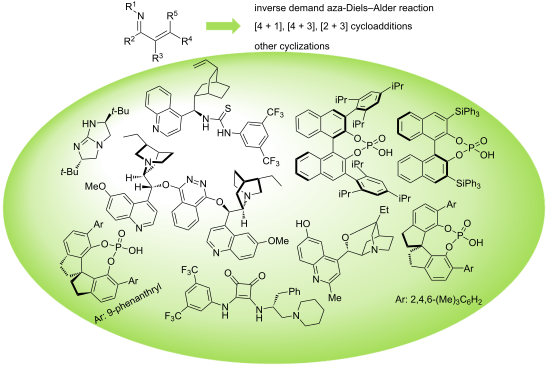
Graphical Abstract

Figure 1: Reactivity of α,β-unsaturated imines and variety of structures.

Figure 2: The hetero-Diels–Alder and inverse electron demand hetero-Diels–Alder reactions.

Figure 3: Different strategies to promote the activation of dienes and dienophiles in IEDADA reactions.

Figure 4: Examples of non-covalent interactions in organocatalysis.

Scheme 1: Enantioselective bifunctional thiourea-catalyzed inverse electron demand Diels–Alder reaction of N-...

Scheme 2: Cinchona-derived thiourea-catalyzed stereoselective (3 + 2) reaction of α,β-unsaturated imines and ...
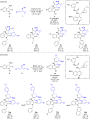
Scheme 3: Cinchona-derived thiourea-catalyzed stereoselective (3 + 2)/(4 + 2) cascade reaction of α,β-unsatur...
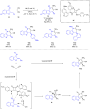
Scheme 4: Enantioselective bifunctional squaramide-catalyzed formal [4 + 2] cycloaddition of malononitrile wi...
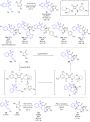
Scheme 5: Bifunctional squaramide-catalyzed IEDADA reaction of saccharin-derived 1-azadienes and azlactones.
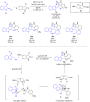
Scheme 6: Chiral guanidine-catalyzed enantioselective (4+1) cyclization of benzofuran-derived azadienes with ...
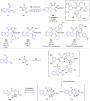
Scheme 7: Bifunctional squaramide-catalyzed [4 + 2] cyclization of benzofuran-derived azadienes and azlactone...
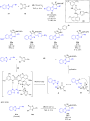
Scheme 8: Chiral bifunctional squaramide-catalyzed domino Mannich/formal [4 + 2] cyclization of 2-benzothiazo...
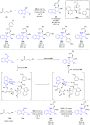
Scheme 9: Chiral bifunctional thiourea-catalyzed formal IEDADA reaction of β,γ-unsaturated ketones and benzof...
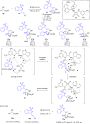
Scheme 10: Dihydroquinine-derived squaramide-catalyzed (3 + 2) cycloaddition reaction of isocyanoacetates and ...

Scheme 11: Enantioselective squaramide-catalyzed asymmetric IEDADA reaction of benzofuran-derived azadienes an...

Scheme 12: Scale up and derivatizations of benzofuran-fused 2-piperidinol derivatives.

Scheme 13: Dihydroquinine-derived squaramide-catalyzed Mannich-type reaction of isocyanoacetates with N-(2-ben...

Figure 5: Structure of a cinchona alkaloid and (DHQD)2PHAL.
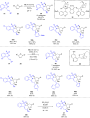
Scheme 14: Enantioselective modified cinchona alkaloid-catalyzed [4 + 2] annulation of γ-butenolides and sacch...
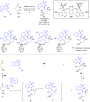
Scheme 15: Chiral tertiary amine-catalyzed [2 + 4] annulation of cyclic 1-azadiene with γ-nitro ketones.

Scheme 16: Inverse electron demand aza-Diels–Alder reaction (IEDADA) of 1-azadienes with enecarbamates catalyz...
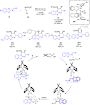
Scheme 17: Phosphoric acid-catalyzed enantioselective [4 + 2] cycloaddition of benzothiazolimines and enecarba...

Scheme 18: Phosphoric acid-catalyzed enantioselective inverse electron demand aza-Diels–Alder reaction of in s...

Scheme 19: Proposed reaction mechanism for the phosphoric acid-catalyzed enantioselective inverse electron dem...

Scheme 20: Enantioselective dearomatization of indoles by a (3 + 2) cyclization with azoalkenes catalyzed by a...

Scheme 21: Synthetic applicability of the pyrroloindoline derivatives.

Scheme 22: Chiral phosphoric acid-catalyzed (2 + 3) dearomative cycloaddition of 3-alkyl-2-vinylindoles with a...
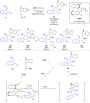
Scheme 23: Chiral phosphoric acid-catalyzed asymmetric [4 + 2] cycloaddition of aurone-derived 1-azadienes and...

Scheme 24: Phosphoric acid-catalyzed enantioselective formal [4 + 2] cycloaddition of dienecarbamates and 2-be...
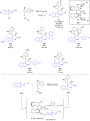
Scheme 25: Chiral phosphoric acid-catalyzed asymmetric inverse electron demand aza-Diels–Alder reaction of 1,3...

Scheme 26: Chiral phosphoric acid-catalyzed asymmetric Attanasi reaction between 1,3-dicarbonyl compounds and ...

Scheme 27: Synthetic applicability of the NPNOL derivatives.
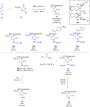
Scheme 28: Chiral phosphoric acid-catalyzed asymmetric intermolecular formal (3 + 2) cycloaddition of azoalken...
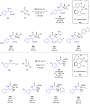
Scheme 29: Enantioselective [4 + 2] cyclization of α,β-unsaturated imines and azlactones.

Scheme 30: Catalytic cycle for the chiral phosphoric acid-catalyzed enantioselective [4 + 2] cyclization of α,...
Towards an asymmetric β-selective addition of azlactones to allenoates
- Behzad Nasiri,
- Ghaffar Pasdar,
- Paul Zebrowski,
- Katharina Röser,
- David Naderer and
- Mario Waser
Beilstein J. Org. Chem. 2024, 20, 1504–1509, doi:10.3762/bjoc.20.134
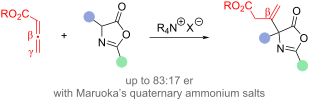
- , Iran 10.3762/bjoc.20.134 Abstract We herein report the asymmetric organocatalytic addition of azlactones to allenoates. Upon using chiral quaternary ammonium salt catalysts, i.e., Maruoka’s binaphthyl-based spirocyclic ammonium salts, the addition of various azlactones to allenoates proceeds in a β
- -selective manner with moderate levels of enantioselectivities (up to 83:17 er). Furthermore, the obtained products can be successfully engaged in nucleophilic ring opening reactions, thus giving highly functionalized α-amino acid derivatives. Keywords: allenoates; amino acids; azlactones; organocatalysis
- -functionalizations by reacting them with suited C- or heteroatom electrophiles. α-Amino acid-derived azlactones 1 are amongst the most commonly utilized starting materials to access more diverse chiral α,α-disubstituted amino acids (Scheme 1A) [20][21][22]. More specifically, these compounds can be engaged in a

Graphical Abstract

Scheme 1: General use of azlactones 1 to access more advanced α-AA derivatives (A), our recently reported amm...

Scheme 2: Application scope (conditions as detailed in Table 1, entry 13).

Scheme 3: Azlactone opening reactions.
Catalytic multi-step domino and one-pot reactions
- Svetlana B. Tsogoeva
Beilstein J. Org. Chem. 2024, 20, 254–256, doi:10.3762/bjoc.20.25
- -aminopyrazoles with azlactones under solvent-free conditions, through subsequent elimination of a benzamide molecule in a superbasic medium, is described by the Fisyuk group [13]. A further facile one-pot process toward a new series of copper(II) benzo[f]chromeno[2,3-h]quinoxalinoporphyrin analogues is described

Figure 1: Comparison of a classical “stop-and-go” synthesis with a domino reaction.
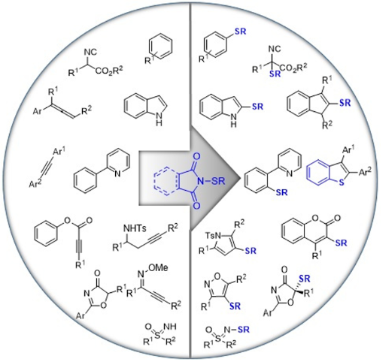
N-Sulfenylsuccinimide/phthalimide: an alternative sulfenylating reagent in organic transformations
- Fatemeh Doraghi,
- Seyedeh Pegah Aledavoud,
- Mehdi Ghanbarlou,
- Bagher Larijani and
- Mohammad Mahdavi
Beilstein J. Org. Chem. 2023, 19, 1471–1502, doi:10.3762/bjoc.19.106
- reduction of II by silane. On the other hand, most of II were converted to intermediate III, which underwent hydride reduction to render product 140 (Scheme 61). Another organocatalysis system was disclosed by Liu and co-workers for sulfenylation of α-fluoro-β-ketoamides 143 and azlactones 145 (Scheme 62

Graphical Abstract

Scheme 1: Sulfur-containing bioactive molecules.

Scheme 2: Scandium-catalyzed synthesis of thiosulfonates.

Scheme 3: Palladium-catalyzed aryl(alkyl)thiolation of unactivated arenes.

Scheme 4: Catalytic cycle for Pd-catalyzed aryl(alkyl)thiolation of unactivated arenes.

Scheme 5: Iron- or boron-catalyzed C–H arylthiation of substituted phenols.

Scheme 6: Iron-catalyzed azidoalkylthiation of alkenes.

Scheme 7: Plausible mechanism for iron-catalyzed azidoalkylthiation of alkenes.

Scheme 8: BF3·Et2O‑mediated electrophilic cyclization of aryl alkynoates.

Scheme 9: Tentative mechanism for BF3·Et2O‑mediated electrophilic cyclization of aryl alkynoates.

Scheme 10: Construction of 6-substituted benzo[b]thiophenes.

Scheme 11: Plausible mechanism for construction of 6-substituted benzo[b]thiophenes.

Scheme 12: AlCl3‑catalyzed cyclization of N‑arylpropynamides with N‑sulfanylsuccinimides.

Scheme 13: Synthetic utility of AlCl3‑catalyzed cyclization of N‑arylpropynamides with N‑sulfanylsuccinimides.

Scheme 14: Sulfenoamination of alkenes with sulfonamides and N-sulfanylsuccinimides.

Scheme 15: Lewis acid/Brønsted acid controlled Pd-catalyzed functionalization of aryl C(sp2)–H bonds.

Scheme 16: Possible mechanism for Lewis acid/Brønsted acid controlled Pd-catalyzed functionalization of aryl C...

Scheme 17: FeCl3-catalyzed carbosulfenylation of unactivated alkenes.

Scheme 18: Copper-catalyzed electrophilic thiolation of organozinc halides.

Scheme 19: h-BN@Copper(II) nanomaterial catalyzed cross-coupling reaction of sulfoximines and N‑(arylthio)succ...

Scheme 20: AlCl3‑mediated cyclization and sulfenylation of 2‑alkyn-1-one O‑methyloximes.

Scheme 21: Lewis acid-promoted 2-substituted cyclopropane 1,1-dicarboxylates with sulfonamides and N-(arylthio...

Scheme 22: Lewis acid-mediated cyclization of β,γ-unsaturated oximes and hydrazones with N-(arylthio/seleno)su...

Scheme 23: Credible pathway for Lewis acid-mediated cyclization of β,γ-unsaturated oximes with N-(arylthio)suc...

Scheme 24: Synthesis of 4-chalcogenyl pyrazoles via chalcogenation/cyclization of α,β-alkynic hydrazones.

Scheme 25: Controllable synthesis of 3-thiolated pyrroles and pyrrolines.

Scheme 26: Possible mechanism for controllable synthesis of 3-thiolated pyrroles and pyrrolines.

Scheme 27: Co-catalyzed C2-sulfenylation and C2,C3-disulfenylation of indole derivatives.

Scheme 28: Plausible catalytic cycle for Co-catalyzed C2-sulfenylation and C2,C3-disulfenylation of indoles.

Scheme 29: C–H thioarylation of electron-rich arenes by iron(III) triflimide catalysis.

Scheme 30: Difunctionalization of alkynyl bromides with thiosulfonates and N-arylthio succinimides.·

Scheme 31: Suggested mechanism for difunctionalization of alkynyl bromides with thiosulfonates and N-arylthio ...

Scheme 32: Synthesis of thioesters, acyl disulfides, ketones, and amides by N-thiohydroxy succinimide esters.

Scheme 33: Proposed mechanism for metal-catalyzed selective acylation and acylthiolation.

Scheme 34: AlCl3-catalyzed synthesis of 3,4-bisthiolated pyrroles.

Scheme 35: α-Sulfenylation of aldehydes and ketones.

Scheme 36: Acid-catalyzed sulfetherification of unsaturated alcohols.

Scheme 37: Enantioselective sulfenylation of β-keto phosphonates.

Scheme 38: Organocatalyzed sulfenylation of 3‑substituted oxindoles.

Scheme 39: Sulfenylation and chlorination of β-ketoesters.

Scheme 40: Intramolecular sulfenoamination of olefins.

Scheme 41: Plausible mechanism for intramolecular sulfenoamination of olefins.

Scheme 42: α-Sulfenylation of 5H-oxazol-4-ones.

Scheme 43: Metal-free C–H sulfenylation of electron-rich arenes.

Scheme 44: TFA-promoted C–H sulfenylation indoles.
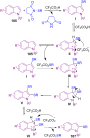
Scheme 45: Proposed mechanism for TFA-promoted C–H sulfenylation indoles.

Scheme 46: Organocatalyzed sulfenylation and selenenylation of 3-pyrrolyloxindoles.

Scheme 47: Organocatalyzed sulfenylation of S-based nucleophiles.

Scheme 48: Conjugate Lewis base Brønsted acid-catalyzed sulfenylation of N-heterocycles.

Scheme 49: Mechanism for activation of N-sulfanylsuccinimide by conjugate Lewis base Brønsted acid catalyst.

Scheme 50: Sulfenylation of deconjugated butyrolactams.

Scheme 51: Intramolecular sulfenofunctionalization of alkenes with phenols.

Scheme 52: Organocatalytic 1,3-difunctionalizations of Morita–Baylis–Hillman carbonates.

Scheme 53: Organocatalytic sulfenylation of β‑naphthols.

Scheme 54: Acid-promoted oxychalcogenation of o‑vinylanilides with N‑(arylthio/arylseleno)succinimides.

Scheme 55: Lewis base/Brønsted acid dual-catalytic C–H sulfenylation of aryls.

Scheme 56: Lewis base-catalyzed sulfenoamidation of alkenes.

Scheme 57: Cyclization of allylic amide using a Brønsted acid and tetrabutylammonium chloride.

Scheme 58: Catalytic electrophilic thiocarbocyclization of allenes with N-thiosuccinimides.

Scheme 59: Suggested mechanism for electrophilic thiocarbocyclization of allenes with N-thiosuccinimides.

Scheme 60: Chiral chalcogenide-catalyzed enantioselective hydrothiolation of alkenes.

Scheme 61: Proposed mechanism for chalcogenide-catalyzed enantioselective hydrothiolation of alkenes.

Scheme 62: Organocatalytic sulfenylation for synthesis a diheteroatom-bearing tetrasubstituted carbon centre.

Scheme 63: Thiolative cyclization of yne-ynamides.

Scheme 64: Synthesis of alkynyl and acyl disulfides from reaction of thiols with N-alkynylthio phthalimides.

Scheme 65: Oxysulfenylation of alkenes with 1-(arylthio)pyrrolidine-2,5-diones and alcohols.

Scheme 66: Arylthiolation of arylamines with (arylthio)-pyrrolidine-2,5-diones.

Scheme 67: Catalyst-free isothiocyanatoalkylthiation of styrenes.

Scheme 68: Sulfenylation of (E)-β-chlorovinyl ketones toward 3,4-dimercaptofurans.

Scheme 69: HCl-promoted intermolecular 1, 2-thiofunctionalization of aromatic alkenes.

Scheme 70: Possible mechanism for HCl-promoted 1,2-thiofunctionalization of aromatic alkenes.

Scheme 71: Coupling reaction of diazo compounds with N-sulfenylsuccinimides.

Scheme 72: Multicomponent reactions of disulfides with isocyanides and other nucleophiles.

Scheme 73: α-Sulfenylation and β-sulfenylation of α,β-unsaturated carbonyl compounds.
New one-pot synthesis of 4-arylpyrazolo[3,4-b]pyridin-6-ones based on 5-aminopyrazoles and azlactones
- Vladislav Yu. Shuvalov,
- Ekaterina Yu. Vlasova,
- Tatyana Yu. Zheleznova and
- Alexander S. Fisyuk
Beilstein J. Org. Chem. 2023, 19, 1155–1160, doi:10.3762/bjoc.19.83
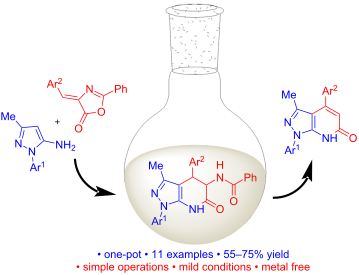
- Ave., 55a, 644077 Omsk, Russian Federation 10.3762/bjoc.19.83 Abstract An effective one-pot strategy was developed for the synthesis of 4-arylpyrazolo[3,4-b]pyridin-6-ones from pyrazolo[3,4-b]pyridin-6-ones, obtained by reacting 5-aminopyrazoles with 4-arylidene-2-phenyloxazol-5(4H)-ones (azlactones
- domino reaction of enamines with azlactones [22][23][24][25][26][27][28][29][30]. We have previously reported a plausible mechanism of such reactions [22][25]. 1H-Pyrazol-5-amines also enter into similar transformations with azlactones in various solvents. The yields of tetrahydro-1H-pyrazolo[3,4-b
- -aminopyrazoles 1, 5, 6 and azlactones 2a–i, followed by heating the resulting intermediate in DMSO in the presence of t-BuOK. Photophysical properties of the obtained compounds were studied. Biologically active 4-arylpyrazolo[3,4-b]pyridin-6-ones. Normalized absorption and fluorescence spectra of solutions of

Graphical Abstract

Figure 1: Biologically active 4-arylpyrazolo[3,4-b]pyridin-6-ones.

Scheme 1: Methods for the synthesis of 4-arylpyrazolo[3,4-b]pyridin-6-ones.

Scheme 2: One-pot synthesis of 4-arylpyrazolo[3,4-b]pyridin-6-ones 4a–i, 9a, and 10a.

Figure 2: Normalized absorption and fluorescence spectra of solutions of compounds 4a–i, 9a, and 10a in EtOH.
Recent advances in the asymmetric phosphoric acid-catalyzed synthesis of axially chiral compounds
- Alemayehu Gashaw Woldegiorgis and
- Xufeng Lin
Beilstein J. Org. Chem. 2021, 17, 2729–2764, doi:10.3762/bjoc.17.185
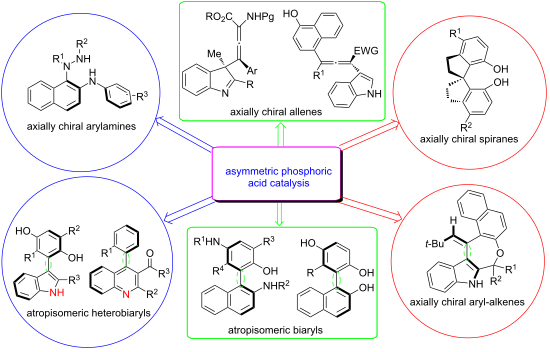
- -trifluoromethylpropargyl alcohol are very important for the reaction. Li and co-workers developed a chiral phosphoric acid-catalyzed asymmetric remote 1,8-conjugate addition of thiazolones 111 and azlactones 112 to propargyl alcohols 110 for the synthesis of the chiral allenes 113 and 114, respectively. In the presence of
- diastereoselectivity (10:1 to >20:1 dr). In addition, the enantioselective 1,8-conjugate addition of azlactones 112 to para-quinone methides generated in situ from propargyl alcohols 110 were carried out in the presence of 1 mol % chiral phosphoric acid CPA 7 and afforded the chiral allenes 114 in high yields (65–97
- reaction. Moreover, both electron-withdrawing and donating groups on the aromatic rings of propargyl alcohols or azlactones smoothly participated in the asymmetric 1,8-conjugate addition and afforded the corresponding chiral allenes in good yields with high enantioselectivity. The control experiments

Graphical Abstract

Figure 1: Representative examples of axially chiral biaryls, heterobiaryls, spiranes and allenes as ligands a...
Figure 2: Selected examples of axially chiral drugs and bioactive molecules.

Figure 3: Axially chiral functional materials and supramolecules.

Figure 4: Important chiral phosphoric acid scaffolds used in this review.

Scheme 1: Atroposelective aryl–aryl-bond formation by employing a facile [3,3]-sigmatropic rearrangement.

Scheme 2: Atroposelective synthesis of axially chiral biaryl amino alcohols 5.

Scheme 3: The enantioselective reaction of quinone and 2-naphthol derivatives.

Scheme 4: Enantioselective synthesis of multisubstituted biaryls.

Scheme 5: Enantioselective synthesis of axially chiral quinoline-derived biaryl atropisomers mediated by chir...

Scheme 6: Pd-Catalyzed atroposelective C–H olefination of biarylamines.

Scheme 7: Palladium-catalyzed directed atroposelective C–H allylation.

Scheme 8: Enantioselective synthesis of axially chiral (a) aryl indoles and (b) biaryldiols.

Scheme 9: Asymmetric arylation of indoles enabled by azo groups.

Scheme 10: Proposed mechanism for the asymmetric arylation of indoles.
Scheme 11: Enantioselective synthesis of axially chiral N-arylindoles [38].

Scheme 12: Enantioselective [3 + 2] formal cycloaddition and central-to-axial chirality conversion.

Scheme 13: Organocatalytic atroposelective arene functionalization of nitrosonaphthalene with indoles.

Scheme 14: Proposed reaction mechanism for the atroposelective arene functionalization of nitrosonaphthalenes.

Scheme 15: Asymmetric construction of axially chiral naphthylindoles [65].

Scheme 16: Enantioselective synthesis of axially chiral 3,3’-bisindoles [66].
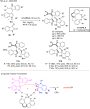
Scheme 17: Atroposelective synthesis of 3,3’-bisiindoles bearing axial and central chirality.

Scheme 18: Enantioselective synthesis of axially chiral 3,3’-bisindoles bearing single axial chirality.

Scheme 19: Enantioselective reaction of azonaphthalenes with various pyrazolones.
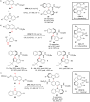
Scheme 20: Enantioselective and atroposelective synthesis of axially chiral N-arylcarbazoles [73].

Scheme 21: Atroposelective cyclodehydration reaction.

Scheme 22: Atroposelective construction of axially chiral N-arylbenzimidazoles [78].

Scheme 23: Proposed reaction mechanism for the atroposelective synthesis of axially chiral N-arylbenzimidazole...

Scheme 24: Atroposelective synthesis of axially chiral arylpyrroles [21].

Scheme 25: Synthesis of axially chiral arylquinazolinones and its reaction pathway [35].
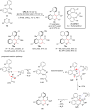
Scheme 26: Synthesis of axially chiral aryquinoline by Friedländer heteroannulation reaction and its proposed...

Scheme 27: Povarov cycloaddition–oxidative chirality conversion process.

Scheme 28: Atroposelective synthesis of oxindole-based axially chiral styrenes via kinetic resolution.

Scheme 29: Synthesis of axially chiral alkene-indole frame works [45].

Scheme 30: Proposed reaction mechanism for axially chiral alkene-indoles.

Scheme 31: Atroposelective C–H aminations of N-aryl-2-naphthylamines with azodicarboxylates.

Scheme 32: Synthesis of brominated atropisomeric N-arylquinoids.

Scheme 33: The enantioselective syntheses of axially chiral SPINOL derivatives.

Scheme 34: γ-Addition reaction of various 2,3-disubstituted indoles to β,γ-alkynyl-α-imino esters.

Scheme 35: Regio- and stereoselective γ-addition reactions of isoxazol-5(4H)-ones to β,γ-alkynyl-α-imino ester...

Scheme 36: Synthesis of chiral tetrasubstituted allenes and naphthopyrans.

Scheme 37: Asymmetric remote 1,8-conjugate additions of thiazolones and azlactones to propargyl alcohols.

Scheme 38: Synthesis of chiral allenes from 1-substituted 2-naphthols [107].
Enantioenriched α-substituted glutamates/pyroglutamates via enantioselective cyclopropenimine-catalyzed Michael addition of amino ester imines
- Zara M. Seibel,
- Jeffrey S. Bandar and
- Tristan H. Lambert
Beilstein J. Org. Chem. 2021, 17, 2077–2084, doi:10.3762/bjoc.17.134
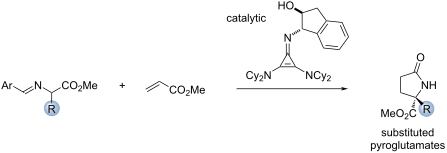
- achieved [31], Michael reactions with these nucleophiles have met with limited success [32][33][34][35][36][37][38][39]. In terms of enantioselective catalytic strategies, Kobayashi has reported the conjugate addition of azlactones to acrylates using a calcium pybox complex, but with enantioselectivities

Graphical Abstract

Figure 1: Strategy for the synthesis of glutamate and pyroglutamate derivatives and several natural products ...

Figure 2: Effect of the aryl substituent on reaction efficiency and selectivity.

Figure 3: Proposed transition state model.
Asymmetric organocatalyzed synthesis of coumarin derivatives
- Natália M. Moreira,
- Lorena S. R. Martelli and
- Arlene G. Corrêa
Beilstein J. Org. Chem. 2021, 17, 1952–1980, doi:10.3762/bjoc.17.128
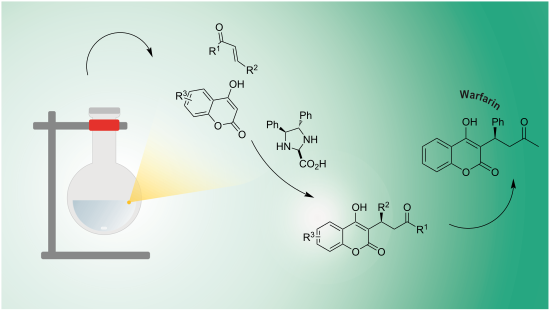
- cascade synthesis of hydrocoumarin 78 mediated by squaramide catalyst with 9-amino-9-deoxy-epi-quinine moiety 73 was reported by Albrecht et al. [59]. In this transformation, the authors developed a Michael addition of azlactones to 2-hydroxychalcones 76 followed by the opening of the azlactone 77 ring to

Graphical Abstract

Figure 1: Coumarin-derived commercially available drugs.

Figure 2: Inhibition of acetylcholinesterase by coumarin derivatives.

Scheme 1: Michael addition of 4-hydroxycoumarins 1 to α,β‐unsaturated enones 2.

Scheme 2: Organocatalytic conjugate addition of 4-hydroxycoumarin 1 to α,β-unsaturated aldehydes 2 followed b...

Scheme 3: Synthesis of 3,4-dihydrocoumarin derivatives 10 through decarboxylative and dearomatizative cascade...

Scheme 4: Total synthesis of (+)-smyrindiol (17).

Scheme 5: Michael addition of 4-hydroxycoumarin (1) to enones 2 through a bifunctional modified binaphthyl or...

Scheme 6: Michael addition of ketones 20 to 3-aroylcoumarins 19 using a cinchona alkaloid-derived primary ami...

Scheme 7: Enantioselective reaction of cyclopent-2-enone-derived MBH alcohols 24 with 4-hydroxycoumarins 1.

Scheme 8: Sequential Michael addition/hydroalkoxylation one-pot approach to annulated coumarins 28 and 30.

Scheme 9: Michael addition of 4-hydroxycoumarins 1 to enones 2 using a binaphthyl diamine catalyst 31.

Scheme 10: Asymmetric Michael addition of 4-hydroxycoumarin 1 with α,β-unsaturated ketones 2 catalyzed by a ch...

Scheme 11: Catalytic asymmetric β-C–H functionalization of ketones via enamine oxidation.

Scheme 12: Enantioselective synthesis of polycyclic coumarin derivatives 37 catalyzed by an primary amine-imin...

Scheme 13: Allylic alkylation reaction between 3-cyano-4-methylcoumarins 39 and MBH carbonates 40.

Scheme 14: Enantioselective synthesis of cyclopropa[c]coumarins 45.

Scheme 15: NHC-catalyzed lactonization of 2-bromoenals 46 with 4-hydroxycoumarin (1).

Scheme 16: NHC-catalyzed enantioselective synthesis of dihydrocoumarins 51.

Scheme 17: Domino reaction of enals 2 with hydroxylated malonate 53 catalyzed by NHC 55.

Scheme 18: Oxidative [4 + 2] cycloaddition of enals 57 to coumarins 56 catalyzed by NHC 59.

Scheme 19: Asymmetric [3 + 2] cycloaddition of coumarins 43 to azomethine ylides 60 organocatalyzed by quinidi...

Scheme 20: Synthesis of α-benzylaminocoumarins 64 through Mannich reaction between 4-hydroxycoumarins (1) and ...

Scheme 21: Asymmetric addition of malonic acid half-thioesters 67 to coumarins 66 using the sulphonamide organ...

Scheme 22: Enantioselective 1,4-addition of azadienes 71 to 3-homoacyl coumarins 70.

Scheme 23: Michael addition/intramolecular cyclization of 3-acylcoumarins 43 to 3-halooxindoles 74.

Scheme 24: Enantioselective synthesis of 3,4-dihydrocoumarins 78 catalyzed by squaramide 73.

Scheme 25: Organocatalyzed [4 + 2] cycloaddition between 2,4-dienals 79 and 3-coumarincarboxylates 43.

Scheme 26: Enantioselective one-pot Michael addition/intramolecular cyclization for the synthesis of spiro[dih...
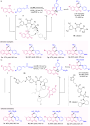
Scheme 27: Michael/hemiketalization addition enantioselective of hydroxycoumarins (1) to: (a) enones 2 and (b)...

Scheme 28: Synthesis of 2,3-dihydrofurocoumarins 89 through Michael addition of 4-hydroxycoumarins 1 to β-nitr...

Scheme 29: Synthesis of pyrano[3,2-c]chromene derivatives 93 via domino reaction between 4-hydroxycoumarins (1...

Scheme 30: Conjugated addition of 4-hydroxycoumarins 1 to nitroolefins 95.

Scheme 31: Michael addition of 4-hydroxycoumarin 1 to α,β-unsaturated ketones 2 promoted by primary amine thio...

Scheme 32: Enantioselective synthesis of functionalized pyranocoumarins 99.

Scheme 33: 3-Homoacylcoumarin 70 as 1,3-dipole for enantioselective concerted [3 + 2] cycloaddition.

Scheme 34: Synthesis of warfarin derivatives 107 through addition of 4-hydroxycoumarins 1 to β,γ-unsaturated α...

Scheme 35: Asymmetric multicatalytic reaction sequence of 2-hydroxycinnamaldehydes 109 with 4-hydroxycoumarins ...

Scheme 36: Mannich asymmetric addition of cyanocoumarins 39 to isatin imines 112 catalyzed by the amide-phosph...

Scheme 37: Enantioselective total synthesis of (+)-scuteflorin A (119).
Synthesis of esters of diaminotruxillic bis-amino acids by Pd-mediated photocycloaddition of analogs of the Kaede protein chromophore
- Esteban P. Urriolabeitia,
- Pablo Sánchez,
- Alexandra Pop,
- Cristian Silvestru,
- Eduardo Laga,
- Ana I. Jiménez and
- Carlos Cativiela
Beilstein J. Org. Chem. 2020, 16, 1111–1123, doi:10.3762/bjoc.16.98
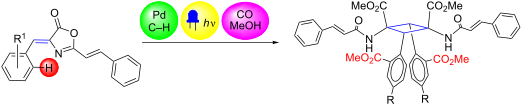
- ortho-position of the 2,4-aryl rings in the resulting bis-amino acids can be functionalized [30]. Substrates of the (Z)-4-arylidene-2((E)-styryl)-5(4H)-oxazolone type, shown in Figure 2b, are interesting starting materials for the synthesis of new 1,3-diaminotruxillic derivatives. These azlactones are

Graphical Abstract

Figure 1: (a) General scheme for truxillic acid derivatives; (b) general scheme for symmetric 1,3-diaminotrux...

Figure 2: (a) (Z)-4-Arylidene-2-aryl-5(4H)-oxazolones used for the synthesis of 1,3-diaminotruxillic derivati...

Figure 3: (Z)-4-Arylidene-2((E)-styryl)-5(4H)-oxazolones 2a–j used in this work and overall reaction scheme.

Figure 4: Molecular drawing of the oxazolone 2c.

Scheme 1: Ortho-palladation of oxazolones 2 by treatment with Pd(OAc)2 and different structures obtained for ...

Scheme 2: [2 + 2] Photocycloaddition of cyclopalladated complexes 3 in solution to give the dinuclear cyclobu...

Figure 5: Molecular drawing of cyclobutane ortho-palladated 4a. Ellipsoids are shown at the 50% probability l...
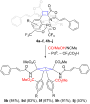
Scheme 3: Release of the 1,3-diaminotruxillic bis-amino ester derivatives 5 by methoxycarbonylation of the Pd...
A Brønsted base-promoted diastereoselective dimerization of azlactones
- Danielle L. J. Pinheiro,
- Gabriel M. F. Batista,
- Pedro P. de Castro,
- Leonã S. Flores,
- Gustavo F. S. Andrade and
- Giovanni W. Amarante
Beilstein J. Org. Chem. 2017, 13, 2663–2670, doi:10.3762/bjoc.13.264

- Brønsted base system for the diastereoselective dimerization of azlactones using trichloroacetate salts and acetonitrile has been developed. Desired products were obtained in good yields (60–93%) and with up to >19:1 dr after one hour of reaction. Additionally, the relative stereochemistry of the major
- analogue of streptopyrrolidine was accomplished in 65% overall yield. Keywords: azlactones; dimerization; diasteoreselective synthesis; kinetics; streptopyrrolidine analogue; Findings Azlactones have been acknowledged as a common nucleophilic reagent to introduce a quaternary carbon stereocenter in the α
- -position of α-amino acid derivatives. To this end, different catalytic transformations involving azlactones have been established [1][2][3][4][5][6][7][8][9][10][11][12][13][14][15][16][17][18][19]. For example, our research group has explored the potential of these heterocycles in the presence of Michael

Graphical Abstract

Figure 1: Structure of an azlactone dimer.
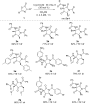
Scheme 1: Diastereoselective dimerization of azlactones. Reactions were carried out using 0.45 mmol of 1 and ...

Figure 2: X-ray crystallographic structure of 2a (30% ellipsoids probability).

Scheme 2: Sterically bulky azlactone enol derivatives.
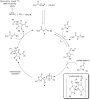
Figure 3: Plausible mechanism for the dimerization of azlactone.

Figure 4:
Plot of ![[Graphic 5]](/bjoc/content/inline/1860-5397-13-264-i10.svg?max-width=637&scale=1.18182) vs time for the dimerization of azlactone 1a.
vs time for the dimerization of azlactone 1a.

Scheme 3: Reduction of 2c.
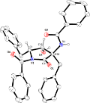
Figure 5: X-ray crystallographic structure of 6 (30% ellipsoids probability).
1H-Imidazol-4(5H)-ones and thiazol-4(5H)-ones as emerging pronucleophiles in asymmetric catalysis
- Antonia Mielgo and
- Claudio Palomo
Beilstein J. Org. Chem. 2016, 12, 918–936, doi:10.3762/bjoc.12.90
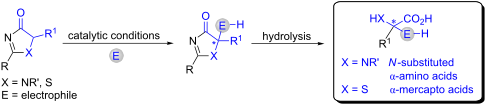
- their pKa values (approximately 19 in DMSO) [19] are much higher, one exception being thioesters [20][21] and pyrazoleamides [22]. As an alternative, some specific heterocycles have been proposed as carboxylic acid surrogates. Examples of this type of heterocycles are oxazol-5-(4H)-ones (or azlactones
- be easily hydrolyzed to provide carboxylic acids or their derivatives carrying different functionalities. The most common pronucleophiles of this type are oxazol-5-(4H)-ones or azlactones (Figure 1a, X = O), which have been thoroughly investigated and reviewed [23][24][25]. On the other hand, since
- ]. The main advantages of these pronucleophiles over the previous known templates are: i) the NR group can be installed in the heterocycle previous to the asymmetric reaction, ii) they are easily deprotonated under soft enolization conditions (aromatic enolate formation), and iii) unlike azlactones and

Graphical Abstract

Figure 1: Some α-substituted heterocycles for asymmetric catalysis, their reactivity patterns against enoliza...

Figure 2: 1H-Imidazol-4(5H)-ones 1 and thiazol-4(5H)-ones 2.
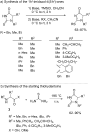
Scheme 1: a) Synthesis of 2-thio-1H-imidazol-4(5H)-ones [55] and b) preparation of the starting thiohydantoins [59].

Scheme 2: Selected examples of the Michael addition of 2-thio-1H-imidazol-4(5H)-ones to nitroalkenes [55]. aReact...

Scheme 3: Michael addition of thiohydantoins to nitrostyrene assisted by Et3N and catalysts C1 and C3. aAbsol...

Scheme 4: Elaboration of the Michael adducts coming from the Michael addition to nitroalkenes [55].

Figure 3: Proposed model for the Michael addition of 1H-imidazol4-(5H)-ones and selected 1H NMR data which su...

Scheme 5: Michael addition 2-thio-1H-imidazol-4(5H)-ones to the α-silyloxyenone 29 [55].

Scheme 6: Elaboration of the Michael adducts coming from the Michael addition to nitroolefins [55].
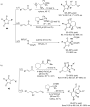
Scheme 7: Rhodanines in asymmetric catalytic reactions: a) Reaction with rhodanines of type 44 [78-80]; b) reactions...

Scheme 8: Michael addition of thiazol-4(5H)-ones to nitroolefins promoted by the ureidopeptide-like bifunctio...

Figure 4: Ureidopeptide-like Brønsted bases: catalyst design. a) Previous known design. b) Proposed new desig...

Scheme 9: Ureidopeptide-like Brønsted base bifunctional catalyst preparation. NMM = N-methylmorpholine, THF =...

Scheme 10: Selected examples of the Michael addition of thiazolones to different nitroolefins promoted by cata...

Scheme 11: Elaboration of the Michael adducts to α,α-disubstituted α-mercaptocarboxylic acid derivatives [85].

Scheme 12: Effect of the nitrogen atom at the aromatic substituent of the thiazolone on yield and stereoselect...

Scheme 13: Michael addition reaction of thiazol-4(5H)ones 74 to α’-silyloxyenone 29 [73].

Scheme 14: Elaboration of the thiazolone Michael adducts [73].

Scheme 15: Enantioselective γ-addition of oxazol-4(5H)-ones and thiazol-4(5H)-ones to allenoates promoted by C6...

Scheme 16: Enantioselective γ-addition of thiazol-4(5H)-ones and oxazol-4(5H)-ones to alkynoate 83 promoted by ...
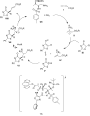
Scheme 17: Proposed mechanism for the C6-catalyzed γ-addition of thiazol-4(5H)-one to allenoates. Adapted from ...

Scheme 18: Catalytic enantioselective α-amination of thiazolones promoted by ureidopeptide like catalysts C5 a...

Scheme 19: Iridium-catalized asymmetric allyllation of substituted oxazol-4(5H)-ones and thiazol-4(5H)-ones pr...
(Thio)urea-mediated synthesis of functionalized six-membered rings with multiple chiral centers
- Giorgos Koutoulogenis,
- Nikolaos Kaplaneris and
- Christoforos G. Kokotos
Beilstein J. Org. Chem. 2016, 12, 462–495, doi:10.3762/bjoc.12.48
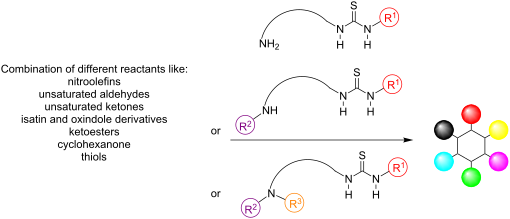
- bifunctional thiourea 57 [55]. A wide range of azlactones 112 were tested, as well as a plethora of o-hydroxychalcone derivatives 111, providing the products in good to excellent yield and good to excellent stereoselectivity (Scheme 36). The authors proposed that azlactones are deprotonated by the tertiary

Graphical Abstract

Scheme 1: Activation of carbonyl compounds via enamine and iminium intermediates [2].

Scheme 2: Electronic and steric interactions present in enamine activation mode [2].

Scheme 3: Electrophilic activation of carbonyl compounds by a thiourea moiety.

Scheme 4: Asymmetric synthesis of dihydro-2H-pyran-6-carboxylate 3 using organocatalyst 4 [16].

Scheme 5: Possible hydrogen-bonding for the reaction of (E)-methyl 2-oxo-4-phenylbut-3-enoate [16].

Scheme 6: Asymmetric desymmetrization of 4,4-cyclohexadienones using the Michael addition reaction with malon...

Scheme 7: The enantioselective synthesis of α,α-disubstituted cycloalkanones using catalyst 11 [18].

Scheme 8: The enantioselective synthesis of indolo- and benzoquinolidine compounds through aza-Diels–Alder re...

Scheme 9: Enantioselective [5 + 2] cycloaddition [20].

Scheme 10: Asymmetric synthesis of oxazine derivatives 26 [21].

Scheme 11: Asymmetric synthesis of bicyclo[3.3.1]nonadienone, core 30 present in (−)-huperzine [22].

Scheme 12: Asymmetric inverse electron-demand Diels-Alder reaction catalyzed by amine-thiourea 34 [23].

Scheme 13: Asymmetric entry to morphan skeletons, catalyzed by amine-thiourea 37 [24].

Scheme 14: Asymmetric transformation of (E)-2-nitroallyl acetate [25].

Scheme 15: Proposed way of activation.

Scheme 16: Asymmetric synthesis of nitrobicyclo[3.2.1]octan-2-one derivatives [26].

Scheme 17: Asymmetric tandem Michael–Henry reaction catalyzed by 50 [27].

Scheme 18: Asymmetric Diels–Alder reactions of 3-vinylindoles 51 [29].

Scheme 19: Proposed transition state and activation mode of the asymmetric Diels–Alder reactions of 3-vinylind...

Scheme 20: Desymmetrization of meso-anhydrides by Chin, Song and co-workers [30].

Scheme 21: Desymmetrization of meso-anhydrides by Connon and co-workers [31].

Scheme 22: Asymmetric intramolecular Michael reaction [32].

Scheme 23: Asymmetric addition of malonate to 3-nitro-2H-chromenes 67 [33].

Scheme 24: Intramolecular desymmetrization through an intramolecular aza-Michael reaction [34].

Scheme 25: Enantioselective synthesis of (−)-mesembrine [34].

Scheme 26: A novel asymmetric Michael–Michael reaction [35].

Scheme 27: Asymmetric three-component reaction catalyzed by Takemoto’s catalyst 77 [46].

Scheme 28: Asymmetric domino Michael–Henry reaction [47].

Scheme 29: Asymmetric domino Michael–Henry reaction [48].

Scheme 30: Enantioselective synthesis of derivatives of 3,4-dihydro-2H-pyran 89 [49].

Scheme 31: Asymmetric addition of α,α-dicyano olefins 90 to 3-nitro-2H-chromenes 91 [50].

Scheme 32: Asymmetric three-component reaction producing 2,6-diazabicyclo[2.2.2]octanones 95 [51].

Scheme 33: Asymmetric double Michael reaction producing substituted chromans 99 [52].

Scheme 34: Enantioselective synthesis of multi-functionalized spiro oxindole dienes 106 [53].

Scheme 35: Organocatalyzed Michael aldol cyclization [54].

Scheme 36: Asymmetric synthesis of dihydrocoumarins [55].

Scheme 37: Asymmetric double Michael reaction en route to tetrasubstituted cyclohexenols [56].

Scheme 38: Asymmetric synthesis of α-trifluoromethyl-dihydropyrans 121 [58].

Scheme 39: Tyrosine-derived tertiary amino-thiourea 123 catalyzed Michael hemiaketalization reaction [59].

Scheme 40: Enantioselective entry to bicyclo[3.2.1]octane unit [60].

Scheme 41: Asymmetric synthesis of spiro[4-cyclohexanone-1,3’-oxindoline] 126 [61].

Scheme 42: Kinetic resolution of 3-nitro-2H-chromene 130 [62].

Scheme 43: Asymmetric synthesis of chromanes 136 [63].

Scheme 44: Wang’s utilization of β-unsaturated α-ketoesters 87 [64,65].

Scheme 45: Asymmetric entry to trifluoromethyl-substituted dihydropyrans 144 [66].

Scheme 46: Phenylalanine-derived thiourea-catalyzed domino Michael hemiaketalization reaction [67].

Scheme 47: Asymmetric synthesis of α-trichloromethyldihydropyrans 149 [68].

Scheme 48: Takemoto’s thiourea-catalyzed domino Michael hemiaketalization reaction [69].

Scheme 49: Asymmetric synthesis of densely substituted cyclohexanes [70].

Scheme 50: Enantioselective synthesis of polysubstituted chromeno [4,3-b]pyrrolidine derivatines 157 [71].

Scheme 51: Enantioselective synthesis of spiro-fused cyclohexanone/5-oxazolone scaffolds 162 [72].

Scheme 52: Utilizing 2-mercaptobenzaldehydes 163 in cascade processes [73,74].

Scheme 53: Proposed transition state of the initial sulfa-Michael step [74].

Scheme 54: Asymmetric thiochroman synthesis via dynamic kinetic resolution [75].

Scheme 55: Enantioselective synthesis of thiochromans [76].

Scheme 56: Enantioselective synthesis of chromans and thiochromans synthesis [77].

Scheme 57: Enantioselective sulfa-Michael aldol reaction en route to spiro compounds [78].

Scheme 58: Enantioselective synthesis of 4-aminobenzo(thio)pyrans 179 [79].

Scheme 59: Asymmetric synthesis of tetrahydroquinolines [80].

Scheme 60: Novel asymmetric Mannich–Michael sequence producing tetrahydroquinolines 186 [81].

Scheme 61: Enantioselective synthesis of biologically interesting chromanes 190 and 191 [82].

Scheme 62: Asymmetric tandem Henry–Michael reaction [83].

Scheme 63: An asymmetric synthesis of substituted cyclohexanes via a dynamic kinetic resolution [84].

Scheme 64: Three component-organocascade initiated by Knoevenagel reaction [85].

Scheme 65: Asymmetric Michael reaction catalyzed by catalysts 57 and 211 [86].

Scheme 66: Proposed mechanism for the asymmetric Michael reaction catalyzed by catalysts 57 and 211 [86].

Scheme 67: Asymmetric facile synthesis of hexasubstituted cyclohexanes [87].

Scheme 68: Dual activation catalytic mechanism [87].

Scheme 69: Asymmetric Michael–Michael/aldol reaction catalyzed by catalysts 57, 219 and 214 [88].

Scheme 70: Asymmetric synthesis of substituted cyclohexane derivatives, using catalysts 57 and 223 [89].

Scheme 71: Asymmetric synthesis of substituted piperidine derivatives, using catalysts 223 and 228 [90].

Scheme 72: Asymmetric synthesis of endo-exo spiro-dihydropyran-oxindole derivatives catalyzed by catalyst 232 [91]....

Scheme 73: Asymmetric synthesis of carbazole spiroxindole derivatives, using catalyst 236 [92].

Scheme 74: Enantioselective formal [2 + 2] cycloaddition of enal 209 with nitroalkene 210, using catalysts 23 ...

Scheme 75: Asymmetric synthesis of polycyclized hydroxylactams derivatives, using catalyst 242 [94].

Scheme 76: Asymmetric synthesis of product 243, using catalyst 246 [95].

Scheme 77: Formation of the α-stereoselective acetals 248 from the corresponding enol ether 247, using catalys...

Scheme 78: Selective glycosidation, catalyzed by Shreiner’s catalyst 23 [97].
Cupreines and cupreidines: an established class of bifunctional cinchona organocatalysts
- Laura A. Bryant,
- Rossana Fanelli and
- Alexander J. A. Cobb
Beilstein J. Org. Chem. 2016, 12, 429–443, doi:10.3762/bjoc.12.46
- methanol bridge, explaining the need for this as an additive within the reaction to give optimal stereoselectivities. Similarly, Xu and co-workers have used β-ICPD in the cycloaddition between isatin framework 87 and olefinic azlactones 88 to give adduct 89 (Scheme 21b) [64]. Finally, in a remarkable

Graphical Abstract

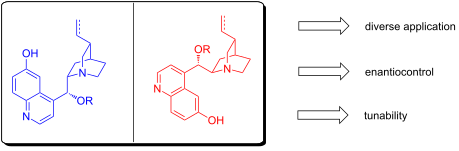
Figure 1: The structural diversity of the cinchona alkaloids, along with cupreine, cupreidine, β-isoquinidine...

Scheme 1: The original 6’-OH cinchona alkaloid organocatalytic MBH process, showing how the free 6’-OH is ess...

Scheme 2: Use of β-ICPD in an aza-MBH reaction.

Scheme 3: (a) The isatin motif is a common feature for MBH processes catalyzed by β-ICPD, as demonstrated by ...

Scheme 4: (a) Chen’s asymmetric MBH reaction. Good selectivity was dependent upon the presence of (R)-BINOL (...

Scheme 5: Lu and co-workers synthesis of a spiroxindole.

Scheme 6: Kesavan and co-workers’ synthesis of spiroxindoles.

Scheme 7: Frontier’s Nazarov cyclization catalyzed by β-ICPD.

Scheme 8: The first asymmetric nitroaldol process catalyzed by a 6’-OH cinchona alkaloid.

Scheme 9: A cupreidine derived catalyst induces a dynamic kinetic asymmetric transformation.

Scheme 10: Cupreine derivative 38 has been used in an organocatalytic asymmetric Friedel–Crafts reaction.

Scheme 11: Examples of 6’-OH cinchona alkaloid catalyzed processes include: (a) Deng’s addition of dimethyl ma...

Scheme 12: A diastereodivergent sulfa-Michael addition developed by Melchiorre and co-workers.

Scheme 13: Melchiorre’s vinylogous Michael addition.

Scheme 14: Simpkins’s TKP conjugate addition reactions.

Scheme 15: Hydrocupreine catalyst HCPN-59 can be used in an asymmetric cyclopropanation.

Scheme 16: The hydrocupreine and hydrocupreidine-based catalysts HCPN-65 and HCPD-67 demonstrate the potential...

Scheme 17: Jørgensen’s oxaziridination.

Scheme 18: Zhou’s α-amination using β-ICPD.

Scheme 19: Meng’s cupreidine catalyzed α-hydroxylation.

Scheme 20: Shi’s biomimetic transamination process for the synthesis of α-amino acids.

Scheme 21: β-Isocupreidine catalyzed [4 + 2] cycloadditions.

Scheme 22: β-Isocupreidine catalyzed [2+2] cycloaddition.

Scheme 23: A domino reaction catalyst by cupreidine catalyst CPD-30.

Scheme 24: (a) Dixon’s 6’-OH cinchona alkaloid catalyzed oxidative coupling. (b) An asymmetric oxidative coupl...
A convergent, umpoled synthesis of 2-(1-amidoalkyl)pyridines
- Tarn C. Johnson and
- Stephen P. Marsden
Beilstein J. Org. Chem. 2016, 12, 1–4, doi:10.3762/bjoc.12.1
- of bioactive structures. Keywords: azlactones; pyridines; pyridine N-oxides; substitution; Introduction Pyridines constitute the most frequently observed class of heterocycles found in pharmaceutical products [1]. As such, there is significant demand for synthetic methods that enable access both to
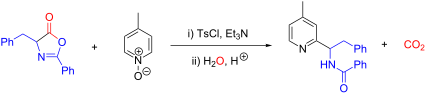
- readily-available azlactones and pyridine N-oxides in the presence of p-toluenesulfonyl chloride as an activating agent, followed by opening of the arylated azlactone intermediate with nucleophiles such as alcohols, primary and secondary amines, and N,O-dialkylhydroxylamines [21] (Scheme 1). However, in
- methods. Given the ready availability of azlactones bearing differential functionality at C2 and C4, a wide range of 2-(1-amidoalkyl)pyridines should become available and we elected to exemplify this process. Substrate scope We first examined variation of azlactone substituents in their reaction with 4

Graphical Abstract

Figure 1: Examples of naturally-occurring and synthetic bioactive (amidoalkyl)pyridines.

Scheme 1: Discovery of the azlactone arylation/decarboxylative hydrolysis approach to 2-(1-amidoalkyl)pyridin...
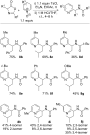
Scheme 2: Substrate scope of the direct amidoalkylation of pyridine N-oxides.
Chiral phosphines in nucleophilic organocatalysis
- Yumei Xiao,
- Zhanhu Sun,
- Hongchao Guo and
- Ohyun Kwon
Beilstein J. Org. Chem. 2014, 10, 2089–2121, doi:10.3762/bjoc.10.218
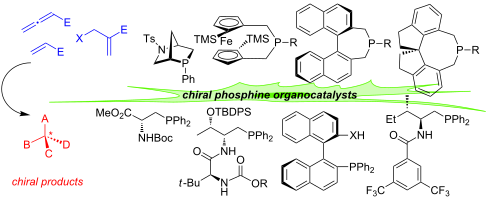
- /alcoholysis reaction. Alkylidene azlactones, among the most widely used starting materials for the syntheses of quaternary amino acids, were cyclized with ethyl allenoate and, subsequently, alcoholyzed in situ to afford highly functionalized, optically active amino esters in moderate to good yields and with
- many have been applied in medicine and other fields. Using the axially chiral spirophosphine D1, Shi and co-workers accomplished highly regioselective, diastereoselective, and enantioselective [3 + 2] annulations of a series of alkylidene azlactones with allenoates (Scheme 18) [49]. Under mild

Graphical Abstract

Figure 1: Cyclic chiral phosphines based on bridged-ring skeletons.

Figure 2: Cyclic chiral phosphines based on binaphthyl skeletons.

Figure 3: Cyclic chiral phosphines based on ferrocene skeletons.

Figure 4: Cyclic chiral phosphines based on spirocyclic skeletons.

Figure 5: Cyclic chiral phosphines based on phospholane ring skeletons.

Figure 6: Acyclic chiral phosphines.

Figure 7: Multifunctional chiral phosphines based on binaphthyl skeletons.

Figure 8: Multifunctional chiral phosphines based on amino acid skeletons.

Scheme 1: Asymmetric [3 + 2] annulations of allenoates with electron-deficient olefins, catalyzed by the chir...

Scheme 2: Asymmetric [3 + 2] annulations of allenoate and enones, catalyzed by the chiral binaphthyl-based ph...

Scheme 3: Asymmetric [3 + 2] annulations of N-substituted olefins and allenoates, catalyzed by the chiral bin...

Scheme 4: Asymmetric [3 + 2] annulations of 2-aryl-1,1-dicyanoethylenes with ethyl allenoate, catalyzed by th...

Scheme 5: Asymmetric [3 + 2] annulations of 3-alkylideneindolin-2-ones with ethyl allenoate, catalyzed by the...

Scheme 6: Asymmetric [3 + 2] annulations of 2,6-diarylidenecyclohexanones with allenoates, catalyzed by the c...

Scheme 7: Asymmetric [3 + 2] annulations of allenoate with alkylidene azlactones, catalyzed by the chiral bin...

Scheme 8: Asymmetric [3 + 2] annulations of C60 with allenoates, catalyzed by the chiral phosphine B6.

Scheme 9: Asymmetric [3 + 2] annulations of α,β-unsaturated esters and ketones with an allenoate, catalyzed b...

Scheme 10: Asymmetric [3 + 2] annulations of exocyclic enones with allenoates, catalyzed by the ferrocene-modi...

Scheme 11: Asymmetric [3 + 2] annulations of enones with an allenylphosphonate, catalyzed by the ferrocene-mod...

Scheme 12: Asymmetric [3 + 2] annulations of 3-alkylidene-oxindoles with ethyl allenoate, catalyzed by the fer...

Scheme 13: Asymmetric [3 + 2] annulations of dibenzylideneacetones with ethyl allenoate, catalyzed by the ferr...

Scheme 14: Asymmetric [3 + 2] annulations of trisubstituted alkenes with ethyl allenoate, catalyzed by the fer...

Scheme 15: Asymmetric [3 + 2] annulations of 2,6-diarylidenecyclohexanones with allenoates, catalyzed by the f...

Scheme 16: Asymmetric [3 + 2] annulations of α,β-unsaturated ketones with ethyl allenoates, catalyzed by the f...

Scheme 17: Asymmetric [3 + 2] annulations of α,β-unsaturated esters with allenoates, catalyzed by the ferrocen...

Scheme 18: Asymmetric [3 + 2] annulations of alkylidene azlactones with allenoates, catalyzed by the chiral sp...

Scheme 19: Asymmetric [3 + 2] annulations of α-trimethylsilyl allenones and electron-deficient olefins, cataly...

Scheme 20: Asymmetric [3 + 2] annulations of α,β-unsaturated ketones with an allenone, catalyzed by the chiral...

Scheme 21: Asymmetric [3 + 2] annulations of cyclic enones with allenoates, catalyzed by the chiral α-amino ac...

Scheme 22: Asymmetric [3 + 2] annulations of arylidenemalononitriles and analogues with an allenoate, catalyze...

Scheme 23: Asymmetric [3 + 2] annulations of α,β-unsaturated esters with an allenoate, catalyzed by the chiral...

Scheme 24: Asymmetric [3 + 2] annulations of 3,5-dimethyl-1H-pyrazole-derived acrylamides with an allenoate, c...

Scheme 25: Asymmetric [3 + 2] annulations of maleimides with allenoates, catalyzed by the chiral phosphine H10....

Scheme 26: Asymmetric [3 + 2] annulations of α-substituted acrylates with allenoate, catalyzed by the chiral p...

Scheme 27: Asymmetric [3 + 2] annulation of an N-tosylimine with an allenoate, catalyzed by the chiral phosphi...

Scheme 28: Asymmetric [3 + 2] annulations of N-tosylimines with an allenoate, catalyzed by the chiral phosphin...

Scheme 29: Asymmetric [3 + 2] annulations of N-tosylimines with an allenoate, catalyzed by the chiral phosphin...

Scheme 30: Asymmetric [3 + 2] annulations of N-diphenylphosphinoyl aromatic imines with butynoates, catalyzed ...

Scheme 31: Asymmetric [3 + 2] annulations of N-tosylimines with allenylphosphonates, catalyzed by the chiral p...

Scheme 32: Asymmetric [3 + 2] annulation of an N-tosylimine with an allenoate, catalyzed by the chiral phosphi...

Scheme 33: Asymmetric [3 + 2] annulations of N-diphenylphosphinoyl aromatic imines with allenoates (top), cata...

Scheme 34: Asymmetric [3 + 2] annulation of N-diphenylphosphinoylimines with allenoates, catalyzed by the chir...

Scheme 35: Asymmetric [3 + 2] annulation of an azomethine imine with an allenoate, catalyzed by the chiral pho...

Scheme 36: Asymmetric [3 + 2] annulations between α,β-unsaturated esters/ketones and 3-butynoates, catalyzed b...

Scheme 37: Asymmetric intramolecular [3 + 2] annulations of electron-deficient alkenes and MBH carbonates, cat...

Scheme 38: Asymmetric [3 + 2] annulations of methyleneindolinone and methylenebenzofuranone derivatives with M...

Scheme 39: Asymmetric [3 + 2] annulations of activated isatin-based alkenes with MBH carbonates, catalyzed by ...

Scheme 40: Asymmetric [3 + 2] annulations of maleimides with MBH carbonates, catalyzed by the chiral phosphine ...

Scheme 41: A series of [3 + 2] annulations of various activated alkenes with MBH carbonates, catalyzed by the ...

Scheme 42: Asymmetric [3 + 2] annulations of an alkyne with isatins, catalyzed by the chiral phosphine F1.

Scheme 43: Asymmetric [4 + 2] annulations catalyzed by the chiral phosphine B1.

Scheme 44: Asymmetric [4 + 2] annulations catalyzed by the chiral phosphine H5.

Scheme 45: Asymmetric [4 + 2] annulations catalyzed by the chiral phosphines H13 and H12.

Scheme 46: Asymmetric [4 + 2] annulations catalyzed by the chiral phosphine H6.

Scheme 47: Kerrigan’s [2 + 2] annulations of ketenes with imines, catalyzed by the chiral phosphine B7.

Scheme 48: Asymmetric [4 + 1] annulations, catalyzed by the chiral phosphine G6.

Scheme 49: Asymmetric homodimerization of ketenes, catalyzed by the chiral phosphine F5 and F6.

Scheme 50: Aza-MBH/Michael reactions, catalyzed by the chiral phosphine G1.

Scheme 51: Tandem RC/Michael additions, catalyzed by the chiral phosphine H14.

Scheme 52: Intramolecular tandem RC/Michael addition, catalyzed by the chiral phosphine H15.

Scheme 53: Double-Michael addition, catalyzed by the chiral aminophosphine G9.

Scheme 54: Tandem Michael addition/Wittig olefinations, mediated by the chiral phosphine BIPHEP.

Scheme 55: Asymmetric Michael additions, catalyzed by the chiral phosphines H7, H8, and H9.

Scheme 56: Asymmetric γ-umpolung additions, catalyzed by the chiral phosphine A1.

Scheme 57: Asymmetric γ-umpolung additions, catalyzed by the chiral phosphines E2 and E3.

Scheme 58: Intramolecular γ-additions of hydroxy-2-alkynoates, catalyzed by the chiral phosphine D2.

Scheme 59: Intra-/intermolecular γ-additions, catalyzed by the chiral phosphine D2.

Scheme 60: Intermolecular γ-additions, catalyzed by the chiral phosphines B5 and B3.

Scheme 61: Intermolecular γ-additions, catalyzed by the chiral phosphines E6 and B4.

Scheme 62: Asymmetric allylic substitution of MBH acetates, catalyzed by the chiral phosphine G2.

Scheme 63: Allylic substitutions between MBH acetates or carbonates and an array of nucleophiles, catalyzed by...

Scheme 64: Asymmetric acylation of diols, catalyzed by the chiral phosphines E4 and E5.

Scheme 65: Kinetic resolution of secondary alcohols, catalyzed by the chiral phosphine E8 and E9.
Synthetic scope and DFT analysis of the chiral binap–gold(I) complex-catalyzed 1,3-dipolar cycloaddition of azlactones with alkenes
- María Martín-Rodríguez,
- Luis M. Castelló,
- Carmen Nájera,
- José M. Sansano,
- Olatz Larrañaga,
- Abel de Cózar and
- Fernando P. Cossío
Beilstein J. Org. Chem. 2013, 9, 2422–2433, doi:10.3762/bjoc.9.280
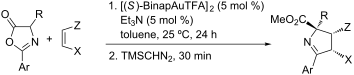
- , Universidad del País Vasco, Apdo. 1072, E-20018 San Sebastián, Spain IKERBASQUE, Basque Foundation for Science, 48011 Bilbao, Spain 10.3762/bjoc.9.280 Abstract The 1,3-dipolar cycloaddition between glycine-derived azlactones with maleimides is efficiently catalyzed by the dimeric chiral complex [(Sa
- (azlactones) are suitable heterocycles to perform this C–C bond generation based strategy affording both quaternized and non quaternized α-amino acid derivatives [2][3][4][5]. The preparation of azlactones is very simple and their reactivity is very diverse due to their functional groups [2][3][4][5]. Many
- electrophilic alkenes have not been exploited. Toste´s group published an efficient 1,3-dipolar cycloaddition (1,3-DC) between alanine, phenylalanine and allylglycine derived azlactones with maleimides and acrylates employing dimetallic (S)-Cy-Segphos(AuOBz)2 complex 1 as a catalyst (2 mol %) in the absence of

Graphical Abstract
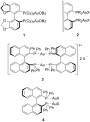
Figure 1: Chiral gold(I) complexes employed in 1,3-DC involving azomethine ylides.

Scheme 1: 1,3-DC of azlactone 5a and NPM.

Scheme 2: General 1,3-DC between azlactones 5 with maleimides.

Scheme 3: Formation of the amide 8aa.

Figure 2: Positive non-linear effects (NLE) observed in 1,3-DC of azlactone 7aa and NPM.

Figure 3: Main geometrical features and relative Gibbs free energies (in kcal mol−1 at 298 K) of complexes [(S...

Figure 4: Main geometrical features and relative Gibbs free energies (in kcal mol−1) of the less energetic tr...

Scheme 4: Reaction Gibbs free energy associated with the 1,3-DC of 5aa and NPM catalyzed by (Sa)-Binap gold d...

Scheme 5: ΔG calculation for the recovery of the catalytic active species.

Scheme 6: 1,3-DC of azlactone 10 and tert-butyl acrylate.

Figure 5: (A) Schematic representation of the model gold(I) ylides. (B) HOMO of the ylides and expansion orbi...

Figure 6: Main geometrical features and relative Gibbs free energies (in kcal mol−1 at 298 K) of complexes [{(...
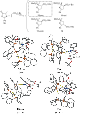
Figure 7: Main geometrical features and relative Gibbs free energies (in kcal mol−1) of the less energetic tr...

Scheme 7: Reduction of heterocycle 7aa under different conditions.

Scheme 8: Double 1,3-DC to give polycycle 15.

Scheme 9: Reaction between 7aa and nitrostyrene.
Chiral gold(I) vs chiral silver complexes as catalysts for the enantioselective synthesis of the second generation GSK-hepatitis C virus inhibitor
- María Martín-Rodríguez,
- Carmen Nájera,
- José M. Sansano,
- Abel de Cózar and
- Fernando P. Cossío
Beilstein J. Org. Chem. 2011, 7, 988–996, doi:10.3762/bjoc.7.111
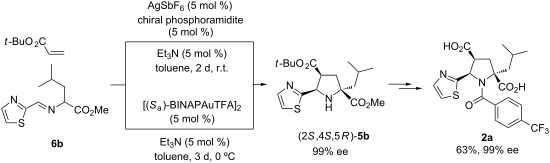
- been so extensively explored. Reports of chiral transformations involving azlactones [32][33] and iminoesters 6 [34], which employed chiral diphosphines and gold(I) salts, have been published showing very good endo-diastereoselectivities and moderate to excellent enantioselectivities. However, the use

Graphical Abstract

Figure 1: More active GSK HCV inhibitors.

Scheme 1: Retrosynthetic analysis of antiviral structures.
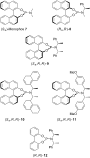
Figure 2: Chiral phosphoramidites tested in this study.

Scheme 2: Optimization of the reaction conditions for the synthesis of the key intermediate 5b.

Scheme 3: Preparation of the enantiomerically enriched 5b.

Scheme 4: Total synthesis of antiviral agent 2b.

Figure 3: Gibbs activation energy and main geometrical features of the computed ylide and transition structur...



