Search results
Search for "circularly polarized luminescence (CPL)" in Full Text gives 17 result(s) in Beilstein Journal of Organic Chemistry.
Recent advances in the stereoselective synthesis of distal biaxially chiral molecules
Beilstein J. Org. Chem. 2026, 22, 461–479, doi:10.3762/bjoc.22.34
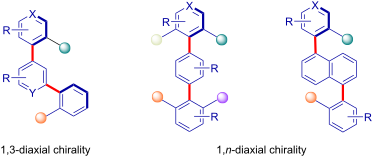
- , investigation of the photophysical properties revealed that the enantiomers exhibited promising features for chiral functional materials, including circularly polarized luminescence (CPL). More recently, Tu’s group described a cobalt-catalyzed direct oxidative coupling of phenols, enabling the synthesis of


Electrosynthetic access to unsymmetrical oxaza[8]helicenes with high chiral stability and strong circularly polarized luminescence (CPL)
Beilstein J. Org. Chem. 2026, 22, 372–382, doi:10.3762/bjoc.22.25
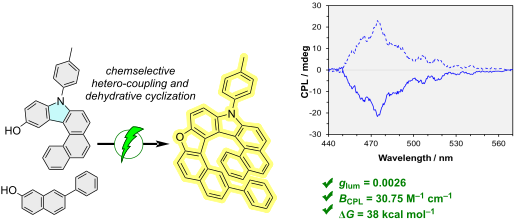
- frontier orbitals, intermolecular interactions, and excited-state dynamics, frequently enhancing fluorescence efficiency and circularly polarized luminescence (CPL) [16][17][18][19][20][21][22]. Consequently, heterohelicenes have emerged as attractive platforms for optoelectronic devices, 3D displays




Screwing the helical chirality through terminal peri-functionalization
Beilstein J. Org. Chem. 2026, 22, 205–212, doi:10.3762/bjoc.22.14
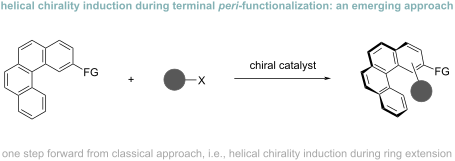
- circularly polarized organic light emitting diodes (OLEDs), circularly polarized luminescence (CPL), and photonic devices, etc., due to their strong circular dichroism and circularly polarized luminescence [15][16]. Their well-defined three-dimensional chiral environment also makes helicenes useful in


Design and synthesis of an axially chiral platinum(II) complex and its CPL properties in PMMA matrix
Beilstein J. Org. Chem. 2026, 22, 143–150, doi:10.3762/bjoc.22.7
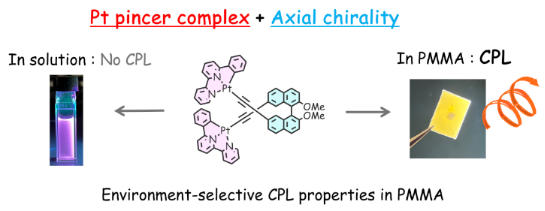
- two platinum(II) chromophore units, leading to the chiroptical properties in the MLCT region through exciton coupling under restricted molecular motion. Keywords: axial chirality; chiral chemistry; circularly polarized luminescence (CPL); phosphorescence; platinum(II) complex; Introduction
- aim to explore the development of materials exhibiting circularly polarized luminescence (CPL). However, most reported chiral pincer-type platinum(II) complexes utilize point chirality as the chiral element. For instance, Zhong and co-workers reported a chiral platinum(II) complex bearing a leucine


Synthesis of N-doped chiral macrocycles by regioselective palladium-catalyzed arylation
Beilstein J. Org. Chem. 2025, 21, 1917–1923, doi:10.3762/bjoc.21.149
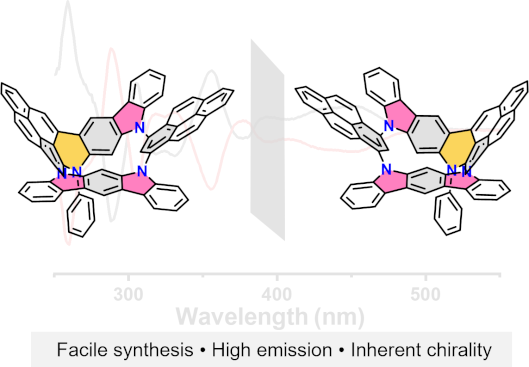
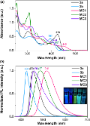
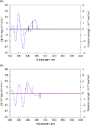
- through circular dichroism (CD) and circularly polarized luminescence (CPL) spectroscopy. Results and Discussion The syntheses of N-doped macrocycles MC1–3 are shown in Scheme 1. Diamines 1a and 1b were synthesized by double Pd-catalyzed C–N coupling reaction of 4,6-dichlorobenzene-1,3-diamine with phenyl




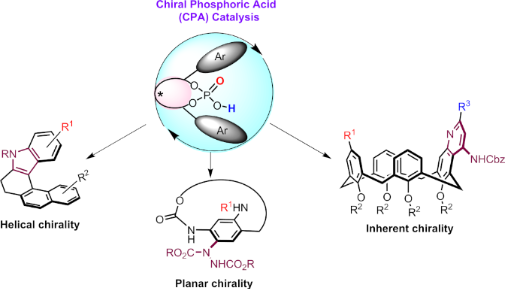
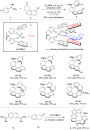
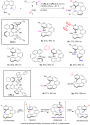
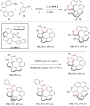
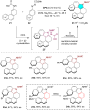
Chiral phosphoric acid-catalyzed asymmetric synthesis of helically chiral, planarly chiral and inherently chiral molecules
Beilstein J. Org. Chem. 2025, 21, 1864–1889, doi:10.3762/bjoc.21.145
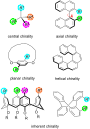
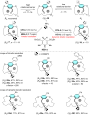
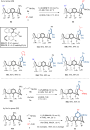
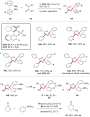
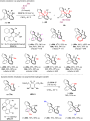
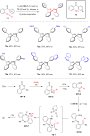
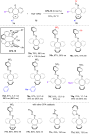
- molecular platforms in various applications, such as circularly polarized luminescence (CPL) materials, chiral liquid crystals and asymmetric catalysis. Currently, the asymmetric catalytic synthesis of helicenes predominantly revolves around transition metal-catalyzed asymmetric annulation reactions











Synthesis of optically active folded cyclic dimers and trimers
Beilstein J. Org. Chem. 2025, 21, 1603–1612, doi:10.3762/bjoc.21.124

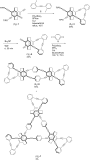
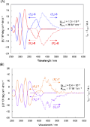
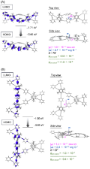
- structures, such as one-handed helical and propeller-shaped structures, can be constructed by folding the π-conjugated system using [2.2]paracyclophane as the chiral crossing unit, leading to circularly polarized luminescence (CPL) properties. Chiral cyclic dimers and trimers were synthesized using planar
- with CHCl3 as a solvent at room temperature. Circularly polarized luminescence (CPL) spectra were recorded on a JASCO CPL-300 with CHCl3 as a solvent at room temperature. Materials Commercially available compounds used without purification are as follows: Pd2(dba)3, SPhos (2-dicyclohexylphosphino-2',6
- , enantiopure [2.2]paracyclophane was used as a chiral monomer to prepare optically active conjugated polymers and cyclic trimers [21], in which π-electron systems were stacked to form zigzag and triangular structures, respectively. The conjugated polymers and cyclic trimers exhibited circularly polarized


Wittig reaction of cyclobisbiphenylenecarbonyl
Beilstein J. Org. Chem. 2025, 21, 1454–1461, doi:10.3762/bjoc.21.107
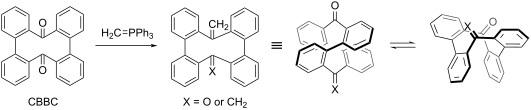
- . Consequently, figure-eight molecules often exhibit fascinating properties, such as unusual rearrangement reactions [9] and efficient circularly polarized luminescence (CPL) [10][11][12]. Cyclobisbiphenylenecarbonyl (CBBC) 1 is a figure-eight macrocycle, which is readily synthesized from commercially available
- peripherally modified CBBC derivatives have also been prepared and were shown to have fascinating properties [17][18][19][20][21]. For example, carbazole-substituted donor–acceptor-type CBBC derivatives exhibit both efficient circularly polarized luminescence (CPL) and thermally activated delayed fluorescence



Advances in nitrogen-containing helicenes: synthesis, chiroptical properties, and optoelectronic applications
Beilstein J. Org. Chem. 2025, 21, 1422–1453, doi:10.3762/bjoc.21.106
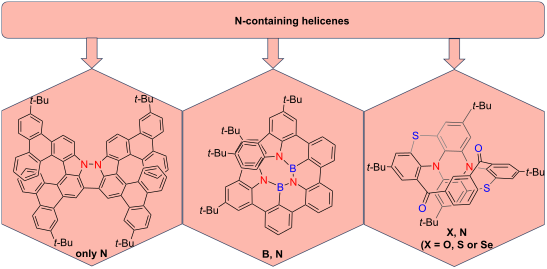
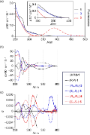
- versatile scaffolds for chiral optoelectronic applications. The incorporation of nitrogen enables precise modulation of electronic structures, redox characteristics, and intermolecular interactions, thereby enhancing performance in circularly polarized luminescence (CPL), thermally activated delayed
- , emphasizing their potential as next-generation chiral optoelectronic materials and outlining future directions toward multifunctional integration and quantum technological applications. Keywords: azahelicene; chiroptical properties; circularly polarized luminescence (CPL); heteroatom containing
- in applications such as organic light-emitting diodes (OLEDs) [8], circularly polarized luminescence (CPL) [9], and chiral photocatalysis [10]. In the past decade, heteroatom-containing helicenes have attracted increasing attention due to their tunable optoelectronic properties and potential

Switchable molecular tweezers: design and applications
Beilstein J. Org. Chem. 2024, 20, 504–539, doi:10.3762/bjoc.20.45
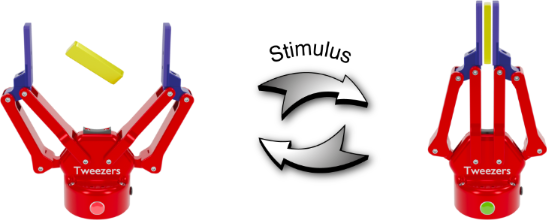
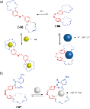
- enantiomers (P,P) and (M,M) were separated by chiral HPLC and displayed opposite circularly polarized luminescence (CPL) and electronic circular dichroism (ECD) properties. The addition of ZnCl2 switched the system from a compact conformation to an extended conformation, resulting in a modulation of the




Construction of hexabenzocoronene-based chiral nanographenes
Beilstein J. Org. Chem. 2023, 19, 736–751, doi:10.3762/bjoc.19.54
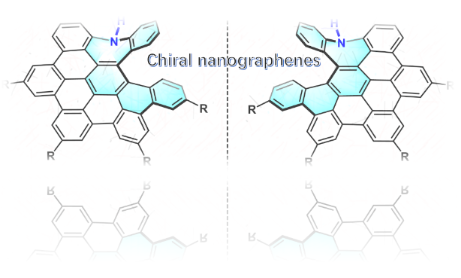
- to the molecules which cannot be superimposed on their own mirror image. Nanomaterials with chiroptical properties have shown potential applications in different fields such as optical devices, polarization-based information encryption, circularly polarized luminescence (CPL) lasers, or biosensing
- compound at 200 °C for 5 h, which gives a lower limit to the barrier of racemization of ΔG > 38.3 kcal mol−1 at 473 K. The circularly polarized luminescence (CPL) of these structures were also evaluated with the luminescence dissymmetry factors (glum) values of 4 × 10⁻⁴ for compound 11 and 7 × 10⁻⁴ for
- , respectively by DFT calculation. The enantiopure isomers of the π-extended helicenes were evaluated as excellent circularly polarized luminescence (CPL) emitters with a glum of 7.44 × 10⁻³ for 37, which is around 10-fold higher than 35. Chiral “HBC-dimers” and “HBC trimers” The combination of two or more HBCs


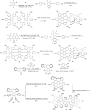


Phenanthridine–pyrene conjugates as fluorescent probes for DNA/RNA and an inactive mutant of dipeptidyl peptidase enzyme
Beilstein J. Org. Chem. 2023, 19, 550–565, doi:10.3762/bjoc.19.40
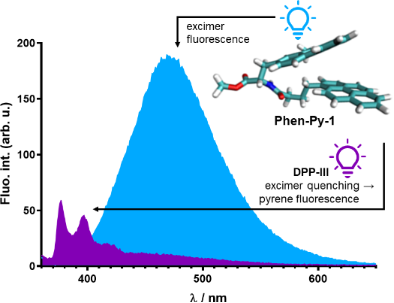
- the pyrene unit as well as combinations of pyrene with other aromatic fluorophores could improve the properties [7]. Recently, Takaishi et al. reported chiral exciplex dyes having pyrenyl, perylenyl, and 4-(dimethylamino)phenyl groups incorporated in their structure, which showed circularly polarized
- luminescence (CPL). The exciplex (excited heterodimer) formed intramolecularly proved to be conformationally rigid and consequently was not sensitive to solvent or temperature [8]. Further, pyrenoimidazole-fused phenanthridines have been reported recently, developed as fluorescence emitters for optoelectronic


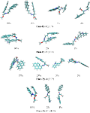


Thiophene/selenophene-based S-shaped double helicenes: regioselective synthesis and structures
Beilstein J. Org. Chem. 2022, 18, 809–817, doi:10.3762/bjoc.18.81
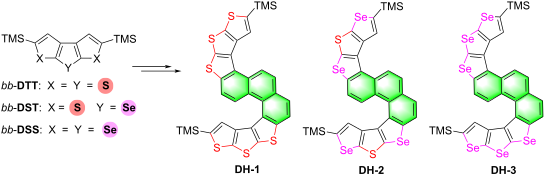
- carbohelicenes has led to the synthesis of double, triple, quadruple, quintuple, and sextuple molecules, the chiro-optical properties of these molecules, such as their circular dichroism (CD) and circularly polarized luminescence (CPL), have also been widely studied [1][2][3][4][5][6][7][8]. The development of


Circularly polarized luminescent systems fabricated by Tröger's base derivatives through two different strategies
Beilstein J. Org. Chem. 2021, 17, 52–57, doi:10.3762/bjoc.17.6
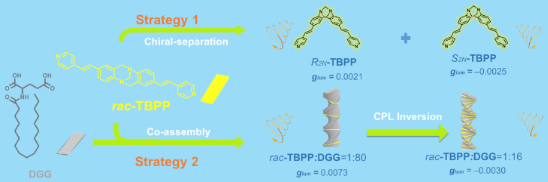
- and applied in practice [4][5][6]. Among them, the fluorescent materials emitting circularly polarized luminescence (CPL) have attracted intensive interest owing to their wide applications in various researching fields including 3D displays, chiroptical materials, and so on [7][8][9][10]. Circular
- dichroism (CD) absorption spectra reflect the chirality of the fluorescent materials in the ground state, and circularly polarized luminescence (CPL) spectra reflect the chirality of fluorescent materials in the excited electronic state. Therefore, the CD and CPL spectrum are the two most important tools to


Bipyrrole boomerangs via Pd-mediated tandem cyclization–oxygenation. Controlling reaction selectivity and electronic properties
Beilstein J. Org. Chem. 2020, 16, 895–903, doi:10.3762/bjoc.16.81
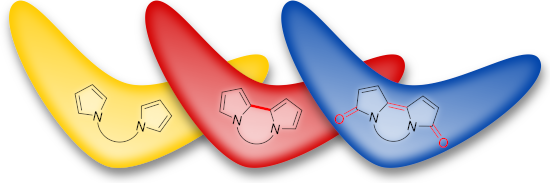
- polarized luminescence (CPL) measurements performed for enantioenriched samples of cNMI3H reveled weak signals of opposite signs, with a maximum at ca. 570 nm consistent with the unpolarized luminescence of this system (Supporting Information File 1, Figure S6). The CPL signals rapidly decayed during the
- cNMI3H were configurationally most stable, showing no loss of their optical activity over the course of several hours in solution. Their CD spectra could be satisfactorily correlated with the TD-DFT data obtained for the cNMI3H enantiomers (Supporting Information File 1, Figures S5 and S22). Circularly




Synthesis and circularly polarized luminescence properties of BINOL-derived bisbenzofuro[2,3-b:3’,2’-e]pyridines (BBZFPys)
Beilstein J. Org. Chem. 2020, 16, 325–336, doi:10.3762/bjoc.16.32
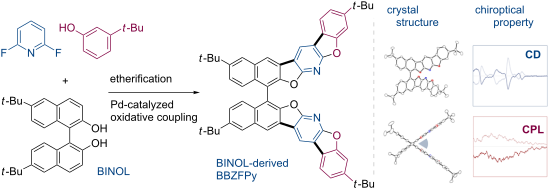
- fluorophore unit in certain light-emitting functional materials (Scheme 1) [14]. Meanwhile, organic optoelectronic materials with circularly polarized luminescence (CPL) characteristics have attracted significant research interests in recent years [18][19][20][21] for their potential applications in three


Polarization spectroscopy methods in the determination of interactions of small molecules with nucleic acids – tutorial
Beilstein J. Org. Chem. 2018, 14, 84–105, doi:10.3762/bjoc.14.5
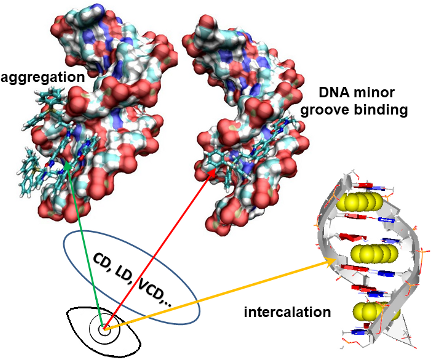
- , which is ideal for the selective study of DNA ligands that strongly change fluorescence upon binding [3]. In a sense complementary to FDCD, also circularly polarized luminescence (CPL) is a chiroptical emission technique which has been employed in the same context for the first time recently [12]. The