


Search results
Search for "dichloroethylene" in Full Text gives 6 result(s) in Beilstein Journal of Organic Chemistry.
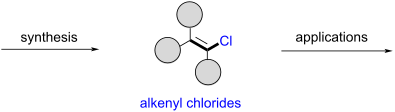
Synthesis and applications of alkenyl chlorides (vinyl chlorides): a review
- Daniel S. Müller
Beilstein J. Org. Chem. 2026, 22, 1–63, doi:10.3762/bjoc.22.1
- -dichloroethylene) to achieve selective monocoupling reactions catalyzed by nickel with Grignard reagents (Scheme 51C) [176]. Building on Sonogashira's findings [177], Linstrumelle also documented the first monoselective coupling of 1,2-dichloroethylenes with alkynes using palladium catalysis (Scheme 51C). Organ
- demonstrated that the use of 4 equivalents of 1,1-dichloroethylene in combination with XPhos or JohnPhos ligands enabled monoselective cross-coupling with alkenyl- and arylboronic acids (Scheme 54B) [184]. Though mechanistically not related it is noteworthy that diazonium salts couple efficiently with alkenyl
- alkenyl chloride product was favored by the utilization of a large excess (100 equivalents) of (E)-1,2-dichloroethylene in the presence of the Grela catalyst 290 [190]. Depending on the substrate, stereoselectivity and yields can vary significantly (Scheme 56). A subsequent study by Johnson confirmed

Graphical Abstract
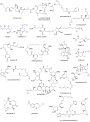
Figure 1: Representative alkenyl chloride motifs in natural products. References: Pinnaic acid [8], haterumalide ...

Figure 2: Representative alkenyl chloride motifs in pharmaceuticals and pesticides. References: clomifene [25], e...
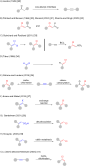
Figure 3: Graphical overview of previously published reviews addressing the synthesis of alkenyl chlorides.

Figure 4: Classification of synthetic approaches to alkenyl chlorides.

Scheme 1: Early works by Friedel, Henry, and Favorsky.

Scheme 2: Product distribution obtained by H NMR integration of crude compound as observed by Kagan and co-wo...

Scheme 3: Side reactions observed for the reaction of 14 with PCl5.

Scheme 4: Only compounds 15 and 18 were observed in the presence of Hünig’s base.

Scheme 5: Efficient synthesis of dichloride 15 at low temperatures.
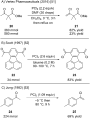
Scheme 6: Various syntheses of alkenyl chlorides on larger scale.

Scheme 7: Scope of the reaction of ketones with PCl5 in boiling cyclohexane.

Scheme 8: Side reactions occur when using excess amounts of PCl5.

Scheme 9: Formation of versatile β-chlorovinyl ketones.

Scheme 10: Mixture of PCl5 and PCl3 used for the synthesis of 49.

Scheme 11: Catechol–PCl3 reagents for the synthesis of alkenyl chlorides.

Scheme 12: (PhO)3P–halogen-based reagents for the synthesis of alkenyl halides.

Scheme 13: Preparation of alkenyl chlorides from alkenyl phosphates.

Scheme 14: Preparation of alkenyl chlorides by treatment of ketones with the Vilsmeier reagent.

Scheme 15: Preparation of electron-rich alkenyl chlorides by treatment of ketones with the Vilsmeier reagent.

Scheme 16: Cu-promoted synthesis of alkenyl chlorides from ketones and POCl3.

Figure 5: GC yield of 9 depending on time and reaction temperature.

Figure 6: Broken reaction flask after attempts to clean the polymerized residue.

Figure 7: GC yield of 9 depending on the amount of CuCl and time.

Scheme 17: Treatment of 4-chromanones with PCl3.

Scheme 18: Synthesis of alkenyl chlorides from the reaction of ketones with acyl chlorides.

Scheme 19: ZnCl2-promoted alkenyl chloride synthesis.
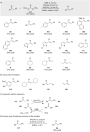
Scheme 20: Regeneration of acid chlorides by triphosgene.

Scheme 21: Alkenyl chlorides from ketones and triphosgene.
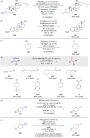
Scheme 22: Various substitution reactions.

Scheme 23: Vinylic Finkelstein reactions reported by Evano and co-workers.

Scheme 24: Challenge of selective monohydrochlorination of alkynes.

Scheme 25: Sterically encumbered internal alkynes furnish the hydrochlorination products in high yield.

Scheme 26: Recent work by Kropp with HCl absorbed on alumina.

Scheme 27: High selectivities for monhydrochlorination with nitromethane/acetic acid as solvent.

Figure 8: Functionalized alkynes which typically afford the monhydrochlorinated products.
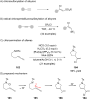
Scheme 28: Related chorosulfonylation and chloroamination reactions.
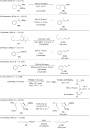
Scheme 29: Reaction of organometallic reagents with chlorine electrophiles.

Scheme 30: Elimination reactions of dichlorides to furnish alkenyl chlorides.

Scheme 31: Elimination reactions of allyl chloride 182 to furnish alkenyl chloride 183.

Scheme 32: Detailed studies by Schlosser on the elimination of dichloro compounds.

Scheme 33: Stereoselective variation caused by change of solvent.

Scheme 34: Elimination of gem-dichloride 189 to afford alkene 190.

Scheme 35: Oxidation of enones to dichlorides and in situ elimination thereof.

Scheme 36: Oxidation of allylic alcohols to dichlorides and in situ elimination thereof.

Scheme 37: Chlorination of styrenes with SOCl2 and elimination thereof.

Scheme 38: Chlorination of styrenes with SOCl2 and elimination thereof.

Scheme 39: Fluorine–chlorine exchange followed by elimination.

Scheme 40: Intercepting cations with alkynes and trapping of the alkenyl cation intermediate with chloride.

Scheme 41: Investigations by Mayr and co-workers.

Scheme 42: In situ activation of benzyl alcohol 230 with BCl3.

Scheme 43: In situ activation of benzylic alcohols with TiCl4.
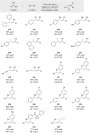
Scheme 44: In situ activation of benzylic alcohols with FeCl3.

Scheme 45: In situ activation of benzylic alcohols with FeCl3.

Scheme 46: In situ activation of aliphatic chlorides and alcohols with ZnCl2, InCl3, and FeCl3.

Scheme 47: In situ generation of benzylic cations and trapping thereof with alkynes.
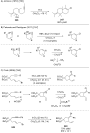
Scheme 48: Intramolecular trapping reactions affording alkenyl halides.

Scheme 49: Intramolecular trapping reactions affording alkenyl chlorides.

Scheme 50: Intramolecular trapping reactions of oxonium and iminium ions affording alkenyl chlorides.
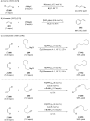
Scheme 51: Palladium and nickel-catalyzed coupling reactions to afford alkenyl chlorides.

Scheme 52: Rhodium-catalyzed couplings of 1,2-trans-dichloroethene with arylboronic esters.

Scheme 53: First report on monoselective coupling reactions for 1,1-dichloroalkenes.

Scheme 54: Negishi’s and Barluenga’s contributions.

Scheme 55: First mechanistic investigation by Johnson and co-workers.

Scheme 56: First successful cross-metathesis with choroalkene 260.

Scheme 57: Subsequent studies by Johnson.
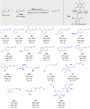
Scheme 58: Hoveyda and Schrock’s work on stereoretentive cross-metathesis with molybdenum-based catalysts.
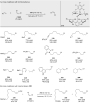
Scheme 59: Related work with (Z)-dichloroethene.
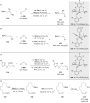
Scheme 60: Further ligand refinement and traceless protection of functional groups with HBpin.

Scheme 61: Alkenyl chloride synthesis by Wittig reaction.

Scheme 62: Alkenyl chloride synthesis by Julia olefination.

Scheme 63: Alkenyl chloride synthesis by reaction of ketones with Mg/TiCl4 mixture.

Scheme 64: Frequently used allylic substitution reactions which lead to alkenyl chlorides.
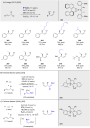
Scheme 65: Enantioselective allylic substitutions.

Scheme 66: Synthesis of alkenyl chlorides bearing an electron-withdrawing group.

Scheme 67: Synthesis of α-nitroalkenyl chlorides from aldehydes.

Scheme 68: Synthesis of alkenyl chlorides via elimination of an in situ generated geminal dihalide.

Scheme 69: Carbenoid approach reported by Pace.

Scheme 70: Carbenoid approach reported by Pace.

Scheme 71: Ring opening of cyclopropenes in the presence of MgCl2.

Scheme 72: Electrophilic chlorination of alkenyl MIDA boronates to Z- or E-alkenyl chlorides.

Scheme 73: Hydroalumination and hydroboration of alkynyl chlorides.

Scheme 74: Carbolithiation of chloroalkynes.

Scheme 75: Chlorination of enamine 420.

Scheme 76: Alkyne synthesis by elimination of alkenyl chlorides.

Scheme 77: Reductive lithiation of akenyl chlorides.

Scheme 78: Reactions of alkenyl chlorides with organolithium reagents.

Scheme 79: Reactions of alkenyl chlorides with organolithium reagents.

Scheme 80: Addition–elimination reaction of alkenyl chloride 9 with organolithium reagents.

Scheme 81: C–H insertions of lithiumcarbenoids.
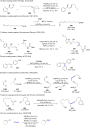
Scheme 82: Pd-catalyzed coupling reactions with alkenyl chlorides as coupling partner.

Scheme 83: Ni-catalyzed coupling of alkenylcopper reagent with alkenyl chloride 183.

Scheme 84: Ni-catalyzed coupling of heterocycle 472 with alkenyl chloride 473.

Scheme 85: Synthesis of α-chloroketones by oxidation of alkenyl chlorides.

Scheme 86: Tetrahalogenoferrate(III)-promoted oxidation of alkenyl chlorides.

Scheme 87: Chlorine–deuterium exchange promoted by a palladium catalyst.

Scheme 88: Reaction of alkenyl chlorides with thiols in the presence of AIBN (azobisisobutyronitrile).

Scheme 89: Chloroalkene annulation.
1,2-Difluoroethylene (HFO-1132): synthesis and chemistry
- Liubov V. Sokolenko,
- Taras M. Sokolenko and
- Yurii L. Yagupolskii
Beilstein J. Org. Chem. 2024, 20, 1955–1966, doi:10.3762/bjoc.20.171
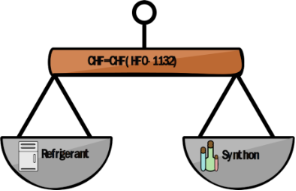
- catalyst (Pd, Pd, Pt, Rh, Ru, Ir, Ni/Cu, Ag, Au, Zn, Cr, Co, Scheme 5) [62][63]. Further, 1,2-Dichloroethylene was reacted with hydrogen fluoride in the presence of metal fluorides or transition metals (Cr, Al, Co, Mn, Ni, Fe) to form 1,2-difluoroethylene (Scheme 6) [56][58]. In patents [59][60], an exotic
- -Difluoroethylene synthesis from HFO-1123. 1,2-Difluoroethylene synthesis from CFC-112 and HCFC-132. 1,2-Difluoroethylene synthesis from HFC-143. 1,2-Difluoroethylene synthesis from HCFC-142 via HCFC-142a. 1,2-Difluoroethylene synthesis from CFO-1112. 1,2-Difluoroethylene synthesis from 1,2-dichloroethylene. 1,2

Graphical Abstract

Scheme 1: 1,2-Difluoroethylene synthesis from HFO-1123.

Scheme 2: 1,2-Difluoroethylene synthesis from CFC-112 and HCFC-132.

Scheme 3: 1,2-Difluoroethylene synthesis from HFC-143.

Scheme 4: 1,2-Difluoroethylene synthesis from HCFC-142 via HCFC-142a.

Scheme 5: 1,2-Difluoroethylene synthesis from CFO-1112.

Scheme 6: 1,2-Difluoroethylene synthesis from 1,2-dichloroethylene.

Scheme 7: 1,2-Difluoroethylene synthesis from perfluoropropyl vinyl ether.

Scheme 8: Deuteration reaction of 1,2-difluoroethylene.

Scheme 9: Halogen addition to 1,2-difluoroethylene.

Scheme 10: Hypohalite addition to 1,2-difluoroethylene.

Scheme 11: N-Bromobis(trifluoromethyl)amine addition to 1,2-difluoroethylene.

Scheme 12: N-Chloroimidobis(sulfonyl fluoride) addition to 1,2-difluoroethylene.

Scheme 13: Trichlorosilane addition to 1,2-difluoroethylene.

Scheme 14: SF5Br addition to 1,2-difluoroethylene.

Scheme 15: PCl3/O2 addition to 1,2-difluoroethylene.

Scheme 16: Reaction of tetramethyldiarsine with 1,2-difluoroethylene.

Scheme 17: Reaction of trichlorofluoromethane with 1,2-difluoroethylene.

Scheme 18: Addition of perfluoroalkyl iodides to 1,2-difluoroethylene.

Scheme 19: Cyclopropanation of 1,2-difluoroethylene.

Scheme 20: Diels–Alder reaction of 1,2-difluoroethylene and hexachlorocyclopentadiene.

Scheme 21: Cycloaddition reaction of 1,2-difluoroethylene and fluorinated ketones.

Scheme 22: Cycloaddition reaction of 1,2-difluoroethylene and perfluorinated aldehydes.

Scheme 23: Photochemical cycloaddition of 1,2-difluoroethylene and hexafluorodiacetyl.

Scheme 24: Reaction of 1,2-difluoroethylene with difluorosilylene.

Scheme 25: Reaction of 1,2-difluoroethylene with aryl iodides.
High-speed C–H chlorination of ethylene carbonate using a new photoflow setup
- Takayoshi Kasakado,
- Takahide Fukuyama,
- Tomohiro Nakagawa,
- Shinji Taguchi and
- Ilhyong Ryu
Beilstein J. Org. Chem. 2022, 18, 152–158, doi:10.3762/bjoc.18.16
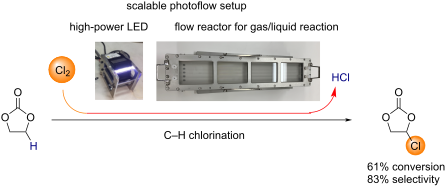
- small amount of undesired 1,2-dichloroethylene carbonate (2’) was detected by GC (Table 1, entry 2). When 0.45 equiv of Cl2 was used, the conversion of 1 increased to 21% and the selectivity of 2 became 91% (Table 1, entry 3). The reaction of 1 with one equivalent of Cl2 gave 2 and 2’ in a ratio of 89

Graphical Abstract

Scheme 1: Radical chain mechanism for a photo-induced C–H chlorination reaction.
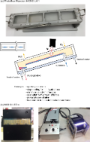
Figure 1: Components for photoflow setup: (a) MiChS LX-1 reactor and (b) MiChS LED-s (365 ± 5 nm, 60–600 W).

Scheme 2: Model reaction: photoflow C–H chlorination of ethylene carbonate (1) to chloroethylene carbonate (2...

Figure 2: Photoflow setup for the C–H chlorination of ethylene carbonate (1).
Learning from B12 enzymes: biomimetic and bioinspired catalysts for eco-friendly organic synthesis
- Keishiro Tahara,
- Ling Pan,
- Toshikazu Ono and
- Yoshio Hisaeda
Beilstein J. Org. Chem. 2018, 14, 2553–2567, doi:10.3762/bjoc.14.232
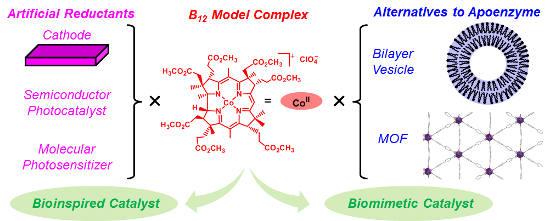
- −1.4 V vs Ag/AgCl in the presence of 1 in DMF/n-Bu4NClO4. The DDT was converted to 1,1-bis(4-chlorophenyl)-2,2-dichloroethane (DDD), 1,1-bis(4-chlorophenyl)-2,2-dichloroethylene (DDE), 1-chloro-2,2-bis(4-chlorophenyl)ethylene (DDMU), and 1,1,4,4-tetrakis(4-chlorophenyl)-2,3-dichloro-2-butene (TTDB, E/Z

Graphical Abstract

Figure 1: (a) Structure and (b) reactivity of B12.

Figure 2: (a) Schematic representation of B12 enzyme-involving systems. (b) Construction of biomimetic and bi...

Scheme 1: (a) Carbon-skeleton rearrangement mediated by a coenzyme B12-depenedent enzyme. (b) Electrochemical...

Scheme 2: Electrochemical carbon-skeleton arrangements mediated by B12 model complexes.

Figure 3: Key electrochemical reactivity of 1 and 2 in methylated forms.

Scheme 3: Carbon-skeleton arrangements mediated by B12-vesicle artificial enzymes.

Scheme 4: Carbon-skeleton arrangements mediated by B12-HSA artificial enzymes.

Scheme 5: Photochemical carbon-skeleton arrangements mediated by B12-Ru@MOF.

Scheme 6: (a) Methyl transfer reaction mediated by B12-dependent methionine synthase. (b) Methyl transfer rea...

Scheme 7: Methyl transfer reaction for the detoxification of inorganic arsenics.

Scheme 8: (a) Dechlorination of 1,1,2,2-tetrarchloroethene mediated by a reductive dehalogenase. (b) Electroc...

Scheme 9: Visible-light-driven dechlorination of DDT using 1 in the presence of photosensitizers.

Scheme 10: 1,2-Migration of a phenyl group mediated by the visible-light-driven catalytic system composed of 1...

Scheme 11: Ring-expansion reactions mediated by the B12-TiO2 hybrid catalyst with UV-light irradiation.
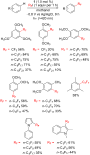
Scheme 12: Trifluoromethylation and perfluoroalkylation of aromatic compounds achieved through electrolysis wi...
Anionic cascade reactions. One-pot assembly of (Z)-chloro-exo-methylenetetrahydrofurans from β-hydroxyketones
- István E. Markó and
- Florian T. Schevenels
Beilstein J. Org. Chem. 2013, 9, 1319–1325, doi:10.3762/bjoc.9.148

- original and connective anionic cascade sequence is reported. Base-catalysed condensation of β-hydroxyketones with 1,1-dichloroethylene generates, in moderate to good yields, the corresponding (Z)-chloro-exo-methylenetetrahydrofurans. Acidic treatment of this motif leads to several unexpected dimers
- , possessing unique structural features. Keywords: acetylene addition; dichloroethylene; dimerisation; dioxanes; tetrahydrofurans; Introduction Recently, we have shown that simple ketones reacted with 1,1-dichloroethylene, in the presence of potassium tert-butoxide, to afford rare (Z)-chloro-exo
- -dichloroethylene is converted into the corresponding chloro-acetylene anion 9 [4][5]. This nucleophilic species adds rapidly, though reversibly, to acetone, leading ultimately to the formation of 5. However, in this case, competitive aldol reaction appears to take place, delivering the adduct 8. The subsequent

Graphical Abstract

Scheme 1: Formation of (Z)-chloro-exo-methyleneketals.

Scheme 2: Mechanism of formation of (Z)-chloro-exo-methylenetetrahydrofurans.

Scheme 3: Stepwise formation of (Z)-chloro-exo-methylenetetrahydrofurans.

Scheme 4: Optimized protocols to form (Z)-chloro-exo-methylenetetrahydrofurans.

Scheme 5: Hydration of (Z)-chloro-exo-methylenetetrahydrofurans.

Scheme 6: Formation of dioxanes.

Figure 1: X-ray diffraction analysis of dioxanes 35 and 36.

Scheme 7: Formation of a new spirocyclic dimer.
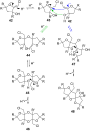
Scheme 8: Mechanism leading to dioxanes and spirocycles.

Scheme 9: (S,S)-syn and (S,R)-syn approaches.
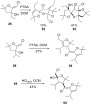
Scheme 10: Formation of a bridged dimer and a triene.

Figure 2: X-ray diffraction analysis of two new dimers.

Scheme 11: Mechanism leading to bridged and dienic dimers.
Chemistry of polyhalogenated nitrobutadienes, 10: Synthesis of highly functionalized heterocycles with a rigid 6-amino-3-azabicyclo[3.1.0]hexane moiety
- Viktor A. Zapol’skii,
- Jan C. Namyslo,
- Armin de Meijere and
- Dieter E. Kaufmann
Beilstein J. Org. Chem. 2012, 8, 621–628, doi:10.3762/bjoc.8.69

- stabilized by an intramolecular hydrogen bridge bond in a six-membered pseudocycle (Figure 3). Upon treatment of 1,3-dinitro-1,4,4-trichlorobutadiene (4), which was obtained in a four-step sequence from 1,2-dichloroethylene (mixture of diastereomers) [20][21], with a fourfold excess of the azabicyclo[3.1.0

Graphical Abstract

Figure 1: Promising starting materials for biologically active compounds.

Figure 2: Pharmaceuticals bearing an azabicyclo[3.1.0]hexane unit.

Scheme 1: Synthesis of the azabicyclic hydrazone 6.

Scheme 2: Novel imidacloprid analogues 11, 12.

Figure 3: Stabilizing hydrogen bond in nitrobutadiene-derived imidacloprid analogues 9–12.

Scheme 3: Synthesis of the 4,4-bis(aminoazabicyclo[3.1.0]hexyl)-1-chloro-1,3-dinitrobutadiene 13.

Scheme 4: Synthesis of the highly substituted trisaminodichloronitrobutadiene 16.

Figure 4: Conceivable tautomeric structures of 16.

Scheme 5: Syntheses of the perfunctionalized isothiazole derivatives 20, 21.

Scheme 6: Preparation of the pyrazoles 27, 28, the pyrimidine 26 and the pyridopyrimidine 24.

Scheme 7: Proposed reaction mechanism for the formation of 27, 28.

Scheme 8: Attempted deprotection of the azabicyclic compounds 21,12, and 28.



