


Search results
Search for "endophytic fungus" in Full Text gives 17 result(s) in Beilstein Journal of Organic Chemistry.
Recent advances in Norrish–Yang cyclization and dicarbonyl photoredox reactions for natural product synthesis
Beilstein J. Org. Chem. 2025, 21, 2315–2333, doi:10.3762/bjoc.21.177
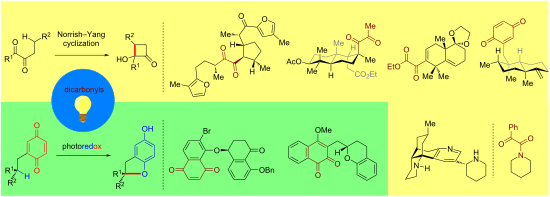
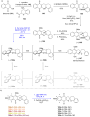
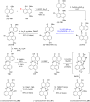
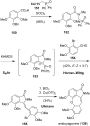
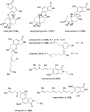
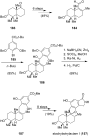
- viable intermediates in the total synthesis of γ-rubromycin, emphasizing the need to avoid C7-oxygenation at early stages. 3.2 Preussomerins Preussomerins EG1 (97), EG2 (98), and EG3 (99) – isolated from the endophytic fungus Edenia gomezpompae in Callicarpa acuminata – exhibit strong antifungal activity







A chiral LC–MS strategy for stereochemical assignment of natural products sharing a 3-methylpent-4-en-2-ol moiety in their terminal structures
Beilstein J. Org. Chem. 2025, 21, 2243–2249, doi:10.3762/bjoc.21.171
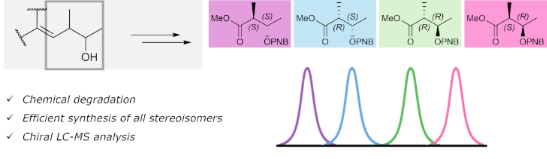
- to the natural product capsulactone (1), an α-pyrone polyketide first isolated in 2021 from the endophytic fungus Penicillium capsulatum [17], and re-isolated in 2023 from the endophytic fungus Neurospora dictyophora WZ-497 [18], whose absolute configuration had been determined by computational


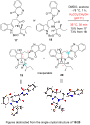
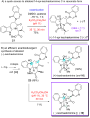
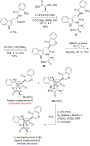
Further elaboration of the stereodivergent approach to chaetominine-type alkaloids: synthesis of the reported structures of aspera chaetominines A and B and revised structure of aspera chaetominine B
Beilstein J. Org. Chem. 2025, 21, 2072–2081, doi:10.3762/bjoc.21.162
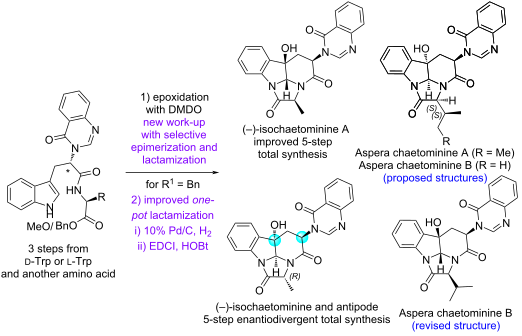
- enantiomers of chaetominine have been reported, which include: 1) pseudofischerine (2) [22], isolated from the fungus Neosartorya pseudofischeri S. W. Peterson, and from the marine-derived fungus Pseudallescheria boydii F19-1 [23]; 2) aniquinazoline D (3), isolated from marine-derived endophytic fungus
- endophytic fungus from the liverwort Heteroscyphus tener (Steph.) Schiffn. [30]; (–)-versiquinazoline H (9), isolated from the gorgonian (Pseudopterogorgia sp.)-derived fungus Aspergillus versicolor LZD-14-1 [31]; as well as 5) aspera chaetominines A and B (12 and 13), isolated from marine sponge associated



Semisynthetic derivatives of massarilactone D with cytotoxic and nematicidal activities
Beilstein J. Org. Chem. 2025, 21, 607–615, doi:10.3762/bjoc.21.48
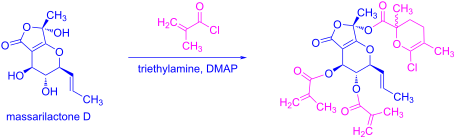
- extract, pH 6.3) by the endophytic fungus Dendrothyrium variisporum. This fungus, isolated from the roots of the Algerian plant Globularia alypum, was explored for the first time for its potential to produce secondary metabolites [16]. Despite the abundant production of massarilactone D, it did not


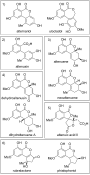
Natural resorcylic lactones derived from alternariol
Beilstein J. Org. Chem. 2024, 20, 2171–2207, doi:10.3762/bjoc.20.187
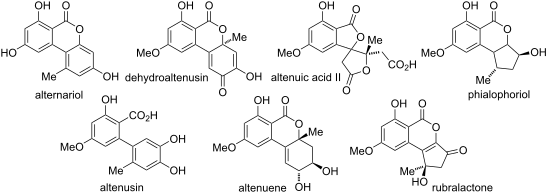
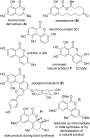
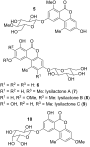
- from an unidentified endophytic fungus [124] and later from colletotrichum sp. [125], Lachnum abnorme [126], Diaporthe phragmitis [127] and a further D. sp. [128], and deviantly from the flower buds of the banana species Musa nana [129]. Its structure was determined by NMR spectroscopy [126] and
- lysilactone A in LC–MS/MS analyses of invested cereals based on comparison with synthesized samples [141], but seems to have never been isolated or further investigated. 3-O-Acetyl-9-O-methylalternariol (11) was isolated from an unidentified endophytic fungus [124] and 3,9-O,O-diacetylalternariol (12) was





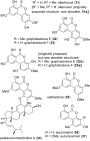

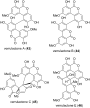


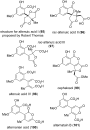
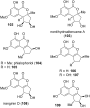
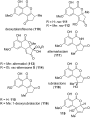


Secondary metabolites of Diaporthe cameroonensis, isolated from the Cameroonian medicinal plant Trema guineensis
Beilstein J. Org. Chem. 2023, 19, 1555–1561, doi:10.3762/bjoc.19.112
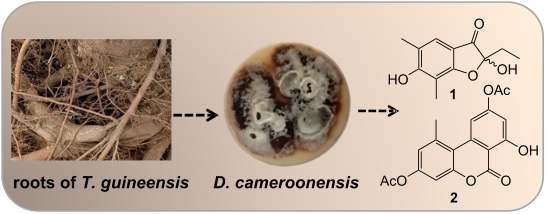
- elucidation of a new polyketide 1 and a new acetylated alternariol derivative 2 as well as fifteen known compounds including three alternariol derivatives 3–5, one chromone 6, one biphenyl 7, seven cytochalasins 8–14, two cytosporones 15 and 16, and one macrolide 17 from the endophytic fungus, Diaporthe
- measured in methanol by using an Anton Paar MCP-150 polarimeter (Seelze, Germany) at 20 °C. Isolation and identification of the endophytic fungus The fresh root of Trema guineesis was collected in January 2019 in Kala Mountain (near Yaoundé), in the Centre region of Cameroon. It was identified at the


Volatile emission and biosynthesis in endophytic fungi colonizing black poplar leaves
Beilstein J. Org. Chem. 2021, 17, 1698–1711, doi:10.3762/bjoc.17.118
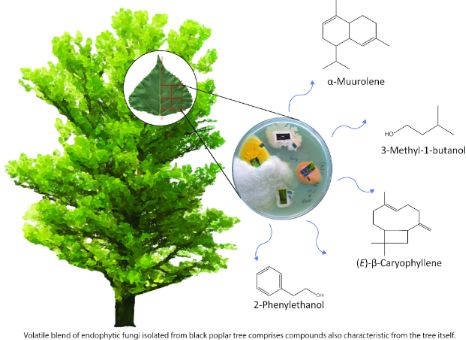
- exhibit antimicrobial activity; however, they are also known to induce the growth and vigor of the host plant and to shape plant community structure [27][28][29][30][31]. Furthermore, volatiles released from endophytic fungi can also affect insect behavior. Daisy et al. isolated the endophytic fungus
- the volatile profiles of endophytic fungi has increased in recent years, only little is known about endophyte terpene synthases that may catalyze volatile terpene formation [44][45]. For the endophytic fungus Cladosporium sp., we identified and characterized two TPS, CxTPS1 and CxTPS2 (Figure 2
- that an endophytic fungus (Acremonium strictum) alters the volatile composition of the tomato plant Solanum lycopersicum and attracts Helicoverpa armigera moth for oviposition [80]. The endophytic fungus Beauveria bassiana also increased the emission of some terpenes from tomato plants resulting in a



Total synthesis of decarboxyaltenusin
Beilstein J. Org. Chem. 2021, 17, 224–228, doi:10.3762/bjoc.17.22

- . [3][5][6], and from the endophytic fungus Botryosphaeria dothidea in Melia azedarach [7] it turned out to be a widely occurring natural product. It shows marked DPPH radical scavenging activities with determined IC50 values of 18.7 ± 0.2 μM [7] and 148 ± 3 μM [2], respectively, and displays


Muyocopronones A and B: azaphilones from the endophytic fungus Muyocopron laterale
Beilstein J. Org. Chem. 2020, 16, 2100–2107, doi:10.3762/bjoc.16.177
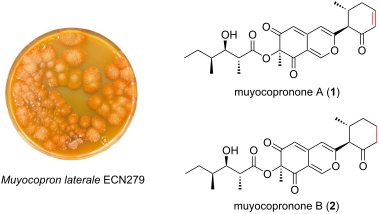
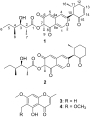
- -cho, Chikusa-ku, Nagoya, Aichi, Japan 10.3762/bjoc.16.177 Abstract Two new azaphilones, namely muyocopronones A (1) and B (2), were isolated from the cultures of an endophytic fungus Muyocopron laterale ECN279. Their structures were elucidated by extensive spectroscopic analysis. Their absolute
- fungal metabolites produced by Muyocopron spp. Thus, as part of our research into the natural products produced by plant-associated fungi [13][14][15], we isolated two new azaphilones from the cultures of an endophytic fungus, namely Muyocopron laterale ECN279. Herein, the isolation, structural
- few such compounds have been previously reported. Conclusion In summary, we successfully performed the isolation and structural determination of muyocopronones A (1) and B (2) from the cultures of an endophytic fungus Muyocopron laterale ECN279. Muyocopronones A (1) and B (2) are both azaphilones




Absolute configurations of talaromycones A and B, α-diversonolic ester, and aspergillusone B from endophytic Talaromyces sp. ECN211
Beilstein J. Org. Chem. 2020, 16, 290–296, doi:10.3762/bjoc.16.28
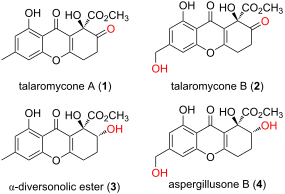
- -cho, Chikusa-ku, Nagoya, Aichi, Japan 10.3762/bjoc.16.28 Abstract Talaromycones A (1) and B (2), new xanthenediones, were isolated from the cultures of Talaromyces sp. ECN211, an endophytic fungus, along with α-diversonolic ester (3), aspergillusone B (4), glauconic acid (5), and rosellisin (6). The
- first time in over 50 years. Keywords: absolute configuration; endophytic fungus; glauconic acid; Talaromyces; tetrahydroxanthone; xanthenedione; Introduction The xanthones, which are a class of phenolic compounds produced by many different organisms, including plants, lichens, fungi, and bacteria


Correction: Varioloid A, a new indolyl-6,10b-dihydro-5aH-[1]benzofuro[2,3-b]indole derivative from the marine alga-derived endophytic fungus Paecilomyces variotii EN-291
Beilstein J. Org. Chem. 2018, 14, 2394–2395, doi:10.3762/bjoc.14.215

New furoisocoumarins and isocoumarins from the mangrove endophytic fungus Aspergillus sp. 085242
Beilstein J. Org. Chem. 2016, 12, 2077–2085, doi:10.3762/bjoc.12.196
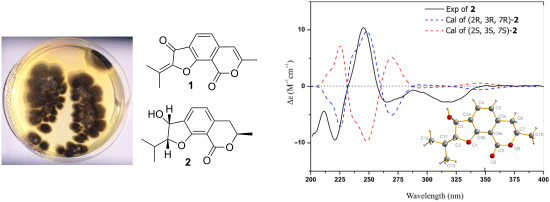
- District, Shenzhen, 518102, China Key Laboratory of Combinatorial Biosynthesis and Drug Discovery, Ministry of Education of China, School of Pharmaceutical Sciences, Wuhan University, Wuhan, 430071, China 10.3762/bjoc.12.196 Abstract The chemical investigation of the mangrove endophytic fungus Aspergillus
- known compounds (3, 4, 7–9) (Figure 1). Details of the isolation, structure elucidation, and biological activity of these compounds are reported herein. Results and Discussion The mangrove endophytic fungus Aspergillus sp. 085242 was cultured on solid rice medium with saline water for four weeks. The


Varioloid A, a new indolyl-6,10b-dihydro-5aH-[1]benzofuro[2,3-b]indole derivative from the marine alga-derived endophytic fungus Paecilomyces variotii EN-291
Beilstein J. Org. Chem. 2016, 12, 2012–2018, doi:10.3762/bjoc.12.188
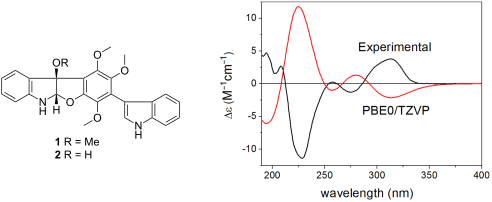
- indolyl-6,10b-dihydro-5aH-[1]benzofuro[2,3-b]indole derivative, varioloid A (1), was isolated from the marine alga-derived endophytic fungus Paecilomyces variotii EN-291. Its structure was elucidated on the basis of extensive analysis of 1D and 2D NMR data and the absolute configuration was determined by
- variotii EN-291, an endophytic fungus isolated from the red alga Grateloupia turuturu. The investigation of the chemical constituents of this fungal strain had been performed and as a result, three new oxepine-containing alkaloids with antimicrobial activities [9][10], two new butenolide derivatives with
- continues to be a prolific source of bioactive secondary metabolites with diverse structures. In this paper, two indolyl-6,10b-dihydro-5aH-[1]benzofuro[2,3-b]indole derivatives, varioloids A (1) and B (2), were isolated from the marine alga-derived endophytic fungus Paecilomyces variotii EN-291. The



New depsidones and isoindolinones from the mangrove endophytic fungus Meyerozyma guilliermondii (HZ-Y2) isolated from the South China Sea
Beilstein J. Org. Chem. 2015, 11, 1187–1193, doi:10.3762/bjoc.11.133
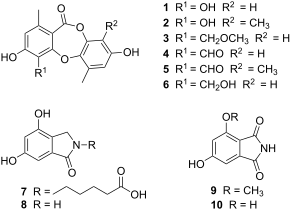
- A and B (7 and 9), along with five known compounds were isolated from an endophytic fungus Meyerozyma guilliermondii, derived from the mangrove plant Kandelia obovata. Their structures were elucidated by 1D and 2D NMR spectroscopy and high resolution mass spectrometry (HREIMS). Compounds 1–6
- exhibited strong α-glucosidase inhibitory activity with IC50 values ranging from 2.1 to 13.3 μM. Moreover, kinetic studies of compounds 2 and 6 showed that both of them were noncompetitive inhibitors of α-glucosidase. Keywords: endophytic fungus; depsidone; α-glucosidase inhibitory activity; isoindolinone


Aspergiloid I, an unprecedented spirolactone norditerpenoid from the plant-derived endophytic fungus Aspergillus sp. YXf3
Beilstein J. Org. Chem. 2014, 10, 2677–2682, doi:10.3762/bjoc.10.282
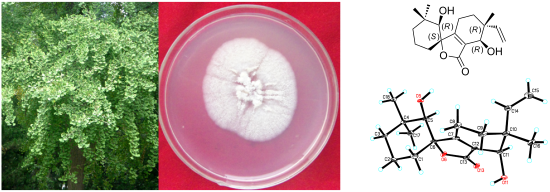
- Phytochemistry and Plant Resources in West China, Kunming Institute of Botany, Chinese Academy of Sciences, Kunming 650204, People’s Republic of China 10.3762/bjoc.10.282 Abstract An unusual C18 norditerpenoid, aspergiloid I (1), was isolated from the culture broth of Aspergillus sp. YXf3, an endophytic fungus
- , antimicrobial, anti-oxidant and enzyme inhibitory activities of 1 were evaluated. Keywords: Aspergillus; endophytic fungus; Ginkgo biloba; natural product; norditerpenoid; Trichocomaceae; Introduction Plant-derived fungi, which have drawn considerable attention from natural product chemists, have been proved
- -unsaturated spirolactone moiety in ring B. The skeleton, tentatively named aspergilane, represents a new subclass of norditerpenoids. The endophytic fungus Aspergillus sp. YXf3 can produce different types of diterpenoids, including pimarane-type diterpenoids (sphaeropsidin A and B, aspergiloid D and E


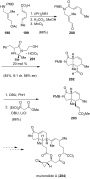
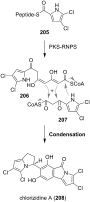
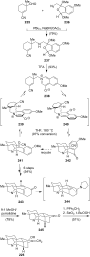
The chemistry of isoindole natural products
Beilstein J. Org. Chem. 2013, 9, 2048–2078, doi:10.3762/bjoc.9.243
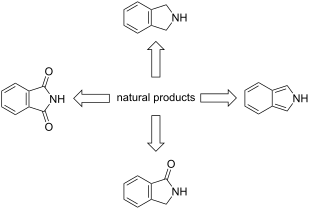
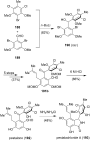
- completed the synthesis of stachybotrylactam I (157). Chlorinated isoindolinone alkaloids: Pestalachloride A (193) was isolated from the plant endophytic fungus Pestalotiopsis adusta as a racemate and displays potent antifungal activities against Fusarium culmorum (IC50 = 0.89 µM) [147]. Pestalone (192), a
















The volatiles of pathogenic and nonpathogenic mycobacteria and related bacteria
Beilstein J. Org. Chem. 2012, 8, 290–299, doi:10.3762/bjoc.8.31
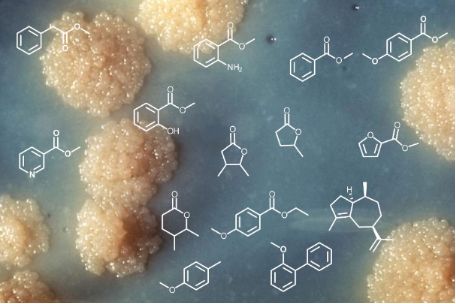
- is a known volatile from several plants [29], and the endophytic fungus Muscodor albus [30]. The structure of 19 has recently been revised [29]. This compound may act as marker for norcardiae, as it was produced as a single compound by Nocardia spp. grown on a 7H11 medium and has so far not been





