Search results
Search for "optoelectronic applications" in Full Text gives 19 result(s) in Beilstein Journal of Organic Chemistry.
Configuration–packing synergy enabling integrated crystalline-state RTP and amorphous-state TADF
Beilstein J. Org. Chem. 2026, 22, 224–236, doi:10.3762/bjoc.22.16
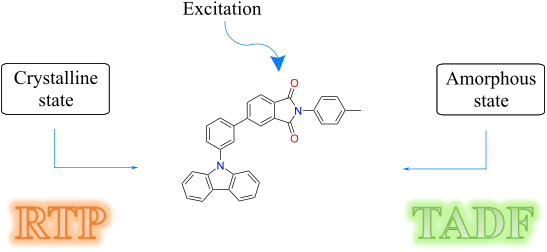
- acceptor, which is essential for efficient charge transfer and the functionality of the material in optoelectronic applications. As shown in Table 1, the calculated excited-state energies indicate that the triplet energy level is 2.7447 eV, and the singlet energy level is 2.7677 eV, which corresponds to a
- and RTP. This result provides valuable insights into the excited-state dynamics of 1 and its potential for optoelectronic applications. In order to fully characterize the solid-state emission properties of 1, a comprehensive set of measurements was performed, including steady-state and post-excitation


Design and synthesis of an axially chiral platinum(II) complex and its CPL properties in PMMA matrix
Beilstein J. Org. Chem. 2026, 22, 143–150, doi:10.3762/bjoc.22.7
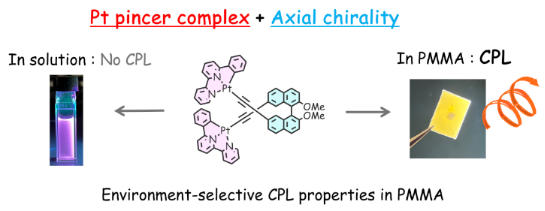
- optoelectronic applications. Experimental General information All reagents and solvents were of commercial reagent grade and used without further purification. Dichloromethane for spectroscopy was purchased from FUJIFILM Wako Pure Chemical Corporation. All compounds were identified by 1H , 13C NMR and ESI-MS. 1H


Advances in nitrogen-containing helicenes: synthesis, chiroptical properties, and optoelectronic applications
Beilstein J. Org. Chem. 2025, 21, 1422–1453, doi:10.3762/bjoc.21.106
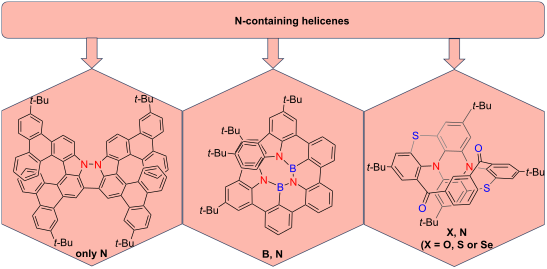
- versatile scaffolds for chiral optoelectronic applications. The incorporation of nitrogen enables precise modulation of electronic structures, redox characteristics, and intermolecular interactions, thereby enhancing performance in circularly polarized luminescence (CPL), thermally activated delayed
- ; optoelectronic applications; Introduction Helicenes, a class of non-planar polycyclic aromatic hydrocarbons characterized by ortho-fused aromatic rings forming a helical framework, have attracted significant attention due to their inherent chirality, unique optoelectronic properties, and wide-ranging
- approximately 500 nm upon trifluoroacetic acid treatment. Both the neutral and protonated forms of 19 exhibited mirror-image CD and CPL spectra, with high |glum| values of 1.4 × 10⁻³ and 1.3 × 10⁻³, respectively, underscoring their potential for responsive chiral optoelectronic applications. Concurrently, Liu

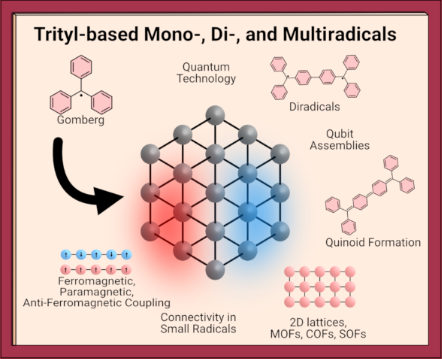
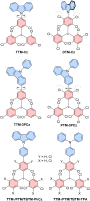
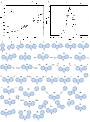
On the photoluminescence in triarylmethyl-centered mono-, di-, and multiradicals
Beilstein J. Org. Chem. 2025, 21, 964–998, doi:10.3762/bjoc.21.80





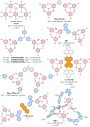


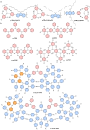
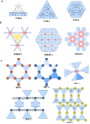


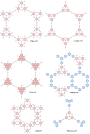
The charge transport properties of dicyanomethylene-functionalised violanthrone derivatives
Beilstein J. Org. Chem. 2024, 20, 2921–2930, doi:10.3762/bjoc.20.244
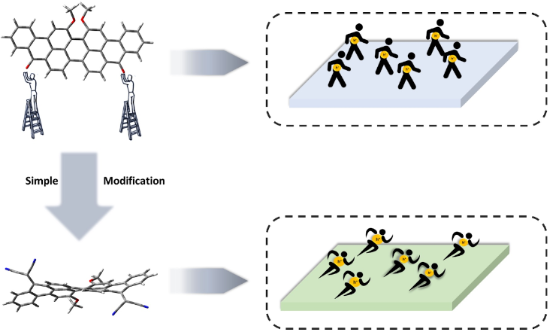
- intermolecular interactions which might result in a narrower HOMO–LUMO gap than that of PDI, and an absorption band extending to the near-infrared (NIR) region [26]. This makes violanthrone and its derivatives potential candidates for NIR optoelectronic applications. In fact, the intrinsic semiconducting


Phenanthridine–pyrene conjugates as fluorescent probes for DNA/RNA and an inactive mutant of dipeptidyl peptidase enzyme
Beilstein J. Org. Chem. 2023, 19, 550–565, doi:10.3762/bjoc.19.40
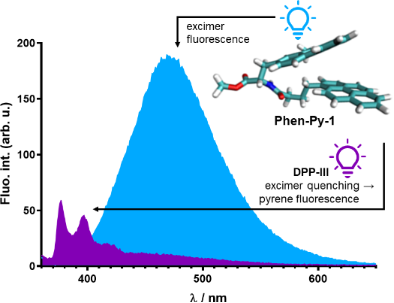
- luminescence (CPL). The exciplex (excited heterodimer) formed intramolecularly proved to be conformationally rigid and consequently was not sensitive to solvent or temperature [8]. Further, pyrenoimidazole-fused phenanthridines have been reported recently, developed as fluorescence emitters for optoelectronic
- applications [9]. These compounds have a very large aromatic surface suitable to form self-assembled supramolecular structures by intermolecular π–π interactions and showed excimer fluorescence in thin film and in the solid state. Kawai et al. reported exciplex formation between pyrene and guanine in polar




Post-synthesis from Lewis acid–base interaction: an alternative way to generate light and harvest triplet excitons
Beilstein J. Org. Chem. 2022, 18, 825–836, doi:10.3762/bjoc.18.83
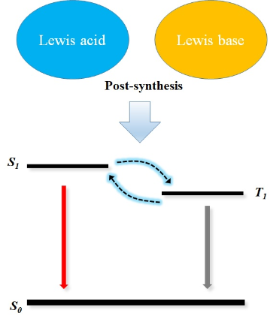
- acceptors Some Lewis acids have good solubility in common organic solvents, which makes it easy to fabricate films for optoelectronic applications [24]. Because of their strong electrophilicity [25], Lewis acids may dominate charge distributions of the fluorescent materials featured with electron-rich


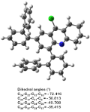
Synthesis and investigation on optical and electrochemical properties of 2,4-diaryl-9-chloro-5,6,7,8-tetrahydroacridines
Beilstein J. Org. Chem. 2021, 17, 2450–2461, doi:10.3762/bjoc.17.162

- makes them promising candidates for optoelectronic applications. Experimental Materials and measurements Anhydrous solvents and chemicals were purchased from Sigma–Aldrich and used without further purification. All reactions were carried out under an inert argon atmosphere and were monitored by thin






Design, synthesis and photophysical properties of novel star-shaped truxene-based heterocycles utilizing ring-closing metathesis, Clauson–Kaas, Van Leusen and Ullmann-type reactions as key tools
Beilstein J. Org. Chem. 2021, 17, 1374–1384, doi:10.3762/bjoc.17.96
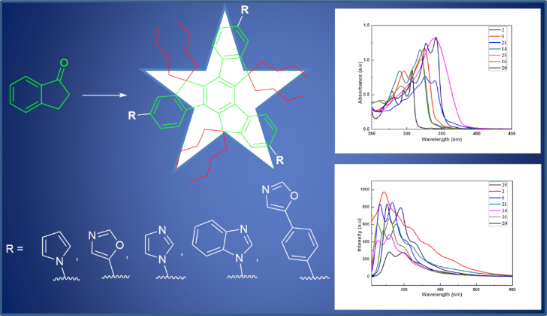
- properties (absorption and emission spectra) of the newly synthesized molecules and the detailed studies for these systems would be published in due course. We are pretty sure that this particular work may offer guidance for further expansion of these materials with enhanced potential for optoelectronic
- applications and other, if any in material science and technology. Experimental General: All commercially available reagents were used without further purification and purchased from Sigma-Aldrich, Alfa Aesar, TCI, GLR, Avera or Spectrochem. Solvents were purified according to reported standard procedures


Multiswitchable photoacid–hydroxyflavylium–polyelectrolyte nano-assemblies
Beilstein J. Org. Chem. 2021, 17, 166–185, doi:10.3762/bjoc.17.17
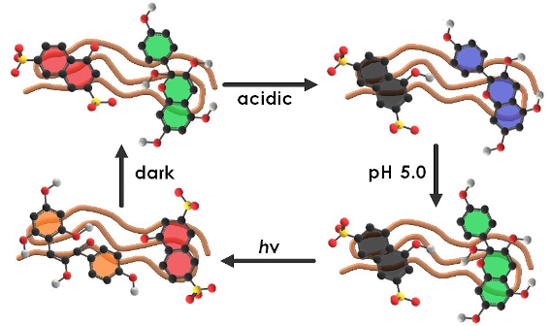
- ; multiswitchable; photoacid; polyelectrolyte; Introduction Supramolecular nanoscale assemblies responding to multiple stimuli are highly desirable in various fields including transport systems, sensors, and optoelectronic applications [1][2][3][4][5][6][7][8]. Self-assembly into supramolecular structures and




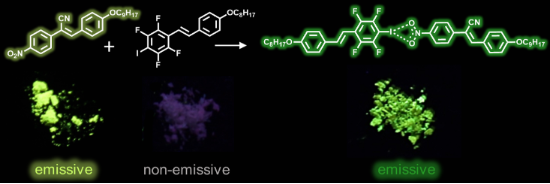
Tuning the solid-state emission of liquid crystalline nitro-cyanostilbene by halogen bonding
Beilstein J. Org. Chem. 2021, 17, 124–131, doi:10.3762/bjoc.17.13
- [22]. This readily accessible class of fluorophores can easily be modified and attached to other functional entities, thus it has become a promising candidate for the design of new materials for optoelectronic applications [23]. Recently, it was successfully employed as a fluorescent moiety in the




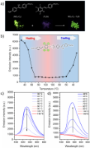


Aggregation-induced emission effect on turn-off fluorescent switching of a photochromic diarylethene
Beilstein J. Org. Chem. 2019, 15, 2204–2212, doi:10.3762/bjoc.15.217
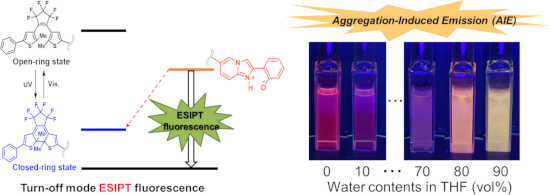
- Diarylethenes are well-known photochromic molecules and are widely applied to molecular switches and systems [1][2]. Recently, the photo-switching of fluorescence signals by using diarylethene switches has attracted much attention because of the potential in various optoelectronic applications [3]. For example


The effect of permodified cyclodextrins encapsulation on the photophysical properties of a polyfluorene with randomly distributed electron-donor and rotaxane electron-acceptor units
Beilstein J. Org. Chem. 2014, 10, 2145–2156, doi:10.3762/bjoc.10.222
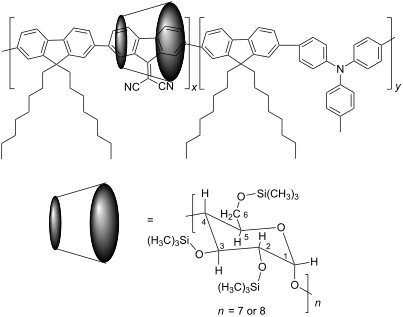
- solvents, a higher fluorescence efficiency, a higher transparency of the solid films, and an easier processability compared with native CDs. These improvements represent noticeable advantages of conjugated polyrotaxanes for optoelectronic applications. The combination of D–A units associated with the


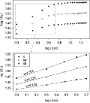
Aryl substitution of pentacenes
Beilstein J. Org. Chem. 2014, 10, 1692–1705, doi:10.3762/bjoc.10.178
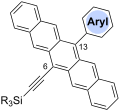
- ; pentacene; π-stacking; polycyclic aromatic hydrocarbon; solid-state structure; Introduction Conjugated organic molecules are promising candidates for use in optoelectronic applications including OLEDs [1], photovoltaics [2], and OFETs [3]. Even though there is literally an infinite number of possibilities




Synthesis of new, highly luminescent bis(2,2’-bithiophen-5-yl) substituted 1,3,4-oxadiazole, 1,3,4-thiadiazole and 1,2,4-triazole
Beilstein J. Org. Chem. 2014, 10, 1596–1602, doi:10.3762/bjoc.10.165

- the need for careful and conscious molecular structure planning, when preparing spectrally bespoken materials for optoelectronic applications. Conclusion To summarize, we have developed a new flexible synthetic approach to the preparation of highly luminescent donor–acceptor compounds, which are of


An organocatalytic route to 2-heteroarylmethylene decorated N-arylpyrroles
Beilstein J. Org. Chem. 2013, 9, 1480–1486, doi:10.3762/bjoc.9.168
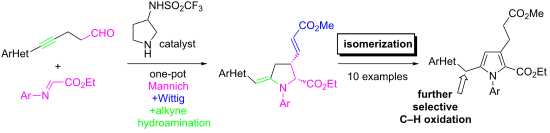
- preparation of N-arylpyrroles is an active field of investigation [5]. Depending on their substituents, N-arylpyrroles could also be electron donor/acceptor molecules with a dual fluorescence ability suggesting attractive optoelectronic applications [6][7]. If the N-arylation of pyrroles is possible by


Synthesis and characterization of low-molecular-weight π-conjugated polymers covered by persilylated β-cyclodextrin
Beilstein J. Org. Chem. 2012, 8, 1505–1514, doi:10.3762/bjoc.8.170
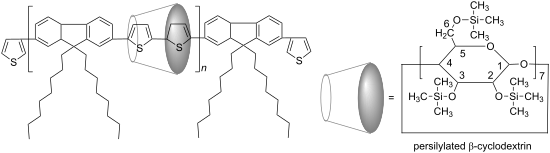
- materials with extended π-conjugation have attracted considerable attention in recent years as a new class of active organic materials for optoelectronic applications [1][2][3][4]. Among the conjugated polymers, a number of poly(9-alkylfluorene)s (PFs) and poly(9,9-dioctylfluorene) (PDOF) polymers in
- reduced interchain interactions, which allow the polyrotaxane chains to pack densely. A better quality of the film, with higher uniformity, flatness, and better mechanical properties, is always desirable for optoelectronic applications. The optical properties of the PDOF-BT and PDOF-BTc compounds (not



Synthesis and characterization of a novel carboxyl group containing (co)polyimide with sulfur in the polymer backbone
Beilstein J. Org. Chem. 2012, 8, 776–786, doi:10.3762/bjoc.8.88

- attractive for optical lenses and optoelectronic applications, such as OLEDs (organic light-emitting diodes) or high-performance CMOS-CISs (complementary metal–oxide–semiconductor contact image sensor) [18]. Although (co)polyimides exhibit excellent properties and are numbered among the high-performance



A stable enol from a 6-substituted benzanthrone and its unexpected behaviour under acidic conditions
Beilstein J. Org. Chem. 2009, 5, No. 31, doi:10.3762/bjoc.5.31
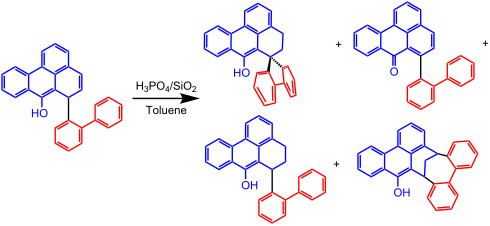
- the reaction products is proposed and supported by DFT calculations. Keywords: consecutive reactions; intramolecular cyclization; molecular modelling; spiro compounds; X-ray structural analysis; Introduction Compounds for optoelectronic applications with electroluminescent (e.g. organic light