


Search results
Search for "specialized metabolites" in Full Text gives 8 result(s) in Beilstein Journal of Organic Chemistry.
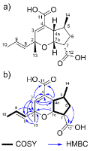
Rhodopyran, a carboxylated hexahydrocyclopenta[b]pyran from Rhodococcus
Beilstein J. Org. Chem. 2026, 22, 1107–1113, doi:10.3762/bjoc.22.89
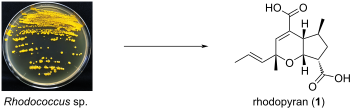
- unusual carboxylated hexahydrocyclopenta[b]pyran and expands the known metabolite diversity of Rhodococcus, highlighting Rhodococcus as a source of uncommon natural-product scaffolds. Keywords: bicyclic compound; cyclopenta[b]pyran; natural products; Rhodococcus; specialized metabolites; Introduction
- Actinomycetes have long been recognized as prolific producers of structurally diverse specialized metabolites, with Streptomyces historically serving as the major source of chemically characterized compounds. In contrast, non-streptomycete actinomycetes remain comparatively underexplored, and the genus
- , 2.0% glycerol, 0.5% glucose, 1.5% Pharmamedia (Archer-Daniels-Midland Company, TX, USA), 0.3% yeast extract, and 1.0% Diaion HP-20 resin (for improvement of specialized metabolites productivity, Mitsubishi Chemical, Tokyo, Japan) in distilled water. The pH of the medium was adjusted to 7.0 before


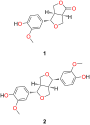
Anti-invasive and cytotoxic evaluation of a (+)-pinoresinol-based semisynthetic library against glioblastoma
Beilstein J. Org. Chem. 2026, 22, 691–704, doi:10.3762/bjoc.22.54
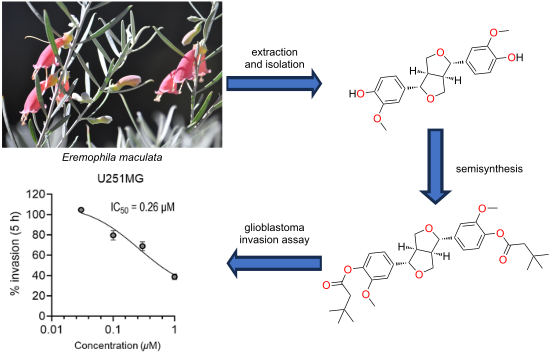
- Eremophila-derived specialized metabolites or semisynthetic derivatives has the potential to impact biodiscovery research. In this study, we investigated the chemistry of the seeds of Eremophila maculata for the first time. Seeds from the Eremophila genus have rarely been chemically investigated due to



Chemical structure metagenomics of microbial natural products: surveying nonribosomal peptides and beyond
Beilstein J. Org. Chem. 2024, 20, 3050–3060, doi:10.3762/bjoc.20.253
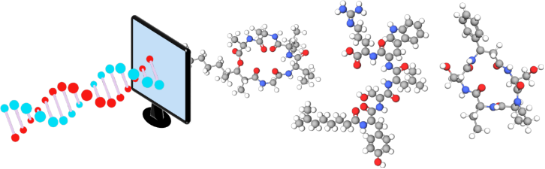
- information that are available for terpenoids and alkaloids biosynthesis. Data standardization (albeit a tedious and labor-intensive task) may be the final roadblock between AI and generalizable chemical structure metagenomics [91]. Conclusion and Outlook Microorganisms produce specialized metabolites to


Discovery of antimicrobial peptides clostrisin and cellulosin from Clostridium: insights into their structures, co-localized biosynthetic gene clusters, and antibiotic activity
Beilstein J. Org. Chem. 2024, 20, 1800–1816, doi:10.3762/bjoc.20.159
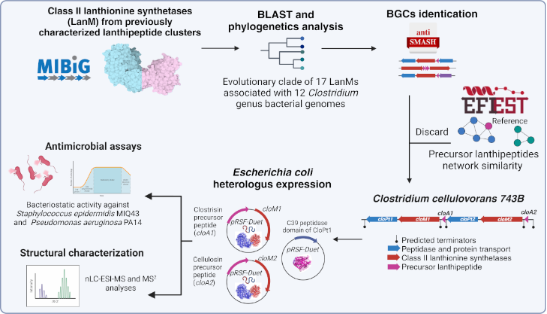
- genes and genomes across diverse species and populations. This provides insights into the origins and evolution of genes that have evolved as "tools" in the ongoing biological battles in the microbial world. The biodiversity of specialized metabolites is strain-specific, meaning that even closely
- the Clostridium genus encountered 17 protein sequences associated with 12 genomes. After analyzing these genomes with AntiSMASH [3], we identified 150 different BGCs of specialized metabolites from different biosynthetic classes. The RiPPs accounted for 36% of these (54 clusters). A total of 14 BGCs


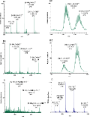


New variochelins from soil-isolated Variovorax sp. H002
Beilstein J. Org. Chem. 2024, 20, 692–700, doi:10.3762/bjoc.20.63
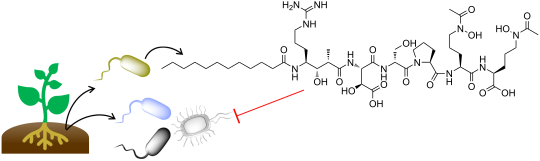
- form of insoluble ferric oxide, diminishing its bioavailability. To mitigate this problem, many microorganisms utilize specialized metabolites known as siderophores to efficiently sequester iron. Siderophores are abundantly produced under iron-deficient growth conditions and secreted through dedicated


Antibacterial scalarane from Doriprismatica stellata nudibranchs (Gastropoda, Nudibranchia), egg ribbons, and their dietary sponge Spongia cf. agaricina (Demospongiae, Dictyoceratida)
Beilstein J. Org. Chem. 2020, 16, 1596–1605, doi:10.3762/bjoc.16.132
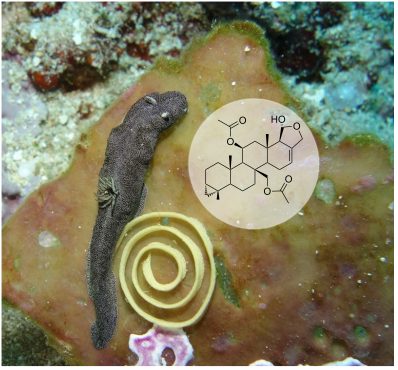
- defend themselves with toxic or deterrent molecules [1][2][3][4][5][6][7][8]. Sponges (Porifera), for example, represent one of the main sources of marine bioactive natural products, due to their impressive chemical armoury [4]. These specialized metabolites can be produced either by the sponge itself or
- inclusion of species that have since been discovered to be members of other genera. Additionally, a splitting of generic groups into several genera and resurrection of old names increased the confusion [39][42][46][47][48][49]. To classify specialized metabolites in the Chromodorididae in a meaningful way



Fabclavine diversity in Xenorhabdus bacteria
Beilstein J. Org. Chem. 2020, 16, 956–965, doi:10.3762/bjoc.16.84
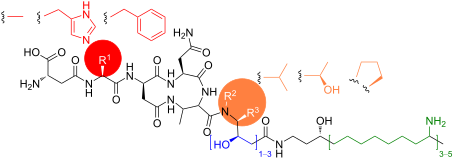
- global threat of multiresistant pathogens has to be answered by the development of novel antibiotics. Established antibiotic applications are often based on so-called secondary or specialized metabolites (SMs), identified in large screening approaches. To continue this successful strategy, new sources
- metabolite; Xenorhabdus; Introduction The constantly increasing threat of multiresistant pathogens requires the development of new antibiotics, as they are indispensable to maintain the state of health of our society [1]. Bacterial natural products, also called secondary or specialized metabolites (SM


Bacterial terpene biosynthesis: challenges and opportunities for pathway engineering
Beilstein J. Org. Chem. 2019, 15, 2889–2906, doi:10.3762/bjoc.15.283
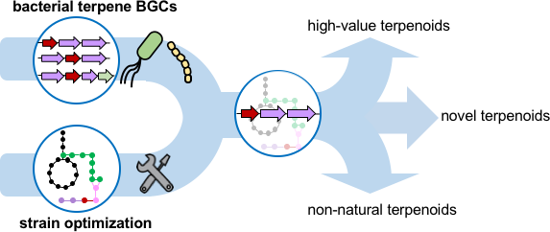
- restricted members possess significant biological activities, like the anticancer agent taxol (1) [4] or the antimalarial agent artemisinin (2, Figure 1) [5][6]. The structural diversity and functional utility of this class of specialized metabolites have combined to encourage efforts to apply the tools of
- nature [39]. Therefore, evolution would likely favor organisms that can generate and retain chemical diversity at a low cost [38]. As a result, producing and “screening” a large number of specialized metabolites for potent TCs that can generate multiple products from simple building blocks is a huge
- . Keywords: bacterial sesquiterpenes and diterpenes; cytochrome P450; pathway engineering; synthetic biology; terpene biosynthesis; terpene cyclase; Introduction Evolutionary diversification of terpene biosynthetic pathways has resulted in the largest and most structurally diverse class of specialized




Other Beilstein-Institut Open Science Activities



