


Search results
Search for "structural revision" in Full Text gives 15 result(s) in Beilstein Journal of Organic Chemistry.
Total synthesis of natural products based on hydrogenation of aromatic rings
- Haoxiang Wu and
- Xiangbing Qi
Beilstein J. Org. Chem. 2026, 22, 88–122, doi:10.3762/bjoc.22.4
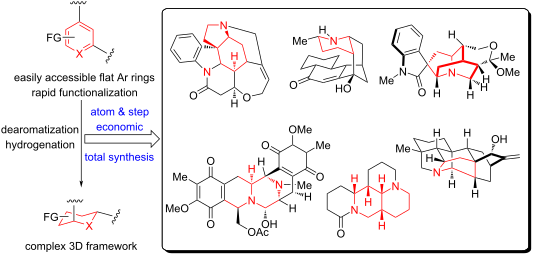
- functional group manipulations, including a pivotal intramolecular SN2 cyclization, ultimately completing the total synthesis of (−)-senepodine F. Notably, this work also led to the structural revision of the originally assigned natural product, as reported in earlier isolation studies. Hydrogenation

Graphical Abstract

Scheme 1: The association between dearomatization and natural product synthesis.

Scheme 2: Key challenges in hydrogenation of aromatic rings.
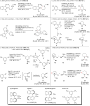
Scheme 3: Hydrogenation of heterocyclic aromatic rings.
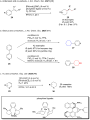
Scheme 4: Hydrogenation of the carbocyclic aromatic rings.
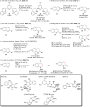
Scheme 5: Hydrogenation of the heterocycle part in bicyclic aromatic rings.
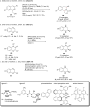
Scheme 6: Hydrogenation of the heterocycle part in bicyclic aromatic rings.
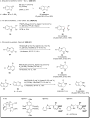
Scheme 7: Hydrogenation of benzofuran, indole, and their analogues.
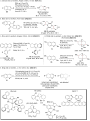
Scheme 8: Hydrogenation of benzofuran, indole, and their analogues.

Scheme 9: Total synthesis of (±)-keramaphidin B by Baldwin and co-workers.

Scheme 10: Total synthesis of (±)-LSD by Vollhardt and co-workers.

Scheme 11: Total synthesis of (±)-dihydrolysergic acid by Boger and co-workers.

Scheme 12: Total synthesis of (±)-lysergic acid by Smith and co-workers.

Scheme 13: Hydrogenation of (−)-tabersonine to (−)-decahydrotabersonine by Catherine Dacquet and co-workers.

Scheme 14: Total synthesis of (±)-nominine by Natsume and co-workers.
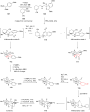
Scheme 15: Total synthesis of (+)-nominine by Gin and co-workers.

Scheme 16: Total synthesis of (±)-lemonomycinone and (±)-renieramycin by Magnus.

Scheme 17: Total synthesis of GB13 by Sarpong and co-workers.

Scheme 18: Total synthesis of GB13 by Shenvi and co-workers.

Scheme 19: Total synthesis of (±)-corynoxine and (±)-corynoxine B by Xia and co-workers.
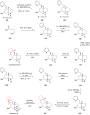
Scheme 20: Total synthesis of (+)-serratezomine E and the putative structure of huperzine N by Bonjoch and co-...

Scheme 21: Total synthesis of (±)-serralongamine A and the revised structure of huperzine N and N-epi-huperzin...

Scheme 22: Early attempts to indenopiperidine core.

Scheme 23: Homogeneous hydrogenation and completion of the synthesis.
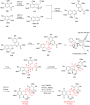
Scheme 24: Total synthesis of jorunnamycin A and jorumycin by Stoltz and co-workers.

Scheme 25: Early attempt towards (−)-finerenone by Aggarwal and co-workers.

Scheme 26: Enantioselective synthesis towards (−)-finerenone.

Scheme 27: Total synthesis of (+)-N-methylaspidospermidine by Smith, Grigolo and co-workers.

Scheme 28: Dearomatization approach towards matrine-type alkaloids.

Scheme 29: Asymmetric total synthesis to (−)-senepodine F via an asymmetric hydrogenation of pyridine.

Scheme 30: Selective hydrogenation of indole derivatives and application.
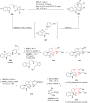
Scheme 31: Synthetic approaches to the oxindole alkaloids by Qi and co-workers.

Scheme 32: Total synthesis of annotinolide B by Smith and co-workers.
Further elaboration of the stereodivergent approach to chaetominine-type alkaloids: synthesis of the reported structures of aspera chaetominines A and B and revised structure of aspera chaetominine B
- Jin-Fang Lü,
- Jiang-Feng Wu,
- Jian-Liang Ye and
- Pei-Qiang Huang
Beilstein J. Org. Chem. 2025, 21, 2072–2081, doi:10.3762/bjoc.21.162
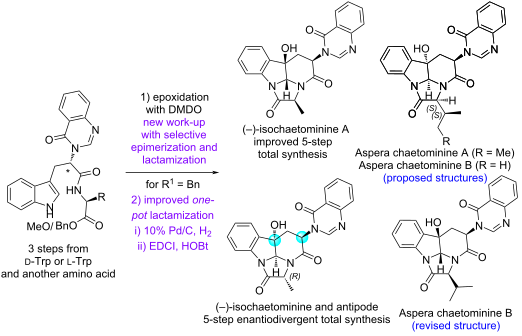
- aspera chaetominine B. Keywords: epoxidation; selective epimerization; stereodivergent synthesis; structural revision; tandem reaction; Introduction In contemporary organic chemistry, due to the widespread application of modern separation and analytical techniques, the structural elucidation and
- concerns in the field of total synthesis of natural products [10][11][12][13][14][15][16][17][18][19][20], which is not only essential for organic chemistry in its own right, but also crucial for drug discovery and structural revision of natural products. Although more and more diastereomeric and

Graphical Abstract

Figure 1: Structures of some reported chaetominine-type alkaloids and revised structures via our total synthe...

Scheme 1: Improved total synthesis of (–)-isochaetominine A (4) and diastereomer 16.
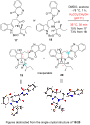
Scheme 2: Diastereoconvergent transformations of 17 and 18 into two diastereomers of versiquinazoline H.
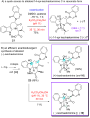
Scheme 3: Mono- and double epimerization-based enantiodivergent syntheses of chaetominine-type alkaloids and ...

Scheme 4: Enantioselective synthesis of the proposed structure of aspera chaetominine A.
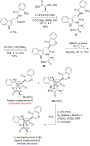
Scheme 5: Enantioselective syntheses of both the proposed and revised structures of aspera chaetominine B.
Enantioselective desymmetrization strategy of prochiral 1,3-diols in natural product synthesis
- Lihua Wei,
- Rui Yang,
- Zhifeng Shi and
- Zhiqiang Ma
Beilstein J. Org. Chem. 2025, 21, 1932–1963, doi:10.3762/bjoc.21.151

- confirmed by X-ray crystallographic analysis. Comparative analysis of the 1H NMR data with authentic samples of the natural heliannuol G and heliannuol H enabled structural revision of these compounds, correcting prior misassignments in the literature [31][32]. Through enzyme-catalyzed asymmetric

Graphical Abstract

Scheme 1: General mechanism of a lipase-catalyzed esterification.

Scheme 2: Shishido’s synthesis of (−)-xanthorrhizol (4) and (+)-heliannuol D (8).

Scheme 3: Shishido’s synthesis of a) (−)-heliannuol A (15) and b) heliannuol G (20) and heliannuol H (21).

Scheme 4: Deska’s synthesis of hyperione A (30) and ent-hyperione B (31).

Scheme 5: Huang’s synthesis of (+)-brazilin (37).

Scheme 6: Shishido’s synthesis of (−)-heliannuol D (42) and (+)-heliannuol A (43).

Scheme 7: Chênevert’s synthesis of (S)-α-tocotrienol (49).

Scheme 8: Kita’s synthesis of monoester 53.

Scheme 9: Kita’s synthesis of fredericamycin A (60).

Scheme 10: Takabe’s synthesis of (E)-3,7-dimethyl-2-octene-1,8-diol (64).

Scheme 11: Takabe’s synthesis of (18S)-variabilin (70).

Scheme 12: Kawasaki’s synthesis of (S)-Rosaphen (74) and (R)-Rosaphen (75).
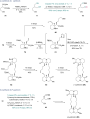
Scheme 13: Tokuyama’s synthesis of a) (−)-petrosin (84) and b) (+)-petrosin (86).

Scheme 14: Fukuyama’s synthesis of leustroducsin B (96).
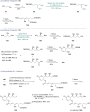
Scheme 15: Nanda’s synthesis of a) fragment 100, b) fragment 106 and c) (−)-rasfonin (109).

Scheme 16: Davies’ synthesis of (+)-pilocarpine (115) and (+)-isopilocarpine (116).

Scheme 17: Ōmura’s synthesis of salinosporamide A (125).

Scheme 18: Kang’s synthesis of ʟ-cladinose (124) and its derivative.

Scheme 19: Kang’s preparation of fragment 139.
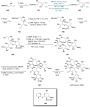
Scheme 20: Kang’s synthesis of azithromycin (149).

Scheme 21: Kang’s synthesis of (−)-dysiherbaine (156).

Scheme 22: Kang’s synthesis of (−)-kaitocephalin (166).
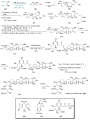
Scheme 23: Kang’s synthesis of laidlomycin (180).

Scheme 24: Snyder’s synthesis of arboridinine (190).
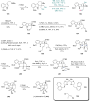
Scheme 25: Ma’s synthesis of (+)-alstrostine G (203).
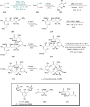
Scheme 26: Trost’s synthesis of (−)-18-epi-peloruside A (215).

Scheme 27: Lindel’s synthesis of (–)-dihydroraputindole (223).

Scheme 28: Iwata’s synthesis of a) (−)-talaromycin B (232) and b) (+)-talaromycin A (235).

Scheme 29: Cook’s synthesis of a) (−)-vincamajinine (240) and b) (−)-11-methoxy-17-epivincamajine (245).

Scheme 30: Cook’s synthesis of (+)-dehydrovoachalotine (249) and voachalotine (250).
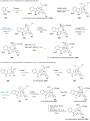
Scheme 31: Cook’s synthesis of a) (−)-12-methoxy-Nb-methylvoachalotine (257) and b) (+)-polyneuridine, macusin...

Scheme 32: Trauner’s synthesis of stephadiamine (273).

Scheme 33: Garg’s synthesis of (–)-ψ-akuammigine (285).

Scheme 34: Ding’s synthesis of (+)-18-benzoyldavisinol (293) and (+)-davisinol (294).
Oxetanes: formation, reactivity and total syntheses of natural products
- Peter Gabko,
- Martin Kalník and
- Maroš Bella
Beilstein J. Org. Chem. 2025, 21, 1324–1373, doi:10.3762/bjoc.21.101
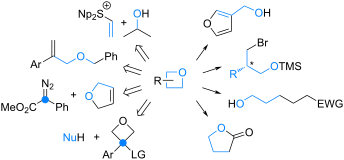

Graphical Abstract

Figure 1: Bond lengths and bond angles in oxetane at 140 K [2].

Figure 2: Analogy of 3-substituted oxetanes to carbonyl and gem-dimethyl groups [12].

Figure 3: Use of oxetanes in drug design – selected examples.

Figure 4: Examples of oxetane-containing natural products.

Scheme 1: Synthetic strategies towards construction of the oxetane ring.

Scheme 2: Overview of intramolecular Williamson etherification and competing Grob fragmentation.

Scheme 3: Synthesis of spiro-oxetanes via 1,4-C–H insertion and Williamson etherification.

Scheme 4: Use of phenyl vinyl selenone in the synthesis of spirooxindole oxetanes.

Scheme 5: Synthesis of bicyclic 3,5-anhydrofuranoses via double epoxide opening/etherification.

Scheme 6: Preparation of spirooxetanes by cycloisomerisation via MHAT/RPC.

Scheme 7: Oxetane synthesis via alcohol C–H functionalisation.

Scheme 8: Access to oxetanes 38 from α-acetyloxy iodides.

Scheme 9: The kilogram-scale synthesis of oxetane intermediate 41.

Scheme 10: Overview of the intramolecular opening of 3-membered rings.

Scheme 11: Synthesis of 4,7-dioxatricyclo[3.2.1.03,6]octane skeletons.

Scheme 12: Silicon-directed electrophilic cyclisation of homoallylic alcohols.

Scheme 13: Hydrosilylation–iodocyclisation of homopropargylic alcohols.

Scheme 14: Cu-catalysed intramolecular O-vinylation of γ-bromohomoallylic alcohols.

Scheme 15: Cu-catalysed intramolecular cross-coupling of hydroxyvinylstannanes.

Scheme 16: Isomerisation of oxiranyl ethers containing weakly carbanion-stabilising groups.

Scheme 17: Cyclisation of diethyl haloalkoxymalonates.

Scheme 18: Synthesis of oxetanes through a 1,5-HAT/radical recombination sequence.

Scheme 19: General approach to oxetanes via [2 + 2] cycloadditions.

Scheme 20: Synthesis of tricyclic 4:4:4 oxetanes through a photochemical triple cascade reaction.

Scheme 21: Iridium-catalysed Paternò–Büchi reaction between α-ketoesters and simple alkenes.

Scheme 22: Three-step synthesis of spirocyclic oxetanes 83 via Paternò–Büchi reaction, nucleophilic ring openi...

Scheme 23: Enantioselective Paternò–Büchi reaction catalysed by a chiral iridium photocatalyst.

Scheme 24: Synthesis of polysubstituted oxetanes 92 via Cu(II)-mediated formal [2 + 2] cycloadditions.
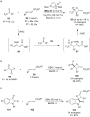
Scheme 25: Synthesis of alkylideneoxetanes via NHC- and DBU-mediated formal [2 + 2] cycloadditions.

Scheme 26: Use of sulphur-stabilised carbanions in ring expansions.

Scheme 27: Synthesis of α,α-difluoro(arylthio)methyl oxetanes.

Scheme 28: Ring expansion in an industrial synthesis of PF-06878031.

Scheme 29: Ring contraction of triflated 2-hydroxy-γ-lactones.

Scheme 30: Ring contraction in an industrial synthesis of PF-06878031.

Scheme 31: Photochemical ring contraction of 2,5-dihydrofurans by aryldiazoacetic acid esters.

Scheme 32: Synthesis of 3-oxetanones via O-H insertion of carbenes.

Scheme 33: Synthesis of phosphonate oxetanones via gold-mediated alkyne oxidation/O–H insertion.

Scheme 34: Syntheses and common derivatisations of 3-oxetanone.

Scheme 35: SN1 substitution of 3-aryloxetan-3-ols by thiols and alcohols.

Scheme 36: Fe–Ni dual-catalytic olefin hydroarylation towards 3-alkyl-3-(hetero)aryloxetanes.

Scheme 37: Synthesis of 3-aryloxetan-3-carboxylic acids.

Scheme 38: Decarboxylative alkylation of 3-aryloxetan-3-carboxylic acids.

Scheme 39: Synthesis of 3-amino-3-aryloxetanes via photoredox/nickel cross-coupling catalysis.
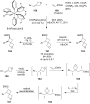
Scheme 40: Intermolecular cross-selective [2 + 2] photocycloaddition towards spirooxetanes.

Scheme 41: Synthesis of 3-aryl-3-aminooxetanes via defluorosulphonylative coupling.

Scheme 42: Two-step synthesis of amide bioisosteres via benzotriazolyl Mannich adducts 170.

Scheme 43: Functionalisation of oxetanyl trichloroacetimidates 172.

Scheme 44: Synthesis of oxetane-amino esters 176.

Scheme 45: Tandem Friedel–Crafts alkylation/intramolecular ring opening of 3-aryloxetan-3-ols.

Scheme 46: Synthesis of polysubstituted furans and pyrroles.

Scheme 47: Synthesis of oxazolines and bisoxazolines.

Scheme 48: Tandem, one-pot syntheses of various polycyclic heterocycles.

Scheme 49: Synthesis of 1,2-dihydroquinolines via skeletal reorganisation of oxetanes.

Scheme 50: Synthesis of benzoindolines and 2,3-dihydrobenzofurans and their derivatisations.

Scheme 51: Synthesis of polysubstituted 1,4-dioxanes.

Scheme 52: Preparation of various lactones via ring opening of oxetane-carboxylic acids 219.

Scheme 53: Tsuji-Trost allylation/ring opening of 3-aminooxetanes.

Scheme 54: Arylative skeletal rearrangement of 3-vinyloxetan-3-ols to 2,5-dihydrofurans.

Scheme 55: Reductive opening of oxetanes using catalytic Mg–H species.

Scheme 56: Opening of oxetanes by silyl ketene acetals.

Scheme 57: Rhodium-catalysed hydroacylation of oxetanes.

Scheme 58: Generation of radicals from oxetanes mediated by a vitamin B12-derived cobalt catalyst.

Scheme 59: Reductive opening of oxetanes by B–Si frustrated Lewis pairs.
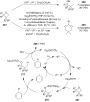
Scheme 60: Zirconocene-mediated reductive opening of oxetanes.

Scheme 61: Enantioselective syntheses of small and medium-size rings using chiral phosphoric acids.

Scheme 62: Asymmetric synthesis of 2,3-dihydrobenzo[b]oxepines catalysed by a chiral scandium complex.

Scheme 63: Enantioselective synthesis of 1,3-bromohydrins under a chiral squaramide catalysis.

Scheme 64: Enantioselective opening of 2-aryl-2-ethynyloxetanes by anilines.

Scheme 65: Ru-catalysed insertion of diazocarbonyls into oxetanes.

Scheme 66: Ring expansion of oxetanes by stabilised carbenes generated under blue light irradiation.

Scheme 67: Expansion of oxetanes via nickel-catalysed insertion of alkynyltrifluoroborates.

Scheme 68: Nickel-catalysed expansion of oxetanes into ε-caprolactones.

Scheme 69: Expansion of oxetanes via cobalt-catalysed carbonyl insertion.

Scheme 70: Gold-catalysed intramolecular 1,1-carboalkoxylation of oxetane-ynamides.

Scheme 71: Expansion of oxetanes by stabilised sulphoxonium ylides.

Scheme 72: Cu-catalysed ring expansion of 2-vinyloxetanes by diazoesters.

Scheme 73: Total synthesis of (+)-oxetin.

Scheme 74: Total synthesis of racemic oxetanocin A.

Scheme 75: Total synthesis of (−)-merrilactone A.
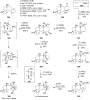
Scheme 76: Total synthesis of (+)-dictyoxetane.

Scheme 77: Total synthesis of ent-dichrocephone B.

Scheme 78: Total synthesis of (−)-mitrephorone A.
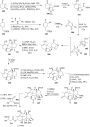
Scheme 79: Total synthesis of (−)-taxol.
Confirmation of the stereochemistry of spiroviolene
- Yao Kong,
- Yuanning Liu,
- Kaibiao Wang,
- Tao Wang,
- Chen Wang,
- Ben Ai,
- Hongli Jia,
- Guohui Pan,
- Min Yin and
- Zhengren Xu
Beilstein J. Org. Chem. 2024, 20, 852–858, doi:10.3762/bjoc.20.77
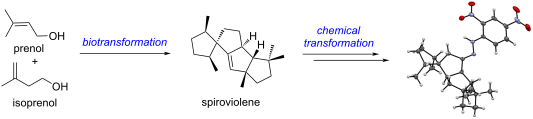
- cyclization process of fungi-derived deoxyconidiogenol and bacteria-derived spiroviolene by sharing the common C6-cation intermediate IM-3 with cyclopiane skeleton (Scheme 1A). Conclusion We have unambiguously confirmed the structural revision of spiroviolene with cis-oriented 19- and 20-methyl groups by

Graphical Abstract

Figure 1: Structures of spiroviolene and related natural products.
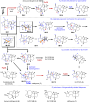
Scheme 1: Possible cyclization mechanisms for spiroviolene (1) and related natural products. A) Revised cycli...

Figure 2: Heterologous production of spiroviolene using the isopentenol utilization pathway. A) Gas chromatog...

Scheme 2: Derivatization of spiroviolene for X-ray crystallography. A) Hydroboration/oxidation reaction of sp...
Correction: Non-peptide compounds from Kronopolites svenhedini (Verhoeff) and their antitumor and iNOS inhibitory activities
- Yuan-Nan Yuan,
- Jin-Qiang Li,
- Hong-Bin Fang,
- Shao-Jun Xing,
- Yong-Ming Yan and
- Yong-Xian Cheng
Beilstein J. Org. Chem. 2023, 19, 1370–1371, doi:10.3762/bjoc.19.97
- HMBC correlations of H-2/C-1, C-3, C-4, C-8a, H-4/C-3, C-4a, C-5, C-8a, C-9, H-5/C-4, C-4a, C-6, C-7, C-8a, H-9/C-2, C-3, C-4, H-10/C-7, C-8, C-8a, H-11/C-6, and H-12/C-7. Table 1 provides the revised 1D 1H and 13C NMR data of compound 1. The structural revision of 1 also required recalculation of the

Figure 1: Revised structure of compound 1 and key HMBC correlations.

Figure 2: Recalculated and experimental ECD spectra of compound 1.
Synthesis of tryptophan-dehydrobutyrine diketopiperazine and biological activity of hangtaimycin and its co-metabolites
- Houchao Xu,
- Anne Wochele,
- Minghe Luo,
- Gregor Schnakenburg,
- Yuhui Sun,
- Heike Brötz-Oesterhelt and
- Jeroen S. Dickschat
Beilstein J. Org. Chem. 2022, 18, 1159–1165, doi:10.3762/bjoc.18.120
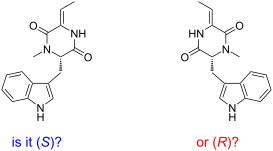
- against Bacillus subtilis [1]. Together with a structural revision from 29Z to 29E configuration and further biological evaluation of its hepatoprotective properties, its biosynthetic gene cluster was recently identified [2]. The biosynthetic machinery is composed of a hybrid trans-acyltransferase (trans
- been compared cannot be the same. This prompted the authors of the synthetic study to conclude on the need for a structural revision of 4 [12], with unclear reasoning for the newly assigned structure. However, this newly suggested structure of 4 is not reflected in the structure of 1 [1][2] and not
- indicated by a strong NOESY correlation between the amide NH and the neighbouring methyl group. The structure of TDD These findings not only challenge the originally assigned structure of (E)-4 [9] and confirm the structural revision of (Z)-4 [1], but also question the suggested structural revision that

Graphical Abstract

Scheme 1: Structures of hangtaimycin (1) and its co-metabolites.

Scheme 2: First synthetic route towards TDD (4).

Figure 1: HPLC analyses of (Z)-4 on a chiral stationary phase. A) Nearly racemic 4 from the first synthetic r...

Scheme 3: Second synthetic route towards TDD ((Z)-4).

Figure 2: X-ray structure of (rac)-4.

Figure 3: Bioactivity testing with hangtaimycin (1). A) Growth retardation of model species B. subtilis 168 a...
Absolute configurations of talaromycones A and B, α-diversonolic ester, and aspergillusone B from endophytic Talaromyces sp. ECN211
- Ken-ichi Nakashima,
- Junko Tomida,
- Takao Hirai,
- Yoshiaki Kawamura and
- Makoto Inoue
Beilstein J. Org. Chem. 2020, 16, 290–296, doi:10.3762/bjoc.16.28
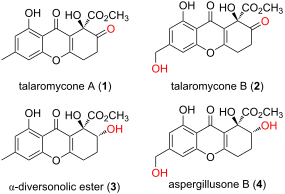
- synthesis [5]. Furthermore, the compound with the originally proposed structure of β-diversonolic ester had already been isolated as blennolide C from the fungus Blennoria sp. prior to structural revision [2]. Consequently, the structures and spectroscopic data of the diversonolic esters and blennolide C

Graphical Abstract

Figure 1: Structures of compounds 1–6.

Figure 2: Key HMBC (blue arrows) and COSY (bold bonds) correlations in 1 and 2.

Figure 3: a) ORTEP drawing of 1, with thermal ellipsoids indicating 50% probability. The atoms of the minor d...

Figure 4: a) ORTEP drawing of 3, with thermal ellipsoids indicating 50% probability. b) Electronic circular d...

Figure 5: a) ORTEP drawing of 5, with thermal ellipsoids indicating 50% probability. b) Electronic circular d...
A chemoenzymatic synthesis of ceramide trafficking inhibitor HPA-12
- Seema V. Kanojia,
- Sucheta Chatterjee,
- Subrata Chattopadhyay and
- Dibakar Goswami
Beilstein J. Org. Chem. 2019, 15, 490–496, doi:10.3762/bjoc.15.42
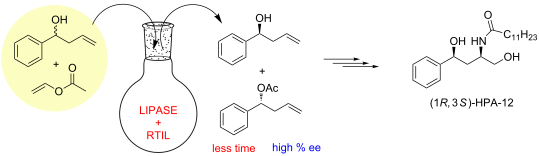
- . However, after the structural revision of the most active stereoisomer, Kobayashi et al. synthesized (1R,3S)-HPA-12 (2, Figure 1) using a Zn-catalyzed asymmetric Mannich-type reaction in water, and unambiguously ascertained the revised configuration by X-ray crystallography [14]. The other syntheses of

Graphical Abstract

Figure 1: Structure of most active HPA-12 isomers, originally proposed (1) and revised (2).

Scheme 1: Lipase-catalyzed trans-acylation of (±)-4 and subsequent Mitsunobu inversion. Conditions: (i) Zn/TH...

Scheme 2: Synthesis of azide 9 from (S)-4. Conditions: (i) NaH/Bu4NI/BnBr/THF/25 °C/4 h; (ii) AD-mix-β/t-BuOH...

Scheme 3: Attempted synthesis of 2 from 9. Conditions: (i) (a) LiAlH4 (1 M in THF)/THF/25 °C/3 h, (b) DCC/DMA...

Scheme 4: Actual synthesis of 2 from 9. Conditions: (i) DDQ/CH2Cl2–H2O 4:1/3 h; (ii) a) LiAlH4/THF/25 °C/3 h,...
Stereoselective total synthesis and structural revision of the diacetylenic diol natural products strongylodiols H and I
- Pamarthi Gangadhar,
- Sayini Ramakrishna,
- Ponneri Venkateswarlu and
- Pabbaraja Srihari
Beilstein J. Org. Chem. 2018, 14, 2313–2320, doi:10.3762/bjoc.14.206
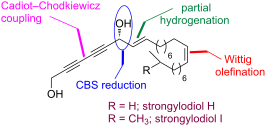
- natural product as 9a which is the enantiomer of the proposed structure 9 (Figure 3). Further, to reconfirm the structural revision, we synthesized the other enantiomer of strongylodiol H. Towards this we proceeded for the stereoselective reduction of prochiral ketone 17 with (R)-CBS as the catalyst

Graphical Abstract
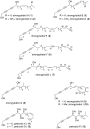
Figure 1: Proposed structures of a selection of diacetylenic polyol natural products.
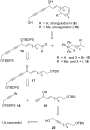
Scheme 1: Retrosynthesis of strongylodiols H and I.

Scheme 2: Synthesis of alkyne 19 and iodo intermediate 21. Reagents and conditions: (a) n-BuLi, THF, −78 °C t...

Scheme 3: Stereoselective synthesis of (R)-25. Reagents and conditions: (a) CuCl, NH2OH·HCl, 30% n-BuNH2, Et2...

Figure 2: Absolute configuration analysis of alcohol 25. ∆δ = δS − δR for the (R)- and (S)-MTPA ester of alco...

Scheme 4: Synthesis of strongylodiol H (9). Reagents and conditions: (a) TBDPSCl, imidazole, CH2Cl2, 0 °C to ...

Figure 3: Previously proposed and revised structure of strongylodiol H (9).

Scheme 5: Synthesis of compound 25a. Reagents and conditions: (a) (R)-CBS catalyst, BH3·DMS, −50 °C, 16 h, 86...

Scheme 6: Synthesis of strongylodiol I (10a). Reagents and conditions: (a) (i) TBDPSCl, imidazole, CH2Cl2, 0 ...
One hundred years of benzotropone chemistry
- Arif Dastan,
- Haydar Kilic and
- Nurullah Saracoglu
Beilstein J. Org. Chem. 2018, 14, 1120–1180, doi:10.3762/bjoc.14.98
- ) were reported (Figure 14) [180][181]. However, Moncur and Grutzner repeated the reaction as described and their studies led to the structural revision of the previously published structure of 7-bromo-2,3-benzotropone (316) to that of 5-bromo-2,3-benzotropone (311, Scheme 52, Figure 14) [186]. The

Graphical Abstract

Scheme 1: Tropone (1), tropolone (2) and their resonance structures.

Figure 1: Natural products containing a tropone nucleus.

Figure 2: Possible isomers 11–13 of benzotropone.

Scheme 2: Synthesis of benzotropones 11 and 12.

Scheme 3: Oxidation products of benzotropylium fluoroborate (16).

Scheme 4: Oxidation of 7-bromo-5H-benzo[7]annulene (22).

Scheme 5: Synthesis of 4,5-benzotropone (11) using o-phthalaldehyde (27).

Scheme 6: Synthesis of 4,5-benzotropone (11) starting from oxobenzonorbornadiene 31.

Scheme 7: Acid-catalyzed cleavage of oxo-bridge of 34.

Scheme 8: Synthesis of 4,5-benzotropone (11) from o-xylylene dibromide (38).

Scheme 9: Synthesis of 4,5-benzotropone (11) via the carbene adduct 41.

Scheme 10: Heck coupling strategy for the synthesis of 11.

Scheme 11: Synthesis of benzofulvalenes via carbonyl group of 4,5-benzotropone (11).

Figure 3: Some cycloheptatrienylium cations.

Scheme 12: Synthesis of condensation product 63 and its subsequent oxidative cyclization products.

Figure 4: A novel series of benzo[7]annulenes prepared from 4,5-benzotropone (11).

Scheme 13: Preparation of substituted benzo[7]annulene 72 using the Mukaiyama-Michael reaction.

Figure 5: Possible benzo[7]annulenylidenes 73–75.

Scheme 14: Thermal and photochemical decomposition of 7-diazo-7H-benzo[7]annulene (76) and the trapping of int...

Scheme 15: Synthesis of benzoheptafulvalene 86.

Scheme 16: Synthesis of 7-(diphenylmethylene)-7H-benzo[7]annulene (89).

Scheme 17: Reaction of 4,5-benzotropone (11) with dimethyl diazomethane.

Scheme 18: Synthesis of dihydrobenzomethoxyazocine 103.

Scheme 19: Synthesis and reducibility of benzo-homo-2-methoxyazocines.

Scheme 20: Synthesis of 4,5-benzohomotropones 104 and 115 from 4,5-benzotropones 11 and 113.

Scheme 21: A catalytic deuterogenation of 4,5-benzotropone (11) and synthesis of 5-monosubstituted benzo[7]ann...

Scheme 22: Synthesis of methyl benzo[7]annulenes 131 and 132.

Scheme 23: Ambident reactivity of halobenzo[7]annulenylium cations 133a/b.

Scheme 24: Preparation of benzo[7]annulenylidene–iron complexes 147.

Scheme 25: Synthesis of 1-ethynylbenzotropone (150) and the etheric compound 152 from 4,5-benzotropone (11) wi...

Scheme 26: Thermal decomposition of 4,5-benzotropone (11).

Scheme 27: Reaction of 4,5-benzotropone (11) with 1,2-ethanediol and 1,2-ethanedithiol.

Scheme 28: Conversions of 1-benzosuberone (162) to 2,3-benzotropone (12).

Scheme 29: Synthesis strategies for 2,3-bezotropone (12) using 1-benzosuberones.

Scheme 30: Oxidation-based synthesis of 2,3-benzotropone (12) via 1-benzosuberone (162).

Scheme 31: Synthesis of 2,3-benzotropone (12) from α-tetralone (171) via ring-expansion.

Scheme 32: Preparation of 2,3-benzotropone (12) by using of benzotropolone 174.

Figure 6: Benzoheptafulvenes as condensation products of 2,3-benzotropone (12).

Scheme 33: Conversion of 2,3-benzotropone (12) to tosylhydrazone salt 182 and gem-dichloride 187.

Figure 7: Benzohomoazocines 191–193 and benzoazocines 194–197.

Scheme 34: From 2,3-benzotropone (12) to carbonium ions 198–201.

Scheme 35: Cycloaddition reactions of 2,3-benzotropone (12).
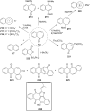
Scheme 36: Reaction of 2,3-benzotropone (12) with various reagents and compounds.

Figure 8: 3,4-Benzotropone (13) and its resonance structure.

Scheme 37: Synthesis of 6,7-benzobicyclo[3.2.0]hepta-3,6-dien-2-one (230).

Figure 9: Photolysis and thermolysis products of 230.

Figure 10: Benzotropolones and their tautomeric structures.

Scheme 38: Synthesis strategies of 4,5-benzotropolone (238).

Scheme 39: Synthesis protocol for 2-hydroxy-4,5-benzotropone (238) using oxazole-benzo[7]annulene 247.

Figure 11: Some quinoxaline and pyrazine derivatives 254–256 prepared from 4,5-benzotropolone (238).

Scheme 40: Nitration product of 4,5-benzotropolone (238) and its isomerization to 1-nitro-naphthoic acid (259)....

Scheme 41: Synthesis protocol for 6-hydroxy-2,3-benzotropone (239) from benzosuberone (162).
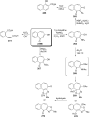
Scheme 42: Various reactions via 6-hydroxy-2,3-benzotropone (239).

Scheme 43: Photoreaction of 6-hydroxy-2,3-benzotropone (239).

Scheme 44: Synthesis of 7-hydroxy-2,3-benzotropone (241) from benzosuberone (162).

Scheme 45: Synthesis strategy for 7-hydroxy-2,3-benzotropone (241) from ketone 276.

Scheme 46: Synthesis of 7-hydroxy-2,3-benzotropone (241) from β-naphthoquinone (280).

Scheme 47: Synthesis of 7-hydroxy-2,3-benzotropone (241) from bicyclic endoperoxide 213.

Scheme 48: Synthesis of 7-hydroxy-2,3-benzotropone (241) by ring-closing metathesis.

Figure 12: Various monosubstitution products 289–291 of 7-hydroxy-2,3-benzotropone (241).

Scheme 49: Reaction of 7-hydroxy-2,3-benzotropone (241) with various reagents.

Scheme 50: Synthesis of 4-hydroxy-2,3-benzotropones 174 and 304 from diketones 300/301.

Scheme 51: Catalytic hydrogenation of diketones 300 and 174.

Scheme 52: Synthesis of halo-benzotropones from alkoxy-naphthalenes 306, 307 and 310.

Figure 13: Unexpected byproducts 313–315 during synthesis of chlorobenzotropone 309.

Figure 14: Some halobenzotropones and their cycloadducts.

Scheme 53: Multisep synthesis of 2-chlorobenzotropone 309.

Scheme 54: A multistep synthesis of 2-bromo-benzotropone 26.

Scheme 55: A multistep synthesis of bromo-2,3-benzotropones 311 and 316.

Scheme 56: Oxidation reactions of 8-bromo-5H-benzo[7]annulene (329) with some oxidants.

Scheme 57: Synthesis of 2-bromo-4,5-benzotropone (26).

Scheme 58: Synthesis of 6-chloro-2,3-benzotropone (335) using LiCl and proposed intermediate 336.

Scheme 59: Reaction of 7-bromo-2,3-benzotropone (316) with methylamine.

Scheme 60: Reactions of bromo-2,3-benzotropones 26 and 311 with dimethylamine.

Scheme 61: Reactions of bromobenzotropones 311 and 26 with NaOMe.

Scheme 62: Reactions of bromobenzotropones 26 and 312 with t-BuOK in the presence of DPIBF.

Scheme 63: Cobalt-catalyzed reductive cross-couplings of 7-bromo-2,3-benzotropone (316) with cyclic α-bromo en...

Figure 15: Cycloadduct 357 and its di-π-methane rearrangement product 358.

Scheme 64: Catalytic hydrogenation of 2-chloro-4,5-benzotropone (311).

Scheme 65: Synthesis of dibromo-benzotropones from benzotropones.

Scheme 66: Bromination/dehydrobromination of benzosuberone (162).

Scheme 67: Some transformations of isomeric dibromo-benzotropones 261A/B.

Scheme 68: Transformations of benzotropolone 239B to halobenzotropolones 369–371.

Figure 16: Bromobenzotropolones 372–376 and 290 prepared via bromination/dehydrobromination strategy.

Scheme 69: Synthesis of some halobenzotropolones 289, 377 and 378.

Figure 17: Bromo-chloro-derivatives 379–381 prepared via chlorination.

Scheme 70: Synthesis of 7-iodo-3,4-benzotropolone (382).

Scheme 71: Hydrogenation of bromobenzotropolones 369 and 370.

Scheme 72: Debromination reactions of mono- and dibromides 290 and 375.

Figure 18: Nitratation and oxidation products of some halobenzotropolenes.
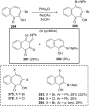
Scheme 73: Azo-coupling reactions of some halobenzotropolones 294, 375 and 378.

Figure 19: Four possible isomers of dibenzotropones 396–399.

Figure 20: Resonance structures of tribenzotropone (400).

Scheme 74: Two synthetic pathways for tribenzotropone (400).

Scheme 75: Synthesis of tribenzotropone (400) from dibenzotropone 399.

Scheme 76: Synthesis of tribenzotropone (400) from 9,10-phenanthraquinone (406).

Scheme 77: Synthesis of tribenzotropone (400) from trifluoromethyl-substituted arene 411.

Figure 21: Dibenzosuberone (414).

Figure 22: Reduction products 415 and 416 of tribenzotropone (400).

Figure 23: Structures of tribenzotropone dimethyl ketal 417 and 4-phenylfluorenone (412) and proposed intermed...

Figure 24: Structures of benzylidene- and methylene-9H-tribenzo[a,c,e][7]annulenes 419 and 420 and chiral phos...

Figure 25: Structures of tetracyclic alcohol 422, p-quinone methide 423 and cation 424.

Figure 26: Structures of host molecules 425–427.

Scheme 78: Synthesis of non-helical overcrowded derivatives syn/anti-431.

Figure 27: Hexabenzooctalene 432.

Figure 28: Structures of possible eight isomers 433–440 of naphthotropone.

Scheme 79: Synthesis of naphthotropone 437 starting from 1-phenylcycloheptene (441).

Scheme 80: Synthesis of 10-hydroxy-11H-cyclohepta[a]naphthalen-11-one (448) from diester 445.

Scheme 81: Synthesis of naphthotropone 433.

Scheme 82: Synthesis of naphthotropones 433 and 434 via cycloaddition reaction.

Scheme 83: Synthesis of naphthotropone 434 starting from 452.

Figure 29: Structures of tricarbonyl(tropone)irons 458, and possible cycloadducts 459.

Scheme 84: Synthesis of naphthotropone 436.

Scheme 85: Synthesis of precursor 465 for naphthotropone 435.

Scheme 86: Generation of naphthotropone 435 from 465.

Figure 30: Structures of tropylium cations 469 and 470.

Figure 31: Structures of tropylium ions 471+.BF4−, 472+.BF4−, and 473+.BF4−.

Scheme 87: Synthesis of tropylium ions 471+.BF4− and 479+.ClO4−.

Scheme 88: Synthesis of 1- and 2-methylanthracene (481 and 482) via carbene–carbene rearrangement.

Figure 32: Trapping products 488–490.

Scheme 89: Generation and chemistry of a naphthoannelated cycloheptatrienylidene-cycloheptatetraene intermedia...

Scheme 90: Proposed intermediates and reaction pathways for adduct 498.

Scheme 91: Exited-state intramolecular proton transfer of 505.

Figure 33: Benzoditropones 506 and 507.

Scheme 92: Synthesis of benzoditropone 506e.

Scheme 93: Synthetic approaches for dibenzotropone 507 via tropone (1).

Scheme 94: Formation mechanisms of benzoditropone 507 and 516 via 515.

Scheme 95: Synthesis of benzoditropones 525 and 526 from pyromellitic dianhydride (527).

Figure 34: Possible three benzocyclobutatropones 534–536.

Scheme 96: Synthesis of benzocyclobutatropones 534 and 539.

Scheme 97: Synthesis attempts for benzocyclobutatropone 545.

Scheme 98: Generation and trapping of symmetric benzocyclobutatropone 536.

Scheme 99: Synthesis of chloro-benzocyclobutatropone 552 and proposed mechanism of fluorenone derivatives.

Scheme 100: Synthesis of tropolone analogue 559.

Scheme 101: Synthesis of tropolones 561 and 562.

Figure 35: o/p-Tropoquinone rings (563 and 564) and benzotropoquinones (565–567).

Scheme 102: Synthesis of benzotropoquinone 566.

Scheme 103: Synthesis of benzotropoquinone 567 via a Diels–Alder reaction.

Figure 36: Products 575–577 through 1,2,3-benzotropoquinone hydrate 569.

Scheme 104: Structures 578–582 prepared from tropoquinone 567.

Figure 37: Two possible structures 583 and 584 for dibenzotropoquinone, and precursor compound 585 for 583.
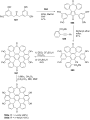
Scheme 105: Synthesis of saddle-shaped ketone 592 using dibenzotropoquinone 584.
Volatiles from three genome sequenced fungi from the genus Aspergillus
- Jeroen S. Dickschat,
- Ersin Celik and
- Nelson L. Brock
Beilstein J. Org. Chem. 2018, 14, 900–910, doi:10.3762/bjoc.14.77

- from cantaloupe a structural revision to the Z stereoisomer is proposed. Ethyl (Z)-hept-4-enoate also occurs in Aspergillus clavatus and was identified by synthesis of an authentic standard. Keywords: Aspergillus; GC–MS; genomics; terpenes; volatiles; Introduction Ascomycete fungi are a highly

Graphical Abstract
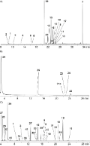
Figure 1: Total ion chromatograms of headspace extracts from A) Aspergillus fischeri NRRL 181, B) Aspergillus...

Scheme 1: Volatiles from Aspergillus fischeri. For all chiral compounds in Schemes 1–5 the relative configura...
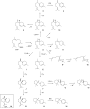
Scheme 2: Biosynthesis of bisabolanes and related terpenes in A. fischeri.

Scheme 3: Biosynthesis of daucanes in A. fischeri.

Scheme 4: Volatiles from A. kawachii. A) Proposed biosynthesis of sesquiterpenes, B) other identified volatil...

Scheme 5: Volatiles from A. clavatus.
Total synthesis of (+)-grandiamide D, dasyclamide and gigantamide A from a Baylis–Hillman adduct: A unified biomimetic approach
- Andivelu Ilangovan and
- Shanmugasundar Saravanakumar
Beilstein J. Org. Chem. 2014, 10, 127–133, doi:10.3762/bjoc.10.9
- quite low. Except for the elaborate synthetic work carried out by Hesse and Detterbeck [6], who described the synthesis of nine putrescine bisamides isolated from different Aglaia species along with the structural revision for one of the compounds and determination of absolute configuration for another

Graphical Abstract

Figure 1: Bisamides as building blocks for flavaglins.

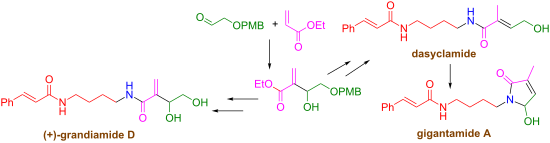
Figure 2: (+)-Grandiamide D, gigantamide A and dasyclamide.

Scheme 1: Retrosynthetic analysis: A unified synthetic approach for the synthesis of grandiamide D, dasyclami...

Scheme 2: Preparation of N-(4-aminobutyl)cinnamamide.

Scheme 3: Synthesis of (±)-grandiamide D.

Scheme 4: Asymmetric synthesis of natural (+)-grandiamide D.

Scheme 5: Various approaches for the synthesis of (E)-N-(4-cinnamamidobutyl)-4-((4-methoxybenzyl)oxy)-2-methy...

Scheme 6: Synthesis of dasyclamide.
A concise enantioselective synthesis of the guaiane sesquiterpene (−)-oxyphyllol
- Martin Zahel and
- Peter Metz
Beilstein J. Org. Chem. 2013, 9, 2028–2032, doi:10.3762/bjoc.9.239
- synthesis of the unnatural enantiomer of 1 enabled a structural revision of this compound and established its relative and absolute configuration as depicted in Figure 1 [4]. During the total synthesis of (−)-9-deoxyenglerin A, compound 1 had already been prepared enantiomerically pure in 14 steps starting

Graphical Abstract

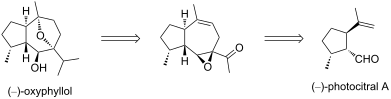
Figure 1: Structure of the guaiane (−)-oxyphyllol (1).

Scheme 1: Retrosynthetic analysis for (−)-oxyphyllol (1) and structures of the guaiane sesquiterpenes (+)-ori...

Scheme 2: Attempted selective deoxygenation of diol 7. a) 1 mol % K2OsO4, NMO, acetone, water, THF, rt, 97%, ...

Scheme 3: Conversion of 4 to 1. a) 20 mol % Co(acac)2, PhSiH3, 1 atm O2, THF, 0°C, 82%, diastereomeric ratio ...
Facile synthesis of two diastereomeric indolizidines corresponding to the postulated structure of alkaloid 5,9E- 259B from a Bufonid toad (Melanophryniscus)
- Angela Nelson,
- H. Martin Garraffo,
- Thomas F. Spande,
- John W. Daly and
- Paul J. Stevenson
Beilstein J. Org. Chem. 2008, 4, No. 6, doi:10.1186/1860-5397-4-6
- the carbon skeleton of 259B is different to 7 and supports the proposal that there is a branch point in the C5 side-chain. Clearly, a structural revision for 5,9E-259B is needed and it appears most likely that the point of difference is branching on the C5 side-chain. Isolation of 5,9E-259B for NMR

Graphical Abstract

Figure 1: Subclasses of diastereoisomeric 5,8-disubstituted alkaloids. The absolute stereochemistry of 5,9Z-2...

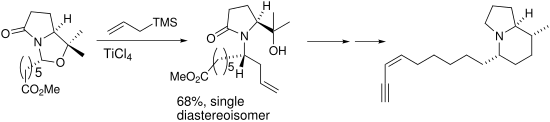
Scheme 1: Reagents: (i) MeMgI. 96% (ii) PTSA 71%. (iii) TiCl4 CH2Cl2 25 oC 3d 68%. (iv) MsCl, Et3N, THF -40 o...
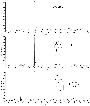
Figure 2: EIMS spectra of a) natural 5,9E-259B, b) synthetic 7, and c) synthetic minor diastereomer of 7. Str...
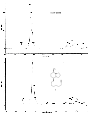
Figure 3: Vapor-phase FTIR spectra of a) natural 5,9E-259B, and b) synthetic 7. Structure shown with relative...



