Search results
Search for "transient absorption" in Full Text gives 29 result(s) in Beilstein Journal of Organic Chemistry.
Thermodynamic equilibrium between locally excited and charge transfer states in perylene–phenothiazine dyads
Beilstein J. Org. Chem. 2025, 21, 1577–1586, doi:10.3762/bjoc.21.121
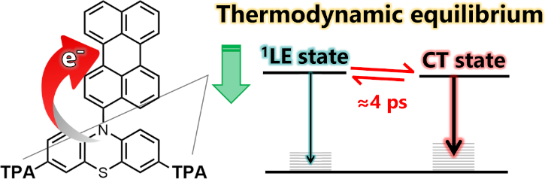
- the PTZ moiety and the photoinduced charge-transfer (CT) state. Femtosecond to microsecond transient absorption spectroscopy reveals that this equilibrium is facilitated not simply by enhanced donor ability, but presumably by excited-state planarization of the PTZ moiety, which lowers the energy of
- demonstrate that precise electronic and geometric design can enable controllable excited-state behavior in orthogonal molecular systems. Keywords: charge transfer; electron transfer; molecular dyad; transient absorption; Introduction Photoinduced electron transfer and charge separation are fundamental
- observed at the decay at 632 nm. Taking into account the broad emission feature observed at 500–520 nm only in the TPA-substituted PTZ derivatives, the emission component may be assigned to another state derived from TPA moieties. Microsecond transient absorption spectroscopy To elucidate the excited-state




On the photoluminescence in triarylmethyl-centered mono-, di-, and multiradicals
Beilstein J. Org. Chem. 2025, 21, 964–998, doi:10.3762/bjoc.21.80
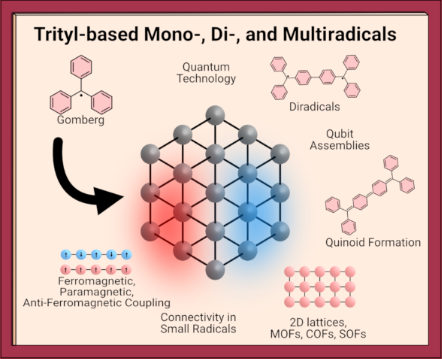
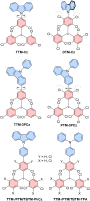
- 374 nm and 544 nm. Therefore, the higher energy for excitation to the D2 state must quickly be lost during relaxation to the relaxed D1 state, rendering the emission indistinguishable from the higher energy excitation. While for TTM and PTM there is no transient absorption data to further elucidate
- the excited state dynamics, there is evidence for this fast relaxation in donor-functionalized TTM radicals [26]. Moreover, transient absorption has been employed to elucidate the formation of a non-luminescent side-product in trityl radicals. During photodegradation, two halogens are lost and two









Mechanistic investigations of polyaza[7]helicene in photoredox and energy transfer catalysis
Beilstein J. Org. Chem. 2024, 20, 1236–1245, doi:10.3762/bjoc.20.106
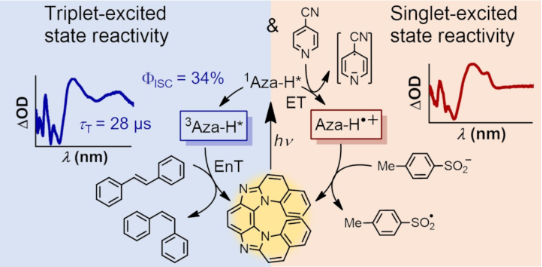
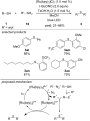
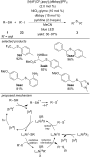
- cage escape quantum yields [67][68]. Aza-H exhibits a relatively long singlet lifetime of 9.6 ns (see Figure 4E), which is sufficient for diffusion-controlled energy or electron transfer at moderate substrate concentrations. Transient absorption (TA) spectra of an Ar-saturated Aza-H solution were
- (blue) and phosphorescence (green) spectra measured at 77 K in MeOH/EtOH (4:1). B) Transient absorption spectra of 25 µM (initial ground-state absorbance at the laser wavelength, 0.2) Aza-H in Ar-saturated (black) and air-saturated (red) MeCN/H2O (9:1) recorded after 250 ns and the difference spectrum
- 200 mM 4CP at 440 nm and 640 nm. B) TA spectra recorded after 250 ns of Aza-H in Ar-saturated solution in the absence (black) and presence (orange) of 5 mM 4CP. Inset: Kinetic traces at 640 nm. Mechanistic investigations of Aza-H with TsNa by LFP studies. A) Transient absorption measurements of 25 µM


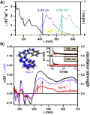


Photochromic derivatives of indigo: historical overview of development, challenges and applications
Beilstein J. Org. Chem. 2024, 20, 228–242, doi:10.3762/bjoc.20.23
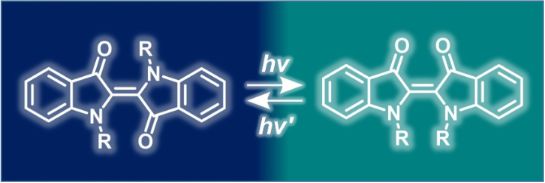
- (λirr = 660 nm). The excited state dynamics of 18c was later studied in detail by Nagasawa and co-workers using femtosecond time-resolved transient absorption spectroscopy [44]. In 2022, Qiao and co-workers attempted to extend the thermal relaxation half-life of compound 18c by addition of cations such
- the Z-isomers in comparison with the E-forms [62]. In 2018, Nagasawa and co-workers provided a detailed investigation of the influence of solvent polarity and intermolecular hydrogen bonding on the photoisomerization of N,N'-diacetylindigo (9a) by transient absorption spectroscopy [63]. In principle





Perspectives on push–pull chromophores derived from click-type [2 + 2] cycloaddition–retroelectrocyclization reactions of electron-rich alkynes and electron-deficient alkenes
Beilstein J. Org. Chem. 2024, 20, 125–154, doi:10.3762/bjoc.20.13
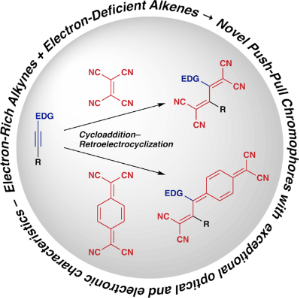
- particular, Diederich et al. conducted a theoretical investigation on the photophysical properties of 1,1,2,4,4-pentacyanobuta-1,3-diene (PCBD) (63) [134]. Compound 63 and the TCBD 64 demonstrated no discernible luminescence at room temperature and 77 K (Figure 4). Transient absorption spectral measurements
- the plausible energy transfer from the local charge-separated (CS) state of the push–pull chromophore (namely N,N-diethylanilino (DEA)•+–TCBD•−) to the singlet excited state of C60 (1C60*). In transient absorption spectral measurements conducted via the femtosecond laser-flash photolysis of compound
- . Consequently, these two structures could independently contribute to the emergence of two distinct and robust ICT bands in close proximity to those of their neighboring electron-rich ZnPc and DMA groups. Notably, in the transient absorption spectra of 84, acquired upon excitation at 775 nm (an excitation


Beyond n-dopants for organic semiconductors: use of bibenzo[d]imidazoles in UV-promoted dehalogenation reactions of organic halides
Beilstein J. Org. Chem. 2023, 19, 1912–1922, doi:10.3762/bjoc.19.142
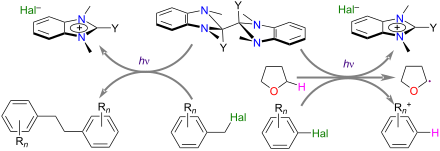
- potentials of the halides that can be reduced in this way, quantum-chemical calculations, and steady-state and transient absorption spectroscopy suggest that UV irradiation accelerates the reactions via cleavage of the dimers to the corresponding radical monomers. Keywords: dehalogenation; n-dopant
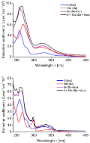
- investigate this possibility in more detail we recorded transient absorption spectra of the dimers following excitation at 350 nm. Importantly, the samples did not degrade during the experiment, indicating that the species observed eventually reform the dimers. The transient absorption spectra of (N-DMBI)2
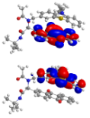
- -DMBI)2. Bottom: TD-DFT (M06/6-31G(d, p)) natural transition orbitals for selected (N-DMBI)2 transitions that are thought to be primarily responsible for (c) the main absorption peak and (d) the weak shoulder seen experimentally. Transient absorption spectra of (a) (N-DMBI)2 in MeCN, (b) (N-DMBI)2 in


Photoredox catalysis harvesting multiple photon or electrochemical energies
Beilstein J. Org. Chem. 2023, 19, 1055–1145, doi:10.3762/bjoc.19.81
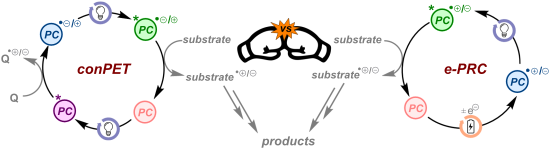
- obtained by transient absorption spectroscopy with femtosecond pulsed laser excitation and were 2–3 orders of magnitude greater (e.g., keT (*PC1•−) = 6.8 × 10¹⁰ s−1) than the diffusion rate in DMSO (kdiff = 4.0 × 10⁸ s−1 of 0.12 M 1d) confirming a preassociation of PC1•− and the substrate prior to PET
- reducing enough to engage the model substrate perfluorooctyl iodide and instead *[FeII(btz)3]2+ was verified as the key catalytic species by transient absorption spectroscopy; even though the strongly reducing α-amino alkyl radical intermediate might also engage in the reduction of alkyl halides or act as

























The effect of dark states on the intersystem crossing and thermally activated delayed fluorescence of naphthalimide-phenothiazine dyads
Beilstein J. Org. Chem. 2023, 19, 1028–1046, doi:10.3762/bjoc.19.79
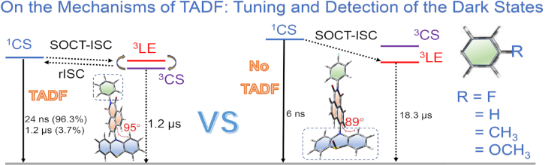
- transient absorption spectra showed that the charge separation takes ca. 0.6 ps, and admixtures of locally excited (3LE) state and charge separated (1CS/3CS) states formed (in n-hexane). The subsequent charge recombination from the 1CS state takes ca. 7.92 ns. Upon oxidation of the PTZ unit, the beginning
- of charge separation is at 178 fs and formation of 3LE state takes 4.53 ns. Nanosecond transient absorption (ns-TA) spectra showed that both 3CS and 3LE states were observed for the dyads showing TADF, whereas only 3LE or 3CS states were observed for the systems lacking TADF. This is a rare but
- states. Femtosecond transient absorption spectroscopy (fs-TA) was rarely used for the study of the photophysics of the TADF emitters [12][34][35][36][37], since it suffers from the limitation of the time window of detection (up to a few ns). On the other hand, nanosecond transient absorption spectroscopy


CuAAC-inspired synthesis of 1,2,3-triazole-bridged porphyrin conjugates: an overview
Beilstein J. Org. Chem. 2023, 19, 349–379, doi:10.3762/bjoc.19.29
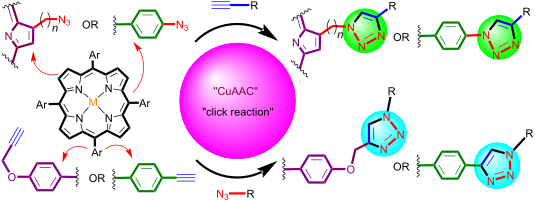
- fluorescence investigation of hybrid 96 revealed that the fluorescence of zinc porphyrin was strongly quenched, and the electron-transfer quenching mechanism was validated by easy oxidation. Furthermore, femtosecond transient-absorption spectrum investigations offered proof of the charge-separation process




Naphthalimide-phenothiazine dyads: effect of conformational flexibility and matching of the energy of the charge-transfer state and the localized triplet excited state on the thermally activated delayed fluorescence
Beilstein J. Org. Chem. 2022, 18, 1435–1453, doi:10.3762/bjoc.18.149
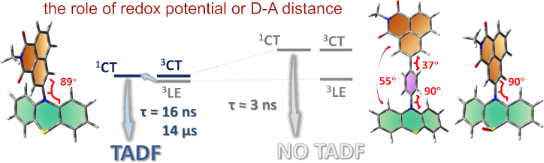
- observed in the nanosecond transient absorption spectra with lifetimes in the 4–48 μs range. Computational investigations show that the orthogonal electron donor–acceptor molecular structure is beneficial for TADF. These calculations indicate small energetic difference between the 3LE and 3CT states, which
- interaction being far from negligible in compact dyads. Nanosecond transient absorption (ns-TA) spectra In order to identify the lowest-lying transient species of the dyads and the triad formed upon photoexcitation, the ns-TA spectra of the compounds were recorded (Figure 8). For the reference NI-3Br (Figure
- NI-PTZ-O (up to 90% in DCM) due to the increase of the CT state energy. In nanosecond transient absorption spectra in HEX, in general a 3LE state was observed (lifetime: 16–48 μs). For all the compounds, CT emission bands were observed in HEX. In polar solvents, CT state was observed for NI-PTZ, NI-N
Control over size, shape, and photonics of self-assembled organic nanocrystals
Beilstein J. Org. Chem. 2021, 17, 42–51, doi:10.3762/bjoc.17.5
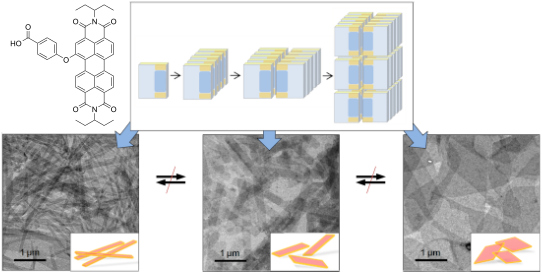
- upon drying, as was evidenced by TEM and atom force microscopy. Photophysical studies, including femtosecond transient absorption spectroscopy, revealed a distinct influence of the ONC morphology on their photonic properties (excitation energy transfer was observed only in the high-aspect ONCs
- excited state dynamics of the nanocrystals. Femtosecond transient absorption spectra of all assemblies displayed typical PDI excited state absorption peaks in the range of 600–770 nm [50], matching PDI bleaching represented by negative features at 550–600 nm. In the disaggregated state, almost no power
- plunged at t = 1 min was used again at t = 5 min and t = 30 min in order to elucidate the structural evolution of the self-assembled crystals. Femtosecond transient absorption Femtosecond transient absorption spectroscopy was performed by a methodology analogous as described previously [36], using a




Naphthalonitriles featuring efficient emission in solution and in the solid state
Beilstein J. Org. Chem. 2020, 16, 2960–2970, doi:10.3762/bjoc.16.246
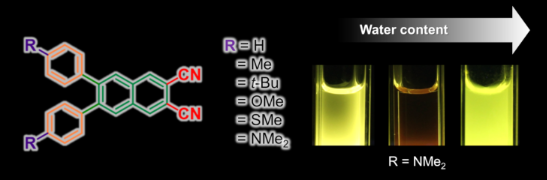
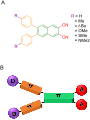
- contributing to the emissive singlet state cannot be entirely ruled out; besides the obvious lack of solvent stabilization in frozen matrices, a TICT suppression at 77 K can also account for the blue-shifted emission in the frozen glassy matrix. However, further transient-absorption experiments and TD-DFT



Photosensitized direct C–H fluorination and trifluoromethylation in organic synthesis
Beilstein J. Org. Chem. 2020, 16, 2151–2192, doi:10.3762/bjoc.16.183
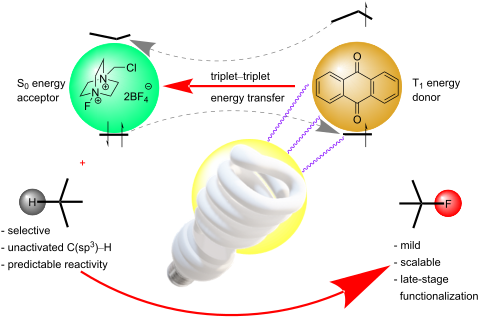
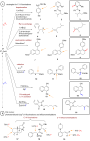
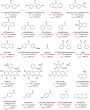
- (sp3)–H fluorination mechanistic studies: In order to unearth a greater understanding of their previously-reported photosensitized C(sp3)–H fluorination, Tan, Lu, Soo and co-workers employed a nanosecond-scale transient absorption (TA) spectroscopy and time-dependent density functional theory (TDDFT






Heterogeneous photocatalysis in flow chemical reactors
Beilstein J. Org. Chem. 2020, 16, 1495–1549, doi:10.3762/bjoc.16.125
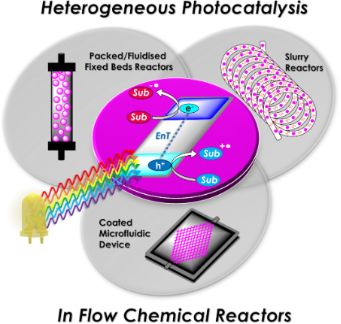
- ][124][125][126][127]. Despite its structural similarities to graphite, the charge carrier mobility in g-C3N4 is significantly different. Transient absorption and transient photoluminescence (TRPL) spectroscopy analysis of a set of g-C3N4 materials found that the charge transport was predominantly














Recent developments in photoredox-catalyzed remote ortho and para C–H bond functionalizations
Beilstein J. Org. Chem. 2020, 16, 248–280, doi:10.3762/bjoc.16.26
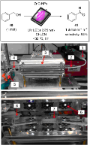
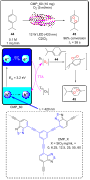
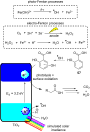
- hydroxylation of arenes (Scheme 18) [157]. They realized that the photoredox catalyst 8 possesses a great oxidizing ability (Ered vs SCE = 2.72 V) at ambient conditions. The mechanism of the reaction was studied by fluorescence quenching and transient absorption spectroscopy. They observed that the one-electron
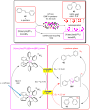
- observed that hydroxylation of the fluoro-, chloro-, and bromobenzene derivatives provided low yields. The photocatalytic mechanism for this reaction was inspected by time-resolved transient absorption spectroscopy to detect the triplet–triplet photoredox catalyst spectrum via nanosecond laser flash
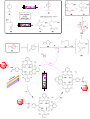
- [163]. They exploited the potent photoredox catalyst 2 for the excitation of the substrate. The mechanism was detected by nanosecond transient absorption spectroscopy. The substrate scope and mechanism are shown in Scheme 22 and Figure 22. Furthermore, König and co-workers synthesized monochlorinated












Arylisoquinoline-derived organoboron dyes with a triaryl skeleton show dual fluorescence
Beilstein J. Org. Chem. 2019, 15, 2612–2622, doi:10.3762/bjoc.15.254
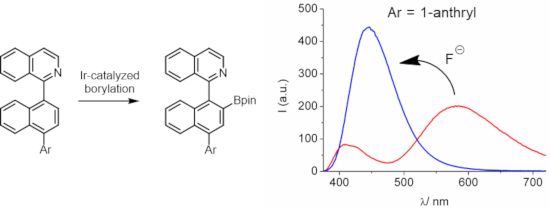
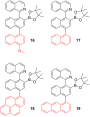
- characterization of the dyes 16–19 was completed by nanosecond laser-flash photolysis experiments in acetonitrile [45]. The laser excitation (λexc = 308 nm) of the dyes 16 and 17 in nitrogen-purged solution yielded transient absorption spectra with a broad band at λmax = 610 and 600 nm, respectively (see Figure 3
- –triplet absorption band at 520 nm). The experimental results corroborate the assignment of the transients to excited triplet states of 16 and 17. Noteworthy, the dyes 18 and 19 are characterized by distinct transient absorption spectra (excitation at λexc = 355 nm) with signals at shorter wavelengths
- acetonitrile (containing 0.4 vol % DMF as co-solvent). Transient absorption spectrum (600 ns delay) of dye 17 in nitrogen-purged acetonitrile on excitation at 308 nm. The inset shows the corresponding kinetics at 600 nm. Fluorescence titrations of the dyes (ca. 4–11 μM) with Bu4NF in acetonitrile. a) 16 (up to



Ultrafast processes triggered by one- and two-photon excitation of a photochromic and luminescent hydrazone
Beilstein J. Org. Chem. 2019, 15, 2438–2446, doi:10.3762/bjoc.15.236
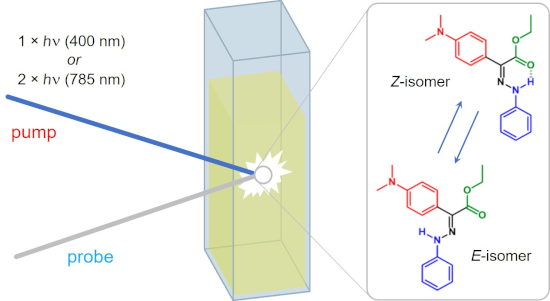
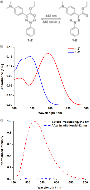
- emission component in the 500–520 nm spectral range, attributed to the Z-isomer, and a very short living blue-shifted emission, attributed to the E-isomer. Finally, transient absorption measurements performed upon far-red excitation are employed as an alternative method to determine the two-photon
- , Supporting Information File 1). Transient absorption spectroscopy To get more insights into the isomerization and fluorescence mechanism of 1, we measured transient absorption spectra of the molecule in different solvents. A fresh solution of the Z-form was excited using 400 nm light, and spectra were
- are observable at a later timescale, the transient signal almost completely recovers on a ca. 140 ps timescale, which is similar to the fluorescence lifetime of the Z-isomer measured in this solvent. To extract a quantitative kinetic information from the transient absorption data, they have been



Excited state dynamics for visible-light sensitization of a photochromic benzil-subsituted phenoxyl-imidazolyl radical complex
Beilstein J. Org. Chem. 2019, 15, 2369–2379, doi:10.3762/bjoc.15.229
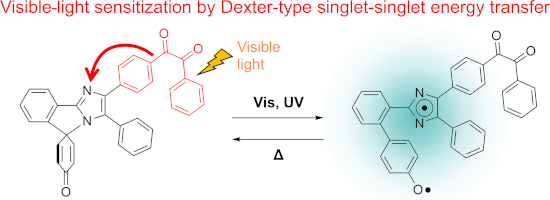
- switching speed of PIC opened up various potential applications, no photosensitivity to visible light limits its applications. In this study, we synthesized a visible-light sensitized PIC derivative conjugated with a benzil unit. Femtosecond transient absorption spectroscopy revealed that the benzil unit
- ; sensitizer; transient absorption spectroscopy; Introduction Photochromism, which is defined as the reversible transformation of a chemical species between two structural isomers by light, has been extensively studied over decades [1][2][3][4]. Recently, visible-light sensitized photochromic materials have
- A. PIC generates the biradical species upon UV-light irradiation and shows the broad transient absorption spectrum over the visible- to near infrared-light regions. The half-life of the thermal back reaction of the biradical in benzene is 250 ns (the lifetime is 360 ns) at 298 K. To investigate the

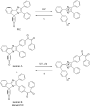


Degenerative xanthate transfer to olefins under visible-light photocatalysis
Beilstein J. Org. Chem. 2018, 14, 3047–3058, doi:10.3762/bjoc.14.283

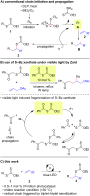
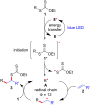
- -octene (2a) and the photocatalyst 8 as demonstrated by the insignificant PL quenching of the photocatalyst [53]. The ns-transient absorption (TA) spectra of photocatalyst 8 (25 μM solution in degassed DMSO) obtained using 355 nm pulse excitation and recorded at different delay times are shown in Figure
- absorption spectra of photocatalyst 8 in degassed DMSO recorded at different delay times (excitation wavelength = 355 nm). (B) ns-TA kinetic profile probed at 480 nm for photocatalyst 8 in the absence and presence of xanthate 1a. (C) and (D) ns-Transient absorption spectra of xanthate 1a and 8 in the
- the corrected PL quenching at 480 nm. (C) Time-resolved PL lifetime decay profiles of photocatalyst 8 in degassed DMSO in the absence of quencher (square), presence of xanthate 1a (circle) and presence of 1-octene (2a, triangle). The mono-exponential decay fits are provided. (A) ns-Transient



Synthesis of aryl sulfides via radical–radical cross coupling of electron-rich arenes using visible light photoredox catalysis
Beilstein J. Org. Chem. 2018, 14, 2520–2528, doi:10.3762/bjoc.14.228
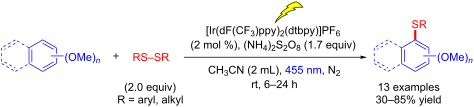
- (1,3,5-TMB•+) is formed indeed during the quenching process of the catalyst by 1,3,5-TMB (Scheme 5) ns-time-resolved transient absorption spectroscopy was used [50]. To allow for a decomposition of the multicomponent spectra we conducted laser flash photolysis (LFP) experiments on the single components
- ps/div, 10 ns/div, 10µs/div; tmax = 3.5 µs to 10 µs) provided information on photophysics and photochemistry of the single reactants. Figure 4 shows the strong luminescence of the catalyst (red line) that overlaps with the transient absorption of the postulated 1,3,5-TMB•+ in the 2-component mixture
- under 355 nm irradiation, a broad transient absorption from 300 nm to 390 nm that did not decline over the measurement time (up to 10 µs, see Supporting Information File 1). In the UV–vis spectra recorded after the LFP experiment a significant change in absorption in the 300–370 nm region was observed


Synthesis and photophysical studies of a multivalent photoreactive RuII-calix[4]arene complex bearing RGD-containing cyclopentapeptides
Beilstein J. Org. Chem. 2018, 14, 1758–1768, doi:10.3762/bjoc.14.150
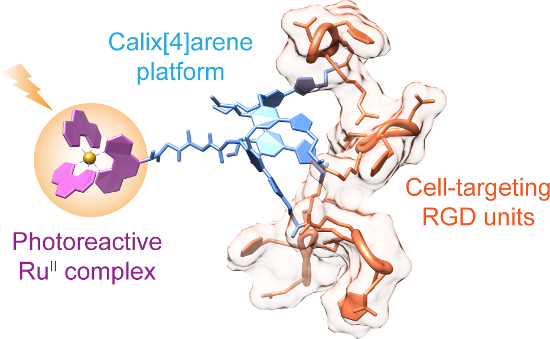
- radical guanine generated after the photoinduced electron transfer (PET). In order to confirm the occurrence of PET, transient absorption measurements with conjugate 9 were performed in the absence and in the presence of GMP. The recorded transient absorption spectra are presented in Figure 5. In absence
- of GMP, the transient absorption spectrum of conjugate 9 is dominated by the luminescence, the ground state bleaching and some excited state absorption around 340 nm whereas in the presence of GMP a positive transient signal can be observed around 500 nm on a long time scale. This transient is
- -calix[4]arene-[c-(RGDfK)]4 conjugate 9 in water. Luminescence intensity and excited state lifetime of conjugate 9 in the presence of GMP measured in 10 mM Tris·HCl buffer at pH 7.0. Transient absorption spectra of RuII-calix[4]arene-[c-(RGDfK)]4 conjugate 9 (in 10 mM Tris·HCl buffer at pH 7.0) measured





Photocatalytic formation of carbon–sulfur bonds
Beilstein J. Org. Chem. 2018, 14, 54–83, doi:10.3762/bjoc.14.4
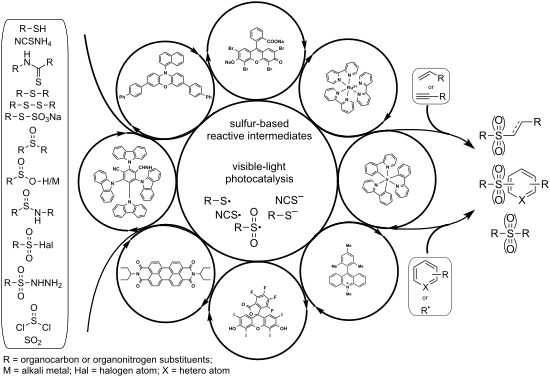
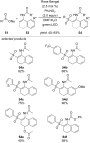
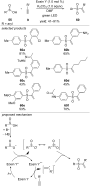
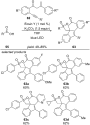
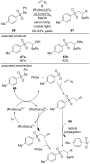
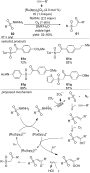
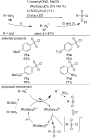
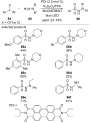
- from alkyl and aryl thiosulfates and aryl diazonium salts (Scheme 39) [74]. They confirmed by transient absorption spectroscopy that a single-electron transfer occurs between [Ru(bpy)3]Cl2 and the aryl diazonium salt. Additionally, electron paramagnetic resonance studies showed that K2CO3 interacts





























Biradical vs singlet oxygen photogeneration in suprofen–cholesterol systems
Beilstein J. Org. Chem. 2016, 12, 1196–1202, doi:10.3762/bjoc.12.115

- significantly more photoreactive than 1 indicating a clear stereodifferentiation in the photochemical behavior. Transient absorption spectra obtained for 1–3 were very similar and matched that described for the SP triplet excited state (typical bands with maxima at ca. 350 nm and 600 nm). Direct kinetic
- (LFP) The studies were carried out in dichloromethane under anaerobic atmosphere at λexc = 355 nm. Transient absorption spectra acquired for 1–3 (Figure 6) were all very similar to that previously reported for the triplet excited state of SP, with maxima at ca. 350 nm (major) and 600 nm (minor) [18
- function of the irradiation time. Inset: changes in the absorption spectrum of a deaerated dichloromethane solution of 1 after increasing irradiation times with monochromatic light at λ = 266 nm. Transient absorption spectra for dyad 1 in CH2Cl2 1 μs after laser pulse (λexc = 355 nm). Inset: Normalized


The Ugi four-component reaction as a concise modular synthetic tool for photo-induced electron transfer donor-anthraquinone dyads
Beilstein J. Org. Chem. 2014, 10, 1006–1016, doi:10.3762/bjoc.10.100
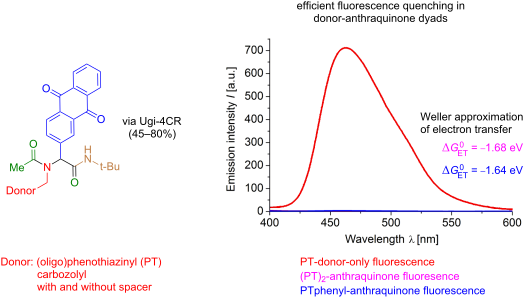
- anthraquinone-substituted aldehyde together with acetic acid and tert-butyl isocyanide for rapidly assembling a donor–acceptor conjugate 1 displaying a photo-induced electron transfer leading to a charge-separated state with a lifetime of >2 ns (Figure 1), as elucidated by femtosecond transient absorption
- nonradiative depopulation of the excited state can be assumed by an electron transfer. This rationale is additionally supported by our previous transient absorption spectroscopic study of the dyad 1 [56]. According to the Weller approximation [87] the driving force for a photo-induced electron transfer leading
- the electronic ground state, whereas the emission of the donor moieties is efficiently quenched according to static fluorescence spectroscopy. The observed peculiar fluorescence quenching was previously studied by femtosecond transient absorption spectroscopy of a related model dyad indicating a photo




On the mechanism of photocatalytic reactions with eosin Y
Beilstein J. Org. Chem. 2014, 10, 981–989, doi:10.3762/bjoc.10.97
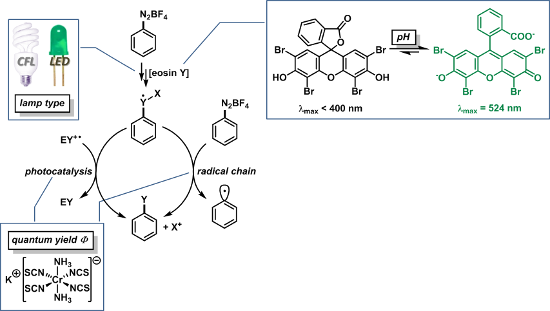
- possible without further spectroscopic, kinetic, and theoretical experiments. The studied systems are mostly too complex for transient absorption spectroscopy. We have so far failed to obtain any insight from photo-CIDNP NMR experiments. Therefore, we have decided to evaluate the efficiency of the