
Search results
Search for "phase" in Full Text gives 1591 result(s) in Beilstein Journal of Nanotechnology. Showing first 200.
Multilayered hyperbolic Au/TiO2 nanostructures for enhancing the nonlinear response around the epsilon-near-zero point
Beilstein J. Nanotechnol. 2026, 17, 251–261, doi:10.3762/bjnano.17.17
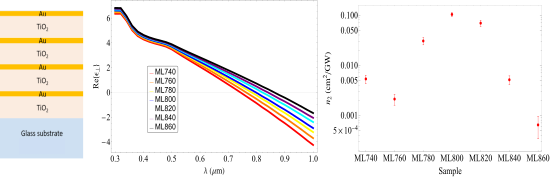
- that, with the right manipulation of the geometry, we are able to make the electric permittivity near zero (“epsilon near zero”, ENZ). The ENZ point causes light to travel through the medium with constant phase, it enhances the electric field, and it enhances the nonlinear response by combining
- coherently the response generated at different planes within the medium without the need of phase matching [5]. Ideally, we would like these materials not to have linear absorption, which prevents the full exploitation of these properties. The presence of linear absorption means that ℑ{ε} ≠ 0, which


Comparative study on 3D morphologies of delignified, single tracheids and fibers of five wood species
Beilstein J. Nanotechnol. 2026, 17, 239–250, doi:10.3762/bjnano.17.16
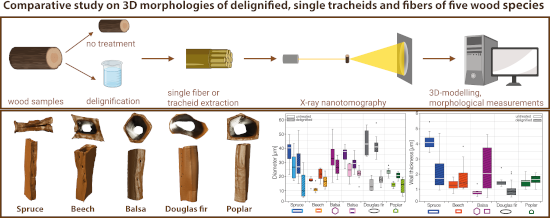
- tomography setup at the nanotomography endstation of beamline P05 of PETRA III at Deutsches Elektronen-Synchrotron (DESY). The X-ray beam was monochromatized using a Si(111) double crystal monochromator at an energy of 11 keV with a Zernike phase contrast [29]. An X-ray sCMOS camera (Hamamatsu C12849-101U
- , Pdet = 6.5 µm pixel size, 2048 × 2048 pixel, 16 bit image depth) with a 10 µm Gadox scintillator was used as the detector. For high-contrast and low-dose imaging, holotomography was applied as the phase contrast technique. Here, a gold Fresnel zone plate with a diameter of 300 µm was used [30]. By
- tomograms. The most representative examples without obvious deformations (16 tomograms: spruce n = 4, beech n = 2, balsa n = 4, Douglas fir n = 2, and poplar n = 4) were selected for presentation. The phase retrieval was performed using HoloTomoToolbox [31], while the tomographic reconstruction was


Structure-dependent thermochromism of PAZO thin films: theory and experiment
Beilstein J. Nanotechnol. 2026, 17, 186–199, doi:10.3762/bjnano.17.12
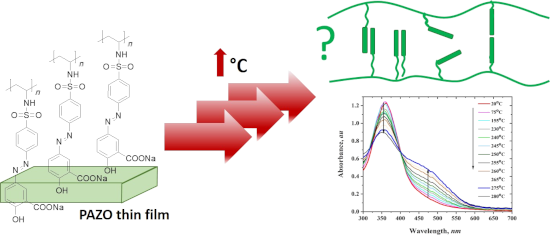
- be a new phase of PAZO transformation. Finally, the last three spectra in Figure 2B show how after reaching the maximum heating temperature of 300 °C and subsequent cooling to r.t., the spectrum remains relatively unchanged for a short time. It should be noted that the polymer retains its ability to
- calculations at r.t. for dimer formation reactions reveal that, from the thermodynamic point of view, the formation of a–d dimers is possible, the reactions are characterized by negative values of Gibbs energies ranging from −24.3 to −9.3 kcal·mol−1 in the gas phase, and from −10.8 to −3.7 kcal·mol−1 in
- ΔEel, ΔEth, PΔV (work term), and ΔS between the products and reactants were used to evaluate the gas-phase free energy of the supramolecular complex formation/aggregation, ΔG1, at T = 298.15 K according to: Solvation effects were accounted for by employing the solvation model based on density (SMD) [31


From shield to spear: Charge-reversible nanocarriers in overcoming cancer therapy barriers
Beilstein J. Nanotechnol. 2026, 17, 159–175, doi:10.3762/bjnano.17.10
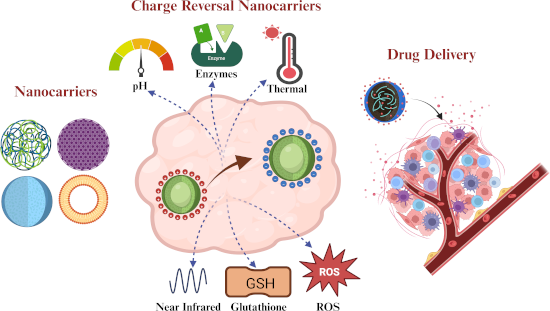
- phase I/II clinical trials for their safety, pharmacokinetic behaviour, and therapeutic potential. Collectively, these findings underscore the promise of CRNs as next-generation, stimulus-responsive drug delivery platforms capable of achieving precise tumour targeting with reduced off-target effects. Li
- models [93]. Most CRNs are still at the preclinical level; however, notable strides have been made toward their clinical implementation. While CRN-specific platforms have yet to appear in phase I/II clinical trials, early stage studies involving pH-sensitive and ionizable lipid-based nanoparticles for


Influence of surface characteristics on the in vitro stability and cell uptake of nanoliposomes for brain delivery
Beilstein J. Nanotechnol. 2026, 17, 139–158, doi:10.3762/bjnano.17.9
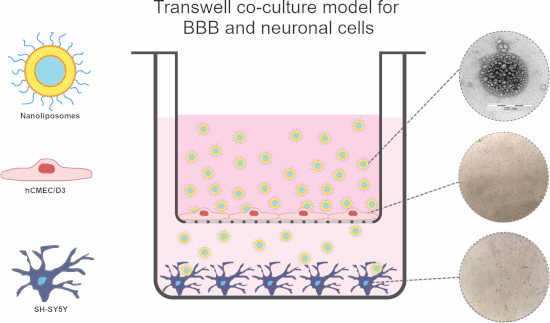
- homogenized again at 6,000 rpm for 3 min and stored at 4–8 °C. All fluorescent dyes, Nile red (1.6%, w/w) and Dil stain (2.5%, w/w), used in cell culture experiments were added in the organic phase during the preparation process, according to Mihailova et al. [17]. In order to remove the unincorporated
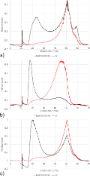
- intensive but excels in fractionating samples under optimal flow and separation conditions. This method is distinguished by gentle separation conditions and a wide operational range. Unlike conventional chromatography, AF4 does not utilize a stationary phase. The separation mechanism involves a longitudinal




Capabilities of the 3D-MLSI software tool in superconducting neuron design
Beilstein J. Nanotechnol. 2026, 17, 122–138, doi:10.3762/bjnano.17.8
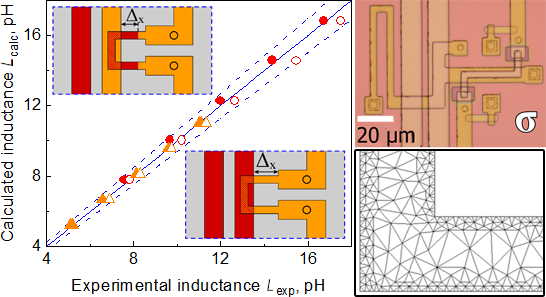
- critical current, φ is the phase difference across the Josephson junction, and the coefficients ki (as well as Δk4) are expressed in terms of the self- and mutual inductances of the neuron arms. The “offset terms” ε and ζ depend on the initial flux in the readout element and do not affect the shape of the
- magnetic flux as determined by a sinusoidal current–phase relationship assumed for tunnel-type junctions. Moreover, the experimental curves were quite symmetrical (see Figure 13b), which allowed for sinusoidal approximation and period determination with an accuracy of the order of 1%. Difficulties could



Development and in vitro evaluation of liposomes and immunoliposomes containing 5-fluorouracil and R-phycoerythrin as a potential phototheranostic system for colorectal cancer
Beilstein J. Nanotechnol. 2026, 17, 97–121, doi:10.3762/bjnano.17.7
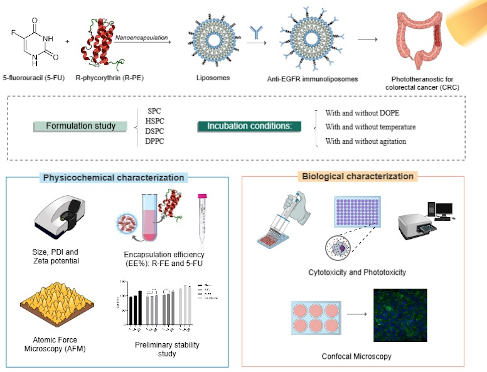
- . (2022) achieved 61.73 ± 0.65 using SPC and cholesterol, which decreased to 50.20 ± 10.20 upon Span 20 addition [34]. Formulations with DSPC showed an improvement in EE%, likely due to its higher phase transition temperature and longer acyl chains, which enhance bilayer rigidity and stability [35
- ]. Conversely, this trend was not observed in DPPC-based liposomes. DPPC has a lower phase transition temperature (41 °C) than DSPC (55 °C), leading to higher permeability. It has been reported that DPPC liposomes may leak encapsulated compounds even before reaching their transition temperature. Given that film
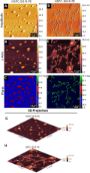
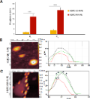
- previous studies [27][59][60]. To complement the topographic data, when comparing phase images of both formulations (Figure 3C and Figure 3F for HSPC-50-R-PE and HSPC-IM-R-PE, respectively), we observe further evidence of consistent structural alterations in the membrane of immunoliposomes, which aligns



Functional surface engineering for cultural heritage protection: the role of superhydrophobic and superoleophobic coatings – a comprehensive review
Beilstein J. Nanotechnol. 2026, 17, 63–96, doi:10.3762/bjnano.17.6

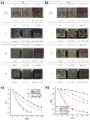
- activity under both UV-A and visible light. The TiO2/C-dot composites were synthesized via a green, hydrothermal method using citric acid and hydroxylamine, resulting in anatase-phase particles. Various C-dot loadings were tested; composites with moderate content (i.e., TC25 and TC50) demonstrated superior




Microscopic study of the intermediate mixed state in intertype superconductors
Beilstein J. Nanotechnol. 2026, 17, 57–62, doi:10.3762/bjnano.17.5
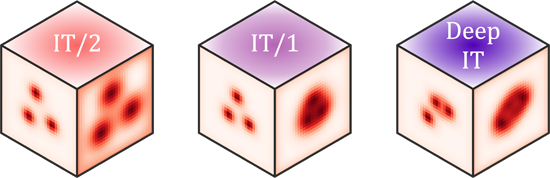
- entire temperature range 0 < T < Tc. Our results demonstrate the key features of IT superconductivity, namely, nonmonotonic vortex interactions and formation of vortex clusters. Using results of the calculations, we construct a “temperature–coupling” phase diagram that delineates distinct superconducting
- energy. Deviations from the ℬ point lift this degeneracy, creating a finite IT domain in the (κ, T) phase diagram [17][23][24]. Within this domain, the system supports a variety of states with close energies that feature nonuniform flux distributions and complex vortex arrangements. Based on the
- increases, shrinking to a single point at Tc. Based on these findings, we construct a phase diagram of the IT regime, which appears qualitatively consistent with that obtained earlier from perturbation theory for the conventional BCS model with a spherical Fermi surface. Results and Discussion Model and


Competitive helical bands and highly efficient diode effect in F/S/TI/S/F hybrid structures
Beilstein J. Nanotechnol. 2026, 17, 15–23, doi:10.3762/bjnano.17.2
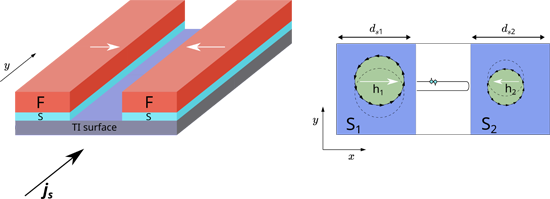
- surface (normal N part) and ds1(ds2) is the width of S1 (S2) region. It is important to emphasize that, although the geometry of the considered device corresponds to a Josephson junction, in this work we consider zero macroscopic phase difference between regions S1 and S2, so that the Josephson
- supercurrent due to the phase shift is absent. The anomalous ground state phase shift ϕ0 is also absent since we assume the exchange field component hy = 0. In contrast, the hx component is considered to be finite in the system and defined as follows: As we stated above, we assume the phase gradient q to be
- the same in the whole system. Obviously, this is not the case if L ≫ ξ because, in this case, the Josephson coupling between the S1 and S2 leads is absent, and they do not “feel” each other. In each lead, a distinct phase gradient q1,2 = −2hi/α is established to satisfy the zero spontaneous current


![[Graphic 16]](/bjnano/content/inline/2190-4286-17-2-i31.svg?max-width=637&scale=1.18182)
![[Graphic 17]](/bjnano/content/inline/2190-4286-17-2-i32.svg?max-width=637&scale=1.18182)


Quantitative estimation of nanoparticle/substrate adhesion by atomic force microscopy
Beilstein J. Nanotechnol. 2026, 17, 1–14, doi:10.3762/bjnano.17.1

- pushed NPs, leaving holes with a depth of up to 7 nm in the Si surface. The origin of these holes still needs to be clarified, but formation during NP impact (at high substrate voltages) due to plastic deformation/tilting, formation of the Cu3Si intermetallic phase [42], and/or fracturing of the NP
- intermetallic phase, both leading to interface strengthening. Future research on local interface formation between substrates and NPs with different kinetic energies would be necessary to establish a comprehensive understanding of NP adhesion. Despite the deviations between theoretically predicted and measured



Terahertz-range on-chip local oscillator based on Josephson junction arrays for superconducting quantum-limited receivers
Beilstein J. Nanotechnol. 2025, 16, 2296–2305, doi:10.3762/bjnano.16.158
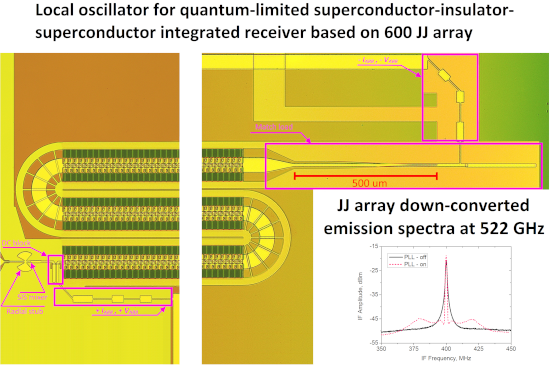
- improvement of the oscillator performance. Keywords: Josephson junction arrays; phase-locking; superconducting local oscillator; superconductor integrated receiver; terahertz-range oscillators; Introduction Superconducting heterodyne receivers based on superconductor–insulator–superconductor (SIS) tunnel
- the harmonic mixer (HM) for frequency and phase locking. For the first time the possibility of phase locking of the JJ array to the local source unit was demonstrated with a spectral ratio higher than 90% at the best points [39]. We have also studied and compared the free-running linewidth of the
- quasiparticle current step more than 0.25 of the current at the gap voltage of the mixer junction. Second, the oscillator frequency should be tunable in a wide range. Third, the ability to phase-lock to the external stable synthesizer should be implemented. Fourth, the spectral ratio (ratio of the signal power


Improving magnetic properties of Mn- and Zn-doped core–shell iron oxide nanoparticles by tuning their size
Beilstein J. Nanotechnol. 2025, 16, 2285–2295, doi:10.3762/bjnano.16.157
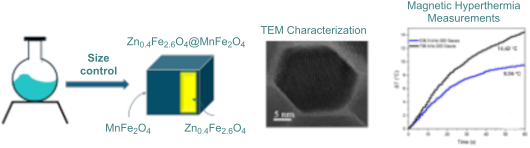
- least tenfold). The designed core NPs are composed of a Zn0.4Fe2.6O4 core and a MnFe2O4 shell. Their size and morphology were determined by transmission electron microscopy, Fourier-transform infrared spectroscopy was used to investigate their chemical composition. The iron oxide phase was confirmed by
- . Mössbauer analysis (Figure S2, Supporting Information File 1) was performed to determine the NPs phase by using a conventional Mössbauer spectrometer in a standard transmission configuration at room temperature. The velocity scale was calibrated with a CoRh (25 mCi) source and a metallic iron foil. The
- standard spinel cubic phase (space group ), matching well with reference data such as JCPDS card no. 22-1012 for ZnFe2O4. No impurity phases were detected, indicating that the synthesized Zn0.4Fe2.6O4 is a single-phase spinel ferrite. The shift and relative intensity of the peaks may reflect the partial



Visualizing nanostructures in supramolecular hydrogels: a correlative study using confocal and cryogenic scanning electron microscopy
Beilstein J. Nanotechnol. 2025, 16, 2274–2284, doi:10.3762/bjnano.16.156
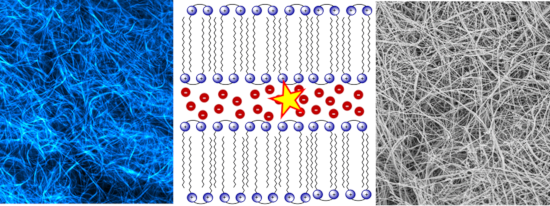
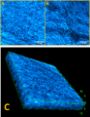
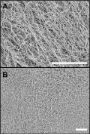
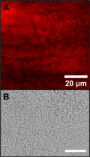
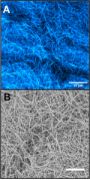
- result in phase separation whereby the water freezes, first expelling the ethanol into concentrated domains, which alters microscale material morphology. Such a phenomenon has been exploited for the fractional freezing of water–ethanol mixtures and in liposomal formulations containing water and DMSO [36




Chiral plasmonic nanostructures fabricated with circularly polarized light
Beilstein J. Nanotechnol. 2025, 16, 2245–2264, doi:10.3762/bjnano.16.154
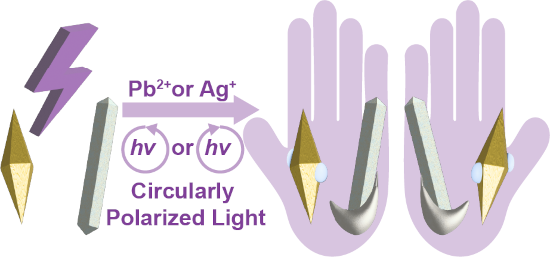
- of achiral PNSs to a more efficient seeded-growth approach in a colloidal phase. The Nam group achieved a significant breakthrough in 2018 with the large-scale synthesis of highly homogenous chiral gold nanostructures using amino acids and peptides [19]. The Tatasuma group developed the first CPL
- longitudinal (L) plasmons as classical oscillators [72][73][74]. The interference between these two modes defines the EM near-field intensity profile. Their interaction can be constructive or destructive depending on the phase difference between the T and L modes. CPL, equivalent to two perpendicular linearly
- polarized light waves with a π/2 phase difference, can further modulate the phase difference between the two modes by π/2. This generates a chiral EM field intensity profile at specific wavelengths. The full details of this model can be found in [72][73][74]. This model suggests that CPL spatially isolates





Optical bio/chemical sensors for vitamin B12 analysis in food and pharmaceuticals: state of the art, challenges, and future outlooks
Beilstein J. Nanotechnol. 2025, 16, 2207–2244, doi:10.3762/bjnano.16.153
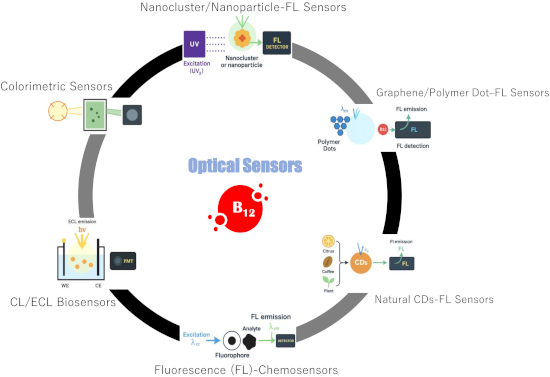
- produce inaccurately normal readings due to interference from anti-intrinsic factor (IF-Ab) or variables like heterophilic antibodies [72][73]. However, Zhang et al. have recently collected VB12 through solid-phase extraction and analyzed it using an LC tandem mass spectrometry (LC-MS/MS) method. They


Hartree–Fock interaction in superconducting condensate fractals
Beilstein J. Nanotechnol. 2025, 16, 2177–2182, doi:10.3762/bjnano.16.150
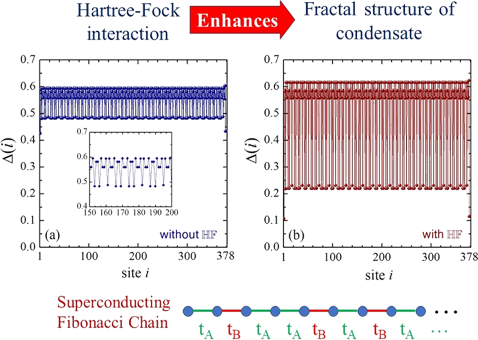
- of superconducting quasicrystals near Tc. Here, we note an early investigation of another quasiperiodic one-dimensional quantum system, namely, the Ising model on a transverse applied field, which studied the phase transition occurring in its coupling parameter and related critical indexes [28]. For


Missing links in nanomaterials research impacting productivity and perceptions
Beilstein J. Nanotechnol. 2025, 16, 2168–2176, doi:10.3762/bjnano.16.149
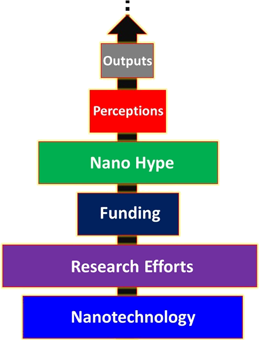
- . Unlike generative AI where a large portion of funding goes directly into product development and use, nanotechnology, still in a growing and exploratory phase has required considerable investment in physical infrastructure, metrology, safety protocols, and specialized facilities. These investments are
- . Nanomaterials research, like any deeply fundamental scientific domain, faces intrinsic bottlenecks, both technical and conceptual, which cannot be overlooked. In spite of these challenges, the field is undergoing a phase of foundational maturation. Although some early-stage products and devices are marketed
- under the umbrella of “nanotechnology”, many of these merely represent the initial wave of applications. This phase is comparable to the early era of personal computing, such as the first-generation iPhones, technologically limited, yet instrumental in paving the way for transformative advances
Quality by design optimization of microemulsions for topical delivery of Passiflora setacea seed oil
Beilstein J. Nanotechnol. 2025, 16, 2116–2131, doi:10.3762/bjnano.16.146
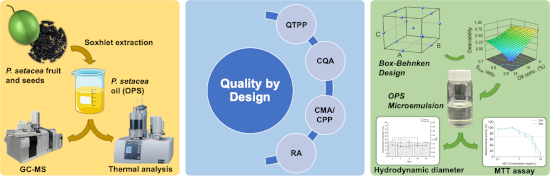
- product profile and critical quality attributes In this study, the QTPP and associated CQAs were established during the pre-formulation phase, guiding the formulation strategy (Table 2) [21]. Based on the QTPP, preformulation-level CQAs were systematically identified by assessing how their potential
- ) was selected for the subsequent optimization phase [24]. The BBD employs three levels for each factor: in each experiment, two factors vary between their upper (+1) and lower (−1) levels, while the third remains at the center point (0) [24]. Using this approach, 17 experimental combinations were
- at similar concentrations (13.2% of PEG-30 castor oil and 1.8% of Span® 80), for curcumin delivery in a Miglyol® 812N (medium chain triglycerides) oil phase. These findings support the feasibility of developing microemulsions with reduced surfactant content, in alignment with safety considerations


Rapid synthesis of highly monodisperse AgSbS2 nanocrystals: unveiling multifaceted activities in cancer therapy, antibacterial strategies, and antioxidant defense
Beilstein J. Nanotechnol. 2025, 16, 2105–2115, doi:10.3762/bjnano.16.145
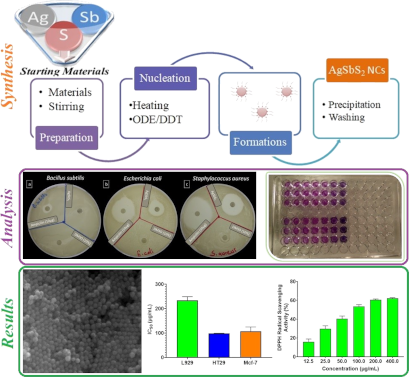
- , Department of Mechanical Engineering, 53020, Rize, Turkey Department of Chemical Engineering, Konya Technical University, Konya, Turkey 10.3762/bjnano.16.145 Abstract Nanocrystals (NCs) of silver antimony sulfide (AgSbS2) in the cubic phase were successfully synthesized using the hot-injection method. This
- ) planes of the AgSbS2 phase. TEM and SEM techniques were used to comprehensively characterize the NCs. The results showed that spherical NCs were predominantly formed, with an average diameter of approximately 32 ± 10 nm. Cytotoxicity studies demonstrated a significant inhibitory effect of the NCs
- ) chloride (SbCl3, ≥99.95%), 1-octadecene (ODE, 90%), and ethanol were obtained from Sigma-Aldrich. Toluene was obtained from VWR. 1-Dodecanethiol (1-DDT, C12H26S) was purchased from Alfa Aesar. Rapid synthesis of AgSbS2 NCs Cubic-phase silver antimony sulfide NCs (AgSbS2 NCs) were synthesized by hot


Calibration of piezo actuators and systems by dynamic interferometry
Beilstein J. Nanotechnol. 2025, 16, 2086–2091, doi:10.3762/bjnano.16.143
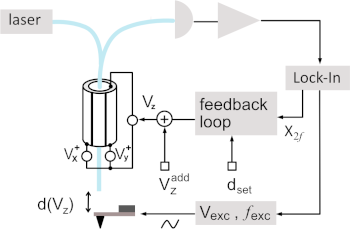
- -step fit method based on Equation 1 as detailed in [13]. Here, VDC represents the DC part of the interferometer signal voltage, V0 is the voltage amplitude of the modulated signal, and φ is the phase shift introduced by the electronics in the signal path, which may be determined from the fit


Multifrequency AFM integrating PeakForce tapping and higher eigenmodes for heterogeneous surface characterization
Beilstein J. Nanotechnol. 2025, 16, 2077–2085, doi:10.3762/bjnano.16.142
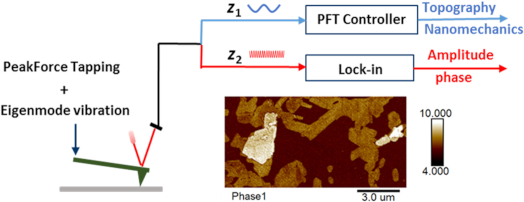
- nanoscale [1][2][3][4][5]. Among its various operating modes, tapping mode AFM is particularly prevalent due to lateral force minimization and its ability to give phase-contrast images of heterogeneous surfaces [6]. This mode involves oscillating the cantilever near its resonance frequency with the tip
- interacting intermittently with the sample surface. By monitoring and controlling the cantilever’s amplitude and phase, topographical and phase images can be generated, providing insights into material properties and enabling the differentiation of regions or components within heterogeneous samples [7][8][9
- include topographic step-like distortions and sudden phase-contrast inversions arising from bistable transitions between co-existing oscillation states, which complicate data interpretation [13][14][15][16][17]. Additionally, operational complexity escalates in liquid environments, where low-quality


Molecular and mechanical insights into gecko seta adhesion: multiscale simulations combining molecular dynamics and the finite element method
Beilstein J. Nanotechnol. 2025, 16, 2055–2076, doi:10.3762/bjnano.16.141
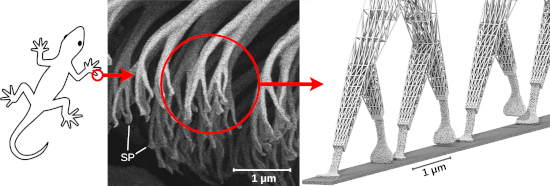
- phase, a 1 nm downward displacement towards the substrate was applied to the driver FE nodes at the start of each load step. Each load step consisted of ten FEM–MD iterations. During this phase, the 16 spatulae were gradually pushed onto the substrate by the moving seta. This process continued until a
- the pull-off (loading) phase, the seta top was moved upwards by reversing the direction of the applied displacement, again using 1 nm per load step. This eventually led to detachment of the spatulae from the substrate. The pull-off was continued until all spatulae were outside the interaction range of
- Forces during preloading and pull-off Once preloading began (Figure 8) and the spatulae made initial contact with the substrate, further load pressed the spatulae against the substrate. The added spatula–substrate forces reached 320 nN after 224 ns (load step 160), marking the end of the preloading phase






Stereodiscrimination of guests in chiral organosilica aerogels studied by ESR spectroscopy
Beilstein J. Nanotechnol. 2025, 16, 2034–2054, doi:10.3762/bjnano.16.140
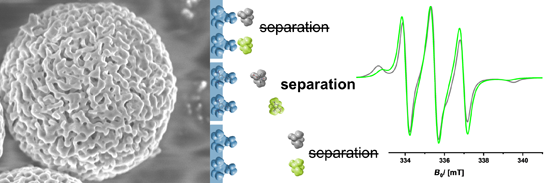
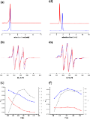
- SerNH10SIL where values higher than αs = 2 are reached. Investigations on an independent chiral matrix Chiralpak IG-3 is a commercially available type of chiral stationary phase used in HPLC for the separation of enantiomers [66]. Chiralpak IG-3 consists of a chiral selector that is based on cellulose
- learn about the factors determining efficiency in chiral chromatography. Obviously, a selectivity factor of more than 1.5 combined with a fraction of molecular species interacting with the surfaces of the stationary phase of the order of 20% is sufficient to reach satisfactory separation results
- effects The choice of solvent is obviously a way to activate the difference in the interaction potentials. The latter reflects how one performs chromatography, which typically uses a gradient of solvents. Often, one starts with a hydrophobic solvent, and then the polarity of the mobile phase becomes more




Beyond the shell: exploring polymer–lipid interfaces in core–shell nanofibers to carry hyaluronic acid and β-caryophyllene
Beilstein J. Nanotechnol. 2025, 16, 2015–2033, doi:10.3762/bjnano.16.139
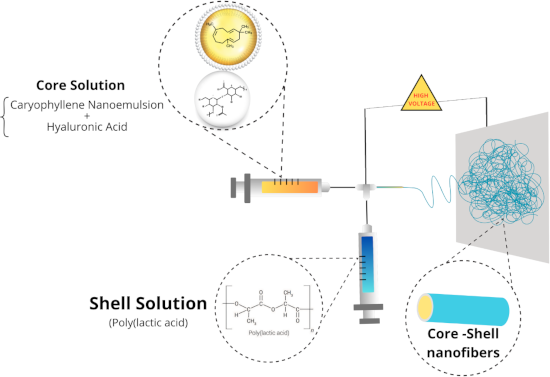
- an oil phase were prepared under magnetic stirring, with their composition specified in Table 4. Subsequently, the aqueous phase was carefully added to the oil phase. The mixture was subjected to vortex (IKA) mixing for 5 min, followed by ultrasonication for 5 min at an amplitude of 40% using an