Search results
Search for "thermal" in Full Text gives 1295 result(s) in Beilstein Journal of Nanotechnology. Showing first 200.
Eco-efficient materials for agricultural crops based on a mineral rich in MOR- and HEU-type zeolites
Beilstein J. Nanotechnol. 2026, 17, 381–395, doi:10.3762/bjnano.17.26
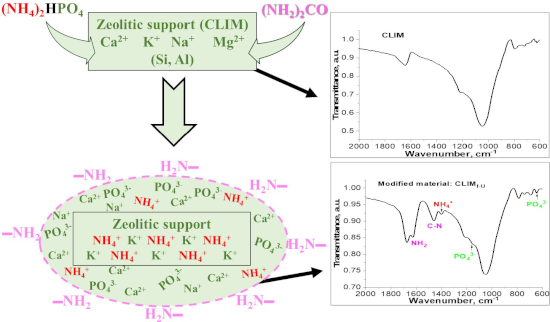
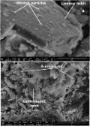
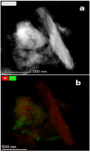
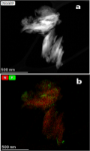
- mode, applying an accelerating voltage of 200 kV and using a high-angle annular dark-field detector. N2 adsorption isotherms at 77 K were obtained on a Micromeritics ASAP 2020 V4.04 (V4.04 H) instrument. Prior to adsorption measurements, the samples underwent vacuum thermal degassing for 8 h at 150 °C




Interconnection morphology effects on the radio frequency response of carbon nanotube sponges
Beilstein J. Nanotechnol. 2026, 17, 343–351, doi:10.3762/bjnano.17.23
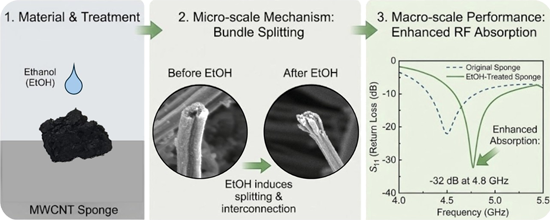
- cellular networks (4G/5G) for mobile and satellite communication. This vast number of applications often requires that the active materials possess additional properties beyond good electrical conductivity, such as flexibility, lightness, and resistance to thermal and mechanical stress or chemically harsh
- demanding non-standard shapes that also need to resist thermal and mechanical stress or chemically harsh conditions. Experimental The CNTs were synthesised using a chemical vapour deposition process [26][27][28] with a floating catalyst injection in a quartz tube (60 cm length and 45 mm external diameter



Beam shaping techniques for pulsed laser ablation in liquids: Unlocking tunable control of nanoparticle synthesis in liquids
Beilstein J. Nanotechnol. 2026, 17, 309–342, doi:10.3762/bjnano.17.22
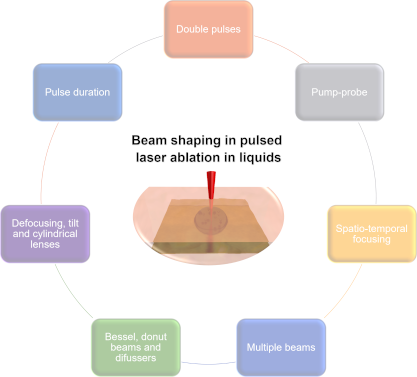
- ][77] and colorimetric sensors [78][79], surface-enhanced Raman spectroscopy detection [71][80][81], nanofluids for thermal applications [82][83][84], additive manufacturing [85][86][87], or catalysis [88][89]. The previously mentioned applications of PLAL-derived NPs can be grouped into four major
- maximise ablation efficiency through minimisation of thermal dissipation [109]. However, pulse shaping in PLAL still represents a barely explored approach, being mostly limited to experiments with controlled temporal delays between pulses. Further evaluating the possibilities of pulse shaping in PLAL holds
- , which makes CLAL unfeasible for continuous or large-scale nanoparticle production [5]. Nanosecond pulses significantly reduce the thermal interaction with the liquid, but their pulse duration is longer than the typical material electron–phonon relaxation time, of the order of 0.1–10 ps for metals







Fast vortex dynamics and relaxation times in NbRe-based heterostructures
Beilstein J. Nanotechnol. 2026, 17, 292–302, doi:10.3762/bjnano.17.20
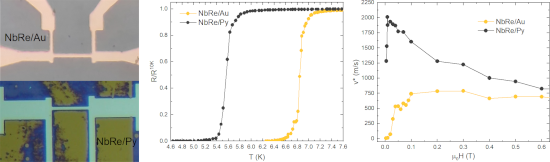
- to extract the quasiparticle energy relaxation time. For external magnetic field values for which edge barrier pinning is dominant and thermal effects are negligible, the relaxation times are about 150 ps and 24 ps for NbRe/Au and NbRe/Py bilayers, respectively. These results indicate that NbRe/Py
- superconducting coherence. This phenomenon, known as flux-flow instability (FFI), depends on several factors such as structural disorder and defects [3], pinning mechanisms [4][5], thermal effects [6], and sample geometry [7]. FFI is effectively described by the Larkin–Ovchinnikov (LO) model [8], which relates
- ]. The enhancement of vortex dynamics and the reduction of τE are strongly linked to the optimization of quasiparticle relaxation mechanisms. Excited quasiparticles can relax primarily through two processes, namely thermal electron–phonon (e–ph) interaction and electron–electron (e–e) recombination [1


Advancing nanolithography: a comprehensive review of materials for local anodic oxidation with AFM
Beilstein J. Nanotechnol. 2026, 17, 275–291, doi:10.3762/bjnano.17.19
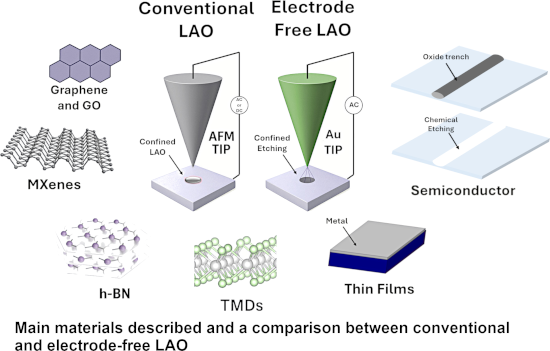
- ] and thermal scanning probe lithography [5], each catering to unique fabrication requirements. Among the bias-driven techniques, local anodic oxidation (LAO) stands out due to its precise, resist-free process and the compatibility with a wide range of materials [6][7][8][9]. LAO uniquely provides
- , with remarkable exceptions of single narrow lines reaching sub-10 nm full width at half maximum [21][50] and machined gaps on 2D materials as narrow as 20 nm [21][23]. The typical throughput of LAO is around a few square millimeters per hour [53]. In comparison, thermal scanning probe lithography (t
- notably GaAs and related heterostructures, where the patterned oxide lines were used as templates for nanoscale device fabrication [90]. Silicon carbide (SiC) is an interesting material for LAO, offering unique advantages over silicon due to its high thermal conductivity, chemical inertness, and


Multilayered hyperbolic Au/TiO2 nanostructures for enhancing the nonlinear response around the epsilon-near-zero point
Beilstein J. Nanotechnol. 2026, 17, 251–261, doi:10.3762/bjnano.17.17
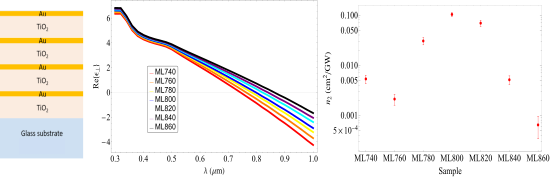
- laser, enabling us to characterize both the refractive and absorptive contributions to the nonlinear response. Due to the high pulse repetition rate inherent to Ti:sapphire systems and the presence of linear absorption in the samples, cumulative pulse-to-pulse thermal effects may be present. A modified
- version of the z-scan technique that allowed us to separate the electronic from the thermal contribution was used. A clear enhancement of the nonlinear response was observed for the sample with an ENZ point around the laser wavelength 800 nm with a nonlinear refractive index of n2 = 0.103 ± 0.006 cm2·GW−1
- and the complex effective permittivity using spectroscopic ellipsometry. Using a Ti:sapphire femtosecond pulsed laser, we study the third-order nonlinear response of the samples employing the z-scan technique [23]. Even though the use of femtosecond pulses allows us to avoid any thermal load to the


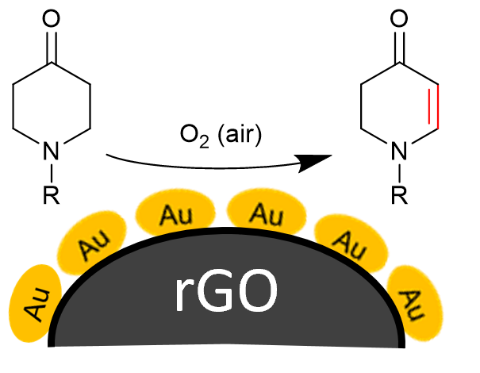
Gold nanoparticle-decorated reduced graphene oxide as a highly effective catalyst for the selective α,β-dehydrogenation of N-alkyl-4-piperidones
Beilstein J. Nanotechnol. 2026, 17, 218–238, doi:10.3762/bjnano.17.15


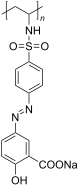
Structure-dependent thermochromism of PAZO thin films: theory and experiment
Beilstein J. Nanotechnol. 2026, 17, 186–199, doi:10.3762/bjnano.17.12
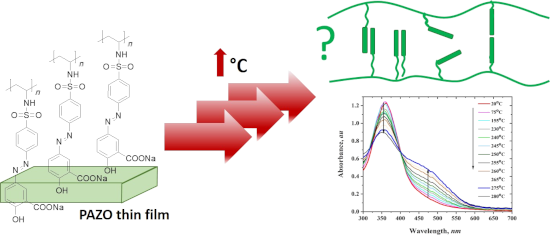
- thickness, and thermal treatment conditions. The observed changes in optical properties suggest that this response is governed by temperature-induced modulation of molecular ordering and aggregation state, which in turn alters the electronic transitions responsible for light absorption. Theoretical
- thin layers subjected to thermal treatment at temperatures up to 300 °C. Particular attention is given to the changes in absorption features and spectral shifts that may arise from structural rearrangements within the material. To rationalize the experimental findings, density functional theory (DFT
- undergo photoinduced isomerization in the temperature range of 280–300 °C, even though some chemical changes cannot be completely ruled out. According to differential thermal (DTA) and thermogravimetric (TGA) analyses, PAZO remains chemically stable up to about 280 °C, with indications of decomposition


From shield to spear: Charge-reversible nanocarriers in overcoming cancer therapy barriers
Beilstein J. Nanotechnol. 2026, 17, 159–175, doi:10.3762/bjnano.17.10
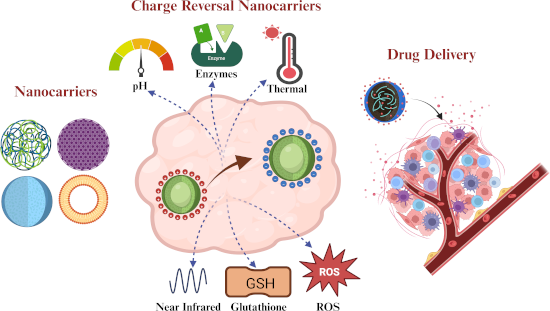
- doxorubicin release at temperatures of ≥44 °C, effectively targeting resistant and quiescent cancer stem cells. Combined TR-DOXO and magnetic field treatment achieved complete tumour inhibition in mice, demonstrating strong hyperthermia–chemotherapy synergy [67]. The combination of magnetic targeting, thermal


Functional surface engineering for cultural heritage protection: the role of superhydrophobic and superoleophobic coatings – a comprehensive review
Beilstein J. Nanotechnol. 2026, 17, 63–96, doi:10.3762/bjnano.17.6
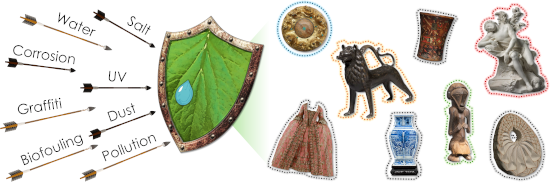
- transparency; however, several limitations can be highlighted. The resins are not always compatible with metal patina [49] and are also easily prone to yellowing due to ageing from ultraviolet (UV) radiation or thermal stress [50], while the waxes guarantee a protection from corrosion, but only in the early
- presented a multifunctional thermal insulation coating incorporating modified vacuum ceramic microbeads (VCMs) to enhance energy efficiency and protection of concrete structures. The VCMs were modified through the polymerization of catechol and hexamethylene diamine, forming a thin poly(catecholamine) (PCA
- ) layer. Subsequently, the authors incorporated the PCA-coated VCMs into a polydimethylsiloxane (PDMS) matrix, significantly reducing the thermal conductivity of the coatings and improving their surface hydrophobicity. The coating provided robust protection for concrete, enhancing abrasion resistance and




Reduced graphene oxide paper electrode for lithium-ion cells – towards optimized thermal reduction
Beilstein J. Nanotechnol. 2026, 17, 24–37, doi:10.3762/bjnano.17.3
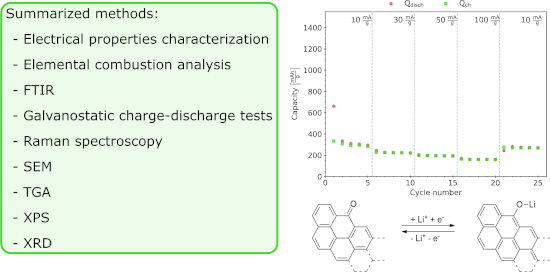
- electrode material in lithium-ion cells. Mildly reduced graphene oxide paper underwent further thermal reduction steps. The structural and chemical properties of the obtained materials were determined using Raman and Fourier-transform infrared spectroscopies and elemental combustion analysis. The morphology
- . Keywords: electrode material; graphene paper; lithium-ion batteries; reduced graphene oxide; thermal reduction; Introduction Electrode materials comprising reduced graphene oxide (rGO) for energy storage in lithium-ion-based or sodium-ion-based technologies have been the subject of over 3800 publications
- description of oxygen species and their behavior during the thermal annealing of GO, allowing them to specify a temperature range expected to provide optimal type and amount of oxygen species [27]. According to this article, the desired ketone groups partially remain, while carboxyl, epoxy, and hydroxy groups



Quantitative estimation of nanoparticle/substrate adhesion by atomic force microscopy
Beilstein J. Nanotechnol. 2026, 17, 1–14, doi:10.3762/bjnano.17.1

- . Note that consecutively recorded AFM images (see below in Figure 2) usually exhibit a slight thermal drift. However, this does not interfere with the data evaluation. During AFM manipulation, NPs do not always move along straight lines. Small deviations, jumps, or irregular paths can occur, depending
- requirements of each experimental setup. The normal spring constant was determined using the thermal sweep method [40] implemented by default in the Asylum Research MFP-3D system. Table 1 summarizes the calibration constants and applied normal forces obtained for both wedge and D-LFC methods, which were used



Internal 3D temperature mapping in biological systems using ratiometric light-sheet imaging and lipid-coated upconversion nanothermometers
Beilstein J. Nanotechnol. 2025, 16, 2306–2316, doi:10.3762/bjnano.16.159
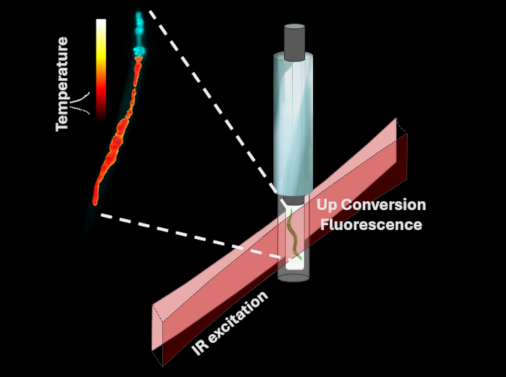
- enables real-time thermal mapping with both high spatial and temporal resolution at the cellular and subcellular levels. To validate the method, we performed 3D temperature imaging on fixed Caenorhabditis elegans (C. elegans) after UCNP ingestion. The proposed technique represents a cutting-edge method
- from dysregulated metabolism (i.e., the Warburg effect) [3][4] and chaotic vasculature that impairs heat dissipation [5][6]. These factors can create thermal gradients of 0.5–2.0 °C between tumors and healthy tissue, with even greater differences at the subcellular level [7][8][9]. Consequently, the
- and non-biological applications. LNTs rely on the emission properties of a fluorophore and its thermal dependence to measure temperature changes, which can be measured as variations in the emission intensity [10][11][12][13] and lifetime [8][14][15][16], spectral shift [17], as well as intensity


Terahertz-range on-chip local oscillator based on Josephson junction arrays for superconducting quantum-limited receivers
Beilstein J. Nanotechnol. 2025, 16, 2296–2305, doi:10.3762/bjnano.16.158
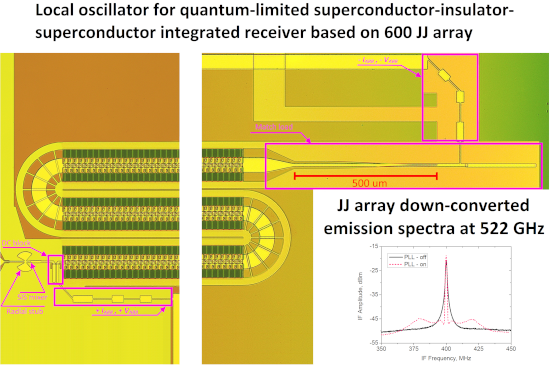
- about 1 min, and it is done after each thermal cycling [13]. Also, the ratio of the radiated power to the consumed DC power is slightly higher than 5%. Some of the aforementioned problems can be solved by the use of Josephson junction arrays as LO for the SIR. The junctions can be fabricated by the use
- ][41] formula with the differential resistance normalized to a single junction yields the value of approx. 0.1 MHz. This is somewhat lower than the experimental value, probably due to the presence of the thermal noise arising from the current flowing through the shunts and other low-frequency
- IVC of the JJ array when the PLL mode is active is shown in Figure 10. The current step induced by the PLL system is approx. 0.5 mA, which is three orders of magnitude higher than the characteristic noise level in the current bias system (≈0.5 μA) and thermal noise. This shows the robust nature of the


Improving magnetic properties of Mn- and Zn-doped core–shell iron oxide nanoparticles by tuning their size
Beilstein J. Nanotechnol. 2025, 16, 2285–2295, doi:10.3762/bjnano.16.157
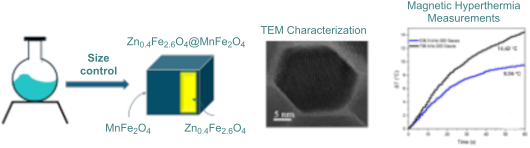
- , we report on the synthesis of polyhedral core–shell SPIONs. Their size was tuned to improve their magnetic properties. Furthermore, by hybridizing into a core–shell inorganic/inorganic structure, the nanoparticles can achieve significantly improved magnetic-to-thermal energy conversion efficiency (at
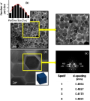
- focused on precise control of shape and size, critical factors for tuning magnetic behavior. By employing thermal decomposition, Zn0.4Fe2.6O4 NPs were synthesized with a well-defined polyhedral morphology, as confirmed by high-resolution transmission electron microscopy (HRTEM) (Figure 1). This morphology
- the core–shell system. Furthermore, the superparamagnetic behavior of both Zn0.4Fe2.6O4 and Zn0.4Fe2.6O4@MnFe2O4 NPs was confirmed by the absence of hysteresis in the magnetization curves. This behavior is characteristic of superparamagnetic NPs, where thermal energy is sufficient to overcome magnetic



Geometry-controlled engineering of the low-temperature proximity effect in normal metal–superconductor junctions
Beilstein J. Nanotechnol. 2025, 16, 2265–2273, doi:10.3762/bjnano.16.155
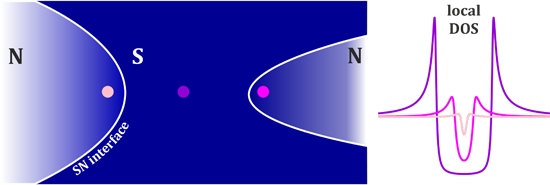
- spatial dimensionality of the system [33], taking values of α = 1 in 3D [7][29][32], α = 1/2 in 2D [34][35], and α = 0 in 1D [36]. This behavior holds for distances z smaller than both the thermal decay length and the mean free path l = vnτ, where τ is the impurity scattering time [32]. Beyond these


Chiral plasmonic nanostructures fabricated with circularly polarized light
Beilstein J. Nanotechnol. 2025, 16, 2245–2264, doi:10.3762/bjnano.16.154
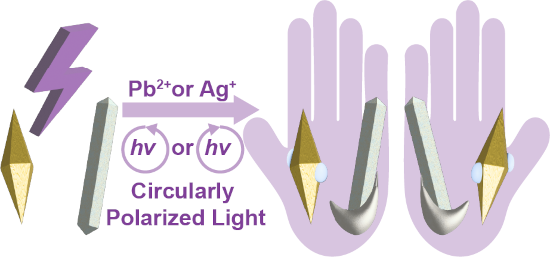
- with large g-factors. Section 2.3 will address this issue with the strategy of modifying the surface ligands on PNSs to create chiral PNSs. The non-radiative decay of hot carriers can heat the PNSs. Due to the high thermal conductivity of metals, isolated PNSs usually feature uniform temperature
- distribution when exposed to CPL. Additionally, the local thermal effects that may lead to isotropic photochemical deposition on the achiral PNSs require further investigation and must be taken into account. Furthermore, the interactions between the achiral PNS seeds and the substrates on which they are





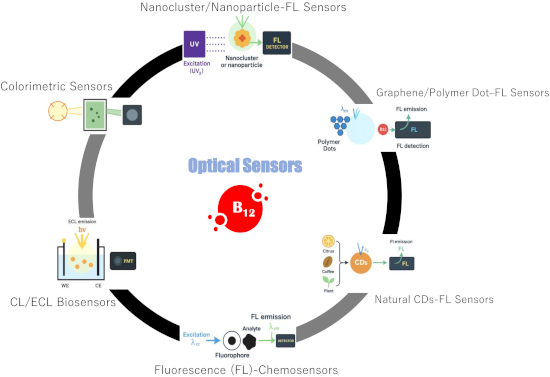
Optical bio/chemical sensors for vitamin B12 analysis in food and pharmaceuticals: state of the art, challenges, and future outlooks
Beilstein J. Nanotechnol. 2025, 16, 2207–2244, doi:10.3762/bjnano.16.153


Microplastic pollution in Himalayan lakes: assessment, risks, and sustainable remediation strategies
Beilstein J. Nanotechnol. 2025, 16, 2144–2167, doi:10.3762/bjnano.16.148
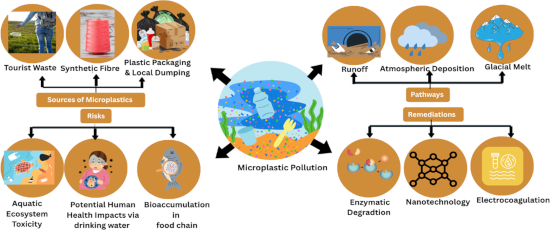
- ]. The combined analytical flow and instrumentation for MP characterization, such as digestion, preparation, and analytical processes like microscopy, spectroscopy, and thermal analysis, is presented in Figure 4. 4.3 Challenges in quantification and identification under alpine conditions MPs assessment
- samples from the environment makes nanoscale plastics yet another challenge. Sophisticated methods such as thermal extraction desorption (TED) and gas chromatography-mass spectrometry (GC-MS) are now routinely used to detect these particles. But these methods involve a lot of expertise and equipment. The
- and increases ROS generation, even below freezing temperatures. It has also been suggested that hybrid nanomaterials, which include photocatalysts and thermal insulators, can minimize the impacts of temperature during remediation while maintaining optimum activity [77]. GO–metal oxide composites are


Electron transport through nanoscale multilayer graphene and hexagonal boron nitride junctions
Beilstein J. Nanotechnol. 2025, 16, 2132–2143, doi:10.3762/bjnano.16.147
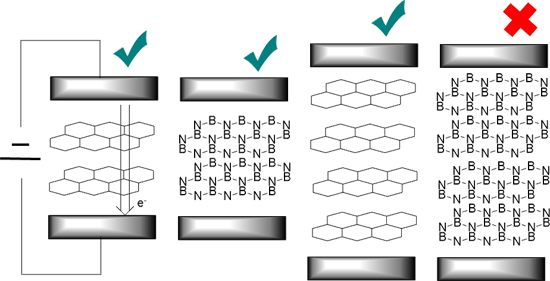
- graphene-based electronics and as a dielectric material in nanoelectronics devices. It finds application regarding corrosion resistance and antioxidation protective coatings [19]. Due to its high thermal conductivity and electrical insulation, h-BN is used in thermal management applications. h-BN is used
- electronic properties of pristine graphene [7]. Here, we consider the effect of the Stone–Wales defect; this is a result of thermal structural isomerization of the graphene lattice where a bond is rotated by 90°, resulting to the isomerization of a 6–6 ring structure to an isoelectronic 7–5 ring structure


Quality by design optimization of microemulsions for topical delivery of Passiflora setacea seed oil
Beilstein J. Nanotechnol. 2025, 16, 2116–2131, doi:10.3762/bjnano.16.146
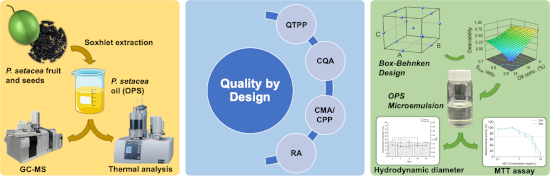
- chromatography–mass spectrometry and thermal analysis. A full factorial design, followed by a Box–Behnken design, was employed to optimize the formulation based on critical quality attributes and the defined quality target product profile. The optimized ME presented a hydrodynamic diameter of approximately 22 nm
- healing [17][18][19]. In addition to its chemical characterization, the thermal stability in inert atmosphere (N2) of OPS was assessed. Thermogravimetric analysis (TGA) revealed an initial mass loss of less than 1% (Tonset = 60 °C), likely associated with the evaporation of residual solvent entrapped in
- the oil matrix. A second thermal event began (Tonset = 384 °C) corresponding to the thermal degradation of the oil (Figure 1). This thermal behavior is consistent with that reported for P. edulis seed oil, which exhibited a similar decomposition profile [20]. Quality by design approach Defining the


Calibration of piezo actuators and systems by dynamic interferometry
Beilstein J. Nanotechnol. 2025, 16, 2086–2091, doi:10.3762/bjnano.16.143
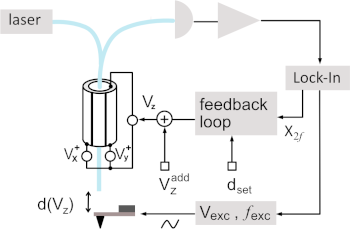
- be possible to reduce the bow effect observed for the tube piezo extension by leaving more accommodation time between the voltage steps. However, in this case, thermal drift is likely to deteriorate the measurement by similar amounts as the observed creep. The fact that the measured tube piezo


Multifrequency AFM integrating PeakForce tapping and higher eigenmodes for heterogeneous surface characterization
Beilstein J. Nanotechnol. 2025, 16, 2077–2085, doi:10.3762/bjnano.16.142
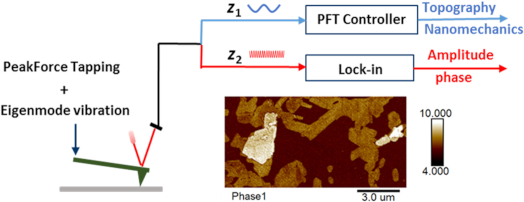
- at least five force–distance curves acquired on a rigid sapphire surface. The standard deviation of these measurements was consistently less than 5%. Subsequently, the spring constant was calibrated using the thermal tune method. The cantilever was retracted more than 5 μm from the sample surface to
- record its thermal vibration power spectral density. A fit to the fundamental resonance peak, based on the equipartition theorem, yielded the spring constant. Characterization of higher eigenmodes The resonant frequencies of the higher eigenmodes were characterized by performing a frequency sweep using


Stereodiscrimination of guests in chiral organosilica aerogels studied by ESR spectroscopy
Beilstein J. Nanotechnol. 2025, 16, 2034–2054, doi:10.3762/bjnano.16.140
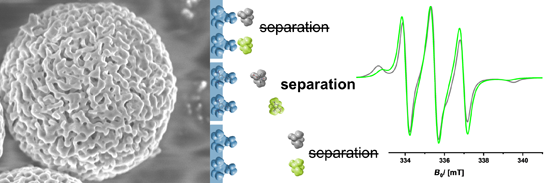
- (Figure 8f). The thermal energy at T = 260 K is approximately 2 kJ·mol−1. The difference in interaction enthalpies of two enantiomers with a chiral surface depends on many factors, but it is exactly in the range of 1–2 kJ·mol−1 [18][67], which we could deduce from ESR spectroscopy. If (+)-3CP is more




Beyond the shell: exploring polymer–lipid interfaces in core–shell nanofibers to carry hyaluronic acid and β-caryophyllene
Beilstein J. Nanotechnol. 2025, 16, 2015–2033, doi:10.3762/bjnano.16.139
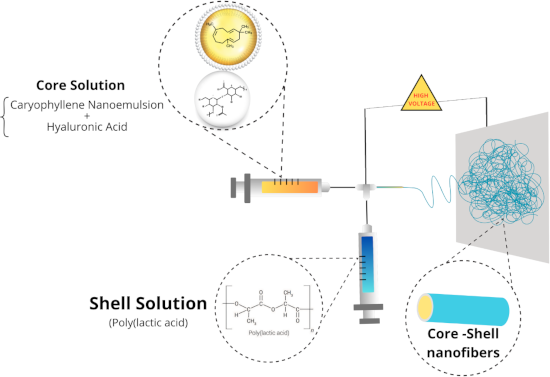
- membrane applications. Thermal and crystalline analyses demonstrated improved thermal stability upon NE-βCp incorporation. Collectively, these results provide robust evidence for the feasibility of producing multifunctional nanofiber membranes that successfully integrate a polymer–lipid hybrid core
- the nanofiber spectra confirmed the complete encapsulation of the core material by the PLA shell. This observation aligns with the cross-sectional analysis results, where a coated core–shell structure was evident following the removal of the HA+NE2 core. Thermal behavior and crystallinity of
- nanofibers The thermal properties and crystallinity of NF-PLA (monolithic), NF-HA/PLA, and NF-HA+NE2/PLA nanofibers were analyzed using thermogravimetric analysis (TGA), X-ray diffraction (XRD), and differential scanning calorimetry (DSC). Thermal behavior and crystallinity of the nanofibers mats of βCp