


Search results
Search for "deconvolution" in Full Text gives 96 result(s) in Beilstein Journal of Nanotechnology.
Synthesis and characterization of RF-sputtered ZnTe/Cu2−xTe thin films for solar cell applications
Beilstein J. Nanotechnol. 2026, 17, 1016–1027, doi:10.3762/bjnano.17.69
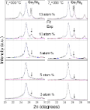
- associated with the presence of Cu and O in the films. The peak deconvolution results for films grown at substrate temperatures of 300 °C and 350 °C are presented in Figure 3. The deconvoluted peaks were assigned according to the reference patterns of ZnTe and Cu7Te5. The diffraction contribution centered at
- approximately 2θ ≈ 25.3° was associated with the ZnTe phase, whereas the reflection observed near 2θ ≈ 26.6° was attributed to the Cu7Te5 secondary phase. Therefore, the deconvolution analysis was primarily used to evaluate the structural evolution and phase segregation induced by increasing Cu concentration
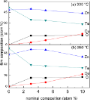
- as a function of the nominal Cu and O concentration in target for substrate temperatures of (a) 300 °C and (b) 350 °C. X-ray diffraction patterns of ZnTe and CuZnTeO films as a function of nominal Cu and O concentration at substrate temperatures of (a) 300 °C and (b) 350 °C. Deconvolution of the main



Synthesis of Cu–Mo/TiO2 and Co–Mo/TiO2 photocatalysts for the efficient degradation of organic pollutants in water
Beilstein J. Nanotechnol. 2026, 17, 559–570, doi:10.3762/bjnano.17.37
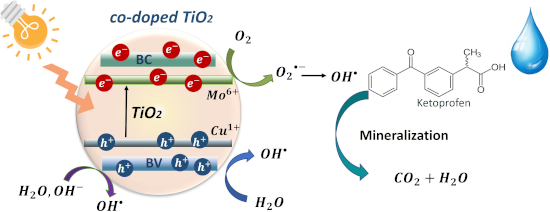
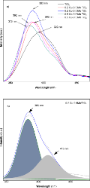
- in the range of 200–800 nm. The photoluminescence analysis was performed at room temperature with a fluorescence spectrophotometer Agilent Cary Eclipse, using an excitation wavelength of 320 nm. Peak deconvolution in the PL spectrum was done using the software XPSPEAK41 for deconvolution and



Probing internal continua and atomic ultrafast charge transfer within size-controlled nanoparticles by post-collision interaction in core-hole clock spectroscopy
Beilstein J. Nanotechnol. 2026, 17, 505–514, doi:10.3762/bjnano.17.33
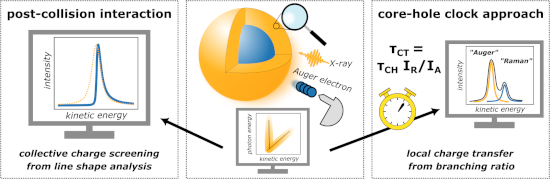
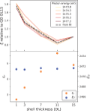
- a function of photon energy and particle size. Top panel: The X-ray absorption cross section (PFY, orange line) is shown in comparison to an integration of the resonant Auger spectra (CFS-PEY, light green line). Also, the deconvolution of the signal into the intensities of Auger (green) and Raman



Upcycling agroindustrial waste into graphene oxide supports for gold nanoparticles: toward sustainable nanomaterials
Beilstein J. Nanotechnol. 2026, 17, 489–504, doi:10.3762/bjnano.17.32
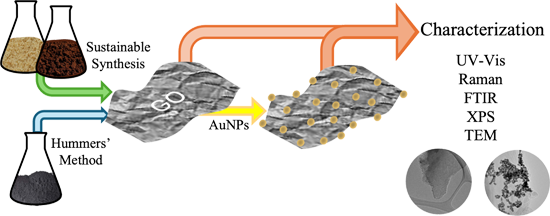
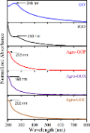
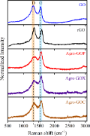
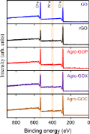
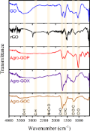
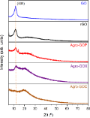
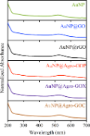
- proportions of oxygen-containing groups obtained from the C 1s deconvolution spectra reveal marked differences among GO, rGO, and Agro-GO samples, indicating that both the synthesis route and the biomass precursor tightly control surface functionalization. In GO, the oxygenated components are balanced, with



Defects and defect-mediated engineering of two-dimensional materials: challenges and open questions
Beilstein J. Nanotechnol. 2026, 17, 454–488, doi:10.3762/bjnano.17.31





Interconnection morphology effects on the radio frequency response of carbon nanotube sponges
Beilstein J. Nanotechnol. 2026, 17, 343–351, doi:10.3762/bjnano.17.23
- as components to the spectra. In order to provide more definite results, an additional deconvolution of the O1 s core level spectra is presented (Figure 5c,d). The fits include the C 1s signals of most of the oxygen–carbon components (C–O–C, 529.8 ± 0.1 eV) and (OH–C, 531.8 ± 0.1 eV ). In the spectra



Reduced graphene oxide paper electrode for lithium-ion cells – towards optimized thermal reduction
Beilstein J. Nanotechnol. 2026, 17, 24–37, doi:10.3762/bjnano.17.3
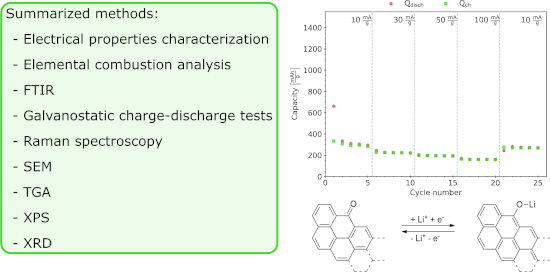
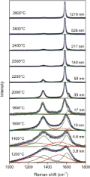
- also worth mentioning is that the peak at ≈3013 cm−1 was more pronounced in all samples except T400. The results of XPS spectra deconvolution are summarized in Table 3 and Table 4. The carbon-related region (depicted in Figure 6) revealed sp2 bonds for samples M300 and T400 [48]. In these materials
- marked with a square, a pentagon and a circle, respectively. Deconvolution of the carbon-related region in the XPS spectra of the samples (a) M300, (b) T400, (c) T600, and (d) T800. Diffractograms of rGO paper samples. Visible changes in the (002) peak shape confirm partial restoration of the graphitic



Electrical, photocatalytic, and sensory properties of graphene oxide and polyimide implanted with low- and medium-energy silver ions
Beilstein J. Nanotechnol. 2025, 16, 1794–1811, doi:10.3762/bjnano.16.123
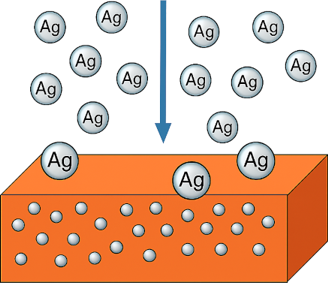
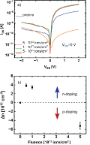
- thin surface layer with a depth of a few nanometers. The deconvolution of the high-resolution C 1s peak of XPS spectra is illustrated in Figure 5 for GO and in Figure 6 for PI. Spectra are shown for unmodified samples and for samples exposed to the highest ion fluence (1 × 1016 cm−2). More detailed
- information describing the presence of each functional group is given in Table 3. The deconvolution of C 1s peak of XPS spectra of GO pristine (Figure 5a) sample shows a fairly balanced proportion of different chemical bonds. The dominant bonds are C–C (42.99%) and C–O (31.42%), which correspond to the
- implantation energy. The deconvolution of the C 1s region in high-resolution X-ray photoelectron spectroscopy (XPS) spectra of pristine PI is depicted in Figure 6a, illustrating four distinct carbon components. These components include C–C carbons originating from the aromatic rings of the oxydianiline portion


Ambient pressure XPS at MAX IV
Beilstein J. Nanotechnol. 2025, 16, 1677–1694, doi:10.3762/bjnano.16.118

- CoTPyP/GR layer in UHV (bottom) and in 10−3 mbar O2 +10−1 mbar H2O at room temperature (top); experimental data (markers) are reported together with the best fit (continuous lines) and deconvolution envelopes (filled profiles). (b) NAP-XPS spectra of the Co 2p3/2 (left, hν = 910 eV) and O 1s (right, hν





Influence of laser beam profile on morphology and optical properties of silicon nanoparticles formed by laser ablation in liquid
Beilstein J. Nanotechnol. 2025, 16, 1533–1544, doi:10.3762/bjnano.16.108
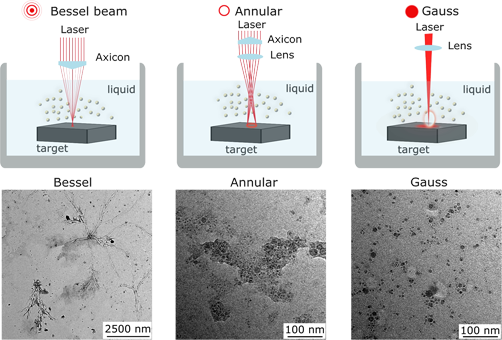
- produced using Bessel and annular profiles. It should be noted that the fractions of amorphous and crystalline phases can be determined by deconvolution of the Raman peaks profiles to estimate the crystallinity of Si NPs (Supporting Information File 1, Figure S6). The colloids synthesized using different


Structural and magnetic properties of microwave-synthesized reduced graphene oxide/VO2/Fe2O3 nanocomposite
Beilstein J. Nanotechnol. 2025, 16, 921–932, doi:10.3762/bjnano.16.70
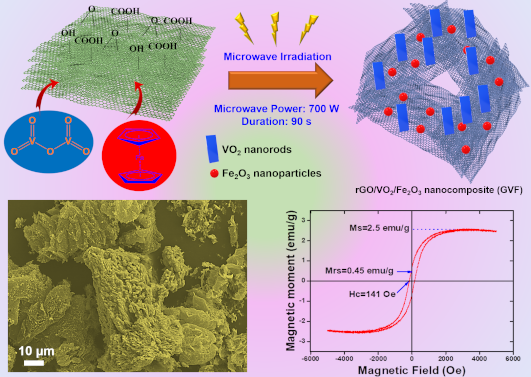
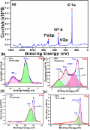
- in the form of Fe2O3, rather than its other counterparts [41]. The deconvolution of O 1s results in the formation of two major peaks at ≈530 and ≈531.6 eV (Figure 7d). While the peak at ≈530 eV can be designated to the metal–oxygen (M–O) bond, the other peak at ≈531.6 eV could be assigned to C=O of



Ar+ implantation-induced tailoring of RF-sputtered ZnO films: structural, morphological, and optical properties
Beilstein J. Nanotechnol. 2025, 16, 872–886, doi:10.3762/bjnano.16.66
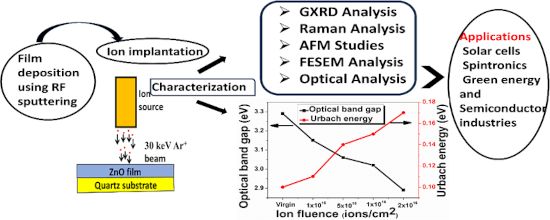
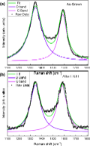
- merges completely with disorder-induced broad band at higher fluences. Moreover, the deconvolution of the A1 (LO) Raman peak affirms the presence of defect-related Raman modes in the implanted samples. A gradual reduction in crystallinity of the implanted ZnO films with increasing ion fluence is observed
- +-implanted ZnO films at various fluences of (b) 1 × 10¹⁵, (c) 5 × 10¹⁵, (d) 1 × 10¹⁶, and (e) 2 × 10¹⁶ ions·cm−2 with inset representing the peak related to the E2 (high) mode. Number of zinc and oxygen vacancies created by the argon ion beam in the ZnO target calculated using TRIM simulations. Deconvolution






Morphology and properties of pyrite nanoparticles obtained by pulsed laser ablation in liquid and thin films for photodetection
Beilstein J. Nanotechnol. 2025, 16, 785–805, doi:10.3762/bjnano.16.60
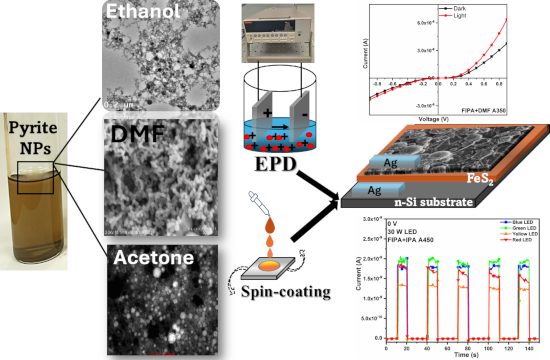
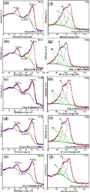
- the peak fitting is in accordance to the hybrids reported [46][47]. The Fe 2p1/2 peak does not require deconvolution due to its relatively lower intensity and minimal contribution to the overall spectral profile. Specifically, in studies of iron, as proposed by Grosvenor et al., the Fe 2p3/2 peak






Changes of structural, magnetic and spectroscopic properties of microencapsulated iron sucrose nanoparticles in saline
Beilstein J. Nanotechnol. 2025, 16, 762–784, doi:10.3762/bjnano.16.59
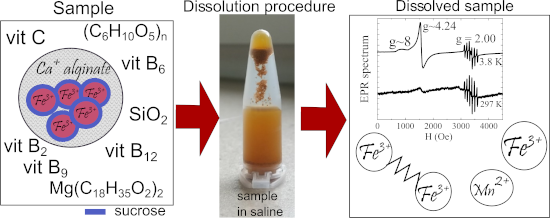
- core level lines there is no trace of Fe2+ ions recognized in the Raman studies of Fe3O4, as its binding energy is substantially lower than those registered here [87][92][93]. It should be stressed that the Fe 2p spectra and the results of their deconvolution obtained in this study are extremely





Nanostructured materials characterized by scanning photoelectron spectromicroscopy
Beilstein J. Nanotechnol. 2025, 16, 700–710, doi:10.3762/bjnano.16.54
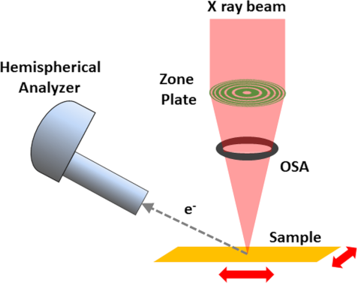
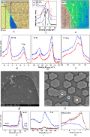
- imaging modes. Figure 3 shows Ni 3p, O 1s, and valence band XPS spectra from samples annealed at diverse temperatures, which exhibit variable morphological, crystallographic, and optical properties. Regarding the Ni 3p signal, less-explored so far, four main bands were observed after signal deconvolution


High-temperature epitaxial growth of tantalum nitride thin films on MgO: structural evolution and potential for SQUID applications
Beilstein J. Nanotechnol. 2025, 16, 690–699, doi:10.3762/bjnano.16.53
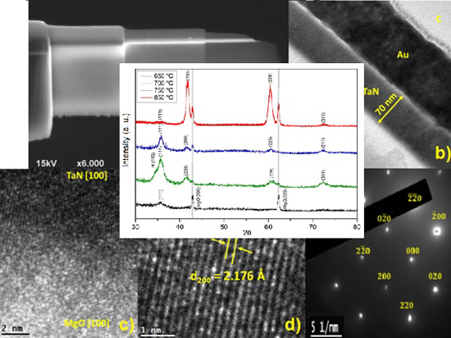
- undergo during the ablation process. Figure 1 presents the deconvolution of high-resolution XPS peaks for Ta 4f, shown both before (Figure 1a,b) and after (Figure 1c,d) heating the substrate. The peaks were fitted using Gaussian functions. The relative atomic concentrations of Ta and N were calculated
- structure, as reported by Hagiwara and collaborators [21]. This overlap of reflections complicates the precise deconvolution of the minor phases in the XRD diffractograms, underscoring the need to carefully consider potential peak coincidences when analyzing multiphase systems containing these tantalum


Retrieval of B1 phase from high-pressure B2 phase for CdO nanoparticles by electronic excitations in CdxZn1−xO composite thin films
Beilstein J. Nanotechnol. 2025, 16, 551–560, doi:10.3762/bjnano.16.43
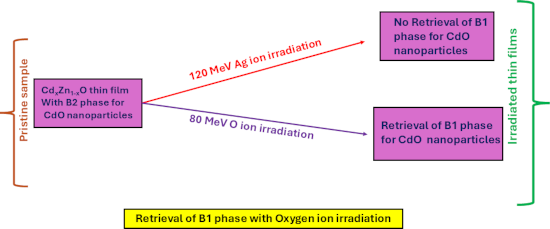
- illustrates the Cd 3d5/2, Zn 2p3/2, O 1s, and Si 2p3/2 peaks in XPS spectra for both pristine and irradiated thin films. The calibration of all peaks was conducted using the C 1s peak, situated at 284.6 eV. The peak deconvolution was performed using Gaussian (70%) and Lorentzian (30%) (GL) functions within


On the use of Raman spectroscopy to characterize mass-produced graphene nanoplatelets
Beilstein J. Nanotechnol. 2023, 14, 509–521, doi:10.3762/bjnano.14.42
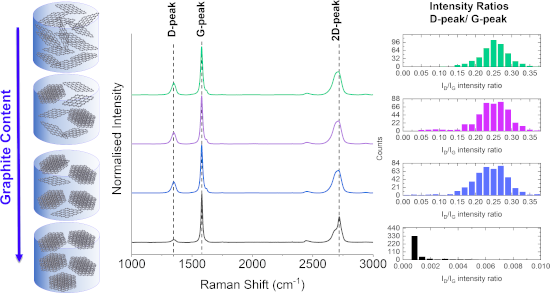
- these two extremes, the peak shape evolves gradually, and while the 2D peak from bilayer graphene has been shown to comprise four components, deconvolution for higher layer numbers has not been reliably carried out. The spectrum recorded from flakes with ten or more layers is typically indistinguishable


The steep road to nonviral nanomedicines: Frequent challenges and culprits in designing nanoparticles for gene therapy
Beilstein J. Nanotechnol. 2023, 14, 351–361, doi:10.3762/bjnano.14.30

- may arise from strong associations between carrier and payload [57]. Without careful deconvolution, the scattering signal from a particulate analyte can readily result in a high bias that compromises UV–vis-based analyses. Ambiguity can further be enhanced in fluorescence assays because of the

A nonenzymatic reduced graphene oxide-based nanosensor for parathion
Beilstein J. Nanotechnol. 2022, 13, 730–744, doi:10.3762/bjnano.13.65
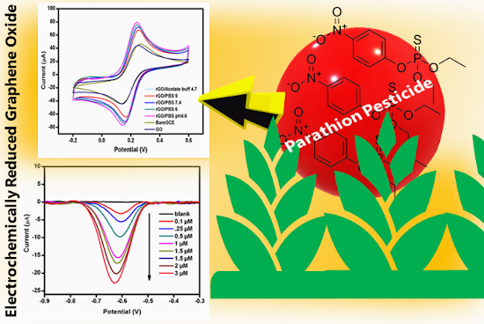
- types are observed from the deconvolution of the peaks shown in Figure 2A. They show an increase in binding energies evidencing the presence of C–OH, C–C, C–O–C, and C=O bonds in GO. The O 1s spectra of synthesized GO can be deconvoluted into three peaks, corresponding to contributions from carbonyl and


Quantitative dynamic force microscopy with inclined tip oscillation
Beilstein J. Nanotechnol. 2022, 13, 610–619, doi:10.3762/bjnano.13.53
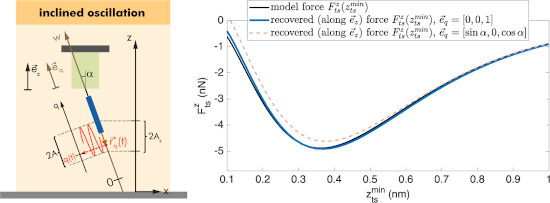
- tip sampling path. Therefore, one has to take into account that the inclined oscillatory motion of the sensor can invoke significant lateral movement of the tip when describing the Δf signal formation and force deconvolution. If the force field above the surface is homogeneous and isotropic with
- presented by the violet dotted curve in Figure 3e for α = 45°. Last, we note that lateral components are virtually absent for large tip–sample distances in this model, leading to a convergence of the Δf() curves in the regime ≫ 1 nm. Force deconvolution for the inclined sampling path The difference in the
- overlap of the tip sampling path segments for nearby positions along the data recording path. Therefore, the deconvolution using the known algorithms can be performed in the usual manner. Naturally, the result will not represent the perpendicular force but rather describes the force component along the


![[Graphic 38]](/bjnano/content/inline/2190-4286-13-53-i79.svg?max-width=637&scale=1.18182) and the axis w....
and the axis w....


Systematic studies into uniform synthetic protein nanoparticles
Beilstein J. Nanotechnol. 2022, 13, 274–283, doi:10.3762/bjnano.13.22

- thorough shape analysis into the assessment of emerging platforms from the very onset of their expansion into the general nano-bio research. The solution-based corollary to dry-state imaging that can provide the above parameters is dynamic light scattering (DLS). DLS uses the deconvolution of a correlation
- , deconvolution is utilized (Supporting Information File 1) to extract relative subpopulation fractions (α1, α2) (Table S6). The HEM/HSA population with d1 = 97 nm comprises swollen individual SPNPs, while the second population with d2 = 455 nm may be attributed to transient or semi-transient clusters. When
- contribution to the properties of blended SPNPs appears to be eclipsed by the more hydrophobic HSA component. MUC/HSA SPNPs DLS and SEM results for MUC/HSA SPNPs are presented in Figure 4a. After deconvolution, the nDLS spectrum of MUC/HSA SPNPs displays a minor fraction (d1 = 30 nm, α1 = 0.07) and a dominant


Plasmon-enhanced photoluminescence from TiO2 and TeO2 thin films doped by Eu3+ for optoelectronic applications
Beilstein J. Nanotechnol. 2021, 12, 1271–1278, doi:10.3762/bjnano.12.94
- are presented in Figure 4. The experimental curve can be deconvoluted in two peaks at 458.2 eV and 463.9 eV, with a splitting energy of 5.7 eV, what is characteristic for Ti4+ [28][29][30]. Deconvolution of the Eu 4d spectrum is complicated. As it can be seen in Figure 4, the sample includes both Eu3


Enhancement of the piezoelectric coefficient in PVDF-TrFe/CoFe2O4 nanocomposites through DC magnetic poling
Beilstein J. Nanotechnol. 2021, 12, 1262–1270, doi:10.3762/bjnano.12.93

- absorption band related to the α phase centered at 763 cm−1, we estimated for the different samples a value of F(β) = (82 ± 3)%. The relatively large error is due to the uncertainty in the deconvolution procedure. From this estimation, and considering that the intensity of the β phase peaks remains


The effect of cobalt on morphology, structure, and ORR activity of electrospun carbon fibre mats in aqueous alkaline environments
Beilstein J. Nanotechnol. 2021, 12, 1173–1186, doi:10.3762/bjnano.12.87

- obtained in the measurement did not allow, however, for deconvolution of the pyrrolic N signal and the graphitic N signal for the fibres containing cobalt. Their spectra (see Supporting Information File 1) were thus fitted with only three peaks, considering the middle peak a mixed peak of pyrrolic and





