


Search results
Search for "graphite" in Full Text gives 382 result(s) in Beilstein Journal of Nanotechnology. Showing first 200.
Electrochemical sensing of sildenafil in pharmaceutical formulations using an (S,N)-doped reduced graphene oxide-modified electrode
Beilstein J. Nanotechnol. 2026, 17, 1087–1102, doi:10.3762/bjnano.17.74
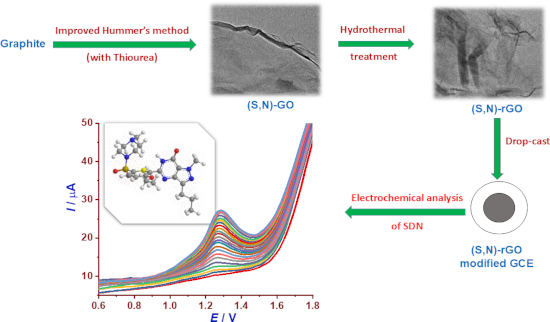
- stability. Finally, the practical applicability of the method was demonstrated by determining SDN in real pharmaceutical samples, with satisfactory accuracy and recovery. Experimental Chemicals Graphite powder, phosphoric acid (H3PO4, 85%), sulfuric acid (H2SO4, 98%), hydrochloric acid (HCl, 37%), potassium
- , Japan), and photoluminescence (PL) (Horiba Fluorolog 3 FL3-22 fluorometer). Synthesis of graphene oxide Graphene oxide (GO) was synthesized following a modified procedure based on the method reported by Diego C. Marcano and coworkers [23]. Briefly, 3 g of graphite powder was gradually added to a mixed
- washed several times with 0.1 M HCl solution and deionized water to remove residual ions and impurities, followed by centrifugation. The purified material was then dried at 60 °C for 48 h to yield graphite oxide. This product was subsequently exfoliated by ultrasonic treatment in distilled water for 4 h



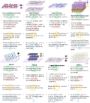
Materials challenges in solid-state sensors for continuous monitoring of ions in water
Beilstein J. Nanotechnol. 2026, 17, 935–973, doi:10.3762/bjnano.17.66
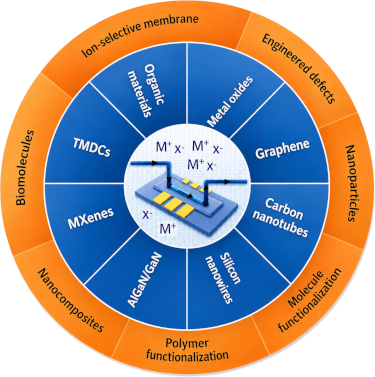
- conductivity. The increased edge density and defect accessibility in FLG facilitate faster electron transfer kinetics and enhanced electrochemical activity, making it especially suitable for electrochemical sensing platforms. Bulk (multilayer) graphene, which approaches graphite-like behavior, offers excellent


Enhanced erosion resistance and radiation stability of WC–WO3 nanocomposite films under 100 keV Kr+ ion irradiation
Beilstein J. Nanotechnol. 2026, 17, 922–934, doi:10.3762/bjnano.17.65
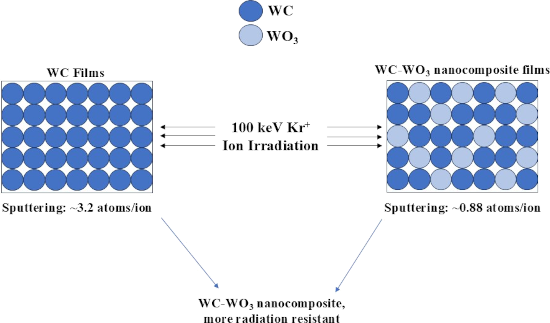
- materials are subjected to (micro)structural damage and erosion due to the impact of energetic particles (e.g., hydrogen, helium, neutrons) [44][45][46]. In earlier decades of fusion research, graphite was explored as a potential plasma-facing component (PFC) material, but it produced mediocre plasma



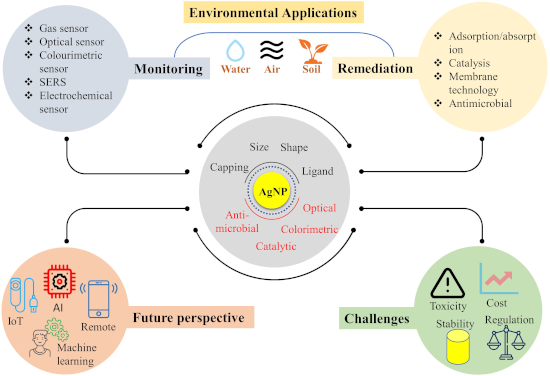
Environmental applications of silver nanoparticles: state-of-the-art review and emerging trends
Beilstein J. Nanotechnol. 2026, 17, 697–736, doi:10.3762/bjnano.17.49


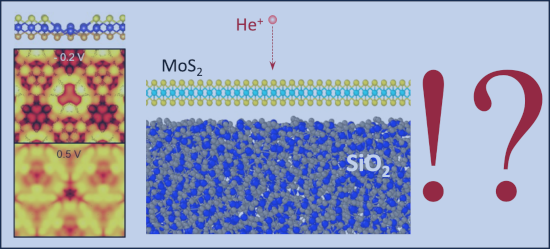
Probing tribological evolution in atomically thin MoS2 at different scales
Beilstein J. Nanotechnol. 2026, 17, 586–597, doi:10.3762/bjnano.17.40
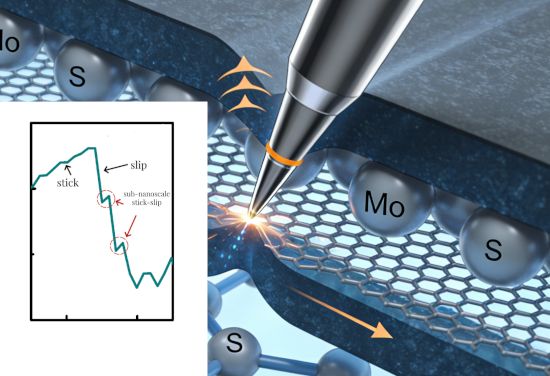
- -sensitive characteristics, such as contact area dependence [3], superlubricity [4][5][6], negative friction coefficients [7], and friction anisotropy [8]. A hallmark of nanoscale friction is atomic-scale stick–slip motion, first observed by sliding a tungsten tip over graphite, where the tip “sticks” to an


Impacts of annealing on structural and photophysical properties of zinc phthalocyanine adsorbed on graphene
Beilstein J. Nanotechnol. 2026, 17, 576–585, doi:10.3762/bjnano.17.39
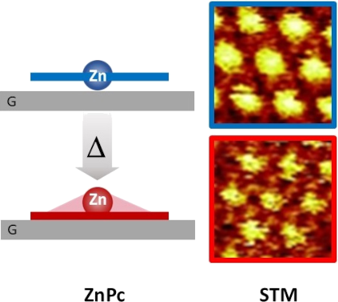
- forces, face-on versus edge-on molecule orientation, and planar-square versus shuttlecock molecule shape. Although the importance of thermal treatment on the interfacial structure of H2Pc [37] and ZnPc [38] on highly oriented pyrolytic graphite (HOPG) and graphene has been demonstrated, its mechanisms


Electrochemical determination of ciprofloxacin using a MIL-101/reduced graphene oxide-modified electrode
Beilstein J. Nanotechnol. 2026, 17, 541–554, doi:10.3762/bjnano.17.35
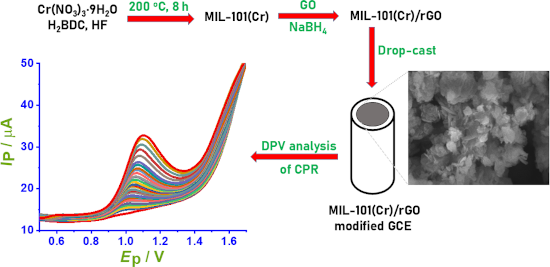
- ·9H2O), terephthalic acid (H2BDC), graphite powder, potassium permanganate (KMnO4), sodium borohydride (NaBH4), sulfuric acid (H2SO4), hydrogen peroxide (H2O2), and other analytical-grade reagents were purchased from standard chemical suppliers. Britton–Robinson (BR) buffer solutions at different pH
- levels were prepared using a mixture of acetic acid, phosphoric acid, and boric acid, with pH adjusted using 0.2 M NaOH solution. Synthesis of reduced graphene oxide (rGO), MIL-101, and MIL-101/rGO Graphene oxide (GO) was synthesized from natural graphite using a modified Hummers’ method, as described in


Upcycling agroindustrial waste into graphene oxide supports for gold nanoparticles: toward sustainable nanomaterials
Beilstein J. Nanotechnol. 2026, 17, 489–504, doi:10.3762/bjnano.17.32
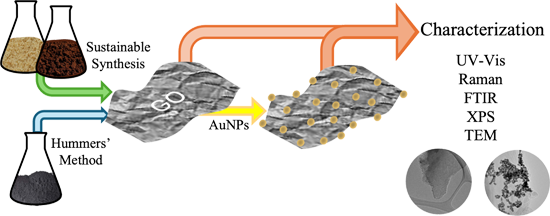
- conventionally synthesized through oxidation of graphite by chemical methods such as the Hummers' method or its modifications, which involve strong acids (e.g., H2SO4 or H3PO4), oxidants (e.g., KMnO4), and occasionally NaNO3 to facilitate exfoliation and oxidation of the graphite layers [6][7][8][9][10]. While
- routes compared to conventional harsh chemical methods [11][12][13][14]. In parallel, the increasing demand for eco-friendly, low-cost substitutes has driven the use of biomass-derived carbon precursors, particularly agricultural and food waste, as replacements for graphite [15][16][17]. These types of
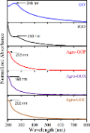
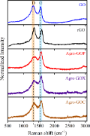
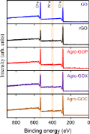
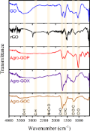
- technologies. Materials and Methods Materials For the synthesis of GO and rGO, all solvents and chemicals were purchased from Sigma-Aldrich and used without further purification. Graphite was purchased from Bay Carbon, Inc. Biomass collection and pre-treatment Peanut shells were obtained from peanuts collected



Defects and defect-mediated engineering of two-dimensional materials: challenges and open questions
Beilstein J. Nanotechnol. 2026, 17, 454–488, doi:10.3762/bjnano.17.31





Advancing nanolithography: a comprehensive review of materials for local anodic oxidation with AFM
Beilstein J. Nanotechnol. 2026, 17, 275–291, doi:10.3762/bjnano.17.19
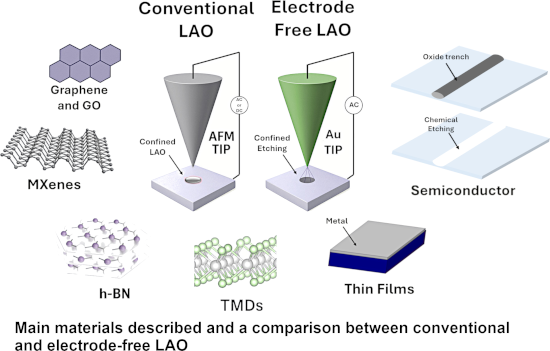
- typical for LAO experiments. In a recent study, Shilov et al. [64] proposed a similar approach to EFLAO, demonstrating efficient patterning on multilayer heterostructures composed of graphene, graphite, hexagonal boron nitride (hBN), NbSe2, and WSe2. Their method leverages the enhancement of the electric
- field, achieved by assembling the heterostructures on conductive graphite flakes. They suggest that the mechanism of electrical breakdown may play a more significant role than previously assumed, potentially overshadowing the electrochemical reactions traditionally attributed to the process. Although
- -layer graphene flakes [22][98][99], epitaxial graphene [20][100], graphene grown by thermal decomposition of SiC [77], and graphite [101]. By applying local oxidation in a humid environment, the resulting reactive oxygen species, such as OH− and O2•−, oxidize the graphene surface, forming graphene oxide


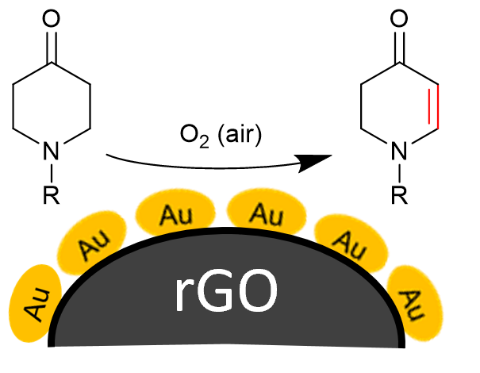
Gold nanoparticle-decorated reduced graphene oxide as a highly effective catalyst for the selective α,β-dehydrogenation of N-alkyl-4-piperidones
Beilstein J. Nanotechnol. 2026, 17, 218–238, doi:10.3762/bjnano.17.15


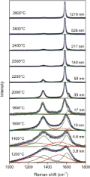
Reduced graphene oxide paper electrode for lithium-ion cells – towards optimized thermal reduction
Beilstein J. Nanotechnol. 2026, 17, 24–37, doi:10.3762/bjnano.17.3
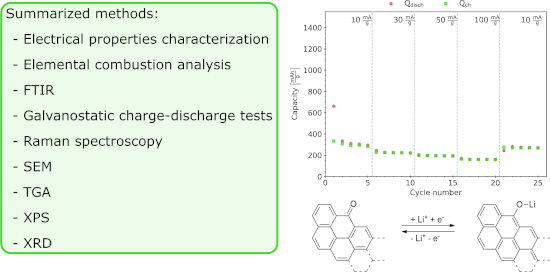
- influenced by graphite oxidation [36]. The D'' peak is related to amorphous phases [36]. As described by Ferrari et al. [45], the G peak refers to sp2-bonded atoms present in both the rings and chains (functional groups). The 2D peak can be considered as representing the second order of this mode [36] or the
- corresponds to an ordered crystalline structure typical of graphite, located around 2θ ≈ 24°, becomes broader and less intense [51]. These changes confirm the progressive reduction of graphene oxide, associated with a partial restoration of the graphitic structure. The slight shift in peak position suggests



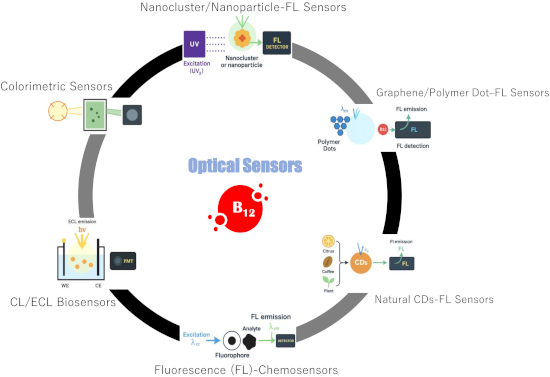
Optical bio/chemical sensors for vitamin B12 analysis in food and pharmaceuticals: state of the art, challenges, and future outlooks
Beilstein J. Nanotechnol. 2025, 16, 2207–2244, doi:10.3762/bjnano.16.153


Electron transport through nanoscale multilayer graphene and hexagonal boron nitride junctions
Beilstein J. Nanotechnol. 2025, 16, 2132–2143, doi:10.3762/bjnano.16.147
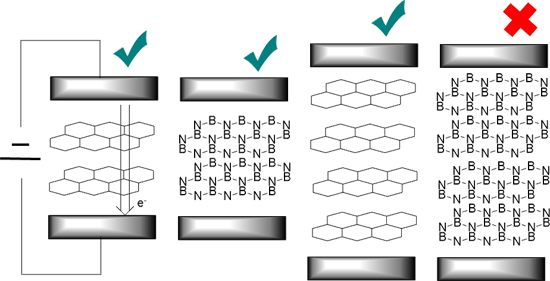
- defects are results of C–C bond rotation in the graphene plane, which isomerizes a 6–6 ring structure to a 7–5 ring structure. Stone–Wales defects are commonly observed in multilayer graphene, graphite, graphene oxide, and their occurrence is temperature-dependent [15][16]. Hexagonal boron nitride (h-BN
- ) is a material that shares many structural and electronic properties with graphite. It is isoelectronic to graphene with N contributing two electrons to the π-conjugated bond and B contributing zero electrons, as opposed to graphene, where each C atom contributes one electron. The h-BN structure is
- composed of polar bonds with N acting as electron donor and B acting as electron acceptor. Unlike graphene and graphite, h-BN shows high resistivity and is a large-bandgap semiconductor [17]. h-BN has a wide range of applications due to its unique properties [18]. It is used as a substrate material for


Mechanical property measurements enabled by short-term Fourier-transform of atomic force microscopy thermal deflection analysis
Beilstein J. Nanotechnol. 2025, 16, 1952–1962, doi:10.3762/bjnano.16.136
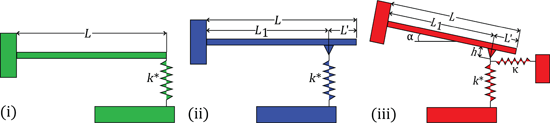
- model, improved matching the cantilever/sample stiffness to obtain a larger variation in contact stiffness with frequency, or investigating the use of higher-order modes that may achieve this improved match. Keywords: atomic force microscopy; contact resonance; highly oriented pyrolytic graphite (HOPG
- AFM experiments on well-characterized surfaces, such as highly ordered pyrolytic graphite (HOPG), using silicon cantilevers with integrated probes. To examine the time evolution of the AFM cantilever’s oscillatory modes during an experiment, STFTs, rather than wavelet transforms, of the thermal motion




Electrical, photocatalytic, and sensory properties of graphene oxide and polyimide implanted with low- and medium-energy silver ions
Beilstein J. Nanotechnol. 2025, 16, 1794–1811, doi:10.3762/bjnano.16.123
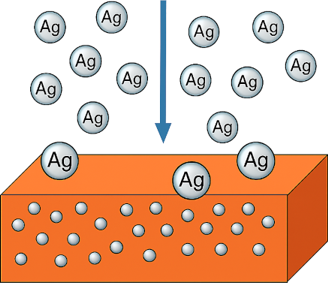
- structural analysis of GO before and after ion irradiation was conducted using Raman spectroscopy [28]. This spectroscopic technique, known for its effectiveness in probing disorders and defects within crystal structures, proved particularly valuable in characterizing graphite and its derivatives [29]. The


Photocatalytic degradation of ofloxacin in water assisted by TiO2 nanowires on carbon cloth: contributions of H2O2 addition and substrate absorbability
Beilstein J. Nanotechnol. 2025, 16, 1567–1579, doi:10.3762/bjnano.16.111
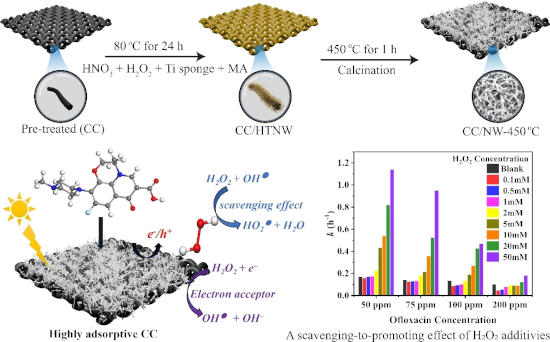
- ) and the graphite (G) band (≈1582 cm−1) [17]. The increasing ratio suggests an increasing surface disordering of the carbon cloth after calcination, which contributes to the high adsorption capacity toward the target molecules. Figure 3a illustrates the UV–vis diffuse absorbance spectrum of the CC/HTNW


Dendrimer-modified carbon nanotubes for the removal and recovery of heavy metal ions from water
Beilstein J. Nanotechnol. 2025, 16, 1522–1532, doi:10.3762/bjnano.16.107
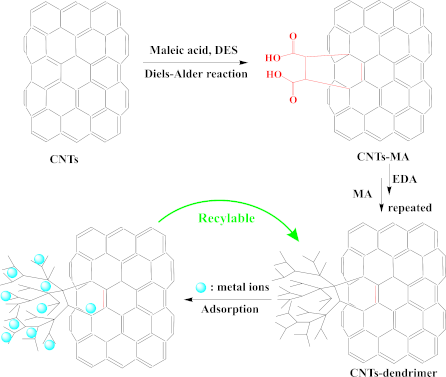
- first peak, with higher intensity, corresponds to the (002) plane of graphite indicating a d-spacing (d002) of 0.34 nm, and the second peak ° is associated with the (100) planes of graphite. Both peaks are characteristic to the graphitic crystal lattice of CNTs [44]. Hence, XRD results indicate that the


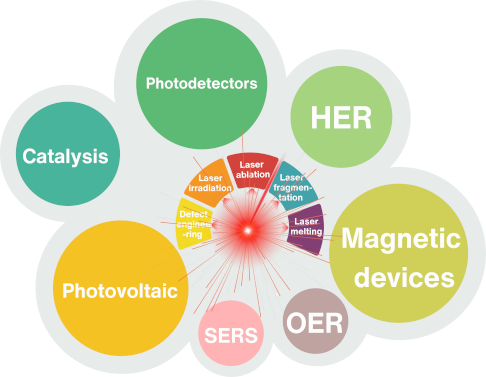
Laser processing in liquids: insights into nanocolloid generation and thin film integration for energy, photonic, and sensing applications
Beilstein J. Nanotechnol. 2025, 16, 1428–1498, doi:10.3762/bjnano.16.104






The role of biochar in combating microplastic pollution: a bibliometric analysis in environmental contexts
Beilstein J. Nanotechnol. 2025, 16, 1401–1416, doi:10.3762/bjnano.16.102
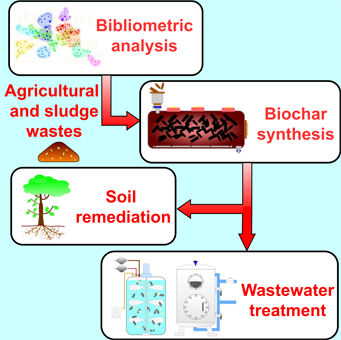
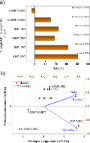
- ]. These findings indicate that while different treatment models exhibit varying efficiency, the removal of nanoscale MPs predominantly depends on functional group interactions within biochar. The presence of functional groups in AZP such as C–H, C–O, C=C, N–H, Al–O, and Si–O, along with its graphite-like



Crystalline and amorphous structure selectivity of ignoble high-entropy alloy nanoparticles during laser ablation in organic liquids is set by pulse duration
Beilstein J. Nanotechnol. 2025, 16, 1141–1159, doi:10.3762/bjnano.16.84
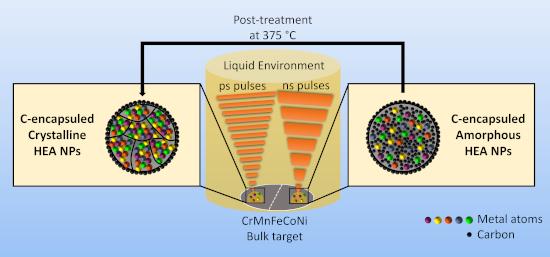
- bowl centrifuges [110]. Hence, despite minor inhomogeneities in mean particle size and composition on a single-particle level and the presence of thin graphite and oxide shells, the laser-fabricated ignoble HEA




Single-layer graphene oxide film grown on α-Al2O3(0001) for use as an adsorbent
Beilstein J. Nanotechnol. 2025, 16, 1082–1087, doi:10.3762/bjnano.16.79
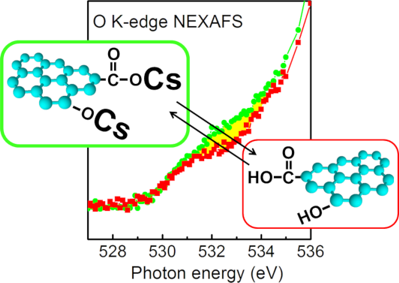
- has a high level of water affinity. Consequently, GO can be expected to have a wide range of applications, such as primers, thermally conductive materials, transparent electrodes, and adsorbent materials [3][4][5][6][7][8][9][10][11][12][13]. GO is typically synthesized by oxidizing graphite. Several
- XPS spectra of SLG/α-Al2O3(0001) is shifted to the lower binding energies by 1.0 eV compared with that of graphite (284.4 eV) [23]. This is due to p-type doping of SLG associated with a strong electrostatic interaction between SLG and the α-Al2O3(0001) at the interface [18]. In SLGO, on the other hand


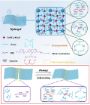
Soft materials nanoarchitectonics: liquid crystals, polymers, gels, biomaterials, and others
Beilstein J. Nanotechnol. 2025, 16, 1025–1067, doi:10.3762/bjnano.16.77
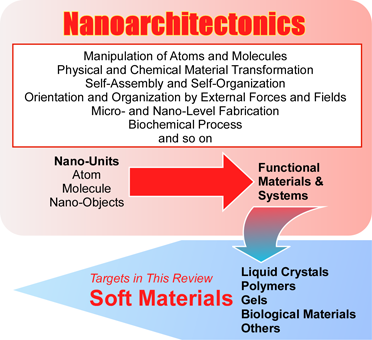
- importance in the fabrication of active electrodes for a range of electrochemical applications. However, it is not always the case that these materials adopt the desired nanostructure. Dag and colleagues fabricated CaFe2O4 thin-film electrodes on graphite rods via a molten salt-assisted self-assembly process




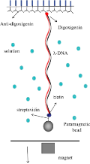


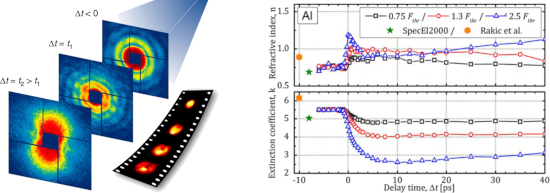
Time-resolved probing of laser-induced nanostructuring processes in liquids
Beilstein J. Nanotechnol. 2025, 16, 968–1002, doi:10.3762/bjnano.16.74


Synthesis of biowaste-derived carbon-dot-mediated silver nanoparticles and the evaluation of electrochemical properties for supercapacitor electrodes
Beilstein J. Nanotechnol. 2025, 16, 933–943, doi:10.3762/bjnano.16.71
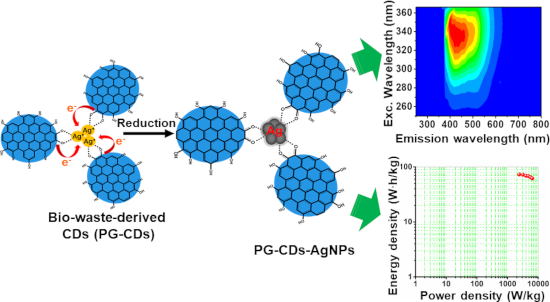
- also shown that AgNPs actively improve the electrochemical characteristics of different electrode materials. Salve et al. reported a noteworthy charge-storing capacity of 367.16 mF/cm2 of the synthesized hybrid material, PGE/AgNPs/CS (pencil graphite electrodes/silver nanoparticles/chitosan) [15





