Search results
Search for "oral administration" in Full Text gives 37 result(s) in Beilstein Journal of Nanotechnology.
Breaking barriers: nanosystems to overcome solubility and permeability challenges of second-generation tyrosine kinase inhibitors
Beilstein J. Nanotechnol. 2026, 17, 1063–1086, doi:10.3762/bjnano.17.73
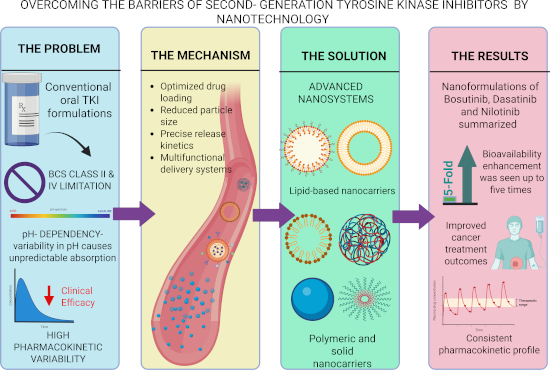
- coating. Upon oral administration, they are mainly absorbed via lymphatic transport through chylomicron pathway and also improve the dissolution rate of the crystalline drug [19]. DTB-loaded SLNs were prepared using various lipids, including glyceryl tristearate, glyceryl tripalmitate, glyceryl
- SLN) [25]. Consequently, this scalable SLN system, with a biocompatible solid lipid matrix made up of lipid excipients that are generally regarded as safe, provides advantages like lymphatic absorption and P-gp inhibition; also, it enables the conversion to solid-dosage form for oral administration by


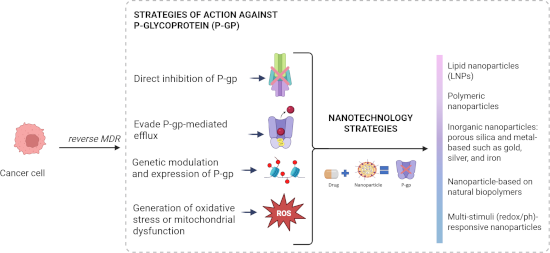
Nanocarrier strategies to overcome P-glycoprotein-mediated drug resistance in cancer therapy
Beilstein J. Nanotechnol. 2026, 17, 882–921, doi:10.3762/bjnano.17.64


Nanoparticle delivery systems for HIV pre-exposure prophylaxis (PrEP): advances and challenges
Beilstein J. Nanotechnol. 2026, 17, 839–853, doi:10.3762/bjnano.17.60
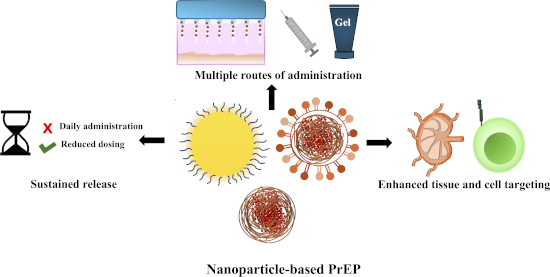
- /emtricitabine (TDF/FTC) or tenofovir alafenamide/emtricitabine (TAF/FTC) [2][3]. Studies have demonstrated that a daily oral administration of these PrEP medications can reduce the risk of HIV transmission by over 90% among patients who take the medication consistently [2][4][5][6]. These medications have
- (MOLT-4) compared to cell models without CD4 receptor. A comparison of the relative bioavailability of DRV achieved by DRV-loaded SLNs versus free drug suspension after oral administration to male Wister rats demonstrated enhanced (569%) bioavailability of DRV for DRV-SLNs in vivo. Moreover, DRV-SLNs


Targeting the vector of arboviruses Aedes aegypti with nanoemulsions based on essential oils: a review with focus on larvicidal and repellent properties
Beilstein J. Nanotechnol. 2025, 16, 1894–1913, doi:10.3762/bjnano.16.132
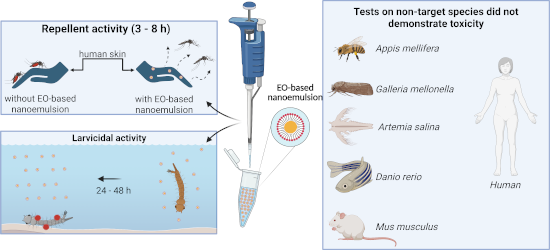
- cells and in adult Wistar rats via oral administration. The assays revealed no hemolytic, cytotoxic, or toxic effects, with IC50 above 2000 mg/kg, indicating a good environmental safety profile of the formulation. Suresh et al. (2020) investigated the use of nanoemulsions containing Crithmum maritimum


Exploring the potential of polymers: advancements in oral nanocarrier technology
Beilstein J. Nanotechnol. 2025, 16, 1751–1793, doi:10.3762/bjnano.16.122
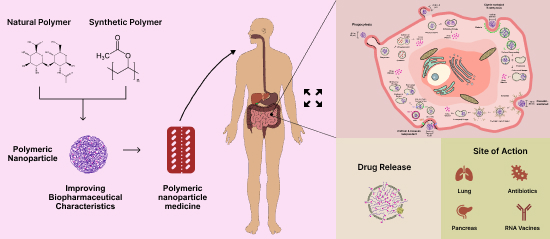
- , Brazil 10.3762/bjnano.16.122 Abstract Polymers play a pivotal role in various drug delivery systems due to their versatility, with polymeric nanoparticles showing significant potential to overcome physiological barriers associated with oral administration. This review examines the current advancements
- developing diverse nanocarriers for oral applications, and this review provides a valuable theoretical foundation for understanding the strategies currently employed in this field. Keywords: drug delivery; nanoparticle; oral administration; polymer; polymeric nanoparticle; Review 1 Introduction The oral
- products intended for human use [1]. Despite their advantages, drug candidates for oral administration face several limitations, as shown in Figure 1, including chemical instability caused by the gastric environment, low bioavailability, and poor permeability across barriers in the gastrointestinal tract


Advances of aptamers in esophageal cancer diagnosis, treatment and drug delivery
Beilstein J. Nanotechnol. 2025, 16, 1734–1750, doi:10.3762/bjnano.16.121

- susceptible to degradation by nucleases or proteases and rapid renal clearance, making oral administration particularly challenging. This necessitates regulatory agencies to develop tailored evaluation criteria, such as extending observation periods beyond those for conventional small-molecule drugs


Aprepitant-loaded solid lipid nanoparticles: a novel approach to enhance oral bioavailability
Beilstein J. Nanotechnol. 2025, 16, 652–663, doi:10.3762/bjnano.16.50
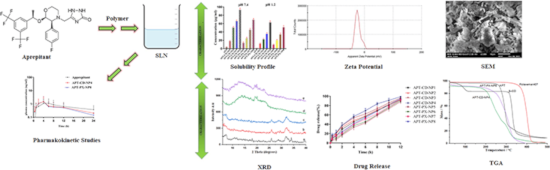
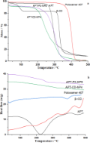
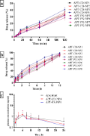
- . Therefore, the optimal SLN formulation APT-CD-NP4 is a promising tool for oral administration with sustained release to improve the bioavailability of the BCS class-IV drug APT. Keywords: aprepitant; β-cyclodextrin; pharmacokinetic study; poloxamer; solid lipid nanoparticles; Introduction Cancer is a



A formulation containing Cymbopogon flexuosus essential oil: improvement of biochemical parameters and oxidative stress in diabetic rats
Beilstein J. Nanotechnol. 2025, 16, 617–636, doi:10.3762/bjnano.16.48
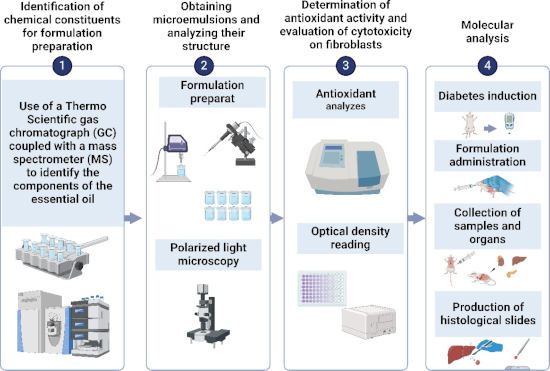
- , the required amount for oral administration would be high and could be unfeasible. Hence, the pseudoternary phase containing Eumulgin® CO40 and Tween® 80 was selected for the subsequent trials. In the PTPD in Figure 1, a broad area of transparent systems is observed, suggesting that the use of these
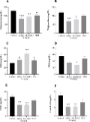
- supplemented for 14 days significantly reduced TG and increased HDL cholesterol in diabetic rats. In this study, oral administration of EOCF for 21 days also promoted an increase in HDL cholesterol levels. However, HDL cholesterol levels were higher for microemulsions than for the free essential oil. It is
- size, good stability, low polydispersity index and pH suitable for oral administration. It was also observed that M7-EOCF exhibited high antioxidant activity, showing that the formulation acted by potentiating the bioactive activity of EOCF. Finally, the in vivo results showed that EOCF, M7-EOCF, and




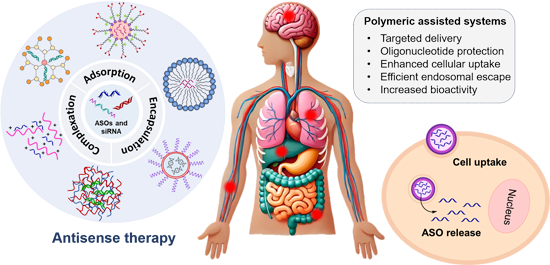
Synthetic-polymer-assisted antisense oligonucleotide delivery: targeted approaches for precision disease treatment
Beilstein J. Nanotechnol. 2025, 16, 435–463, doi:10.3762/bjnano.16.34


Nanocarriers and macrophage interaction: from a potential hurdle to an alternative therapeutic strategy
Beilstein J. Nanotechnol. 2025, 16, 97–118, doi:10.3762/bjnano.16.10
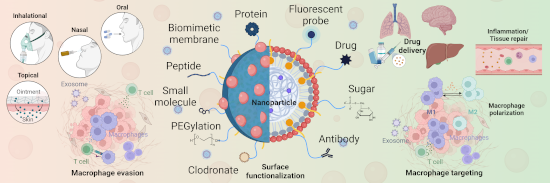
- healthy mice and in a murine model of Huntington's disease [42]. Similarly, inhalation for lung targeting [43], subcutaneous injection for reaching lymph nodes [44], or oral administration for gastrointestinal tract disorders [45] are important alternative routes. 4.2 Macrophage depletion and modulation


Polymer lipid hybrid nanoparticles for phytochemical delivery: challenges, progress, and future prospects
Beilstein J. Nanotechnol. 2024, 15, 1473–1497, doi:10.3762/bjnano.15.118
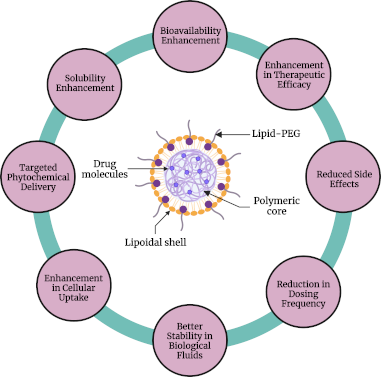
- include their small particle size, high encapsulation efficiency, enhanced stability, and improved dissolution in harsh gastrointestinal (GI) fluids. Following oral administration, PLHNPs demonstrate superior intestinal absorption and bioavailability, attributed to their enhanced stability and dissolution
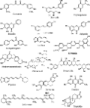
- single phytochemicals, offering enhanced stability, bioavailability, and targeted delivery. As previously discussed, many phytochemicals are lipophilic. Figure 5 illustrates the chemical structures of the various phytochemicals examined in this paper. After oral administration, phytochemicals exhibit
- water because it is highly lipophilic. After, oral administration, CUR shows very limited dissolution in GI fluids and low absorption from the intestine, which results in low oral bioavailability. CUR metabolizes rapidly in the biological system, which further lowers its bioavailability, and shows a


Nanotechnological approaches for efficient N2B delivery: from small-molecule drugs to biopharmaceuticals
Beilstein J. Nanotechnol. 2024, 15, 1400–1414, doi:10.3762/bjnano.15.113
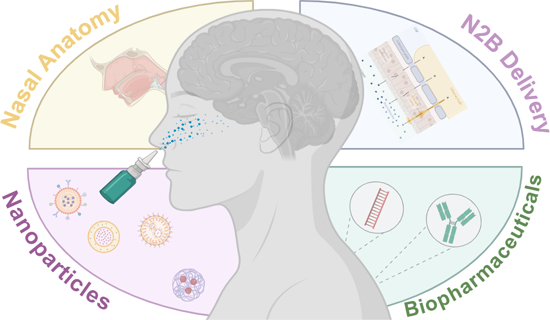
- intranasal administration compared to the intravenous administration of the NP formulation (by a factor of 2.41) [108]. In another study, NLCs were designed and optimized by 32 full factorial design for the encapsulation of clozapine, an anti-schizophrenia drug suffering from low bioavailability after oral
- administration. The optimization process yielded optimized NLCs with a particle size of 178 nm of and an entrapment efficiency of 77%. The in vivo pharmacokinetic study showed that intranasal administration of the optimized NLC formulation led to significantly faster drug absorption and greater clozapine


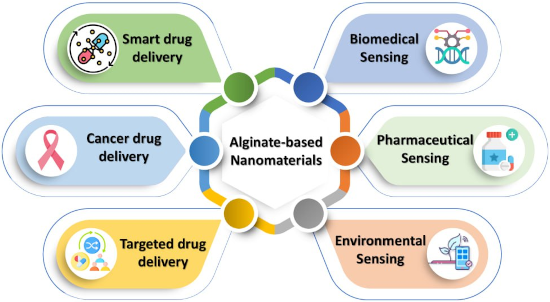
Unveiling the potential of alginate-based nanomaterials in sensing technology and smart delivery applications
Beilstein J. Nanotechnol. 2024, 15, 1077–1104, doi:10.3762/bjnano.15.88


Cholesterol nanoarchaeosomes for alendronate targeted delivery as an anti-endothelial dysfunction agent
Beilstein J. Nanotechnol. 2024, 15, 517–534, doi:10.3762/bjnano.15.46
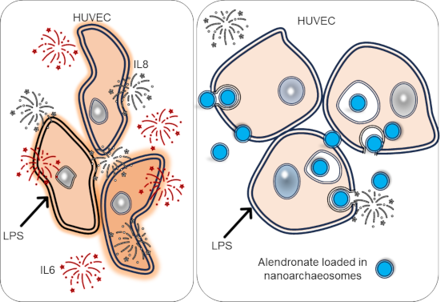
- Biopharmaceutical Classification System, ALN is a class-III molecule (high solubility and low permeability due to a polar hydrophilic nature) [13]. Its use as a vascular anti-inflammatory agent is limited by its low bioavailability, which after oral administration is minimal (about 0.7%) and highly variable [14][15



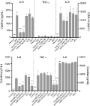


Fabrication of nanocrystal forms of ᴅ-cycloserine and their application for transdermal and enteric drug delivery systems
Beilstein J. Nanotechnol. 2024, 15, 465–474, doi:10.3762/bjnano.15.42
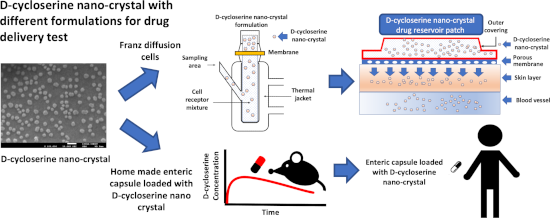
- disease, and post-traumatic stress disorder [13][14][15][16]. In general, solid dosage forms for oral administration are preferable for therapies against CNS disorders. Nevertheless, challenges persist with oral solid dosage forms, including issues of bioavailability and clinical efficacy [17]. On the
- , matrix, and microneedle systems [24][25][26]. In addition, enteric-coated solid dosage forms for oral administration have shown significant improvement in providing better absorption and targeted delivery [27][28]. In this study, due to high water solubility of DCS (Log P = −1.72) and difficulty to


Nanomedicines against Chagas disease: a critical review
Beilstein J. Nanotechnol. 2024, 15, 333–349, doi:10.3762/bjnano.15.30

- treatment against CD is based on the oral administration of benznidazole, an agent, developed in 1971, of controversial effectiveness on chronically ill patients and toxic to adults. So far, conventional pharmacological approaches have failed to offer more effective and less toxic alternatives to
- increased 10-fold (from 0.4 mg/mL for bulk BNZ to 3.99 mg/mL for BNZ-NC) [49]. After oral administration of BNZ-NC to an acute murine model infected with the Nicaragua strain of T. cruzi at 300 mg/kg total dose (TD) (30 days treatment) and 375 mg/kg TD (15 days treatment), which was about half of the 750 mg

Curcumin-loaded nanostructured systems for treatment of leishmaniasis: a review
Beilstein J. Nanotechnol. 2024, 15, 37–50, doi:10.3762/bjnano.15.4

- promastigotes and intracellular amastigotes, as well as the effects of oral administration of the formulations in infected mice [73]. The droplet size of the NEs was 76 and 88 nm for nanocopa and nanoandi, respectively. The authors observed a significant decrease in parasite load for both investigated species


Nanotechnological approaches in the treatment of schistosomiasis: an overview
Beilstein J. Nanotechnol. 2024, 15, 13–25, doi:10.3762/bjnano.15.2

- vitro and in vivo models. Finally, the author discusses the possibility that the nanoformulation could be used to treat cases of schistosomiasis in the brain due to its smaller size [40]. Nevertheless, it is noteworthy that oral administration of biodegradable nanoparticles, such as conventional


Microneedle patches – the future of drug delivery and vaccination?
Beilstein J. Nanotechnol. 2023, 14, 494–495, doi:10.3762/bjnano.14.40
- . Hypodermic syringe injections are, of course, ubiquitous in modern medicine for drug therapy and vaccination, where oral administration is either not desirable or not possible. Delivery may be intravenous, intramuscular or percutaneous. Hypodermic needles of various dimensions are also used to extract venous
Orally administered docetaxel-loaded chitosan-decorated cationic PLGA nanoparticles for intestinal tumors: formulation, comprehensive in vitro characterization, and release kinetics
Beilstein J. Nanotechnol. 2022, 13, 1393–1407, doi:10.3762/bjnano.13.115
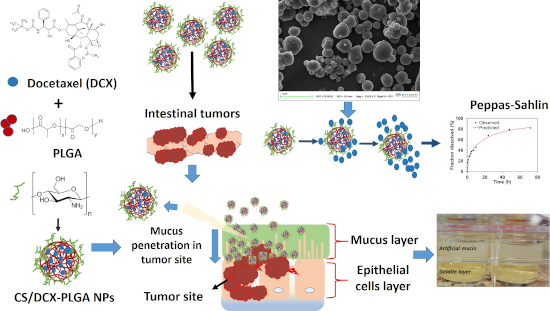
- multiple GIT-related barriers through oral administration of nanoparticulate drug delivery systems. From this point of view, polymeric nanoparticles (NPs) are promising in the development of an oral formulation for colon carcinomas. While it protects the drug from various destructive effects of GIT with
- oral administration. The nanoparticles were designed to penetrate the colon tissue by showing higher local concentration in the tumoral region and to release the anticancer agent locally to a large extent. The aim of this study is to develop a new and unique orally administered approach for the
- study, it was aimed to deliver DCX to the bowel effectively and stably through oral administration of CS-coated PLGA NPs. The CS/DCX-PLGA oral formulation, whose extensive in vitro characterization studies have been completed, showed high mucin interaction, high mucus penetration, high anticancer


Stimuli-responsive polypeptide nanogels for trypsin inhibition
Beilstein J. Nanotechnol. 2022, 13, 538–548, doi:10.3762/bjnano.13.45
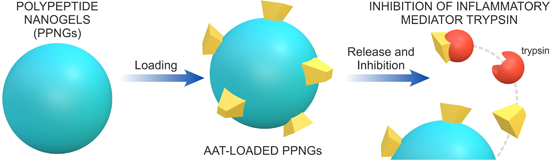
- other serine proteases inhibitors, such as α1-antitrypsin (AAT), α2-macroglobulin, α1-antichymotrypsin, and eglin C [11]. However, direct intravenous or oral administration of the majority of these natural serine protease inhibitors is ineffective due to their low plasma and peritoneal levels, very


Engineered titania nanomaterials in advanced clinical applications
Beilstein J. Nanotechnol. 2022, 13, 201–218, doi:10.3762/bjnano.13.15
- organs. The [48V]TiO2NP content in blood decreased 200-fold within one hour, whereas hepato-biliary clearance of [48V]TiO2NP from the liver and other organs and tissues continued over the period of 28 days [32]. Likewise, the study of MacNicoll et al. has shown that oral administration of 5 mg TiO2 nps


Comprehensive review on ultrasound-responsive theranostic nanomaterials: mechanisms, structures and medical applications
Beilstein J. Nanotechnol. 2021, 12, 808–862, doi:10.3762/bjnano.12.64
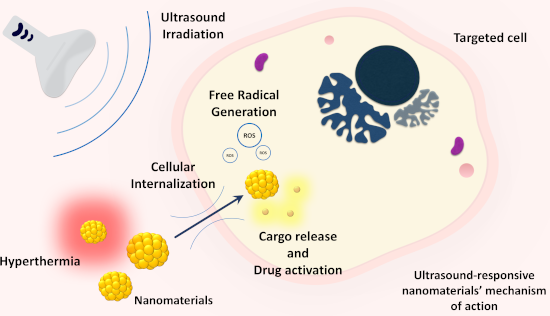
- therapy; sonoporation; theranostics; ultrasound; ultrasound responsive nanomaterials; Review Introduction Smart drug delivery vehicles It is well known that the administration of most anticancer drugs can produce considerable systemic toxicity, which in some cases can be dose-limiting. Whether oral
- administration or intravenous injection is employed, the drug often accumulates in normal healthy tissues and causes damages. Therefore, it is necessary to target and release these drugs at the desired sites in a controlled manner to decrease their systemic side effects and to increase their therapeutic


Fate and transformation of silver nanoparticles in different biological conditions
Beilstein J. Nanotechnol. 2021, 12, 665–679, doi:10.3762/bjnano.12.53

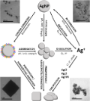
- . Despite their wide use and significant amount of scientific data on their effects on biological systems, detailed insight into their in vivo fate is still lacking. This study aimed to elucidate the biotransformation patterns of AgNPs following oral administration. Colloidal stability, biochemical
- transformation, dissolution, and degradation behaviour of different types of AgNPs were evaluated in systems modelled to represent biological environments relevant for oral administration, as well as in cell culture media and tissue compartments obtained from animal models. A multimethod approach was employed by
- ]. Upon oral administration, AgNPs are first exposed to saliva and then to gastric fluid. These two media are characterized by different pH values, ranging from 6.2 to 7.6 in saliva or from 1.5 to 3.5 in gastric fluid, which may significantly affect AgNP dissolution. Moreover, the lining oral mucosa may




Nanoporous smartPearls for dermal application – Identification of optimal silica types and a scalable production process as prerequisites for marketed products
Beilstein J. Nanotechnol. 2019, 10, 1666–1678, doi:10.3762/bjnano.10.162

- formulations. The company Capsulution (Berlin, Germany) incorporated active agents in the amorphous state inside the pores of silica particles with mesopores (2–50 nm) [17] using the technology from CapsMorph for oral administration [18]. With this, the amorphous state could be stabilized over the course of
- the range of 2–50 nm. In 2006 this delivery technology was transferred from the oral to the dermal administration route [22] by applying a technology called smartPearls [23]. The name was changed to smartPearls to clearly differentiate them from silica used for oral administration. smartCrystals are