Search results
Search for "polymer" in Full Text gives 790 result(s) in Beilstein Journal of Nanotechnology. Showing first 200.
A redox-responsive viologen–cavitand nanocarrier for dual-function photodynamic therapy
Beilstein J. Nanotechnol. 2026, 17, 1142–1158, doi:10.3762/bjnano.17.78
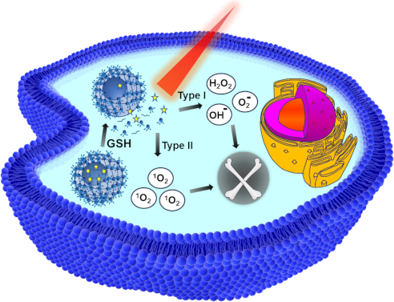
- . Furthermore, this nanoscale size enhances passive accumulation in tumor tissues due to the enhanced permeability and retention (EPR) effect [11][12][13][14][15], allowing polymer–drug conjugates to achieve intratumoral concentrations 10 to 100 times higher than those obtained with the free drug [16]. However
- functionalities into a single synthetic step to improve upon existing polymer-based methods. A rigid resorcinarene cavitand core provides structural stability and monodispersity without surfactants [26][27]. Peripheral viologen units enhance cellular uptake via positive surface charge and boost reactive oxygen
- species production through photoinduced electron transfer with THPP [32][34]. In situ disulfide crosslinking prevents premature cargo leakage, enabling efficient GSH-triggered drug release specifically within cancer cells [24]. This one-step multicomponent assembly simplifies previous multistage polymer


Facile synthesis of platinated DNA nanoparticles with radiosensitizing potential
Beilstein J. Nanotechnol. 2026, 17, 1117–1127, doi:10.3762/bjnano.17.76
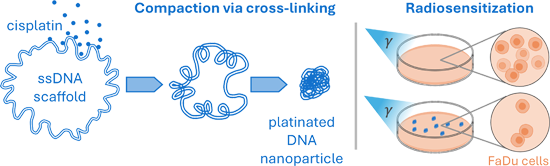
- polymer chain that can potentially undergo a progressive coil-to-globule transition as cross-links are introduced. Typically, the formation of intramolecular cross-links in polymers reduces chain entropy and promotes localized loop formation, which subsequently evolves into a compact, collapsed structure
- as the cross-link density increases. Utilizing a circular scaffold of fixed length constrains the conformational space of the polymer, which could result in narrower nanoparticle size distributions as opposed to approaches relying on short oligonucleotides or fragmented genomic DNA. This strategy
- could therefore enable controlled nanoparticle formation through a combination of polymer collapse and cross-linking-driven compaction. The next subsections describe the optimization of the parameters for the synthesis of the platinated DNA nanoparticles, driven by this design concept. Effect of mixing


Breaking barriers: nanosystems to overcome solubility and permeability challenges of second-generation tyrosine kinase inhibitors
Beilstein J. Nanotechnol. 2026, 17, 1063–1086, doi:10.3762/bjnano.17.73
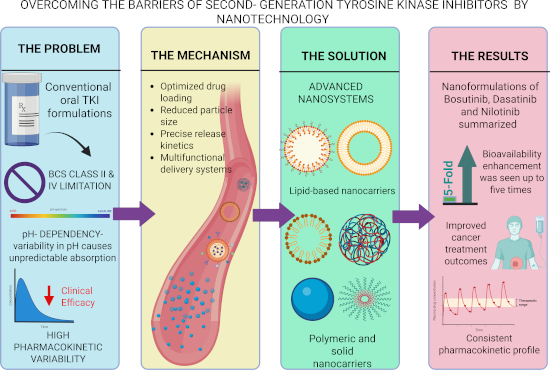
- processing equipment, the requirement for optimization studies, and reproducibility during large-scale manufacturing are associated challenges. A suitable and compatible surfactant or polymer is needed to impart a negative or positive charge on the surface of the NLCs, thereby preventing precipitation and
- making nanoformulations stable in the long term. Additionally, surfactant and polymer-related toxicity must also be considered for clinical translation [33]. Polymeric nanoparticles Polymeric nanoparticles are versatile carriers to increase the solubility of poorly soluble drugs. The drugs are either
- encapsulated (nanospheres) or surface-adsorbed (nanocapsules) in the polymer matrix. NTB-loaded nanoparticles were formulated using Eudragit RL 100 and Eudragit RS 100 as polymers via the precipitation method. The resulting nanoparticles were stable and exhibited a mean particle size of 42.54 nm, a PDI of


Development of Protium heptaphyllum essential oil-loaded nanocapsules: experimental design and biological activity
Beilstein J. Nanotechnol. 2026, 17, 974–990, doi:10.3762/bjnano.17.67
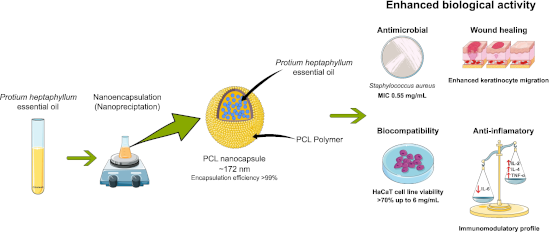
- with specific advantages and limitations depending on the desired application [15][16]. Among these, nanoprecipitation (NP) is notable for producing uniform particles through a low-cost, reproducible process based on polymer nucleation in aqueous media [17][18]. Previous work, such as that by Vauthier
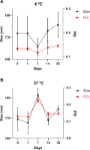
- the Box–Behnken design matrix and the observed responses for Dh, PDI, and zeta potential. These results reflect the combined effects of the independent variables, that is, polymer concentration (20–100 mg), EO content (50–150 mg), and surfactant concentration (20–60 mg) on the physicochemical
- ), whereas higher polymer levels were consistently associated with increased diameters. The quadratic model demonstrated satisfactory explanatory and predictive performance (R2 = 90.78%, adjusted R2 = 87.71%, predicted R2 = 82.44%) (Supporting Information File 1, Table S1). The lack-of-fit test was not




Materials challenges in solid-state sensors for continuous monitoring of ions in water
Beilstein J. Nanotechnol. 2026, 17, 935–973, doi:10.3762/bjnano.17.66
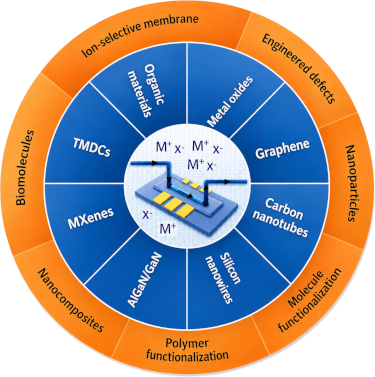
- + redox couple provides a stable and reproducible interfacial potential. (3) Mixed ionic–electronic conduction occurs in materials such as PEDOT:PSS, which supports simultaneous ion and electron transport and transduces potential changes via modulation of the polymer oxidation state. Together, these
- , fabrication processes often leave polymer residues and adsorbates that deteriorate electronic quality, and large-area CVD graphene suffers from structural non-uniformities, including grain boundaries, wrinkles, and non-uniform doping, that create substantial device-to-device variability [120]. Beyond these


Enhanced erosion resistance and radiation stability of WC–WO3 nanocomposite films under 100 keV Kr+ ion irradiation
Beilstein J. Nanotechnol. 2026, 17, 922–934, doi:10.3762/bjnano.17.65
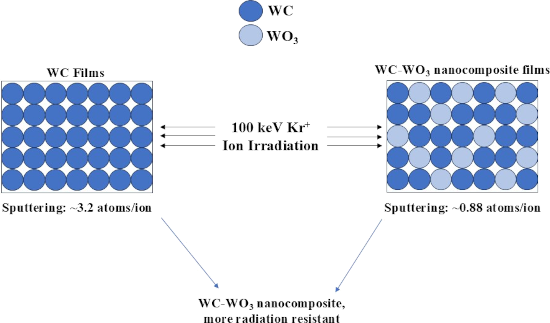
- drawn attention owing to their improved mechanical properties, enhanced activities and chemical stability [21][22][23][24]. In the recent past, many studies have been carried out which establish synthesis–structure–property relationships of polymer matrix composites in various areas of applications like


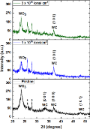

Nanocarrier strategies to overcome P-glycoprotein-mediated drug resistance in cancer therapy
Beilstein J. Nanotechnol. 2026, 17, 882–921, doi:10.3762/bjnano.17.64
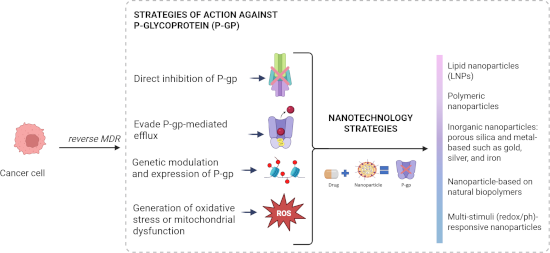
- ) suppression of transporter expression via co-delivery of siRNA, shRNA, or anti-miRNA payloads targeting ABCB1 regulatory pathways. We further discuss advances in nanoplatform engineering, including lipid-based nanoparticles, polymeric micelles, lipid–polymer hybrid systems, and biomimetic carriers designed to
- ]. 3.2.1.3 Lipid–polymer hybrid nanoparticles. Another important class of nanocarriers are lipid–polymer hybrid nanoparticles (LPNs), which integrate the advantageous properties of lipids (biocompatibility) and polymers (structural stability). These nanoparticles can exhibit various structural configurations
- enhanced cellular uptake, stimuli-responsive drug release, and direct inhibition of P-gp activity. This collaboration results in substantial decreases in IC50 values and tumor inhibition rates over 80% in multidrug-resistant animals. The findings underscore the adaptability of lipid–polymer hybrid


Light-driven ammonia electrooxidation via carbon nitride–ruthenium molecular interfaces
Beilstein J. Nanotechnol. 2026, 17, 854–862, doi:10.3762/bjnano.17.61
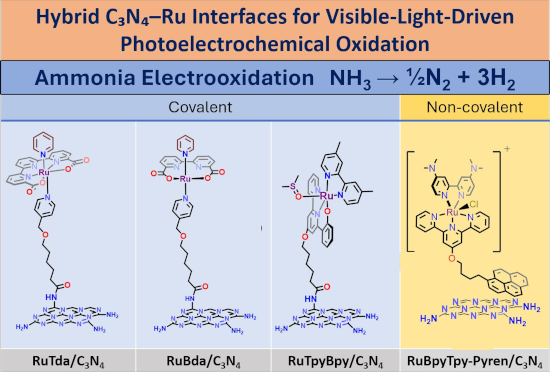
- material is a two-dimensional polymer composed of heptazine (tri-s-triazine) or s-triazine building block units linked by tertiary amines into extended graphitic sheets, with a bandgap of approximately 2.7 eV with optical absorption onset at 460 nm (Figure 2b), firmly within the visible range of the solar


Nanoparticle delivery systems for HIV pre-exposure prophylaxis (PrEP): advances and challenges
Beilstein J. Nanotechnol. 2026, 17, 839–853, doi:10.3762/bjnano.17.60
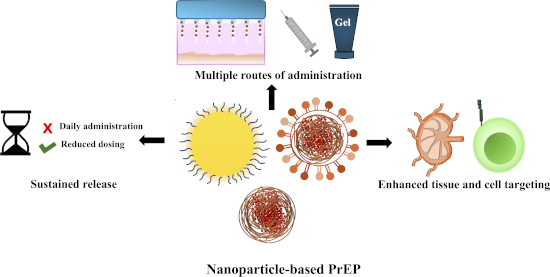
- vaccine-focused strategies. (4) Hybrid nanoparticles: These systems are composed of multiple materials, for example lipid–polymer hybrids and magnetoliposomes. The combination of two or more materials provides opportunities for enhancing PrEP relevant nanoparticle properties, including improved drug
- ]. A major advantage of polymeric platforms lies in their ability to take up and store drug cargo in their interior with a capacity that depends on the chemical nature of the polymer and the structure of the nanoparticle. They provide engineering degrees of freedom to tune release properties and thus
- throughout the polymer matrix. This property is particularly beneficial for drugs with poor bioavailability or short plasma half-lives, as it allows a reduction in dosing frequency and improves adherence. In some designs, drug cargo is confined within nanocapsule-like structures formed by a polymer shell [49


Cross-scale design of chemosensor arrays: from molecular self-assembly in water to paper-based devices for metal ion detection
Beilstein J. Nanotechnol. 2026, 17, 828–838, doi:10.3762/bjnano.17.59
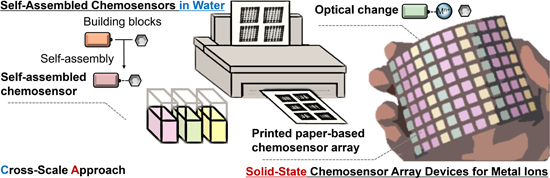
- comparable to those of the solution-based chemosensor array. The concept can also be extended to polymer-based chemosensor elements. In a previous study, a polythiophene derivative immobilized chemosensor array on a paper substrate achieved highly sensitive detection of metal ions at tens of parts per


Substrate-dependent pore formation in molybdenum disulfide monolayers under ion irradiation
Beilstein J. Nanotechnol. 2026, 17, 769–780, doi:10.3762/bjnano.17.54
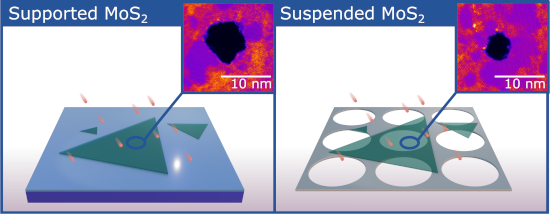
- received the same fluence. Schematic of the irradiation and subsequent STEM analysis of MoS2 on SiO2. First, CVD-grown MoS2 on SiO2/Si is irradiated with highly charged ions (a). After that, irradiated MoS2 is transferred polymer-free to a TEM grid (b). (c) Transferred flakes on the TEM grid (left) are


Environmental applications of silver nanoparticles: state-of-the-art review and emerging trends
Beilstein J. Nanotechnol. 2026, 17, 697–736, doi:10.3762/bjnano.17.49
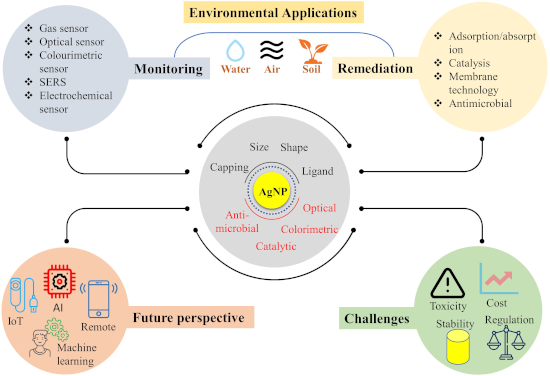
- capacity, which was increased by adding other materials. This includes carbon-based nanocomposites (activated carbon, graphene, and nanotubes), polymer-based nanocomposites (chitosan and alginate), and metal oxide-based nanocomposites (iron, zinc, and titanium) [26]. A recent study confirmed the removal of


Protein-based custom-designed molecular nanotraps for biomedical applications
Beilstein J. Nanotechnol. 2026, 17, 683–687, doi:10.3762/bjnano.17.47
- polymer matrices that closely mimic natural recognition entities [2]. MIP technology is a strategy specifically designed to mold selective binding sites in a material through a template-assisted synthesis [3]. The specific recognition is achieved through a polymer synthesis that occurs in the presence of
- rich in glycine, proline, and hydroxyproline, gelatin is a denatured and fragmented form of collagen produced through partial acidic or basic hydrolysis [13]. Gelatin is a water-soluble polymer that typically undergoes a temperature-dependent gelation, with the transition from a liquid to a hydrogel

Decontamination from water pollutants and pathogens by electrospun nanofibers doped with heavy-atom-free borafluorene-BODIPY photosensitizers
Beilstein J. Nanotechnol. 2026, 17, 668–682, doi:10.3762/bjnano.17.46
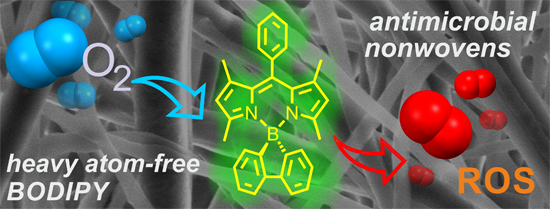
- successfully incorporated into electrospun polymeric nanofibers. Optimization of the material composition revealed that polycaprolactone (PCL), an FDA- and EMA-approved, biodegradable, easily accessible, and cost-efficient polymer, doped with BODIPY at a concentration of only 0.15 wt %, is an efficient
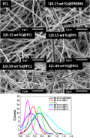
- typical range for electrospun materials. The addition of highly hydrophobic BODIPY to the polymer fibers slightly reduced the hydrophilicity of the material. This is evidenced by a small but systematic decrease in the water contact angle (WCA), from 122° ± 0.9° for pure PCL to 117.49° ± 3.1° for 1(0.50 wt



Cellulose as a photocatalyst support material: extraction, structural features, and environmental applications
Beilstein J. Nanotechnol. 2026, 17, 635–652, doi:10.3762/bjnano.17.44
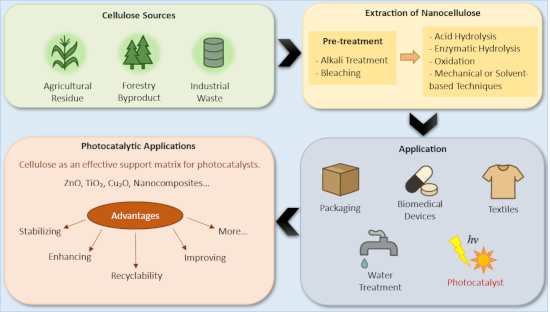
- polymers provide distinct advantages such as renewability, biodegradability, and biocompatibility, which make them particularly valuable for biomedical applications. Among polysaccharides, cellulose is the most abundant biodegradable polymer [1]. Many researchers have reported on the extraction of
- groups that contribute to the unique reactivity and structural properties of the polymer. These hydroxy groups enable extensive hydrogen bonding between polymer strands; together with van der Waals forces, they drive the cellulose molecules to align and stack in parallel, ultimately giving rise to the
- immobilizing photocatalysts on membrane surfaces to create a polymer photocatalytic membrane matrix, which has shown strong effectiveness in degrading water contaminants [14]. They also prevent biofouling, a major problem in membrane separation. Scientists are increasingly combining cellulose with different


Recent progress in enhancing built-in electric fields of perovskite solar cells via junction engineering
Beilstein J. Nanotechnol. 2026, 17, 602–621, doi:10.3762/bjnano.17.42
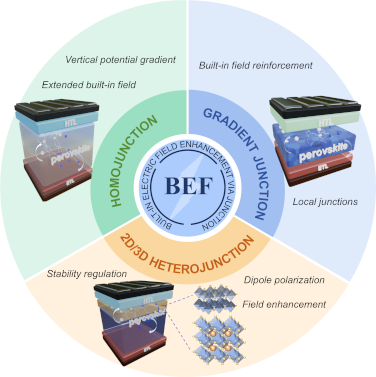
- that dopants fail to penetrate the crystalline domains of the polymer, limiting the achievable doping level. To overcome this limitation, Zhang et al. [31] proposed an anion-assisted molecular-doping (AMD) strategy using BF4− for the PTAA and Poly-TPD hole-transport layers in p–i–n inverted devices



Advances in nanotechnology applied to natural products
Beilstein J. Nanotechnol. 2026, 17, 555–558, doi:10.3762/bjnano.17.36
- modifications (e.g., polymer or polysaccharide coatings) can be used to tailor stability and biological interactions [16]. These vesicles are attractive due to their biocompatibility and capacity to encapsulate both hydrophilic and lipophilic substances [17]. Liposomes have been explored in diverse biomedical
- , underscoring the importance of physicochemical approaches in the development of nanostructured formulations [23][24]. More recently, hybrid nanosystems have emerged as promising strategies for natural product delivery and application. Structures that combine polymer–lipid interfaces, such as core–shell
Electrochemical determination of ciprofloxacin using a MIL-101/reduced graphene oxide-modified electrode
Beilstein J. Nanotechnol. 2026, 17, 541–554, doi:10.3762/bjnano.17.35
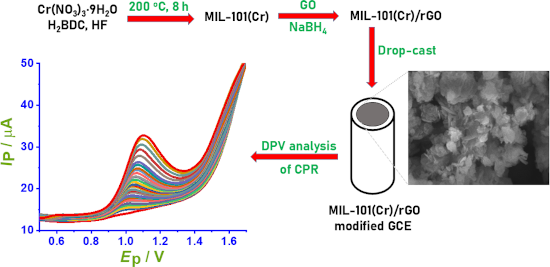
- affordable analytical methods for detecting ciprofloxacin is very important. Conventional analytical techniques for CPR determination, including a fluorescence sensor based on CsPbBr3 quantum dots embedded in a molecularly imprinted polymer [5], and ultrasound-assisted magnetic dispersive micro-solid phase


Nanocarrier-integrated multilayer films produced by 3D printing for improved skin adhesion and curcumin photostability
Beilstein J. Nanotechnol. 2026, 17, 440–453, doi:10.3762/bjnano.17.30
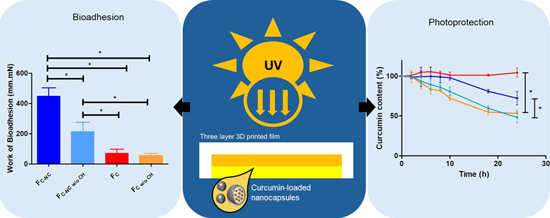
- and were used as received. Nanocapsule suspensions Preparation Nanocapsules were prepared using a preformed polymer interfacial deposition method that was previously described by our group, but with some modifications [27]. Curcumin-loaded polymeric nanocapsules (C-NC) were prepared using an organic
- for the present study. Some hydrogels were prepared solely for comparative purposes and were used during the characterisation step. Chitosan was the polymer used to produce the hydrogel for the bottom layer of the film. This natural polymer was initially mixed with glycerine in a porcelain mortar, and
- presented a negative zeta potential. In addition to the low magnitude of the negative zeta potential, physical stability was further ensured by steric stabilisation, resulting from the presence of a non-ionic polymer (polysorbate 80) at the nanocapsule–water interface. The curcumin concentration in the


Polycatecholamine nanocoatings on stainless steel: the effect on attachment of human fibroblasts and platelets
Beilstein J. Nanotechnol. 2026, 17, 365–380, doi:10.3762/bjnano.17.25
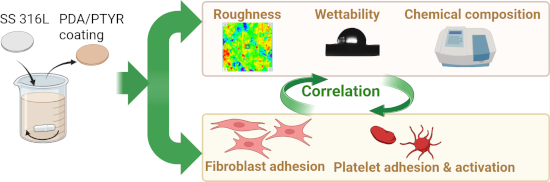
- several weeks and prolonged antimicrobial activity [21][22][23]. Beyond classical PDA films, broader catechol-based and PDA-inspired chemistries have been explored, including phenolic polymer systems, mussel-inspired adhesive interfaces and catechol-rich surface architectures, which have been shown to
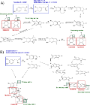
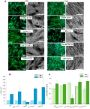
- longest time of coating. Images taken directly after coating (Figure 5a,b,e,f) show the initial coating morphology. The surface of SS-PDA 10 min could not be clearly distinguished with SEM; however, the surface of SS-PDA 4 h presented a full coverage with a polymer film. After 28 d of constant washing




Advancing nanolithography: a comprehensive review of materials for local anodic oxidation with AFM
Beilstein J. Nanotechnol. 2026, 17, 275–291, doi:10.3762/bjnano.17.19
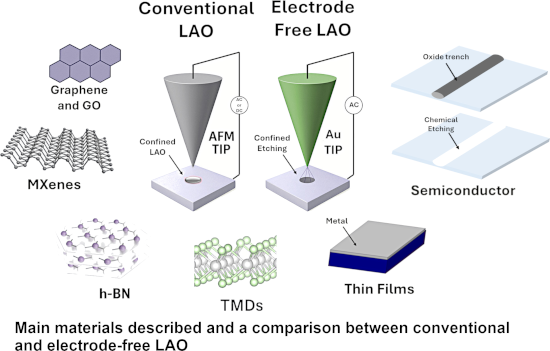
- graphene flakes. However, their susceptibility to degradation in the presence of water and oxygen remains a significant challenge [110]. Yet, for both materials, an ultrathin casing layer of oxide or polymer resist might not represent an obstacle to LAO processing, as already demonstrated [41][63
- contrast, LAO remains primarily a prototyping technique best suited for laboratory-scale setups. It is worth noting that recently developed cantilever-free scanning probe technologies [124] address the scalability challenge by employing large arrays of polymer pens, effectively overcoming the inherently


Structure-dependent thermochromism of PAZO thin films: theory and experiment
Beilstein J. Nanotechnol. 2026, 17, 186–199, doi:10.3762/bjnano.17.12
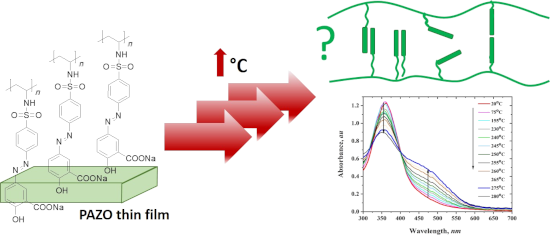
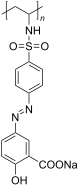
- relationship between the structural organization of the polymer side chains and temperature-induced optical changes. By combining experimental spectroscopic techniques with theoretical modeling, we demonstrate that the thermochromic response of PAZO films is strongly influenced by molecular aggregation, film
- physicochemical, optoelectronic, and even biophysical properties creates myriad opportunities for their application, especially as polymer thin films [1][2]. These films are widely used in modern life as they can be easily tailored to have specific properties like high conductivity, optical transparency, or
- polymers in thin films are known to markedly differ from those observed in the bulk, with significant differences in glass transition behavior, diffusion, and viscoelastic properties [4]. The assembly of polymer molecules from solution to solid state play a critical role in determining thin film morphology


From shield to spear: Charge-reversible nanocarriers in overcoming cancer therapy barriers
Beilstein J. Nanotechnol. 2026, 17, 159–175, doi:10.3762/bjnano.17.10
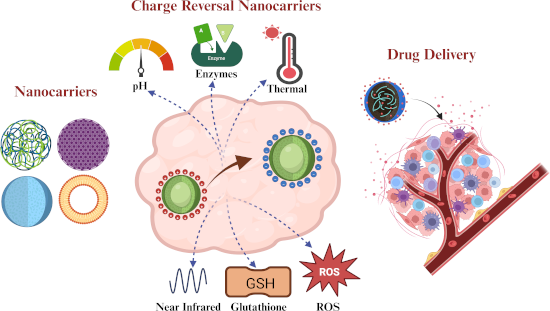
- siRNA within lysosomes via protonation-induced release [21]. Similarly, a study presented a polymer nanocarrier with acid-triggered charge reversal achieving >60% drug release within 48 h at lysosomal pH 5.0, compared to less than 10% release at physiological pH 7.4. The system used tethered imidazole
- photothermal therapy and chemotherapy by encapsulating the HSP90 inhibitor 17-AAG within UCST-type polymer-modified gold nanorods. Upon 1064 nm irradiation, they exhibit 65.1% photothermal conversion efficiency and trigger heat-induced 17-AAG release, achieving 98.86% of tumour growth inhibition in mice [57
- radiation compared to that under conventional methods. These dual-functionality CRNs improved drug delivery precision and enhanced the overall effectiveness of radiotherapy [61]. A study by Liu et al. developed the nanoscale coordination polymer Hf-nIm@PEG (HNP), which integrates hafnium ions (Hf4+) with 2


Influence of surface characteristics on the in vitro stability and cell uptake of nanoliposomes for brain delivery
Beilstein J. Nanotechnol. 2026, 17, 139–158, doi:10.3762/bjnano.17.9
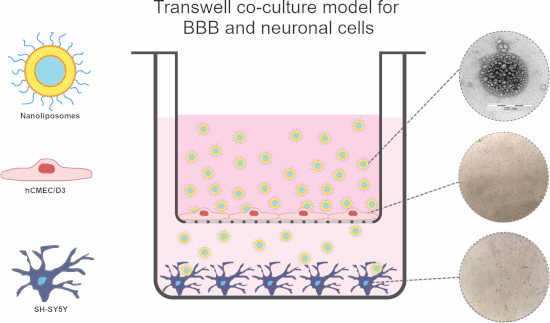
- (ethylene glycol) with a fixed concentration different than that used in the present study), examining their cellular uptake at a single time point. The results highlighted that both the type of nanocarrier and the nature of the surface polymer critically influence nanoparticle–cell interactions, including
- chains on the liposome surface is expected to be increased and be characterized with a“dense brush” conformation as steric hindrances restrict movement and self-coiling of the grafted polymer [44]. This fact is supported by the literature data that confirms that nanosystems characterized by “dense brush




Development and in vitro evaluation of liposomes and immunoliposomes containing 5-fluorouracil and R-phycoerythrin as a potential phototheranostic system for colorectal cancer
Beilstein J. Nanotechnol. 2026, 17, 97–121, doi:10.3762/bjnano.17.7
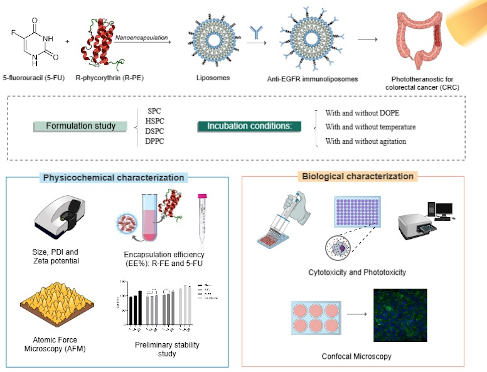
- polymer is known to reduce protein corona formation and confer greater stability in biological media [69][70]. In immunoliposomes, a tendency for size and PDI to increase after 24–48 h of incubation was observed, suggesting possible adsorption of serum proteins and/or reorganization of antibody chains on