


Search results
Search for "remediation" in Full Text gives 77 result(s) in Beilstein Journal of Nanotechnology.
Environmental applications of silver nanoparticles: state-of-the-art review and emerging trends
Beilstein J. Nanotechnol. 2026, 17, 697–736, doi:10.3762/bjnano.17.49
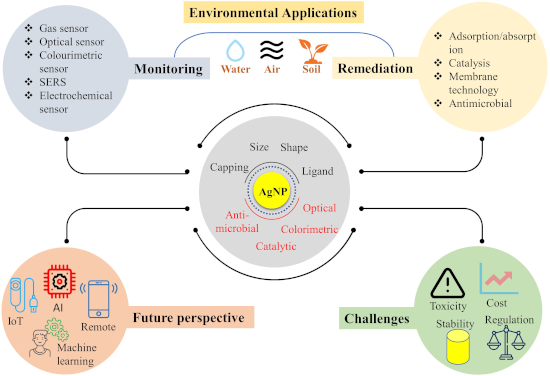
- applications for heavy metal immobilisation, organic pollutant degradation, plant disease management, and growth promotion are assessed alongside their ecotoxicological implications. Besides remediation, environmental monitoring capabilities of AgNP-based sensing platforms are systematically reviewed across
- population and their demand for advanced technology, healthcare, and household products. Therefore, monitoring and remediation of these contaminants from the environment is the need of the hour, with cost-effective, sensitive, and selective strategies or systems foremost. Indeed, various high-throughput
- environmental monitoring and remediation. For example, the optical properties of AgNPs are primarily governed by localised surface plasmon resonance (LSPR ), which occurs in the 380–450 nm region and depends on the nanoparticles’ size and shape. The unique optical properties of nanosilver were utilised to


Cellulose as a photocatalyst support material: extraction, structural features, and environmental applications
Beilstein J. Nanotechnol. 2026, 17, 635–652, doi:10.3762/bjnano.17.44
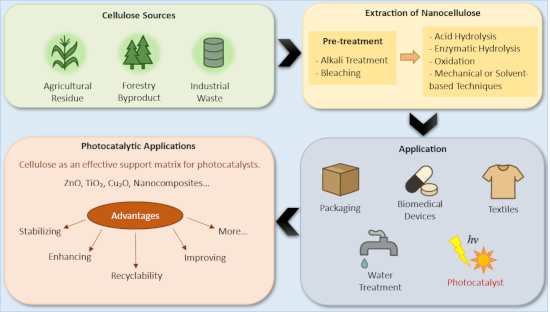
- photocatalytic systems, improving its performance under a wide range of light sources. Moreover, cellulose-supported systems often show enhanced recyclability and mechanical durability, making them suitable for repeated use in wastewater treatment and environmental remediation. The relationship between


Two-step laser synthesis of Ag@TiO2 nanomaterials for the photocatalytic degradation of rhodamine B
Beilstein J. Nanotechnol. 2026, 17, 622–634, doi:10.3762/bjnano.17.43
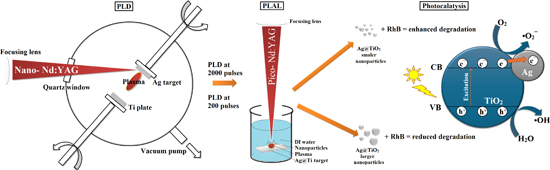
- suppression of electron–hole recombination, allowing for more effective utilization of the solar spectrum. Accordingly, Ag@TiO2 nanostructures, especially those obtained through controlled synthesis, represent highly promising candidates for photocatalytic environmental remediation processes induced by
- results highlight the potential of this chemical-free, laser-based approach as a sustainable and versatile platform for fabricating advanced nanomaterials tailored for high-efficiency environmental remediation. Experimental Synthesis of photocatalysts TiO2 and Ag@TiO2 (200p and 2000 p) Thin films of Ag


Synthesis of Cu–Mo/TiO2 and Co–Mo/TiO2 photocatalysts for the efficient degradation of organic pollutants in water
Beilstein J. Nanotechnol. 2026, 17, 559–570, doi:10.3762/bjnano.17.37
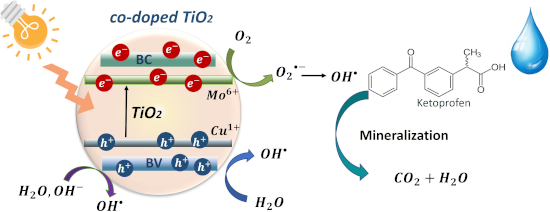
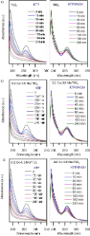
- the complete degradation of ketoprofen and 90% of mineralization. It was determined that HO· radicals play an important role in the oxidation reactions. Keywords: co-doping; photocatalysis; titanium dioxide; water remediation; Introduction Water is an essential part of every living entity
- . Unfortunately, water quality is negatively impacted by the increasing population, industrial operations, and agricultural activities. Therefore, it is essential to develop technologies to conserve and remediate contaminated water. A significant environmental challenge in water remediation is the presence of
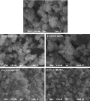
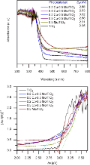
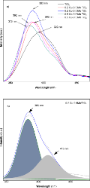
- environmental remediation processes. This research project reports the synthesis and characterization of two photocatalyst systems not reported before for water remediation, namely, co-doped photocatalysts Cu–Mo/TiO2 and Co–Mo/TiO2 synthesized by the sol–gel method. The structural, optical, and morphological



Nanoinformatics: spanning scales, systems and solutions
Beilstein J. Nanotechnol. 2026, 17, 423–427, doi:10.3762/bjnano.17.28
- artificial intelligence (AI) and ML approaches to nanomaterials disease therapy, environmental remediation, and to support implementation of the framework for Safe and Sustainable by Design (SSbD); and (iv) infrastructure and tools to underpin the implementation of nanoinformatics. Given the heterogeneity of
- nanomaterials, thus helping to fill the current gap in the toxicity data for zebrafish [8]. A major driver of the development of nanomaterials, nanoinformatics and ML/AI is the potential for solutions to real-world issues, whether in nanomedicine, nano-enabled agriculture, or environmental remediation

Safe and sustainable by design with ML/AI: A transformative approach to advancing nanotechnology
Beilstein J. Nanotechnol. 2026, 17, 176–185, doi:10.3762/bjnano.17.11

- , offering unprecedented opportunities to design and develop nanomaterials with unique, tailored properties. These advances have significantly impacted diverse industrial sectors, including healthcare, energy, environmental remediation, and defence. For instance, nanoparticle-based drug delivery systems have
- remediation measures on the particle concentrations in specific environmental compartments (e.g., [59] and made accessible via a web application at https://sb4n.cloud.nanosolveit.eu/). These models integrate geospatial data, fluid dynamics, and chemical reactivity, offering a geographically and temporally
- , recycling, and potential remediation strategies. Collectively, digital twin technologies embody the core principles of SSbD: prevention, iteration, and information. They provide a living laboratory in silico, where scientists, industry representatives, and policymakers can validate and refine nanomaterial


Missing links in nanomaterials research impacting productivity and perceptions
Beilstein J. Nanotechnol. 2025, 16, 2168–2176, doi:10.3762/bjnano.16.149
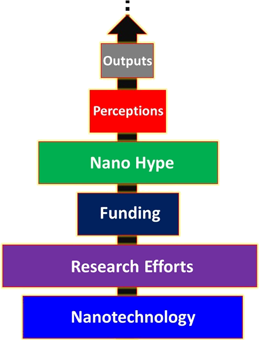
- . The event brought together leading scientists and key stakeholders from the Indian government to deliberate on the impact and potential of carbon nanomaterials. The idea was further refined during the organization of the New Materials in Carbon Capture and Environmental Remediation (NMCCER 2024
Microplastic pollution in Himalayan lakes: assessment, risks, and sustainable remediation strategies
Beilstein J. Nanotechnol. 2025, 16, 2144–2167, doi:10.3762/bjnano.16.148
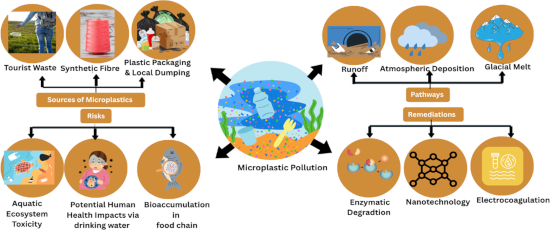
- other sensitive aquatic ecosystems. The review describes existing remediation technologies, categorizing these into physical, chemical, and biological interventions, and takes into account emerging sustainable approaches, including biofilm-mediated degradation and nanotechnology-based solutions. The
- pollution; nanotechnology; remediation; Review 1 Introduction The Himalayan lakes, often known as the “Water Towers of Asia,” serve an important role in biodiversity conservation, downstream hydraulic management, and supplying freshwater supplies to millions of people. Sau et al. explain that Pangong
- Manasbal [2][9][13]. This review compiles recent evidence on MP contamination of Himalayan lakes and contrasts it with global high-altitude ecosystems. It will propose to identify special regional vulnerabilities, evaluate existing limitations in monitoring and remediation, and suggest strategies specific


Toward clinical translation of carbon nanomaterials in anticancer drug delivery: the need for standardisation
Beilstein J. Nanotechnol. 2025, 16, 2092–2104, doi:10.3762/bjnano.16.144
- energy sectors (Figure 1). NMs have seen use as antimicrobial agents [1], catalysts [2], bioimaging agents [3][4][5][6], magnetic particle imaging agents [7], nanofluids [8], antiviral agents [9], photothermal convertors [10], and in environmental remediation [11]. Topically, the biomedical applications




Stereodiscrimination of guests in chiral organosilica aerogels studied by ESR spectroscopy
Beilstein J. Nanotechnol. 2025, 16, 2034–2054, doi:10.3762/bjnano.16.140
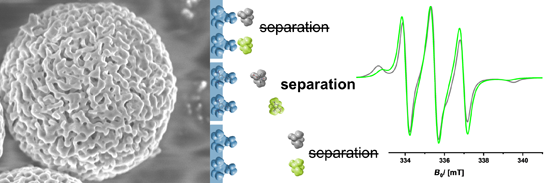
- , environmental remediation, and construction. The key transport processes in porous materials include diffusion, advection, capillary action, and sometimes reactions that might occur within the pores, highly complex phenomena one tries to understand as detailed as possible [15][16][17]. Laemmerhofer gave an





Piezoelectricity of layered double hydroxides: perspectives regarding piezocatalysis and nanogenerators
Beilstein J. Nanotechnol. 2025, 16, 1812–1817, doi:10.3762/bjnano.16.124
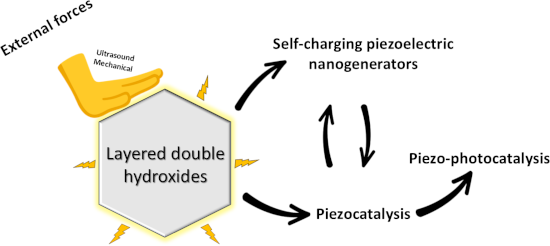
- piezocatalytic environmental remediation, achieved ≈98% degradation of rhodamine B within 20 min under ultrasonic activation when used together with PMS, with a kinetic constant significantly higher than many simple photocatalysts [16]. Thus, we can conclude that LDHs are competitive with, and in several cases

Ambient pressure XPS at MAX IV
Beilstein J. Nanotechnol. 2025, 16, 1677–1694, doi:10.3762/bjnano.16.118

- remediation, and other light-driven processes. Atomic layer deposition Atomic layer deposition (ALD) is a critical thin-film technology widely used in semiconductors, nanoelectronics, energy storage, catalysis, and advanced coatings. It enables atomically precise control over film thickness and composition
- conversion, sustainable catalysis, environmental remediation, and next-generation electronic and electrochemical devices. Through its unique ability to reveal buried, reactive, and dynamic interfaces under realistic conditions, APXPS will not only remain a cornerstone of modern surface science, but








Nanotechnology-based approaches for the removal of microplastics from wastewater: a comprehensive review
Beilstein J. Nanotechnol. 2025, 16, 1607–1632, doi:10.3762/bjnano.16.114
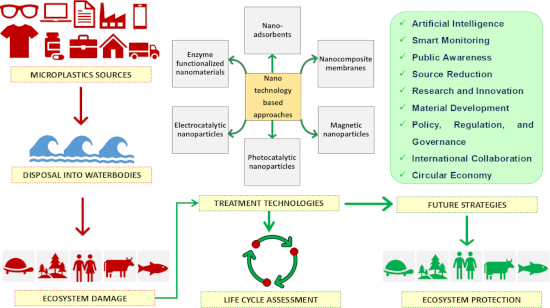
- effectively removing MPs, especially those in the nanosize range. This review presents a detail analysis of the sources, pathways, detection methods, and health impact of MPs, while emphasizing the emerging role of nanotechnology in their remediation. Nanomaterials, including nanoadsorbents, photocatalysts
- synthesis, hybrid system integration, and machine learning optimization. Together, these approaches aim to establish a comprehensive, scalable, and environmentally safe solution for the remediation of MPs in wastewater systems. Keywords: artificial intelligence; membrane technology; microplastic
- . Common chemical treatment techniques include coagulation, flocculation, precipitation, and electrocoagulation [18]. Even though both physical and chemical methods are found to be effective in the removal of MPs, they pose several challenges on the remediation of MPs, such as blocking pores and surfaces



Photocatalytic degradation of ofloxacin in water assisted by TiO2 nanowires on carbon cloth: contributions of H2O2 addition and substrate absorbability
Beilstein J. Nanotechnol. 2025, 16, 1567–1579, doi:10.3762/bjnano.16.111
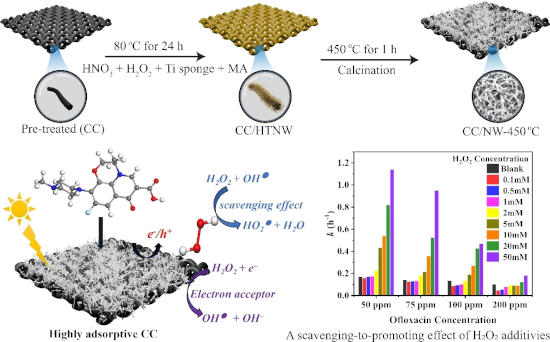
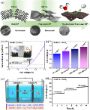
- materials for environmental remediation. (a) The Ti–H2O2 interaction approach to precipitate TiO2 nanowire arrays on carbon cloth. (b–d) FESEM images of TiO2 nanowires grown on carbon cloth at different magnifications. (e) TEM, (f) HRTEM images, and (g) the corresponding SAED pattern of the CC/NW-450 °C. (a


Laser processing in liquids: insights into nanocolloid generation and thin film integration for energy, photonic, and sensing applications
Beilstein J. Nanotechnol. 2025, 16, 1428–1498, doi:10.3762/bjnano.16.104






The role of biochar in combating microplastic pollution: a bibliometric analysis in environmental contexts
Beilstein J. Nanotechnol. 2025, 16, 1401–1416, doi:10.3762/bjnano.16.102
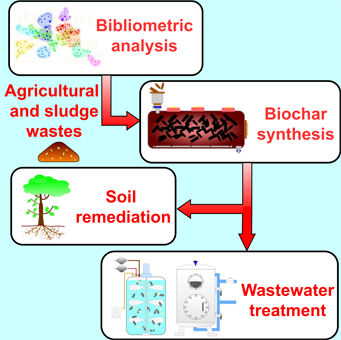
- , positioning it as a promising solution for nanoplastic remediation. Keywords: aquatic pollution; bibliometric analysis; biochar; microplastics (MPs); soil remediation; Introduction Plastics are widely utilized in various industries and daily life due to their low production cost. The average global per
- aquatic systems, reinforcing the importance of targeted remediation approaches. To address MP contamination, various adsorbent materials have been investigated. Granular activated carbon at a concentration of 1.5 g/L has demonstrated adsorption efficiencies of up to 90% for MP fragments and fibers
- combined with fluidized bed treatment achieved 99.2% MP removal, while granular activated carbon coupled with a fixed-column system attained 95.2% removal efficiency [15][16]. Biochar (BC) has emerged as a promising material for environmental remediation, offering benefits such as pollutant adsorption



Soft materials nanoarchitectonics: liquid crystals, polymers, gels, biomaterials, and others
Beilstein J. Nanotechnol. 2025, 16, 1025–1067, doi:10.3762/bjnano.16.77
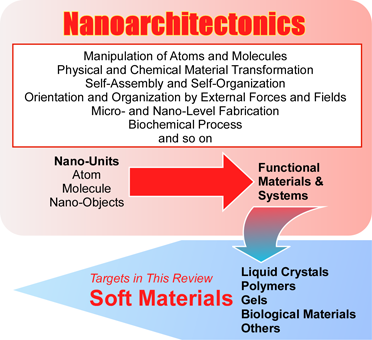
- ][182][183], fuel cells [184][185][186][187][188], batteries [189][190][191][192][193], supercapacitors [194][195][196][197][198], and other energy applications [199][200][201][202][203]. Furthermore, it is employed in environmental remediation [204][205][206][207][208], drug delivery [209][210][211







Insights into the electronic and atomic structures of cerium oxide-based ultrathin films and nanostructures using high-brilliance light sources
Beilstein J. Nanotechnol. 2025, 16, 860–871, doi:10.3762/bjnano.16.65

- ; Introduction Transition metal oxides in the form of thin films or nanostructures find extensive use in sustainable energy technologies [1][2]. They serve as active materials or supports for catalysts for various chemical reactions, essential to energy conversion, sensing, and environmental remediation [3][4
- field of environmental remediation [9]. The related ability of the material to easily store and release oxygen also plays a key role in energy conversion technologies, including fuel cells and batteries [10][11]. Gas sensing applications of ceria-based materials are based on the modifications of the


Quantification of lead through rod-shaped silver-doped zinc oxide nanoparticles using an electrochemical approach
Beilstein J. Nanotechnol. 2025, 16, 422–434, doi:10.3762/bjnano.16.33
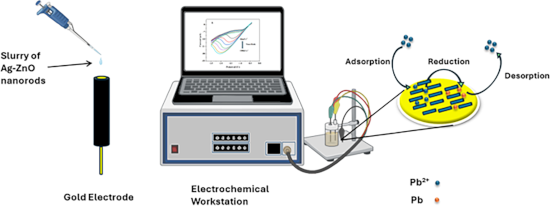
- medicine, electronics, environmental remediation, and energy [10][11]. The use of certain metal dopants to modify the chemical, optical, and electrical features of a material has gained considerable interest in the realm of semiconductor technology. A recent study has conducted thorough investigations into


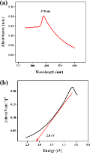


Emerging strategies in the sustainable removal of antibiotics using semiconductor-based photocatalysts
Beilstein J. Nanotechnol. 2025, 16, 264–285, doi:10.3762/bjnano.16.21
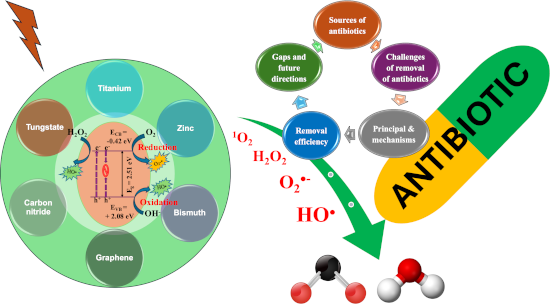
- contaminants, making it a versatile option for environmental remediation across various water and air treatment applications. These features collectively make photocatalysis an attractive approach for addressing pollution challenges in diverse settings. In recent years, several significant review papers have
- focused on removing antibiotics through AOPs [28][29][30]. Articles explored specific AOP methods tailored for antibiotic remediation, such as H2O2-based AOP [29], Fenton-based AOPs [31], UV-based AOPs [32], UV/chlor(am)ine-based AOP [33], electrochemical-based AOP (EAOP) [34], persulfate and
- ), and CIP by using ZnIn2S4 [77], g-C3N4/ZnFe2O4 [78], Cr2O3@ZnO [79], and ZnO/TiO2 [80]. However, the application of doped ZnO for remediation purposes is presently impractical because of electron–hole recombination under certain conditions. Scientists have found a variety of adsorbent materials




Clays enhanced with niobium: potential in wastewater treatment and reuse as pigment with antibacterial activity
Beilstein J. Nanotechnol. 2025, 16, 141–154, doi:10.3762/bjnano.16.13
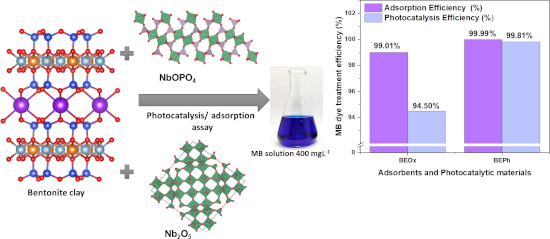
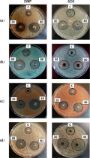
- /bjnano.16.13 Abstract Bentonite clay sourced from the Guarapuava region, Brazil, was modified with niobium oxide (BEOx) and niobium phosphate (BEPh) to act as an adsorbent and photocatalyst in the remediation of wastewater containing methylene blue (MB) dye. Additionally, colored materials were evaluated
- cereus (ATCC 10876) and Proteus mirabilis (ATCC 35649). The analysis revealed remarkable antibacterial activity against Proteus mirabilis, suggesting a preferential selectivity for Gram-negative bacteria. Keywords: adsorption; bentonite; hybrid pigment; niobium; photocatalysis; water remediation







Characterization of ZnO nanoparticles synthesized using probiotic Lactiplantibacillus plantarum GP258
Beilstein J. Nanotechnol. 2025, 16, 78–89, doi:10.3762/bjnano.16.8
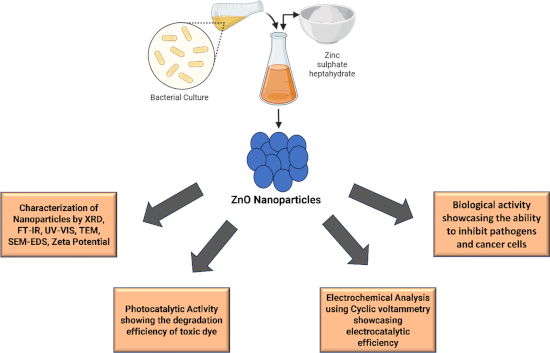
- studies underscored the efficacy of ZnO NPs in photocatalytic degradation and emphasized their potential applications in environmental remediation and catalysis. Because there is a lack of cyclic voltammetry studies using similar biological sources, we expanded our comparison to include ZnO NPs





Facile synthesis of size-tunable L-carnosine-capped silver nanoparticles and their role in metal ion sensing and catalytic degradation of p-nitrophenol
Beilstein J. Nanotechnol. 2024, 15, 1576–1592, doi:10.3762/bjnano.15.124
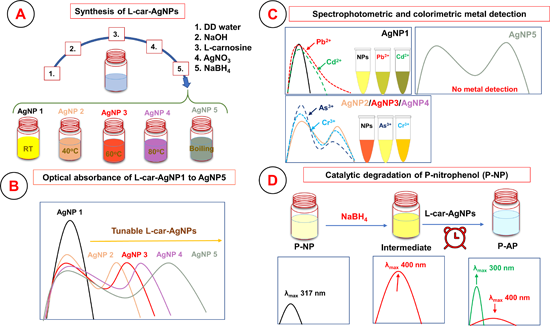
- -car-AgNPs for both heavy metal ion detection and catalytic degradation of P-NP, indicating their suitability for environmental monitoring and remediation applications. Further optimization and research are needed to expand their environmental applications and to understand their interaction mechanisms
- monitoring and remediation methods. Five heavy metals, namely, mercury (Hg2+), lead (Pb2+), cadmium (Cd2+), chromium (Cr3+), and arsenic (As3+), pose severe risks to human health and ecological systems because of their non-biodegradable nature and long biological half-lives, leading to bioaccumulation and
- conductivity, and potent catalytic activity, make them ideal candidates for environmental monitoring and remediation [3]. Modifying silver nanoparticles with various biological molecules, peptides, proteins, and enzymes has further enhanced their functionality, stability, and selectivity towards specific





Nanoarchitectonics with cetrimonium bromide on metal nanoparticles for linker-free detection of toxic metal ions and catalytic degradation of 4-nitrophenol
Beilstein J. Nanotechnol. 2024, 15, 1312–1332, doi:10.3762/bjnano.15.106
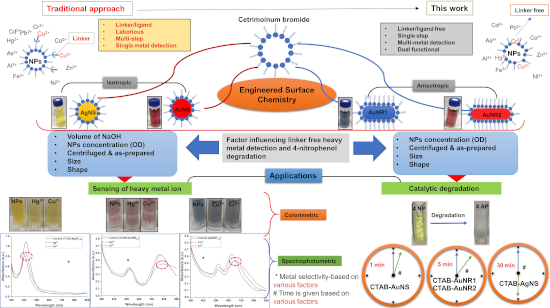
- +, Cr3+, and Hg2+ at 0.5 OD, while efficiently degrading 4-NP within 5 min at 1 OD. This study emphasizes the importance of tailoring parameters of CTAB-capped nanoparticles for specific sensing and catalytic applications, offering potential solutions for environmental remediation and human health





Mn-doped ZnO nanopowders prepared by sol–gel and microwave-assisted sol–gel methods and their photocatalytic properties
Beilstein J. Nanotechnol. 2024, 15, 1283–1296, doi:10.3762/bjnano.15.104
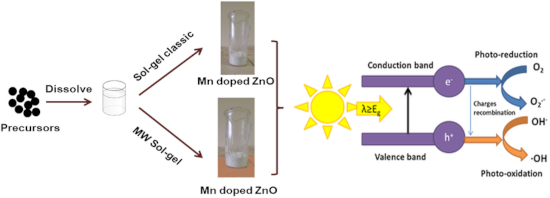
- purification and pollutant remediation. Experimental Synthesis The starting materials (all reagent grade) for obtaining precursor solutions are zinc acetate dehydrate (Zn(CH3COO)2·2H2O), anhydrous manganese acetate (Mn(CH3COO)2), absolute ethanol (C2H5OH), and triethanolamine (C6H15NO3, TEA). The precursor





