

Search results
Search for "anisotropy" in Full Text gives 247 result(s) in Beilstein Journal of Nanotechnology. Showing first 200.
Directed growth of quinacridone chains on the vicinal Ag(35 1 1) surface
Beilstein J. Nanotechnol. 2024, 15, 556–568, doi:10.3762/bjnano.15.48
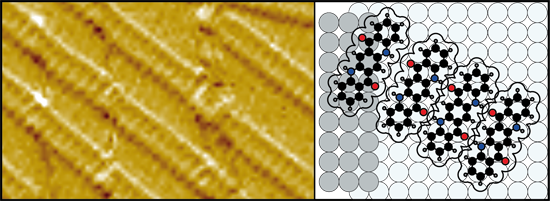
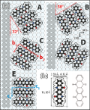
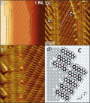
- orientation. After deposition at 400 K, only two of the above four azimuthal orientations are observed. Furthermore, the deposition at 500 K leads to heterochiral chains in a commensurate structure (β-phase) that also exhibits a strong anisotropy, that is, two domains are favored over the other two. In both
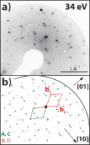
- very similar to the one of the QA β-phase on Ag(100) but exhibits a clear anisotropy. Roughly half of the spots are more intense than the other half. This LEED image was measured under an in-phase condition for the specular spot with respect to monoatomic Ag steps. (b) Simulated LEED pattern of the β


Photocatalytic degradation of methylene blue under visible light by cobalt ferrite nanoparticles/graphene quantum dots
Beilstein J. Nanotechnol. 2024, 15, 475–489, doi:10.3762/bjnano.15.43
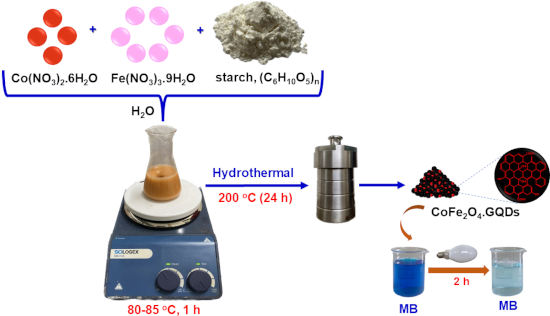
- the most important soft-magnetic ferrite materials because of its ferromagnetic properties, high magnetic and thermal stability, low conductivity, and anisotropy [6]. The controllable synthesis of spherical CF nanoparticles from corresponding salts and Arabic gum as surfactant agent using a




Modulated critical currents of spin-transfer torque-induced resistance changes in NiCu/Cu multilayered nanowires
Beilstein J. Nanotechnol. 2024, 15, 360–366, doi:10.3762/bjnano.15.32
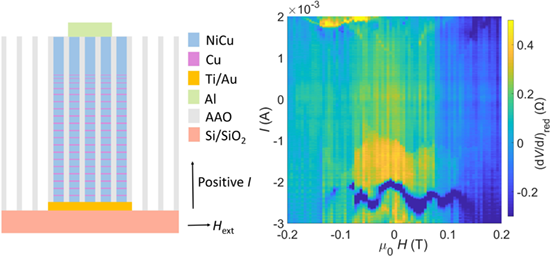
- stiffness, the dipolar stray field, and the anisotropy field caused by the spin–orbit interaction [34]. Since the magnetization of layer 1 () and layer 3 () are both parallel to the applied magnetic field (here: positive), the exchange stiffness as well as the dipolar stray field on layer 2 point in the


Ferromagnetic resonance spectra of linear magnetosome chains
Beilstein J. Nanotechnol. 2024, 15, 157–167, doi:10.3762/bjnano.15.15
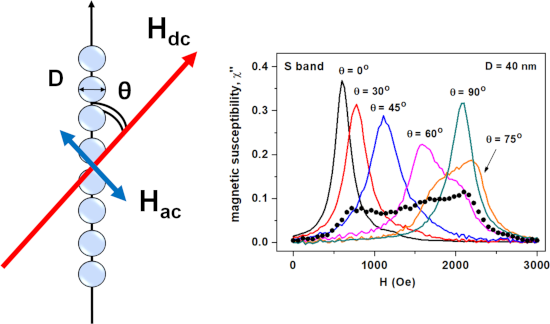
- chain, the distance between the centers of neighboring particles, the mutual orientation of the cubic axes of particle anisotropy, and the value of the magnetic damping constant is studied. It is shown that FMR spectra of non-oriented chain assemblies depend on the average particle diameter at a fixed
- of magnetic anisotropy, the direction of the particle easy anisotropy axes, and other parameters. In addition, the FMR spectrum is sensitive to the presence of magnetostatic interactions in dense assemblies of magnetic nanoparticles. Thus, ferromagnetic resonance spectroscopy is a promising technique
- chain, that is, about the particle diameters, the number of particles in the chain, the characteristic distance between the particle centers, and the mutual orientation of the particle cubic anisotropy axes, is completely lost. In addition, in the approach [22][23][24][25], only the position of the


In situ optical sub-wavelength thickness control of porous anodic aluminum oxide
Beilstein J. Nanotechnol. 2024, 15, 126–133, doi:10.3762/bjnano.15.12
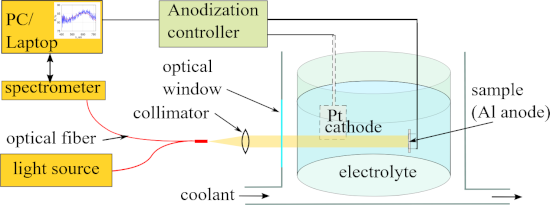
- achieve precise optical characterization, one could employ spectroscopic ellipsometry (SE) with more refined division into sub-layers [26] and consider additional material properties, such as the anisotropy of PAAO [27] and the optical dispersion of the refractive index (RI) of Al2O3 [28]. However, for


The microstrain-accompanied structural phase transition from h-MoO3 to α-MoO3 investigated by in situ X-ray diffraction
Beilstein J. Nanotechnol. 2023, 14, 692–700, doi:10.3762/bjnano.14.55
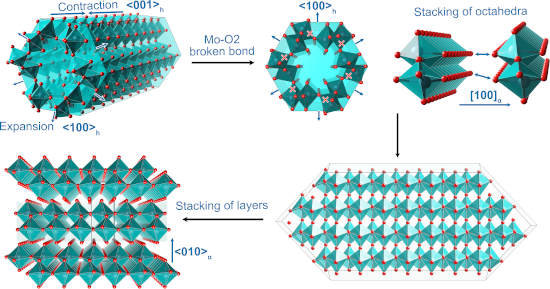
- increase of microstrain during the h-MoO3→α-MoO3 transition. Note that since the thermal shock properties of a material are proportional to the CTEs, large values of CTE and the anisotropy of the hexagonal phase h-MoO3 may increase thermal shock, leading to fatigue or damage to devices. Microscopic view on


ZnO-decorated SiC@C hybrids with strong electromagnetic absorption
Beilstein J. Nanotechnol. 2023, 14, 565–573, doi:10.3762/bjnano.14.47
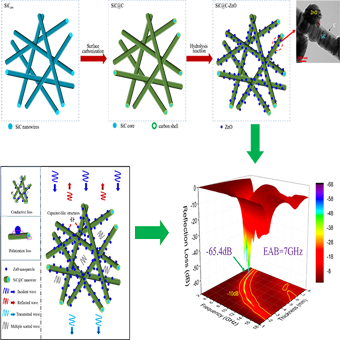
- that there are some fluctuations in the high-frequency range (10–16 GHz), which are called Debye relaxation peaks. These peaks are caused by shape anisotropy or surface polarization. For the SCZ samples, the unique core–shell structure and the interface polarization effect between different phases may


Specific absorption rate of randomly oriented magnetic nanoparticles in a static magnetic field
Beilstein J. Nanotechnol. 2023, 14, 485–493, doi:10.3762/bjnano.14.39

- nanoparticles with uniaxial magnetic anisotropy randomly oriented in a solid matrix. The saturation magnetization of particles and the magnetic anisotropy constant are taken to be Ms = 350 emu/cm3 and K1 = 105 erg/cm3, respectively [27]. The range of nanoparticle diameters studied is D = 18–50 nm, the
- completely at Hdc = 400 Oe. The functions SAR(Hdc) for randomly oriented assemblies of nanoparticles with diameters D = 40 and 50 nm behave similarly. To explain this effect, Figure 3 shows the magnetization dynamics of a nanoparticle with D = 30 nm and with the easy anisotropy axis parallel to the ac field
- θ and φ (in radians) in a dc magnetic field directed perpendicular to the particle easy anisotropy axis. Figure 4a and Figure 4b show the total energy of the particle in the absence of a dc magnetic field, Hdc = 0, at times when the current ac magnetic field is zero or equal to its maximum value


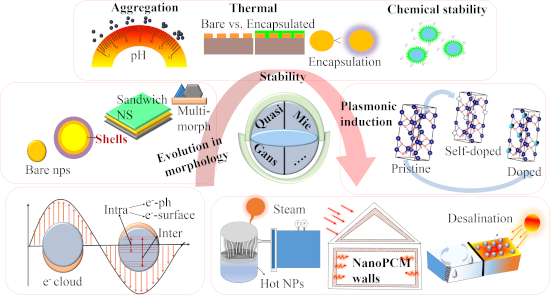
Plasmonic nanotechnology for photothermal applications – an evaluation
Beilstein J. Nanotechnol. 2023, 14, 380–419, doi:10.3762/bjnano.14.33




Upper critical magnetic field in NbRe and NbReN micrometric strips
Beilstein J. Nanotechnol. 2023, 14, 45–51, doi:10.3762/bjnano.14.5

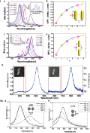
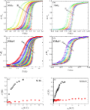
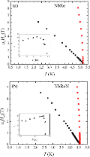
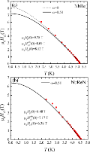
- in both cases. The temperature dependence of Hc2 for NbRe and NbReN is displayed, respectively, in Figure 3a and Figure 3b, where both Hc2⟂(T) and Hc2∥(T) are reported. In the insets of Figure 3a and Figure 3b, the temperature dependence of the anisotropy coefficient γ(T) = Hc2∥(T)/Hc2⟂(T) is given
- squares and red circles indicate the temperature dependence of Hc2⟂ and Hc2∥, respectively. The insets show the behavior of the anisotropy coefficient γ as a function of the temperature. (a, b) Temperature dependence of the perpendicular upper critical field of (a) the NbRe and (b) the NbReN microstrip

The influence of structure and local structural defects on the magnetic properties of cobalt nanofilms
Beilstein J. Nanotechnol. 2023, 14, 23–33, doi:10.3762/bjnano.14.3
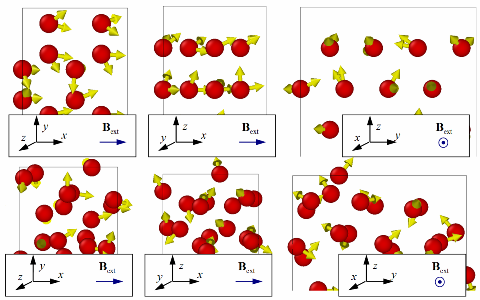
- -hand side are the Zeeman and exchange interactions, respectively, the next two terms describe magnetic anisotropy, followed by the terms responsible for the Dzialoshinsky–Moriya, magnetoelectric, and dipole interactions, respectively. The consideration of different types of interactions in a model
- emphasis at this stage was placed on the pairwise anisotropy model of Neel. The exchange interaction provides a natural connection between the spin and lattice degrees of freedom due to the dependence of the function J on the interatomic distance. This function determines the intensity of the interaction
- and promising magnetic nanomaterials. Magnetic crystallographic anisotropy arises on spin–orbit interaction of atoms. As a consequence, this type of interaction should be separately taken into account when constructing theoretical models and conducting numerical experiments. The type and parameters of


Structural studies and selected physical investigations of LiCoO2 obtained by combustion synthesis
Beilstein J. Nanotechnol. 2022, 13, 1473–1482, doi:10.3762/bjnano.13.121

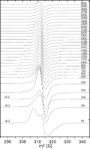
- dynamic Jahn–Teller effect. Below about 20 K the dynamic effect becomes static, and the spectra show a clear anisotropy due to static Jahn–Teller distortion. Experimental spectra obtained at 5 K (Figure 7) show that the EPR spectra for each sample consist of two different nickel complexes. From the




Density of states in the presence of spin-dependent scattering in SF bilayers: a numerical and analytical approach
Beilstein J. Nanotechnol. 2022, 13, 1418–1431, doi:10.3762/bjnano.13.117

- discuss a ferromagnet with strong uniaxial anisotropy, in which case the perpendicular fluctuations of the exchange field are suppressed (αx ∼ 0). For simplicity, we also assume the ferromagnet with weak spin–orbit interactions and also neglect the spin–orbit scattering time αso. Finally, assuming αx


Recent trends in Bi-based nanomaterials: challenges, fabrication, enhancement techniques, and environmental applications
Beilstein J. Nanotechnol. 2022, 13, 1316–1336, doi:10.3762/bjnano.13.109
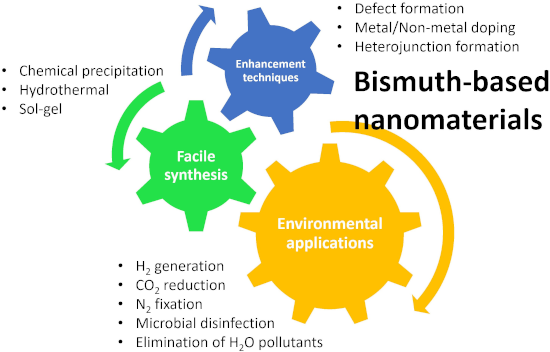
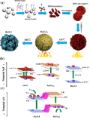
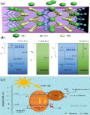
- acceptable rates of 522.44, 174.15, and 88.24 μmol·g−1·h−1, respectively, were reached under these conditions. These rates outperform those of other similar Bi-based semiconductor photocatalysts reported in the literature. To synthesize Bi-based photocatalysts with high anisotropy, hollow structures, or




Enhanced electronic transport properties of Te roll-like nanostructures
Beilstein J. Nanotechnol. 2022, 13, 1284–1291, doi:10.3762/bjnano.13.106
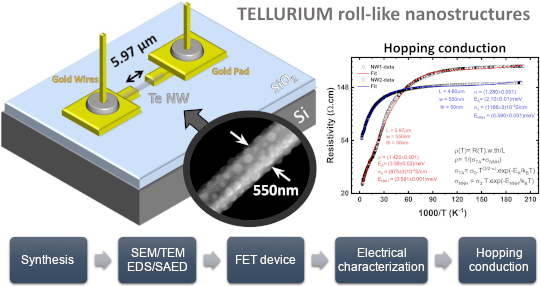
- the anisotropy of the Te crystal structure [20][21]. However, a fast Fourier transform (FFT) analysis of different areas of the HRTEM images (see Figure 3a) shows that the nanostructures are polycrystalline, with well-oriented large grains and rotated small grains at the edges. Small amorphous areas




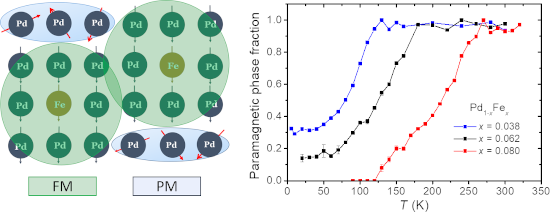
Ultrafast signatures of magnetic inhomogeneity in Pd1−xFex (x ≤ 0.08) epitaxial thin films
Beilstein J. Nanotechnol. 2022, 13, 836–844, doi:10.3762/bjnano.13.74
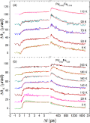
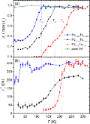
- polarization plane Δθ, which partially can originate from the pump-induced anisotropy, the responses were measured at two oppositely applied magnetic fields +H and −H. In this case, the contribution odd with respect to the sign of the field ΔθΚ = [Δθ(+H) − Δθ(−H)]/2 has a magnetic nature. To perform


Efficient liquid exfoliation of KP15 nanowires aided by Hansen's empirical theory
Beilstein J. Nanotechnol. 2022, 13, 788–795, doi:10.3762/bjnano.13.69
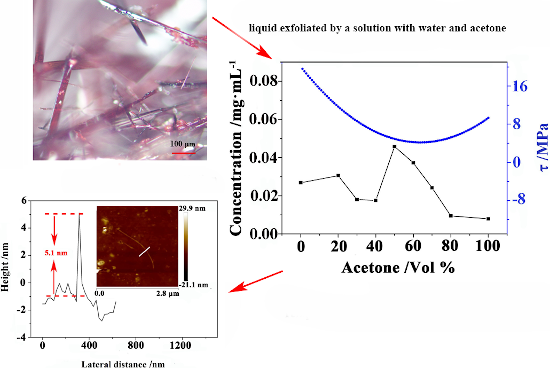
- Abstract The KP15 nanowires with one-dimensional properties has a defect-free surface, high anisotropy, and carrier mobility which is desirable for the development of novel nanodevices. However, the preparation of nanoscale KP15 is still inefficient. In this work, the Hansen solubility parameters of KP15
- weak interaction between these chains [3][4]. Therefore, those 1D materials have defect-free surfaces, high anisotropy, and carrier mobility. For example, TiS3 nanowires obtained by mechanical stripping have a large carrier mobility of about 10000 cm2·V−1·s−1 [5][6][7]. Fibrous phosphorus is also a new




A new method for obtaining the magnetic shape anisotropy directly from electron tomography images
Beilstein J. Nanotechnol. 2022, 13, 590–598, doi:10.3762/bjnano.13.51
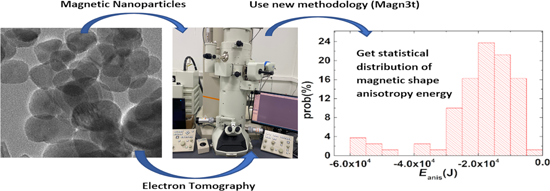
- developed in order to increase the reliability of the correlations between morphology and magnetism. Using the Magn3t software, the magnetic shape anisotropy magnitude and direction of magnetite nanoparticles has been extracted for the first time directly from transmission electron tomography. Keywords
- : electron tomography; magnetite; Python; shape anisotropy; Introduction For any nanoparticle (NP) system, among the most important pieces of physical information for scientists is information related to the morphology (size, shape, and organization) of its constituents. In nanoscale systems, this
- anisotropy energy, and on the NP organization, through long-range dipole interactions. In other words, magnetic properties are strongly correlated with morphology. There are quite a few ways to provide primary morphological information on NP systems, each of them with specific strengths and weaknesses. A


Effects of substrate stiffness on the viscoelasticity and migration of prostate cancer cells examined by atomic force microscopy
Beilstein J. Nanotechnol. 2022, 13, 560–569, doi:10.3762/bjnano.13.47
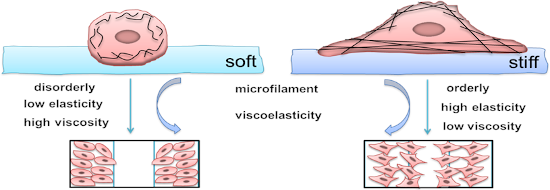
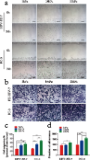
- using fluorescent isothiocyanate (FITC)-labelled phalloidin to analyse the distribution and local directional changes of filamentous actin. It could be seen that the microfilaments of PC-3 cells were densely arranged and ordered on the stiff substrate. The quantified anisotropy of cytoskeletal
- images of HPV-PZ-7 and PC-3 cytoskeletal microfilaments of cells seeded on substrates with different stiffness. The scale bar of HPV-PZ-7 cells is 20 μm and the scale bar of PC-3 cells is 10 μm. (b) Anisotropy quantification maps of the fibrillar structure of HPV-PZ-7 and PC-3 cells on substrates with
- different stiffness. FibrilTool, an ImageJ plug-in, was used to quantify the fibrillar structure in the original cytoskeleton images. Anisotropy (score between 0 and 1): 0 for no order (purely isotropic arrays) and 1 for perfectly ordered arrays (i.e., parallel fibrils, purely anisotropic arrays); “ns



Controllable two- and three-state magnetization switching in single-layer epitaxial Pd1−xFex films and an epitaxial Pd0.92Fe0.08/Ag/Pd0.96Fe0.04 heterostructure
Beilstein J. Nanotechnol. 2022, 13, 334–343, doi:10.3762/bjnano.13.28

- easy-plane ferromagnets with four-fold anisotropy in the film plane [18][19]. Our conjecture is a possibility to switch the magnetic moment of a Pd1−xFex alloy film between the steady directions (90° apart) as it had been done with epitaxial iron films [20][21][22]. To realize this idea, it is
- be written in terms of the cubic anisotropy with small tetragonal distortion. In addition, based on the guess simulations, an importance of the uniaxial anisotropy in the film plane became obvious: where αi are directional cosines for the magnetic М with respect to crystallographic axes [100], [010
- ], [001] of the film, αu is the cosine of the angle between М and the direction of the uniaxial anisotropy axis, Ku is the in-plane uniaxial anisotropy constant. As a result of the parameter adjustment, a good agreement of the theoretical dependences with the experimental data was achieved (Figure 1 and


Systematic studies into uniform synthetic protein nanoparticles
Beilstein J. Nanotechnol. 2022, 13, 274–283, doi:10.3762/bjnano.13.22
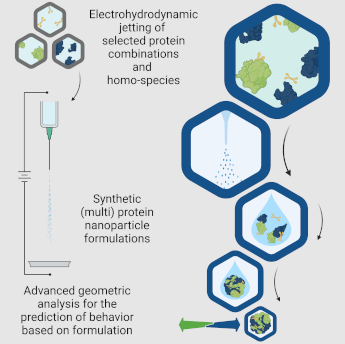
- distributions of as-jetted SPNPs approached monodispersity as indicated by polydispersity indices (PDISEM) ranging from 0.11–0.19. Geometric factor analysis revealed high circularities (0.82–0.90), low anisotropy (<1.45) and excellent roundness (0.76–0.89) for all SPNPs prepared via EHD jetting. Tentatively
- , blended SPNPs displayed higher circularity and lower anisotropy, as compared to single-protein SPNPs. Secondary statistical analysis indicated that blended SPNPs generally present combined features of their constituents, with some properties driven by the dominant protein constituent. Our study suggests
- . Direct inspection of the minimum diameter also reveals a similar trend of TF (65 nm) > HSA > HEM ≈ MUC ≈ INS (43 nm). Comparable PDISEM values can be observed for TF, MUC, HSA and INS (0.16–0.19); HEM is the most uniform (0.11) formulation. TF, HEM, and HSA have comparable anisotropy and roundness values


Theoretical understanding of electronic and mechanical properties of 1T′ transition metal dichalcogenide crystals
Beilstein J. Nanotechnol. 2022, 13, 160–171, doi:10.3762/bjnano.13.11

- ′ polytype; anisotropy; density functional theory; layered transition metal dichalcogenide crystals; shear modulus; Young’s modulus; Introduction Layered transition metal dichalcogenides (TMDs) have received increasing attention as important and versatile materials for new applications in different sectors



Influence of magnetic domain walls on all-optical magnetic toggle switching in a ferrimagnetic GdFe film
Beilstein J. Nanotechnol. 2022, 13, 74–81, doi:10.3762/bjnano.13.5

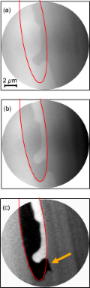
- compensation temperature, a different Walker breakdown, or less uniaxial anisotropy. Conclusion XMCD-PEEM imaging of the deviation from deterministic all-optical toggle switching of a Gd26Fe74 film by single ultrashort laser pulses showed that the factors that cause this deviation can be distinguished as


Sputtering onto liquids: a critical review
Beilstein J. Nanotechnol. 2022, 13, 10–53, doi:10.3762/bjnano.13.2







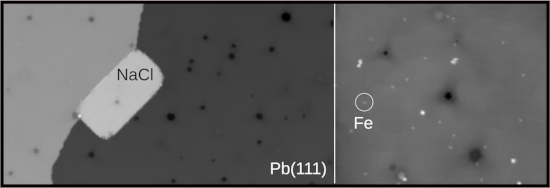
Topographic signatures and manipulations of Fe atoms, CO molecules and NaCl islands on superconducting Pb(111)
Beilstein J. Nanotechnol. 2022, 13, 1–9, doi:10.3762/bjnano.13.1
- possibility to tune the magnetic anisotropy of a single porphyrin molecule by perturbing its ligand field with the STM probe [39][40]. These results not only suggest the importance of future manipulations experiments, but also shed new lights into the potential of decoupling atoms and molecules electronically