Search results
Search for "blade" in Full Text gives 59 result(s) in Beilstein Journal of Nanotechnology.
Layered calcium phenylphosphonate: a hybrid material for a new generation of nanofillers
Beilstein J. Nanotechnol. 2018, 9, 2906–2915, doi:10.3762/bjnano.9.269
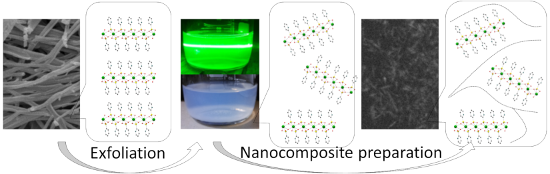
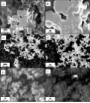
- blade. Model structure of the CaPhP layer. Calcium atoms are in green, phosphorus atoms in yellow and red and gray spheres correspond to oxygen and hydrogen, respectively. SEM pictures of calcium phenylphosphonate particles prepared by addition of chloride solution using the “drop by drop” (CaPhP_d) and


Hydrothermal-derived carbon as a stabilizing matrix for improved cycling performance of silicon-based anodes for lithium-ion full cells
Beilstein J. Nanotechnol. 2018, 9, 2381–2395, doi:10.3762/bjnano.9.223
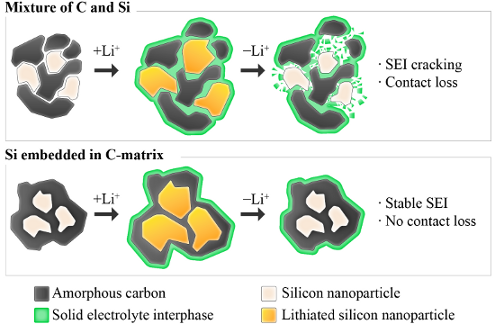
- treatment, the solution was transferred into a pressure reactor (Parr Instrument Company), equipped with a 600 mL polytetrafluoroethylene (PTFE) liner and two six-blade impellers, one near the bottom and one near the surface of the solution. The hydrothermal treatment consisted of a 150 min heating-up phase
- the electrode paste for one hour at 10,000 rpm (VMA-GETZMANN GmbH), it was cast onto a previously purified (ethanol) dendritic copper foil with a speed of 50 mm s−1 using a doctor blade technique (Zehntner GmbH) in combination with an automatic film applicator (Sheen Instruments). A wet coating

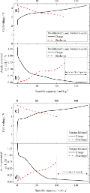
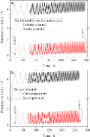
Quantitative comparison of wideband low-latency phase-locked loop circuit designs for high-speed frequency modulation atomic force microscopy
Beilstein J. Nanotechnol. 2018, 9, 1844–1855, doi:10.3762/bjnano.9.176
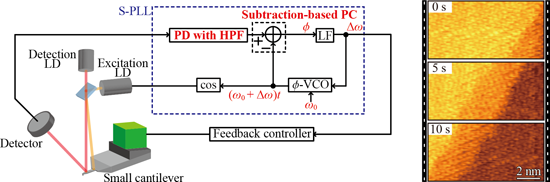
- preparation and imaging conditions A 5 × 5 × 2 mm3 calcite crystal (Crystal Base Co., Ltd.) was used for the FM-AFM experiment. The sample was glued onto the sample holder. Immediately after cleavage of the sample with a razor blade, 50 μL of Milli-Q water was deposited onto the sample surface. Then, high


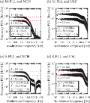
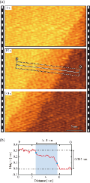
Scanning speed phenomenon in contact-resonance atomic force microscopy
Beilstein J. Nanotechnol. 2018, 9, 945–952, doi:10.3762/bjnano.9.87
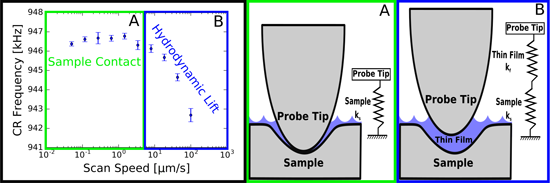
- cyanoacrylate. A razor blade was then used to cleave the sample, leaving behind a pristine sample surface. The sample was placed in a closed AFM flow-cell with an integrated relative humidity sensor. A cantilever with spring constant kL = 1.7 ± 0.2 N/m and first free resonance = 61.85 ± 0.1 kHz was mounted to


Engineering of oriented carbon nanotubes in composite materials
Beilstein J. Nanotechnol. 2018, 9, 415–435, doi:10.3762/bjnano.9.41
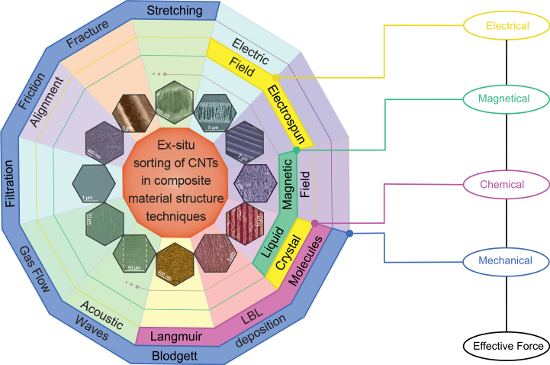
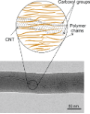
- membrane could be coated by cellulose acetate (CA) solution. Frictional orientation The frictional orientation method is known as the doctor blade (DB) technique or tape casting. This technique is widely used to produce a variety of thin layers and coat substrates with wet films. A blade or a spiral film








Periodic structures on liquid-phase smectic A, nematic and isotropic free surfaces
Beilstein J. Nanotechnol. 2018, 9, 342–352, doi:10.3762/bjnano.9.34

- temperature of the isotropic liquid phase was set, and the behavior of the droplet was studied using ISSA. In some experiments, the droplet was thinly spread on the substrate with a metal blade in the isotropic liquid. To measure the liquid crystal layer thickness, the ISSA was focused on the upper boundary









Humidity-dependent wound sealing in succulent leaves of Delosperma cooperi – An adaptation to seasonal drought stress
Beilstein J. Nanotechnol. 2018, 9, 175–186, doi:10.3762/bjnano.9.20

- the relative bending angle γ was carried out on leaves of potted plants. The upper side of the leaf was injured in a transversal direction by a razor blade. The cutting depth was chosen so that in each experiment, the parenchyma was injured with certainty. On average, the parenchyma starts at 55% of


Nanoprofilometry study of focal conic domain structures in a liquid crystalline free surface
Beilstein J. Nanotechnol. 2017, 8, 2544–2551, doi:10.3762/bjnano.8.254

- crater in this cross-section is 340 nm. Experiments with different film thickness showed that the size of the crater-like structures become smaller as the film thickness decreases. The films thickness can be reduced by spreading the substance with a razor blade. At a thickness of about 5 μm, the
- using ISSA. During heating, the droplet sometimes moved on the surface and it was necessary to wait for the motion to stabilize. In some experiments, the droplet was spread very thin on the substrate with a razor blade pre-heated up to the temperature of the isotropic liquid. For measuring the thickness




Increasing the stability of DNA nanostructure templates by atomic layer deposition of Al2O3 and its application in imprinting lithography
Beilstein J. Nanotechnol. 2017, 8, 2363–2375, doi:10.3762/bjnano.8.236
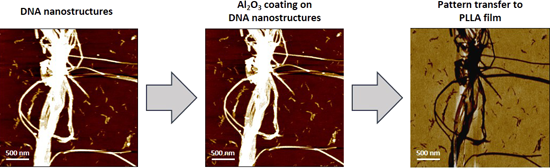
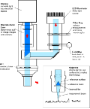
- ). Around the edges of the silicon wafer, the PLLA film was scraped off with a blade and the silicon wafer underneath the PLLA film was revealed (Figure 1d). A polydimethylsiloxane (PDMS) film was placed on top of the PLLA film serving as a flexible backing to assist in the separation of the polymer film
- a blade. (e) A PDMS film is adhered to the polymer film as a backing support. (f) Droplets of water are added to the exposed edges of the silicon wafer and the PLLA/PDMS film is peeled off. Comparison of features on a DNA nanotube master template with a ca. 2 nm thick Al2O3 film and a PLLA stamp




Systematic control of α-Fe2O3 crystal growth direction for improved electrochemical performance of lithium-ion battery anodes
Beilstein J. Nanotechnol. 2017, 8, 2032–2044, doi:10.3762/bjnano.8.204

- carbon, Timcal) and 20% of polyvinylidene difluoride (PVdF) binder (Kynar 2801) by weight in 1-methyl-2-pyrrolidinone (NMP, 99.5%, Sigma-Aldrich). This was coated on a copper foil with a doctor blade (gap height of 300 μm) then oven-dried at 60 °C overnight and roll-pressed with 20 tons. The dried


Carbon nanotube-wrapped Fe2O3 anode with improved performance for lithium-ion batteries
Beilstein J. Nanotechnol. 2017, 8, 649–656, doi:10.3762/bjnano.8.69

- %), conductive carbon black (Super P, 20 wt %) and polyvinylidene fluoride (PVDF, 10 wt %) were mixed in N-methyl-2-pyrrolidone to form a uniform slurry that was and stirred for 6 h. The slurry was spread on to the surface of a copper foil using a medical blade. The casted film was heated at 110 °C for 12 h in a


Performance of colloidal CdS sensitized solar cells with ZnO nanorods/nanoparticles
Beilstein J. Nanotechnol. 2017, 8, 210–221, doi:10.3762/bjnano.8.23

- . ZnO nanoparticles and nanorods were synthesized by a solution-growth process, the details of which are reported elsewhere [31][32]. Fabrication of CdS-NP-sensitized ZnO-based films ZnO nanoparticle (ZnO-P) and nanorod (ZnO-R) films were fabricated by the doctor blade method on FTO glass (7 Ω/cm2) and


In situ formation of reduced graphene oxide structures in ceria by combined sol–gel and solvothermal processing
Beilstein J. Nanotechnol. 2016, 7, 1815–1821, doi:10.3762/bjnano.7.174

- hydrolysis and condensation along with solvent evaporation). The solid films were then scraped off with a razor blade to get a gel powder. The gel from 5 mmol Ce(Ot-Bu)4 was transferred into a 60 mL autoclave with 30 mL EtOH, which was sealed, heated to 200 °C for 6 h and then cooled to room temperature by




Effective intercalation of zein into Na-montmorillonite: role of the protein components and use of the developed biointerfaces
Beilstein J. Nanotechnol. 2016, 7, 1772–1782, doi:10.3762/bjnano.7.170

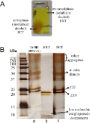
- 200 kV), the biohybrids were previously embedded in epoxy resin and then cut in very thin sections using an ultramicrotome (LEICA EM UC6) equipped with a diamond blade. SDS-PAGE SDS-PAGE was performed according to Cabra and co-workers [29], where aliquots of 7.5 µL containing approximately 30 µg of




Enhanced detection of nitrogen dioxide via combined heating and pulsed UV operation of indium oxide nano-octahedra
Beilstein J. Nanotechnol. 2016, 7, 1507–1518, doi:10.3762/bjnano.7.144
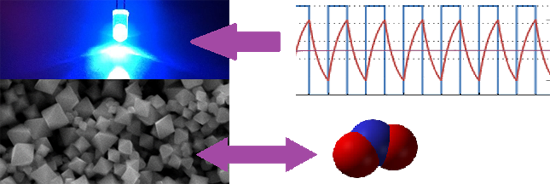
- mechanically removed from the silicon substrate employing a razor blade and mixed in a solution of 1,2-propanediol to form a printable ink. This ink was screen-printed on top of commercially available (Ceram Tech GmbH, Germany), alumina transducer elements, which comprised a pair of Pt interdigitated


Reasons and remedies for the agglomeration of multilayered graphene and carbon nanotubes in polymers
Beilstein J. Nanotechnol. 2016, 7, 1174–1196, doi:10.3762/bjnano.7.109
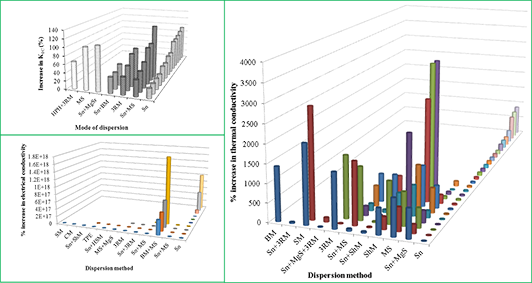
- ) while the central roller rotates in opposite direction (anti-clockwise). A knife blade removes the product from the apron roller. The process can be repeated until the desired level of mixing has been achieved [40]. The calendering process has certain limitations; the minimum gap that can be achieved




Comparative kinematical analyses of Venus flytrap (Dionaea muscipula) snap traps
Beilstein J. Nanotechnol. 2016, 7, 664–674, doi:10.3762/bjnano.7.59
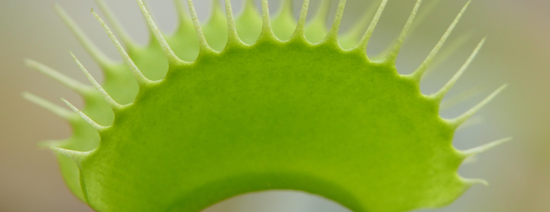
- and one additional adult trap were recorded during opening as described above. From the resulting videos we also calculated the normalized distances d*. A closed Dionaea muscipula trap. Petiole and leaf blade serve the function of photosynthesis. In addition, the leaf blade is highly modified and


Novel roles for well-known players: from tobacco mosaic virus pests to enzymatically active assemblies
Beilstein J. Nanotechnol. 2016, 7, 613–629, doi:10.3762/bjnano.7.54
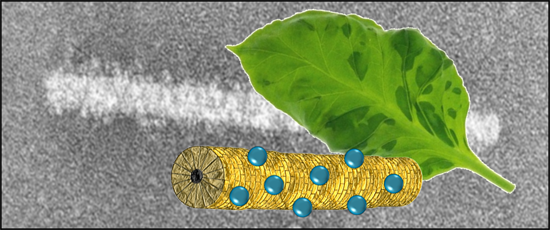
- applications. Tobacco mosaic virus infection. Left: Leaf of a healthy tobacco plant (Nicotiana tabacum 'Samsun' nn). Center: Leaf of a TMV-infected plant showing the typical TMV-associated mosaic (light and dark green mottling on the leaf blade). Right: Organization and dimensions of a TMV ribonucleoprotein


Negative differential electrical resistance of a rotational organic nanomotor
Beilstein J. Nanotechnol. 2015, 6, 2332–2337, doi:10.3762/bjnano.6.240

- a number of groups [50][51][52] and allow the imposition of an external electric field via a nearby gate. Schematic of the proposed molecular switch, where the asymmetric rotor blade is terminated at one end with nitrogen and at the other with three fluorine atoms with a single bond linking the



Nanoscale rippling on polymer surfaces induced by AFM manipulation
Beilstein J. Nanotechnol. 2015, 6, 2278–2289, doi:10.3762/bjnano.6.234
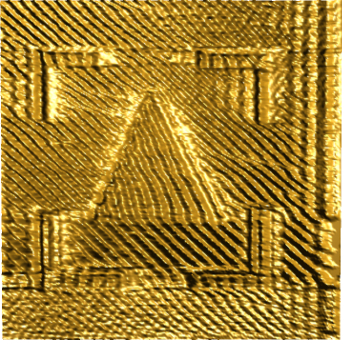
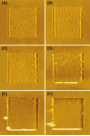
- be described as the parallel movement of a number of tips moving together along the same direction, like a blade. The final pattern could also depend on the number of scans. Tip trajectory: Gnecco et al. have also evidenced that ripple patterns could be obtained via circular or spiral trajectories of




Boosting the local anodic oxidation of silicon through carbon nanofiber atomic force microscopy probes
Beilstein J. Nanotechnol. 2015, 6, 215–222, doi:10.3762/bjnano.6.20

- . Experimental CNFs are grown on arrays of commercially available AFM cantilevers, non-blade tetragonal-type Si tips made by Olympus (force constant, k = 40 N·m−1), coated with a thin carbon layer; on typically 3–9 chips per batch [17]. The synthesis is performed in a Kaufman-type ion gun, whose beam diameter is


Materials and characterization techniques for high-temperature polymer electrolyte membrane fuel cells
Beilstein J. Nanotechnol. 2015, 6, 68–83, doi:10.3762/bjnano.6.8

- of carbon-supported platinum catalyst, solvent, and binder onto a GDL, followed by a drying step. There exist a wide range of catalyst layer deposition techniques, for instance, spraying [12], decal transfer [36], painting [37], rolling [38], sputter deposition [39], and doctor blade coating [27
- ]. Some of these methods are adapted for the fabrication of GDEs for HT-PEMFCs. In particular, spraying [12] and doctor blade coating [27] are the most common techniques used in research. The deposition method can affect the morphology, specifically the macro structure, of the GDE significantly. For
- instance, the catalyst layer fabricated by doctor blade technique shows a complete network of shrinkage cracks, which go all the way though the catalyst layer. The clots are completely disconnected from each other. The situation is different for sprayed GDEs, where only small hairline cracks on the




En route to controlled catalytic CVD synthesis of densely packed and vertically aligned nitrogen-doped carbon nanotube arrays
Beilstein J. Nanotechnol. 2014, 5, 219–233, doi:10.3762/bjnano.5.24

- soft and could be easily peeled off from the quartz reactor in large pieces by using a razor blade, whereas the N-CNTs were peeled off as powder. Also, a drastic increase in the adhesion of N-CNT arrays to the quartz substrates as compared to pristine MWCNT films was noticeable because of changes in


Constant-distance mode SECM as a tool to visualize local electrocatalytic activity of oxygen reduction catalysts
Beilstein J. Nanotechnol. 2014, 5, 141–151, doi:10.3762/bjnano.5.14
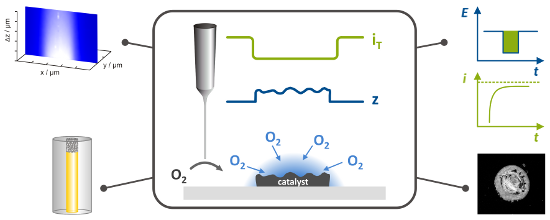
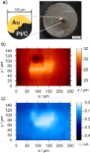
- used. The platinum of the fabricated SECM tips was exposed by cutting the very end of the pulled Pt/capillary assembly with a blade under microscopic control (BX41, Olympus, Hamburg, Germany). For polishing a machine like in [42] was used. The electrodes were characterized by means of optical




Synthesis and electrochemical performance of Li2Co1−xMxPO4F (M = Fe, Mn) cathode materials
Beilstein J. Nanotechnol. 2013, 4, 860–867, doi:10.3762/bjnano.4.97

- of N-methyl-pyrrolidone. This cathode slurry was cast on an Al-foil collector by using the doctor-blade technique with a typical loading of 1 mg·cm−2. The prepared electrodes were dried, rolled and then dried again at 100 °C under vacuum for several hours. The electrochemical evaluation was carried