Search results
Search for "drag" in Full Text gives 68 result(s) in Beilstein Journal of Nanotechnology.
Bidirectional biomimetic flow sensing with antiparallel and curved artificial hair sensors
Beilstein J. Nanotechnol. 2019, 10, 32–46, doi:10.3762/bjnano.10.4

- a capacitive artificial neuromast based sensor platform that was integrated as high-density arrays to measure high-frequency acoustic flow patterns based on drag force [33][34][35][36]. The artificial neuromast is made of a vertical pillar with heights between 400 and 1000 μm, heights similar to the
- × 500 μm × 10 μm) which bent as air flow hit the plate. While the plate received the drag force of the air flow, the cantilevers measured the drag force using platinum strain gauges. One variable resistor (strain gauge) on each of the two cantilevers and two fixed resistances on the sensor substrate
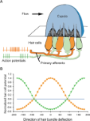
- flow conditions, which was expected, as drag force on the bent cantilevers is a function of flow direction (or rotation angle in the presented experiment). When a cantilever is rotated by angle α, the expected signal amplitude is Aα = Amaxsin(α), where Amax is the signal amplitude for the rotation


A new bioinspired method for pressure and flow sensing based on the underwater air-retaining surface of the backswimmer Notonecta
Beilstein J. Nanotechnol. 2018, 9, 3039–3047, doi:10.3762/bjnano.9.282

- ., for drag reducing ship coatings [5]. Submerged backswimmers are covered with a thin air layer, in particular on their hemelytra (forewings) [4][11][12]. This air layer remains stable over long periods of time under both static and dynamic conditions [4][13][14][15]. To understand the mechanism that
- typical morphological features of mechanoreceptors, such as a dendritic canal or an outer dendritic tip, were identified (Figure 5). The morphological data suggest that the clubs (Figure 1b, yellow) are used for pressure detection while the pins (Figure 1b, grey) are used for the detection of drag caused
- mechanosensitive setae not only for drag reduction, but also for the detection of prey or predators. With one exception [16], the involvement of air layers in a sensory function has never been demonstrated. A possible principle for a sensor that uses an air layer for the detection of pressure changes is shown in




The effect of flexible joint-like elements on the adhesive performance of nature-inspired bent mushroom-like fibers
Beilstein J. Nanotechnol. 2018, 9, 2893–2905, doi:10.3762/bjnano.9.268
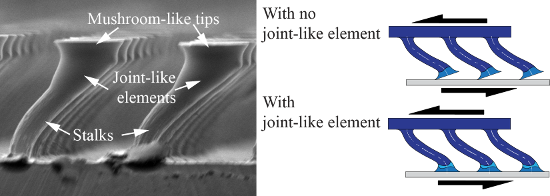
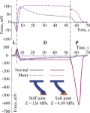
- results from load–drag–pull (LDP) experiments performed along (gripping) and against (releasing) the tilt direction indicate that the soft and the very soft joint fibers performed superior to the stiff joint fibers and maintained directionally dependent performance. The soft joint fibers achieved up to 22
- than vertically aligned [10]. This tilt, in addition to enhanced performance [11], equips the gecko with directional adhesion properties as shown by Autumn et al. [12]. When they tested setae using a load–drag–pull (LDP) experiment, they found that setae exhibit very high interfacial shear and tension
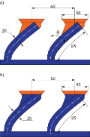
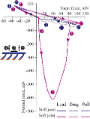
- Figure 1c. Friction and adhesion are measured as a function of initial compressive load (preload) using load–drag–pull (LDP) experiments. Fibers arrays were dragged in the direction of tilt (i.e., gripping direction) and against the tilt direction (i.e., releasing direction) to assess directional






Recent highlights in nanoscale and mesoscale friction
Beilstein J. Nanotechnol. 2018, 9, 1995–2014, doi:10.3762/bjnano.9.190
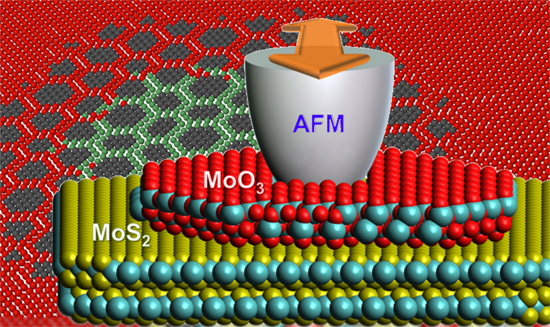
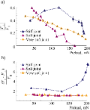
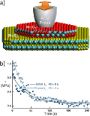
- of most moving machinery parts, it has the disadvantages of a relatively large viscous drag and the risk of a transition to the boundary regime under certain, sometimes uncontrolled conditions. Just recently, a few systems based on layered materials, such as graphene or molybdenum chalcogenides have


Nonlinear effect of carrier drift on the performance of an n-type ZnO nanowire nanogenerator by coupling piezoelectric effect and semiconduction
Beilstein J. Nanotechnol. 2018, 9, 1917–1925, doi:10.3762/bjnano.9.183

- and the acoustic wave itself [1][2][3][4]. This kind of interaction between an acoustic wave and carriers in piezoelectric semiconductors is called the acoustoelectric effect, which is a special case of a more general phenomenon, called wave–particle drag [4][5]. Obviously, acoustoelectric coupling of


![[Graphic 46]](/bjnano/content/inline/2190-4286-9-183-i59.svg?max-width=637&scale=1.18182) and (b) boundary electric displacement Dr at Ω for different end f...
and (b) boundary electric displacement Dr at Ω for different end f...


Surface characterization of nanoparticles using near-field light scattering
Beilstein J. Nanotechnol. 2018, 9, 1228–1238, doi:10.3762/bjnano.9.114
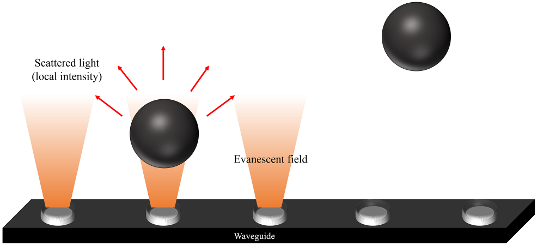
- (trapping force), scattering force, coating force, and drag force (Figure 1) [21]. Nanoparticles are either trapped in the evanescent field and reside in a potential well or escape the potential well via Brownian motion due to inadequate trapping force [22]. The potential well is the sum of all forces, and
- particle polarizability is α = [3V(ε − εs)/(ε + 2εs)], V is the particle volume, ε and εS are the dielectric constants of the particle and solution, respectively, and I is the local intensity. As the particle travels in solution, a drag force also acts on the particle along the opposite direction of the
- laser waveguide. According to Stokes’s Law, the drag force can be written as, where η is the solution viscosity, r is the particle radius and v is the particle velocity. When a particle enters the evanescent field and is trapped by the gradient force, it can be transported along the direction of the




Engineering of oriented carbon nanotubes in composite materials
Beilstein J. Nanotechnol. 2018, 9, 415–435, doi:10.3762/bjnano.9.41
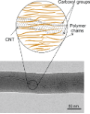
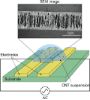
- of the gap between the two layers and the simultaneous effects of the shear force and mechanical tensile stretch, a slight drag force pulls the CNT in the vertical direction. However, the obtained free CNTs are certainly not vertical relative to the surface of layers. Although the small length of the








The nanofluidic confinement apparatus: studying confinement-dependent nanoparticle behavior and diffusion
Beilstein J. Nanotechnol. 2018, 9, 301–310, doi:10.3762/bjnano.9.30
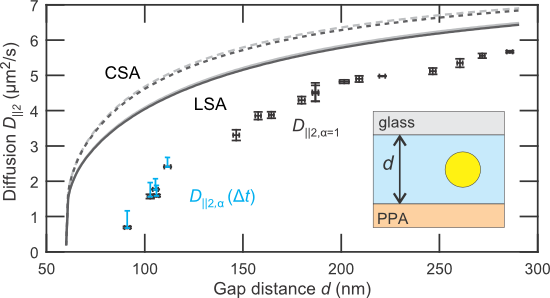
- height, ω = h/a, for [27] by Faxèn [28] and Goldman [29], respectively. A similar approach leads to the drag-reduced diffusion in a slit [30]: where d is the gap distance of the confining walls. Oseen suggested the LSA [30] where the drag of each wall is treated independently and the total force is given
- role in a nanofluidic system, in particular when a particle is close to a charged wall. Whereas diffusion measurements for uncharged particles [15] and for particles in electrolyte with higher ionic concentration [33] are in agreement with predictions that consider only a hydrodynamically hindered drag
- . There is considerable evidence of an increased drag of charged particles near charged walls in a weak electrolyte [18][38]. In a similar experimental configuration Eichmann et al. [18] measured a ≈30% (≈55%) lower lateral diffusion coefficient for 60 nm (100 nm) gold nanospheres with a relative radius



Nematic topological defects positionally controlled by geometry and external fields
Beilstein J. Nanotechnol. 2018, 9, 109–118, doi:10.3762/bjnano.9.13

- rotation of an assembly of TDs. Finally, we show that an external electric field could be used to drag the boojum fingertip towards the interior of the confinement cell. Assemblies of TDs could be exploited as traps for appropriate nanoparticles, opening several opportunities for the development of


![[Graphic 25]](/bjnano/content/inline/2190-4286-9-13-i36.svg?max-width=637&scale=1.18182) with the largest positive eigenvalue, corresponding to the 2D biaxi...
with the largest positive eigenvalue, corresponding to the 2D biaxi...


Robust nanobubble and nanodroplet segmentation in atomic force microscope images using the spherical Hough transform
Beilstein J. Nanotechnol. 2017, 8, 2572–2582, doi:10.3762/bjnano.8.257
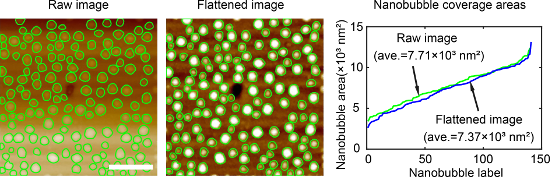
- ameliorate oxygen mass transfer to living microorganisms [7], reduce drag force at solid–liquid interfaces in micro/nanofluidics [2][8][9], and enhance ultrasonic tumor imaging contrast [10]. Regarding NDs, they can be applied to fabricate nanolenses on solid surfaces to modify them for antireflection and


Interface conditions of roughness-induced superoleophilic and superoleophobic surfaces immersed in hexadecane and ethylene glycol
Beilstein J. Nanotechnol. 2017, 8, 2504–2514, doi:10.3762/bjnano.8.250

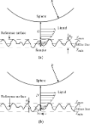
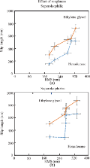
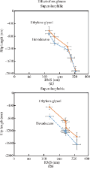
- that can affect the drag of fluid flow. For surfaces with different oleophobicity, the boundary slip at the solid–oil interface is mostly larger than that at the solid–water interface. Roughness is a key factor for the wettability of superoleophilic/superoleophobic surfaces, and it has been found to
- significantly inhibit the degree of boundary slip on both superoleophilic surfaces in Wenzel state and superoleophobic surfaces in Cassie state immersed in oil. The oleic systems were likely to enhance boundary slip and resulted in a corresponding reduction in drag with decreasing roughness on the solid–oil
- interfaces. Keywords: boundary slip; roughness; superoleophilic; superoleophobic; Introduction In micro/nanofluidic systems, the increasing surface to volume ratio leads to unignorable fluid drag at the solid–liquid interface. The reduction of fluid drag is an important issue to improve the efficiency of





Material property analytical relations for the case of an AFM probe tapping a viscoelastic surface containing multiple characteristic times
Beilstein J. Nanotechnol. 2017, 8, 2230–2244, doi:10.3762/bjnano.8.223

- damage induced by constant tip drag. Additionally, these methods are prone to significant tip wear and contamination which could make quantitative characterization unreliable due to constant changes in tip geometry. Dynamic methods have been designed to overcome the above issues, whereby tapping-mode AFM


A comparative study of the nanoscale and macroscale tribological attributes of alumina and stainless steel surfaces immersed in aqueous suspensions of positively or negatively charged nanodiamonds
Beilstein J. Nanotechnol. 2017, 8, 2045–2059, doi:10.3762/bjnano.8.205

- of films in both in vacuum and liquid environments [23][24][25]. When immersed in liquid, it can be used to probe frictional drag forces and interfacial effects at complex solid–liquid interfaces [19][27] including those of a biological origin [18][22]. Given that the transverse shear speed of the
- mass and frictional energy losses of materials deposited onto its surface electrodes and/or drag forces and interfacial slippage of fluids that it is immersed in. For a QCM with one side immersed in a fluid with bulk density ρ3 and viscosity η3, the shifts in δf and δ(Q−1) associated with the presence
- = −714 Hz drop in the resonant frequency and an increase of δ(Q−1) = 2.85 × 10⁻⁴ in the dissipation. For a QCM with quality factor Q = 50,000 in air this corresponds to a drop to Q = 3,280 after an immersion in water. The viscous drag forces on the QCM electrode are mechanical in nature; a decrease in Q




Collembola cuticles and the three-phase line tension
Beilstein J. Nanotechnol. 2017, 8, 1714–1722, doi:10.3762/bjnano.8.172

- in functional surfaces with effects like self-cleaning, drag reduction and air retention [10][11][12]. The field of superhydrophobic surfaces has made extensive use of biomimetic methods, where the imitation of natural surfaces provides the basis for artificial surfaces [9][13][14]. The exact nature


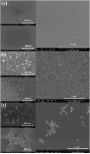
![[Graphic 16]](/bjnano/content/inline/2190-4286-8-172-i22.png?max-width=637&scale=1.18182) . A system with θ0 = 105°, S = 0.1 μm a...
. A system with θ0 = 105°, S = 0.1 μm a...

Air–water interface of submerged superhydrophobic surfaces imaged by atomic force microscopy
Beilstein J. Nanotechnol. 2017, 8, 1671–1679, doi:10.3762/bjnano.8.167

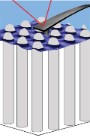
- fields of drag reduction, antifouling, anticorrosion and under water sensing. Current knowledge regarding the shape of the air–water interface is insufficient, although it plays a crucial role with regards to stability in terms of diffusion and dynamic conditions. Optical methods for imaging the
- years, the Salvinia effect – the long term stabilization of an air layer on a submerged surface – has gained increasing interest. There is great potential for various technical applications utilizing this effect, for example, drag reduction, antifouling or anticorrosion applications, and underwater



Measuring adhesion on rough surfaces using atomic force microscopy with a liquid probe
Beilstein J. Nanotechnol. 2017, 8, 813–825, doi:10.3762/bjnano.8.84
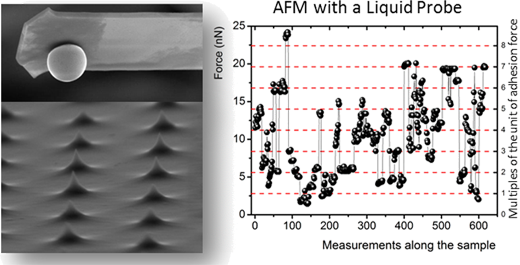
- ], in self-cleaning – because liquid-repellency is correlated with a low adhesion force –, drag reduction [14], fog harvesting [15], and to understand adhesive interactions between imaging materials, which are crucial in print-engine design, and print-process development in the printing industry [16

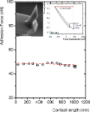
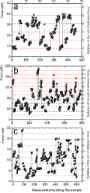
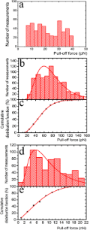
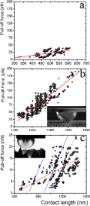
When the going gets rough – studying the effect of surface roughness on the adhesive abilities of tree frogs
Beilstein J. Nanotechnol. 2016, 7, 2116–2131, doi:10.3762/bjnano.7.201

- twigs [50]. We are thus building up a good understanding of both the underlying mechanisms and the ecology of tree frog adhesive mechanisms. But this study goes further: comparable to the drag reduction mechanisms of snake skin [51], the superhydrophobicity and self-cleaning mechanisms of lotus leaves
- friction forces. Simple LabView programs (similar to those used in Crawford et al. [33]) were used to move the pad over the force plate so that maximum frictional and adhesive forces could be measured. This involved a proximal lateral drag (5 mm drag at 1 mm s−1), followed by a vertical pull off. Above the




Dynamic of cold-atom tips in anharmonic potentials
Beilstein J. Nanotechnol. 2016, 7, 1543–1555, doi:10.3762/bjnano.7.148
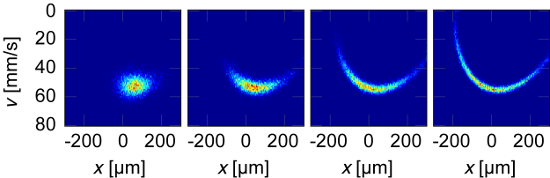
- (i). As time goes by, the higher energetic particles will drag more and more behind, leading to a relative dephasing between particle oscillations (ii–iv). This results in a spread of the phase-space distribution and a center-of-mass shift towards the equilibrium position. For the density




Contact-free experimental determination of the static flexural spring constant of cantilever sensors using a microfluidic force tool
Beilstein J. Nanotechnol. 2016, 7, 492–500, doi:10.3762/bjnano.7.43

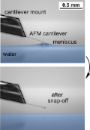
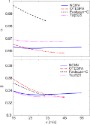
- experienced by the cantilever is due to plan-view-dependent drag as opposed to viscous shear, and the former is not significantly influenced by the presence of the tip. The reason for the observed hysteresis in the speed-dependent deflection (Figure 5) is not entirely clear. Some cantilevers showed no




![[Graphic 28]](/bjnano/content/inline/2190-4286-7-43-i34.png?max-width=637&scale=1.18182) value for cantilever NCHV. The dashed line indicates the mean
value for cantilever NCHV. The dashed line indicates the mean ![[Graphic 29]](/bjnano/content/inline/2190-4286-7-43-i35.png?max-width=637&scale=1.18182) value for ...
value for ...
Single-molecule mechanics of protein-labelled DNA handles
Beilstein J. Nanotechnol. 2016, 7, 138–148, doi:10.3762/bjnano.7.16
- fluid-flow dependent DNA extension, corresponding to the hydrodynamic drag experienced by the DNA molecule. The flow force induced stretching as presented here is consistent with the original experimental findings by Perkins et al. [15] and follows the theoretical description of Stigter et al. [16
- cell. Variations in the fluid flow speed change the hydrodynamic drag experienced by the long dsDNA molecule, altering its extension. Interaction rate of streptavidin- and neutravidin-DNA coupled to anti-DIG beads with the ratio 40:1 in various buffers. Acknowledgements This work was supported by



Electroviscous effect on fluid drag in a microchannel with large zeta potential
Beilstein J. Nanotechnol. 2015, 6, 2207–2216, doi:10.3762/bjnano.6.226
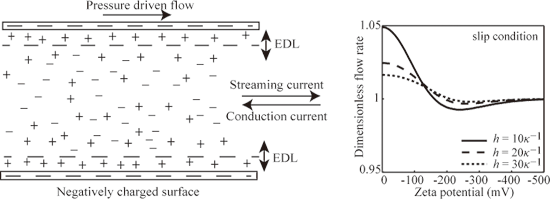
- /bjnano.6.226 Abstract The electroviscous effect has been widely studied to investigate the effect of surface charge-induced electric double layers (EDL) on the pressure-driven flow in a micro/nano channel. EDL has been reported to reduce the velocity of fluid flow and increase the fluid drag
- potential on the pressure-driven flow in a microchannel with no-slip and charge-dependent slip conditions. The results show that the EDL leads to an increase in the fluid drag, but that slip can reduce the fluid drag. When the zeta potential is large enough, the electroviscous effect disappears for flow in
- the microchannel under a no-slip condition. However, the retardation of EDL on the flow and the enhancement of slip on the flow counteract each other under a slip condition. The underlying mechanisms of the effect of EDL with large zeta potential on fluid drag are the high net ionic concentration near


Stiffness of sphere–plate contacts at MHz frequencies: dependence on normal load, oscillation amplitude, and ambient medium
Beilstein J. Nanotechnol. 2015, 6, 845–856, doi:10.3762/bjnano.6.87

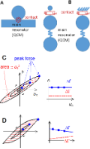
- displacement is evaluated in the undeformed regions far outside the contact zone. The ratio of force and displacement is the contact stiffness. As we show in the modeling section, the spring constant and the dashpot’s drag coefficient can be easily determined from the shifts of frequency and bandwidth. The
- acounts for viscous dissipation, where ξ is the drag coefficient. ξ quantifies linear processes in the sense that the stress is proportional to the rate of displacement. No statement is made on the mechanism(s) leading to dissipation. The drag coefficient may be linked to the viscoelastic nature of the




Graphene quantum interference photodetector
Beilstein J. Nanotechnol. 2015, 6, 726–735, doi:10.3762/bjnano.6.74

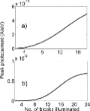
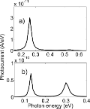
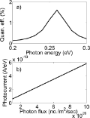
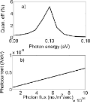
- generation mechanisms in graphene photodetectors include the photovoltaic effect, photothermoelectric effect, bolometric effect and phonon drag effect [3]. In the photovoltaic effect, the built-in electric field generated in the junction of p- and n-type graphene is utilized for separation of photogenerated


A surface acoustic wave-driven micropump for particle uptake investigation under physiological flow conditions in very small volumes
Beilstein J. Nanotechnol. 2015, 6, 414–419, doi:10.3762/bjnano.6.41

- Cloc > Cm. Ignoring these effects can in fact lead to misinterpretation of experimental data, especially to an overestimation of the impact of big particles or agglomerates. Furthermore, particles on a cell surface under shear are subject to drag and torsion forces [3]. For spherical particles in the
- nano-regime it can be easily derived from the Stokes equation that these drag forces are typically of the order of a few piconewtons or below, i.e, one or more orders of magnitude weaker than typical receptor–ligand binding strengths [4]. Nevertheless, in the case of weak unspecific particle adhesion
- 2000 s−1, its rolling velocity will be of the order of 100 μm/s. Relevant disruption forces for specific bindings can be achieved for large particle agglomerates, since the drag force scales with r2. An agglomerate with an hydrodynamic radius of r = 500 nm at a shear rate of 2000 s−1, for instance


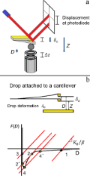
The capillary adhesion technique: a versatile method for determining the liquid adhesion force and sample stiffness
Beilstein J. Nanotechnol. 2015, 6, 11–18, doi:10.3762/bjnano.6.2

- [4][5] because of the significant drag reduction [6][7][8][9][10][11][12]. However, an essential requirement for the functionality of these surfaces is the persistence of the air layer [13][14][15]. As all of the highly engineered surfaces developed to date have failed in this respect [9][10][11][12
- molesta attracts considerable attention due to its ability to maintain a persistent layer of air on its leaves under water. This feature could be of high technological relevance, opening perspectives for completely new concepts for drag reduction of ships, for example, lubricating a ship hull with a