


Search results
Search for "mechanical" in Full Text gives 1127 result(s) in Beilstein Journal of Nanotechnology. Showing first 200.
Structure-dependent thermochromism of PAZO thin films: theory and experiment
Beilstein J. Nanotechnol. 2026, 17, 186–199, doi:10.3762/bjnano.17.12
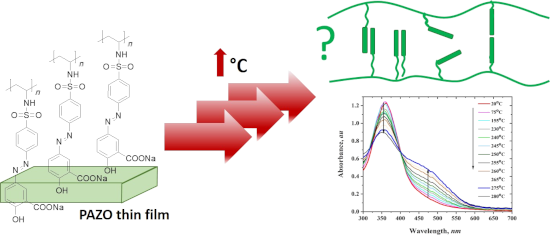
- improved mechanical properties. Figure 3B shows the IR spectra of PAZO samples before and after thermal treatment. There are no drastic changes in the band positions, but some changes in the band intensities are observed. Variation of the band intensities with temperature increase for absorption bands
- undergo reversible E–Z isomerization upon exposure to light with different wavelengths. This E–Z isomerization of the azobenzene units leads to significant changes in the conformation, supramolecular structure, and bulk properties of the polymer such as optical anisotropy, solubility, and mechanical


Safe and sustainable by design with ML/AI: A transformative approach to advancing nanotechnology
Beilstein J. Nanotechnol. 2026, 17, 176–185, doi:10.3762/bjnano.17.11
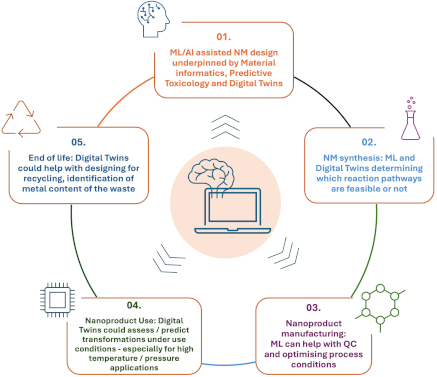
- for rapid adjustments to nanomaterial formulations or processing parameters in response to emerging safety or efficacy concerns. By simulating how nanomaterials behave across varying operational scenarios – incorporating factors like temperature, pH, or mechanical stress – digital twins will


Functional surface engineering for cultural heritage protection: the role of superhydrophobic and superoleophobic coatings – a comprehensive review
Beilstein J. Nanotechnol. 2026, 17, 63–96, doi:10.3762/bjnano.17.6
- Giuseppe Cesare Lama Marino Lavorgna Letizia Verdolotti Federica Recupido Giovanna Giuliana Buonocore Bharat Bhushan Institute for Polymers, Composite and Biomaterials, National Council of Research (IPCB-CNR), P.le E. Fermi 1, 80055 Portici, Italy Dept of Mechanical and Aerospace Engineering, The
- , such as ethylenediaminetetraacetic acid (EDTA) or mechanical abrasion, offering a promising, green innovation for conserving indoor historical iron objects by a targeted removal of both corrosion and old coatings [16]. Although the identification of the impairment and its restoration play crucial roles
- , acknowledging the conservative merits of amurca, obtained from wastes of olive oil production, that keeps bronze surfaces shinier and free from rust. Moreover, Pliny himself endorsed bitumen for being highly useful for bronze protection against fire, and mechanical and corrosion threats. Other examples of the




Quantitative estimation of nanoparticle/substrate adhesion by atomic force microscopy
Beilstein J. Nanotechnol. 2026, 17, 1–14, doi:10.3762/bjnano.17.1

- NPs and significantly enhancing their interfacial adhesion. Their mechanical stability was tested utilizing scanning probe microscopy nanomanipulation [12]. Another approach tested for SiO2 NPs was functionalizing their surfaces for improved adhesion on epoxy film-covered substrate surfaces [13]. In
- reliable measure for adhesion forces, the mechanical work required to manipulate NPs was calculated by determining the area covered by the measured lateral force versus distance curves. The suggested approach provides insight into the complex interplay between the NP landing conditions and resulting
- energy, NP surface termination, relative orientation of the NP upon landing, and mechanical properties of NP and substrate [46][47]. However, a very decisive parameter is the impact velocity, which can be controlled by the substrate bias voltage applied during deposition. A higher bias voltage results in



Internal 3D temperature mapping in biological systems using ratiometric light-sheet imaging and lipid-coated upconversion nanothermometers
Beilstein J. Nanotechnol. 2025, 16, 2306–2316, doi:10.3762/bjnano.16.159
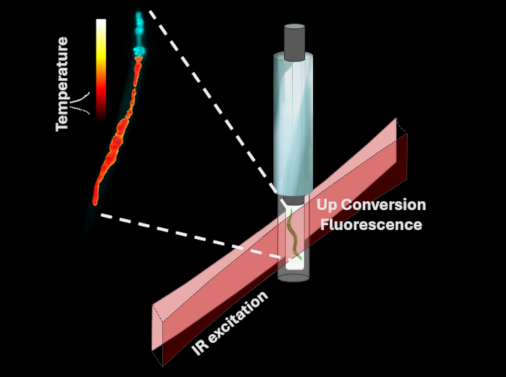
- currently developing an alternative approach based on color CMOS detection, which retrieves the spectral intensity from a single RGB image and eliminates the need for mechanical filter switching. This strategy, though beyond the scope of the present work, is expected to enable true real-time 3D


Visualizing nanostructures in supramolecular hydrogels: a correlative study using confocal and cryogenic scanning electron microscopy
Beilstein J. Nanotechnol. 2025, 16, 2274–2284, doi:10.3762/bjnano.16.156
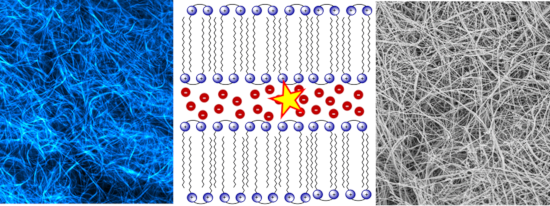
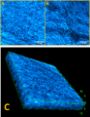
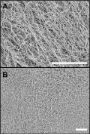
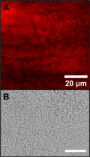
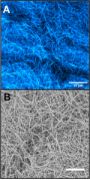
- manufacturing [27], and mechanical photoresponsiveness [21] on the morphology, and the potential to correlate with confidence between morphology and these and other properties. Results and Discussion Confocal imaging ZnPc@Gel The attempts at using CLSM to image the hydrogels containing ZnPc met with significant
- , the resulting micrographs largely depicted aggregated domains or regions of mechanical disruption (Figure 2A–D), where the gel network had broken during sample compression between glass slides or where air bubbles were trapped (Figure 2A). In comparatively intact regions of the gels, fibrillar
- only necessitated the application of high excitation powers but also required physical compression of the gel sample to reduce path length and thus improve the signal-to-noise ratio. However, this approach introduced the evident result of mechanical artefacts, such as gel network disruption or the




Geometry-controlled engineering of the low-temperature proximity effect in normal metal–superconductor junctions
Beilstein J. Nanotechnol. 2025, 16, 2265–2273, doi:10.3762/bjnano.16.155
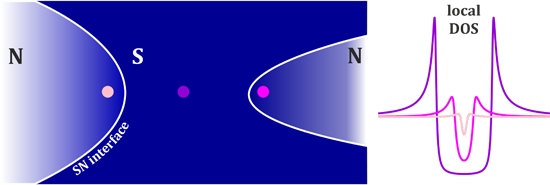
- ⟨…⟩ denoting the quantum mechanical averaging. The Equations Equation 6 are solved numerically through a self-consistent iteration process that produces the eigenvectors u and v. These eigenvectors are then used to calculate updated values of the order parameter and Hartree potential, and the process is


Chiral plasmonic nanostructures fabricated with circularly polarized light
Beilstein J. Nanotechnol. 2025, 16, 2245–2264, doi:10.3762/bjnano.16.154
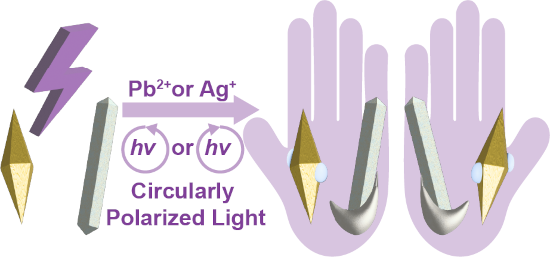
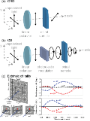
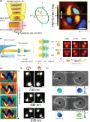
- the fabrication details and morphology of the CPL-enabled cPNSs in Section 2. In recent years, chiral assemblies of PNSs from mechanical forces via magnetic fields [60][61] or strain [62][63] have also been demonstrated. Although the cPNSs prepared via mechanical forces are relatively scarce, they
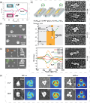
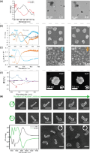
- ”. In the same paper, the authors attributed the formation of chiral AuNPs to the assembly of small NPs under the mechanical force of CPL. The spatial dissymmetry of hot carrier-induced chemical reactions was not discussed. While Figure 4a represents chiral metallic cPNSs synthesized in solution, Figure





Optical bio/chemical sensors for vitamin B12 analysis in food and pharmaceuticals: state of the art, challenges, and future outlooks
Beilstein J. Nanotechnol. 2025, 16, 2207–2244, doi:10.3762/bjnano.16.153


Ultrathin water layers on mannosylated gold nanoparticles
Beilstein J. Nanotechnol. 2025, 16, 2183–2198, doi:10.3762/bjnano.16.151
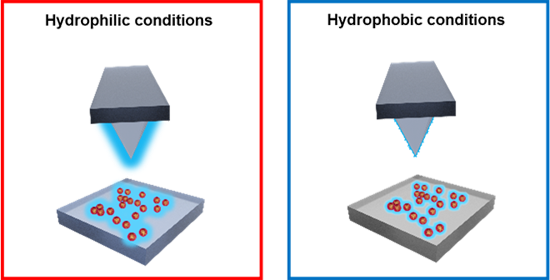
- repeated the experiments under hydrophobic conditions: We employed OTS silicon surfaces and hydrophobic carbon AFM tips. From this, we exclude that the observed phenomena is specific for the type of surface [36] or based on mechanical contact between tip and surface [22][23][37]. The ∆z value under ambient



Missing links in nanomaterials research impacting productivity and perceptions
Beilstein J. Nanotechnol. 2025, 16, 2168–2176, doi:10.3762/bjnano.16.149
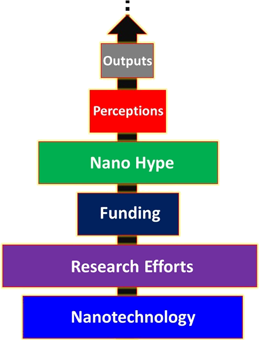
- almost every domain of science and technology [8]. Its exceptional thermo-mechanical properties are ideal for critical sectors such as aerospace, medicine, space exploration, textiles, construction, and materials capable of operating from cryogenic temperatures up to beyond 2000 °C [8][9]. Similarly
- properties, with electronic and quantum mechanical behaviors that continue to surprise the scientific community [11]. Researchers are continuously developing and reporting new nanomaterials with unique properties tailored for diverse applications. Thus, the properties of materials once considered impossible
- working extensively in various aspects of nanotechnology, we find that the majority come from chemistry, physics, materials science, and metallurgy. Very few come from other fields such as mechanical, energy, electronics, biomedical engineering, and mathematics. The experts belonging to chemistry, physics
Electron transport through nanoscale multilayer graphene and hexagonal boron nitride junctions
Beilstein J. Nanotechnol. 2025, 16, 2132–2143, doi:10.3762/bjnano.16.147
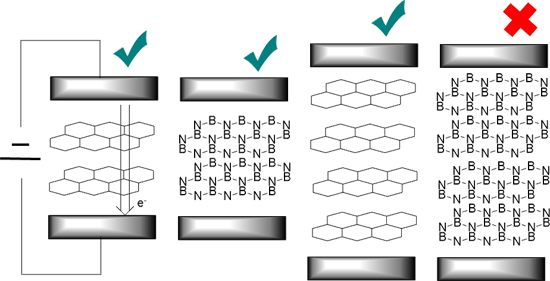
- sandwiched between conductive materials such as graphene, graphite, and gold. The authors fabricated vertical tunnel junctions with h-BN barriers ranging from one to four atomic layers and demonstrated that the tunneling current decreases exponentially with barrier thickness, confirming quantum mechanical
- with voltage. NDR occurs in various electronic systems, such as tunnel diodes, resonant tunneling diodes, and molecular junctions, and arises from quantum mechanical effects like tunneling or charge carrier trapping. In short molecular and nanoscale junctions, NDR is assigned to localization of a


Quality by design optimization of microemulsions for topical delivery of Passiflora setacea seed oil
Beilstein J. Nanotechnol. 2025, 16, 2116–2131, doi:10.3762/bjnano.16.146
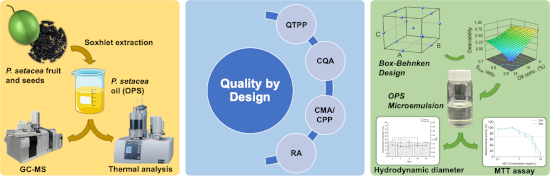
- . Subsequently, Liquid Germall® Plus (0.2% w/w) and sodium carboxymethylcellulose (1.5% w/w) were added under mechanical stirring to obtain the gelled topical microemulsion. Characterization of the emulsified systems Hydrodynamic diameter distribution The hydrodynamic diameter and polydispersity index of the


Rapid synthesis of highly monodisperse AgSbS2 nanocrystals: unveiling multifaceted activities in cancer therapy, antibacterial strategies, and antioxidant defense
Beilstein J. Nanotechnol. 2025, 16, 2105–2115, doi:10.3762/bjnano.16.145
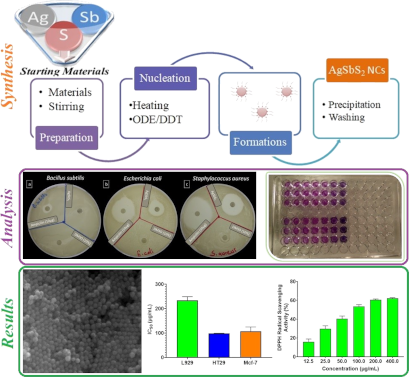
- , Department of Mechanical Engineering, 53020, Rize, Turkey Department of Chemical Engineering, Konya Technical University, Konya, Turkey 10.3762/bjnano.16.145 Abstract Nanocrystals (NCs) of silver antimony sulfide (AgSbS2) in the cubic phase were successfully synthesized using the hot-injection method. This


Multifrequency AFM integrating PeakForce tapping and higher eigenmodes for heterogeneous surface characterization
Beilstein J. Nanotechnol. 2025, 16, 2077–2085, doi:10.3762/bjnano.16.142
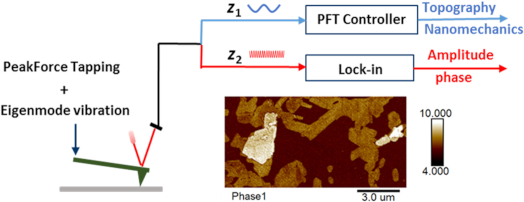
- environments such as liquids [18][19]. As demonstrated by force–distance curve analyses [19], PFT enables direct extraction of quantitative mechanical properties (e.g., Young’s modulus and adhesion) for material discrimination. However, this capability is constrained by the requirement for precise probe
- overcome these challenges. This configuration harnesses the mechanical precision of quasi-static force control and the sensitivity of eigenmode signals to variations in surface properties and enables simultaneous topographical, mechanical, and compositional mapping. We apply this technique to
- withdraw with the sample surface periodically, forming a force curve. The peak force, identified within this curve, is utilized as a feedback parameter. By sustaining a constant peak force between the probe and the sample, the topography of the sample can be obtained. Quantitative mechanical properties of


Molecular and mechanical insights into gecko seta adhesion: multiscale simulations combining molecular dynamics and the finite element method
Beilstein J. Nanotechnol. 2025, 16, 2055–2076, doi:10.3762/bjnano.16.141
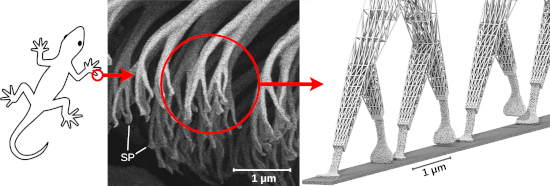
- dynamics to capture molecular interactions at the spatula–substrate interface and finite element method to simulate the mechanical behavior of the larger setal shaft. This hybrid approach enables synchronized simulations that resolve both fine-scale interfacial dynamics and overall structural deformation
- continuum and particle domains exchange information through a handshake region using our coupling algorithm, which will be detailed in Section “Methods”. The simulations presented in this paper visualize the mechanical response of whole seta and the peeling of spatulae during pull-off from a dry, smooth
- structure similar to a fiber-reinforced elastomer, with a fibrillar nature that leads to anisotropic mechanical properties [40][41][42]. Rather than explicitly resolving individual fibers and the surrounding amorphous matrix, we represented the spatula with a coarse-grained bead network whose anisotropic






Beyond the shell: exploring polymer–lipid interfaces in core–shell nanofibers to carry hyaluronic acid and β-caryophyllene
Beilstein J. Nanotechnol. 2025, 16, 2015–2033, doi:10.3762/bjnano.16.139
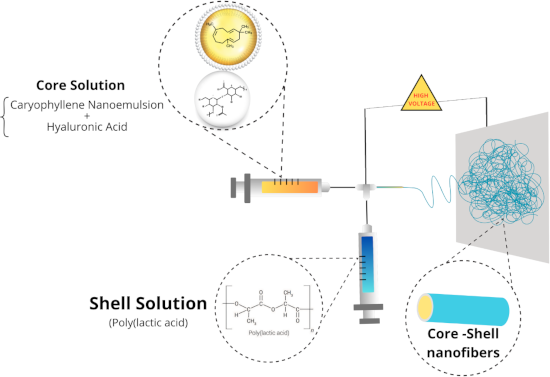
- advancements in the controlled release of diverse bioactive compounds [5][6][7][8][9][10]. Among the various nanostructured platforms explored for these purposes, nanofibers have gained attention due to their high surface area, adjustable porosity, and robust mechanical properties, which set them apart from
- concentration, surface tension, conductivity, and solvent volatility, alongside careful consideration of electrospinning conditions, such as temperature and humidity [18][19]. The polymer selection of nanofibers intended for biomedical applications must prioritize not only mechanical strength, controlled
- mechanical strength, assist in managing wound exudates, and maintain a moist wound bed. Its properties can also be tailored through blends with different forms of PLA or other biopolymers to achieve desired tensile strength, release profiles, or biodegradation characteristics [24][25]. The growing commercial




The cement of the tube-dwelling polychaete Sabellaria alveolata: a complex composite adhesive material
Beilstein J. Nanotechnol. 2025, 16, 1998–2014, doi:10.3762/bjnano.16.138
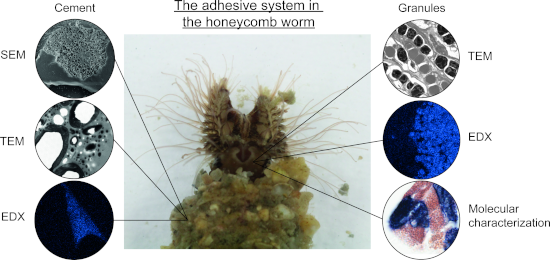
- cement spots treated with EDTA compared to untreated spots [39]. Moreover, EDTA treatment had a strong effect on the mechanical properties of the cement [39]. Proteins involved in the adhesive system In S. alveolata, the localization of the adhesive proteins Sa-1 and Sa-3 in cement cells with



Mechanical property measurements enabled by short-term Fourier-transform of atomic force microscopy thermal deflection analysis
Beilstein J. Nanotechnol. 2025, 16, 1952–1962, doi:10.3762/bjnano.16.136
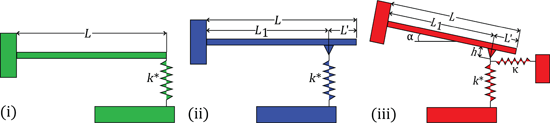
- Thomas Mathias Roland Bennewitz Philip Egberts Department of Mechanical and Manufacturing Engineering, University of Calgary, 2500 University Drive NW, Calgary, AB, T2N 1Y6, Canada INM-Leibniz Institute for New Materials, Campus D2 2, 66123 Saarbrücken, Germany 10.3762/bjnano.16.136 Abstract
- ); mechanical property measurements; surface science; Introduction Atomic force microscopy (AFM) has become an indispensable tool for imaging the surface topography on a variety of surfaces [1]. Since the invention of the AFM [2], several other modes of AFM have been developed, including friction force
- bring physical values or interpretation to the data that is collected by the AFM, allowing operators of the technique to compare their measurements across fields [6]. CR-AFM is a technique that was established in 2008, allowing for the measurement of mechanical properties (elastic modulus and




Evaluating metal-organic precursors for focused ion beam-induced deposition through solid-layer decomposition analysis
Beilstein J. Nanotechnol. 2025, 16, 1942–1951, doi:10.3762/bjnano.16.135
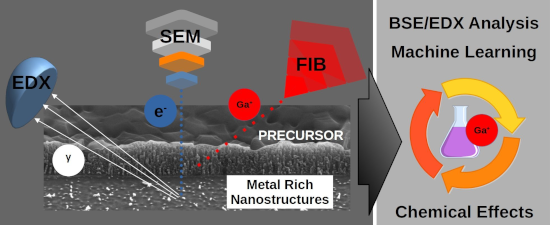
- deposition, chemical mechanical polishing, and laser nanopatterning, enable the creation of nanostructures and nanoscale devices. However, a major limitation of these methods is their inability to effectively produce high-resolution three-dimensional nanostructures [1][2][3][4]. In contrast, focused electron


Targeting the vector of arboviruses Aedes aegypti with nanoemulsions based on essential oils: a review with focus on larvicidal and repellent properties
Beilstein J. Nanotechnol. 2025, 16, 1894–1913, doi:10.3762/bjnano.16.132
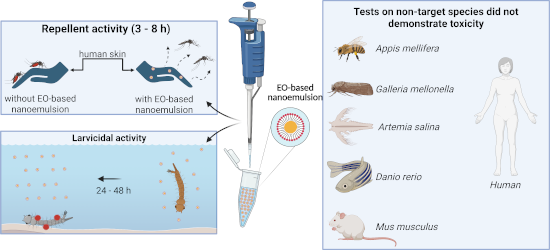
- Bacillus thuringiensis israelensis (Bti); mechanical control, based on improving basic sanitation and infrastructure to eliminate breeding sites; and behavioral control, which promotes the adoption of practices such as the use of traps to capture mosquitoes at different life stages [9][10][11][12]. In this
- trichomes, which are the secretory tissues present in different vegetative parts of plants, such as leaves, flowers, roots, fruits, or stems [67]. These can be obtained by distillation with water or steam, microwave or ultrasound assisted extraction, or from the epicarp of fruits by a mechanical process, or


Low-temperature AFM with a microwave cavity optomechanical transducer
Beilstein J. Nanotechnol. 2025, 16, 1873–1882, doi:10.3762/bjnano.16.130
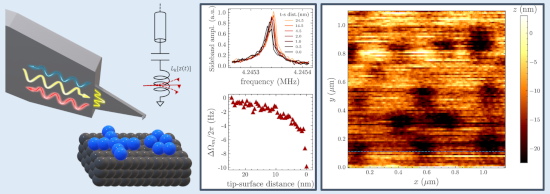
- causing significant wideband mechanical vibrations, which can propagate through the cold stages down to the measurement apparatus. However, force sensors with integrated position detectors, as the one presented in this work, do not require free-space optical alignment with a long optical path length. They
- features in a 1 µm scan field, but has not been tested to atomic resolution. Results and Discussion Force sensitivity and imaging The microcantilever in dynamic AFM operates as a resonant force transducer. Each individual eigenmode is described by a mechanical susceptibility χ, expressing cantilever
- -independent added noise of the detection SVV [V2/Hz], which is converted to an equivalent deflection noise via the detector responsivity α [V/m]: Neglecting back action, the noise-equivalent force for a given measurement bandwidth Δf is given by This quantity is minimized at the mechanical resonance


Self-assembly and adhesive properties of Pollicipes pollicipes barnacle cement protein cp19k: influence of pH and ionic strength
Beilstein J. Nanotechnol. 2025, 16, 1863–1872, doi:10.3762/bjnano.16.129
- bond formation, metal chelation, and covalent interactions [6]. The byssal threads display a mechanical gradient, with regions proximal to the animal more elastic and distal regions stiffer and tougher [7]. This design allows for effective dissipation of hydrodynamic forces and maintains attachment of
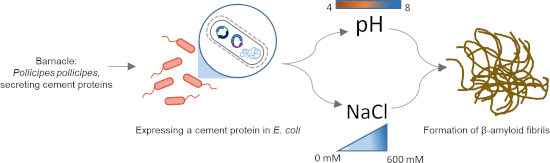
- (basic pH with high salt concentration) or proposed gland-like (acidic pH with low salt concentration) conditions [28][29][30][31], however, with much still unknown about their structural properties or mechanical function under varied environmental conditions. Among P. pollicipes cement proteins, cp19k


On the road to sustainability – application of metallic nanoparticles obtained by green synthesis in dentistry: a scoping review
Beilstein J. Nanotechnol. 2025, 16, 1851–1862, doi:10.3762/bjnano.16.128
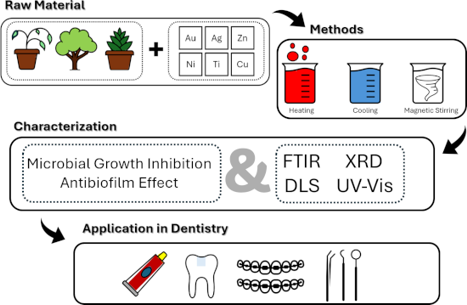
- containing biogenic AgNPs are being investigated as adjunctive therapies to improve oral hygiene in patients with fixed orthodontic appliances [8][37][44]. These strategies aim to balance microbial control while preserving the mechanical performance of orthodontic devices. Green-synthesized nanoparticles


Further insights into the thermodynamics of linear carbon chains for temperatures ranging from 13 to 300 K
Beilstein J. Nanotechnol. 2025, 16, 1818–1825, doi:10.3762/bjnano.16.125
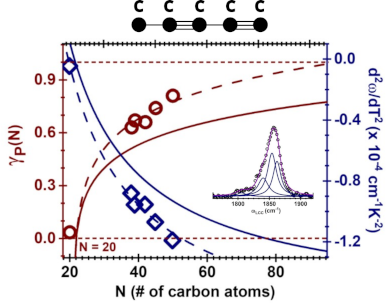
- gradients), and mechanical (e.g., pressure variations) stimuli [1][2][3][4][5][6][7][8][9][10][11][12][13][14][15][16][17][18][19][20][21][22][23]. These responses are directly connected with electronic and transport properties, which in turn depend on the equilibrium between emission and absorption of
- materials as well as the understanding of how such phonons relate to thermal and mechanical properties of the materials become of fundamental importance [1][2][3][4][5][6][7][8][9][10][11][12][13][14][15][16][17][18][19][20][21][22][23][24][25][26][27][28][29][30]. One important point to keep in mind is
- allows thermal and mechanical properties of materials to be described by semi-classical theories (such as the Debye’s theory that describes the behavior of materials with T), and their phonon frequencies might be directly connected with relevant parameters such as the Young’s modulus, the Grüneisen


![[Graphic 23]](/bjnano/content/inline/2190-4286-16-125-i25.svg?max-width=637&scale=1.18182)



