


Search results
Search for "morphology" in Full Text gives 1288 result(s) in Beilstein Journal of Nanotechnology. Showing first 200.
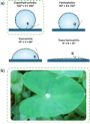
Micro- and nanoscale effects in biological and bioinspired materials and surfaces
Beilstein J. Nanotechnol. 2026, 17, 214–217, doi:10.3762/bjnano.17.14
- Thies H. Buscher Rhainer Guillermo Ferreira Manuela Rebora Stanislav N. Gorb Department of Functional Morphology and Biomechanics, Kiel University, Am Botanischen Garten 1–9, 24098 Kiel, Germany Lestes Lab, Federal University of Triângulo Mineiro, Uberaba, Minas Gerais, Brazil Dipartimento di
- Chimica, Biologia e Biotecnologie, University of Perugia, Via Elce di Sotto 8, 06121 Perugia, Italy 10.3762/bjnano.17.14 Keywords: adhesion; bioengineering; functional morphology; material properties; medical coatings; microstructures; nanostructures; optics; structure–function relationships; Micro- and
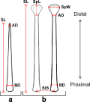
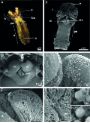
- coloration [13]. Piersanti et al. [12] described the functional morphology and material composition of the cleaning devices of a damselfly species and experimentally investigated their performance. This species bears specialized grooming structures on the tibiae of its forelegs with dedicated micro- and
Structure-dependent thermochromism of PAZO thin films: theory and experiment
Beilstein J. Nanotechnol. 2026, 17, 186–199, doi:10.3762/bjnano.17.12
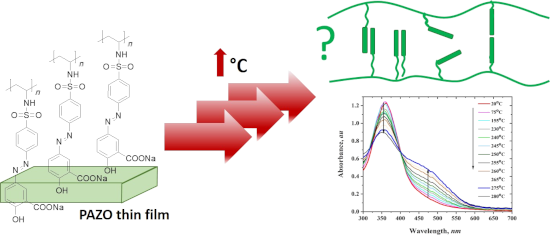
- polymers in thin films are known to markedly differ from those observed in the bulk, with significant differences in glass transition behavior, diffusion, and viscoelastic properties [4]. The assembly of polymer molecules from solution to solid state play a critical role in determining thin film morphology


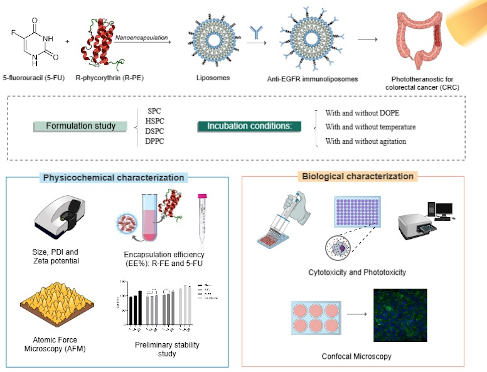
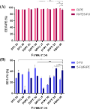
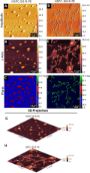
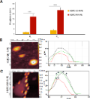
Development and in vitro evaluation of liposomes and immunoliposomes containing 5-fluorouracil and R-phycoerythrin as a potential phototheranostic system for colorectal cancer
Beilstein J. Nanotechnol. 2026, 17, 97–121, doi:10.3762/bjnano.17.7



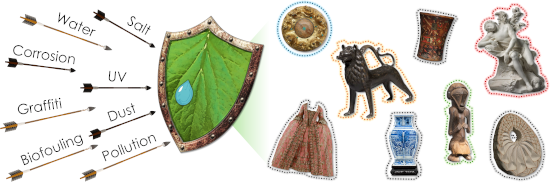
Functional surface engineering for cultural heritage protection: the role of superhydrophobic and superoleophobic coatings – a comprehensive review
Beilstein J. Nanotechnol. 2026, 17, 63–96, doi:10.3762/bjnano.17.6




Subdigital integumentary microstructure in Cyrtodactylus (Squamata: Gekkota): do those lineages with incipiently expressed toepads exclusively exhibit adhesive setae?
Beilstein J. Nanotechnol. 2026, 17, 38–56, doi:10.3762/bjnano.17.4
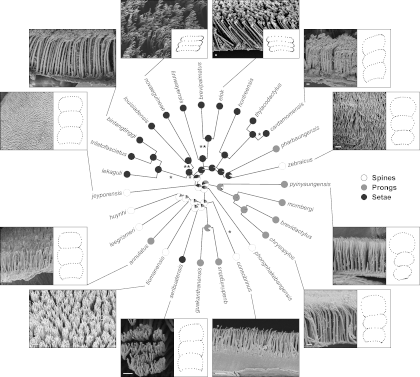
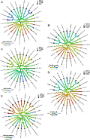
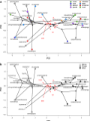
- , making it a promising candidate for studying toepad evolution. We investigated the subdigital microstructures of 27 Cyrtodactylus species occupying a wide range of habitats, and exhibiting a spectrum of subdigital morphology, from the presence of the ancestral condition of small, rounded scales to the
- bear microscopic epidermal filaments (microstructures) and are associated with modified musculature, bone morphology, and blood vessels [10][11][12][13][14]. This effective system allows geckos to adhere, despite being at the upper weight limit for organisms bearing adhesive toepads [15]. In geckos
- adhesive apparatus evolved from padless precursors, and how the ecology of species influences digital morphology at the microscopic level, are far from being elucidated. This is mostly because functionally intermediate forms representing the potential evolutionary transition to a fully expressed adhesive


Reduced graphene oxide paper electrode for lithium-ion cells – towards optimized thermal reduction
Beilstein J. Nanotechnol. 2026, 17, 24–37, doi:10.3762/bjnano.17.3
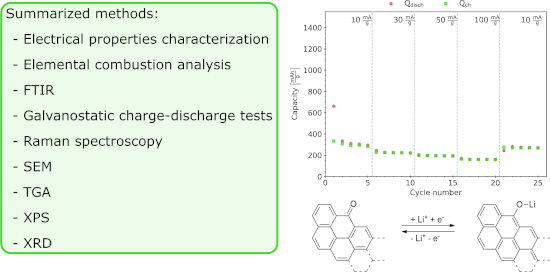
- electrode material in lithium-ion cells. Mildly reduced graphene oxide paper underwent further thermal reduction steps. The structural and chemical properties of the obtained materials were determined using Raman and Fourier-transform infrared spectroscopies and elemental combustion analysis. The morphology
- eletrochemical reduction methods may result in a more defective structure of the graphene material [29][30], which, in this case, should be considered as a shortcoming of such an approach. Thermal methods may be additionally beneficial as they promote changes in the material's morphology introducing air pockets
- [31] and flake edge exposition on the rGO paper surface, improving accessibility of the redox sites for electrolyte and lithium ions. Microwave methods, which also lead to changes in morphology (i.e., expansion) of the material, require thermal pre-treatment since GO weakly absorbs incident microwaves



Internal 3D temperature mapping in biological systems using ratiometric light-sheet imaging and lipid-coated upconversion nanothermometers
Beilstein J. Nanotechnol. 2025, 16, 2306–2316, doi:10.3762/bjnano.16.159
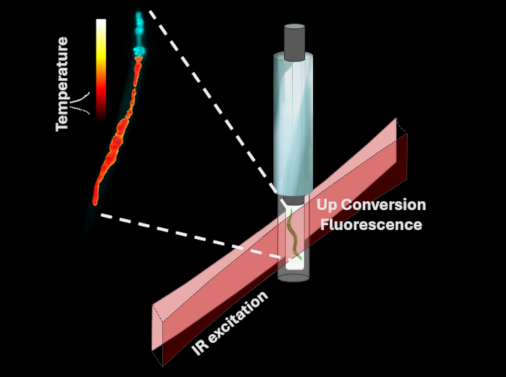
- is then calculated plane-by plane, and the corresponding temperature map is generated using the calibration curve of Figure 4b. Figure 5e presents the z-axis projection of the FIR as a red-hot temperature map overlaid with the nematode’s autofluorescence (cyan), which delineates its morphology across


Improving magnetic properties of Mn- and Zn-doped core–shell iron oxide nanoparticles by tuning their size
Beilstein J. Nanotechnol. 2025, 16, 2285–2295, doi:10.3762/bjnano.16.157
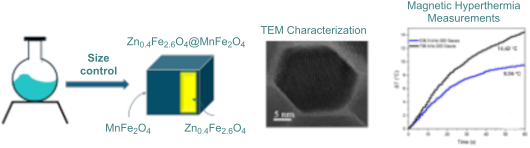
- least tenfold). The designed core NPs are composed of a Zn0.4Fe2.6O4 core and a MnFe2O4 shell. Their size and morphology were determined by transmission electron microscopy, Fourier-transform infrared spectroscopy was used to investigate their chemical composition. The iron oxide phase was confirmed by
- chemical composition of magnetic nanoparticles is critical, the morphology of the particles also plays a significant role in determining their magnetic properties. Although spherical nanoparticles have been extensively studied, recent research suggests that polyhedral nanoparticles exhibit superior
- their spherical counterparts [12]. This observation highlights the importance of morphology control in the design of high-performance magnetic nanoparticles. One effective approach to achieving both enhanced magnetic properties and biocompatibility is the formation of core–shell structures, where the



Visualizing nanostructures in supramolecular hydrogels: a correlative study using confocal and cryogenic scanning electron microscopy
Beilstein J. Nanotechnol. 2025, 16, 2274–2284, doi:10.3762/bjnano.16.156
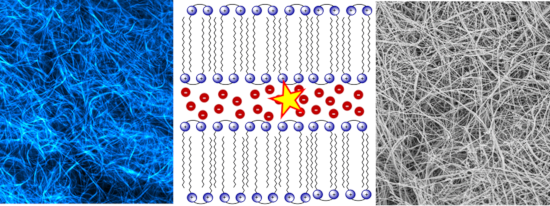
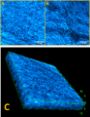
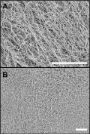
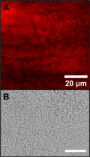
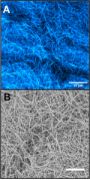
- [11]. Cryogenic scanning electron microscopy (cryo-SEM) bypasses many of these resolution limits by preserving the hydrogel through rapid freezing and subsequent fracture, thereby maintaining native-like morphology in the microscope in the form of a xerogel (no solvent) nature [12][13][14]. High
- material. The application of confocal microscopy, stimulated emission depletion (STED) microscopy, and conventional transmission electron microscopy (TEM) to a supramolecular peptide material has been shown to allow for sub-diffraction resolution imaging of fibre morphology in situ without covalent
- artefacts stresses the need for multiple orthogonal approaches when interpreting gel morphology [18]. In this study, the morphological features of imidazolium-based supramolecular hydrogel fibres incorporating two distinct fluorescent probes, namely, a zinc phthalocyanine tetrasulfonic acid (ZnPc) and a




Geometry-controlled engineering of the low-temperature proximity effect in normal metal–superconductor junctions
Beilstein J. Nanotechnol. 2025, 16, 2265–2273, doi:10.3762/bjnano.16.155
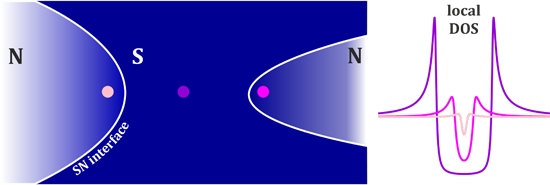
- the NS junction. In this work, we systematically investigate how geometrical characteristics of the NS interface, such as local curvature and morphology, affect both the spatial decay of the superconducting order parameter in the NM and the effective interface transparency. We aim to elucidate how


Chiral plasmonic nanostructures fabricated with circularly polarized light
Beilstein J. Nanotechnol. 2025, 16, 2245–2264, doi:10.3762/bjnano.16.154
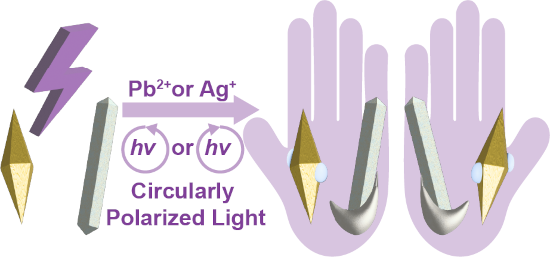
- the fabrication details and morphology of the CPL-enabled cPNSs in Section 2. In recent years, chiral assemblies of PNSs from mechanical forces via magnetic fields [60][61] or strain [62][63] have also been demonstrated. Although the cPNSs prepared via mechanical forces are relatively scarce, they
- the final NC morphology on the EM field distribution of symmetric nanoparticle precursors [98]. A representative example is the plasmon-mediated synthesis of Au NCs, where the surfactant polyvinylpyrrolidone (PVP) relays warm (not hot) electrons to reduce [101]. Growth was directed by the spatial





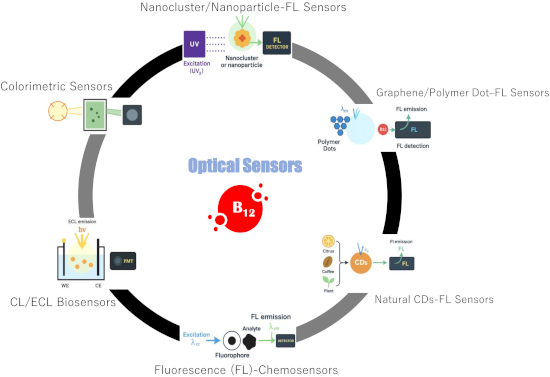
Optical bio/chemical sensors for vitamin B12 analysis in food and pharmaceuticals: state of the art, challenges, and future outlooks
Beilstein J. Nanotechnol. 2025, 16, 2207–2244, doi:10.3762/bjnano.16.153


Ultrathin water layers on mannosylated gold nanoparticles
Beilstein J. Nanotechnol. 2025, 16, 2183–2198, doi:10.3762/bjnano.16.151
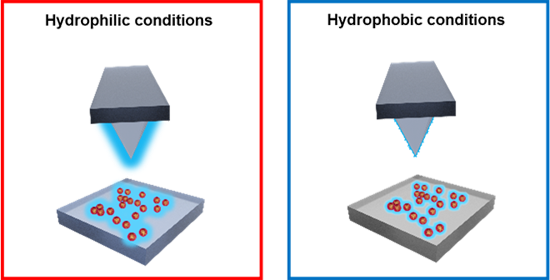
- , while size and morphology under completely dry conditions were measured by electron microscopy. DLS yields a hydrodynamic diameter of the PEG AuNPs of 67.7 ± 9.4 nm and a polydispersity index (PDI) of 0.35. However, the size distribution (Figure 2) reaches a maximum at 41.1 ± 4.2 nm. In contrast, the



Missing links in nanomaterials research impacting productivity and perceptions
Beilstein J. Nanotechnol. 2025, 16, 2168–2176, doi:10.3762/bjnano.16.149
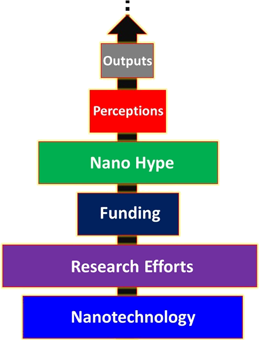
- aggregate, agglomerate, and self-assemble according to their morphology. These issues cannot be fully eliminated without external stabilization and suggestively impact their performance in real-world applications. Furthermore, such an instability becomes more pronounced as the particle size decreases. For
Microplastic pollution in Himalayan lakes: assessment, risks, and sustainable remediation strategies
Beilstein J. Nanotechnol. 2025, 16, 2144–2167, doi:10.3762/bjnano.16.148
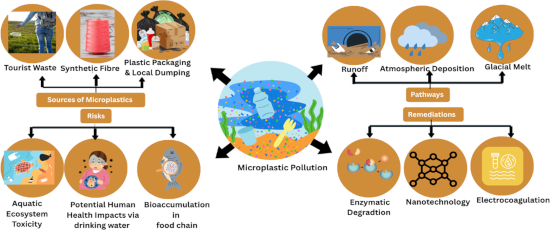
- morphology (glacier-fed and rain-fed) influence MP density, though this interaction is poorly studied and requires further work [2]. Similar to what has been happening in Ladakh’s Pangong Lake, MPs carried in the air and over long distances are deposited in water bodies via atmospheric deposition. This is a


Multifrequency AFM integrating PeakForce tapping and higher eigenmodes for heterogeneous surface characterization
Beilstein J. Nanotechnol. 2025, 16, 2077–2085, doi:10.3762/bjnano.16.142
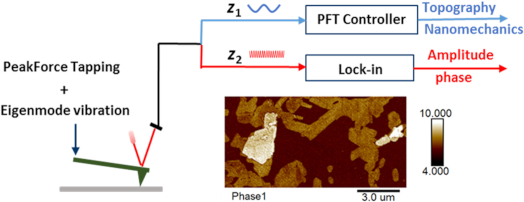
- . Keywords: atomic force microscopy (AFM); high eigenmodes; multifrequency AFM; nanoscale material analysis; surface characterization; Introduction Atomic force microscopy (AFM) has become an indispensable tool for characterizing the morphology and surface properties of materials at the micro- and the


Molecular and mechanical insights into gecko seta adhesion: multiscale simulations combining molecular dynamics and the finite element method
Beilstein J. Nanotechnol. 2025, 16, 2055–2076, doi:10.3762/bjnano.16.141
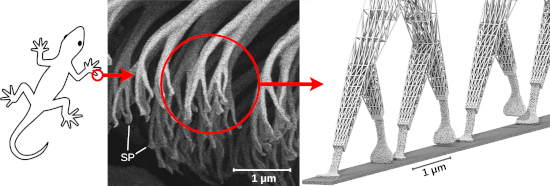
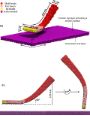
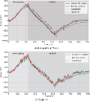
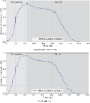
- Yash Jain Saeed Norouzi Tobias Materzok Stanislav N. Gorb Florian Muller-Plathe Eduard-Zintl-Institut für Anorganische und Physikalische Chemie, Technische Universität Darmstadt, Peter-Grünberg-Str. 8, D-64287 Darmstadt, Germany Zoological Institute Functional Morphology and Biomechanics, Kiel






Beyond the shell: exploring polymer–lipid interfaces in core–shell nanofibers to carry hyaluronic acid and β-caryophyllene
Beilstein J. Nanotechnol. 2025, 16, 2015–2033, doi:10.3762/bjnano.16.139
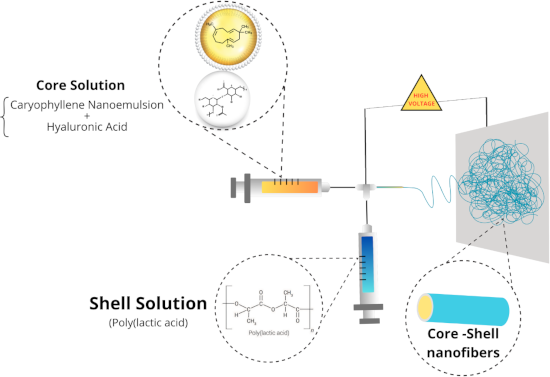
- process variables, such as high voltage, flow rate, and the distance from the Taylor cone to the collector, which significantly impacts nanofiber morphology [17]. Furthermore, selection of the material to be electrospun is crucial, requiring control over key attributes such as molecular weight, polymer
- morphological analysis. Varying the process parameters and the concentration of the constituent(s) seems to be an effective way to control the morphology of the electrospun mats, especially the diameter of the fibers, as demonstrated by Coelho et al. [45]. This study investigated the influence of core
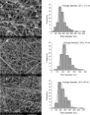
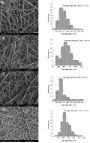
- composition on fiber formation by analyzing the concentrations of the core components and the process flow rate as variables. It was observed that the concentration of NE-βCp in the core had a significant impact on fiber morphology, as illustrated in Figure 2. The presence of NE-βCp led to an increase in the




The cement of the tube-dwelling polychaete Sabellaria alveolata: a complex composite adhesive material
Beilstein J. Nanotechnol. 2025, 16, 1998–2014, doi:10.3762/bjnano.16.138
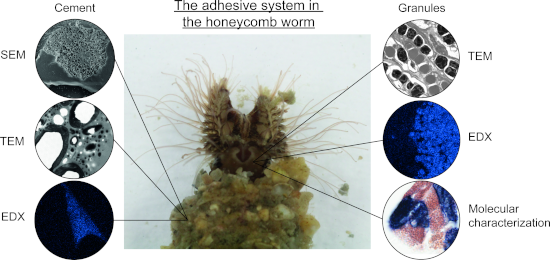
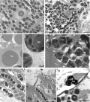
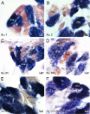
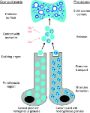
- organ is the external part of an extended glandular system comprising two types of cement cells located in the parathoracic region of the worm, around the digestive tract and at the base of parapodia. The two types of cells can be distinguished by the morphology of their secretory granules, which are
- distinguish both types of cement glands based on their secretory granule morphology, and images were taken with an AxioCam 305 digital camera (Carl Zeiss MicroImaging). Results Tube structure As described by Vovelle [6], the tubes of S. alveolata are generally rectilinear and cylindrical, measuring up to 12
- . The sizes of the electron-dense granules and lacunae are 50–700 nm and 50–1400 nm in diameter, respectively. They are homogeneously distributed in the matrix between the hollow spheroids (Figure 2F,G). Morphology and ultrastructure of the adhesive glands The body of S. alveolata measures approximately



Laser ablation in liquids for shape-tailored synthesis of nanomaterials: status and challenges
Beilstein J. Nanotechnol. 2025, 16, 1963–1997, doi:10.3762/bjnano.16.137
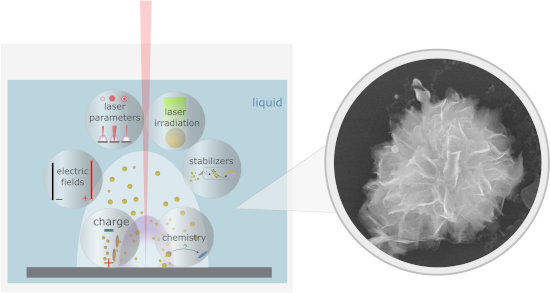
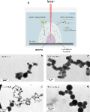
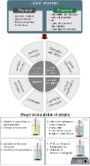
- of their impact on the conditions for anisotropic NP formation and growth. The description of the methods developed for the control over nanomaterial morphology is summarized by the vision of the current challenges and development routes of laser ablation in liquids. Keywords: laser ablation in
- liquids; laser irradiation; nanofabrication; nanoparticles; shape control; Perspective 1 Introduction: Mechanisms and key parameters influencing the morphology of laser-produced NPs The precise control and tailoring of NP parameters has long been an aim of the laser ablation synthesis in liquids
- (nanosecond), this interaction should be taken into account, resulting in the ionization and heating of the ejected material. The initial stages of interaction of a laser beam with a solid target are strongly dependent on laser pulse duration and fluence, surrounding liquid, target morphology and composition




Evaluating metal-organic precursors for focused ion beam-induced deposition through solid-layer decomposition analysis
Beilstein J. Nanotechnol. 2025, 16, 1942–1951, doi:10.3762/bjnano.16.135
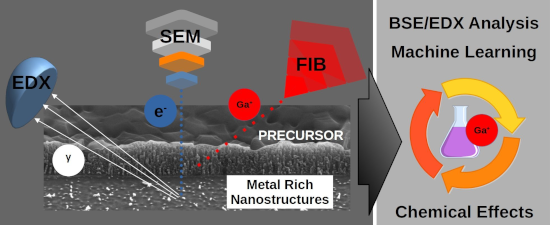
- new metal-organic precursors, in the form of supported thick layers, to the ion beam irradiation is studied through analysis of the chemical composition and morphology of the resulting structures. This is done using SEM backscattered electron/energy-dispersive X-ray spectroscopy along with machine
- cost-intensive nature of analyzing the morphology and composition of the deposits, we propose a method/approach to minimize studies within the experimental reactor and identify promising potential precursors. Testing Pathway and Methods Used The proposed approach for effectively testing new metal
- irradiation and what kind of morphology is developed for the finally formed metal-rich structures. (3) Analyzing BSE images of the evolving surface morphology at successive stages of FIB irradiation in order to determine “the sputtering point”, that is, the threshold ion fluence at which the sputtering


Self-assembly and adhesive properties of Pollicipes pollicipes barnacle cement protein cp19k: influence of pH and ionic strength
Beilstein J. Nanotechnol. 2025, 16, 1863–1872, doi:10.3762/bjnano.16.129
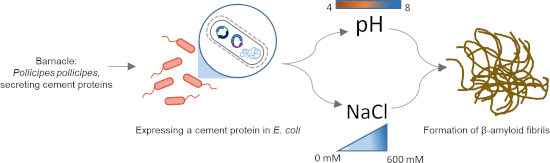
- work, we expressed recombinant P. pollicipes cp19k (rPpolcp19k) in E. coli and identified key environmental modulators of fibril formation by the protein. Transmission electron microscopy (TEM) was used to study the rate of fibril formation and morphology under varied pH and salt concentration
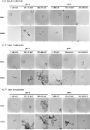
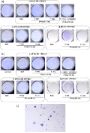
- positive in the ThT assay, indicating that, despite the difference in morphology, they contain a β-sheet-rich architecture characteristic of amyloid structures, which is increasingly implicated in enhancing cohesive strength in marine adhesives [33]. rPolcp19k-his fibrils formed in the high pH/low salt
- curled-fibril morphology has been reported for cp19k homologues from other barnacle species, but at the low pH/low salt concentration conditions noted above, and these fibrils did not exhibit fluorescence in ThT assays and were instead proposed to be largely non-amyloid and α-helical in content [29


On the road to sustainability – application of metallic nanoparticles obtained by green synthesis in dentistry: a scoping review
Beilstein J. Nanotechnol. 2025, 16, 1851–1862, doi:10.3762/bjnano.16.128
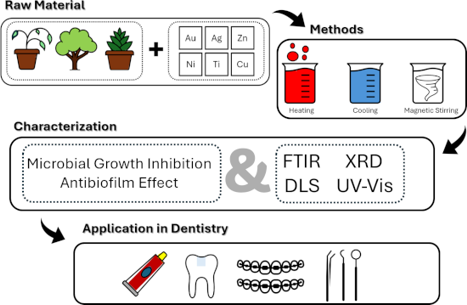
- biomaterials [16][17]. Owing to their high adaptability to various metals, including silver, zinc, iron, and platinum, their operational simplicity, and the ability to control nanoparticle size and morphology by selecting plant extracts and reaction conditions, green synthesis is gaining increasing prominence
- morphology and size, which are crucial for optimizing biological activity [8][38]. The Myrtaceae family, particularly Syzygium aromaticum, is a well-established source of eugenol, a potent phenolic compound with known antimicrobial and antioxidant properties, enhancing the bioactivity of synthesized
- between them and results in more uniform nucleation and better control over particle size and morphology. Moreover, continuous stirring prevents aggregation of the nanoparticles, contributing to their colloidal stability. Studies have shown that variations in stirring speed can significantly impact the


Current status of using adsorbent nanomaterials for removing microplastics from water supply systems: a mini review
Beilstein J. Nanotechnol. 2025, 16, 1837–1850, doi:10.3762/bjnano.16.127
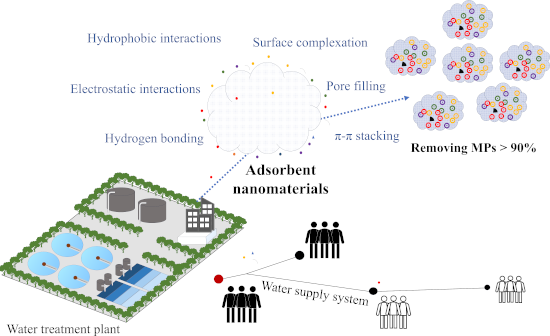
- a magnetic nanoseed concentration of just 0.002 g·L−1, these composites enabled 98% PET extraction, with the separation efficiency largely influenced by the morphology of the magnetic seeds. In addition to ensuring highly efficient magnetic separation of MP particles, this approach significantly


Phytol-loaded soybean oil nanoemulsion as a promising alternative against Leishmania amazonensis
Beilstein J. Nanotechnol. 2025, 16, 1826–1836, doi:10.3762/bjnano.16.126
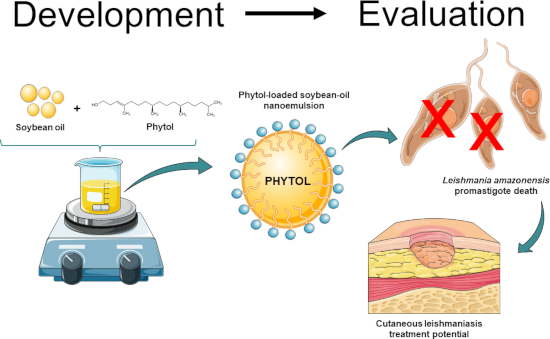
- Pharmacy, Federal University of Rio Grande do Norte-UFRN, Natal, RN, Brazil Immunoparasitology Laboratory, Department of Clinical and Toxicological Analysis, Centre of Health Sciences, Federal University of Rio Grande do Norte-UFRN, Natal, RN, Brazil Department of Morphology, Federal University of Rio
- evaluated over a 30-day period by monitoring droplet size, PdI, ZP, and pH using the same methodologies previously described. Morphology The morphology of the nanoemulsion droplets was examined by transmission electron microscopy using a FEI Tecnai G2 Spirit Biotwin microscope operating at 120 kV (FEI





