
Search results
Search for "surface characteristics" in Full Text gives 52 result(s) in Beilstein Journal of Nanotechnology.
A review on the green and sustainable synthesis of silver nanoparticles and one-dimensional silver nanostructures
Beilstein J. Nanotechnol. 2021, 12, 102–136, doi:10.3762/bjnano.12.9
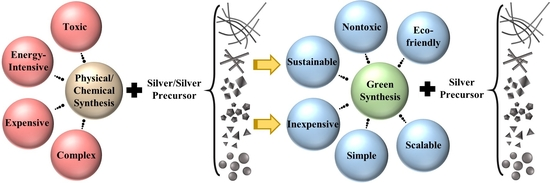
- unique surface characteristics [228]. Therefore, for safe biological applications (i.e. in the medical and food industry), this approach would be preferred as an alternative for methods that necessarily require the use of chemical stabilizers [108][112]. In addition, the small NP size, low agglomeration
- –gel technique at 100 °C and produced particles with an average diameter of 25 nm with hexagonal cross section. In the sol–gel process, besides temperature and gel composition, the solvent plays an important role in determining the size, morphology, and surface characteristics of the synthesized AgNPs


Atomic-resolution imaging of rutile TiO2(110)-(1 × 2) reconstructed surface by non-contact atomic force microscopy
Beilstein J. Nanotechnol. 2020, 11, 443–449, doi:10.3762/bjnano.11.35
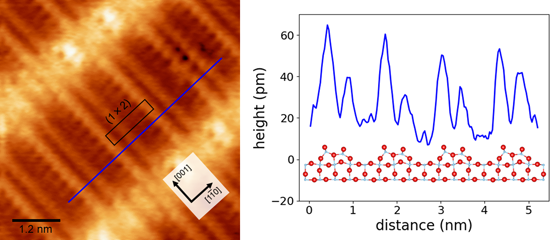
- important to understand the reaction process, hence investigations of chemical and physical surface characteristics and the structure of the photocatalyst are necessary. The rutile TiO2(110) surface has often been the subject of atomic-level studies in the field of photocatalysis since the preparation of a


Interactions at the cell membrane and pathways of internalization of nano-sized materials for nanomedicine
Beilstein J. Nanotechnol. 2020, 11, 338–353, doi:10.3762/bjnano.11.25
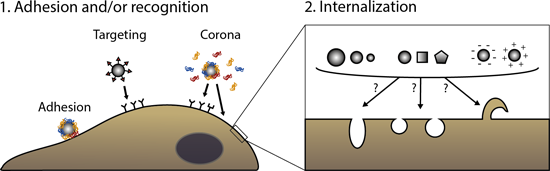
- , hydrophobicity, rigidity and surface characteristics [3][7][8][48][54]. By changing these properties, the corona composition might be tuned to contain components that bind to specific cell surface receptors and initiate internalization [17][49][55][56][57]. Similarly, artificial coronas can be formed to achieve


Nanostructured and oriented metal–organic framework films enabling extreme surface wetting properties
Beilstein J. Nanotechnol. 2019, 10, 1994–2003, doi:10.3762/bjnano.10.196

- -repellent designs and self-cleaning capabilities of their skin [10][11][12]. These intriguing superhydrophilic or superoleophobic surface characteristics are obtained by the combination of a precise chemical composition and hierarchical microstructuring of the surface [13][14][15][16]. Nowadays, modern


Photoactive nanoarchitectures based on clays incorporating TiO2 and ZnO nanoparticles
Beilstein J. Nanotechnol. 2019, 10, 1140–1156, doi:10.3762/bjnano.10.114
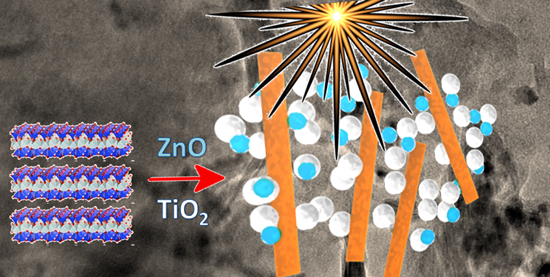
- inorganic solids (substrate or matrix components) are advantageous not only for photocatalytic purposes but also for applications as pigments and cosmetics, where colloidal and surface characteristics play a significant role. TiO2 and ZnO NPs have been prepared in the presence of inorganic matrices by in
- -exchange of their interlayer inorganic cations and to the presence of reactive hydroxyl groups at their external surfaces, it is possible to modify in a controlled manner the surface characteristics of clay minerals introducing new suitable functions leading to hierarchically structured nanoarchitectures
- nanopore structure and other surface characteristics. However, in the case of sepiolite and palygorskite, the sizes of the available nanospaces are too small for the generation of TiO2 and ZnO NPs within the nanopores [72]. In this case, mesopores, which can be ascribed to inter-fibre regions, could



Effects of gold and PCL- or PLLA-coated silica nanoparticles on brain endothelial cells and the blood–brain barrier
Beilstein J. Nanotechnol. 2019, 10, 941–954, doi:10.3762/bjnano.10.95

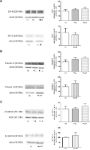
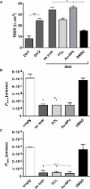
- times higher. Besides the NP concentration, physicochemical properties, especially surface characteristics were demonstrated to be important for the interactions with cells [29][30][31]. Hence, variations in surface characteristics, composition and size of the NPs and the various cell types used are
- times. PCL- and PLLA-NP-stock solutions were then diluted 1:10 in cell culture medium, resulting in concentrations of 2.9 × 10¹⁰ PCL-NPs in 1 mL culture medium and 2.6 × 10¹⁰ PLLA-NPs in 1 mL culture medium. These concentrations correspond to [24.9 µg/mL]. Au-NPs exhibiting size and surface
- characteristics similar to those of the Si-NPs used were purchased from Nanopartz (Nanopartz Inc., USA). They were 80 nm in diameter, with a zeta potential of −35 mV. Au-NPs were sonicated for 5 min in a sonication bath and vortexed for 2 min prior to dilution in cell culture medium. rBCEC4 cells were exposed to



A comparison of tarsal morphology and traction force in the two burying beetles Nicrophorus nepalensis and Nicrophorus vespilloides (Coleoptera, Silphidae)
Beilstein J. Nanotechnol. 2019, 10, 47–61, doi:10.3762/bjnano.10.5

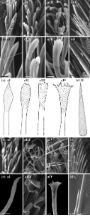
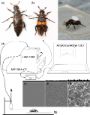
- respective surfaces [15][16][17]. Another property that influences insect adhesion is surface polarity, which can be affected by surface roughness, apparently reinforcing hydrophobic or hydrophilic surface characteristics. The testing of both of these surface properties in combination in our experiments has


Electrospun one-dimensional nanostructures: a new horizon for gas sensing materials
Beilstein J. Nanotechnol. 2018, 9, 2128–2170, doi:10.3762/bjnano.9.202
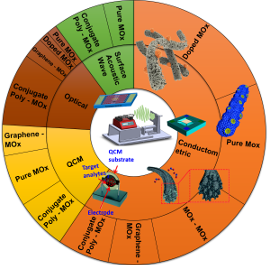
- applications in numerous areas, including healthcare, energy storage, biotechnology, environmental monitoring, and defence/security. Their enhanced specific surface area, superior mechanical properties, nanoporosity and improved surface characteristics (in particular, uniformity and stability) have made them
- composites, are fabricated in various assemblies (e.g., as mixed nanocomposites, double-layers, core–shell or hollow forms) using the electrospinning technique [37]. These electrospun nanofibers exhibit enhanced specific surface area, superior mechanical properties, nanoporosity and improved surface
- characteristics [37][40]. Such porous nanostructures provide a fundamental property that enhances the effective analyte adsorption and increases sensitivity. Therefore, the remarkable specific surface area and high porosity (≈70–90%) [41] due to the presence of small and large pores means that electrospun








A review of carbon-based and non-carbon-based catalyst supports for the selective catalytic reduction of nitric oxide
Beilstein J. Nanotechnol. 2018, 9, 740–761, doi:10.3762/bjnano.9.68

- carbon fibre (ACF) as catalysts and catalyst supports has been the focus of researchers in NO removal application [95][96]. The adsorption ability of both AC and ACF depends highly on its surface area, internal pore structure, surface characteristics, and the presence of functional groups on the pore
Characterization of ferrite nanoparticles for preparation of biocomposites
Beilstein J. Nanotechnol. 2017, 8, 1257–1265, doi:10.3762/bjnano.8.127

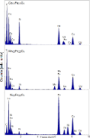
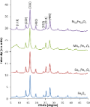
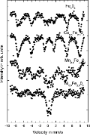
- functionalization of nanoparticles with organic compounds are becoming the most popular due to the wide potential applications of such hierarchical structures. On demand surface characteristics allow further immobilization of proper biological structures [3], and as a result, biocomposites are obtained. Metallic
- nanoparticles in powder form were introduced into the mixture of oleic acid, oleylamine, toluene and water in the molar ratio 36:36:18:10. The nanoparticles were mixed and sonicated and then left for four days. As a result, the surface characteristics of the nanoparticles change from aqueous to organic. At the



Performance of colloidal CdS sensitized solar cells with ZnO nanorods/nanoparticles
Beilstein J. Nanotechnol. 2017, 8, 210–221, doi:10.3762/bjnano.8.23

- value of 53.5° was observed for ZnO-R, as shown in Figure 3c. The higher surface area of ZnO-P facilitates better CdS sensitization compared to the rod-shaped ZnO, having low surface area and rough surface characteristics. In order to establish the deposition of CdS over ZnO-based films, the FESEM


Studying friction while playing the violin: exploring the stick–slip phenomenon
Beilstein J. Nanotechnol. 2017, 8, 159–166, doi:10.3762/bjnano.8.16
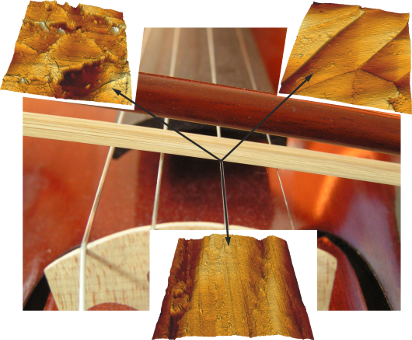
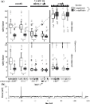
- same magnifications as in Figure 4 were selected. Other violin strings were also inspected, but they all presented similar surface characteristics at these scales. Hence, only a representative D-string was analyzed in detail. In Figure 6, line profiles obtained from AFM characterization of samples 1
- approximately the same. Therefore, no effect except their surface difference is the responsible for their sound variation. The recorded sounds were analyzed using Audacity software. In order to check their surface characteristics, atomic force microscopy images were taken on both surfaces. A JPK Nanowizard II
- be related to the surface characteristics of the hair–string interface, an analysis of the surface changes and sound variations produced by these rosin particles is required. Scheme of the different parameters involved in violin performance. Sound waves and Fourier analyses of samples 1 and 2 with


Case studies on the formation of chalcogenide self-assembled monolayers on surfaces and dissociative processes
Beilstein J. Nanotechnol. 2016, 7, 263–277, doi:10.3762/bjnano.7.24

- . We emphasize this variability, which we attribute to differences in the surface characteristics that can lead to differences in reactivity and changes in the relative intensity of components related to dissociation channels. This can also explain the difference between the characteristics of the


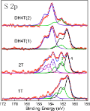


Synthesis, characterization and in vitro biocompatibility study of Au/TMC/Fe3O4 nanocomposites as a promising, nontoxic system for biomedical applications
Beilstein J. Nanotechnol. 2015, 6, 1677–1689, doi:10.3762/bjnano.6.170

- modification by a chitosan or TMC coating. The successful coating process was confirmed by FTIR. These nanocomplexes were then exposed to Au nanoparticles, which assembled on the surface to form the final nanoparticles. The size, magnetic behavior, chemical composition, thermal stability and surface
- characteristics of all nanoparticles were evaluated via a variety of techniques such as TEM, XRD, EDX, DLS, VSM, TGA, and FTIR. The development of novel three-layer particles with a core–shell–shell structure, proper size range, and good saturated magnetization were confirmed which also showed a low concentration




Thermal treatment of magnetite nanoparticles
Beilstein J. Nanotechnol. 2015, 6, 1385–1396, doi:10.3762/bjnano.6.143

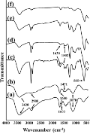
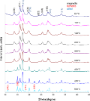
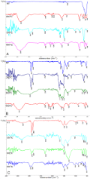
- /bjnano.6.143 Abstract This paper presents the results of a thermal treatment process for magnetite nanoparticles in the temperature range of 50–500 °C. The tested magnetite nanoparticles were synthesized using three different methods that resulted in nanoparticles with different surface characteristics




Conformal SiO2 coating of sub-100 nm diameter channels of polycarbonate etched ion-track channels by atomic layer deposition
Beilstein J. Nanotechnol. 2015, 6, 472–479, doi:10.3762/bjnano.6.48
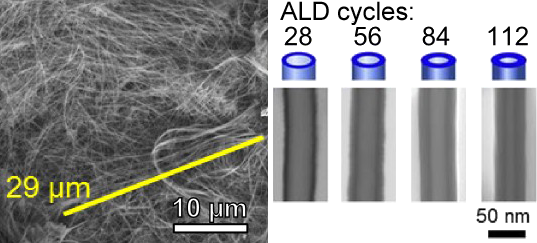
- by electrochemical [10][11] or electroless deposition [12][13]. Transport processes in narrow nanochannels are strongly affected by the surface characteristics of these channels. In the case of etched polycarbonate, carboxylate groups (–COO−) are present at the surface [14]. Specific channel


Oxygen-plasma-modified biomimetic nanofibrous scaffolds for enhanced compatibility of cardiovascular implants
Beilstein J. Nanotechnol. 2015, 6, 254–262, doi:10.3762/bjnano.6.24
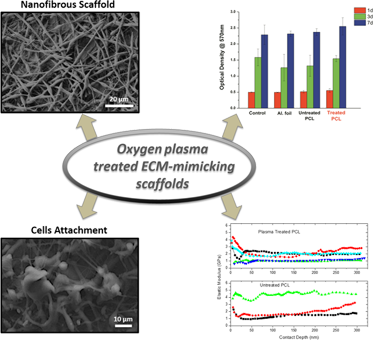
- scaffolds. SEM micrographs of the (a–c) untreated PCL electrospun scaffolds for 1,3 and 7 days of direct contact with cells and (d–f) and of the O2-plasma-modified scaffolds, at the predetermined time periods. Surface characteristics from AFM analysis and water contact angle measurements for the untreated



Caveolin-1 and CDC42 mediated endocytosis of silica-coated iron oxide nanoparticles in HeLa cells
Beilstein J. Nanotechnol. 2015, 6, 167–176, doi:10.3762/bjnano.6.16

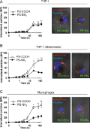
- on the surface characteristics of the nanoparticles and the experimental design. Knockdown of CDC42 showed a 46% decrease of the internalization of PEGylated SPIONs within 24 h incubation time. Knockdown of Dynamin 2, Flotillin-1, Clathrin and PIP5Kα caused no or only minor effects. Hence endocytosis


The fate of a designed protein corona on nanoparticles in vitro and in vivo
Beilstein J. Nanotechnol. 2015, 6, 36–46, doi:10.3762/bjnano.6.5

- charged due to the formation of carboxyl groups at the surface. To get a platform of particles with different surface characteristics we then used a poly(ethylenglycol)(PEG)-amine (C-PEG) or a PEG-α,ω-bisamine (N-PEG) in the presence of the coupling agent, 1-ethyl-3-(3-dimethylaminopropyl)carbodiimide


Functionalized polystyrene nanoparticles as a platform for studying bio–nano interactions
Beilstein J. Nanotechnol. 2014, 5, 2403–2412, doi:10.3762/bjnano.5.250

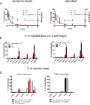
- particle surface characteristics on various biological parameters. Therefore, we have exploited polystyrene nanoparticles as a convenient platform to study bio–nano interactions. This review summarizes studies on positively and negatively charged polystyrene nanoparticles and compares them with clinically




Inorganic Janus particles for biomedical applications
Beilstein J. Nanotechnol. 2014, 5, 2346–2362, doi:10.3762/bjnano.5.244
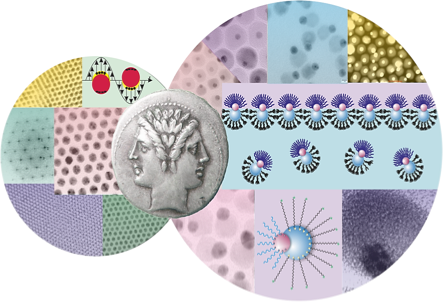
- , synthesis, and properties of multifunctional nanoparticles owing to their special structure–property relationship [1]. Due to their distinct surface properties, these nanomaterials can be modified by various ligands to introduce the desired surface characteristics ranging from solubility in selected
- surface characteristics of the chosen materials. Although, Janus particles were demonstrated to be a powerful tool for widespread applications, several challenges have to be overcome. Therefore, the following aspects might find particular attention in the future. Janus particles can be purely inorganic




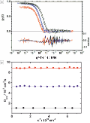


Nanoencapsulation of ultra-small superparamagnetic particles of iron oxide into human serum albumin nanoparticles
Beilstein J. Nanotechnol. 2014, 5, 2259–2266, doi:10.3762/bjnano.5.235

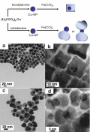
- such as antibodies [1][2] and other proteins [3][4]. Aside the specific binding affinity, drug targeting is based on a passive accumulation mechanism that is controlled by particle size and surface characteristics of the colloids. Particles ranging in size between 50 and 300 nm accumulate in solid
- were stirred for a minimum of 3 h and purified by 3 cycles of centrifugation (16100g, 8 min) and redispersion in 1.0 mL water over 5 min in an ultrasonic bath (Bandelin electronic, Berlin, Germany). Determination of particle size, size distribution, and surface characteristics The average particle size


Current state of laser synthesis of metal and alloy nanoparticles as ligand-free reference materials for nano-toxicological assays
Beilstein J. Nanotechnol. 2014, 5, 1523–1541, doi:10.3762/bjnano.5.165
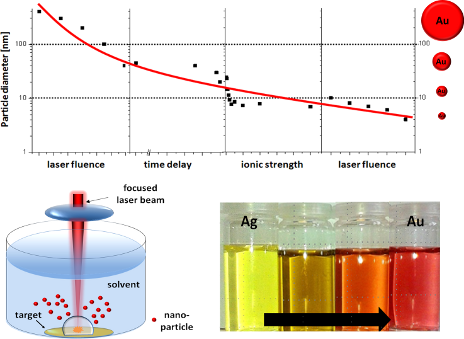
- as in organic solvents [40][41]. The obtained particles possess unique surface characteristics which are not reproducible by any other synthesis route. In that context, XPS measurements were used to verify that in aqueous media 3–6% of the surface atoms were oxidized to Au+ and Au3+ [42], while


The protein corona protects against size- and dose-dependent toxicity of amorphous silica nanoparticles
Beilstein J. Nanotechnol. 2014, 5, 1380–1392, doi:10.3762/bjnano.5.151
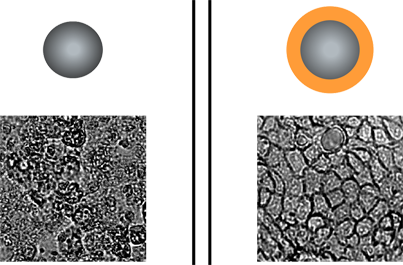
- concentrations, it was suggested that the surface area and/or surface characteristics of the particles are unique parameters determining their toxicity [19][20][42][43]. Clearly, our results now demonstrate that the situation is more complex, and that the surface area alone is not a generally applicable




Measuring air layer volumes retained by submerged floating-ferns Salvinia and biomimetic superhydrophobic surfaces
Beilstein J. Nanotechnol. 2014, 5, 812–821, doi:10.3762/bjnano.5.93
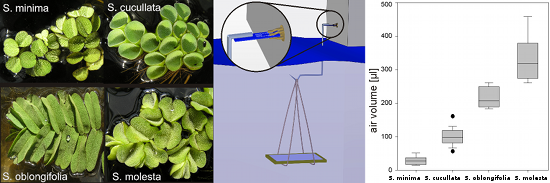
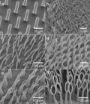
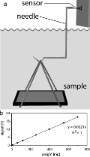
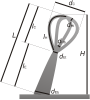
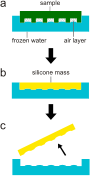
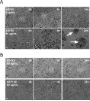
- before and after removal of the air layer its volume was calculated. Surface characteristics of Salvinia and replicas The surface microstructures of both technical and biological surfaces were visualised by scanning electron microscopy (SEM). The wafer replicas were coated with gold by a sputter coater