Search results
Search for "absorption" in Full Text gives 1062 result(s) in Beilstein Journal of Nanotechnology. Showing first 200.
Electrical, photocatalytic, and sensory properties of graphene oxide and polyimide implanted with low- and medium-energy silver ions
Beilstein J. Nanotechnol. 2025, 16, 1794–1811, doi:10.3762/bjnano.16.123
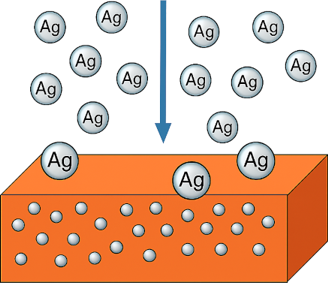
- bandgap and an increased density of states near the Fermi level, promotes absorption in the visible region and facilitates the generation of electron–hole (e−–h+) pairs upon light irradiation. The silver clusters also exhibit plasmonic resonances, which amplify the local electromagnetic field and promote
- the generation of excited states with longer lifetimes [18]. Photocatalysis is a surface-driven process in which the absorption of photons with energy equal to or greater than the material’s bandgap results in the generation of e−–h+ pairs. These photogenerated charge carriers migrate to the surface
- spectral range, enhancing light absorption and enabling the utilization of a broader portion of the solar spectrum [19]. These combined effects result in a significantly higher photocatalytic efficiency of implanted samples compared to their non-implanted samples, both in terms of reaction rate and quantum


Exploring the potential of polymers: advancements in oral nanocarrier technology
Beilstein J. Nanotechnol. 2025, 16, 1751–1793, doi:10.3762/bjnano.16.122
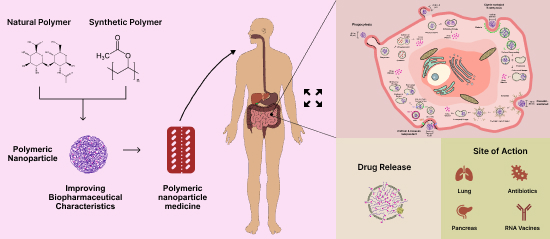
- , and maintaining homeostasis within the GIT. The diverse cells of the intestinal epithelium can be explored as therapeutic targets for oral absorption, given the significant roles they play in the epithelial barrier [9]. Nanotechnology is a field that focuses on the study and production of nanometric
- investigated. These nanoparticles (NPs) preserve the bioactivity of the active compound during gastric transit and facilitate permeation through mucus and absorption by epithelial cells, enabling targeted delivery. In essence, PNs offer superior performance in protecting, targeting, and enhancing both the
- absorption by interacting with food, digestive enzymes, bile salts, electrolytes, and mucus. Polymers enable diverse surface functionalities tailored to therapeutic demands, including adhesive, bioinert, or charge-conversion functionalities that modify zeta potential and hydrophilic properties, among others


Multifunctional anionic nanoemulsion with linseed oil and lecithin: a preliminary approach for dry eye disease
Beilstein J. Nanotechnol. 2025, 16, 1711–1733, doi:10.3762/bjnano.16.120

- %) pre-formulation in OV. This process increased the pH of the nanoformulations by buffering salts such as NaHPO4 and Na2PO4. Maintaining the pH within the range of 6.5–8.0 ensures ocular compatibility, avoiding irritation and enhancing drug absorption [92][105][106]. Morphological, stability, and



Beyond the bilayer: multilayered hygroscopic actuation in pine cone scales
Beilstein J. Nanotechnol. 2025, 16, 1695–1710, doi:10.3762/bjnano.16.119
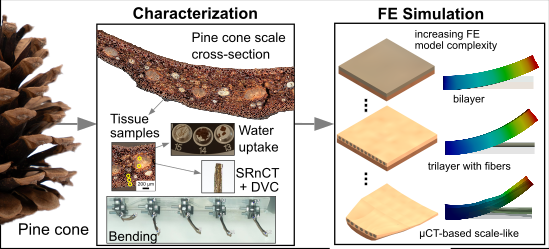
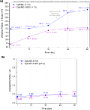
- allowed us to make precise analyses of the moisture content (Figure 4A). The behavior of the sclereid cells and the brown tissue revealed marked differences particularly above 50% RH. During absorption at 60% RH, the moisture content of the brown tissue is 0.37 percentage points lower than that of the
- sclereid cells, when looking at absolute differences. At 90% RH, the moisture content of the brown tissue is 2.13 percentage points lower. The sclerenchyma fibers have a lower moisture content than the other two tissues even at lower RHs. At 30% RH during absorption, their moisture content is 0.43
- , the sclereid cells achieve a moisture content of 27.7 ± 0.4% for desorption and 26.8 ± 0.4% for absorption. In comparison, the sclerenchyma fibers achieve a moisture content of 23.7 ± 0.6% for desorption and 23.0 ± 0.5% for absorption. In terms of the hysteresis observed, the difference in moisture


Ambient pressure XPS at MAX IV
Beilstein J. Nanotechnol. 2025, 16, 1677–1694, doi:10.3762/bjnano.16.118

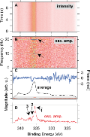
- reactor to expose samples up to 1 bar gas atmosphere and 900 °C connected to the main UHV system. In addition, a polarization modulation infrared reflection absorption spectroscope (PM-IRRAS) is also available, enabling simultaneous APXPS and IRRAS measurements. The SLE at HIPPIE is designed as a large
- direction for the future lies in the multimodal integration of APXPS with complementary surface-sensitive and bulk-sensitive techniques. Combining APXPS with vibrational spectroscopies (such as IRRAS and Raman), structural probes (such as X-ray absorption spectroscopy or X-ray diffraction), and mass





Prospects of nanotechnology and natural products for cancer and immunotherapy
Beilstein J. Nanotechnol. 2025, 16, 1644–1667, doi:10.3762/bjnano.16.116
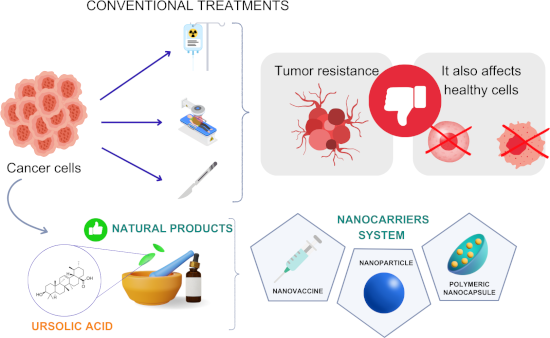
- , cellular absorption, and slow release of drugs [38]. Polymeric nanoparticles are colloidal polymer systems used as drug carriers for targeted therapies and diagnostics [39]. Gold nanoparticles have properties such as chemical reactivity, anti-inflammatory effects, and protein-binding abilities, while
- vasculature of these cells compared to healthy ones. Upon absorption of light during photodynamic therapy, Ce6 generates ROS, causing damage to the cell membrane, proteins, and DNA of the cancer cells, ultimately leading to their destruction. Additionally, the ROS produced by Ce6 destroys the vascular layer



Photocatalytic degradation of ofloxacin in water assisted by TiO2 nanowires on carbon cloth: contributions of H2O2 addition and substrate absorbability
Beilstein J. Nanotechnol. 2025, 16, 1567–1579, doi:10.3762/bjnano.16.111
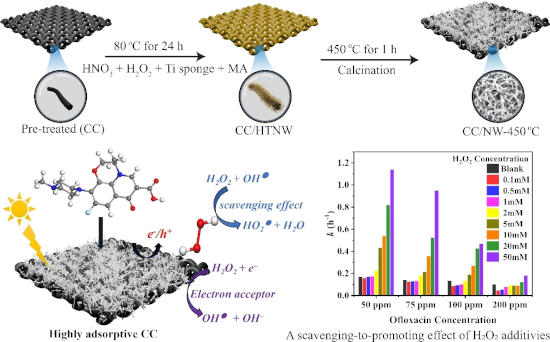
- on porous materials, such as carbon-based adsorbents. These innovations help to slow down electron–hole recombination, broaden light absorption, and enhance surface adsorption sites [11]. Cao et al. synthesized TiO2 nanowires on reduced graphene oxide (rGO) through a solvothermal method, which
- Ultura DLD system (Kratos, UK), and the binding energies were calibrated to C 1s = 284.8 eV. The specific surface area and pore size were analyzed using low-temperature N2 adsorption–desorption measurements conducted with an ASAP 2460 (USA). The absorption spectrum of the sample was acquired through UV


Influence of laser beam profile on morphology and optical properties of silicon nanoparticles formed by laser ablation in liquid
Beilstein J. Nanotechnol. 2025, 16, 1533–1544, doi:10.3762/bjnano.16.108
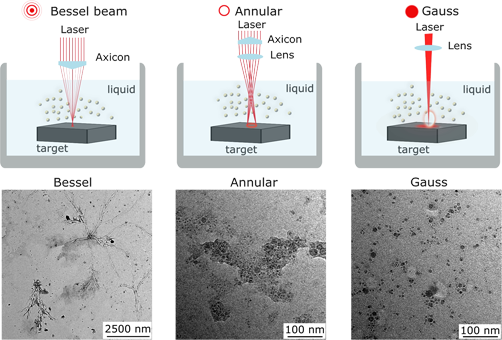
- absorption spectra of the prepared colloids were measured using a Cary 500 Scan spectrophotometer (Varian, USA) in the spectral range of 200–2000 nm in a 10 mm quartz cuvette. The measurements of the PL spectra were carried out at room temperature using a Fluorolog-3 spectrofluorometer (HORIBA Scientific
- the propagation direction [34]. Formation of NPs in liquid media during laser ablation is known to be a complex phenomenon. A typical mechanism assumes that the ablation process starts with absorption of the laser pulse by a target during first tens of nanoseconds, followed by electron–phonon
- laser beams also showed different optical properties, which were characterized using UV–vis absorption and PL spectroscopies. The absorption spectra of the Si colloids prepared using Gauss, Bessel, and annular profiles are shown in Figure 6. In all the spectra, absorption in the visible and near


Dendrimer-modified carbon nanotubes for the removal and recovery of heavy metal ions from water
Beilstein J. Nanotechnol. 2025, 16, 1522–1532, doi:10.3762/bjnano.16.107
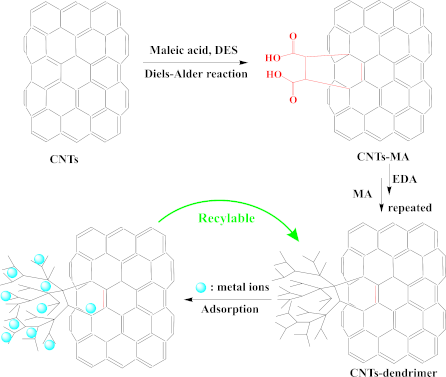
- reaction with EDA, the FTIR spectrum of CNTs-G0 reveals new peaks around 3340 cm−1, which correspond to N–H stretching vibrations from the introduced amine groups. Additionally, strong absorption bands at approximately 1700 cm−1 were observed in all other materials, representing the C=O stretching of amide
- CNTs. Additionally, atomic absorption spectroscopy was employed to determine the concentration of heavy metal ions in the aqueous solutions before and after the adsorption process. Preparation of dendrimerized carbon nanotubes 20 g of maleic anhydride was first hydrolyzed into maleic acid at 70 °C
- an additional 2 h at room temperature. The remaining concentrations of Pb2+ and Cd2+ in solution after the adsorption process were determined using atomic absorption spectroscopy. Finally, the recovered dendrimerized CNTs were thoroughly washed with deionized water until neutral pH, thus making them


Cross-reactivities in conjugation reactions involving iron oxide nanoparticles
Beilstein J. Nanotechnol. 2025, 16, 1504–1521, doi:10.3762/bjnano.16.106
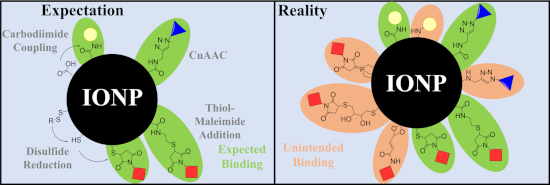
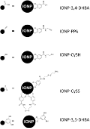
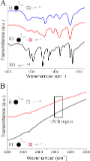
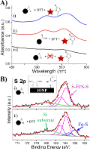
- correspond to the pure Cy5 absorption bands (Supporting Information File 1, Figure S1.i); however, that alone does not prove the successful binding of PPA. For that purpose, we ran two controls, that is, one in which IONP-PPA was subjected to CuAAC reaction conditions, but without the addition of the Cu(I
- significantly contribute to the binding of Cy3-maleimide to the IONP surface. The loading of Cy3-maleimide on IONP-CySH (Figure 9A.i) is observed to be much less than that of Cy5-azide on IONP-PPA (Figure 3B.i), even when the higher absorption coefficient of Cy5 (271,000 cm−1·M−1) relative to Cy3 (162,000 cm−1







Laser processing in liquids: insights into nanocolloid generation and thin film integration for energy, photonic, and sensing applications
Beilstein J. Nanotechnol. 2025, 16, 1428–1498, doi:10.3762/bjnano.16.104
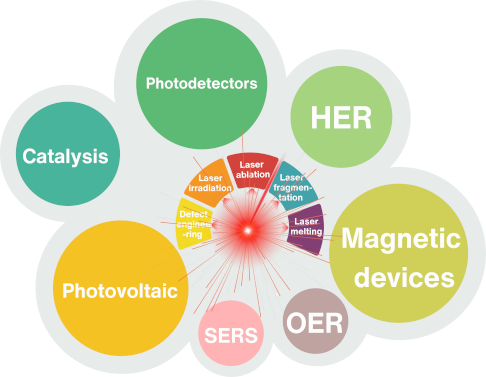
- particles as the resulting droplets are quenched by the surrounding liquid. This process is influenced by the size-dependent optical absorption efficiency and heat capacity of the NPs [43][44]. Utilizing this method, submicrometer spherical particles can be fabricated from a variety of materials, including
- -component materials, spherical particles are easily formed through laser melting, while two-component alloys, like Au–Fe, show distinct morphologies due to differences in heating behavior and optical absorption. Additionally, reactive fabrication of SMSPs with compositions differing from raw materials, such
- factors such as size, surface-to-volume ratio, crystalline structure, composition, oxidation state, shape, and defects [68]. To synthesize NPs, colloids suspended in transparent liquids are irradiated with short or ultra-short laser pulses, which result in selective absorption by the NPs. This occurs






Photochemical synthesis of silver nanoprisms via green LED irradiation and evaluation of SERS activity
Beilstein J. Nanotechnol. 2025, 16, 1417–1427, doi:10.3762/bjnano.16.103
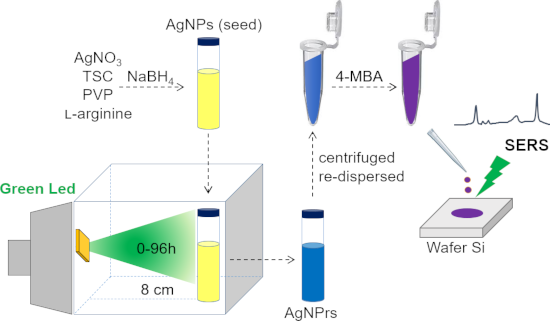
- applications in optical sensing, particularly in surface-enhanced Raman scattering (SERS) [1]. Among ASNPs, silver nanoprisms (AgNPrs) are of particular interest because of their broad absorption in the visible range (400–900 nm), enabling them to display a wide spectrum of colors such as yellow, red, orange
- –vis spectrum exhibited a single absorption peak at 402 nm, characteristic of the in-plane dipole (IPD) resonance of spherical silver nanoparticles. The solution retained its yellow color, indicating that the seed morphology remained largely unchanged and that no formation of anisotropic silver
- began to emerge at approximately 650 nm. This shoulder became more prominent after 24 h, shifting slightly to 662 nm. The appearance of this absorption feature indicated the onset of anisotropic nanoparticle formation, such as silver nanoprisms [4][5][6][7]. After 48 h of LED irradiation, the IPD peak


The role of biochar in combating microplastic pollution: a bibliometric analysis in environmental contexts
Beilstein J. Nanotechnol. 2025, 16, 1401–1416, doi:10.3762/bjnano.16.102

- consequently affecting fruit and seed formation [51]. This effect is primarily due to oxidative stress and cellular damage in plant roots, which diminishes water and nutrient absorption [52]. MPs disrupt root–soil hydrocarbon exchange pathways and hinder photosynthesis. Furthermore, they impair metabolic



Synthesis and antibacterial properties of nanosilver-modified cellulose triacetate membranes for seawater desalination
Beilstein J. Nanotechnol. 2025, 16, 1380–1391, doi:10.3762/bjnano.16.100
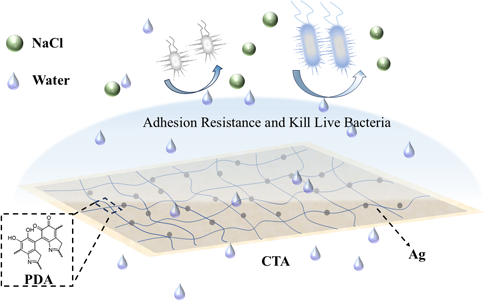
- absorption bands in the FTIR spectrum of PCTA and Ag@PCTA. This is because the functional groups in the PDA structure including –OH, –NH2, and C=O, which have band positions at 3200–3600 cm−1, 3300–3500 cm−1, and 1660–1700 cm−1, respectively, coincided with those of CTA. Moreover, the modifying agents (PDA


Enhancing the therapeutical potential of metalloantibiotics using nano-based delivery systems
Beilstein J. Nanotechnol. 2025, 16, 1350–1366, doi:10.3762/bjnano.16.98
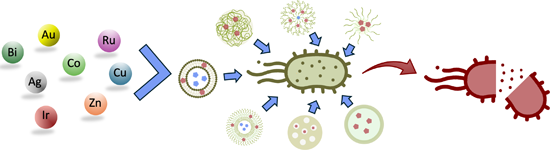
- higher light absorption, and greater photoemission output, resulting in enhanced bactericidal activity against S. aureus (Figure 7). The Ir-complex liposomes interact efficiently with 450 nm LED light, leading to ROS generation and subsequent bacterial inactivation at the site of an infected chronic skin


Ferroptosis induction by engineered liposomes for enhanced tumor therapy
Beilstein J. Nanotechnol. 2025, 16, 1325–1349, doi:10.3762/bjnano.16.97
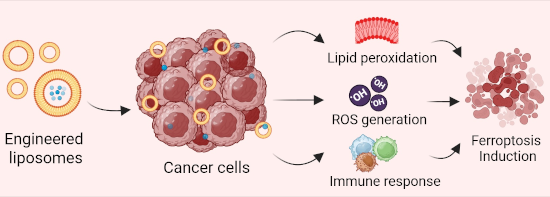
- transferrin receptor 1 (TFR1) during receptor-bound endocytosis. In addition to this pathway, iron absorption can also occur with the help of actin filaments, one of the components of the cytoskeleton, via the receptor (TFRC) [36]. The iron required by the cell, in the form of ferrous iron (Fe+2), is produced
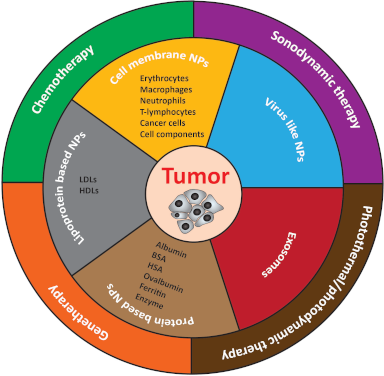
- domains and thus provide suitable drug delivery targets to enhance absorption in particular areas [144]. Therefore, engineered liposomes have been developed to deliver targeted ferroptosis agents to tumor cells to improve tumor therapy, which is discussed here. For example, Celastrol (Cel) can inhibit the


Deep-learning recognition and tracking of individual nanotubes in low-contrast microscopy videos
Beilstein J. Nanotechnol. 2025, 16, 1316–1324, doi:10.3762/bjnano.16.96
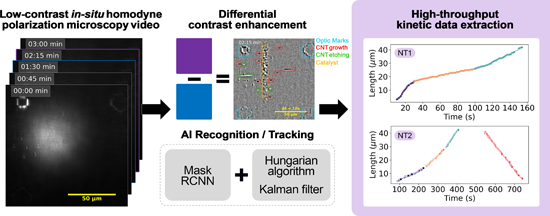
- selectivity, particularly kinetic selectivity. To address this, we developed a method based on in situ homodyne polarization microscopy (HPM), which is highly sensitive and can detect changes in optical absorption caused by a single carbon nanotube. The technique allows for imaging tens to hundreds of
- adds useful information to the video. Additionally, differential videos capture other processes causing local changes in optical absorption. For instance, if the nanotube structure (also called helicity or chirality) changes during growth, this manifests as a second segment moving synchronously with
- the first one: The new chirality appears either as a bright segment if it has lower optical absorption, or as a dark segment otherwise. If the nanotube switches from growth to shrinkage, it appears as a single bright segment moving backward, corresponding to lower optical absorption [20]. We developed


Wavelength-dependent correlation of LIPSS periodicity and laser penetration depth in stainless steel
Beilstein J. Nanotechnol. 2025, 16, 1302–1315, doi:10.3762/bjnano.16.95
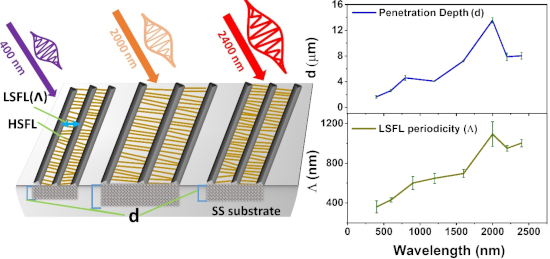
- modulation of the net localized energy distribution on the surface, and this field absorption is manifested as LIPSS on the surface. This process depends on several experimental factors, namely, incident wavelength, polarization, material dielectric, dielectric, fluence of the laser, pulse width, repetition
- absorption in the metal and scattering in other directions, which depend on the properties of the metal [43]. The penetration depth of SPPs into the metal measures how far the electric field of the SPP decays exponentially inside the metal. Ash and colleagues reported the impact of wavelength and beam width
- geometry. It can also depend on the optical properties of the material, such as the refractive index, absorption coefficient, reflectivity, and laser parameters, such as the wavelength, pulse duration, fluence, incidence angle, and polarization [64]. Generally, penetration depth increases with increasing




Enhancing the photoelectrochemical performance of BiOI-derived BiVO4 films by controlled-intensity current electrodeposition
Beilstein J. Nanotechnol. 2025, 16, 1289–1301, doi:10.3762/bjnano.16.94
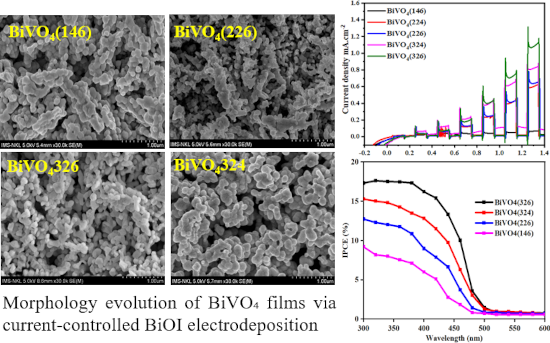
- limited by material challenges, including insufficient light absorption, high electron–hole recombination rates, and poor stability under operating conditions [5][6]. Among various semiconductor materials, bismuth vanadate (BiVO4) has attracted considerable interest due to its strong visible light
- absorption, moderate bandgap (≈2.4 eV), high theoretical photocurrent density (≈7.5 mA·cm−2), and chemical stability in aqueous environments [7][8][9]. Nevertheless, BiVO4 suffers from intrinsic drawbacks such as low charge carrier mobility, limited conductivity, and rapid recombination of photogenerated
- . Characteristics of materials X-ray diffraction (XRD, Bruker D8 Advance) and Raman spectroscopy (LabRAM Odyssey Semiconductor) were used to analyze the crystal structures of photoanodes. UV–vis absorption spectra were obtained using a Cary 60 spectrophotometer. X-ray photoelectron spectroscopy (XPS, VG ESCALAB250



Acrocomia aculeata oil-loaded nanoemulsion: development, anti-inflammatory properties, and cytotoxicity evaluation
Beilstein J. Nanotechnol. 2025, 16, 1277–1288, doi:10.3762/bjnano.16.93
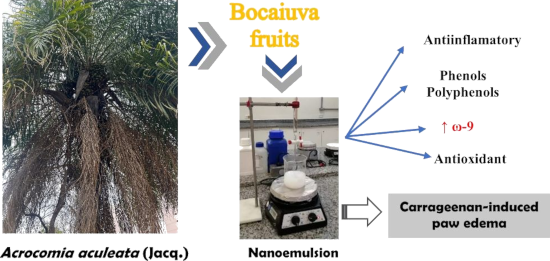
- counterpart [47]. The superior pharmacological response of the nanoemulsion may be attributed to the nanoscale droplet size, which increases the surface area-to-volume ratio, enhances solubility and stability, and promotes rapid absorption and cellular uptake [56]. The nanometric scale facilitates more


Better together: biomimetic nanomedicines for high performance tumor therapy
Beilstein J. Nanotechnol. 2025, 16, 1246–1276, doi:10.3762/bjnano.16.92








Functional bio-packaging enhanced with nanocellulose from rice straw and cinnamon essential oil Pickering emulsion for fruit preservation
Beilstein J. Nanotechnol. 2025, 16, 1234–1245, doi:10.3762/bjnano.16.91
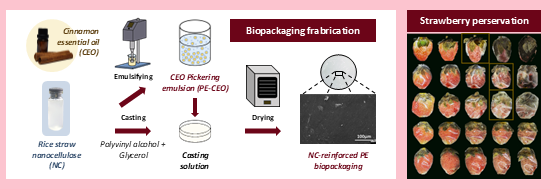
- microbial access [7]. PVA also exhibits superior biocompatibility as evidenced by its high safety threshold (LD50 of 15–20 g·kg−1), low systemic absorption, absence of mutagenic effects, and established medical applications, making it a reliable choice for biopackaging without concerns of harmful
- characteristic peaks confirm the presence of functional groups associated with PE-CEO and polymer interactions. The broad absorption band around 3300 cm−1 corresponds to O–H stretching vibrations, indicating hydrogen bonding between the biopolymer and PE-CEO components [24]. The intensity of the peaks at 1730 cm
- materials (BP, rBP, and rCBP) was observed using a scanning electron microscope (SEM), model Primas E (US). The samples were coated with Pt for 30 s prior to measurement. Bioactive properties UV absorption. Transparency and UV absorption of the films were determined using UV–vis spectroscopy in the



Hydrogels and nanogels: effectiveness in dermal applications
Beilstein J. Nanotechnol. 2025, 16, 1216–1233, doi:10.3762/bjnano.16.90
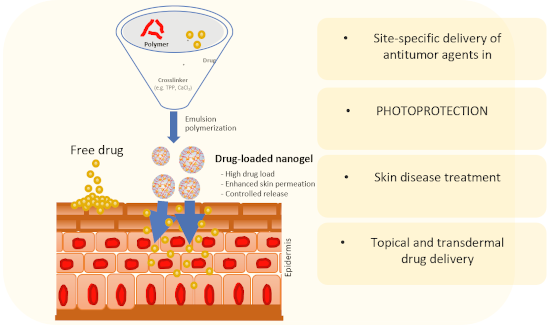
- stability, absorption, and biodistribution impairments. Among the DDSs, we can highlight hydrogels and nanogels, which are easy to obtain, show good biocompatibility, and have several applications in the design of drug carriers for dermal and ocular administration. In this review, we introduce a brief
- [20][21], drug monitoring in biological fluids [22], CO2 absorption from the atmosphere [23], dye removal from industrial effluents [24], cavity-prevention in oral products [25], insect repellent coating for textiles [26], lead detection in water reservoirs [27], production of vaccines [28], and
- angiogenic factor associated with the tumor, called thymidine phosphorylase (dTfdPase), thus minimizing the exposure of healthy tissues to 5-FU [216]. Biodegradable polymers are widely used in nanotechnology to develop different systems due to their advantages, such as greater absorption [218][219] and high


Investigation of the solubility of protoporphyrin IX in aqueous and hydroalcoholic solvent systems
Beilstein J. Nanotechnol. 2025, 16, 1209–1215, doi:10.3762/bjnano.16.89
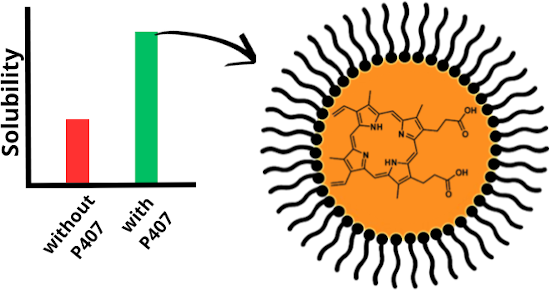
- its bioavailability and light absorption capacity will be increased [5]. To overcome this problem, the development of drug delivery systems, such as poloxamer-based ones, has played an important role on the delivery of dyes for PDT [8][9][10]. Poloxamers are triblock copolymers with thermosensitive


Chitosan nanocomposite containing rotenoids: an alternative bioinsecticidal approach for the management of Aedes aegypti
Beilstein J. Nanotechnol. 2025, 16, 1197–1208, doi:10.3762/bjnano.16.88
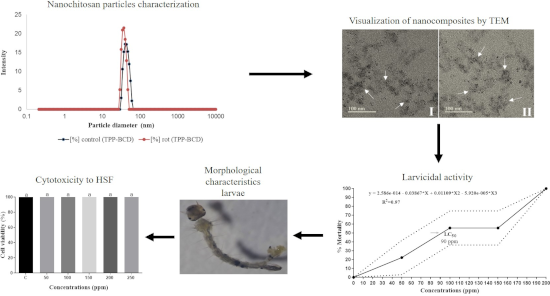
- between the rotenoids and the nanocomposite matrix was obtained through Fourier-transform infrared (FTIR) spectroscopy. Figure 3A shows the FTIR spectra of CS/TPP-β-CD, CS/TPP-β-CD loaded with rotenoids (CS/TPP-β-CD-rot), and pure rotenoids. All three spectra display a broad absorption band in the 3600
- region, while glycosidic linkages and methoxyl groups contribute bands in the 1300–1000 cm−1 range [25][26]. Figure 3B presents a spectral subtraction analysis between CS/TPP-β-CD and CS/TPP-β-CD-rot, clearly revealing absorption features from the encapsulated rotenoids in the functionalized
- rotenoids, empty nanoparticles (CS/TPP-β-CD), and rotenoid-loaded nanoparticles (CS/TPP-β-CD-rot). B) Comparison between the spectrum of in natura rotenoids and the differential spectrum obtained by subtracting the CS/TPP-β-CD spectrum from that of CS/TPP-β-CD-rot, highlighting the characteristic absorption