

Search results
Search for "dyes" in Full Text gives 211 result(s) in Beilstein Journal of Nanotechnology. Showing first 200.
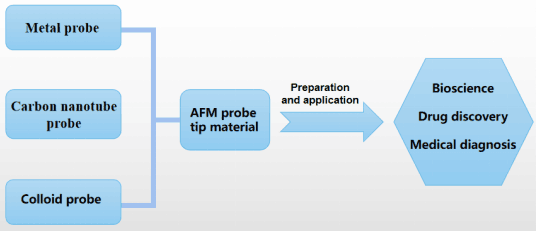
Studies of probe tip materials by atomic force microscopy: a review
Beilstein J. Nanotechnol. 2022, 13, 1256–1267, doi:10.3762/bjnano.13.104
- ]. In particular, metal nanoclusters exhibit excellent photostability, large Stokes shifts, and low toxicity compared to quantum dots and organic dyes. Researchers increasingly use them in analytical detection fields such as metal ions, small biological molecules, drug delivery, and bioimaging [22][23
Green synthesis of zinc oxide nanoparticles toward highly efficient photocatalysis and antibacterial application
Beilstein J. Nanotechnol. 2022, 13, 1108–1119, doi:10.3762/bjnano.13.94

- and zinc chloride salt. The antibacterial activity of the synthesized ZnO material against Escherichia coli (E. coli) was studied. In addition, the study also determined the ability of ZnO NPs to act as photocatalysts and to degrade dyes including MB and methyl orange (MO). Experimental Design
- ), indicating that ZnO NPs are negatively charged and stable in aqueous solution. Photocatalytic degradation of dyes The photocatalytic degradation of ZnO NPs was evaluated through the degradation of methylene blue and methyl orange under visible and UV light and the degradation efficiency was calculated via
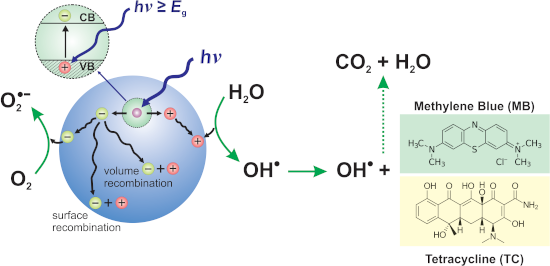
- present in solution which can degraded dyes. These radicals can attract MO and MB molecules, oxidize the dye molecules to degradation products, and finally completely degrade the dyes to CO2 and H2O [35][36]. In addition, when ZnO NPs get in contact with E. coli, reactive oxygen species (ROS), such as •OH




Recent advances in green carbon dots (2015–2022): synthesis, metal ion sensing, and biological applications
Beilstein J. Nanotechnol. 2022, 13, 1068–1107, doi:10.3762/bjnano.13.93
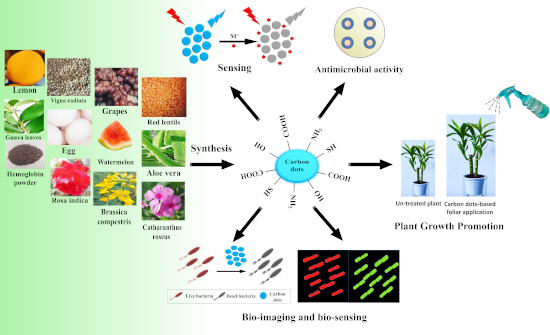
- organic dyes. Moreover, CDs have unparalleled extraordinary properties, including cell compatibility, chemical inertness, emission at tunable wavelengths, low cost, high quantum yield (QY), water dispersibility, small size, tunability, high biocompatibility, strong photostability (resistance to
- was 17.2% [29]. Grass was used as a natural source to prepare immensely photoluminescent N-CDs through a hydrothermal method. Six different dyes, that is, acid blue, acid red, eosin Y, eriochrome black T, methyl orange, and methylene blue underwent degradation in the presence of radiation, which




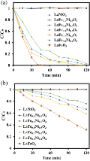
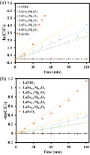
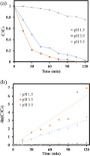
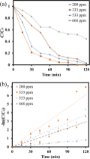
Solar-light-driven LaFexNi1−xO3 perovskite oxides for photocatalytic Fenton-like reaction to degrade organic pollutants
Beilstein J. Nanotechnol. 2022, 13, 882–895, doi:10.3762/bjnano.13.79
- without proper solutions would eventually significantly affect natural ecology and people’s quality of life. Dyes are widely used in various living areas, such as paint, leather, textiles, oil wax, etc. Accordingly, a large amount of dye wastewater is produced every day. Dye wastewater refers to dyes
- remaining in the aqueous solution during the textile process. The amount of dye wastewater is enormous and has gradually become the main wastewater discharged in the industry [6]. At present, dyes are mainly divided into azo dyes, thiazine dyes, acridine dyes, and aryl methane dyes. Due to their complex
- chemical structure and high chromophore, it is not conducive to most biological and physical treatments. Thus, wastewater is regarded as a threat to the environment and health. As environmental awareness is gradually increasing, many countries are currently starting to control the use of harmful azo dyes



Hierarchical Bi2WO6/TiO2-nanotube composites derived from natural cellulose for visible-light photocatalytic treatment of pollutants
Beilstein J. Nanotechnol. 2022, 13, 745–762, doi:10.3762/bjnano.13.66
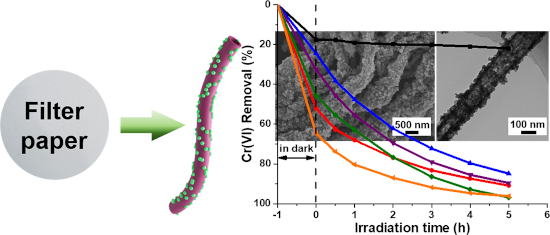
- pollutants including dyes, organic matter, and heavy metals has caused disastrous consequences to the ecosystem [1]. Cr(VI) is one of the unmanageable pollutants in industrial effluents. It is highly toxic, carcinogenic, and harmful to the lungs, liver, and other organs [2][3]. Photocatalysis is a promising


Modeling a multiple-chain emeraldine gas sensor for NH3 and NO2 detection
Beilstein J. Nanotechnol. 2022, 13, 721–729, doi:10.3762/bjnano.13.64
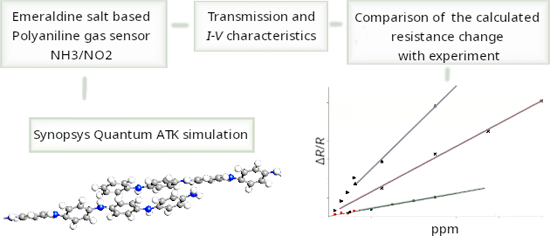
- good properties for NO2 detection. Keywords: ammonia; gas sensor; nitrogen dioxide; numerical computation; polyaniline; Introduction Polyaniline is a conducting polymer consisting of benzene rings connected by nitrogen units, which can be used in a wide spectrum of applications, for example, dyes for


Detection and imaging of Hg(II) in vivo using glutathione-functionalized gold nanoparticles
Beilstein J. Nanotechnol. 2022, 13, 549–559, doi:10.3762/bjnano.13.46
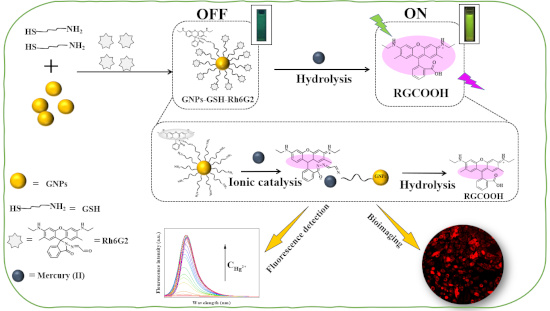
- conjugate with drug molecules and fluorescent dyes [24]. Recently, we developed a novel Cu(II)-triggered release system with gold nanoparticles surface-modified with ʟ-cysteine for molecular delivery and imaging in cells [31]. Well dispersed GNP–ʟ-cysteine was conjugated with Rh6G2 (GNP–ʟ-Cys–Rh6G2) for a


Zinc oxide nanostructures for fluorescence and Raman signal enhancement: a review
Beilstein J. Nanotechnol. 2022, 13, 472–490, doi:10.3762/bjnano.13.40
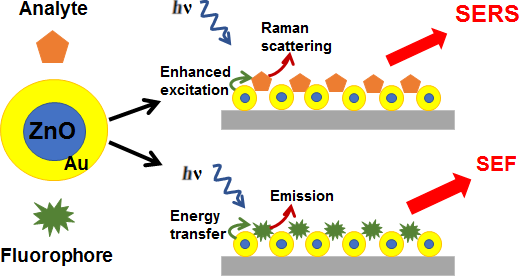
- stability, to name just a few. Additionally, ZnO-based nanosubstrates have been used lately in combination with noble metals to enhance the fluorescence emission of dyes located in their vicinity [20][21] as well for amplifying the fluorescence emission of ZnO, which could prove very useful for solar cell
- been detected [113]. ZnO platforms are inexpensive to produce, non-toxic and biodegradable, showing potential for improving the detection of various molecules as fluorophores, dyes, or cancer biomarkers. Thus, the use of ZnO NPs as substrates for fluorescence enhancement is an alternative to overcome
- broad range of wavelengths. This multiplexing property was investigated for ZnO nanoflower (NF) and nanorod arrays by [114]. Different Alexa Fluor (AF) dyes were used and the results showed a significant enhancement of their fluorescence over the entire visual spectral range (400–840 nm). Specifically




A comprehensive review on electrospun nanohybrid membranes for wastewater treatment
Beilstein J. Nanotechnol. 2022, 13, 137–159, doi:10.3762/bjnano.13.10
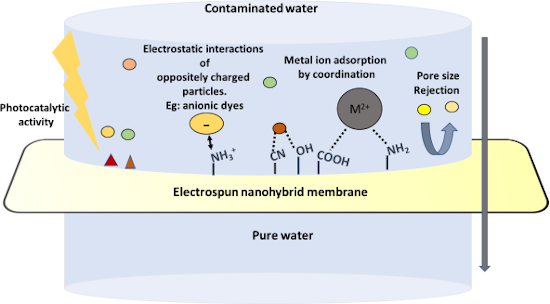
- functional specific nanosized additives to be used in various water remediation membrane techniques. The adsorption, filtration, photocatalytic, and bactericidal capabilities of the hybrid membranes in removing common major water pollutants such as metal ions, dyes, oils, and biological pollutants have been
- electrospinning [17]. Similarly, a wide range of ENH membranes are being used to remove particles, heavy metals, other metal cations, organic chemicals, dyes, and microorganisms from water and will be discussed in detail in this review article. Water is one of the most critical natural resources and is non
- heavy metals, cations, oils, dyes, and other organic and inorganic chemicals. In recent years, electrospun nanohybrid membranes have been developed and modified for the removal of these pollutants from synthetic/waste water. Heavy metals and other metal cations, such as Cd2+, Pb2+, Cu2+, Ni2+, Hg2+, As3





Tin dioxide nanomaterial-based photocatalysts for nitrogen oxide oxidation: a review
Beilstein J. Nanotechnol. 2022, 13, 96–113, doi:10.3762/bjnano.13.7

- catalytic area, SnO2 is an emerging material for removing contaminants such as organic dyes, phenolic compounds, and volatile organic compounds (VOCs) due to strongly oxidizing properties thanks to flexible energy band structure, rich defects, good chemical, and high thermal stability, and easily controlled


Theranostic potential of self-luminescent branched polyethyleneimine-coated superparamagnetic iron oxide nanoparticles
Beilstein J. Nanotechnol. 2022, 13, 82–95, doi:10.3762/bjnano.13.6

- are SPIONs conjugated with luminescent quantum dots (QD) [44][45][46][47] or tagged with luminescent dyes such as indocyanine green (ICG) [48]. Here, we demonstrate the utility of intensely blue-luminescent, small, and cationic SPION@bPEI in dye-free optical detection and therapeutic gene transfection




The role of deep eutectic solvents and carrageenan in synthesizing biocompatible anisotropic metal nanoparticles
Beilstein J. Nanotechnol. 2021, 12, 924–938, doi:10.3762/bjnano.12.69
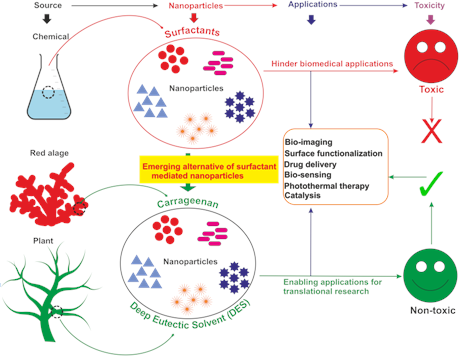
- emerged as a promising candidate for industrial applications. Silver nanoparticles synthesized using carrageenan as a reducing and stabilizing agent showed promising results in removing organic dyes such as methylene blue and rhodamine B [111]. Magnetic iron nanoparticles were synthesized using κ-, ι-, or


Modification of a SERS-active Ag surface to promote adsorption of charged analytes: effect of Cu2+ ions
Beilstein J. Nanotechnol. 2021, 12, 902–912, doi:10.3762/bjnano.12.67

- the Ag NPs. Literature analysis reveals that many authors use cationic organic dyes as SERS probing analytes [18][25]. In contrast, practically interesting biological molecules are mostly negatively charged. In 2015, the authors of [18] pointed out a possibility to prepare positively charged Ag NPs to
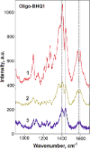
- possible in the case of luminescent dyes. As BHQ1 has a wide band that overlaps the excitation laser frequency, we can speak about surface-enhanced Raman resonance scattering (SERRS) in this case. The unmodified SERS substrate did not show any SERS signal of the oligonucleotide (Figure 8). Based on our


Nanoporous and nonporous conjugated donor–acceptor polymer semiconductors for photocatalytic hydrogen production
Beilstein J. Nanotechnol. 2021, 12, 607–623, doi:10.3762/bjnano.12.50

- P80 as the acceptor could intimately blend with the donor P81, which rendered HERs up to 128.85 μmol·h−1 (2 mg) [96]. Regarding heterojunctions with TiO2, for instance, Hua et al. used two indeno[1,2-b]thiophene-based organic dyes (P82 and P83) (Figure 10) to sensitize TiO2 to harvest near-infrared





Influence of electrospray deposition on C60 molecular assemblies
Beilstein J. Nanotechnol. 2021, 12, 552–558, doi:10.3762/bjnano.12.45

- photovoltaics [47]. To date, only few SPM studies have focused on the adsorption of organic molecules on NiO surfaces [35][36][37]. Because organic dyes are large and complex molecules, their TE is impossible, making HV-ESD methods the only deposition technique compatible with fundamental studies. A first step


Bio-imaging with the helium-ion microscope: A review
Beilstein J. Nanotechnol. 2021, 12, 1–23, doi:10.3762/bjnano.12.1

- . Few bio-imaging studies have focused on the detection of IL. To the best of our knowledge, the only work on IL-HIM bio-imaging was done by Franklin and is published in his Ph.D. thesis [24]. He investigated the IL of fluorescent dyes and applied this to study an Alexa Fluor 488-tagged mouse incisor


Unravelling the interfacial interaction in mesoporous SiO2@nickel phyllosilicate/TiO2 core–shell nanostructures for photocatalytic activity
Beilstein J. Nanotechnol. 2020, 11, 1834–1846, doi:10.3762/bjnano.11.165
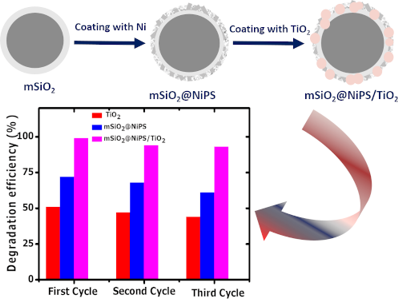
- the core–shell nanostructure and yielded superior photocatalytic properties. Keywords: bandgap energy; core–shell; dye degradation; nickel phyllosilicate; photocatalysts; Introduction Textile dyes and organic compounds are major water pollutants, which create an environmental hazard to aquatic
- systems and humanity. For instance, textile dyes of the methylene family, such as methylene blue (MB), methyl orange (MO), and methyl violet (MV), have detrimental toxicological and ecological effects on human life and the environment [1][2]. Thus, considerable efforts have been garnered towards finding
- inertness, low cost, and non-toxicity, titanium dioxide (TiO2) has been widely used as a photocatalyst in the degradation of dyes in textile industries as well as in water-treatment systems [5][6]. There are three different phases of TiO2, namely anatase, rutile, and brookite. Compared to the rutile and


Nanocasting synthesis of BiFeO3 nanoparticles with enhanced visible-light photocatalytic activity
Beilstein J. Nanotechnol. 2020, 11, 1822–1833, doi:10.3762/bjnano.11.164
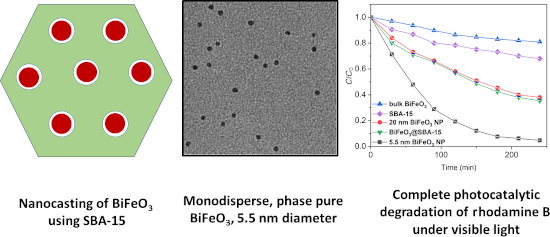
- wastewater flows back into the environment untreated. One of the most polluting industries is the textile industry, in which vast quantities of toxic and harmful organic and inorganic chemicals are utilized [7]. The effluents resulting from these processes contain residues of very stable and toxic dyes such
- water problem that we face today [5]. Regarding this, the removal of organic dyes from industrial wastewater is absolutely essential and, consequently, it has become a focus of attention of the scientific community over the past two decades. A number of techniques have been reported for the removal of
- dyes from wastewater such as precipitation (chemical coagulation, flocculation), membrane and electrochemical processes, as well as biological treatment methods [9]. The main disadvantages of these treatment methods are very often incomplete dye removal, high energy consumption and capital cost, and




Electrokinetic characterization of synthetic protein nanoparticles
Beilstein J. Nanotechnol. 2020, 11, 1556–1567, doi:10.3762/bjnano.11.138

- commercially available Alexa Fluor dyes conjugated to BSA as fluorescent markers at 0.8% (w/w) of total protein into the initial electrospraying solution. After performing the purification steps described previously, we were able to clearly observe particles under typical microscopy conditions (Figure 1c
- ). Effect of small size differences and fluorescent dyes For potential applications in theragnostics, in which fluorescently labeled particles could be needed, we were first interested in investigating whether the incorporation of different fluorescent dyes in our particles could affect the particle
- been reported in the literature in similar EK microdevices [57]. The absence of a difference in trapping voltage even in the presence of different fluorescent dyes shows that the dye molecules themselves have no evident effect on the EK behavior of the particles. Electrokinetic response of SPNPs




Thermophoretic tweezers for single nanoparticle manipulation
Beilstein J. Nanotechnol. 2020, 11, 1126–1133, doi:10.3762/bjnano.11.97
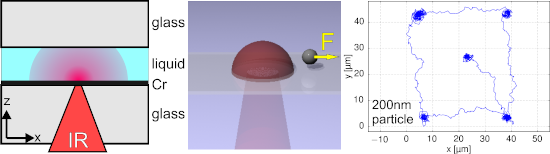
- 1b,c). Temperature measurements are performed using the temperature-dependent fluorescence of sulforhodamine B (Radiant dyes Chemie), which is calibrated in an independent measurement (accuracy ±2 K). Since the sapphire glass with a high thermal conductivity helps cooling the thin sample film, the


Effect of Ag loading position on the photocatalytic performance of TiO2 nanocolumn arrays
Beilstein J. Nanotechnol. 2020, 11, 717–728, doi:10.3762/bjnano.11.59
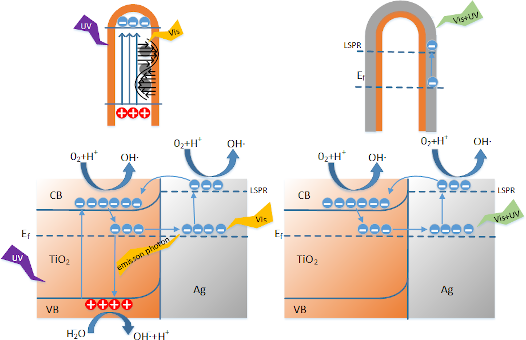
- the catalyst, so the catalyst needs to have a certain adsorption capacity for dye molecules. Due to the presence of oxygen vacancies, the surface of TiO2 is usually negatively charged and has a good adsorption capacity for cationic dye molecules [36]. Commonly used cationic dyes are rhodamine, methyl


Preparation, characterization and photocatalytic performance of heterostructured CuO–ZnO-loaded composite nanofiber membranes
Beilstein J. Nanotechnol. 2020, 11, 631–650, doi:10.3762/bjnano.11.50

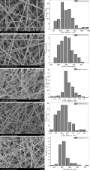
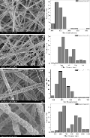
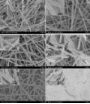
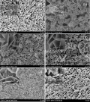
- protection. Water pollution with organic dyes (such as congo red, methylene blue, and methyl orange) is becoming a major environmental problem. Therefore, water purification technologies, such as photocatalytic purification, electrochemical oxidation, membrane filtration, ozonation, and chlorination











Silver-decorated gel-shell nanobeads: physicochemical characterization and evaluation of antibacterial properties
Beilstein J. Nanotechnol. 2020, 11, 620–630, doi:10.3762/bjnano.11.49

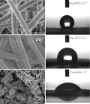
- . The analyses were conducted using the LIVE/DEAD BacLight bacterial viability kit and the samples were imaged with confocal fluorescence microscopy [50]. The test uses the properties of fluorescent dyes, namely, green SYTO 9 and red propidium iodide. The SYTO 9 stain labels the bacteria with intact
- membranes and those with damaged membranes. In contrast, propidium iodide penetrates only the bacteria with damaged membranes, thereby reducing the fluorescence of SYTO 9 when both dyes are present. The living cells appear green while the dead cells are red in the images of the biofilms. One can see that


Adsorptive removal of bulky dye molecules from water with mesoporous polyaniline-derived carbon
Beilstein J. Nanotechnol. 2020, 11, 597–605, doi:10.3762/bjnano.11.47
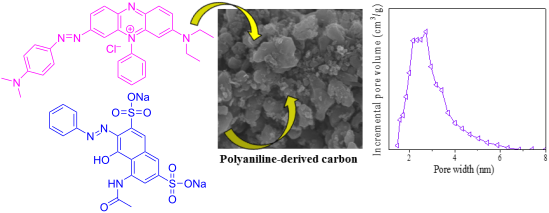
- ; polyaniline-derived carbon; water purification; Introduction Dyes have been widely used in a wide range of industries including textile, leather and paper, causing serious concern worldwide mainly because of the contamination of water resources. For example, around 700,000 tons of textile dyes are produced
- annually; and a considerable quantity of the produced dyes is discharged into waste water [1]. Such dyes are usually toxic or are converted into toxic substances after further treatment [1][2], and dyes discarded in waste water inevitably increase the biochemical oxygen demand (BOD) and chemical oxygen
- demand (COD) levels. Additionally, dyes decrease sunlight penetration through water, decreasing the natural restoration activity of rivers. Moreover, dyes in waste water are also considered problematic in the aesthetic sense, since the absorbance of dyes is usually very high (therefore, even small


Luminescent gold nanoclusters for bioimaging applications
Beilstein J. Nanotechnol. 2020, 11, 533–546, doi:10.3762/bjnano.11.42
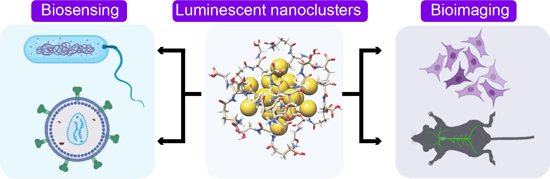
- biomolecules [7]. Antibodies conjugated to low molecular weight fluorescent dyes have been used for various bioimaging applications [8]. Despite their cost-effectiveness, and water solubility, organic dyes display a small Stokes shift, low photochemical stability and they undergo photobleaching [9][10
- of colors covering ultraviolet to near-infrared (NIR). Furthermore, SCQDs offer better sensitivity, stability against photobleaching, and a narrow spectral bandwidth compared to conventional organic dyes. However, due to their cytotoxicity, the tendency to undergo aggregation inside the cells, and
- selective modification and biomolecular tagging. Therefore, AuNCs find potential applications in sensing, photodynamic therapy, labeling and bioimaging. However, there are challenges because the number of luminescent gold NCs is limited and the PL quantum yield is low compared to organic dyes, lanthanide