

Search results
Search for "field emission" in Full Text gives 302 result(s) in Beilstein Journal of Nanotechnology. Showing first 200.
Nanoarchitectonics to entrap living cells in silica-based systems: encapsulations with yolk–shell and sepiolite nanomaterials
Beilstein J. Nanotechnol. 2023, 14, 522–534, doi:10.3762/bjnano.14.43
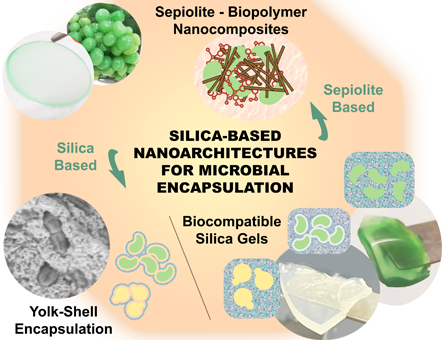
- without staining. Electron microscopy imaging was conducted using a field-emission scanning electron microscope FEI-NOVA NanoSEM 230 equipped with an Apollo XL silicon drift detector from EDAX-Ametek or using a high-resolution JEOL IT500HR/LA microscope equipped with an energy dispersive X-ray


A distributed active patch antenna model of a Josephson oscillator
Beilstein J. Nanotechnol. 2023, 14, 151–164, doi:10.3762/bjnano.14.16

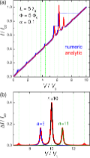
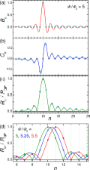
- efficiency was attributed to a good impedance matching with free space [17]. In [24], a Bi2Sr2CaCu2O8+δ mesa was implemented into a patch antenna and far-field emission at f = 1.5 THz was reported. Common for all mentioned approaches is that the junctions, which are small compared to λ0 and, according to


Gap-directed chemical lift-off lithographic nanoarchitectonics for arbitrary sub-micrometer patterning
Beilstein J. Nanotechnol. 2023, 14, 34–44, doi:10.3762/bjnano.14.4
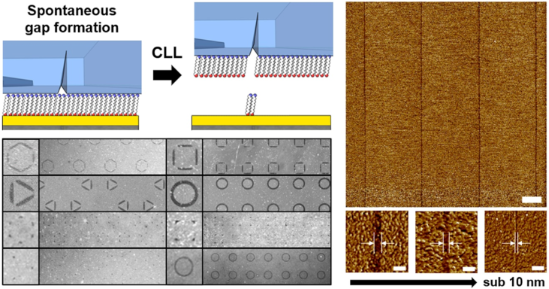
- Schottky Field Emission Scanning Electron Microscope, Tokyo, Japan) is used, but for sub-100 nm features AFM is employed to avoid the heavy influence of high-energy electron beams on molecular patterns in imaging. The straightness of the obtained lines is also assessed by calculating the linear regression


Photoelectrochemical water oxidation over TiO2 nanotubes modified with MoS2 and g-C3N4
Beilstein J. Nanotechnol. 2022, 13, 1541–1550, doi:10.3762/bjnano.13.127

- of materials The morphology, the phase, and the vibrational characteristics of the surface functional groups of the materials were observed by field-emission scanning electron microscopy (FESEM), X-ray diffraction (XRD), and Fourier-transform infrared spectroscopy (FTIR). Diffuse reflectance


Non-stoichiometric magnetite as catalyst for the photocatalytic degradation of phenol and 2,6-dibromo-4-methylphenol – a new approach in water treatment
Beilstein J. Nanotechnol. 2022, 13, 1531–1540, doi:10.3762/bjnano.13.126

- value was then obtained from the point at which the curve showing final pH vs initial pH intersected the y = x line on the graph. The morphology of the catalysts was observed with a field-emission scanning electron microscope (Zeiss Ultra 55, Oberkochen, Germany). The crystalline phases were analyzed


A TiO2@MWCNTs nanocomposite photoanode for solar-driven water splitting
Beilstein J. Nanotechnol. 2022, 13, 1520–1530, doi:10.3762/bjnano.13.125
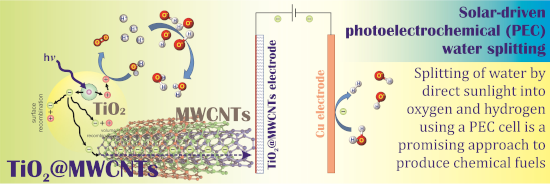
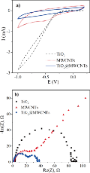
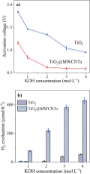
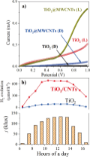
- -603103, Tamil Nadu, India 10.3762/bjnano.13.125 Abstract A TiO2@MWCNTs (multi-wall carbon nanotubes) nanocomposite photoanode is prepared for photoelectrochemical water splitting in this study. The physical and photoelectrochemical properties of the photoanode are characterized using field emission
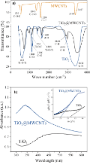
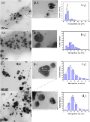
- nanocomposite characterizations The surface morphology of MWCNTs and the TiO2@MWCNTs nanocomposite is characterized by using field-emission scanning electron microscopy (FE-SEM, S4800) and transmission electron microscopy (TEM, JEOL-1400). The crystallization behavior of the catalysts is analyzed by X-ray



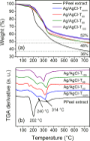
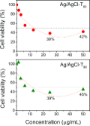
In search of cytotoxic selectivity on cancer cells with biogenically synthesized Ag/AgCl nanoparticles
Beilstein J. Nanotechnol. 2022, 13, 1505–1519, doi:10.3762/bjnano.13.124

- ° in 2θ. Quantitative chemical analysis was performed on a JEOL JSM-7401F field-emission scanning electron microscope (FE-SEM) using EDX. An acceleration voltage of 15 kV and a working distance of 8 mm were used. The samples were precoated with Au/Pd for 10 seconds. Ultraviolet–visible spectroscopy was





Rapid and sensitive detection of box turtles using an electrochemical DNA biosensor based on a gold/graphene nanocomposite
Beilstein J. Nanotechnol. 2022, 13, 1458–1472, doi:10.3762/bjnano.13.120

- probe using bioinformatics tools, and it was also validated in wet-lab experiments. As a detection platform, a screen-printed carbon electrode (SPCE) enhanced with a nanocomposite containing gold nanoparticles and graphene was used. The morphology of the nanoparticles was analysed by field-emission
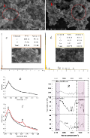
- modified screen-printed carbon electrode Surface morphology and structural characterisation Field-emission scanning electron microscopy (FESEM) images of nanoparticles and their composites are depicted in Figure 2a–b, where the wrinkled regions represent specific patterns of different materials. In Figure
- Gr/SPCE surface, which was then labelled as AuNPs/Gr/SPCE. Morphological and structural studies of nanomaterials The surface morphology of the nanoparticles and their nanocomposites were analysed using a field-emission scanning electron microscope (model SU8030 Hitachi, Japan), equipped with an



Recent trends in Bi-based nanomaterials: challenges, fabrication, enhancement techniques, and environmental applications
Beilstein J. Nanotechnol. 2022, 13, 1316–1336, doi:10.3762/bjnano.13.109
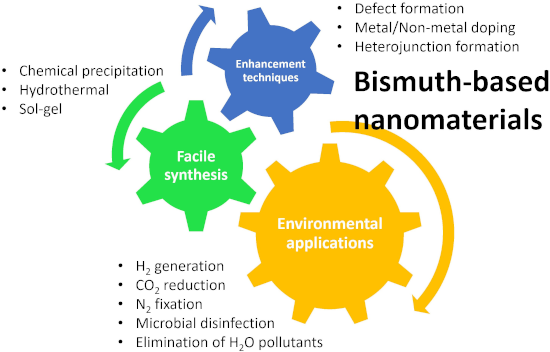
- intermediates from the synthesis process into photocatalysts to alter the energy band structure and increase photocatalytic activity [89]. A simple two-step technique was used to develop a novel compound photocatalyst of Bi/BiOBr-Bi5+ [90]. X-ray diffraction, field-emission transmission electron microscopy, and




Studies of probe tip materials by atomic force microscopy: a review
Beilstein J. Nanotechnol. 2022, 13, 1256–1267, doi:10.3762/bjnano.13.104
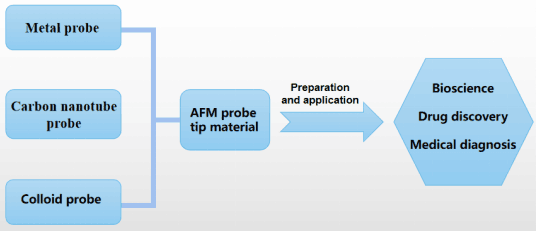
- et al. [34] developed a technique based on field emission-induced growth by growing a single metal nanowire at the AFM tip and forming vertically aligned nanowire probes on AFM cantilever beams of different types and force constants. This type of probe has properties such as a high aspect ratio and
- robustness. This technique based on field emission-induced growth has been maturely applied to produce tungsten nanowire probes. The produced probes have high reproducibility and consistency. Experiments using tungsten nanowire probes have shown that the resulting AFM images are of high resolution because of
Green synthesis of zinc oxide nanoparticles toward highly efficient photocatalysis and antibacterial application
Beilstein J. Nanotechnol. 2022, 13, 1108–1119, doi:10.3762/bjnano.13.94

- , Vietnam 10.3762/bjnano.13.94 Abstract Zinc oxide nanoparticles (ZnO NPs) were successfully synthesized by a green method using rosin and zinc chloride as salt precursors. The phase structure, morphology, and particle size of ZnO were determined by X-ray powder diffraction, field emission scanning
- (XRD) using a Bruker D8 advanced X-ray diffractometer equipped with Cu Kα radiation (λ = 1.5418 Å). The morphology and size of the synthesized material were determined by field emission scanning electron microscopy (FESEM) on a Hitachi S-4800 at 15 kV and high-resolution transmission electron




Solar-light-driven LaFexNi1−xO3 perovskite oxides for photocatalytic Fenton-like reaction to degrade organic pollutants
Beilstein J. Nanotechnol. 2022, 13, 882–895, doi:10.3762/bjnano.13.79
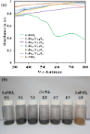
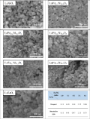
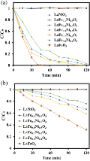
- other hand, the prepared samples might also be considered non-porous materials with inter-particle pore voids, since their low surface area might come from the external surface, indicating that LaFe0.7Ni0.3O3 had the highest external surface area for reaction. Figure 7 revealed the field emission
- diffracting angle was set from 10° to 70° with a scan rate of 4 °/min. The crystalline sizes of the LaFexNi1−xO3 perovskite oxides were further obtained by Scherrer’s equation. To obtain the morphologies of the prepared samples, S-4800 (Hitachi, Japan) was employed to conduct field emission scanning electron



Hierarchical Bi2WO6/TiO2-nanotube composites derived from natural cellulose for visible-light photocatalytic treatment of pollutants
Beilstein J. Nanotechnol. 2022, 13, 745–762, doi:10.3762/bjnano.13.66
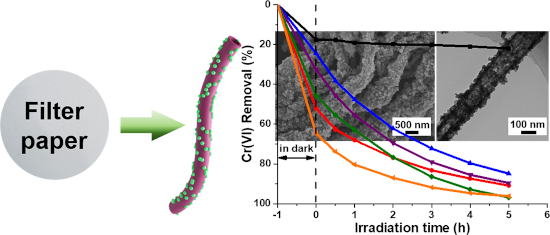
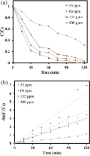
- homogeneous suspension. The suspension was then dropped onto an Al foil to be observed via field-emission scanning electron microscopy (FE-SEM), and onto a carbon-supported copper grid for examination via transmission electron microscopy (TEM) and high resolution transmission electron microscopy (HR-TEM


A nonenzymatic reduced graphene oxide-based nanosensor for parathion
Beilstein J. Nanotechnol. 2022, 13, 730–744, doi:10.3762/bjnano.13.65
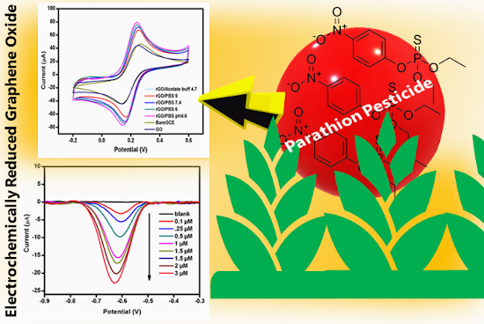
- an acceleration voltage of 15 kV. The morphological characteristics of the electrodeposited ERGO were obtained by field-emission scanning electron microscopy (FESEM, model: LEO 430i, Carl Zeiss) and high-resolution transmission electron microscopy (model: Tecnai G2 30ST, FEI) operating at 300 kV


Nanoarchitectonics of the cathode to improve the reversibility of Li–O2 batteries
Beilstein J. Nanotechnol. 2022, 13, 689–698, doi:10.3762/bjnano.13.61
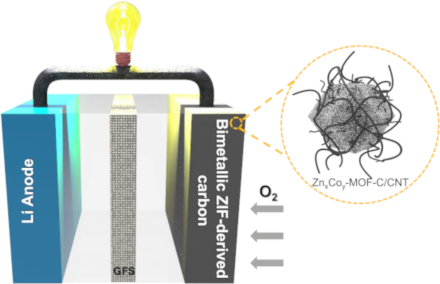
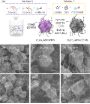
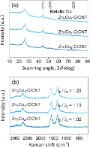
- , and Zn1Co4 particles grown on CNT frameworks, respectively. Field-emission scanning electron microscopy (FESEM) observations confirmed that abundant rhombic dodecahedral ZnxCoy particles with different Zn/Co ratios were successfully integrated into the CNTs. Corresponding energy-dispersive X-ray
- atmosphere, the ZnxCoy–C/CNT composite was obtained and further chemically etched with 1 M of H2SO4 solution before use. Material characterization Field-emission scanning electron microscopy (JEOL, JSM-7000F) and high-resolution TEM (HRTEM, JEOL, JEM-2100F) with EDS were used to examine the morphologies and


Sodium doping in brookite TiO2 enhances its photocatalytic activity
Beilstein J. Nanotechnol. 2022, 13, 599–609, doi:10.3762/bjnano.13.52
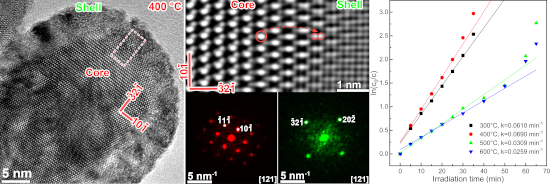
- ]. The morphology and the chemical composition of the products were characterized by a field-emission scanning electron microscope (Hitachi S-4800) equipped with an energy-dispersive X-ray spectroscope working at 10 kV and 10 μA. Samples were dispersed into ethyl alcohol and then sprayed on a silicon


Influence of thickness and morphology of MoS2 on the performance of counter electrodes in dye-sensitized solar cells
Beilstein J. Nanotechnol. 2022, 13, 528–537, doi:10.3762/bjnano.13.44
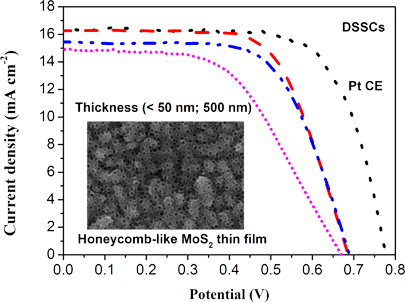
- performed on a LabRAM HR 800 Raman Spectrometer (HORIBA Jobin Yvon) with an excitation laser source at 532 nm. The morphology of MoS2 thin films was analyzed by an ultrahigh-resolution field-emission scanning electron microscope (FE-SEM, Hitachi SU-8010, Japan). The electrochemical catalytic activity of the


Investigation of electron-induced cross-linking of self-assembled monolayers by scanning tunneling microscopy
Beilstein J. Nanotechnol. 2022, 13, 462–471, doi:10.3762/bjnano.13.39
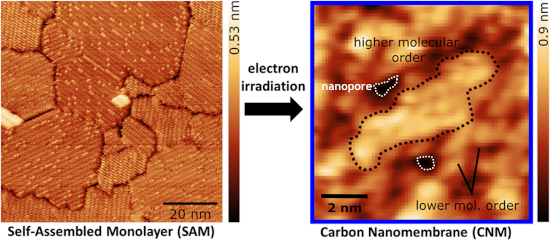
- by the rastering electron beam of an SEM, where the kinetic energy of the electrons was set to 1 keV. The SEM used is a modified type of a UHV Zeiss Standard Gemini with a Schottky-type thermal field emission source (ZrO/W). The pressure in the SEM column was ≈10−8 mbar. Prior to each experiment, the


A non-enzymatic electrochemical hydrogen peroxide sensor based on copper oxide nanostructures
Beilstein J. Nanotechnol. 2022, 13, 424–436, doi:10.3762/bjnano.13.35

- nanostructures were obtained by a one-step hydrothermal oxidation method. The resulting coating is uniform and dense and shows good adhesion to the wire surface. Structure, surface, and composition of the obtained samples were studied using field-emission scanning electron microscopy along with energy-dispersive
- of the nanostructured CuO samples was studied via field-emission scanning electron microscopy (FESEM, Tescan MAIA 3). The chemical composition analysis was performed via energy-dispersive spectroscopy (EDS, Inca Synergy) integrated into the FESEM system. The crystalline structure of the samples was




Interfacial nanoarchitectonics for ZIF-8 membranes with enhanced gas separation
Beilstein J. Nanotechnol. 2022, 13, 313–324, doi:10.3762/bjnano.13.26
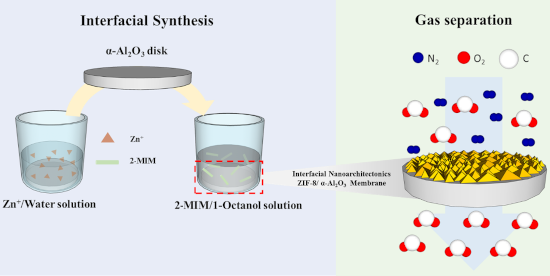
- optimal ZIF-8 membranes, three reaction parameters were investigated, namely, reaction temperature, reaction time, and concentration of the organic linker (i.e., 2-methylimidazole). The growth of ZIF-8 membranes under various parameters was evaluated by field-emission scanning electron microscopy, and the


Effects of drug concentration and PLGA addition on the properties of electrospun ampicillin trihydrate-loaded PLA nanofibers
Beilstein J. Nanotechnol. 2022, 13, 245–254, doi:10.3762/bjnano.13.19

- a scanning electron microscope (QUANTA 400F Field Emission SEM, Holland). The average diameters of the resulting nanofibers were calculated by the measurement of 100 single nanofibers from SEM images using the ImageJ analysis software (National Institutes of Health, USA). Mechanical properties The



Design aspects of Bi2Sr2CaCu2O8+δ THz sources: optimization of thermal and radiative properties
Beilstein J. Nanotechnol. 2021, 12, 1392–1403, doi:10.3762/bjnano.12.103
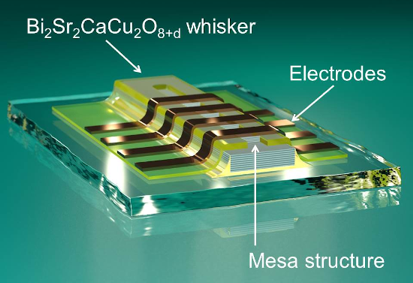
- mesa. Such configuration is relevant for large mesas, contacted by a bonding wire [9]. Remarkably, the far-field emission is larger, Emax = 0.19 V/m, in the absence of the electrode. This clearly shows that the electrode on top of the crystal does not help in impedance matching. To the contrary, it


Enhancement of the piezoelectric coefficient in PVDF-TrFe/CoFe2O4 nanocomposites through DC magnetic poling
Beilstein J. Nanotechnol. 2021, 12, 1262–1270, doi:10.3762/bjnano.12.93

- verify the presence of the aggregates of the CoFe2O4 we investigated the morphology of the CoFe2O4 nanoparticles (Figure 5a) and of the PVDF-TrFe/CoFe2O4 nanocomposites (Figure 5b) using field-emission scanning electron microscopy (FESEM). As shown in Figure 5b, the morphology of the produced
- °C and a DC magnetic field was applied through a ferromagnetic core (Figure 8). The morphology of the PVDF-TrFe/CoFe2O4 nanocomposite thin films was investigated using a field-emission scanning electron microscope (FESEM, Auriga, Carl Zeiss) operated with an accelerating voltage of 5 kV. Chemical


Morphology-driven gas sensing by fabricated fractals: A review
Beilstein J. Nanotechnol. 2021, 12, 1187–1208, doi:10.3762/bjnano.12.88
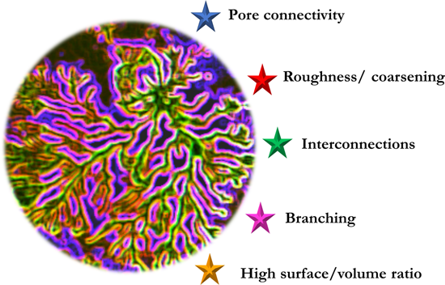
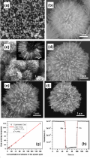
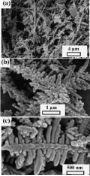
- excellent as compared to monoclinic bismuth vanadate (m-BiVO4) at room temperature owing to the hyperbranched structure and high surface area. Figure 19a–c shows field-emission SEM (FESEM) images of hyperbranched m-BiVO4, a single hyperbranch of h-BiVO4, and a trunk of h-BiVO4. Recently, Bai et al. used










Local stiffness and work function variations of hexagonal boron nitride on Cu(111)
Beilstein J. Nanotechnol. 2021, 12, 559–565, doi:10.3762/bjnano.12.46
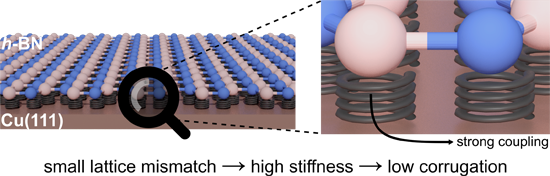
- for atomic and molecular adsorbates owing to its local electronic trapping potential due to the in-plane electric field. We obtain work function (Φ) variations on the h-BN/Cu(111) superstructure of the order of 100 meV using two independent methods, namely the shift of field emission resonances and
- based on a shift of the field emission resonance (FER) induced by Φ variations. The effective potential well of depth Φ at the surface of a metal can accommodate a series of Rydberg states, extending a few angstroms into the vacuum above the metal surface [43]. These image potential states (IPSs