

Search results
Search for "light" in Full Text gives 1542 result(s) in Beilstein Journal of Nanotechnology. Showing first 200.
Ultrathin water layers on mannosylated gold nanoparticles
Beilstein J. Nanotechnol. 2025, 16, 2183–2198, doi:10.3762/bjnano.16.151
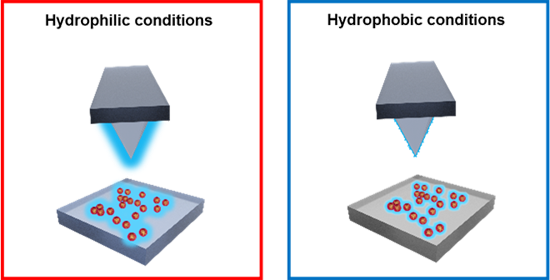
- light scattering, and infrared spectroscopy. We probed particles adsorbed on hydrophilic and hydrophobic surfaces with atomic force microscopy (AFM) and vibrational sum frequency generation (VSFG) spectroscopy, both operated under variable air humidity. For AFM, we additionally tested hydrophilic and
- short oligo(ethylene glycol) chains. The particles were first characterized by dynamic light scattering (DLS) and zeta potential (ZP) measurements in solution, and by scanning electron microscopy (SEM) and scanning transmission electron microscopy (STEM) in vacuum. Samples were adsorbed on flat
- PEG thiol with carboxylic acid termination was used. To obtain the dimanno-AuNPs, 50 mol % of the same carboxylic acid ligand was mixed with 50 mol % of a dimannoside (Manα1-2Man) thiourea PEG thiol. After purification and lyophilization, the nanoparticles were obtained as brown powders. Dynamic light



Microplastic pollution in Himalayan lakes: assessment, risks, and sustainable remediation strategies
Beilstein J. Nanotechnol. 2025, 16, 2144–2167, doi:10.3762/bjnano.16.148
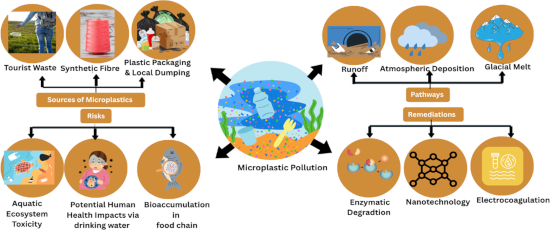
- generally render conventional methods, for example, trawling plankton nets in surface water, infeasible owing to transport and size constraints of equipment [31]. This has given rise to sampling devices that are both portable and light, specifically tailored for use in remote environments. For example
- permanently removed without causing secondary pollution [72]. 5.3.2 Nanotechnology for degradation. Nanotechnology offers a novel method for the accurate and effective breakdown of MPs. Under UV light, nanomaterials such as ZnO and TiO2 work as photocatalysts to break down MPs into CO2 and water, which are
- nanoparticles have been shown to break down PS in both UV and natural light, which suggests they could be used in a range of environmental conditions [44]. Another prospective application is the integration of nanomaterials into filtration membranes, which results in the development of hybrid systems that are


Electron transport through nanoscale multilayer graphene and hexagonal boron nitride junctions
Beilstein J. Nanotechnol. 2025, 16, 2132–2143, doi:10.3762/bjnano.16.147
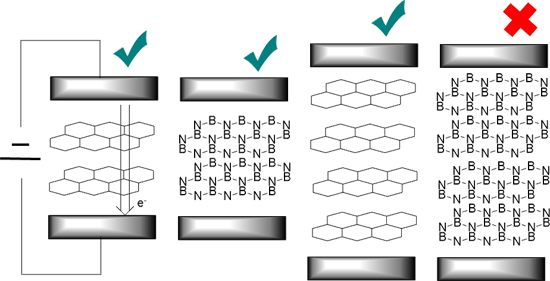
- in far-ultraviolet light-emitting devices. These applications leverage h-BN’s properties like high temperature stability, electrical insulation, and chemical resistance [18][20][21]. An interesting application of multilayer h-BN is its deposition on electrode surfaces as an electron blocking layer


Quality by design optimization of microemulsions for topical delivery of Passiflora setacea seed oil
Beilstein J. Nanotechnol. 2025, 16, 2116–2131, doi:10.3762/bjnano.16.146
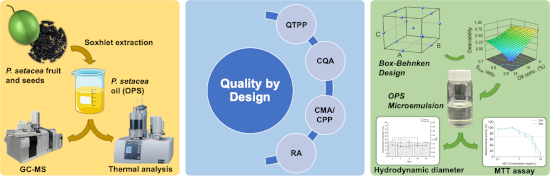
- desirable nanostructural features over time [39]. It is important to note, however, that NaCMC forms polymeric networks when dispersed in aqueous media, which scatter light and may artificially increase the measured hydrodynamic diameter [40]. Consequently, dynamic light scattering (DLS) data may not
- microemulsions were determined by dynamic light scattering using a Zetasizer® Nano ZS (Malvern Panalytical Ltd. – Malvern, United Kingdom) at 25 °C with a fixed backscattering angle of 173°. Prior to analysis, samples were diluted in purified water (1:40 v/v) [13]. All measurements were performed in triplicate


Toward clinical translation of carbon nanomaterials in anticancer drug delivery: the need for standardisation
Beilstein J. Nanotechnol. 2025, 16, 2092–2104, doi:10.3762/bjnano.16.144
- of NMs have been extensive; including niche applications such as enabling nightvision; particular Yb(III) and Er(III) doped nanoparticles have been found to upconvert NIR light into visible light, thus enabling mice to visually perceive infrared light [12]. Carbon nanomaterials as nanocarriers Carbon
- instance, small carbon nanoparticles (CNPs) are readily cleared through renal pathways, whereas larger or irregularly shaped CNPs tend to accumulate in organs such as the liver and spleen. Characterisation of these properties is typically performed using dynamic light scattering, electron microscopy, or




Calibration of piezo actuators and systems by dynamic interferometry
Beilstein J. Nanotechnol. 2025, 16, 2086–2091, doi:10.3762/bjnano.16.143
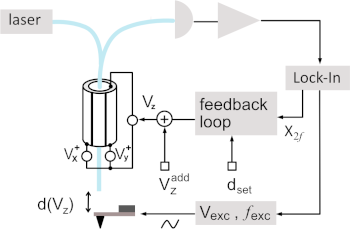
- that is a periodic function of time. However, it is generally not a harmonic oscillation due to the convolution of the (quasi)-harmonic oscillation of the cantilever with the spatially modulated light field in the interferometer cavity [13]. Dynamic interferometric signals have been studied in the
- context of NC-AFM using the interferometric concepts of Michelson and Fabry–Perot interferometers [14][15]. Both interferometers rely on the precise alignment of a single-mode optical fiber delivering the light and receiving the optical signal generated in the optical cavity formed by the cantilever and
- stabilized so that the working point is the inflection point and center of symmetry of the time-dependent interferometer signal [16], implying that the mean cavity length is d0 = , where m is an odd integer and λ is the vacuum wavelength of the light used for interferometer operation in a UHV environment. As


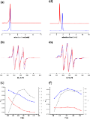
Stereodiscrimination of guests in chiral organosilica aerogels studied by ESR spectroscopy
Beilstein J. Nanotechnol. 2025, 16, 2034–2054, doi:10.3762/bjnano.16.140
- electromagnetic properties, enabling the development of metamaterials with negative refractive indices or chiral photonic crystals, which can manipulate light in novel ways. Another exciting area of research in chiral materials is developing supports for enantioselective catalysis [5][6]. Enantiomers are
- washed with toluol for 3 d. ArFSH-FmocAlaNHzoSIL: SH-FmocAlaNHzoSIL is added to a degassed solution of pentafluorostyrene (0.312 g, 1.61 mmoL) and DMPA (5 mg, 0.04 mmol) in 10 mL of toluol. The material was infiltrated overnight. The material in solution was irradiated with UV light (λ = 365 nm) for 6 h




Beyond the shell: exploring polymer–lipid interfaces in core–shell nanofibers to carry hyaluronic acid and β-caryophyllene
Beilstein J. Nanotechnol. 2025, 16, 2015–2033, doi:10.3762/bjnano.16.139
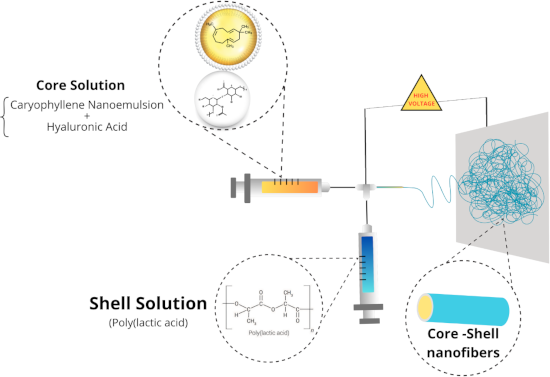
- impregnated with HA and βCp nanoemulsion. The use of βCp in practice is questioned due to its low aqueous solubility, low viscosity, extreme volatility, and sensitivity to temperature, oxygen, and light [38]. The production of a nanoemulsion was developed as a nanocarrier system designed to enhance both the
- confirmed by its fluorescence emission under incident light, indicating that the electrospun fibers predominantly displayed continuous cores. This suggests that the established coaxial electrospinning parameters successfully supported the formation of nanofibers with HA+NE cores. The limited discontinuities
- using dynamic light scattering (DLS) with a Zetasizer Nano ZS (Malvern Instruments, UK) at 25 °C. The measurements were based on a refractive index of 1.34 for the material. Prior to analysis, the samples were diluted at a ratio of 1:10 (βCp/distilled water). The reported parameters represent the




The cement of the tube-dwelling polychaete Sabellaria alveolata: a complex composite adhesive material
Beilstein J. Nanotechnol. 2025, 16, 1998–2014, doi:10.3762/bjnano.16.138
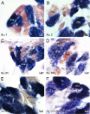
- ng·µL−1 on dewaxed sections of S. alveolata and detected with anti digoxigenin-AP Fab fragments (Roche) at a dilution of 1:2000. The signal was developed using the NBT/BCIP substrate (Roche) at 37 °C. The sections were observed using a Zeiss Axio Scope A1 light microscope with a 100× objective to




Laser ablation in liquids for shape-tailored synthesis of nanomaterials: status and challenges
Beilstein J. Nanotechnol. 2025, 16, 1963–1997, doi:10.3762/bjnano.16.137
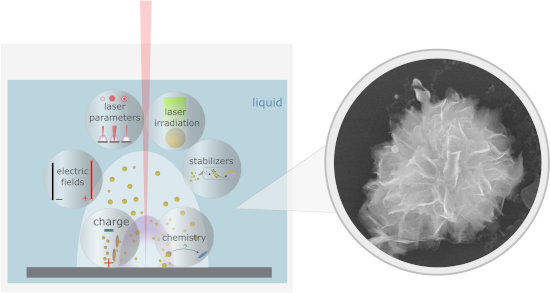
- to the laser light polarization. When the nanoflakes are fully ablated and no longer supply material, nanowire growth stops. At this stage, laser-induced fragmentation takes over, producing the nanoparticles observed in the later stages of laser modification. Several important observations were





Targeting the vector of arboviruses Aedes aegypti with nanoemulsions based on essential oils: a review with focus on larvicidal and repellent properties
Beilstein J. Nanotechnol. 2025, 16, 1894–1913, doi:10.3762/bjnano.16.132
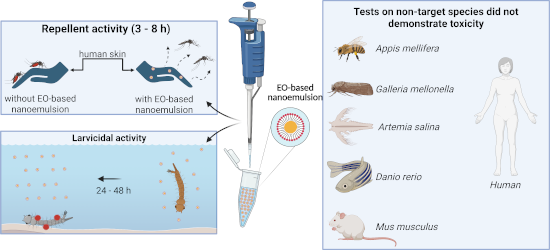
- stress, being easily degradable or evaporated upon exposure to air, light, heat, and humidity during processing, use, or storage [27][28]. Their volatile nature, susceptibility to oxidation, and insolubility in water limit their industrial application [29]. To overcome these limitations


Low-temperature AFM with a microwave cavity optomechanical transducer
Beilstein J. Nanotechnol. 2025, 16, 1873–1882, doi:10.3762/bjnano.16.130
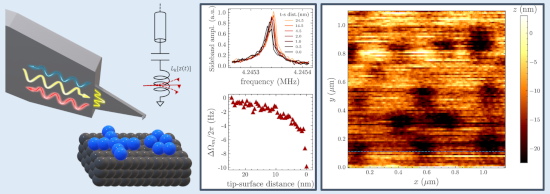
- can therefore be made light and compact, significantly reducing their susceptibility to external vibrations, the complexity of vibration isolation, and their thermal mass. For this prototype, we implement a rather simple vibration isolation which, as we will show, is sufficient to demonstrate imaging
- thermal bath. Figure 2b shows various contributions to the noise of probe 1 as a function of nc. The light blue area marks the range of operation of this sensor, where Kerr nonlinear response of the superconducting resonant circuit [27] limits nc < 2.0 × 10⁶, well below ≈ 1.4 × 10⁸. The general


Phytol-loaded soybean oil nanoemulsion as a promising alternative against Leishmania amazonensis
Beilstein J. Nanotechnol. 2025, 16, 1826–1836, doi:10.3762/bjnano.16.126
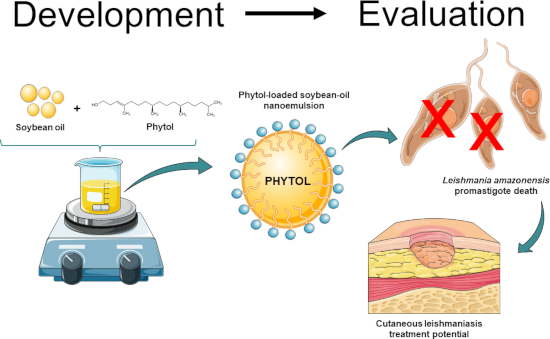
- performed. The results revealed nanodroplets with spherical and oval shapes and a homogeneous size distribution, with diameters up to 250 nm, consistent with the dynamic light scattering (DLS) data (Figure 1c,d). Colloidal and physicochemical stability The colloidal and physicochemical stability of the NEs
- analysis. All samples were prepared in triplicate and data were expressed as mean ± standard deviation. The NEs composition was described in Table 3. Physicochemical characterization Droplet size, polydispersity index and zeta potential evaluation The droplet size was determined by dynamic light scattering
- . After this time, the MTT solution was removed, and 100 μL of ethanol was added to each well. The plates were protected from light and agitated for 20 min. The absorbance was measured at 570 nm using an ELISA microplate reader (Biotek® Epoch), and the obtained values were applied following Equation 1


Piezoelectricity of layered double hydroxides: perspectives regarding piezocatalysis and nanogenerators
Beilstein J. Nanotechnol. 2025, 16, 1812–1817, doi:10.3762/bjnano.16.124
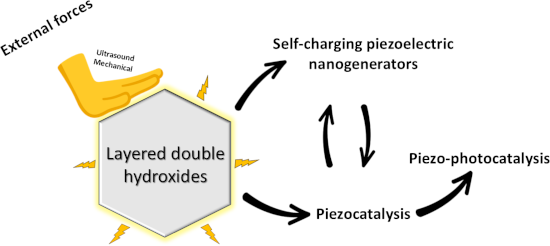
- different thicknesses were investigated for the piezo-photocatalytic degradation of carbamazepine [6]. The ultrathin samples achieved an efficiency of 95.8% with a reaction rate constant of 0.148 min−1. This effect was attributed to the higher sensitivity of ultrathin LDH sheets to both light irradiation
- and 29 times higher than that of individual Zn/Al-LDHs and LDHs combined with peroxydisulfate without light and stress exposure, respectively. This significant enhancement was also attributed to the stimulation of a high current by the photo-piezocatalytic effect generating electrons and holes in Zn
- carrier localization effects), or to interfacial electronic interactions that facilitate charge transfer. While these mechanisms may coexist, many publications lack the necessary control experiments (e.g., mechanical stimulation without light/oxidant, photocatalysis without stress, or defect-free samples

Electrical, photocatalytic, and sensory properties of graphene oxide and polyimide implanted with low- and medium-energy silver ions
Beilstein J. Nanotechnol. 2025, 16, 1794–1811, doi:10.3762/bjnano.16.123
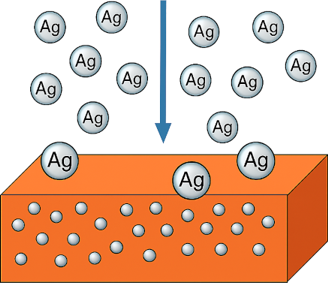
- properties of the modified materials. In our previous studies, light ions such as Cu [1][2] and C [3] were implanted into GO, PI, and other polymers. In contrast, the implantation of heavier ions like Ag interacts with the target material through different mechanisms. Owing to its higher mass, Ag has a
- bandgap and an increased density of states near the Fermi level, promotes absorption in the visible region and facilitates the generation of electron–hole (e−–h+) pairs upon light irradiation. The silver clusters also exhibit plasmonic resonances, which amplify the local electromagnetic field and promote
- spectral range, enhancing light absorption and enabling the utilization of a broader portion of the solar spectrum [19]. These combined effects result in a significantly higher photocatalytic efficiency of implanted samples compared to their non-implanted samples, both in terms of reaction rate and quantum


Exploring the potential of polymers: advancements in oral nanocarrier technology
Beilstein J. Nanotechnol. 2025, 16, 1751–1793, doi:10.3762/bjnano.16.122
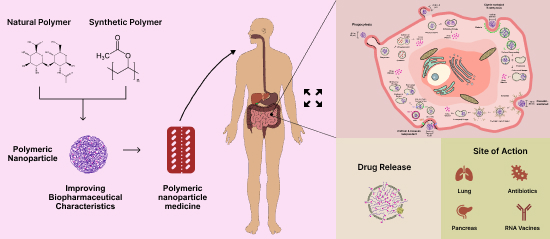
- made PNs a topic of growing interest in light of their small size and unique physicochemical properties [22][23]. These systems offer advantages for drug delivery, including the ability to protect labile compounds, control release kinetics, improve drug solubility and stability, enhance oral
- response to internal signals (e.g., oxidation or reduction, enzymatic activity, or low acidity) or external stimuli such as light and temperature [26][27]. This delivery of active ingredients relies on differential biochemical changes, facilitating the development of more precise therapies with improved
- frequently involve non-biodegradable monomers, generate non-biocompatible byproducts, and require extensive purification to eliminate potentially toxic residues, thereby complicating scalability and regulatory compliance. Moreover, the use of free radicals or ultraviolet light to initiate polymerization


Multifunctional anionic nanoemulsion with linseed oil and lecithin: a preliminary approach for dry eye disease
Beilstein J. Nanotechnol. 2025, 16, 1711–1733, doi:10.3762/bjnano.16.120

- mL·min−1, using sealed aluminum pans (T181206 and T181128). Droplet size, polydispersity index, zeta potential, and conductivity Droplet size and polydispersity index (PdI) of the formulations were measured 24 h after preparation using dynamic light scattering with a Zetasizer Nano-ZS ZEN 3600 (Malvern
- sealed glass vials at 25 °C, protected from light and kept at rest. The average droplet diameter (size-weighted), polydispersity index, and zeta potential were measured on days 1, 30, 45, and 60 after preparation, following the methodologies previously described. All measurements were performed in
- from light. Absorbance was then measured at 518 nm using a Multiskan Go UV spectrophotometer (Thermo Fisher Scientific, FI). Ascorbic acid (3% w/v, prepared in the ophthalmic vehicle) was used as the positive control. The experiment was performed in quadruplicate, and antioxidant activity (DPPH radical



Ambient pressure XPS at MAX IV
Beilstein J. Nanotechnol. 2025, 16, 1677–1694, doi:10.3762/bjnano.16.118

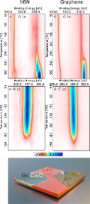
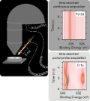
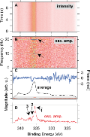
- restricted to ultrahigh vacuum. This review highlights the capabilities and scientific impact of APXPS at the MAX IV Laboratory, the world’s first fourth-generation synchrotron light source. With the APXPS beamlines SPECIES and HIPPIE, MAX IV offers state-of-the-art instrumentation for in situ and operando
- studies across a broad pressure range, enabling research in catalysis, corrosion, energy storage, and thin film growth. The high brilliance and small beam size of MAX IV’s synchrotron light are essential for pushing the time-resolution boundaries of APXPS, especially in the soft X-ray regime. We discuss
- near ambient pressure. Fourth-generation synchrotron light sources, characterized by their unprecedented photon flux, provide a key advantage for APXPS, enabling rapid data acquisition with low signal-to-noise ratio and facilitating the study of transient phenomena. This capability is essential for





Prospects of nanotechnology and natural products for cancer and immunotherapy
Beilstein J. Nanotechnol. 2025, 16, 1644–1667, doi:10.3762/bjnano.16.116

- the development of reactive oxygen species (ROS) [118]. Hyaluronic acid can inhibit local recurrence and distant tumor growth when used in immunotherapy scenarios in conjuction with CAR-T cells and anti-PDL1-conjugated platelets [119]. Transmission electron microscopy (TEM) and dynamic light
- vasculature of these cells compared to healthy ones. Upon absorption of light during photodynamic therapy, Ce6 generates ROS, causing damage to the cell membrane, proteins, and DNA of the cancer cells, ultimately leading to their destruction. Additionally, the ROS produced by Ce6 destroys the vascular layer
- light, synthesis in reverse micelles, and condensation processes [148]. Gold nanoparticles have great benefits for cancer and immunotherapy, providing increased efficiency and effectiveness by acting as immune regulators, enhancing the delivery of antitumor drugs, and improving biocompatibility



Venom-loaded cationic-functionalized poly(lactic acid) nanoparticles for serum production against Tityus serrulatus scorpion
Beilstein J. Nanotechnol. 2025, 16, 1633–1643, doi:10.3762/bjnano.16.115
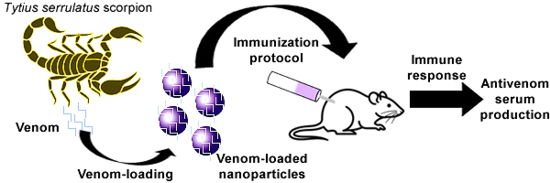
- polyethylenimine for loading peptides and proteins of T. serrulatus venom, and their use as a potential immunoadjuvant was evaluated. The protein loading efficiency of about 100% and the polyacrylamide gel electrophoresis assay confirmed the success of venom loading. Dynamic light scattering and zeta potential
- shape, uniform aspects, and sizes compatible with the results obtained by dynamic light scattering. These morphological features are known to influence the biological activity of nanoparticles loaded with bioactive molecules, directly affecting their release. The release profile of a substance depends
- weeks old), from both sexes were used for the studies. The animals were maintained at 22 ± 2 °C and in a 12 h dark/12 h light cycle, with free access to standard laboratory chow and water. Each experimental group was composed of five animals (n = 5). After the experiments, all animals were euthanized



Nanotechnology-based approaches for the removal of microplastics from wastewater: a comprehensive review
Beilstein J. Nanotechnol. 2025, 16, 1607–1632, doi:10.3762/bjnano.16.114
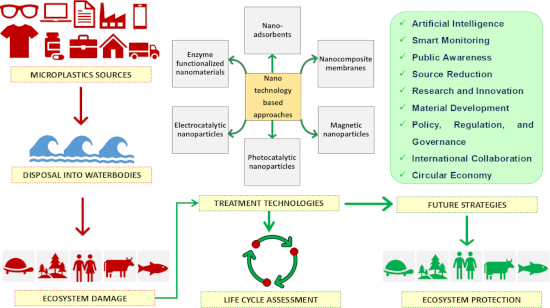
- include ultraviolet-induced oxidation, ozone-based oxidation, photocatalysis (activated by UV, solar, or visible light), electrochemical oxidation, and persulfate-activated oxidation [57]. In photocatalysis, photons excite the catalyst, generating electron–hole pairs that trigger redox reactions with the
- fabrication process involves thermally transforming Ti3C2Tx MXene into multilayered TiO2 with photocatalytic properties, followed by coating with platinum and decorating the surface with magnetic γ-Fe2O3 nanoparticles. These engineered γ-Fe2O3/Pt/TiO2 microrobots exhibit light-driven, fuel-free movement with
- , their ability to trigger photocatalytic reactions under UV light makes them effective for breaking down MPs. Among these materials, silver is especially valued for its suitability in creating corrosion-resistant surfaces. Membranes composed of metals and metal oxides exhibit strong adsorption


Photocatalytic degradation of ofloxacin in water assisted by TiO2 nanowires on carbon cloth: contributions of H2O2 addition and substrate absorbability
Beilstein J. Nanotechnol. 2025, 16, 1567–1579, doi:10.3762/bjnano.16.111
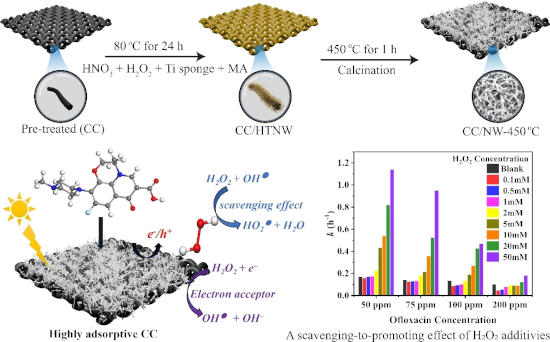
- turn, a superior photoactivity. Compared to TiO2 nanowire arrays grown on metallic Ti substrates, TiO2 nanowires supported on carbon cloth substrates demonstrate markedly superior efficiency in the photocatalytic degradation of ofloxacin (OFL) molecules in water when exposed to UV light. The TiO2
- nanowires remove 90–97% OFL in water with a high initial concentration of 50 ppm in 6 h under UV light irradiation for up to six cycles. The contributions of the hydrogen peroxide (H2O2) additive were also studied. An enhanced efficiency could be achieved only when the H2O2 in water reaches a critical
- on porous materials, such as carbon-based adsorbents. These innovations help to slow down electron–hole recombination, broaden light absorption, and enhance surface adsorption sites [11]. Cao et al. synthesized TiO2 nanowires on reduced graphene oxide (rGO) through a solvothermal method, which


Modeling magnetic properties of cobalt nanofilms used as a component of spin hybrid superconductor–ferromagnetic structures
Beilstein J. Nanotechnol. 2025, 16, 1557–1566, doi:10.3762/bjnano.16.110
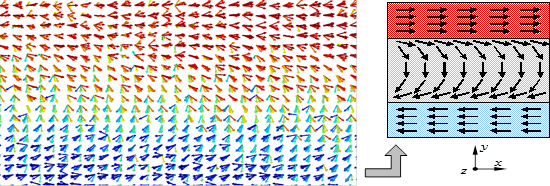
- ], reinforcing, light-reflecting, conductive, and dielectric materials. Their utilization extends to contacts, printed circuit boards, and integrated circuit elements in microelectronics, as well as to the fabrication of optical filters, the component base of optoelectronics, and advanced lithographic processes


Transient electronics for sustainability: Emerging technologies and future directions
Beilstein J. Nanotechnol. 2025, 16, 1545–1556, doi:10.3762/bjnano.16.109
- ; encapsulation; fabrication strategy; transient electronics; Introduction In recent years, a growing global concern has emerged regarding the unintended consequences of material longevity on sustainability initiatives, particularly in light of the escalating crisis of plastic waste accumulation in landfills and
- external stimuli, such as changes in pH, light exposure, or temperature [94]. Because these materials do not react under standard biodegradation conditions, they can theoretically maintain functional performance throughout the intended operational period. However, delivering such stimuli into the body


Influence of laser beam profile on morphology and optical properties of silicon nanoparticles formed by laser ablation in liquid
Beilstein J. Nanotechnol. 2025, 16, 1533–1544, doi:10.3762/bjnano.16.108
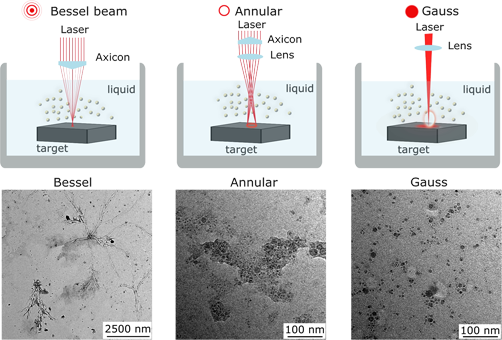
- special configurations of laser ablation experiments, such as laser ablation in an applied external electrical field [14][15][16], variation of liquid composition [13], laser ablation at increased liquid temperature [17][18], and using different light polarization (linear or circular) [19]. As a result, a