

Search results
Search for "molecular dynamics" in Full Text gives 184 result(s) in Beilstein Journal of Nanotechnology.
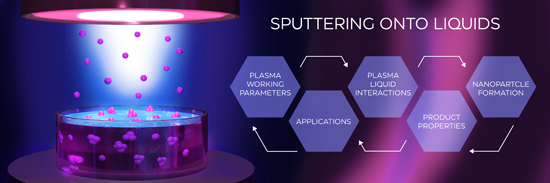
Sputtering onto liquids: a critical review
Beilstein J. Nanotechnol. 2022, 13, 10–53, doi:10.3762/bjnano.13.2






A review on slip boundary conditions at the nanoscale: recent development and applications
Beilstein J. Nanotechnol. 2021, 12, 1237–1251, doi:10.3762/bjnano.12.91

- force [39][40][41][42]. However, compared with experimental methods, numerical simulations, such as the lattice Boltzmann method and molecular dynamics (MD) simulation, are more attractive in many aspects. First, numerical simulations can readily reach the system sizes and timescales of practical
- Beskok compared a slip-modified theoretical model with the molecular dynamics simulation results. They found that the slip enhancement in the electro-osmotic flow is independent of the channel height, which can provide a theoretical basis for membrane fabrication of electrically assisted nanofiltration


Irradiation-driven molecular dynamics simulation of the FEBID process for Pt(PF3)4
Beilstein J. Nanotechnol. 2021, 12, 1151–1172, doi:10.3762/bjnano.12.86
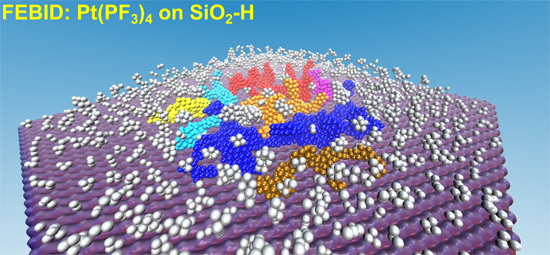
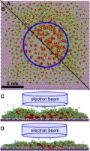
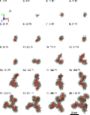
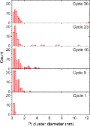
- presents a detailed computational protocol for the atomistic simulation of formation and growth of metal-containing nanostructures during focused electron beam-induced deposition (FEBID). The protocol is based upon irradiation-driven molecular dynamics (IDMD), a novel and general methodology for computer
- deposition; irradiation-driven molecular dynamics; irradiation-induced chemistry; platinum nanostructures; reactive force fields; Introduction The controllable fabrication of nanostructures with nanoscale resolution remains a considerable scientific and technological challenge [1]. To address this challenge
- up to a few hundred atoms. This makes ab initio approaches of limited use to describe the irradiation-induced chemical transformations occurring during the FEBID process. A breakthrough into the atomistic description of FEBID has been achieved recently by means of irradiation-driven molecular








Effects of temperature and repeat layer spacing on mechanical properties of graphene/polycrystalline copper nanolaminated composites under shear loading
Beilstein J. Nanotechnol. 2021, 12, 863–877, doi:10.3762/bjnano.12.65

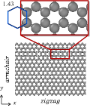
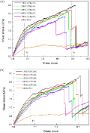
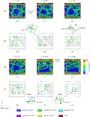
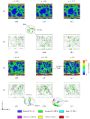
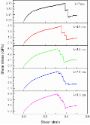
- ) composites under shear loading are investigated by molecular dynamics simulations. The effects of different temperatures, graphene chirality, repeat layer spacing, and grain size on the mechanical properties, such as failure mechanism, dislocation, and shear modulus, are observed. The results indicate that
- . Keywords: dislocation; graphene/Cu; molecular dynamics; shear; self-healing; Introduction Graphene is a monolayered hexagonal thin film composed of sp2-bonded carbon atoms and has extraordinary properties for applications in nanoelectronics [1][2][3][4][5][6]. However, because of the two-dimensional
- this work, we focus on temperature and microstructure effects on graphene/polycrystalline copper nanolaminated (GPCuNL) composites. As mentioned above, the microstructure plays a crucial role for the mechanical behavior of GPCuNL composites. Thus, in the present study, molecular dynamics (MD











Reducing molecular simulation time for AFM images based on super-resolution methods
Beilstein J. Nanotechnol. 2021, 12, 775–785, doi:10.3762/bjnano.12.61
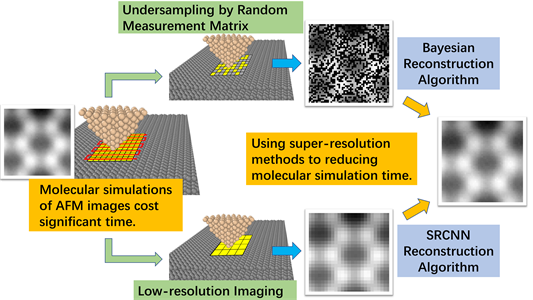
- can be used to speed up the generation of training data and vary simulation resolution for AFM machine learning. Keywords: atomic force microscopy; Bayesian compressed sensing; convolutional neural network; molecular dynamics simulation; super resolution; Introduction Atomic force microscopy methods
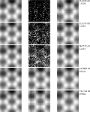
- . The energy maps of the interaction between several tips and samples under different conditions are simulated in dynamic and quasi-static modes. The molecular dynamics simulation details and main steps of reconstruction algorithms are presented. Then, several reconstruction results are conducted to
- dynamics simulation To test the effectiveness of the reconstruction algorithms we perform molecular dynamics simulations of AFM imaging in different conditions. The dynamic process (AM mode) and quasi-static process (the relative position of tip–sample remains unchanged in the simulation) are separately




Surface-enhanced Raman scattering of water in aqueous dispersions of silver nanoparticles
Beilstein J. Nanotechnol. 2021, 12, 497–506, doi:10.3762/bjnano.12.40

- are faster than molecular dynamics methods. The simulations were performed on a 100×100×32 FCC lattice and averaged over 10 000 time units. Two stiff immobile walls representing Ag {100} surfaces were placed at z = 1 and z = 32. In other directions, (x, y) periodic boundary conditions were used. All


The role of gold atom concentration in the formation of Cu–Au nanoparticles from the gas phase
Beilstein J. Nanotechnol. 2021, 12, 72–81, doi:10.3762/bjnano.12.6
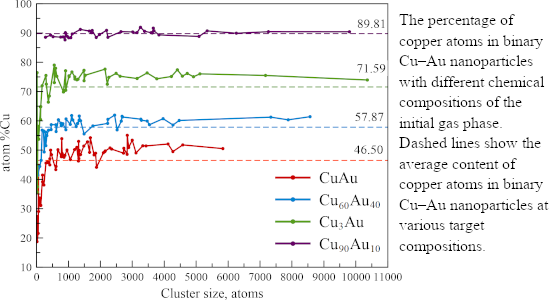
- composition; however, the size of the resulting particles varies significantly. To solve this issue, we studied the formation of Cu–Au nanoparticles with different chemical compositions from a gaseous medium using computer molecular dynamics (MD) simulation. The aim was to determine the effect of the
- initial vapor phase, basically corresponded to a given target composition. Keywords: binary nanoparticles; computer simulation; copper; gold; molecular dynamics; Introduction The nanometer-sized Cu–Au compounds are being studied quite actively [1][2][3][4][5][6][7][8] because of their potential
- energy effects but also by kinetic effects. By using molecular dynamics methods, we tried to determine the chemical ordering of Cu–Au particles in these synthesis processes and to elucidate some of their formation mechanisms. In particular, it was found that an increase in the relative number of gold


Scanning transmission imaging in the helium ion microscope using a microchannel plate with a delay line detector
Beilstein J. Nanotechnol. 2020, 11, 1854–1864, doi:10.3762/bjnano.11.167
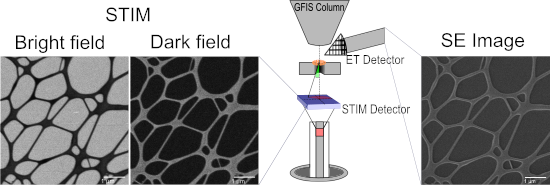
- channeling effect in the HIM has also been studied using Monte Carlo [21] and molecular dynamics [22] simulations. Measuring the energy of the transmitted particles is a novel technique that adds an information channel to the previously discussed transmission imaging modes. It will provide information on the


Nanomechanics of few-layer materials: do individual layers slide upon folding?
Beilstein J. Nanotechnol. 2020, 11, 1801–1808, doi:10.3762/bjnano.11.162

- methods; atomic force microscopy (AFM); molecular dynamics (MD); Raman spectroscopy; nanostructured materials; Introduction Layered materials such as graphite, talc, and transition metal dichalcogenides (TMDs), held together by strong covalent bonds within layers and relatively weak van der Waals
- folded 2D material. In principle, the model describes any 2D material, and its predictions are corroborated by comparison with classical molecular dynamics simulations and to results of previous investigations on graphene and talc. Because folds naturally occur in flakes of varying thickness
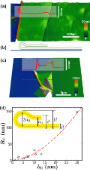
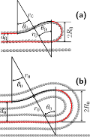

![[Graphic 5]](/bjnano/content/inline/2190-4286-11-162-i8.svg?max-width=637&scale=1.18182) =
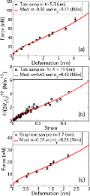
= ![[Graphic 6]](/bjnano/content/inline/2190-4286-11-162-i9.svg?max-width=637&scale=1.18182) as a function of 1/h for the nine measured talc samples. h is a directly measured ...
as a function of 1/h for the nine measured talc samples. h is a directly measured ...
Molecular dynamics modeling of the influence forming process parameters on the structure and morphology of a superconducting spin valve
Beilstein J. Nanotechnol. 2020, 11, 1776–1788, doi:10.3762/bjnano.11.160
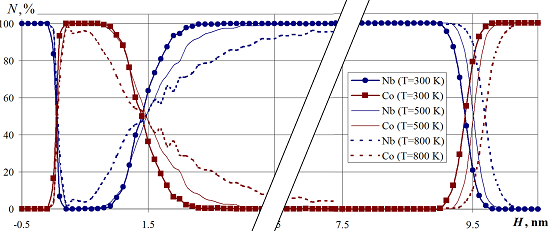
- molecular dynamics method using the many-particle potential of the modified embedded-atom method. In the calculation process the temperature was controlled using the Nose–Hoover thermostat. The simulation of the atomic nanolayer formation was performed by alternating the directional deposition of different
- atomic structures depending on the main parameters of the deposition process. Keywords: hybrid nanostructure; mathematical modeling; modified embedded-atom method; molecular dynamics; spintronics; spin valve; vacuum deposition; Introduction Multilayer superconductor/ferromagnetic (S/F) hybrid
- spintronics applications were studied by the molecular dynamics method [33][34]. Molecular dynamics describes the motion of each nanosystem atom at a certain point in time, therefore, it is possible to reproduce the detailed evolution of nanoelements and their properties. The basis of the method is the


Atomic defect classification of the H–Si(100) surface through multi-mode scanning probe microscopy
Beilstein J. Nanotechnol. 2020, 11, 1346–1360, doi:10.3762/bjnano.11.119

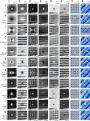
- -terminated tips In Figure 3, we compare AFM line profiles taken across the defect of interest (blue) and a corresponding defect-free region (grey) with a simple theoretical structure optimized by molecular dynamics calculations (see Methods for parameters). A preliminary comparison of Figure 3 with the
- above the defect in 4t show a reduced minimum, as well as a horizontal shift in position towards the defect centre due to a polaronic distortion induced by the vacancy’s localized negative charge. Molecular dynamics relaxation was unable to capture this effect as part of the modelling, so the ball and
- terminations. The defect free H–Si ball and stick model was the same as used in [43], with defects manually inserted using Avogadro [94][95]. The geometry of the defect atoms within the lattice were optimized using molecular dynamics relaxation with a Merck molecular force field (MMFF94) [96]. Images of the



Three-dimensional solvation structure of ethanol on carbonate minerals
Beilstein J. Nanotechnol. 2020, 11, 891–898, doi:10.3762/bjnano.11.74

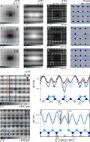
- molecular dynamics (MD) simulations. Within a single AFM data set we are able to resolve both the first laterally ordered solvation layer of ethanol on the calcite surface as well as the following solvation layers that show no lateral order. Our experimental results are in excellent agreement with MD
- has been investigated theoretically by using both density functional theory (DFT) [12][13] and molecular dynamics (MD) simulations [14][15][16][17]. It has been found that ethanol molecules strongly bind towards calcite (10.4) terraces – even stronger than water [12][14][16][17]. Ethanol molecules
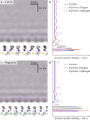
- Information File 1, where we also discuss the robustness and reproducibility of the AFM results. Molecular dynamics simulations We employed molecular dynamics simulations to model both calcite and magnesite with their (10.4) surface exposed as a nine layer crystal with three surface unit cells in the

Simulations of the 2D self-assembly of tripod-shaped building blocks
Beilstein J. Nanotechnol. 2020, 11, 884–890, doi:10.3762/bjnano.11.73

- Lukasz Baran Wojciech Rzysko Edyta Slyk Department for Theoretical Chemistry, Institute of Chemical Sciences, Faculty of Chemistry, Maria Curie-Sklodowska University in Lublin, Poland. 10.3762/bjnano.11.73 Abstract We introduce a molecular dynamics (MD) coarse-grained model for the description of
- can lead to valuable conclusions, which can be further explored and proved by experimental studies. To date, there are two main approaches that can complement the results obtained in experiments. The first one involves the use of all-atom simulations by molecular dynamics (MD) [27][28][29][30]. Even
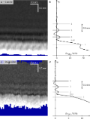
- ” active sites, respectively. In a) we can see that the arms are marked as A, B, and C. e) Parameters of the molecular dynamics model. Part of the configurations for a) NT111 at T* = 0.58, b) NL111 at T* = 0.54, and c) WT111 at T* = 0.58, all with ρ* = 0.2. d) Corresponding Monte Carlo simulation on a


Quantitative determination of the interaction potential between two surfaces using frequency-modulated atomic force microscopy
Beilstein J. Nanotechnol. 2020, 11, 729–739, doi:10.3762/bjnano.11.60
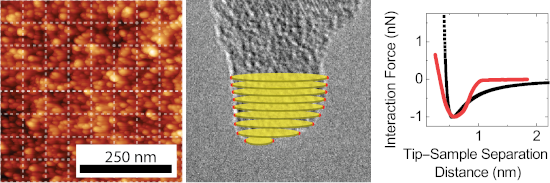
- mechanics models [22][23][24][25] to allow better visualization of surface interactions. While useful insights can be obtained using fully atomistic simulations, such as molecular dynamics simulations or density functional theory, these techniques are impractical for describing larger contacts with a large


A novel dry-blending method to reduce the coefficient of thermal expansion of polymer templates for OTFT electrodes
Beilstein J. Nanotechnol. 2020, 11, 671–677, doi:10.3762/bjnano.11.53

- the influence of fullerene (C60) on the CTE of Araldite LY 5052/Aradur HY 5052 cross-linked epoxy resin by molecular dynamics simulations. The CTE was minimized by adding a maximum of 15.9 wt % fullerene to the LY/HY/C60 epoxy system. Liu et al. [14] selected MCM-41 mesoporous silica nanoparticles


Understanding nanoparticle flow with a new in vitro experimental and computational approach using hydrogel channels
Beilstein J. Nanotechnol. 2020, 11, 296–309, doi:10.3762/bjnano.11.22

- applicable for modeling smaller NP systems or optimizing less detailed simulations due to their increased complexity and computational cost [17]. The coarse grained molecular dynamics simulations can characterize larger systems over time scales greater than 1 ms [21]. These slightly coarser models simulate a
- group of atoms or molecular fragment instead of an individual atom to incorporate a larger system. However, molecular dynamics models in general are more appropriate in understanding the size, surface, interaction, and uptake of a NP rather than their flow over larger dimensions as it models the



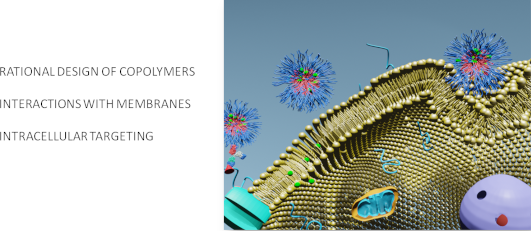
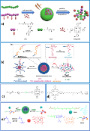
Rational design of block copolymer self-assemblies in photodynamic therapy
Beilstein J. Nanotechnol. 2020, 11, 180–212, doi:10.3762/bjnano.11.15






Nonclassical dynamic modeling of nano/microparticles during nanomanipulation processes
Beilstein J. Nanotechnol. 2020, 11, 147–166, doi:10.3762/bjnano.11.13
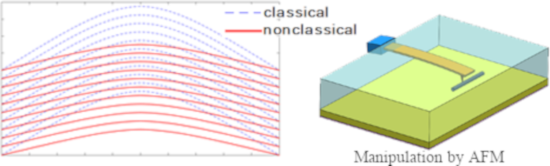
- of nanoparticles. To model this process, previous studies employed classical continuum mechanics and molecular dynamics simulations which had certain limitations; the former does not consider size effects at the nanoscale while the latter is time consuming and faces computational restrictions. To
- flexible behavior. Also, for manipulating multiple nanowires, they presented a method based on graph theory that saved significant time owing to being independent from intermediate scanning [22]. Mahdjour Firouzi et al. tried to simulate the manipulation of biological nanoparticles using molecular dynamics
- required repulsive force for releasing nanoparticles via high electrostatic voltage. The method was proposed for a conductive tip and nanoparticles, and the efficiency of the proposed method was studied using a combination of molecular dynamics simulation and FEM [25]. To examine the size dependence in the







Molecular architectonics of DNA for functional nanoarchitectures
Beilstein J. Nanotechnol. 2020, 11, 124–140, doi:10.3762/bjnano.11.11

- designed a porphyrin-tethered single-DNA duplex as a transmembrane ion channel [94]. Their minimalistic design approach involved the attachment of six porphyrin units along the oligonucleotide sequence that facilitated the movement of ions through the channel. The schematic of molecular dynamics simulation


Internalization mechanisms of cell-penetrating peptides
Beilstein J. Nanotechnol. 2020, 11, 101–123, doi:10.3762/bjnano.11.10

- peptides to directly cross the cellular membranes involves the formation of pores. A theoretical model using molecular dynamics simulations was proposed for the translocation of the TAT peptide, which explains the relevance of peptide–phosphate interaction during the pore formation [47]. This theoretical


Formation of metal/semiconductor Cu–Si composite nanostructures
Beilstein J. Nanotechnol. 2019, 10, 2497–2504, doi:10.3762/bjnano.10.240
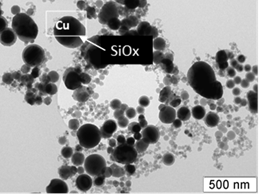
- 10.3762/bjnano.10.240 Abstract Molecular dynamics modelling of the formation of copper and silicon composite nanostructures was carried out by using the many-particle potential method. The dependences of the internal structure on the cooling rate and the ratio of elements were investigated. The
- content of 50 atom %. Additionally, an estimation of the effective experimental cooling rate was made. Keywords: composite nanoparticle; gas-phase synthesis; molecular dynamics modelling; Introduction In recent years, due to the development of various methods of synthesis, it has become possible to
- approach to modelling the formation of metal/semiconductor core–shell nanoparticles was described in [18]. There, a core–shell particle was obtained by spraying the outer shell on an already formed core. The molecular dynamics calculation of such a procedure showed the possibility of the formation of Cu–Si


Abrupt elastic-to-plastic transition in pentagonal nanowires under bending
Beilstein J. Nanotechnol. 2019, 10, 2468–2476, doi:10.3762/bjnano.10.237
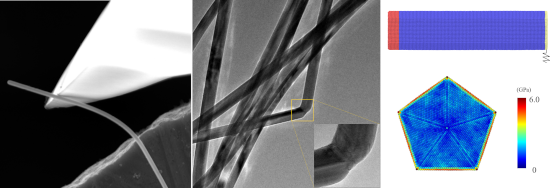
- flexible polymer composite materials. Keywords: finite element method; mechanical properties; molecular dynamics; nanowires; Introduction Nanostructures comprised of noble metals with face centered cubic (FCC) crystal structure (Au, Ag and Cu according to the most common physical definition) prepared via
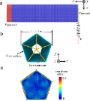
- : Classical molecular dynamics (MD) simulations were conducted to investigate the atomic deformation behavior of the penta-twinned Ag NW under bending. The large-scale open-source molecular dynamics simulator, LAMMPS, developed by Sandia National Laboratories, was adopted [35]. The interatomic interactions
- the present work are comparable, but do not exceed the theoretical yield strength value of bulk Au, which is about 8 GPa in accordance with the empirical relation E/10 based on atomic bonding considerations [41]. Molecular dynamics results Figure 8 depicts the loading curve of the penta-twinned NW



Mobility of charge carriers in self-assembled monolayers
Beilstein J. Nanotechnol. 2019, 10, 2449–2458, doi:10.3762/bjnano.10.235
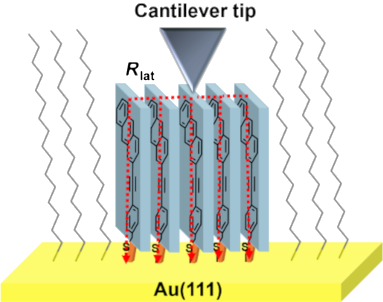
- conductivity within self-assembled monolayers was further corroborated by Bashir et al. through the application of molecular dynamics simulation where the charge transport was taken explicitly into account [29]. The theoretical study on the optimized model of HBC by using the Ehrenfest (mean field) approach


Design of a nanostructured mucoadhesive system containing curcumin for buccal application: from physicochemical to biological aspects
Beilstein J. Nanotechnol. 2019, 10, 2304–2328, doi:10.3762/bjnano.10.222
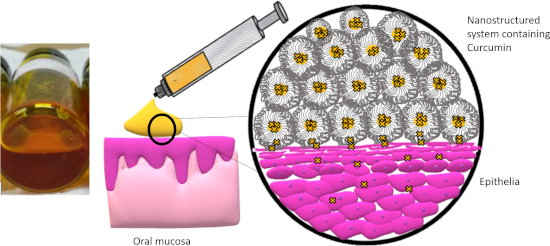
- spectral emission (Table 1). Anisotropy is considered a powerful technique to investigate the molecular dynamics of fluorescent solutes, such as CUR. During the fluorescence analysis, the molecules are excited by linearly polarized light, and they absorb and emit the fluorescence in a polarized way. If the


Effects of surface charge and boundary slip on time-periodic pressure-driven flow and electrokinetic energy conversion in a nanotube
Beilstein J. Nanotechnol. 2019, 10, 1628–1635, doi:10.3762/bjnano.10.158
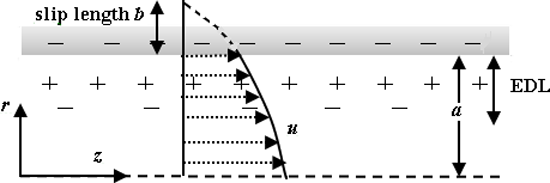
- independent of the surface charge. However, recent theoretical and experimental results have shown that the surface charge affects the slip length. Joly et al. [18] used molecular dynamics simulations to find the relationship between slip length and surface charge density. The reason is that there exists an