


Search results
Search for "nanofabrication" in Full Text gives 127 result(s) in Beilstein Journal of Nanotechnology.
Experimental study of an evanescent-field biosensor based on 1D photonic bandgap structures
Beilstein J. Nanotechnol. 2019, 10, 967–974, doi:10.3762/bjnano.10.97
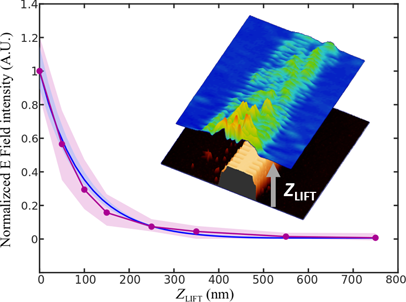
- increase by a factor about three. Experimental For the creation of the photonic chips, a standard nanofabrication process optimized in our clean-room facilities has been used [11]. E-beam lithography with 100 keV acceleration voltage was used to expose the created chip layout onto a 100 nm thick hydrogen


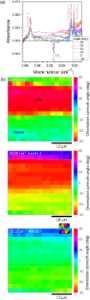
Nanoscale optical and structural characterisation of silk
Beilstein J. Nanotechnol. 2019, 10, 922–929, doi:10.3762/bjnano.10.93

- , Hamamatsu, Shizuoka 4328561, Japan Tokyo Tech World Research Hub Initiative (WRHI), School of Materials and Chemical Technology, Tokyo Institute of Technology, 2-12-1, Ookayama, Meguro-ku, Tokyo 152-8550, Japan Melbourne Center for Nanofabrication, Australian National Fabrication Facility, Clayton 3168
- Recent advances in the nanofabrication of electronic devices require cutting-edge analytical technologies to provide a reliable structural characterisation of materials at the nanoscale. Such technologies are particularly important to probe molecular properties of cross sections smaller than 100 nm in
- all three dimensions, which is of rapidly growing interest in the field of nanotechnology. Electronic chip manufacturing is currently introducing the sub-10 nm fabrication node (a half pitch of a grating pattern) in the development of 3D fin-gates of field-effect transistors. Nanofabrication


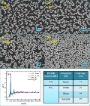
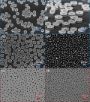
Fabrication of silver nanoisland films by pulsed laser deposition for surface-enhanced Raman spectroscopy
Beilstein J. Nanotechnol. 2019, 10, 882–893, doi:10.3762/bjnano.10.89

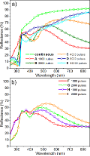
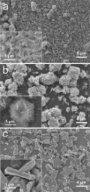
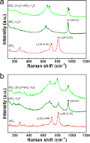
- . Keywords: nanofabrication; pulsed laser deposition; SERS substrates; silver nanoisland films; surface-enhanced Raman spectroscopy; X-ray photoelectron spectroscopy; Introduction In recent years, SERS has been intensively investigated as a sensing tool in many applications [1][2][3]. Of particular interest




Charged particle single nanometre manufacturing
Beilstein J. Nanotechnol. 2018, 9, 2855–2882, doi:10.3762/bjnano.9.266
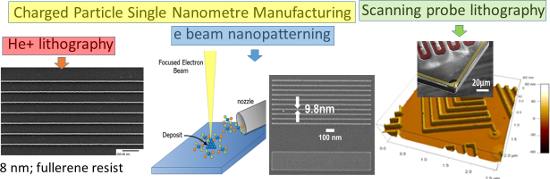
- EBID for reliable nanofabrication has required several issues to be addressed, such as different kinds of proximity effects [58][59] leading to deposit broadening while patterning dense lines and dots, variation of deposit morphology as a function of the beam current and precursor flux [60], and the


Nanostructure-induced performance degradation of WO3·nH2O for energy conversion and storage devices
Beilstein J. Nanotechnol. 2018, 9, 2845–2854, doi:10.3762/bjnano.9.265

- : Coloration/bleaching during electrochemical cycling. Acknowledgements The work was supported by the Research and Development Program of the Ghent University Global Campus, South Korea. This work was supported in part by the Melbourne Centre for Nanofabrication (MCN) in the Victoria Node of the Australian


Low cost tips for tip-enhanced Raman spectroscopy fabricated by two-step electrochemical etching of 125 µm diameter gold wires
Beilstein J. Nanotechnol. 2018, 9, 2718–2729, doi:10.3762/bjnano.9.254

- intrinsically scalable and tips of any kind of material can be used, but the reproducibility is low and the field enhancement is not excellent. Nanofabrication methods guarantee optimal control of the dimensions and reproducibility, but they are serial techniques, i.e., slow, and fabrication costs are high. In


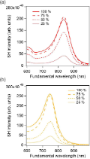
Silencing the second harmonic generation from plasmonic nanodimers: A comprehensive discussion
Beilstein J. Nanotechnol. 2018, 9, 2674–2683, doi:10.3762/bjnano.9.250

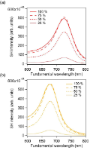
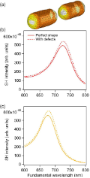
- ]. Indeed, although important progress has been made in nanofabrication, it still impossible to fabricate nanostructures of perfect shape and, for real experiments, one must consider the influence of shape variations of the nanostructures on SHG. This issue has been thoroughly considered in the case of SHG
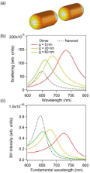
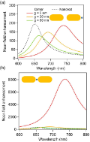
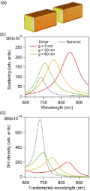
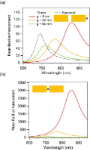
- , the case of gold dimers made of rectangular arms is considered, Figure 7a. The purpose is to show that the observations made for cylindrical nanorods still stand for other geometries. Both geometries can be obtained with specific nanofabrication techniques. While cylindrical nanorods would be the


Two-dimensional semiconductors pave the way towards dopant-based quantum computing
Beilstein J. Nanotechnol. 2018, 9, 2668–2673, doi:10.3762/bjnano.9.249
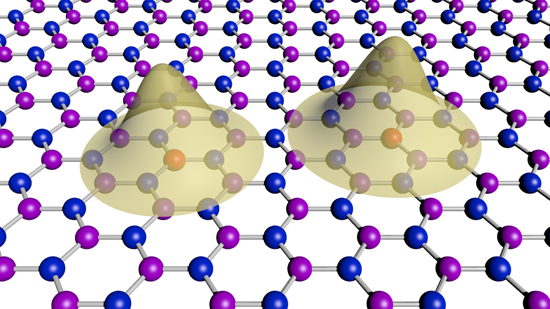
- 21941-972, Brazil 10.3762/bjnano.9.249 Abstract Since the proposal in 1998 to build a quantum computer using dopants in silicon as qubits, much progress has been made in the nanofabrication of semiconductors and the control of charge and spins in single dopants. However, an important problem remains


![[Graphic 7]](/bjnano/content/inline/2190-4286-9-249-i7.svg?max-width=637&scale=1.18182) and energy for one electron bound to a donor pair
and energy for one electron bound to a donor pair ![[Graphic 8]](/bjnano/content/inline/2190-4286-9-249-i8.svg?max-width=637&scale=1.18182) as a function of R. For R = 2a*, ...
as a function of R. For R = 2a*, ...

Polarization-dependent strong coupling between silver nanorods and photochromic molecules
Beilstein J. Nanotechnol. 2018, 9, 2657–2664, doi:10.3762/bjnano.9.247

- large number of metallic nanoparticles and molecules respectively. Indeed, the nanofabrication process does not allow us to obtain identical geometries over this large number of particles, especially for this nanorod geometry where a rounding of the corners occurs. The extinction measurements do not
- parameters of the nanorods, mainly width and length, correspond to the designed values. Indeed, only few images have been recorded by electronic microscopy after the nanofabrication process and small variations between the designed and the real sizes can occur. To confirm the observation of a strong coupling

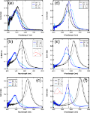


Enhancement of X-ray emission from nanocolloidal gold suspensions under double-pulse excitation
Beilstein J. Nanotechnol. 2018, 9, 2609–2617, doi:10.3762/bjnano.9.242

- Branch, Russian Academy of Science, Vladivostok 690041, Russia Melbourne Centre for Nanofabrication, the Victorian Node of the Australian National Fabrication Facility, Clayton 3168 VIC, Australia College of Engineering, Chang Gung University , Guishan, Taoyuan 33302, Taiwan Department of Materials


Pattern generation for direct-write three-dimensional nanoscale structures via focused electron beam induced deposition
Beilstein J. Nanotechnol. 2018, 9, 2581–2598, doi:10.3762/bjnano.9.240
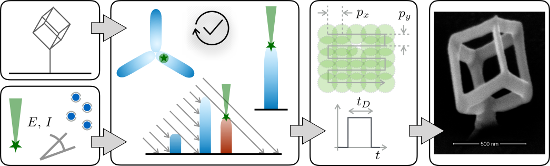
- different precursors are presented that validate the effectiveness of the implementation. Keywords: focused electron beam induced deposition; nanofabrication; three-dimensional nanostructures; 1 Introduction New physical effects and functionalities can arise when the third dimension can be accessed at the
- into account in order to deposit well-defined 3D structures that are in satisfying agreement with the originally targeted geometry. Fowlkes and collaborators have demonstrated the potential of a simulation-guided and computer-aided design (CAD)-based approach to 3D nanofabrication via FEBID [24], which




Metal–dielectric hybrid nanoantennas for efficient frequency conversion at the anapole mode
Beilstein J. Nanotechnol. 2018, 9, 2306–2314, doi:10.3762/bjnano.9.215

- have already been achieved in integrated nonlinear optics [24], including SHG in quasi-phase-matched waveguides [25], efficient frequency-comb generation [25], and optical parametric oscillation [26]. Only very recently, thanks to the dramatic improvement of nanofabrication techniques, the integration




Optimization of the optical coupling in nanowire-based integrated photonic platforms by FDTD simulation
Beilstein J. Nanotechnol. 2018, 9, 2248–2254, doi:10.3762/bjnano.9.209

- width. For NW devices with a 1 µm diameter, the optimized efficiency is reached for a 1.49 µm wide waveguide. All of the parameters are within reach of current nanofabrication capabilities. Therefore, the optimized photonic platform with a high light coupling efficiency could be implemented. This light


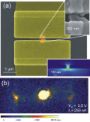
Electromigrated electrical optical antennas for transducing electrons and photons at the nanoscale
Beilstein J. Nanotechnol. 2018, 9, 1964–1976, doi:10.3762/bjnano.9.187

- for producing these functional units based upon the electromigration of metal constrictions. Results: We combine multiple nanofabrication steps to realize in-plane tunneling junctions made of two gold electrodes, separated by a sub-nanometer gap acting as the feedgap of an optical antenna. We
- tunneling transport. We demonstrate light generation from the feedgap and discuss different emission mechanisms based on the radiated spectrum and activation voltage. Results and Discussion Nanofabrication of electrically connected optical antennas The starting geometry for realizing an electrically


![[Graphic 32]](/bjnano/content/inline/2190-4286-9-187-i38.svg?max-width=637&scale=1.18182) and
and ![[Graphic 33]](/bjnano/content/inline/2190-4286-9-187-i39.svg?max-width=637&scale=1.18182) are...
are...


Interaction-tailored organization of large-area colloidal assemblies
Beilstein J. Nanotechnol. 2018, 9, 1582–1593, doi:10.3762/bjnano.9.150
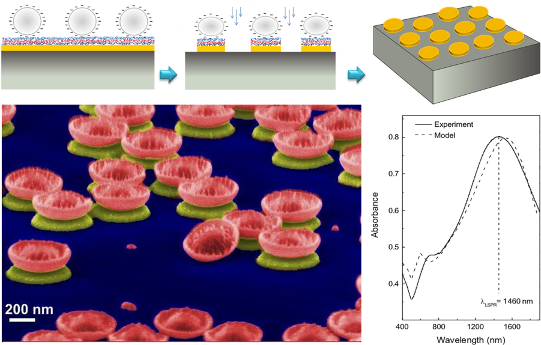
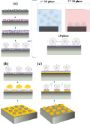
- size, shape and distribution control. However, these processes have high cost and low speed and these limitations encourage the development of alternative methods for parallel nanofabrication. Among them, colloidal lithography is emerging as an innovative strategy for fast and inexpensive realization
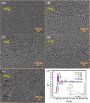

Cathodoluminescence as a probe of the optical properties of resonant apertures in a metallic film
Beilstein J. Nanotechnol. 2018, 9, 1491–1500, doi:10.3762/bjnano.9.140
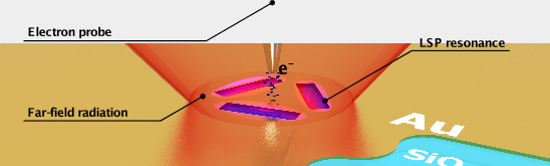
- : Additional figures. Background material relating to the modes of rod and aperture ensembles. Acknowledgements This work was performed in part at the Melbourne Centre for Nanofabrication (MCN) in the Victorian Node of the Australian National Fabrication Facility (ANFF). The authors acknowledge the financial


Chemistry for electron-induced nanofabrication
Beilstein J. Nanotechnol. 2018, 9, 1317–1320, doi:10.3762/bjnano.9.124
- -Alexander-Universität Erlangen-Nürnberg, Egerlandstr. 3, 91058 Erlangen, Germany, Department of Imaging Physics, Delft University of Technology, Lorentzweg 1, 2628CJ Delft, The Netherlands 10.3762/bjnano.9.124 Keywords: electron-induced chemistry, FEBID; FEBIP; nanofabrication; nanolithography; Electron
- technique for nanofabrication capable of producing structures that range from 0D dots with a diameter of less than 1 nm [3] to arbitrarily shaped free-standing 3D structures with sub-10 nm size [1][2] or fascinating complexity [4][5]. These structures can serve as devices that give access to a wealth of new
- in the FEBID process. All these factors govern the deposit purity, spatial resolution, and processing speed. The European COST Action CELINA (Chemistry for ELectron-Induced NAnofabrication [9]) has, from 2013 to 2017, stimulated multidisciplinary and multinational collaborative research that aims at
Field-controlled ultrafast magnetization dynamics in two-dimensional nanoscale ferromagnetic antidot arrays
Beilstein J. Nanotechnol. 2018, 9, 1123–1134, doi:10.3762/bjnano.9.104
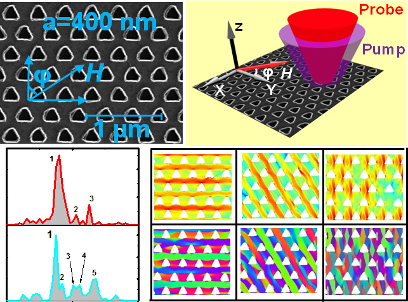
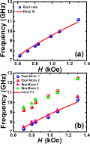
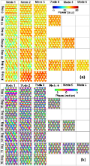
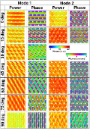
- triangular holes in future magnonic and spintronic devices. Keywords: ferromagnetic antidot lattice; magnonic crystal; micromagnetic simulations; spin-wave modes; time-resolved magneto-optical Kerr effect; Introduction Recent advances in nanofabrication techniques have resulted in artificially patterned



Magnetic characterization of cobalt nanowires and square nanorings fabricated by focused electron beam induced deposition
Beilstein J. Nanotechnol. 2018, 9, 1040–1049, doi:10.3762/bjnano.9.97

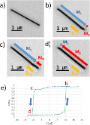
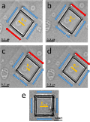
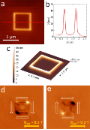
- at remanence using L-TEM and MFM. Our results confirm the suitability of FEBID for nanofabrication of magnetic structures and demonstrate the versatility of TEM techniques for the study and manipulation of magnetic domain walls in nanostructures. Keywords: focused electron beam induced deposition
Wafer-scale bioactive substrate patterning by chemical lift-off lithography
Beilstein J. Nanotechnol. 2018, 9, 311–320, doi:10.3762/bjnano.9.31
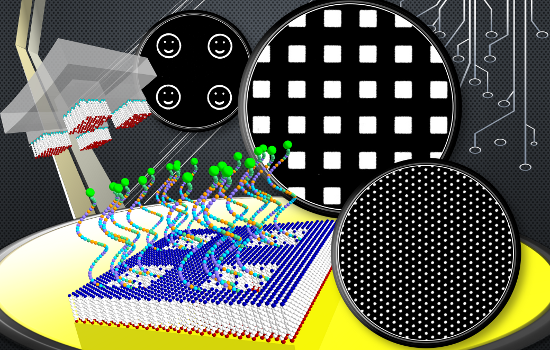
- versatile applications in chemistry, biology, biophysics, and bioengineering [1][2][3][4]. In order to achieve the feature size and procedure convenience requirements that satisfy the specific needs for different applications, the adaptation of appropriate micro/nanofabrication approaches is necessary. The


Review: Electrostatically actuated nanobeam-based nanoelectromechanical switches – materials solutions and operational conditions
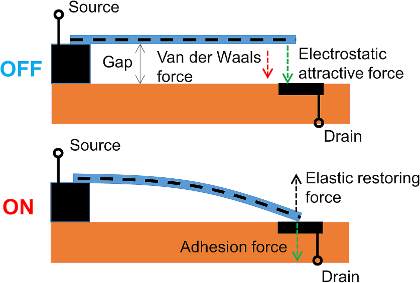
Beilstein J. Nanotechnol. 2018, 9, 271–300, doi:10.3762/bjnano.9.29


Design of photonic microcavities in hexagonal boron nitride
Beilstein J. Nanotechnol. 2018, 9, 102–108, doi:10.3762/bjnano.9.12
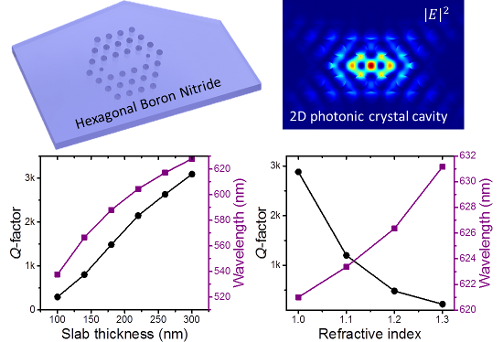
- ]. The former process is preferred when attempting to maximize the field overlap between the emitters and the cavity modes, and is often employed when using materials that are amenable to scalable nanofabrication protocols, such as gallium arsenide or silicon [17][18], and more recently diamond and


Localized growth of carbon nanotubes via lithographic fabrication of metallic deposits
Beilstein J. Nanotechnol. 2017, 8, 2592–2605, doi:10.3762/bjnano.8.260
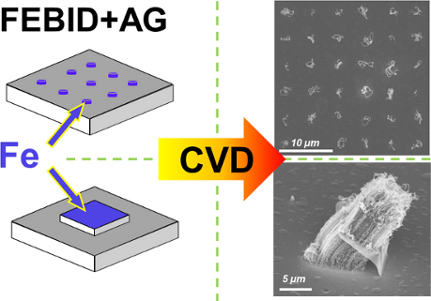
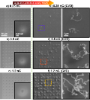
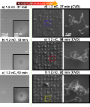
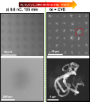
- ; electron beam induced deposition; focused electron beam induced processing; iron pentacarbonyl; nanofabrication; Introduction Carbon nanotubes (CNTs) have attracted enormous interest due to their potential as functional building blocks in applications such as molecular electronics, sensors and energy




Refractive index sensing and surface-enhanced Raman spectroscopy using silver–gold layered bimetallic plasmonic crystals
Beilstein J. Nanotechnol. 2017, 8, 2492–2503, doi:10.3762/bjnano.8.249
- Energy Frontier Research Center on Light-Material Interactions in Energy Conversion and was performed using resources at the Frederick Seitz Materials Research Laboratory Central Facilities at the University of Illinois, including the Center for Microanalysis of Materials; the Micro/Nanofabrication


Au nanostructure fabrication by pulsed laser deposition in open air: Influence of the deposition geometry
Beilstein J. Nanotechnol. 2017, 8, 2438–2445, doi:10.3762/bjnano.8.242

- properties [1][2], which are not observed in their bulk counterparts. Moreover, the strong dependence of the physical and chemical properties of these structures on their surface morphology makes them very attractive for a wide range of applications [3][4][5][6][7][8][9]. Initially, the nanofabrication
- the development of inexpensive, easy-to-use, flexible and time-saving nanofabrication techniques. The efforts of the other scientific groups have been directed to producing nanostructures for applications in areas such as nanomedicine that impose specific requirements regarding the technology behind
- their fabrication. Such applications require contamination-free nanostructures, suggesting that the development and use of physical nanofabrication methods is further warranted. One of the physical vapor deposition techniques widely applied in bottom-up nanotechnology is pulsed laser deposition (PLD





