


Search results
Search for "pH" in Full Text gives 710 result(s) in Beilstein Journal of Nanotechnology. Showing first 200.
The role of biochar in combating microplastic pollution: a bibliometric analysis in environmental contexts
Beilstein J. Nanotechnol. 2025, 16, 1401–1416, doi:10.3762/bjnano.16.102
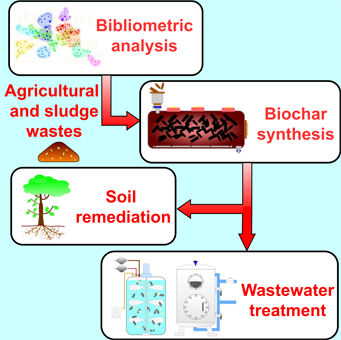
- biochar with a surface area of 368.3 m2·g−1 for sawdust [32]. Post-synthesis modification: Pre-synthesized biochar is immersed in ferric and ferrous solutions at pH 10–11 for 24 h, resulting in Fe3O4 deposition on the biochar surface [45]. The incorporation of functional groups significantly enhances the
- illustrates the effectiveness of biochar in counteracting the physical degradation caused by MPs. In terms of soil chemical properties, MPs influence pH, organic matter content, and macronutrient levels, including nitrogen (N), phosphorus (P) and potassium (K). For example, 3–7% low-density polyethylene (LDPE
- optimal removal observed for adsorbents with surface areas of 539 m2·g−1 [71]. Biochar derived from jujube waste pyrolyzed at 700 °C achieved more than 99% removal efficiency for PE, compared to 98% for biochar produced at 300 °C, at the optimal pH 7 [72]. Notably, PE removal efficiency was lower than



Parylene-coated platinum nanowire electrodes for biomolecular sensing applications
Beilstein J. Nanotechnol. 2025, 16, 1392–1400, doi:10.3762/bjnano.16.101
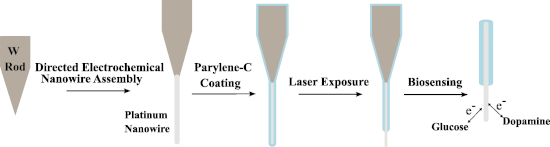
- hydrochloride power (98%, Sigma-Aldrich) to 10 mL 0.01 M phosphate-buffered saline (pH 7.4, Sigma-Aldrich). This stock dopamine solution was added into 30 mL 0.01 M phosphate-buffered saline solution to get desired concentrations. Same Ag/AgCl reference and platinum counter electrodes as above were used in


Synthesis and antibacterial properties of nanosilver-modified cellulose triacetate membranes for seawater desalination
Beilstein J. Nanotechnol. 2025, 16, 1380–1391, doi:10.3762/bjnano.16.100
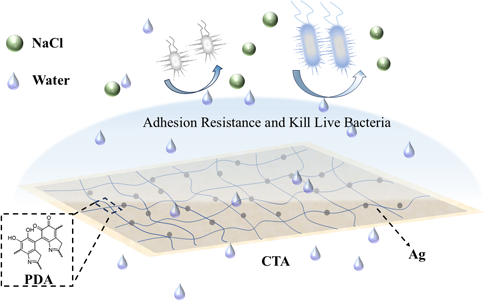
- ][32][33][34]. In comparison, no peaks of Ag are observed in CTA and PCTA (Figure 3c,d). Under alkaline conditions (pH > 7.5), dopamine can spontaneously polymerize into PDA in the presence of oxygen (Supporting Information File 1, Figure S1a) [31][35][36]. During the preparation of PCTA, alkaline
- of water, followed by gradual addition of dilute hydrochloric acid until the solution reached a pH of 8.5. Subsequently, 10 mg of dopamine hydrochloride (98%) was dissolved in 5 mL of the tris/HCl solution to prepare a 2 mg·mL−1 dopamine solution. The CTA membrane surface was then coated with the


Enhancing the therapeutical potential of metalloantibiotics using nano-based delivery systems
Beilstein J. Nanotechnol. 2025, 16, 1350–1366, doi:10.3762/bjnano.16.98
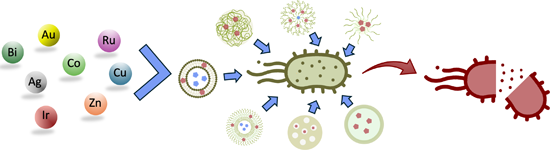
- nanoparticles constructed with pH-sensitive polymers can be engineered to degrade in acidic environments, such as those found at infection sites. Additionally, certain bacteria at these sites express enzymes like lipase and hyaluronidase, which can be leveraged to design enzyme-sensitive antibiotic delivery
- , which improves cellular uptake and facilitates drug release within the target site [90]. The incorporation of stimuli-responsive agents in the pores also enables MSiNPs to release therapeutic agents upon exposure to specific environmental cues, such as pH or temperature. These interesting features for
- high positive surface charges suitable for drug delivery. Notably, CAT–Zn-loaded β-CS-NPs displayed significantly enhanced antibacterial activity, with MIC and MBC values as low as 0.031 and 0.063 mg/mL, respectively. The system maintained good stability under acidic conditions (pH 2.0–4.5), further


Ferroptosis induction by engineered liposomes for enhanced tumor therapy
Beilstein J. Nanotechnol. 2025, 16, 1325–1349, doi:10.3762/bjnano.16.97
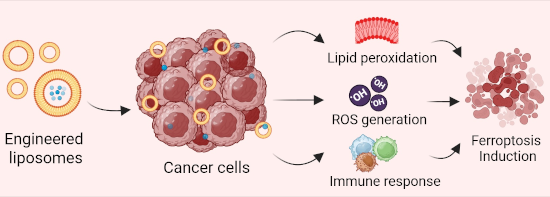
- PEG can sometimes limit the targetability of liposomes [114]. Another innovation is the development of stimuli-responsive liposomes, which release their payload in response to triggers like pH, temperature, or enzymatic activity. Stimuli-responsive technology, based on specific physiological
- conditions found in tumors compared to healthy tissue, aids in the spatiotemporal release of cargo. For example, pH-sensitive liposomes use the acidic tumor microenvironment to achieve targeted drug release, reducing systemic toxicity and enhancing therapeutic impact [134][135]. According to recent studies
- oxidation or hydrolysis processes. After the hydrolysis of free fatty acids, compounds are formed that are toxic to the human body and lower the pH value of the environment. Antioxidants such as flavonoids and vitamins C and E can be included in the formulation of liposomes to stop oxidation [138]. While


Enhancing the photoelectrochemical performance of BiOI-derived BiVO4 films by controlled-intensity current electrodeposition
Beilstein J. Nanotechnol. 2025, 16, 1289–1301, doi:10.3762/bjnano.16.94
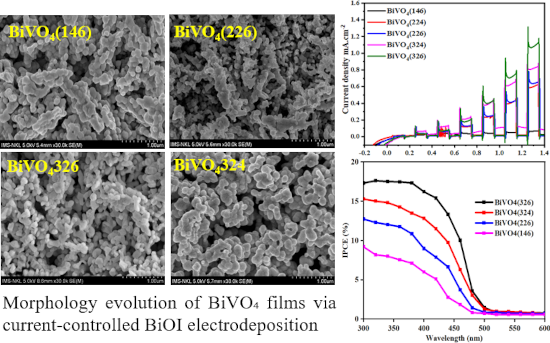
- ) were used to adjust the pH during deposition. Ethanol (C2H5OH, 99.9%, Merck) and deionized (DI) water were used for cleaning and dilution, respectively. Fluorine-doped tin oxide (FTO) glass substrates (7 Ω·sq−1, Pilkington) served as the conductive support for electrodeposition. Fabrication of BiVO4
- photoanodes The BiVO4 film was deposited using electrochemical deposition. A solution of 0.2962 g Bi(NO3)3 dissolved in 50 mL distilled water was ultrasonicated for 30 min. Subsequently, 400 mM KI and 5% HNO3 were added to adjust the pH to 2. Additionally, 50 mM p-benzoquinone (0.2 g) was dissolved in 10 mL
- electrochemical workstation (CHI650E, CH Instruments, USA). The three electrodes included a working electrode (BiVO4 photoelectrode, 1.0 × 1.0 cm2), counter electrode (Pt plate), and reference electrode (Ag/AgCl). The electrolyte used in the photoelectrochemical measurements was 0.50 M Na2SO4 (pH 5.6), and the



Acrocomia aculeata oil-loaded nanoemulsion: development, anti-inflammatory properties, and cytotoxicity evaluation
Beilstein J. Nanotechnol. 2025, 16, 1277–1288, doi:10.3762/bjnano.16.93
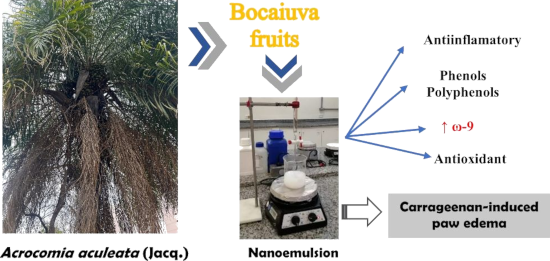
- 80®: Tween 80®), and 90% deionized water. The organic phase, composed of bocaiúva oil and surfactants, was stirred at 400 rpm at 35 °C for 20 min. The aqueous phase (deionized water with conductivity below 0.4 μS and pH 6.5) was added to the organic phase at 1 mL/min under continuous magnetic
- to each well [41]. The plates were incubated for 1 h at 37 °C and were centrifuged at 3000 rpm at 5 °C for 15 min. After centrifugation, the concentration was suspended in 50 mL of phosphate-buffered saline (PBS, pH 7.4). The amount of hemoglobin was determined at 540 nm using a docetaxel (DTX) 880


Better together: biomimetic nanomedicines for high performance tumor therapy
Beilstein J. Nanotechnol. 2025, 16, 1246–1276, doi:10.3762/bjnano.16.92
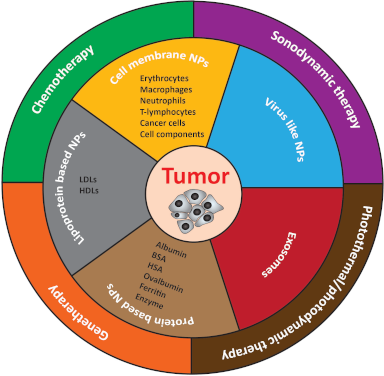
- surface acts as scaffold for synthesis of nanoparticles [76]. The thiol groups are protonated at neutral pH and can entrap Au(III) ions. When the pH is changed to basic (≈12), Au(III) is reduced to Au and gold nanoparticles are formed [77]. Synthesis of albumin-templated nanomaterials depends upon many
- applications. It forms crosslinked gels and responds to changes in pH and temperature [93]. To escape the RES, ovalbumin nanoparticles are conjugated with polyethylene glycol. Controlling the PEG/OVA ratio allows for fine-tuning of critical physical properties, such as particle size, elasticity, and mesh size
- ferritin. This property was exploited to design redox and pH dual-responsive ferritin nanoparticles. In drug-loaded mesoporous silica nanoparticles, ferritin was used as a gating material. It covered the pores to prevent drug release and opened only when activated by redox or pH stimuli [98]. Similarly







Hydrogels and nanogels: effectiveness in dermal applications
Beilstein J. Nanotechnol. 2025, 16, 1216–1233, doi:10.3762/bjnano.16.90
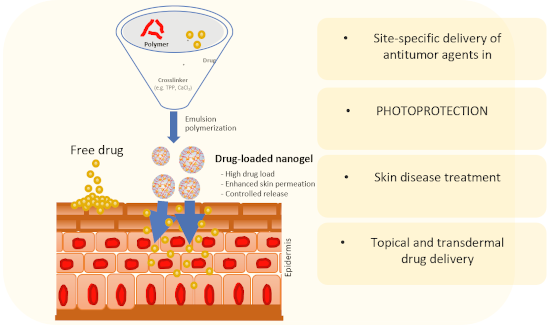
- , such as primary amines and sulfhydryl groups on proteins or other biomolecules. The reactive chemical group is the most important property of a cross-linker. The reactive group establishes the method and mechanism for polymer modification [43][45]. Harsh conditions such as low pH and high temperature
- of Ca(OH)2 (pH 10.2), CaCl2 (pH 7.2), or CaCO3 (pH 8.1) for three days at room temperature, followed by washing with water and drying at 60 °C [140]. In recent years, ultrasmall nanogels have emerged as an innovative drug delivery system, mainly due to their ability to deeply penetrate biological
- suppressions of ear edema, pruritus, high IgE levels, epidermal swelling, and mast cell infiltration in Balb/c mouse model [62]. Temperature- and pH-responsive hydrogels loaded with gallic acid were developed using a combination of biocompatible polymers: Pluronic F-127, N,N,N-trimethyl chitosan, and


Mechanical stability of individual bacterial cells under different osmotic pressure conditions: a nanoindentation study of Pseudomonas aeruginosa
Beilstein J. Nanotechnol. 2025, 16, 1171–1183, doi:10.3762/bjnano.16.86
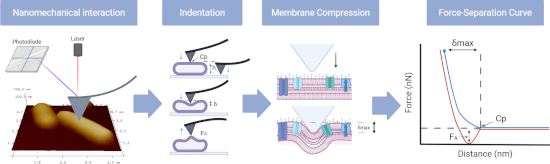
- contamination is always present, and also because the sensitive nature of the intermolecular forces during the measuring conditions (pH, ionic strength, temperature, etc.) can easily affect their magnitude. This was reflected in the obtained adhesion maps (see Figures S5 and S6 of Supporting Information File 1


Transfer function of an asymmetric superconducting Gauss neuron
Beilstein J. Nanotechnol. 2025, 16, 1160–1170, doi:10.3762/bjnano.16.85
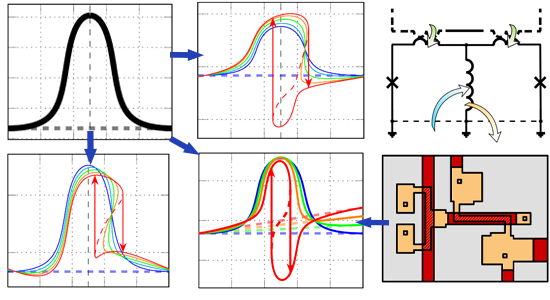
- readout (SQUID) elements (Equation 51). Upon substitution into Equation 2–Equation 3, the third term will cause the appearance of terms characteristic of input asymmetry with t = LoutMsq/MoutMin (with ). Substituting further the values Lout = 7.2 pH, Msq = 0.1 pH, Mout = 2.7 pH, and Min = 2.4 pH given in



Fabrication of metal complex phthalocyanine and porphyrin nanoparticle aqueous colloids by pulsed laser fragmentation in liquid and their potential application to a photosensitizer for photodynamic therapy
Beilstein J. Nanotechnol. 2025, 16, 1088–1096, doi:10.3762/bjnano.16.80
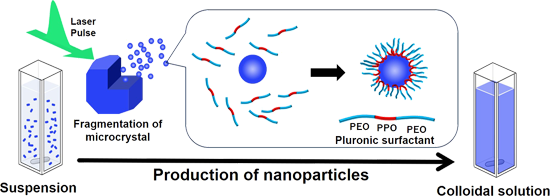
- polypropylene oxide (PPO) arranged in a triblock structure. Here, the stability in phosphate-buffered saline (PBS, pH 7.2), which is used widely in pharmacology and biomedical experiments, was examined. We evaluated the phototoxicity of the fabricated nanoparticle colloids in vitro against PC12 cells (a cell
- stability of the nanoparticles was evaluated by spectral absorption measurements. 0.2 mL of the prepared colloids was put in 1.8 mL of deionized water, PBS (pH 7, Thermo Fisher scientific), MEM (Sigma-Aldrich, M4655-500ML), or RPMI1640 medium (Sigma-Aldrich, R8758-500ML) media, and then the absorption


Single-layer graphene oxide film grown on α-Al2O3(0001) for use as an adsorbent
Beilstein J. Nanotechnol. 2025, 16, 1082–1087, doi:10.3762/bjnano.16.79
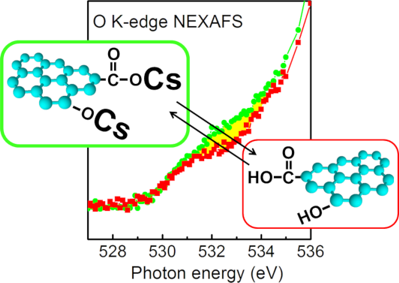
- . In this study, the SLGO surface after Cs adsorption was analyzed by surface analytical tools. This enabled us to elucidate the adsorbing sites and electronic state of Cs on SLGO. Additionally, we examined the electronic structure of Cs adsorbed on SLGO in several different solutions with pH values of
- 4, 7, and 9. Both the electronic structure and the normalized amount of Cs adsorbates were dependent on the pH scale. These fundamental aspects provide us important information for developing new adsorbent materials using GO. Results and Discussion Large-area and single-layer graphene oxide growth
- adsorbing mechanism of the Cs atoms to the SLGO sheet, we investigated the electronic structure and chemical properties of adsorbed Cs by changing the pH level of the Cs aqueous solutions. Figure 5 shows Cs 3d XPS spectra of Cs-adsorbed SLGO under three different pH values. No energy shift was observed


Piezoelectricity of hexagonal boron nitrides improves bone tissue generation as tested on osteoblasts
Beilstein J. Nanotechnol. 2025, 16, 1068–1081, doi:10.3762/bjnano.16.78
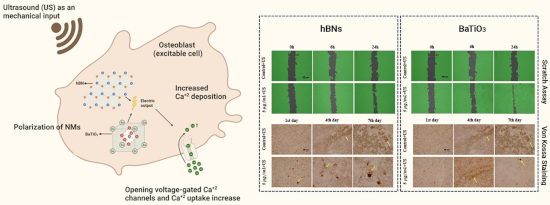
- hydrolytic environments, releasing boron over time. This boron is present in physiological media mostly in the form of boric acid which is the thermodynamically stable and biologically active species at pH ≈7.4 [68][69]. The literature indicates that hBN-based nanostructures can enhance bone recovery and


Soft materials nanoarchitectonics: liquid crystals, polymers, gels, biomaterials, and others
Beilstein J. Nanotechnol. 2025, 16, 1025–1067, doi:10.3762/bjnano.16.77
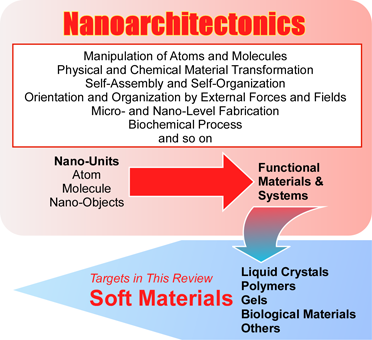
- electroactivity. This combination is intended to result in enhanced ORR activity. The LbL-assembled films were electrically connected, thereby increasing the electrocatalytic current obtainable for ORR in aqueous environments with neutral pH. Furthermore, the selective incorporation and enrichment of oxygen
- between benzoquinone and hydroquinone is precisely controlled by pH, in accordance with the Nernst equation. In order to compensate for the charge carriers in the semiconductor, dopant ions must be supplied through the redox reaction. The efficient doping of polymeric organic semiconductor thin films is






Synchrotron X-ray photoelectron spectroscopy study of sodium adsorption on vertically arranged MoS2 layers coated with pyrolytic carbon
Beilstein J. Nanotechnol. 2025, 16, 847–859, doi:10.3762/bjnano.16.64
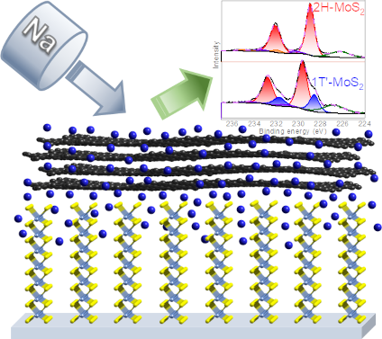
- an aqueous solution of iron chloride (30 wt %) for 2 h to dissolve the copper foil. The remaining free PyC film was washed twice in dilute HCl (10 wt %) and then in deionized water until neutral pH was reached. The floating PyC film was trapped either on bare or MoS2-covered SiO2/Si substrates and


Supramolecular hydration structure of graphene-based hydrogels: density functional theory, green chemistry and interface application
Beilstein J. Nanotechnol. 2025, 16, 806–822, doi:10.3762/bjnano.16.61
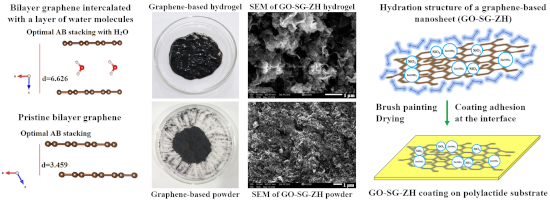
- exothermic heat increased the reactor temperature to above 90 °C). After 2 h of agitation, the reaction was mixed with 150 mL of a 5% H2O2 solution and kept stirring for one day. After washing to neutral pH, the material was dried and ground to produce a GrO powder (moisture ≈20%). Next, the GrO powder was
- then sonicated for 15 min. A volume of 500 mL of the as-prepared GO/Zn2+ dispersion was dropped into the 500 mL SG dispersion. The mixture was agitated for 15 min and sonicated for 15 min. Then, the reaction was adjusted to pH 10 using ammonia solution for Zn(OH)2 precipitation and kept stirring for 1


Serum heat inactivation diminishes ApoE-mediated uptake of D-Lin-MC3-DMA lipid nanoparticles
Beilstein J. Nanotechnol. 2025, 16, 740–748, doi:10.3762/bjnano.16.57
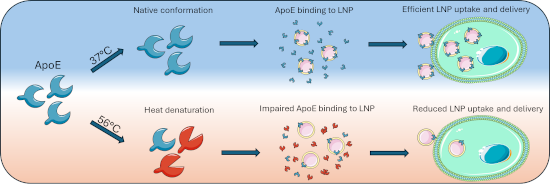
- molar ratio of 50:38.5:10:1.5 and a final lipid concentration of 10 mM. siRNA was diluted in an acetate buffer (25 mM, pH 4.0) to a final concentration of 3.3 µM for MC3 LNPs and 12.33 µM for C12 LNPs. For fluorescent LNPs, siRNA and siRNA-AF647 were mixed 2:1 v/v. For MC3 LNPs the Nanoassemblr was set


Synthesis of a multicomponent cellulose-based adsorbent for tetracycline removal from aquaculture water
Beilstein J. Nanotechnol. 2025, 16, 728–739, doi:10.3762/bjnano.16.56
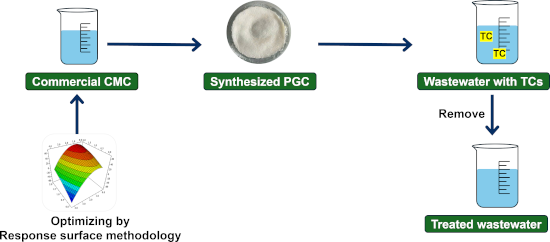
- concentration of 60 mg·L–1 at pH 6–7, reaching equilibrium after 12 h. The surface characteristics and structural properties of PGC were determined using various material characterization techniques, including FTIR, SEM, EDX, and BET. Verification experiments under optimal conditions confirmed that the
- high porosity and a large specific surface area, have demonstrated adsorption efficiency across a wide pH range [17]. Although previous studies have offered valuable insights, further research is needed to optimize the structural and compositional properties of materials to improve their performance
- characteristics and morphology of the synthesized adsorbent. Additionally, the study examines the adsorption mechanism of TC on the material’s surface and evaluates the effects of pH value, adsorbent dosage, and matrix composition. As a biodegradable and easily recoverable material derived from natural cellulose


Efficiency of single-pulse laser fragmentation of organic nutraceutical dispersions in a circular jet flow-through reactor
Beilstein J. Nanotechnol. 2025, 16, 711–727, doi:10.3762/bjnano.16.55
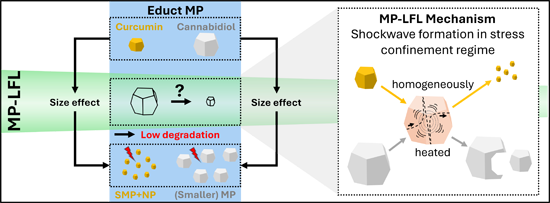
- −1 solution of potassium dihydrogen phosphate previously adjusted to pH 2.0 with phosphoric acid (A) and acetonitrile (B). The initial concentration of mobile phase B is increased from 30% to 70% within the time interval from 0 to 8 min, then further increased to 90%; this concentration is maintained


Colloidal few layered graphene–tannic acid preserves the biocompatibility of periodontal ligament cells
Beilstein J. Nanotechnol. 2025, 16, 664–677, doi:10.3762/bjnano.16.51
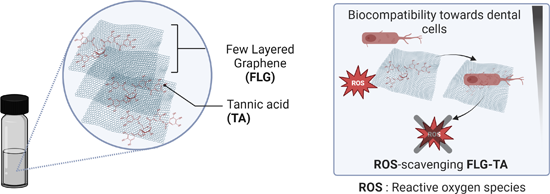
- diameter glass coverslips (CML, France) in a 24-well plate and exposed to FLG–TA concentrations ranging from 1 to 200 µg·mL−1. Adherent cells were washed twice with PBS and fixed in 2.5% glutaraldehyde (Euromedex, France) in 0.05 M sodium cacodylate buffer (Euromedex, France) at pH 7.4 for 2 h. Cells were




Aprepitant-loaded solid lipid nanoparticles: a novel approach to enhance oral bioavailability
Beilstein J. Nanotechnol. 2025, 16, 652–663, doi:10.3762/bjnano.16.50
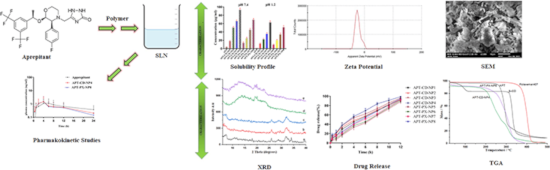
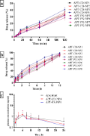
- microscopy (SEM), X-ray diffraction (XRD), differential scanning calorimetry (DSC) and thermogravimetric analysis (TGA), in vitro drug release in 0.1 M HCl (pH 1.2) and phosphate-buffered saline (PBS, pH 7.4), and pharmacokinetic studies. The optimal formulation (APT-CD-NP4) containing the highest
- concentration of β-CD showed the highest drug solubility (93.50% ± 3.73%) in PBS (pH 7.4) and drug content (96.75% ± 0.24%); particle size, zeta potential, and polydispersity index of APT-CD-NP4 were 121.1 ± 0.72 nm, −18.8 ± 0.94 mV, and 0.15 ± 0.35, respectively. SEM analysis showed that APT was converted from
- release (98.89% ± 4.11%) in PBS (pH 7.4) and followed the Higuchi release model (with exponent n = 0.542), indicating non-Fickian diffusion (anomalous transport). The maximum concentration of drug in plasma and the bioavailability of optimal formulation APT-CD-NP4 were higher than those of pure APT



A formulation containing Cymbopogon flexuosus essential oil: improvement of biochemical parameters and oxidative stress in diabetic rats
Beilstein J. Nanotechnol. 2025, 16, 617–636, doi:10.3762/bjnano.16.48
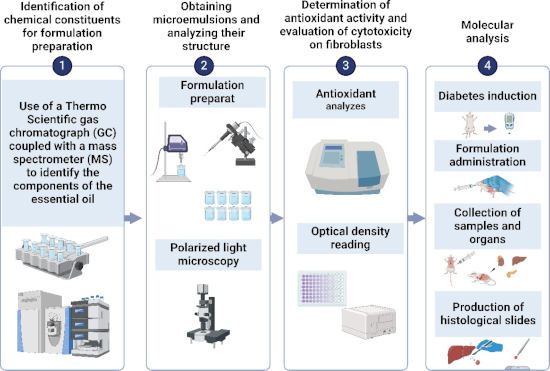
- obtained after consulting the corresponding pseudoternary phase diagram and showed stability, isotropy, Newtonian behavior, nanometric size (15.2 nm), and pH 4.2. Both EOCF and the ME showed high antioxidant activity, but the ME resulted in greater antioxidant activity, potentiating the activity of
- diagram Various surfactants in different combinations were tested to obtain the ME. In general, non-ionic surfactants are most commonly used because they have a low critical micelle concentration, low toxicity, and greater stability to changes in pH and charge when compared to other classes of surfactants
- ][27], improving patient acceptance [28]. The pH value is also capable of inducing changes in stability and chemical phenomena, such as deterioration and oxidation of compounds and bacterial growth, and is a precise and specific measure for quality control of the formulation. The pH found for M7-EOCF




Functionalized gold nanoflowers on carbon screen-printed electrodes: an electrochemical platform for biosensing hemagglutinin protein of influenza A H1N1 virus
Beilstein J. Nanotechnol. 2025, 16, 540–550, doi:10.3762/bjnano.16.42
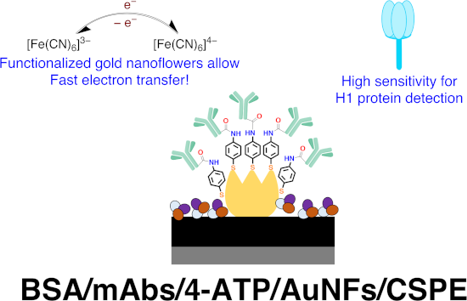
- , potassium chloride, potassium hexacyanoferrate(II) trihydrate, potassium hexacyanoferrate(III), N-(3-dimethylaminopropyl)-N′-ethylcarbodiimide hydrochloride (EDC), N-hydroxy succinimide (NHS), phosphate-buffered saline pH 7.4 (PBS), and bovine serum albumin (BSA) were all purchased from Sigma-Aldrich
- in a 1.5 mL Eppendorf vial by adding 100 μL of 38 μg/mL mABs solution in PBS, 100 μL of 10 mM EDC aqueous solution, and 100 μL of 10 mM NHS aqueous solution. The pH of the mixture was 6.5 as determined by litmus paper. Then, 10 μL of the mixture was added on top of the 4-ATP/AuNFs/CSPE as working


Synthetic-polymer-assisted antisense oligonucleotide delivery: targeted approaches for precision disease treatment
Beilstein J. Nanotechnol. 2025, 16, 435–463, doi:10.3762/bjnano.16.34
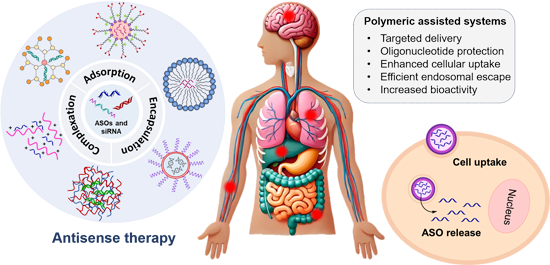
- delivery in tumour therapy. Poly(ʟ-glutamic acid). Poly(ʟ-glutamic acid) (PLG) is a biodegradable, water-soluble synthetic polymer composed of repeating units of the amino acid ʟ-glutamic acid. Owing to the presence of the carboxyl side chains, PLG is anionic under physiological conditions (pH ≈ 7.4). This





