
Search results
Search for "surface chemistry" in Full Text gives 220 result(s) in Beilstein Journal of Nanotechnology. Showing first 200.
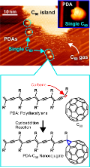
Molecular nanoarchitectonics: unification of nanotechnology and molecular/materials science
Beilstein J. Nanotechnol. 2023, 14, 434–453, doi:10.3762/bjnano.14.35

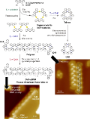
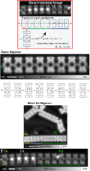
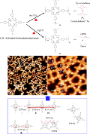
- molecules was also realized. Kawai et al. synthesized three-dimensional graphene nanoribbons by surface chemistry and showed that local probe chemistry can be used to add different molecules by tip manipulation [115]. Specifically, they demonstrated that radicals created by tip-induced debromination can be







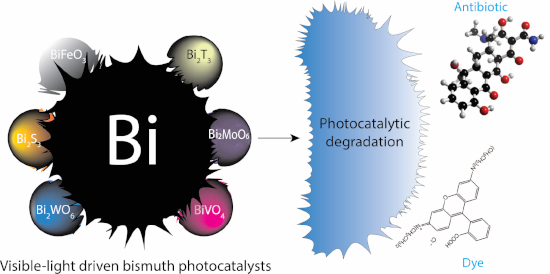
Bismuth-based nanostructured photocatalysts for the remediation of antibiotics and organic dyes
Beilstein J. Nanotechnol. 2023, 14, 291–321, doi:10.3762/bjnano.14.26


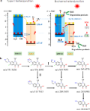
Structural, optical, and bioimaging characterization of carbon quantum dots solvothermally synthesized from o-phenylenediamine
Beilstein J. Nanotechnol. 2023, 14, 165–174, doi:10.3762/bjnano.14.17
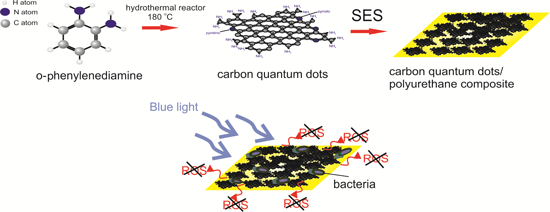
- different effectiveness on bacteria and tested cells (adenocarcinomic human alveolar basal epithelial cells-A549 and mouse embryonic fibroblast cell line-NIH/3T3) [18]. By comparing the results of these two investigations, we concluded that the surface chemistry of the encapsulated CQDs in polymer


Role of titanium and organic precursors in molecular layer deposition of “titanicone” hybrid materials
Beilstein J. Nanotechnol. 2022, 13, 1240–1255, doi:10.3762/bjnano.13.103
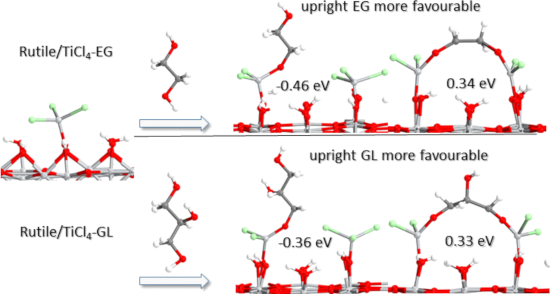
- growth could be achieved. Keywords: density functional theory (DFT) studies; double reactions; surface chemistry; titanicone; Introduction Molecular layer deposition (MLD), a thin film deposition technique, has attracted significant attention in recent years as a suitable approach for the deposition of


Design of surface nanostructures for chirality sensing based on quartz crystal microbalance
Beilstein J. Nanotechnol. 2022, 13, 1201–1219, doi:10.3762/bjnano.13.100
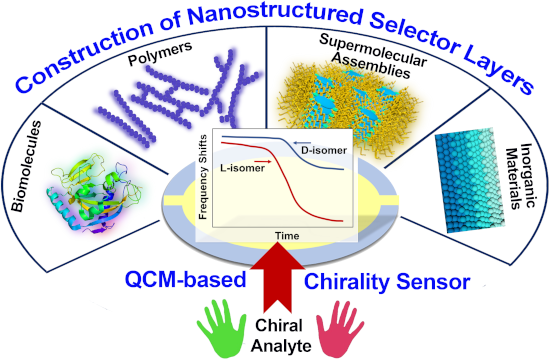
- generated by polypyrrole (PPy) and Trp [127]. Intrinsic chiral metal crystals Until relatively recently, metals were ignored as potential substrates for asymmetric surface chemistry since metals always show highly symmetric and achiral bulk structures with unexposed chiral surfaces [128][129]. Sykes and co


Recent advances in green carbon dots (2015–2022): synthesis, metal ion sensing, and biological applications
Beilstein J. Nanotechnol. 2022, 13, 1068–1107, doi:10.3762/bjnano.13.93
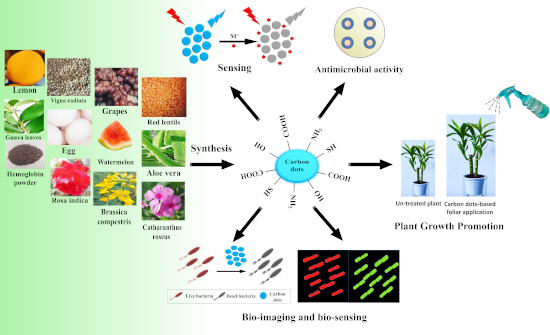
- their functional properties [5][6]. These exceptional optical and physicochemical properties make them ideal for transdisciplinary research. Fluorescent CDs can be manufactured using inexpensive, naturally rich carbon sources in an environmentally friendly manner. By adjusting the surface chemistry of


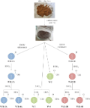


Interaction between honeybee mandibles and propolis
Beilstein J. Nanotechnol. 2022, 13, 958–974, doi:10.3762/bjnano.13.84

- effect of surface chemistry on adhesion was excluded. First, washed mandibles fixed to glass slides, as described above (section “Investigation of propolis adhesion on mandibles”), were covered with a two-component dental wax (Affinis light body, ISO 4823, polyvinylsiloxane, Coltène Whaledent AG
- mandibles was of a similar magnitude to that measured on glass under fluid conditions (0.9 J/m2 [1]). It was shown before that the adhesion of propolis does not show a great dependence on the substrate material [1]. It is therefore unlikely that the surface chemistry of the bee cuticle alone is responsible
- that anti-adhesive properties minimize adhesion of resins and propolis to their body parts. Various anti-adhesive strategies have been found in nature. Different mechanisms can lead to low adhesion. Possible strategies to reduce adhesion on the insect cuticle, as suggested in [16], are specific surface


Nanoarchitectonics of the cathode to improve the reversibility of Li–O2 batteries
Beilstein J. Nanotechnol. 2022, 13, 689–698, doi:10.3762/bjnano.13.61
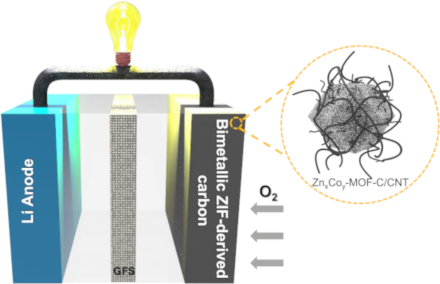
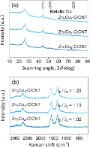
- the chemical composition of ZnxCoy particles. It is expected that it would play an important role as an electrocatalyst in the composites for lowering the overpotential for the given electrochemical reactions. For further inspection of the structural characteristics, the surface chemistry of ZnxCoy–C
- microstructures of the materials. Powder XRD (PANalytical, Empyrean) and Raman spectroscopy (inVia Raman microscopes, Ar ion laser, 514 nm) were employed to analyze the structures. Their surface chemistry was investigated by XPS (Thermo Scientific, Sigma Probe), while their surface area and porosity were



Detection and imaging of Hg(II) in vivo using glutathione-functionalized gold nanoparticles
Beilstein J. Nanotechnol. 2022, 13, 549–559, doi:10.3762/bjnano.13.46
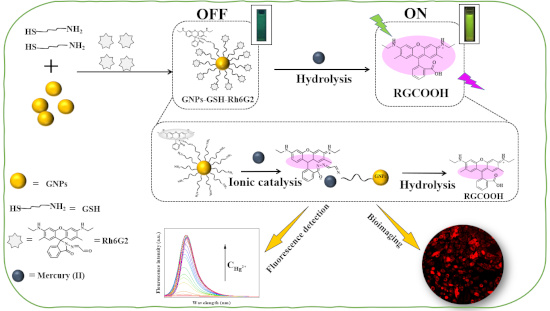
- biocompatibility, and low toxicity [4][5][6][7][8][9]. Another advantage of GNPs is that different shapes and sizes can be obtained during synthesis through changing reducing agents and reaction conditions [10]. The surface chemistry of GNPs is modified via ligands with functional groups such as thiol (–SH), amino


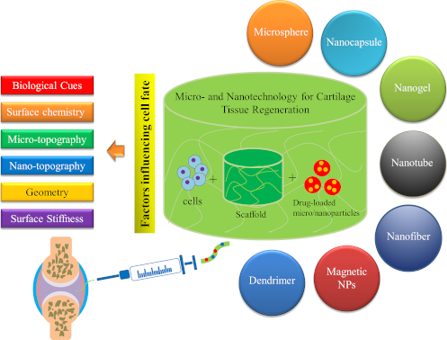
Micro- and nanotechnology in biomedical engineering for cartilage tissue regeneration in osteoarthritis
Beilstein J. Nanotechnol. 2022, 13, 363–389, doi:10.3762/bjnano.13.31


Systematic studies into uniform synthetic protein nanoparticles
Beilstein J. Nanotechnol. 2022, 13, 274–283, doi:10.3762/bjnano.13.22
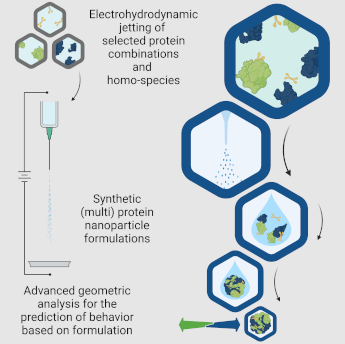
- occurred during jetting, with solid SPNPs deposited on the collection plate. Completion of the crosslinking was achieved through SPNP storage at 37 °C for 7 days. Multiple studies have shown that nanoparticle formulation, size, and surface chemistry are not the only factors governing the biological


Relationship between corrosion and nanoscale friction on a metallic glass
Beilstein J. Nanotechnol. 2022, 13, 236–244, doi:10.3762/bjnano.13.18

- are susceptible to corrosion when exposed to environmental conditions, the role of surface chemistry for friction must be investigated. At the macroscale, the existence of metal oxide surface films on MGs enhanced the wear resistance in corrosive solutions and the fluid lubricating films formed by


Engineered titania nanomaterials in advanced clinical applications
Beilstein J. Nanotechnol. 2022, 13, 201–218, doi:10.3762/bjnano.13.15
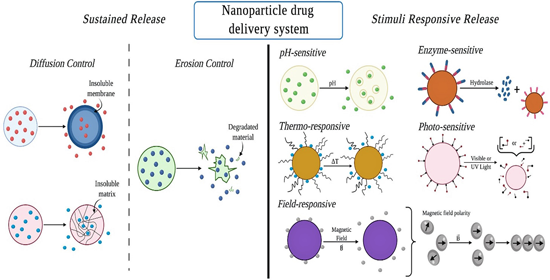
- surface chemistry play a significant role in the interaction between proteins and cells and the material surface. It has also been shown that hydroxyapatite and calcium phosphate mimics the chemical composition of natural bone. Thus, with the use of these components in the coating, TiO2 implants have
- demonstrated enhanced osseointegration [58]. Additionally, drug release kinetics and duration from titania nanotubes (TNTs) can be controlled by modifying nanotube dimensions, surface chemistry, or by a polymer coating on the TNT implant surface through dip coating or plasma polymerization. Losic and co


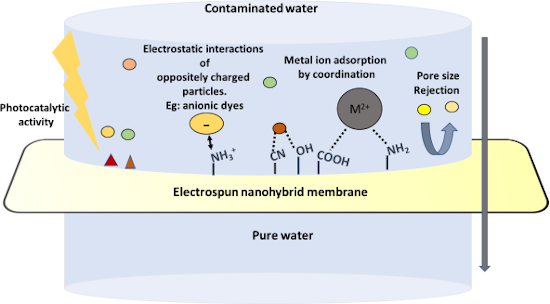
A comprehensive review on electrospun nanohybrid membranes for wastewater treatment
Beilstein J. Nanotechnol. 2022, 13, 137–159, doi:10.3762/bjnano.13.10





Sputtering onto liquids: a critical review
Beilstein J. Nanotechnol. 2022, 13, 10–53, doi:10.3762/bjnano.13.2
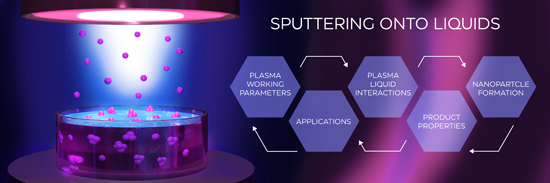
- the target surface chemistry and the ISEE change. Besides, once the poisoned regime is reached, compound molecules can be sputtered as demonstrated by mass spectrometry analysis of the plasma ion chemistry during the reactive sputtering of Ti in Ar/N2 [63] or in Ar/O2 plasmas [64]. In these






Biocompatibility and cytotoxicity in vitro of surface-functionalized drug-loaded spinel ferrite nanoparticles
Beilstein J. Nanotechnol. 2021, 12, 1339–1364, doi:10.3762/bjnano.12.99
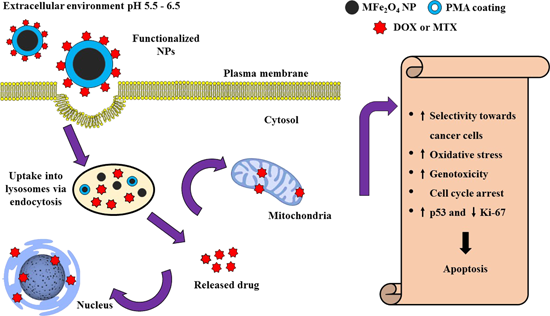
- which enables controlled and nontoxic biological interactions [18]. The hydrophilicity of the nanocarriers is important, as native hydrophobic surfaces of NPs are rapidly opsonized by hydrophobic serum proteins [19]. For this, surface functionalization has a major role [18]. It alters the surface
- chemistry of NPs, thereby affecting their physiochemical and biological properties [11][20]. In the present work, we synthesized a variety of MFe2O4 (M = Co, Ni, and Zn) NPs using the sonochemical technique. Particle agglomeration was prevented by using oleic acid as the surfactant [21]. Phase change of








Identifying diverse metal oxide nanomaterials with lethal effects on embryonic zebrafish using machine learning
Beilstein J. Nanotechnol. 2021, 12, 1297–1325, doi:10.3762/bjnano.12.97
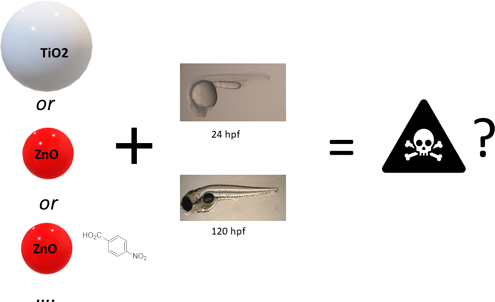
- earlier analyses. Previous analyses of NBI Knowledgebase data have suggested that, whilst primary particle size may not be irrelevant to observed biological effects, no consistent trends could be observed with primary particle size and/or that surface chemistry was a more significant factor driving


A review on slip boundary conditions at the nanoscale: recent development and applications
Beilstein J. Nanotechnol. 2021, 12, 1237–1251, doi:10.3762/bjnano.12.91

- the superhydrophobic state [44][88][89][90][91]. 2.4 Surface chemistry effects A substantial number of studies have demonstrated that complex surfaces decorated with a sophisticated surface chemistry can dramatically affect the effective slip length for nanoscale flow systems. The surface textures we


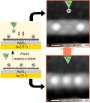
Molecular assemblies on surfaces: towards physical and electronic decoupling of organic molecules
Beilstein J. Nanotechnol. 2021, 12, 950–956, doi:10.3762/bjnano.12.71
- molecules, offering unique opportunities for the bottom-up assembly of novel carbon-based materials using on-surface chemistry [48][49]. However, the significantly reduced catalytic activity on non-metallic substrates requires exploring alternative reaction mechanisms beyond thermal activation, for example
The role of deep eutectic solvents and carrageenan in synthesizing biocompatible anisotropic metal nanoparticles
Beilstein J. Nanotechnol. 2021, 12, 924–938, doi:10.3762/bjnano.12.69
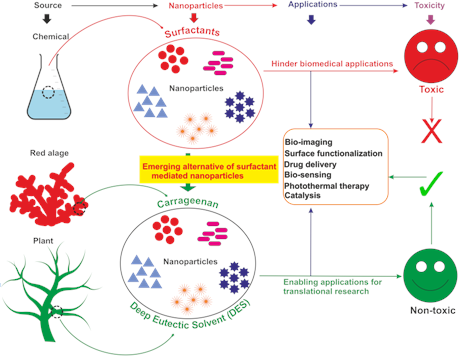
- nanoparticles are reported in the literature tabulated in Table 1. The cytotoxicity of nanoparticles is depicted based on several factors such as morphology, size and surface chemistry as shown in Table 1 and Figure 2. In vitro cytotoxicity of anisotropic nanoparticles The use of anisotropic metal nanoparticles
- , and surface chemistry, determine their cytotoxicity. For example, gold nanoparticles of different shapes, as shown in Figure 3, displayed morphology-dependent cytotoxicity. Rod-shaped gold nanoparticles were more toxic than nanostars and nanospheres [54]. The potential risk is higher for anisotropic
- microscopy revealed fundamental and mechanistic information regarding nanoparticle–cell interactions and their uptake into cell organelles. The metal content within the cells was determined via ICP-MS. Cell toxicity of nanoparticles depends on their size, shape, surface chemistry (predominantly determined by


Comprehensive review on ultrasound-responsive theranostic nanomaterials: mechanisms, structures and medical applications
Beilstein J. Nanotechnol. 2021, 12, 808–862, doi:10.3762/bjnano.12.64


Differences in surface chemistry of iron oxide nanoparticles result in different routes of internalization
Beilstein J. Nanotechnol. 2021, 12, 270–281, doi:10.3762/bjnano.12.22

- understood yet. Herein, we present a mechanistic study of cellular internalization pathways of two magnetic iron oxide nanoparticles (MNPs) differing in surface chemistry into A549 cells. The MNP uptake was investigated in the presence of different inhibitors of endocytosis and monitored by spectroscopic and
- imaging techniques. The results revealed that the route of MNP entry into cells strongly depends on the surface chemistry of the MNPs. While serum bovine albumin-coated MNPs entered the cells via clathrin-mediated endocytosis (CME), caveolin-mediated endocytosis (CavME) or lipid rafts were preferentially
- carrier, are the most frequently used materials for biomedical applications [17][18][19][20]. The impact of the surface chemistry on the mechanism of nanoparticle uptake has not been sufficiently clarified yet. MNPs with comparable basic physicochemical characteristics (e.g., particle size, surface charge



Cardiomyocyte uptake mechanism of a hydroxyapatite nanoparticle mediated gene delivery system
Beilstein J. Nanotechnol. 2020, 11, 1685–1692, doi:10.3762/bjnano.11.150
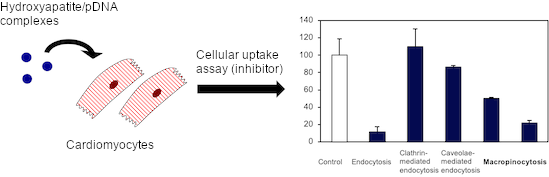
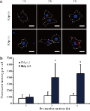
- -mediated endocytosis, and micropinocytosis. These routes depend heavily on the cell type studied [16][17] and on the vector properties, such as size, shape, chemical composition, and surface chemistry [18][19]. Therefore, the fate of the vector/DNA complex taken up by a cell depends on the type of


Helium ion microscope – secondary ion mass spectrometry for geological materials
Beilstein J. Nanotechnol. 2020, 11, 1504–1515, doi:10.3762/bjnano.11.133
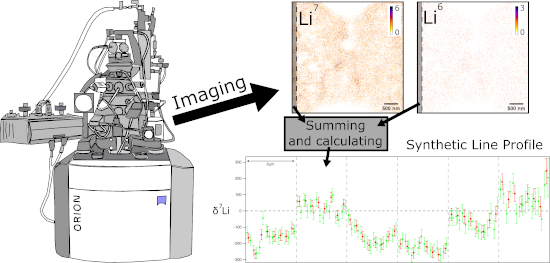
- several suggestions for the possibility of microanalysis on the HIM, the most common of these being Rutherford backscattered ion imaging (RBI) and secondary ion mass spectrometry (SIMS) [7][8][9]. However, the variation of RBI intensity with changing surface chemistry, specifically the atomic number, Z



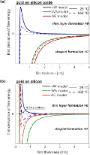
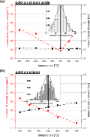
Analysis of catalyst surface wetting: the early stage of epitaxial germanium nanowire growth
Beilstein J. Nanotechnol. 2020, 11, 1371–1380, doi:10.3762/bjnano.11.121
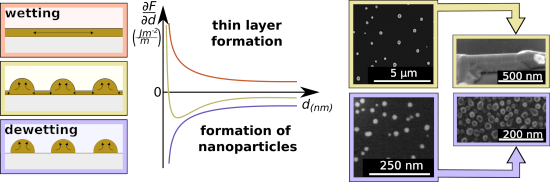
- and no defined surface chemistry, since different oxide types can occur. The vW model fails to provide a complete theoretical description of gold deposition onto silicon oxide. This happens since there is not enough information about the morphology and chemical heterogeneity of silicon oxide surfaces