


Search results
Search for "defects" in Full Text gives 746 result(s) in Beilstein Journal of Nanotechnology. Showing first 200.
Enhancing mechanical properties of chitosan/PVA electrospun nanofibers: a comprehensive review
Beilstein J. Nanotechnol. 2025, 16, 286–307, doi:10.3762/bjnano.16.22
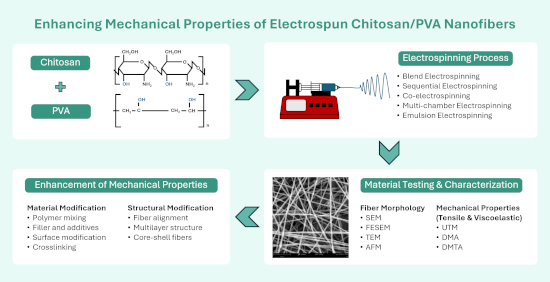
- electron microscopy (SEM) and field-emission scanning electron microscopy (FESEM) are more commonly used to analyze the fiber diameter, distribution, and overall surface morphology [144]. Microscopic images obtained from these techniques help to identify defects such as beading or non-uniformity in fibers


Emerging strategies in the sustainable removal of antibiotics using semiconductor-based photocatalysts
Beilstein J. Nanotechnol. 2025, 16, 264–285, doi:10.3762/bjnano.16.21
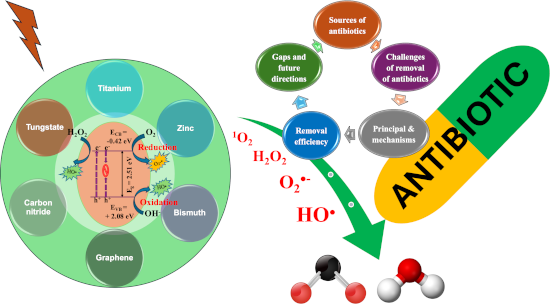
- and/or transition metals compounds) into ZnO. This alteration introduces surface defects, leading to a decrease in the bandgap. As a result, the materials become more efficient in harvesting energy to produce reactive species, which is beneficial for applications involving contaminant treatment [61
- light exposure, the rates of TC degradation by pure ZnO, g-C3N4, and defective ZnO/g-C3N4 composite were found to be 35.20%, 71.48%, and 93.47%, respectively. Because of the existence of N defects, the constructed nanocomposite promotes the electron transfer efficiently with lower recombination rates
- oxide-based materials Graphene is a monolayer of carbon atoms organized in a hexagonal lattice, with various types of defects present around the edges. This material is categorized based on the level of surface oxidation, which includes pristine graphene, graphene oxide, and reduced graphene oxide (rGO



Radiosensitizing properties of dual-functionalized carbon nanostructures loaded with temozolomide
Beilstein J. Nanotechnol. 2025, 16, 229–251, doi:10.3762/bjnano.16.18
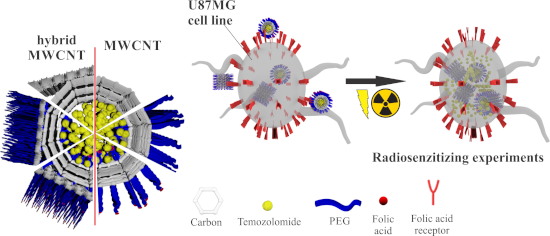
- the ectopic (acentrosomal) microtubule nucleation was observed, with disassembly of the centrosome and a cytoskeletal reorganization that trigger the generation of ineffective biomechanical forces, which leads to migration defects, and ultimately to spindle-assembly checkpoint blockage and apoptosis
- dual-functionalized MWCNTs and MWCNTs-G, blank and TMZ-loaded, are presented in Figure 5. When analyzing these spectra, the following features were taken into consideration: the D (“disorder”) band, usually positioned around 1350 cm−1 and related to the degree of structural defects, deteriorations, and
- because of their significance for identifying the structural defects [60][61][62]. In the Raman spectra of MWCNT–COOH and MWCNTs-G-COOH (Figure 5a and Figure 5c, respectively), the intensity ratios of D and G band (IG/ID) were calculated as 0.59 and 0.65, respectively. The analogous calculation for




Recent advances in photothermal nanomaterials for ophthalmic applications
Beilstein J. Nanotechnol. 2025, 16, 195–215, doi:10.3762/bjnano.16.16
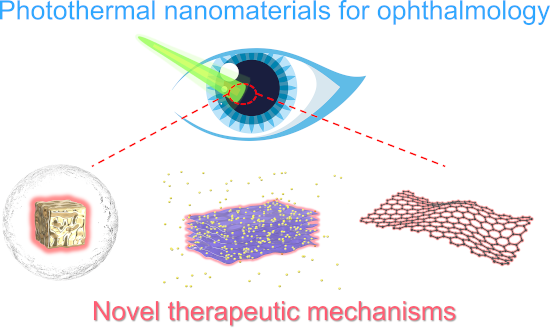
- their bandgap energy (incident wavelength from approximately 310 to 1240 nm) [73], leading to the generation of electron–hole pairs that possess energy equivalent to the bandgap [74]. Once these excited electrons are transferred to impurities, defects, or surface dangling bonds [75], they release energy


A review of metal-organic frameworks and polymers in mixed matrix membranes for CO2 capture
Beilstein J. Nanotechnol. 2025, 16, 155–186, doi:10.3762/bjnano.16.14
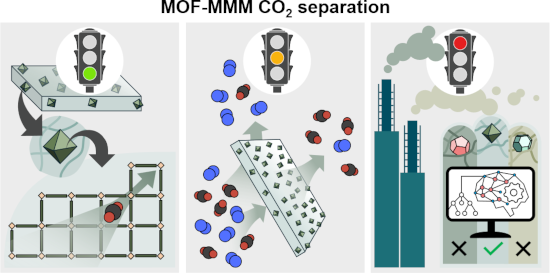
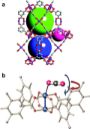
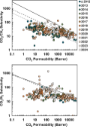
- considerably impaired compared to that of the pristine MOF [86]. The major issue arising from such incompatibility is the formation of void defects within the MMM due to insufficient adhesion between the MOF interface and the polymer matrix. Such voids act as non-specific permeation sites [80]. Consequently
- suspension with a small amount of polymer before blending with the polymer solution can help reduce MOF–polymer interface defects [80][90][91][92][93]. Thorough mixing of the precursor slurry is critical to ensure a homogenous final membrane with MOFs evenly dispersed throughout the polymer matrix. For more
- precursor slurry undergoes phase separation under altered solvent, composition, or temperature conditions to form a porous support phase and a dense MMM phase [80][87][92][94]. Finally, fabrication of thin selective MMM layers on top of porous substrates can be accomplished via spin coating [95]. Defects




Comparison of organic and inorganic hole transport layers in double perovskite material-based solar cell
Beilstein J. Nanotechnol. 2025, 16, 119–127, doi:10.3762/bjnano.16.11
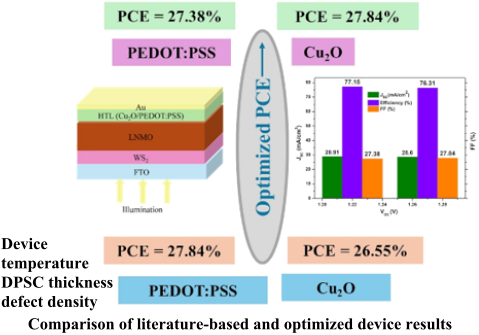
- possible that misalignment of energy levels due to thermal effects can hinder efficient hole extraction, further increasing recombination losses. Effect of absorber layer defect density Defects in the absorber layer hinder carrier transportation between the absorber layer and the CTLs, leading to a drop in
- optimum value. The increase in the defects reduces the absorber film’s overall quality because trap sites are generated. Both Cu2O and PEDOT:PSS show different results at 1 × 1018 cm−3; the PCE is 16.05% for Cu2O and 16.21% for PEDOT:PSS, implying a higher recombination rate in the case of the inorganic


Advanced atomic force microscopy techniques V
Beilstein J. Nanotechnol. 2025, 16, 54–56, doi:10.3762/bjnano.16.6
- characterization of defects in a single layer of graphene on iridium that were induced by rare-gas ion bombardment by using combined scanning tunnelling microscopy (STM) measurements and NC-AFM [12]. The authors reveal that presumed monoatomic vacancies, as deduced from STM measurements alone, have rather
- different origins. The authors assign one type of defects to a possible defect in the Ir surface. The other type is identified as four missing carbon atoms corroborated by a higher reactivity with the tip. We thank all authors who contributed to this thematic issue and we are grateful to all reviewers for
Bioinspired nanofilament coatings for scale reduction on steel
Beilstein J. Nanotechnol. 2025, 16, 25–34, doi:10.3762/bjnano.16.3
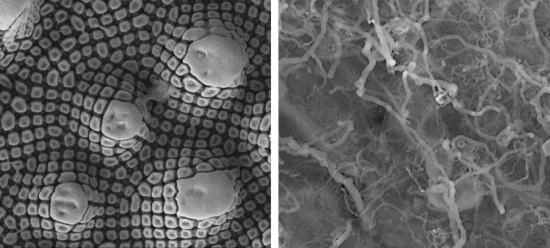
- can be seen in in the optical images in Figure 5A and Figure 5B, no defects are visible after the explosion/decompression test, demonstrating the stability of the SNF coating on steel. This is also borne out by the SEM analysis (Figure 5C), which shows the SNF structures are fully intact after the


Fabrication of hafnium-based nanoparticles and nanostructures using picosecond laser ablation
Beilstein J. Nanotechnol. 2024, 15, 1639–1653, doi:10.3762/bjnano.15.129
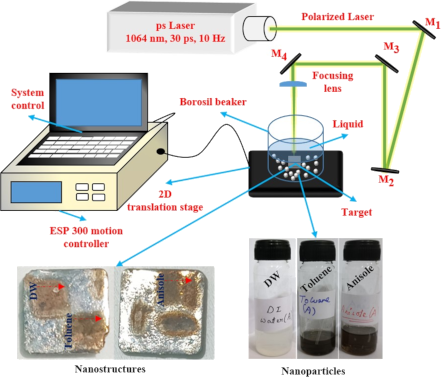
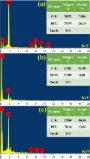
- may affect the optical properties of the NPs. Figure 9a–c shows the PL emission spectra of the NPs laser-ablated in DW, toluene, and anisole, respectively. Emission peaks were observed for each of the NPs (Figure 9). The presence of emission peaks indicates the presence of defects in the NPs [57]. The
- defects may be due to impurities in the lattice structure, possibly in the form of oxygen contamination, or imperfect crystallinity of the graphitic layer or the NPs themselves. Further detailed PL studies are essential to understand the origin of the observed emission peaks. Nanostructures Figure 10




Effect of radiation-induced vacancy saturation on the first-order phase transformation in nanoparticles: insights from a model
Beilstein J. Nanotechnol. 2024, 15, 1453–1472, doi:10.3762/bjnano.15.117
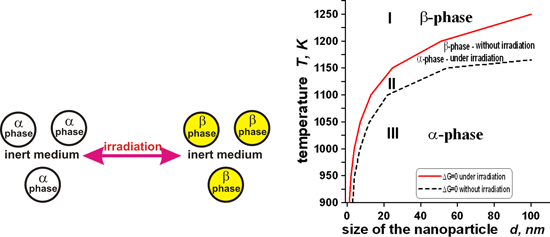
- are stable) because of surface effects. There is an intermediate zone of sizes and parameters where radiation-induced defects become important so that the α-phase particle is unstable without irradiation but becomes stable under irradiation. For large sizes and low temperatures, the α→β transformation
- confirmed by calculations for iron particles under irradiation. Substances characterized by high vacancy migration energy, small diffusion coefficients of defects, and low temperatures of first-order phase transitions can serve as suitable candidates for radiation-induced phase transitions in nanosystems
- , and other emerging nanotechnologies. When HDCMs are exposed to radiation, such as ion bombardment or exposure to high-energy radiation sources, defects (vacancies, interstitials, point defect clusters, voids, and interstitial loops) are created in the crystal lattice because of the displacement of


Strain-induced bandgap engineering in 2D ψ-graphene materials: a first-principles study
Beilstein J. Nanotechnol. 2024, 15, 1440–1452, doi:10.3762/bjnano.15.116
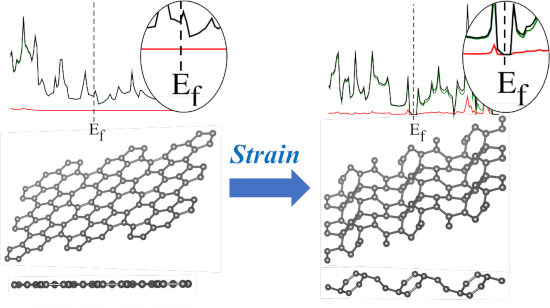
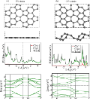
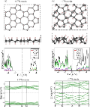
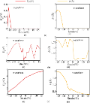
- . The mechanical strain tolerance of pristine and fully hydrogenated ψ-graphene is observed to be −17% to +17%, while for ψ-graphone, it lies within the strain span of −16% to +16%. Keywords: 2D materials; defects; DFT; graphene; ψ-graphene; strain; Introduction Graphene is the best-known zero-bandgap


Various CVD-grown ZnO nanostructures for nanodevices and interdisciplinary applications
Beilstein J. Nanotechnol. 2024, 15, 1390–1399, doi:10.3762/bjnano.15.112
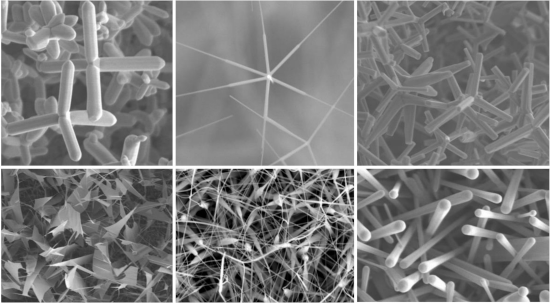
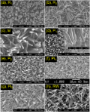
- )-E2(L), A1(TO), E1(TO), and E1(LO) processes [62], as labelled in Figure 7. Spectral features recorded from these samples are almost the same. There are no anomalous modes induced by lattice defects, structural disorders, and impurities [17][63][64]. For some nanostructures, however, there are
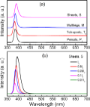
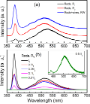
- visible emissions, typically the samples named R1, R2, and RW, as shown in Figure 9a. The UV emission peaks at ≈384 nm while the visible one peaks at approx. 510–525 nm – corresponding to the green emission that is usually assigned to donor (VO)/acceptor (VZn) recombination [68], Oi defects [69], or VO
- defects [70][71]. These defects are intrinsic and nonavoidable during the fabrication of ZnO nanostructures, and are usually dependent on a surface area-to-volume ratio of nanoparticles. Because of this reason, the relative intensity ratio of UV to visible lines can be used to evaluate the ZnO crystal



Green synthesis of carbon dot structures from Rheum Ribes and Schottky diode fabrication
Beilstein J. Nanotechnol. 2024, 15, 1369–1375, doi:10.3762/bjnano.15.110
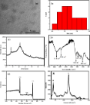
- . The FTIR and XPS results are in agreement. Raman spectroscopy was also carried out to confirm the presence of aromatic carbon atoms in the newly synthesized CDs. The D band was observed at 1150 cm−1, and the G band was observed at 1519 cm−1 (Figure 2f). The D band is associated with defects in the
- graphite lattice, while the G band is attributed to the vibrations of sp2-bonded carbon atoms in a 2D hexagonal lattice. The degree of defects in the CDs can be calculated from the relative intensity ratio (ID/IG) of two peaks of D band and G band. ID/IG was calculated to be approximately 0.69, indicating




Hymenoptera and biomimetic surfaces: insights and innovations
Beilstein J. Nanotechnol. 2024, 15, 1333–1352, doi:10.3762/bjnano.15.107
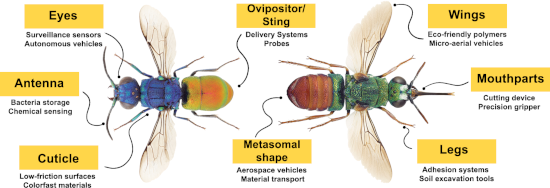
- fabrication of delicate devices by reducing contamination-induced defects. Digging: Many species of bees, wasps, and ants nest in the ground, showing a remarkable digging ability [143] (Figure 1E). Digging can be very efficient even in very hard soils [144], with some species excavating tunnels up to 1 m or





Interaction of graphene oxide with tannic acid: computational modeling and toxicity mitigation in C. elegans
Beilstein J. Nanotechnol. 2024, 15, 1297–1311, doi:10.3762/bjnano.15.105

- less than 1.5 nm thickness and a flake size distribution from 18 to 308 nm. The calculated ratio between the intensity of the D (ID) and G (IG) bands of Raman is ID/IG = 0.85, indicating that the material has a high number of defects, an indirect indication of oxidation. The surface chemical
- defects, one of the armchair edges presents hydroxy groups and one of the zigzag edges presents a broken epoxy site. Figure 3 presents the dynamics of a representative configuration of TA interacting with GO flake. Comparing the evolution of the TA’s configurations in the different simulations, the
- the TA conformations on the GO surface and to calculate the adsorption energy of TA with density functional theory (DFT). Most interactions between TA and GO occurred through the oxygenated defects in the middle of the sheet and TA oxygen functional groups, as shown in Figure 3. However, it is also


Mn-doped ZnO nanopowders prepared by sol–gel and microwave-assisted sol–gel methods and their photocatalytic properties
Beilstein J. Nanotechnol. 2024, 15, 1283–1296, doi:10.3762/bjnano.15.104
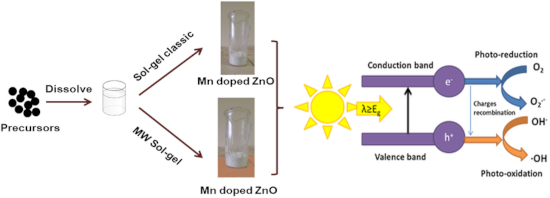
- explained by the influence of the microwave irradiation, which is known to create materials with fewer defects [49]. Porosimetry The nitrogen adsorption–desorption isotherms and pore size distributions are presented in Figure 7. The adsorption and desorption branches for both samples appear to be almost
- spectra (Figure 8) depict the light absorption mainly in the 200–400 nm range for both samples. The MW sample exhibits a higher light absorption and a tendency of main broad band to split at 330 nm. The long absorption tails in the visible domain can be assigned to the presence of surface defects [50
- defects of ZnO nanoparticles. The first peak is attributed to band edge free excitons [51] and the second to bound excitons [51][52]. The lower PL signal of the SG sample relative to the MW sample suggests a slower rate of recombination for photogenerated charges and, consequently, a much more efficient


Quantum-to-classical modeling of monolayer Ge2Se2 and its application in photovoltaic devices
Beilstein J. Nanotechnol. 2024, 15, 1153–1169, doi:10.3762/bjnano.15.94
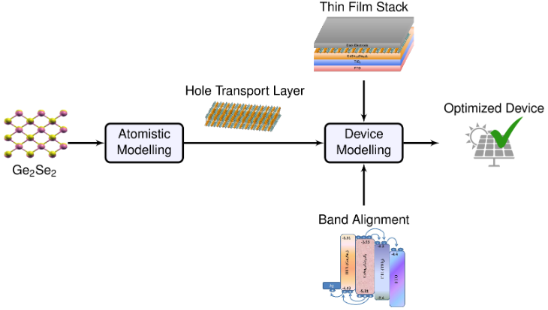
- the optimum performance of the proposed device, we have optimized the performance of the cell module by varying the layer thicknesses of HTL, ETL, and absorber. Also, we have tested the performance of the device under the influence of varying defects densities in the active layer and the interfaces
- resistance and higher losses [59]. We set the optimal absorber thickness at 2 µm, above which the parameter variation was only very little. Effect of defects in the absorber layer Halide pervoskites are generally considered as defect-resilient; yet, deep level defects shows significant impact on the device
- performance. This is due to the decrement in the lifetime of the charge carriers because of the shorter diffusion length, which results from the higher defect densities [62]. We can observed that the performance parameters decrease significantly above defect densities of 1015 cm−3. Effect of interface defects




Local work function on graphene nanoribbons
Beilstein J. Nanotechnol. 2024, 15, 1125–1131, doi:10.3762/bjnano.15.91
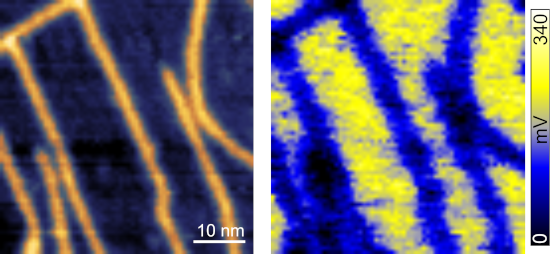
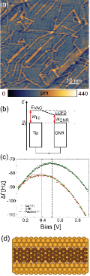
- irregularities such as kinks or defects at the edge are observed in the topography measurement. For example for the GNR where the cross section has been taken, marked by a black line, there is a kink associated with a darker region in the local work function, and in the topography image there are some small

![[Graphic 1]](/bjnano/content/inline/2190-4286-15-91-i4.svg?max-width=637&scale=1.18182)
Interface properties of nanostructured carbon-coated biological implants: an overview
Beilstein J. Nanotechnol. 2024, 15, 1041–1053, doi:10.3762/bjnano.15.85
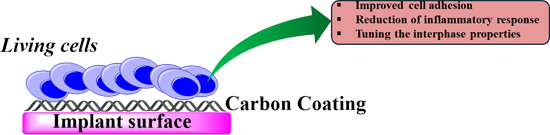
- can reach 550 W·m−1·K−1 after sintering at high pressure [73]. Nevertheless, surface defects and the granular shape of the NDs represent boundaries for phonon transport reducing the thermal energy propagation [74]. Furthermore, the thermal conductivity of NDs increases with the increment of
- defects, including passivation and vacancies [78]. Deposition methods for the synthesis of carbon coatings The addition of nanostructured and nanosized carbon species into materials for biological applications can be attained by several techniques such as chemical vapor deposition (CVD), physical vapor



Atomistic insights into the morphological dynamics of gold and platinum nanoparticles: MD simulations in vacuum and aqueous media
Beilstein J. Nanotechnol. 2024, 15, 995–1009, doi:10.3762/bjnano.15.81
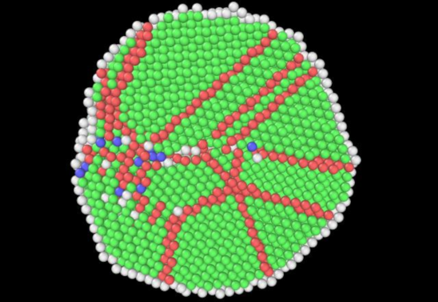
- coordination number in an FCC unit cell without defects and for cutoff distances somewhat larger than the lattice constant is 12. Thus, for the lower temperatures considered, such as 100 K, the atoms exhibit preferably the equilibrium FCC structure, and the coordination number tends to the theoretical value of


Beyond biomimicry – next generation applications of bioinspired adhesives from microfluidics to composites
Beilstein J. Nanotechnol. 2024, 15, 965–976, doi:10.3762/bjnano.15.79
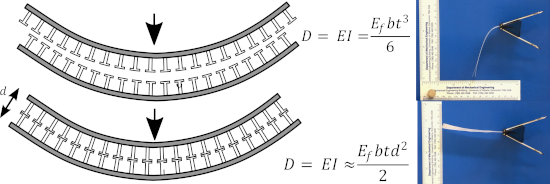
- biomimetic adhesives such as silicone rubbers, which behave more linear-elastically, show a dramatic difference in adhesion force with defects, whereas materials that are more viscoelastic, such as thermoplastic elastomers or polyurethanes, are less sensitive to small defects intentionally introduced into
- silicone rubber (C, D). Isotropic designs were initially produced with polyurethane, and then structural materials were swapped to thermoplastic elastomers, with directional adhesion created by deliberate defects in the caps (D). Electrically conductive composite versions and geckofluidics were created in


Electrospun nanofibers: building blocks for the repair of bone tissue
Beilstein J. Nanotechnol. 2024, 15, 941–953, doi:10.3762/bjnano.15.77
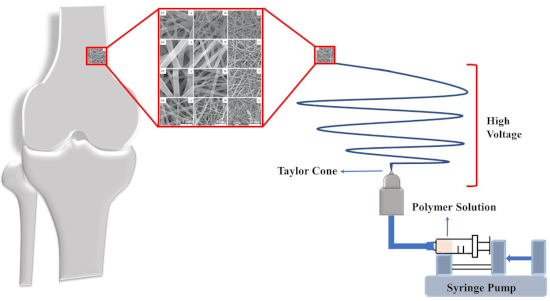
- regeneration [25][29]. Polymeric nanofibrous scaffolds Bone has the ability to heal after fractures and to regenerate continuously. Nevertheless, tumor resections, traumatic bone loss, or large defects caused by infections cannot heal without surgical interventions, and treatments targeting skeletal
- high, beaded nanofibers and many other defects are formed mainly because of more unspun droplets as a result of larger droplet volume and increased bending instabilities [56][58]. Needle tip-to-collector distance Since the distance between needle tip and collector influences the amount of evaporated
- ’ recovery, ReBOSSIS is gradually replaced with bone. ReBOSSIS was approved by the US Food and Drug Administration in April 2015, and it us available in the USA [102]. PLLA and collagen-containing scaffolds developed by The Electrospinning Company are used for biomedical applications in various bone defects


Effects of cutting tool geometry on material removal of a gradient nanograined CoCrNi medium entropy alloy
Beilstein J. Nanotechnol. 2024, 15, 925–940, doi:10.3762/bjnano.15.76
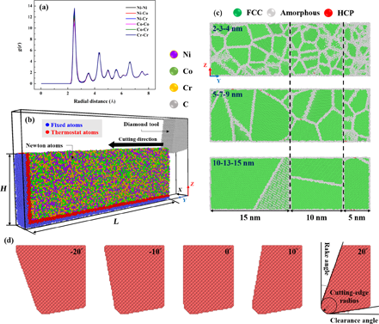
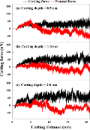
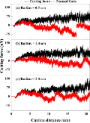
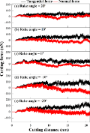
- obvious. However, it is also affected by chip shape and defects such as grain boundaries and dislocations. The cutting force does not increase significantly at a cutting depth of 0.5 nm. Only as the cutting length increases, the number of accumulate atoms in the grooves slightly increases. When the
- mechanism of the material is very sensitive to the presence of defects [23]. For specimens in the range of 0.1–100 µm, the formation of voids at grain boundaries is the dominant defect and significantly affects the deformation behavior of the material. In contrast, voids seem negligible when the scale is
- changed to the nanoscale below 10 nm. Moreover, the simulation assumes perfect defects in polycrystalline CoCrNi MEAs, whereas the experimental samples always contain a variety of defects. However, the hardness results of the CoCrNi MEAs in this study are comparable to the MD results for NiCoCr multi








Investigation on drag reduction on rotating blade surfaces with microtextures
Beilstein J. Nanotechnol. 2024, 15, 833–853, doi:10.3762/bjnano.15.70
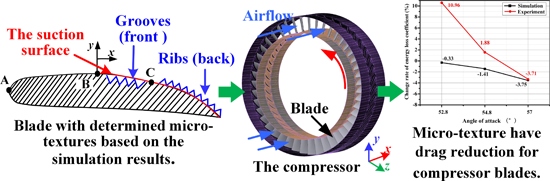
- and no obvious defects. In order to further analyze the processing quality, a HIROX KH-7700 three-dimensional video microscope was used to examine the microtexture and blade surface morphology, as shown in Figure 19. The rib surface morphology and dimensional data are shown in Figure 19a. The


Intermixing of MoS2 and WS2 photocatalysts toward methylene blue photodegradation
Beilstein J. Nanotechnol. 2024, 15, 817–829, doi:10.3762/bjnano.15.68
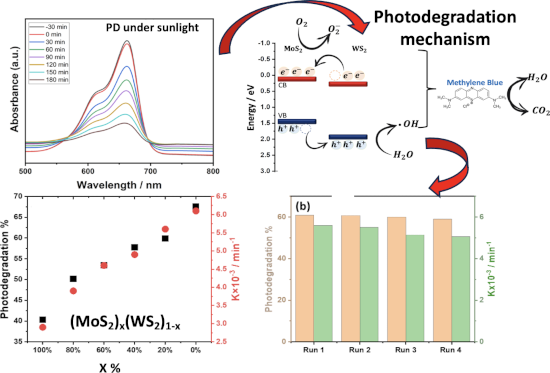
- orientation is indicated by the (103) direction. In the high-resolution image, some edge-related defects can also be seen which is common in CVD-grown MoS2 materials [34]. Similarly, the WS2 sample exhibits a flake shape along with a high crystalline nature of the flakes (Figure 5c, Figure 5d). Figure 5e and





