Search results
Search for "instrumentation" in Full Text gives 145 result(s) in Beilstein Journal of Nanotechnology.
Selective detection of Mg2+ ions via enhanced fluorescence emission using Au–DNA nanocomposites
Beilstein J. Nanotechnol. 2017, 8, 762–771, doi:10.3762/bjnano.8.79

- Information File 56: Additional experimental details. Acknowledgements We acknowledge Dr. B. N. Chudasama (School of Physics and Material Science, Thapar University) for the zeta potential and DLS measurements. We would also like to thank the Sophisticated Analytical Instrumentation Facility (IIT Bombay) for




Gas sensing properties of MWCNT layers electrochemically decorated with Au and Pd nanoparticles
Beilstein J. Nanotechnol. 2017, 8, 592–603, doi:10.3762/bjnano.8.64

- standards established by Kyoto and Paris climate agreements [2][3]. Besides the expensive and time-consuming analytical instrumentation (e.g., gas chromatography) commonly used to control the concentration of released gases, some progress has been made in gas sensor technologies as a valid alternative in
- electrophoretic method to functionalize the surface of a MWCNT gas senor with metal NPs is fast, scalable and versatile compared to the other proposed processes. Moreover, these MWCNT-based solid-state chemiresistive gas sensors seem to be a complementary solution to the common analytical instrumentation for gas


Multimodal cantilevers with novel piezoelectric layer topology for sensitivity enhancement
Beilstein J. Nanotechnol. 2017, 8, 358–371, doi:10.3762/bjnano.8.38

- AFM cantilever instrumentation requires a piezoelectric stack actuator at the base of the cantilever for excitation [3] inevitably adding additional resonances as is visible from the so called forest of peaks [22]. These additional frequency components make cantilever resonance tuning almost
- desired modes rather than suppress the undesirable modes. This difference leads to fundamental changes in the design strategy, resulting piezoelectric layer topology, instrumentation, actuator characteristics and sensor characteristics. Indeed, the justification for this altered approach comes from the
- piezoelectric actuator arrangements to maximize the transducer response for the first four modes of a cantilever with a stepped geometry. In section ’Instrumentation of the cantilever’ the working principle and modeling of the instrumentation is presented. The experimentally determined actuator and sensor




Nanostructured SnO2–ZnO composite gas sensors for selective detection of carbon monoxide
Beilstein J. Nanotechnol. 2016, 7, 2045–2056, doi:10.3762/bjnano.7.195
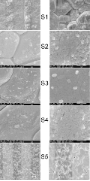
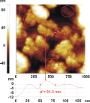
- . The final thermal treatment consisted of heating the sensor for 1 h at 350 °C [34]. The obtained sensors were named S1–S5 (see Table 1). Instrumentation Sensor characterization techniques The S1–S5 sensor samples were characterized using scanning electron microscopy (SEM) and atomic force microscopy




Noise in NC-AFM measurements with significant tip–sample interaction
Beilstein J. Nanotechnol. 2016, 7, 1885–1904, doi:10.3762/bjnano.7.181

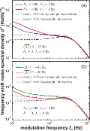
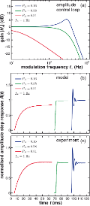
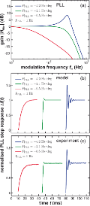
- of noise generation and propagation in the NC-AFM and provide a quantitative prediction of noise for given experimental parameters. We derive strategies for noise-optimised imaging and spectroscopy and outline a full optimisation procedure for the instrumentation and control loops. Keywords



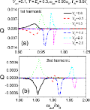
![[Graphic 32]](/bjnano/content/inline/2190-4286-7-181-i73.png?max-width=637&scale=1.18182) wit...
wit...

![[Graphic 34]](/bjnano/content/inline/2190-4286-7-181-i75.png?max-width=637&scale=1.18182) wit...
wit...



Functionalized platinum nanoparticles with surface charge trigged by pH: synthesis, characterization and stability studies
Beilstein J. Nanotechnol. 2016, 7, 1822–1828, doi:10.3762/bjnano.7.175

- bond on the PtNP surface. The DLS characterization demonstrated the long-term stability of the colloidal system up to three months and the possibility to tune the aggregation phenomenon of the PtNPs by varying the pH due to modulation of the metal surface charge. Experimental Instrumentation UV–vis


Precise in situ etch depth control of multilayered III−V semiconductor samples with reflectance anisotropy spectroscopy (RAS) equipment
Beilstein J. Nanotechnol. 2016, 7, 1783–1793, doi:10.3762/bjnano.7.171

- photon energy, the term RAS spectrum will be used. Due to the rotation of the substrates during epitaxy the software of the epitaxy-RAS instrumentation typically ignores the sign of the RAS signal. The time evolution of the spectrum of this RAS signal is called a false-color plot or short color plot (see


Numerical investigation of depth profiling capabilities of helium and neon ions in ion microscopy
Beilstein J. Nanotechnol. 2016, 7, 1749–1760, doi:10.3762/bjnano.7.168
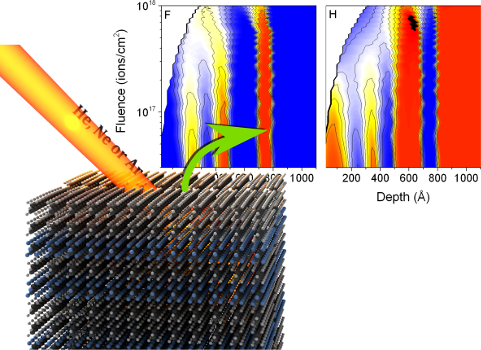
- Patrick Philipp Lukasz Rzeznik Tom Wirtz Advanced Instrumentation for Ion Nano-Analytics (AINA), MRT Department, Luxembourg Institute of Science and Technology (LIST), 41 rue du Brill, L-4422 Belvaux, Luxembourg 10.3762/bjnano.7.168 Abstract The analysis of polymers by secondary ion mass


Morphology of SiO2 films as a key factor in alignment of liquid crystals with negative dielectric anisotropy
Beilstein J. Nanotechnol. 2016, 7, 1743–1748, doi:10.3762/bjnano.7.167

- rule" [11] are shown for comparison. LC pretilt vs the SiO2 deposition angle. The experimental data from [2] and [3] are shown for comparison. Acknowledgements This work has been partially supported by ICT COST Action IC1208 "Integrating devices and materials: a challenge for new instrumentation in


Nanoanalytics for materials science
Beilstein J. Nanotechnol. 2016, 7, 1674–1675, doi:10.3762/bjnano.7.159
- Thilo Glatzel Tom Wirtz Department of Physics, University of Basel, Klingelbergstrasse 82, 4056 Basel, Switzerland Advanced Instrumentation for Ion Nano-Analytics (AINA), MRT Department, Luxembourg Institute of Science and Technology (LIST), 41 rue du Brill, L-4422 Belvaux, Luxembourg 10.3762
- “Nanoanalytics for materials science” groups six exciting articles around the aforementioned aspects of nanoanalytics, describing the development of both new instrumentation as well as new methodologies. On the side of instrumental development, a ultra-high resolution multi-probe device based on tuning fork
False positives and false negatives measure less than 0.001% in labeling ssDNA with osmium tetroxide 2,2’-bipyridine
Beilstein J. Nanotechnol. 2016, 7, 1434–1446, doi:10.3762/bjnano.7.135

- the pore in speeds that correspond microseconds per base − speeds that are too fast for detection by current instrumentation [11]. To remedy the situation, work mostly with α-HL and MspA has yielded engineered versions thereof with improved DNA sensing capabilities [12][22][23], as well as the
- experiment (Figure 4). These calculations of 0.3/100,000 for A reactivity and 2/100,000 for G reactivity are upper limits of detectability, and not actual levels of reactivity. This is due to limitations in instrumentation and the specifics of the experiment. These limits are also consistent with
- pyrimidines and 31 plausible positions for backbone cleavage would be visible at the level of 2/20,135/3/31 = 1/1,000,000, and suggests that OsBp reactivity towards a DNA backbone, osmylated or not, is lower than 1/1,000,000. As previously discussed, this limit is the result of our current instrumentation and


Experimental and simulation-based investigation of He, Ne and Ar irradiation of polymers for ion microscopy
Beilstein J. Nanotechnol. 2016, 7, 1113–1128, doi:10.3762/bjnano.7.104
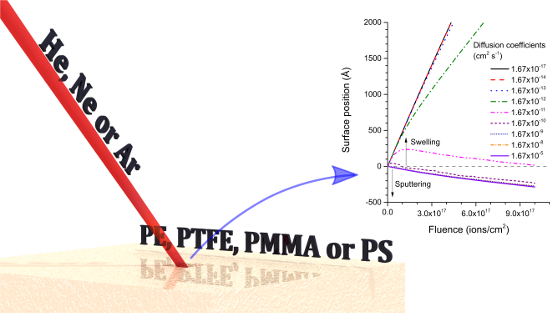
- Lukasz Rzeznik Yves Fleming Tom Wirtz Patrick Philipp Advanced Instrumentation for Ion Nano-Analytics (AINA), MRT Department, Luxembourg Institute of Science and Technology (LIST), 41 rue du Brill, L-4422 Belvaux, Luxembourg 10.3762/bjnano.7.104 Abstract Secondary ion mass spectrometry (SIMS) on


Voltammetric determination of polyphenolic content in pomegranate juice using a poly(gallic acid)/multiwalled carbon nanotube modified electrode
Beilstein J. Nanotechnol. 2016, 7, 1104–1112, doi:10.3762/bjnano.7.103
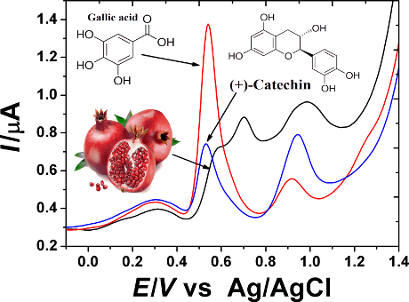
- gallic acid were prepared by dilution of the stock solution with 0.2 M phosphoric acid. Instrumentation Cyclic and square wave voltammetric, chronoamperomeric and chronocoulomeric experiments were performed by using an Autolab PGSTAT128N Potentiostat/Galvanostat (Eco-Chemie, Utrecht, The Netherlands


Phenalenyl-based mononuclear dysprosium complexes
Beilstein J. Nanotechnol. 2016, 7, 995–1009, doi:10.3762/bjnano.7.92
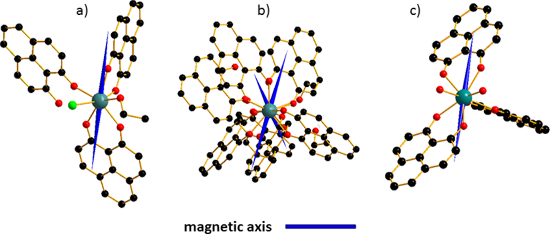
- the concept that we discussed in our introduction. Experimental Instrumentation Elemental analysis of carbon and hydrogen, were carried out in a Vario Micro Cube. Infrared spectra were recorded using KBr pressed pellets with a Perkin-Elmer Spectrum GX FTIR spectrometer (MAGNA FTIR 750, Nicolet) in the


Modelling of ‘sub-atomic’ contrast resulting from back-bonding on Si(111)-7×7
Beilstein J. Nanotechnol. 2016, 7, 937–945, doi:10.3762/bjnano.7.85

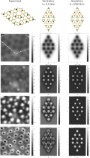
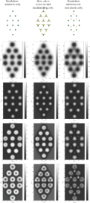
- temperature scanning probe instrumentation [1], coupled with specific experimental techniques utilising the in situ functionalisation of scanning probe tips with single molecules [2], and operation in the constant-height imaging mode, have resulted in an explosion of interest in high-resolution imaging and


Efficient electron-induced removal of oxalate ions and formation of copper nanoparticles from copper(II) oxalate precursor layers
Beilstein J. Nanotechnol. 2016, 7, 852–861, doi:10.3762/bjnano.7.77
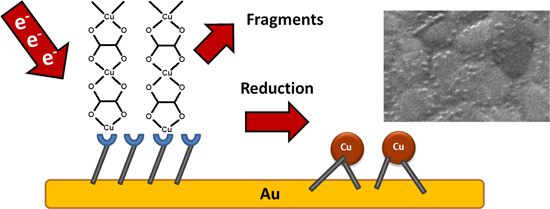
- precursor distribution on the surface was achieved by using liquid precursor materials, i.e., molten salts [5] or solutions of the precursors [6][7][8]. The latter processes are more demanding in terms of instrumentation as they require heating stages [5] or liquid cells [6][7][8], respectively. Furthermore


Facile synthesis of water-soluble carbon nano-onions under alkaline conditions
Beilstein J. Nanotechnol. 2016, 7, 758–766, doi:10.3762/bjnano.7.67
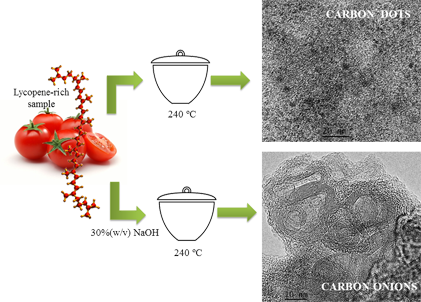
- H2SO4 (n = 1.33) with a quantum yield of 0.54 at λex = 350 nm was used as a reference. C-dots and C-onions were dissolved in Milli-Q water (n = 1.33). Instrumentation HRTEM (JEOL JEM-2100F, 200 kV) was used to determine the size and morphology of the synthesized carbon materials. Powder X-ray


Novel roles for well-known players: from tobacco mosaic virus pests to enzymatically active assemblies
Beilstein J. Nanotechnol. 2016, 7, 613–629, doi:10.3762/bjnano.7.54
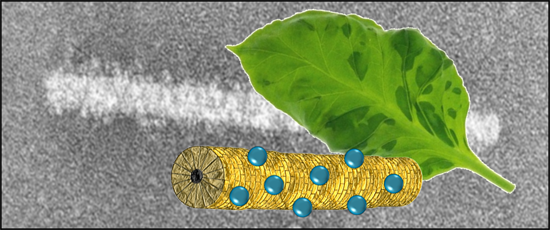
- has been growing enormously since then [170][171], which parallels the investigation of viral biotemplates (see above). The main emerging application area is medical diagnostics, namely “point-of-care” on-site analytics circumventing the need for expensive instrumentation [172], with further uses


Nanoscale effects in the characterization of viscoelastic materials with atomic force microscopy: coupling of a quasi-three-dimensional standard linear solid model with in-plane surface interactions
Beilstein J. Nanotechnol. 2016, 7, 554–571, doi:10.3762/bjnano.7.49
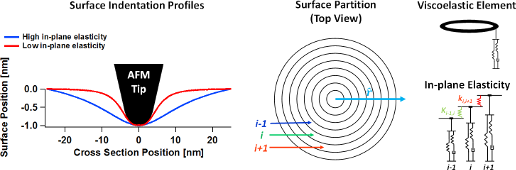
- method and instrumentation, almost arriving at the conclusion that it is nearly impossible to carry out quantitatively accurate measurements of viscoelasticity with AFM, unless one assumes that the sample follows the simplest continuum behaviors. For the most part, the development of new AFM imaging and


Charge and heat transport in soft nanosystems in the presence of time-dependent perturbations
Beilstein J. Nanotechnol. 2016, 7, 439–464, doi:10.3762/bjnano.7.39







Efficiency improvement in the cantilever photothermal excitation method using a photothermal conversion layer
Beilstein J. Nanotechnol. 2016, 7, 409–417, doi:10.3762/bjnano.7.36

- due to its great potential for many applications. For example, recent advancements in instrumentation of dynamic-mode AFM have enabled atomic-resolution imaging not only in vacuum [2][3][4] but also in liquid [5][6]. In addition, other advanced AFM techniques such as high-speed AFM [7][8][9] and



Molecular machines and devices
Beilstein J. Nanotechnol. 2016, 7, 310–311, doi:10.3762/bjnano.7.29
- interesting combination of theoretical questions, dedicated instrumentation development, synthetic chemistry, and experimental observations. Concepts for electrically actuated, molecular scale motion are discussed in many of the contributions, where switches, pumps, or motors are considered, and first
High-bandwidth multimode self-sensing in bimodal atomic force microscopy
Beilstein J. Nanotechnol. 2016, 7, 284–295, doi:10.3762/bjnano.7.26
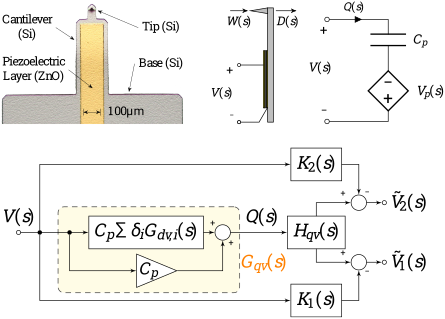
- enables the omission of the commonly used piezoelectric stack actuator and optical beam deflection sensor, alleviating limitations due to distorted frequency responses and instrumentation cost, respectively. The proposed method benefits from a more than two orders of magnitude increase in deflection to
- excitation of higher order eigenmodes of a microcantilever [1][2][3] and as such, present a number of practical challenges to cantilever instrumentation. Both high-bandwidth cantilever actuation and deflection sensing are necessary, ideally without distorting the frequency response of the cantilever and
- elimination of the piezoelectric base actuator and the OBD sensor from the cantilever instrumentation setup, avoiding tedious laser alignment and distorted frequency responses. In this contribution, we demonstrate that the self-sensing method can be extended to MF-AFM techniques such as bimodal imaging by


Single-molecule magnet behavior in 2,2’-bipyrimidine-bridged dilanthanide complexes
Beilstein J. Nanotechnol. 2016, 7, 126–137, doi:10.3762/bjnano.7.15
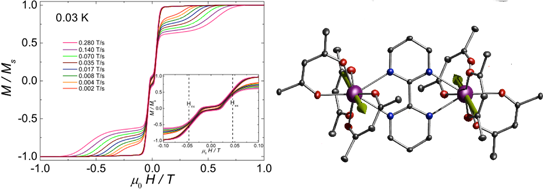
- −17 °C and by layering EtOH onto a CHCl3 solution of 1, 4 and 5 at room temperature, respectively. Results of elemental analyses and isolated yields are given in Table 1. Physical measurements and instrumentation IR transmission measurements of pressed KBr pellets were recorded at room temperature


Single pyrimidine discrimination during voltage-driven translocation of osmylated oligodeoxynucleotides via the α-hemolysin nanopore
Beilstein J. Nanotechnol. 2016, 7, 91–101, doi:10.3762/bjnano.7.11
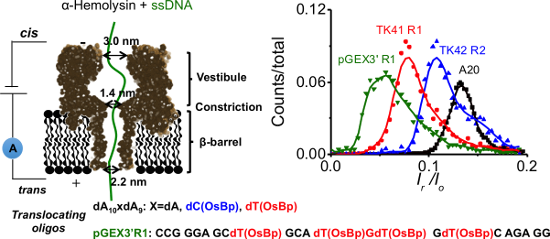
- composition. Part B, Chemicals, materials and instrumentation for nanopore measurements: Nanopore experiments were conducted with 10 μM DNA in 1.0 M KCl, 10 mM potassium phosphate buffer at pH 7.4 and at 22 ± 1 °C, as described in detail in [14], and summarized here. WT α-hemolysin was purchased from List