Search results
Search for "photothermal" in Full Text gives 112 result(s) in Beilstein Journal of Nanotechnology.
Droplet-based synthesis of homogeneous magnetic iron oxide nanoparticles
Beilstein J. Nanotechnol. 2018, 9, 2413–2420, doi:10.3762/bjnano.9.226
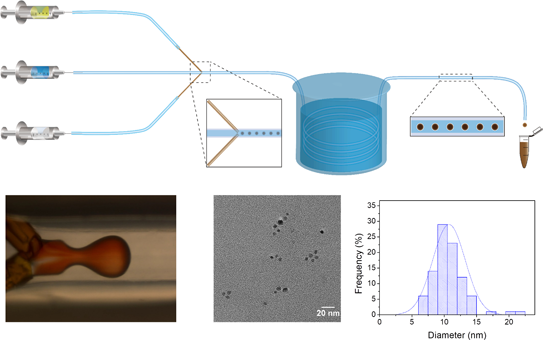
- healthcare significantly [5]. For example, a composite nanomaterial has been developed as a photosensitizer in photothermal therapy (PTT), while also acting as a contrast agent for magnetic resonance imaging (MRI) [6]. Magnetic materials are of particular interest here, as they can be used for targeting [7


Spin-coated planar Sb2S3 hybrid solar cells approaching 5% efficiency
Beilstein J. Nanotechnol. 2018, 9, 2114–2124, doi:10.3762/bjnano.9.200
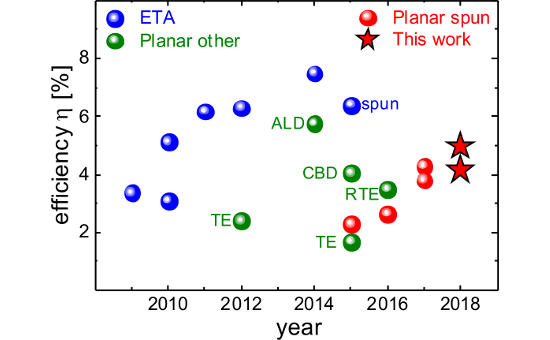
- chosen to be 265 °C slightly above the minimum crystallization temperature of Sb2S3. The morphology was studied with SEM and atomic force microscopy (AFM). Possible changes in electronic quality with crystallization temperature were investigated via photothermal deflection spectroscopy (PDS) where the



Fabrication of photothermally active poly(vinyl alcohol) films with gold nanostars for antibacterial applications
Beilstein J. Nanotechnol. 2018, 9, 2040–2048, doi:10.3762/bjnano.9.193
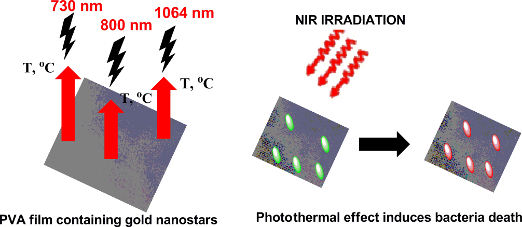
- , Piazza dell’AteneoNuovo, 20126, Milan, Italy 10.3762/bjnano.9.193 Abstract The unique photothermal properties of non-spherical gold nanoparticles under near-infrared (NIR) irradiation find broad application in nanotechnology and nanomedicine. The combination of their plasmonic features with widely used
- biocompatible poly(vinyl alcohol) (PVA) films can lead to novel hybrid polymeric materials with tunable photothermal properties and a wide range of applications. In this study, thin PVA films containing highly photothermally efficient gold nanostars (GNSs) were fabricated and their properties were studied. The
- resulting films displayed good mechanical properties and a pronounced photothermal effect under NIR irradiation. The local photothermal effect triggered by NIR irradiation of the PVA-GNS films is highly efficient at killing bacteria, therefore providing an opportunity to develop new types of protective


Quantitative comparison of wideband low-latency phase-locked loop circuit designs for high-speed frequency modulation atomic force microscopy
Beilstein J. Nanotechnol. 2018, 9, 1844–1855, doi:10.3762/bjnano.9.176
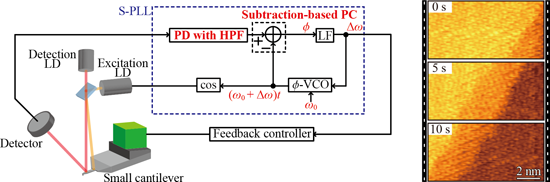
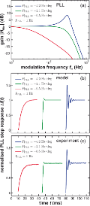
- excited and detected using a highly stable custom-built photothermal excitation system and low-noise optical beam deflection sensor, respectively [27][28][29][30]. The noise spectra shown below in Figure 8 were obtained using the commercially available AFM controller (ARC2, Asylum Research). Sample


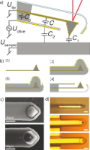
Electrostatically actuated encased cantilevers
Beilstein J. Nanotechnol. 2018, 9, 1381–1389, doi:10.3762/bjnano.9.130

- fluid. Magnetic excitation [13][14][15] or photothermal excitation [16][17][18][19] are more common in liquids, but require specialized instruments. Although frequently applied in microelectromechanical systems, electrostatic actuation is rarely used in scanning probe force microscopy. Reliable
- . Substantially stiffer cantilevers would have too small of an amplitude leading to a similar practical bandwidth of ca. 5 MHz. This is far greater than magnetic and piezo actuation techniques and similar to photothermal excitation. Influence of the encasement The capacitor between the encasement and the sample
- interpretation of tip–sample interactions. The advantages over photothermal excitation are that no additional optical components or alignment procedures are required and that the cantilever does not get heated. With the used geometry and high stiffness, we achieve excitation of sub-nanometer amplitudes with high


Methionine-mediated synthesis of magnetic nanoparticles and functionalization with gold quantum dots for theranostic applications
Beilstein J. Nanotechnol. 2017, 8, 1734–1741, doi:10.3762/bjnano.8.174

- nanomedicine, biocompatible iron oxide-based NPs have attracted particular interest due to their size-dependent magnetic, optical and chemical properties that allow for the design of NPs for multimodal imaging and photothermal therapy of cancer cells [1]. Dual-imaging probes, capable to perform simultaneously


Near-infrared-responsive, superparamagnetic Au@Co nanochains
Beilstein J. Nanotechnol. 2017, 8, 1680–1687, doi:10.3762/bjnano.8.168

- various applications, such as energy conversion in solar cells [10][11], biosensing [12], photothermal therapy [13], and biomedical imaging [14]. Surface modification with an inorganic coating, such as silica, can lend biocompatibility to the nanoparticles [15][16][17][18]. A gold shell on magnetic
- shift from that of a single particle because of near-field coupling. This shift in wavelength is proportional to the number of nanoparticles in the chain [31][32]. These new types of magnetic nanostructures find use in several applications, such as combined MRI imaging and photothermal treatment and bio


Relationships between chemical structure, mechanical properties and materials processing in nanopatterned organosilicate fins
Beilstein J. Nanotechnol. 2017, 8, 863–871, doi:10.3762/bjnano.8.88

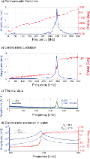
- microscope; contact resonance; infrared spectroscopy; organosilicate; photothermal; Introduction A fundamental objective of materials science and engineering is to understand, control, and exploit the relationships between the structure of a material at various length scales and its properties in order to



3D Nanoprinting via laser-assisted electron beam induced deposition: growth kinetics, enhanced purity, and electrical resistivity
Beilstein J. Nanotechnol. 2017, 8, 801–812, doi:10.3762/bjnano.8.83
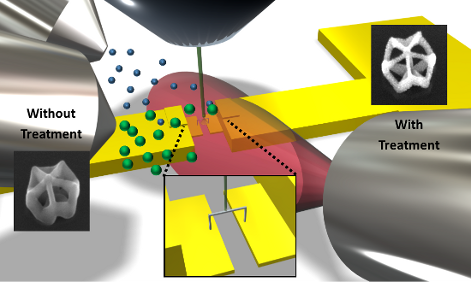
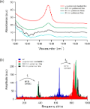
- and a coalescence of the otherwise Pt–C nanogranular material, 2) a slight enhancement in the deposit resolution and 3) a 100-fold improvement in the conductivity of suspended nanowires grown with the in situ photothermal assist process, while retaining a high degree of shape fidelity. Keywords
- from 45 to 34 °C. Both approaches yield a comparable segment angle to the laser-assisted EBID – thus it is opined that the photothermal heating must produce an equilibrium precursor surface coverage comparable with the lower precursor flux growth. As expected, the higher Pt precursor temperature (#5


Study of the surface properties of ZnO nanocolumns used for thin-film solar cells
Beilstein J. Nanotechnol. 2017, 8, 446–451, doi:10.3762/bjnano.8.48
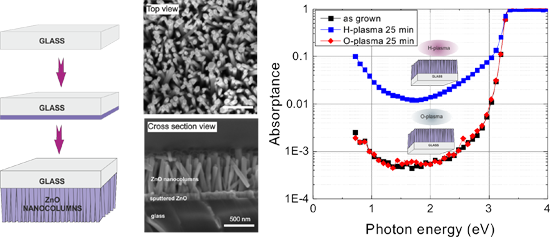
- surface properties of ZnO NCs and the binding state of present elements were investigated before and after different plasma treatments, typically used in plasma-enhanced CVD solar cell deposition processes, by X-ray photoelectron spectroscopy (XPS). Photothermal deflection spectroscopy (PDS) was used to
- development of thin film solar cells based on ZnO NCs. Keywords: 3-dimensional solar cells; hydrothermal growth; optical spectroscopy; photothermal deflection spectroscopy; plasma treatment; X-ray photoelectron spectroscopy; ZnO nanocolumns; Introduction The widely accepted design of thin-film silicon (TF
- were prepared before by DC reactive magnetron sputtering. The optical absorption of the pristine ZnO layers as well as that of the substrates bearing the dense ZnO NCs was investigated by photothermal deflection spectroscopy (PDS) [16][17]. Furthermore, we investigated the changes in the PDS spectrum



Comparison of four methods for the biofunctionalization of gold nanorods by the introduction of sulfhydryl groups to antibodies
Beilstein J. Nanotechnol. 2017, 8, 372–380, doi:10.3762/bjnano.8.39

- biomedicine, including biosensing [1][2][3], photothermal therapy [4][5][6], molecular imaging [7][8], and controlled drug delivery [5][9] because of their distinct optical properties, i.e., high refractive index sensitivity and a tunable longitudinal plasmon band by varying the aspect ratio [10][11]. However


Multimodal cantilevers with novel piezoelectric layer topology for sensitivity enhancement
Beilstein J. Nanotechnol. 2017, 8, 358–371, doi:10.3762/bjnano.8.38

- impossible in liquids [23][24] and can alter the cantilever response rendering the identification and subsequent analysis of higher modes exceedingly difficult. For this reason, numerous integrated actuation methods such as magnetic [25], photothermal [26], resistive thermal [27], ultrasonic [28] or via a




Nanoscale isoindigo-carriers: self-assembly and tunable properties
Beilstein J. Nanotechnol. 2017, 8, 313–324, doi:10.3762/bjnano.8.34

- electrical properties [1][2][3][4][5]. This makes possible to develop new technologies for biodiagnostics, biomedical applications, including photothermal therapy [6][7][8], study of biomembranes [9] and dynamically probing cells [10][11]. (ii) These heterocyclic compounds found applications in various




Noise in NC-AFM measurements with significant tip–sample interaction
Beilstein J. Nanotechnol. 2016, 7, 1885–1904, doi:10.3762/bjnano.7.181

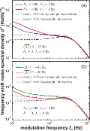
- speculate that the low-frequency deviation is caused by mechanical instabilities within the system, or by instabilities within the piezoelectric excitation system. For example, low-frequency noise has been observed when using photothermal excitation [23]. Disabling the amplitude control loop results in a



![[Graphic 32]](/bjnano/content/inline/2190-4286-7-181-i73.png?max-width=637&scale=1.18182) wit...
wit...

![[Graphic 34]](/bjnano/content/inline/2190-4286-7-181-i75.png?max-width=637&scale=1.18182) wit...
wit...



Photothermal effect of gold nanostar patterns inkjet-printed on coated paper substrates with different permeability
Beilstein J. Nanotechnol. 2016, 7, 1480–1485, doi:10.3762/bjnano.7.140

- . A pronounced photothermal effect was observed under NIR excitation of LSPR of the printed GNS patterns even at low laser intensities. It was found that beside the direct role of the laser intensity, this effect depends appreciably on the printing parameters, such as drop density (δ, drops/mm2) and
- number of printed layers, and, critically, on the permeability of the coated paper substrates. These results will promote the development of GNS-based printed platforms for local photothermal therapy. Keywords: gold nanostars; inkjet printing; localized surface plasmon resonance (LSPR); photothermal
- output [25][26]. The photothermal properties of printed gold nanoparticle patterns on paper substrates have not been fully explored yet, and this is the main aim of this study. We reported recently that GNS patterns inkjet-printed onto semi-permeable paper display a substantial photothermal effect with


Multiwalled carbon nanotube hybrids as MRI contrast agents
Beilstein J. Nanotechnol. 2016, 7, 1086–1103, doi:10.3762/bjnano.7.102
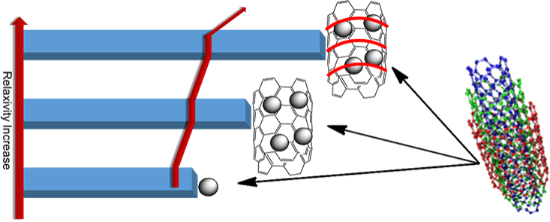
- carbon nanotubes (CNT) drug and genetic material delivery, immunotherapy or photothermal cancer therapy [1][2]. The 'quantum leap' [3] of bionanomaterials has also affected magnetic resonance imaging (MRI). This technique, which has already matured into a basic diagnostic tool in medicine, has an edge



Advanced atomic force microscopy techniques III
Beilstein J. Nanotechnol. 2016, 7, 1052–1054, doi:10.3762/bjnano.7.98
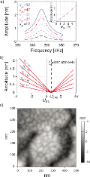
- developed an advanced microscope capable of obtaining nanoscale topography as well as mechanical properties by multifrequency AFM at high speed. They combined recent progress in increased imaging speed and photothermal actuation in a unique and versatile AFM head using ultrasmall cantilevers [18]. Single
Generalized Hertz model for bimodal nanomechanical mapping
Beilstein J. Nanotechnol. 2016, 7, 970–982, doi:10.3762/bjnano.7.89
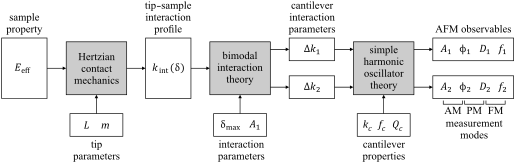
- a Ti/Ir-coated tip of nominal tip radius R = 28 ± 10 nm. Photothermal excitation [56] was used, which ensures stable imaging [57] and accurate FM tracking [58][59][60]. An automated calibration method [61] was used to obtain the stiffness of the first eigenmode (kc1 = 43.2 N/m), which was then used


![[Graphic 4]](/bjnano/content/inline/2190-4286-7-89-i40.png?max-width=637&scale=1.18182) approximation applied to Equation 6 i...
approximation applied to Equation 6 i...


Noncontact atomic force microscopy III
Beilstein J. Nanotechnol. 2016, 7, 946–947, doi:10.3762/bjnano.7.86
- particular, latest instrumental advances are highlighted in the form of a new design for a large-area SPM used for electrostatic force measurements, improvement of dynamic cantilever response by the utilization of reflective coatings and photothermal conversion layers, and the use of length extension
Efficiency improvement in the cantilever photothermal excitation method using a photothermal conversion layer
Beilstein J. Nanotechnol. 2016, 7, 409–417, doi:10.3762/bjnano.7.36

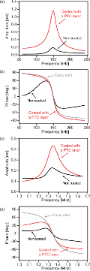
- /bjnano.7.36 Abstract Photothermal excitation is a cantilever excitation method that enables stable and accurate operation for dynamic-mode AFM measurements. However, the low excitation efficiency of the method has often limited its application in practical studies. In this study, we propose a method for
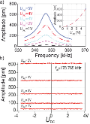
- improving the photothermal excitation efficiency by coating cantilever backside surface near its fixed end with colloidal graphite as a photothermal conversion (PTC) layer. The excitation efficiency for a standard cantilever of PPP-NCHAuD with a spring constant of ≈40 N/m and a relatively stiff cantilever
- than 2 h without any indication of possible contamination from the coating. The proposed method, using a PTC layer made of colloidal graphite, greatly enhances photothermal excitation efficiency even for a relatively stiff cantilever in liquid. Keywords: atomic force microscopy; cantilever excitation



High-bandwidth multimode self-sensing in bimodal atomic force microscopy
Beilstein J. Nanotechnol. 2016, 7, 284–295, doi:10.3762/bjnano.7.26
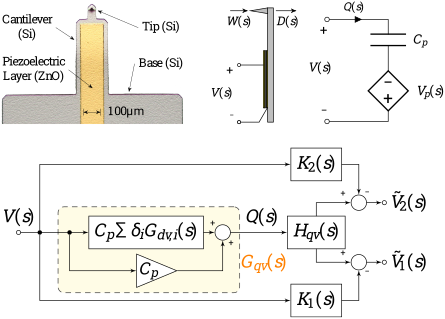
- . To circumvent this problem, integrated actuation such as magnetic [4], photothermal [5], resistive thermal [6], ultrasonic [7] or through a piezoelectric layer [8] have been employed. Among the sensing techniques to detect the cantilever oscillations, the optical beam deflection (OBD) method [9


Self-organization of gold nanoparticles on silanated surfaces
Beilstein J. Nanotechnol. 2015, 6, 2345–2353, doi:10.3762/bjnano.6.242

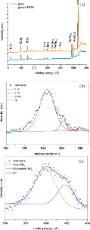
- photothermal therapy [16]. AuNPs exhibit well-defined optical properties such as surface plasmon resonance, which depends on the size and shape of nanoparticles, interparticle distance and the effective refractive index of the surrounding medium [17]. Different techniques have been used to assemble AuNPs on


Improved atomic force microscopy cantilever performance by partial reflective coating
Beilstein J. Nanotechnol. 2015, 6, 1450–1456, doi:10.3762/bjnano.6.150

- reduction is due to the reduced photothermal (bimetallic) effect. Note that the sharp peaks in the spectra are of electronic origin as they also appear in the detection noise. We observed the similar reduction in 1/f noise for the NCLR cantilevers, which can be seen in Supporting Information File 1, Figure


Low-cost formation of bulk and localized polymer-derived carbon nanodomains from polydimethylsiloxane
Beilstein J. Nanotechnol. 2015, 6, 744–748, doi:10.3762/bjnano.6.76

- reported in [20]. The nanoresidues also show good photothermal stability as the intensity of the fluorescence emission did not present quenching after hours of irradiation under a fluorescence microscope or when characterized with a 4 W UV lamp and characterized with a photomultiplier tube, even months


A scanning probe microscope for magnetoresistive cantilevers utilizing a nested scanner design for large-area scans
Beilstein J. Nanotechnol. 2015, 6, 451–461, doi:10.3762/bjnano.6.46

- , optical read-outs have to be readjusted not only after every cantilever exchange but also after temperature drifts which can offset the focal position of the laser and photo-detector due to thermal expansion. Additionally, the optical read-out can influence the cantilevers deflection by photothermal