


Search results
Search for "reduced graphene oxide" in Full Text gives 83 result(s) in Beilstein Journal of Nanotechnology.
Carbon-based smart nanomaterials in biomedicine and neuroengineering
Beilstein J. Nanotechnol. 2014, 5, 1849–1863, doi:10.3762/bjnano.5.196
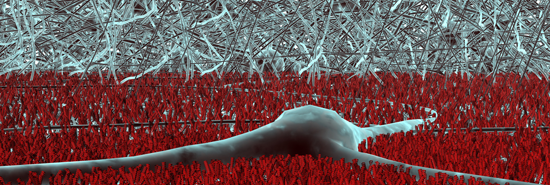
- treatments, but also in a high degree of purity of the recovered proteins, which can be further analysed by mass spectrometry [86]. Graphene: Graphene, graphene oxide (GO) and reduced graphene oxide (r-GO) have been investigated as new biocompatible material by virtue of their unique properties, making them
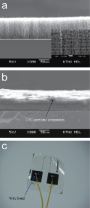


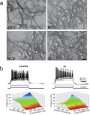
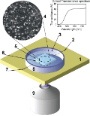
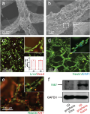
Donor–acceptor graphene-based hybrid materials facilitating photo-induced electron-transfer reactions
Beilstein J. Nanotechnol. 2014, 5, 1580–1589, doi:10.3762/bjnano.5.170

- applications. There are two main routes to overcome this hurdle. Namely, this can be accomplished by starting with water-soluble graphene oxide (GO), which can be reduced to the so-called reduced graphene oxide (rGO), followed by post-modification to acquire functionalized graphene [11]. However, the reduction
- on graphene oxide or reduced graphene oxide The unique and notable features of porphyrins and phthalocyanines as light-harvesting antennas with high extinction coefficients and remarkable redox properties make them promising electron donors to be associated with graphene. The very first approach of
- ) aryl diazonium addition, and (d) azide addition. Iron(II) coordinated on terpyridine (tpy) moieties covalently anchored to graphene oxide (GO) forming GO–tpy–Fe hybrids [51]. “Click” reaction for the grafting of a porphyrin onto reduced graphene oxide sheets that was pre-modified by phenylacetylene


Enhanced photocatalytic hydrogen evolution by combining water soluble graphene with cobalt salts
Beilstein J. Nanotechnol. 2014, 5, 1167–1174, doi:10.3762/bjnano.5.128

- ][27][28][29][30][31][32][33]. Specifically, graphene has been involved in photocatalytic hydrogen production systems [34], such as TiO2-(N)RGO-Pt [35][36][37][38], g-C3N4-RGO-Pt [39], CdS-RGO-Pt [40][41][42][43], MoS2-NRGO [44][45], EY-RGO-Pt [46] and BiVO4-RGO-Ru/SrTiO3:Rh [47] (RGO: reduced graphene
- oxide; EY: eosin Y). Graphene enhances the catalytic efficiency of hydrogen evolution remarkably. By using transient photovoltage and photocurrent techniques [48][49][50], the function of graphene was examined. More recently, our group has demonstrated the efficient forward electron-transfer mediated by


Photocatalysis
Beilstein J. Nanotechnol. 2014, 5, 1071–1072, doi:10.3762/bjnano.5.119
- and morphological tuning, in particular for hybrid materials systems such as Ag–ZnO, VTi/MCM-41, are important toward achieving higher solar energy conversion efficiencies. In a couple of reports, materials alternative to conventional metal oxides, for example, reduced graphene oxide, graphene quantum
Enhancement of photocatalytic H2 evolution of eosin Y-sensitized reduced graphene oxide through a simple photoreaction
Beilstein J. Nanotechnol. 2014, 5, 801–811, doi:10.3762/bjnano.5.92

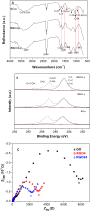
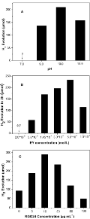
- Weiying Zhang Yuexiang Li Shaoqin Peng Xiang Cai Department of Chemistry, Nanchang University, Nanchang 330031, China 10.3762/bjnano.5.92 Abstract A graphene oxide (GO) solution was irradiated by a Xenon lamp to form reduced graphene oxide (RGO). After irradiation, the epoxy, the carbonyl and the
- composites, a nanographene shell on a TiO2 core and TiO2 nanoparticles on a graphene sheet, exhibit a higher photocatalytic H2 evolution than TiO2 under UV irradiation. This can be attributed to an efficient electron transfer from TiO2 to graphene [9][10]. Interestingly, single reduced graphene oxide itself
- graphene oxide solution is denoted as RGOx, where x represents the reaction time in hours. In order to characterize the performance of RGOx, its powder (denoted as RGOx-p) was obtained by centrifuging at 12000 rpm for 30 min and drying at 120 °C. Characterization methods An X-ray photoelectron spectrometer





Nanostructure sensitization of transition metal oxides for visible-light photocatalysis
Beilstein J. Nanotechnol. 2014, 5, 696–710, doi:10.3762/bjnano.5.82
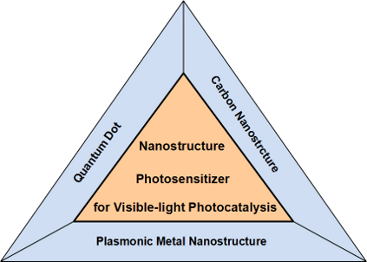
- identical measurement conditions [101]. The reduced graphene oxide (RGO) can act as a photosensitizer similar to organic dyes in the ZnS–RGO nanocomposites, which subsequently leads to efficient visible-light driven photoactivity for both the aerobic selective oxidation of alcohols and the epoxidation of




Core level binding energies of functionalized and defective graphene
Beilstein J. Nanotechnol. 2014, 5, 121–132, doi:10.3762/bjnano.5.12
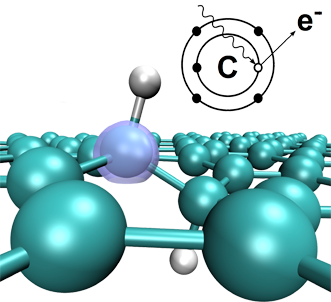
- to sp3. This can lead to a band gap opening [3] and other interesting features [5]. To study such functional groups, along with intrinsic defects, is also vital for the spectroscopic analysis of reduced graphene oxide [6][7], which in turn is a promising avenue to the mass production of graphene


Simulation of bonding effects in HRTEM images of light element materials
Beilstein J. Nanotechnol. 2011, 2, 394–404, doi:10.3762/bjnano.2.45

- opposite conclusions, because the polarization of the carbons in the DFT calculation prevents the detection of the oxygen atom in the carbon network, whereas this should be possible according to the IAM result. This may be the reason why we did not detect residual oxygen atoms in reduced graphene oxide [26


Other Beilstein-Institut Open Science Activities



