


Search results
Search for "composition" in Full Text gives 1136 result(s) in Beilstein Journal of Nanotechnology. Showing first 200.
Facile one-step radio frequency magnetron sputtering of Ni/NiO on stainless steel for an efficient electrode for hydrogen evolution reaction
Beilstein J. Nanotechnol. 2025, 16, 837–846, doi:10.3762/bjnano.16.63
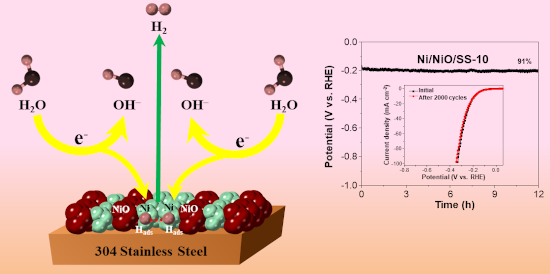
- /SS-15, and Ni/NiO/SS-20 electrodes became rougher, as shown in Figure 2b–d, which was attributed to a higher metal oxide content. More importantly, the composition of the samples (wt %) changed with different O2 flow rates in the sputtering process. The proportion of O increases when the O2 flow rate
- distribution in materials were studied using EDX. The Raman spectra were studied using a LabRAM-HR Evolution Raman microscope with a laser wavelength of 532 nm. The composition of the thin films was investigated using XPS on a Thermo Scientific K-Alpha XPS system. Electrochemical measurements The HER catalytic


Synthesis and magnetic transitions of rare-earth-free Fe–Mn–Ni–Si-based compositionally complex alloys at bulk and nanoscale
Beilstein J. Nanotechnol. 2025, 16, 823–836, doi:10.3762/bjnano.16.62
- fluctuations or trigger mechanical responses, making them essential in automation, industrial processes, and healthcare monitoring technologies. Considerable research has been dedicated to tailoring the Curie temperature and associated magnetic properties through material design. Advances in composition
- modification, doping strategies, and material synthesis have been shown to effectively tune the phase transition characteristics, such as the temperature, coercivity (Hc), magnetization, and Curie or Néel temperatures [7][8][9]. For instance Zhou et al. [10] reported that adjusting the composition of NiMnGa to
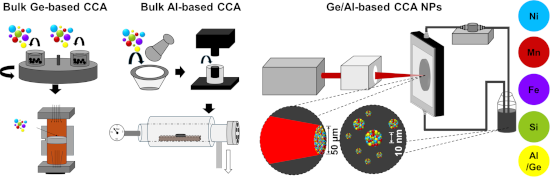
- combinations that control the configurational entropy of mixing, phase, and free energy of the material. Consequently, the magnetic phase transition of CCAs can be tuned by altering their chemical composition because of the different elemental interactions [17]. A significant advantage of using CCAs is their


Supramolecular hydration structure of graphene-based hydrogels: density functional theory, green chemistry and interface application
Beilstein J. Nanotechnol. 2025, 16, 806–822, doi:10.3762/bjnano.16.61
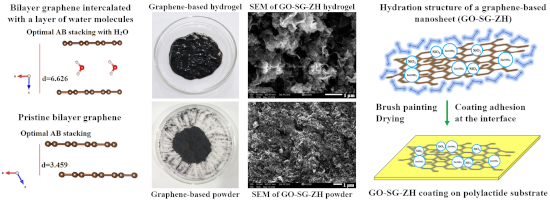
- transmittance spectroscopy, microscopic structure and elemental composition of graphene oxide–nanosilica–zinc hydroxide coating on polylactide films Nanosilica hydrogels and graphene oxide–nanosilica–zinc hydroxide hydrogels were utilized as aqueous paints for brush coating on PLA films. After drying, thin
- appeared in Figure 8e, and nanoparticles of SG and ZH were shown in Figure 8f. Integrated EDS analysis presented the elemental composition on the surface of the GO-SG-ZH/PLA film (Table 3). With the atomic contents of 8.13% of silicon and 6.36% of zinc, the atomic proportions of SiO2 and Zn(OH)2 in the
- elemental composition of the GO-SG-ZH coating on the PLA substrate. Mechanical properties of blank PLA, SG/PLA, and GO-SG-ZH/PLA thin films. Supporting Information Figure of SEM-EDS analyses of graphene-based powder and hydrogel, figures of nanocomposite hydrogel and its dispersions in water, figures and


Morphology and properties of pyrite nanoparticles obtained by pulsed laser ablation in liquid and thin films for photodetection
Beilstein J. Nanotechnol. 2025, 16, 785–805, doi:10.3762/bjnano.16.60
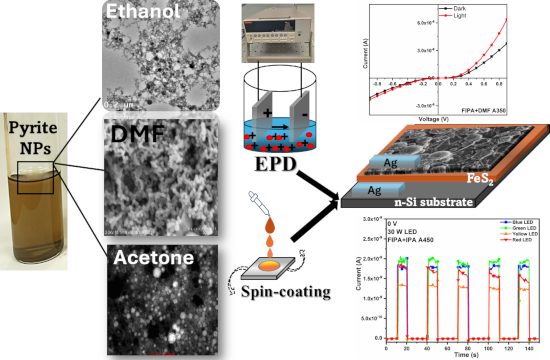
- microscopy, scanning electron microscopy, X-ray photoelectron spectroscopy, and ultraviolet–visible spectroscopy. The morphology of the NPs in different solvents varied from spherical, rice-like to rod-like particles which demonstrates the effect of the solvent on the morphology/composition of NPs
- nanocolloids obtained in different solvents are shown in Supporting Information File 1, Figure S1. The NPs of FeS2 in IPA are referred to as FIPA, in DMF as FDMF, in ethanol as FET, in methanol as FMET, and in acetone as FAC. Morphology and composition of the nanoparticles obtained in all solvents are analyzed
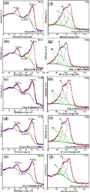
- , Thermo Scientific K-Alpha) was employed to characterize the elemental composition and chemical states of the elements in the NPs. Apart from using HRTEM and SAED for phase analysis, a Panalytical Empyrean Diffractometer (X-ray source of Cu Kα1 radiation = 1.54056 Å) was also used for X-ray diffraction







Changes of structural, magnetic and spectroscopic properties of microencapsulated iron sucrose nanoparticles in saline
Beilstein J. Nanotechnol. 2025, 16, 762–784, doi:10.3762/bjnano.16.59
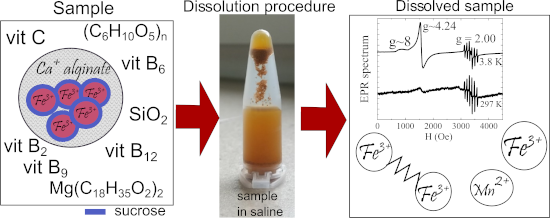
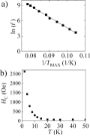
- AC) performed on the undissolved sample revealed the presence of a low temperature blocking process (
≈ 10 K), and confirmed its superparamagnetic state between 70– 250 K. X-ray photoelectron spectroscopy and Raman studies showed a varied composition of the undissolved sample in which organic
- transmission electron microscopy (TEM). Composition studies using XRD, magnetic properties using dc and ac magnetometry, and extensive spectral analysis using Fourier-transform infrared spectroscopy (FTIR), Raman, and electron paramagnetic resonance (EPR) were also performed. Considering that the AB-Fortis
- from the Néel models are at the level similar to that obtained in the fitting of the modified Langevin function to the M(H) dependences for the FS0 sample. It means that the assumptions about the core composition from oxyhydroxide seems to be accurate. The estimated nUC value falls within the range of





Thickness dependent oxidation in CrCl3: a scanning X-ray photoemission and Kelvin probe microscopies study
Beilstein J. Nanotechnol. 2025, 16, 749–761, doi:10.3762/bjnano.16.58
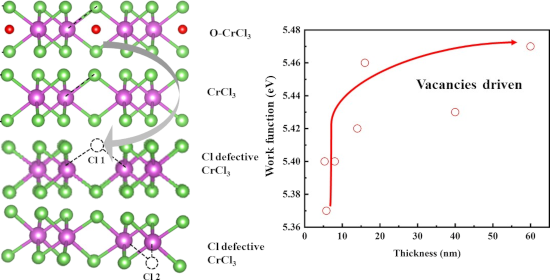
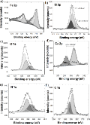
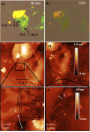
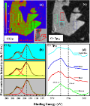
- Cl and Cr core levels at room temperature (RT). By monitoring the core levels and valence band spectra at various spatial resolutions (≥0.13 μm), we obtained quantitative maps of the chemical composition to correlate these maps with the thicknesses measured by AFM. Additionally, we investigated the
- electronic properties of a material. Neal et al. [34] reported the effect of chemisorption of oxygen as a kind of p-type doping, which shows consistency with our results. We expect the surface potential to show the same behavior depending on the chemical composition found by spatially resolved photoemission
- establishing a method to engineer the material. In this specific case, it is difficult to find the reason of the composition modulation we have observed through the spatial resolved techniques. However, it could be the result of the combined effect of vacancies and a possibly induced dissociation of molecular






Serum heat inactivation diminishes ApoE-mediated uptake of D-Lin-MC3-DMA lipid nanoparticles
Beilstein J. Nanotechnol. 2025, 16, 740–748, doi:10.3762/bjnano.16.57
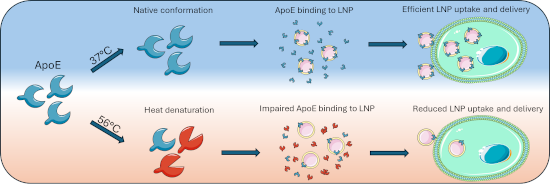
- proteins, forms on its surface. This so-called protein corona significantly affects the physicochemical properties of the nanoparticle, such as size, charge and stability [2][3][4][5]. In turn, the composition of the protein corona is influenced by the physicochemical properties of the pristine
- found in the protein corona, but it did change the corona composition, thereby affecting cellular uptake of the nanoparticles. They found that some apolipoproteins unfold during heat inactivation of FCS, while other proteins remain unaffected [30]. Specifically pinpointing which proteins are


Synthesis of a multicomponent cellulose-based adsorbent for tetracycline removal from aquaculture water
Beilstein J. Nanotechnol. 2025, 16, 728–739, doi:10.3762/bjnano.16.56
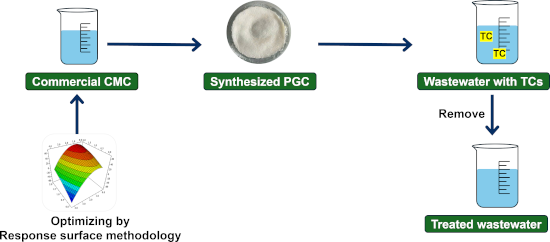
- characteristics and morphology of the synthesized adsorbent. Additionally, the study examines the adsorption mechanism of TC on the material’s surface and evaluates the effects of pH value, adsorbent dosage, and matrix composition. As a biodegradable and easily recoverable material derived from natural cellulose
- involvement of Zn2+ in dissolving CMC. The sharp peak at 568 cm−1 corresponds to a Ca‒O bond [25]. EDX EDX analysis revealed the elemental composition of the PGC material, as detailed in Figure 3a,b. Notably, the detection of elements, particularly Zn, in PGC confirms the role of Zn2+ ions in cellulose


Nanostructured materials characterized by scanning photoelectron spectromicroscopy
Beilstein J. Nanotechnol. 2025, 16, 700–710, doi:10.3762/bjnano.16.54
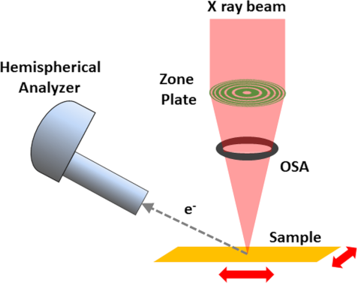
- current and future applications. Due to their nature resulting in diffused heterogeneous structures (chemical and electronic composition typically organized in phases or building blocks) characterizing these materials needs state of the art technologies which combine nanometer spatial resolution
- surfaces. The characterization of the building blocks is of paramount importance to deeply understand their functionalities and mutual interactions when they are part of a nanostructured body. The building blocks may differ in their atomic structure, crystallographic orientation, chemical composition, and
- charge distribution, to list the most important features. If the building blocks are crystallites, any change in the structure or chemical composition may lead to the formation of incoherent or coherent interfaces among them which may influence the final properties of the material. Often the volumes of


High-temperature epitaxial growth of tantalum nitride thin films on MgO: structural evolution and potential for SQUID applications
Beilstein J. Nanotechnol. 2025, 16, 690–699, doi:10.3762/bjnano.16.53
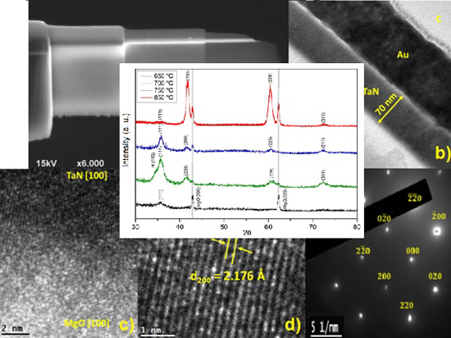
- using pulsed laser deposition (PLD). This research investigates the influence of varying deposition parameters, including substrate temperature and ambient gas composition, on the structural, morphological, and superconducting properties of the films. X-ray photoelectron spectroscopy, X-ray diffraction
- levels. Although the results for samples grown at 70 mTorr pN2 show a near-stoichiometric TaN composition, the presence of significant oxygen (32%) and carbon (4%) impurities suggests a composition closer to TaNO. The optimal stoichiometry for TaN thin films was achieved at a pN2 = 90 mTorr, where the
- limited oxygen availability and the dominant role of nitrogen flow. The samples in Figure 1c,d present a stoichiometry closer to that of TaN than the smaples in Figure 1a,b; they have an atomic composition of Ta2O5, and the doublet shape is more defined. Table 2 shows the atomic composition of samples


The impact of tris(pentafluorophenyl)borane hole transport layer doping on interfacial charge extraction and recombination
Beilstein J. Nanotechnol. 2025, 16, 678–689, doi:10.3762/bjnano.16.52
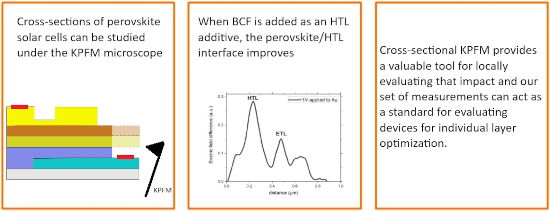
- particular, the CPD value of the perovskite layer is influenced by the composition and the doping of the perovskite [15][46]. In Figure 3, the potential profiles plotted for the four devices exhibit features that deviate from the ideal profiles of a p-i-n junction (See Supporting Information File 1, Section


Colloidal few layered graphene–tannic acid preserves the biocompatibility of periodontal ligament cells
Beilstein J. Nanotechnol. 2025, 16, 664–677, doi:10.3762/bjnano.16.51
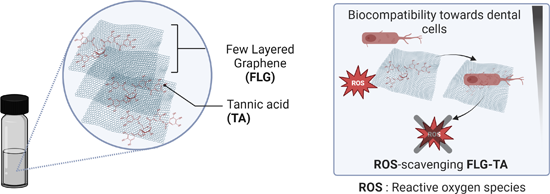
- of graphene confers antioxidant properties The arrangement of TA molecules on graphene layers and their antioxidant effects were analyzed through three experimental methods. The concentration of TA in the FLG suspension was measured using UV–vis spectroscopy, surface composition changes from graphite





Aprepitant-loaded solid lipid nanoparticles: a novel approach to enhance oral bioavailability
Beilstein J. Nanotechnol. 2025, 16, 652–663, doi:10.3762/bjnano.16.50
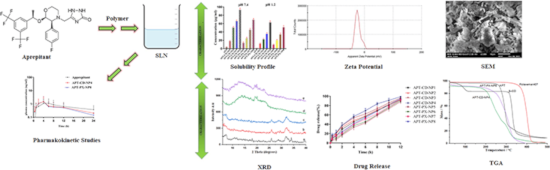
- -loaded formulations.a Composition of drug-loaded of SLNs formulations. Acknowledgements Authors are thankful to faculty of pharmacy, University of Lahore, Lahore, Pakistan, for providing research facilities. We are thankful to Dr. Zeeshan Masood (co-author) for preparing a graphical abstract with Chemix



Nanoscale capacitance spectroscopy based on multifrequency electrostatic force microscopy
Beilstein J. Nanotechnol. 2025, 16, 637–651, doi:10.3762/bjnano.16.49
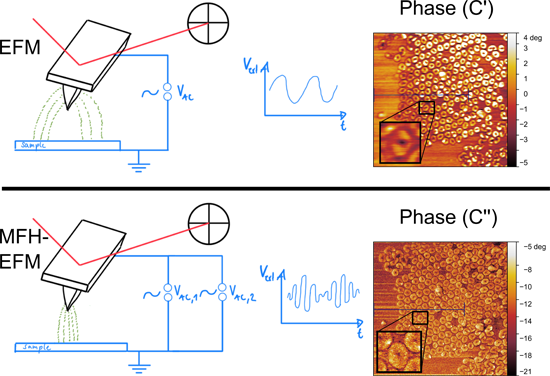
- importance of dielectric properties becomes even more pronounced. Many advanced materials exhibit nanoscale structural heterogeneity, where quantum confinement, phase composition, and interfacial effects cause significant deviations in dielectric behavior compared to bulk materials [12][13]. These nanoscale




A formulation containing Cymbopogon flexuosus essential oil: improvement of biochemical parameters and oxidative stress in diabetic rats
Beilstein J. Nanotechnol. 2025, 16, 617–636, doi:10.3762/bjnano.16.48
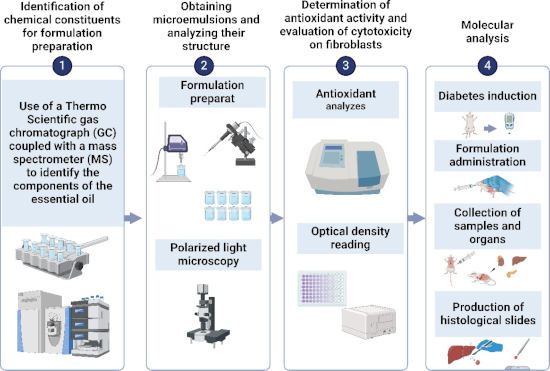
- , the aim of this work is to evaluate the antioxidant and antidiabetic activity of EOCF and a ME containing EOCF. Glycemic and lipid parameters, oxidative damage, and tissue injury in diabetic rats were evaluated. Results and Discussion Chemical composition of EOCF The GC-MS analysis results of EOCF are
- %), corroborating the findings of the present study. However, other minor components were not identified in this study, showing that the composition of the essential oil can change significantly when obtained from different geographical origins. Development of microemulsions considering the pseudoternary phase
- and one NTS were also obtained. Among the TLS, point 7 (M7-EOCF) was selected for subsequent tests, as it had the lowest amount of surfactants and the highest proportion of water in its composition. Physicochemical characterization of the selected system Some parameters are fundamental for




Polyurethane/silk fibroin-based electrospun membranes for wound healing and skin substitute applications
Beilstein J. Nanotechnol. 2025, 16, 591–612, doi:10.3762/bjnano.16.46
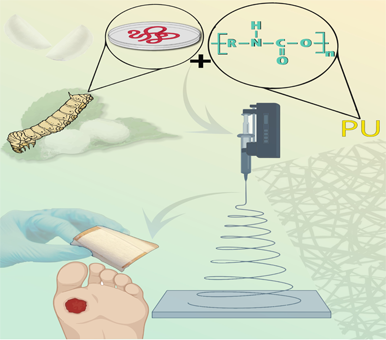
- response, is extensively investigated by addressing its molecular structure, composition, and medical uses. PU is a candidate for potential biomedical applications because of its strength, flexibility, biocompatibility, cell-adhesive properties, and high resistance to biodegradation. PU combined with silk
- biodegradable [124]. Degradation is limited in crystalline regions, while amorphous regions get degraded easily within PU. The molecular structure and composition of the polymer, its molecular weight, crystallinity, and the presence of cross-links and additives are a few elements that impact polymer degradation



Nanomaterials in targeting amyloid-β oligomers: current advances and future directions for Alzheimer's disease diagnosis and therapy
Beilstein J. Nanotechnol. 2025, 16, 561–580, doi:10.3762/bjnano.16.44
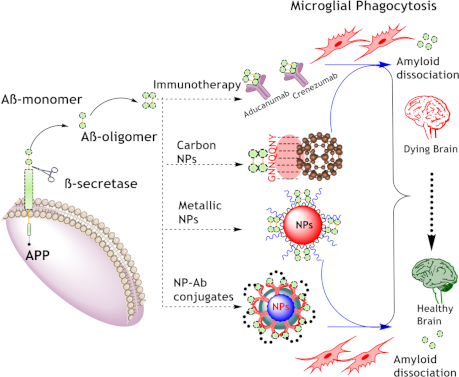
- manage NDs such as Alzheimer’s. In this review, we systematically categorize NPs used for the diagnosis and inhibition of AβOs based on their composition and functionalization. This bifurcation allows for a clearer understanding of the diverse mechanisms and applications of NPs in addressing AD. We have
- composition of exosomes can provide valuable insights into the underlying pathology, making them a promising tool for diagnostic applications. Figure 5 demonstrates how exosomes can transport AβOs and tau protein, both of which are key biomarkers associated with AD. The accumulation of these proteins is


Electron beam-based direct writing of nanostructures using a palladium β-ketoesterate complex
Beilstein J. Nanotechnol. 2025, 16, 530–539, doi:10.3762/bjnano.16.41
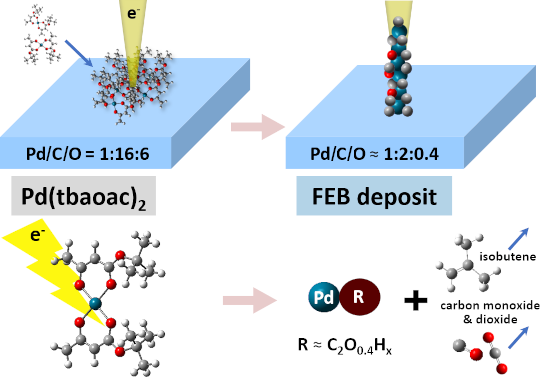
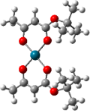
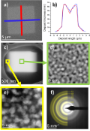
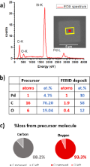
- nanostructure and composition of the deposits were determined, and possible volatile products produced under electron-induced dissociation, explaining the composition, are investigated. A method to eliminate the residual gas contamination during FEBID was implemented. [Pd(tbaoac)2] contains large organic
- , though they follow a two-step process similar to lithography techniques [26]. Since the dissociation of molecules under an electron beam on the substrate can follow multiple pathways, the deposition parameters can greatly influence the composition, leading to the creation of novel materials [27
- spectrum of electron energies, including secondary electrons (SEs) and backscattered electrons (BSEs). This has a significant impact on the resulting composition, which depends on the specific precursor used. To produce pure metal structures, new precursors are being explored for FEBID applications. In


Zeolite materials with Ni and Co: synthesis and catalytic potential in the selective hydrogenation of citral
Beilstein J. Nanotechnol. 2025, 16, 520–529, doi:10.3762/bjnano.16.40
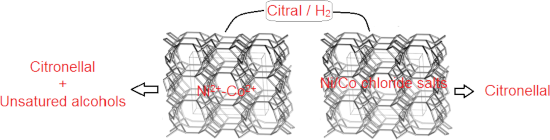
- with Ni2+ and Co2+ chloride solutions through traditional ion exchange (IE) and impregnation (Imp) processes. Special attention was given to analyzing the cationic and anionic composition of the resulting materials. The catalytic potential was evaluated in the selective hydrogenation of citral, focused
- exchange in conventional solutions, in the solid phase with molten salts, and with gaseous phases. Depending on the chosen modification method, particularities regarding the elemental composition and application of the resulting materials occur [4][5][6]. Cu–Y zeolites were obtained by contacting Na–Y
- through traditional ion exchange (IE) and impregnation (Imp) processes. Emphasis is put on analyzing the cationic and anionic composition of the materials resulting from both methods and the catalytic performance in citral hydrogenation with a focus on enhancing the formation of unsaturated alcohols


N2+-implantation-induced tailoring of structural, morphological, optical, and electrical characteristics of sputtered molybdenum thin films
Beilstein J. Nanotechnol. 2025, 16, 495–509, doi:10.3762/bjnano.16.38
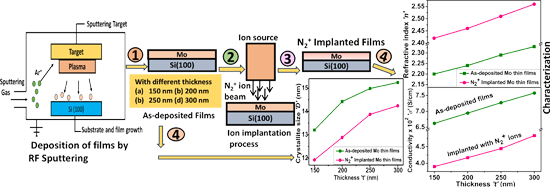
- electron beam evaporation [10] have been reported in the literature. RF sputtering is the predominant technique for thin film deposition because of its benefits regarding layer adhesion, uniformity, composition, and deposition rate compared to other methods [11]. In the deposition of molybdenum films, RF
- material characteristics. Ion implantation is one of the most attractive techniques because it introduces considerable changes in the surface morphology and composition of the films [13][14]. The uses of implanted Mo thin films cover a broad range of applications including microelectronics and
- . Refractive index Figure 9 shows the refractive index of as-deposited and implanted Mo thin films as a function of the thickness. The refractive index increases after N2+ implantation because of several factors, notably the formation of defects and changes in the composition and structure of Mo thin films


Effect of additives on the synthesis efficiency of nanoparticles by laser-induced reduction
Beilstein J. Nanotechnol. 2025, 16, 464–472, doi:10.3762/bjnano.16.35
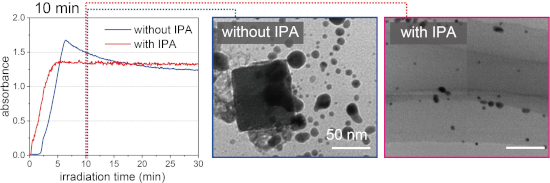
- synthesis of various nanoparticles that maintain the crystal structure and composition of the source solid material. In contrast to those methods, laser-induced reduction in liquid (LRL) is a nanoparticle synthesis method based on reduction reactions induced by laser in solution. Synthesis of nanoparticles
- water electrolysis catalyst than IrO2 [32]. The combination and composition of elements are important to achieve superior properties to those of pure metal nanoparticles. The typical method for nanoparticles synthesis such as chemical reduction with thermal equilibrium reaction is basically limited to


Synthetic-polymer-assisted antisense oligonucleotide delivery: targeted approaches for precision disease treatment
Beilstein J. Nanotechnol. 2025, 16, 435–463, doi:10.3762/bjnano.16.34
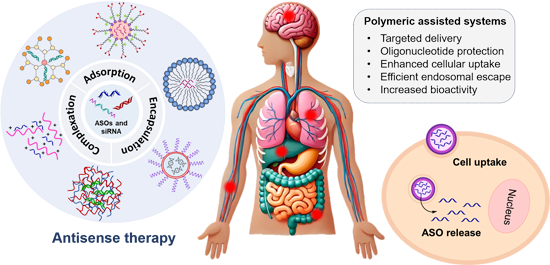
- potential use in precision medicine over the past decade. Review Synthetic polymers for enhanced ASOs delivery Polymer-assisted platforms for enhanced delivery have attracted considerable attention because of their versatile drug delivery capabilities and their diverse chemical composition, which enables


Quantification of lead through rod-shaped silver-doped zinc oxide nanoparticles using an electrochemical approach
Beilstein J. Nanotechnol. 2025, 16, 422–434, doi:10.3762/bjnano.16.33
- average diameter of Ag@ZnO NRs is approximately 70 nm. The elemental composition of the fabricated nanorods was examined through energy-dispersive spectroscopy (EDS). Figure 2c depicts the typical EDS spectrum of the produced Ag@ZnO NRs. Observations from the EDS spectrum lead to the conclusion that the




Biomimetics and bioinspired surfaces: from nature to theory and applications
Beilstein J. Nanotechnol. 2025, 16, 418–421, doi:10.3762/bjnano.16.32
- , substrate compliance, and overall pad geometry. The attachment system of a second stick insect species was structurally investigated by Thomas et al. [4]. This article employed a range of imaging techniques to elucidate the ultrastructure and material composition of the two attachment pad types of this

Size control of nanoparticles synthesized by pulsed laser ablation in liquids using donut-shaped beams
Beilstein J. Nanotechnol. 2025, 16, 407–417, doi:10.3762/bjnano.16.31
- , respectively, by PLAL. The Cantor HEA CoCrFeNiMn target of equimolar composition was prepared by employing powder pressing as described in [18]. In brief, elemental powders of Co (purity 99.8%), Cr (99.2%), Fe (99.5%), Mn (99.6%), and Ni (99.9%) with a particle size less than 10 µm (Thermo Fisher Scientific
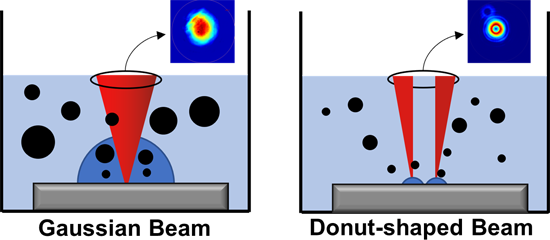
- materials is intended to clarify the effect of the donut-shaped beam on NP size and to approve whether factors such as phase and composition can be disregarded. For example, the inertness of gold minimizes its oxidation by laser irradiation, whereas the HEA is composed of elements prone to oxidation
- , especially in water. However, a similar trend for the different materials using the donut-shaped PLAL can indicate that the donut-shaped beam does not drastically modify the materials’ composition. This will be discussed in section Results and Discussion. Results and Discussion Figure 2 depicts the size





