Search results
Search for "dyes" in Full Text gives 211 result(s) in Beilstein Journal of Nanotechnology. Showing first 200.
Ceria/polymer nanocontainers for high-performance encapsulation of fluorophores
Beilstein J. Nanotechnol. 2019, 10, 522–530, doi:10.3762/bjnano.10.53
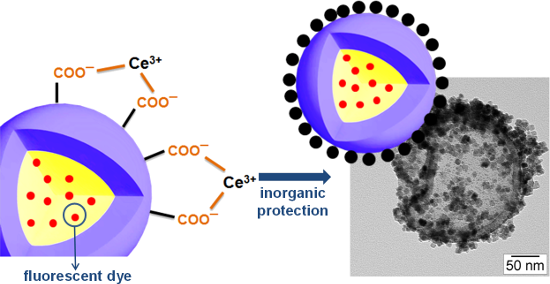
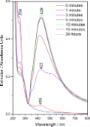
- nitrogen or argon bubbling and/or freeze–pump–thaw cycles, the oxygen content can be lowered. These techniques are efficient enough to suppress the oxygen quenching of fluorescence [13]. The case of fluorescent samples containing dyes encapsulated in nanoconfined materials is more complicated. In general
- scattering than visible light, causes less photodamage, and can penetrate deeper into tissues. Hence, it is preferred for life-science applications. Organic dyes that can be excited above 600 nm are highly favorable for live-cell imaging experiments, because the background signal obtained from the
- the π-conjugated core system of highly fluorescent perylene-3,4:9,10-tetracarboxdimides. The rylene dyes have unique optical properties, such as high extinction coefficients, high thermal, chemical and photochemical stabilities, and exhibit brilliant colors [29][30]. Furthermore, in bulk samples, TDI


New micro/mesoporous nanocomposite material from low-cost sources for the efficient removal of aromatic and pathogenic pollutants from water
Beilstein J. Nanotechnol. 2019, 10, 119–131, doi:10.3762/bjnano.10.11
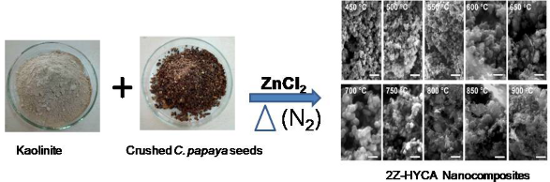
- are reports of the use of clay/carbon materials for the removal of toxic micropollutants from water. In some cases, sugars have been used as starting compounds [17][18], while in other cases, dyes and other organic molecules have been loaded into the clay interlayer and calcined together with the clay




Electrolyte tuning in dye-sensitized solar cells with N-heterocyclic carbene (NHC) iron(II) sensitizers
Beilstein J. Nanotechnol. 2018, 9, 3069–3078, doi:10.3762/bjnano.9.285

- realized with ruthenium-based [2], zinc(II) porphyrin-based [5][6][7][8][9] or metal-free organic dyes [10][11][12]. In a recent review [2], Nazeeruddin points to the fact that only incremental enhancements of the photoconversion efficiencies of ruthenium dyes have occurred during the last two decades
- , with N3 (first reported in 1993 [13]) and N719 [14] (Scheme 1) remaining the state-of-the-art dyes. The low natural abundance of ruthenium (≈0.001 ppm in the Earth's crust [15]) and its consequential high cost motivates thorough investigations of the use of dyes based on Earth-abundant metals. Among
- . [21] have demonstrated the viability of DSCs comprising both copper(I)-based dyes and copper(I)/copper(II) redox shuttles. Photoconversion efficiencies in the range of 3–5% have been achieved for DSCs containing copper(I) dyes [22][23][24]. However, based upon the 800-fold greater natural abundance of


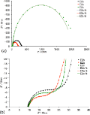

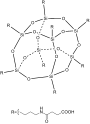
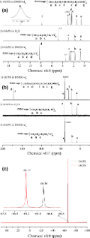
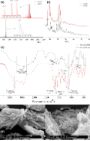
A novel polyhedral oligomeric silsesquioxane-modified layered double hydroxide: preparation, characterization and properties
Beilstein J. Nanotechnol. 2018, 9, 3053–3068, doi:10.3762/bjnano.9.284

- ][19], amino acids [20], anionic dyes [11], and compounds of biological origin, such as β-cyclodextrin and eugenol derivatives [9][10][13][21]. However, most of these current modifiers do not have satisfactory thermal stability and are flammable, reducing the thermal and fire stability of the LDHs







Low cost tips for tip-enhanced Raman spectroscopy fabricated by two-step electrochemical etching of 125 µm diameter gold wires
Beilstein J. Nanotechnol. 2018, 9, 2718–2729, doi:10.3762/bjnano.9.254

- tested on dyes, pigments and biomolecules and enhancement factors higher than 105 are observed. TERS mapping with a spatial resolution of 5 nm is demonstrated. Keywords: amyloid; enhanced spectroscopy; gold tips; plasmonics; TERS; Introduction Tip-enhanced Raman spectroscopy (TERS) combines the
- times of approximately 2 min. The tips can be easily manipulated and safely mounted, by gluing or clamping them into STM- or ShF-based TERS setups. The good performance of the tips is highlighted by TERS spectra of dyes, pigments and biomolecules. The enhancement factor in the range of 104–105 was found
- on the shaft (red line). Typical laser powers are 1.0–2.5 mW and integration times are 0.5–1.0 s per pixel. TERS spectra of dyes, pigments and biomolecules The tips have been applied to evaluate the spectra of analyze standard dye molecules such as rhodamine 6G (R6G), crystal violet (CV), methylene


Nanocellulose: Recent advances and its prospects in environmental remediation
Beilstein J. Nanotechnol. 2018, 9, 2479–2498, doi:10.3762/bjnano.9.232
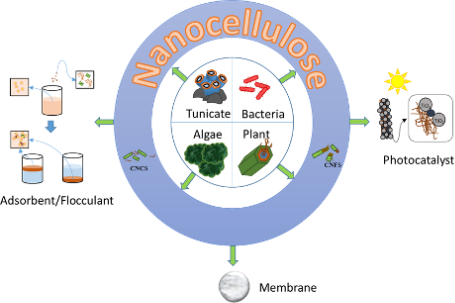
- –OH of CNC. This modified nanocellulose adsorbent was used for the removal of cationic dyes from aqueous solution by forming a bidentate arrangement between the dye and the adsorbent’s carboxy groups. Meanwhile, Anirudhan et al. [92][93] modified a nanocellulose/nanobentonite composite adsorbent with
- displayed high uptake adsorption capacity for several cationic dyes such as methylene blue, basic fuchsin, crystal violet and malachite green [101]. Carboxylated CNC, with a high COOH content of 2.1 mmol/g, showed a significant uptake of about 769 mg/g for methylene blue as compared to CNC with surface
- nanocellulose materials were able to adsorb metal ions due to the presence of amino (–NH2) on aminosilane and/or –OH groups on cellulose fibre. Besides, cationic functionality such as amine-functionalized nanocellulose is usually effective for the removal of anionic dyes. Zhu et al. [102] found that


Hierarchical heterostructures of Bi2MoO6 microflowers decorated with Ag2CO3 nanoparticles for efficient visible-light-driven photocatalytic removal of toxic pollutants
Beilstein J. Nanotechnol. 2018, 9, 2297–2305, doi:10.3762/bjnano.9.214
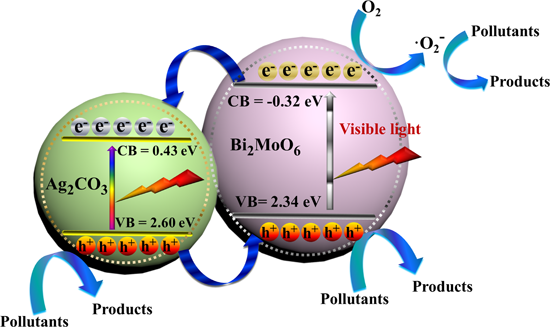
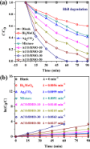
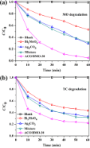
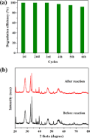
- heterostructures exhibited substantially improved performance in the removal of industrial dyes (rhodamine B (RhB), methyl orange (MO), and methyl blue (MB)), and the antibiotic tetracycline hydrochloride (TC), compared with bare Bi2MoO6 and Ag2CO3 under visible-light irradiation. The enhancement of activity was
- candidate for wastewater treatment. Keywords: antibiotic removal; Bi2MoO6; heterojunction; silver carbonate (Ag2CO3); Introduction Industrial pollutants, such as industrial dyes and antibiotics, in wastewaters pose a huge threat to the environment [1][2]. Thus, many methods for pollutant removal have been
- the photocatalytic degradation of industrial dyes (rhodamine B (RhB), methyl orange (MO), and methyl blue (MB)), and the antibiotic tetracycline hydrochloride (TC) under visible light. The improved performance of the photocatalytic degradation was prominent, and the reasons were rationally analyzed




The role of adatoms in chloride-activated colloidal silver nanoparticles for surface-enhanced Raman scattering enhancement
Beilstein J. Nanotechnol. 2018, 9, 2236–2247, doi:10.3762/bjnano.9.208

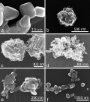
- reducing or capping agent. The resulting AgNPs are already SERS-activated by the Cl− ions chemisorbed onto the metal surface where the chloride concentration in the colloidal solution is 10−2 M. Consequently, the enhanced SERS spectra of cationic dyes (e.g., crystal violet or 9-aminoacridine) demonstrate
- -aminoacridine hydrochloride monohydrate were used as test analytes. Figure 4 shows comparatively the SERS spectra of the two cationic dyes obtained using the three silver colloids. By far, the Cl-AgNPs displayed the highest SERS intensity for both cationic dyes, followed by hya-AgNPs, which showed only low
- the case of cit-AgNPs which were previously activated by adding 1 mM NaCl (Figure 6C). In summary, high-intensity SERS spectra of cationic dyes can be recorded with all three silver colloids after activation. For this, our recommendation is that the silver colloid should contain Cl− anions in a



Dumbbell gold nanoparticle dimer antennas with advanced optical properties
Beilstein J. Nanotechnol. 2018, 9, 2188–2197, doi:10.3762/bjnano.9.205

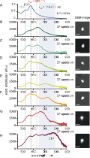
- , and retracting the antenna by 50 nm from the surface. The high quantum yield dyes Alexa633 and Alexa680 respectively, are applied for these measurements, which provide suitable absorption and emission properties in regard to the LSPR of the applied monomer and dimer AuNP antennas. Dark-field




Electrospun one-dimensional nanostructures: a new horizon for gas sensing materials
Beilstein J. Nanotechnol. 2018, 9, 2128–2170, doi:10.3762/bjnano.9.202








Sulfur-, nitrogen- and platinum-doped titania thin films with high catalytic efficiency under visible-light illumination
Beilstein J. Nanotechnol. 2018, 9, 1629–1640, doi:10.3762/bjnano.9.155
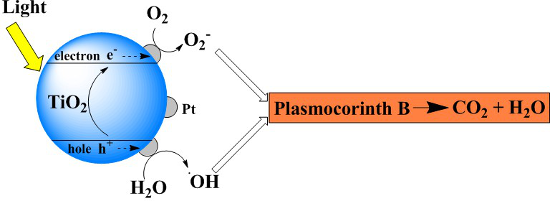
- are photocatalytically active under visible-light illumination. The photocatalytic activity of our samples was determined by measuring the degradation rate of plasmocorinth B (PB), an organic pigment belonging to the group of azo dyes. Azo dyes are used in the textile industry as textile colorants and


Closed polymer containers based on phenylboronic esters of resorcinarenes
Beilstein J. Nanotechnol. 2018, 9, 1594–1601, doi:10.3762/bjnano.9.151
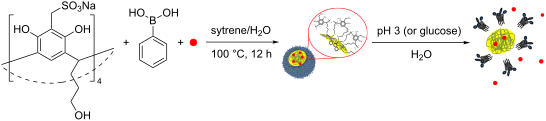
- resorcinarene (SRA) with phenylboronic acid. p(SRA-B) shows good stability in water and can be used as a nanocontainer for the pH- and glucose-controlled substrate release. Fluorescent dyes (fluorescein, pyrene and 1,3,6,8-pyrenetetrasulfonic acid tetrasodium salt) were successfully loaded into p(SRA-B). The
- ) was examined as a container for pH- and glucose-controlled storage and as a source of substrates. Three dyes were chosen: fluorescein (Fl), pyrene (Py) and 1,3,6,8-pyrenetetrasulfonic acid tetrasodium salt (PTS). These dyes differ in polarity but all of them are used as fluorescent probes to determine
- the environments solvent [46]. It is possible to control the location of the dyes in the container as well as their release when the container is destroyed, using fluorescence spectroscopy. The synthesis of the nanoparticles with the dyes (D@p(SRA-B), where D = Fl, Py and PTS) was carried out similar


Cr(VI) remediation from aqueous environment through modified-TiO2-mediated photocatalytic reduction
Beilstein J. Nanotechnol. 2018, 9, 1448–1470, doi:10.3762/bjnano.9.137


Electro-optical interfacial effects on a graphene/π-conjugated organic semiconductor hybrid system
Beilstein J. Nanotechnol. 2018, 9, 963–974, doi:10.3762/bjnano.9.90

- estimated via Raman scattering experiment is of order of 1013 cm−2, consistent with the value predicted from ab initio calculations. Conclusion Organic semiconductor dyes and 2D materials are classes of materials which have enormous potential applications by themselves. The possibility of creating hybrid


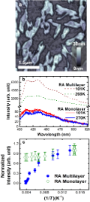


Surface-plasmon-enhanced ultraviolet emission of Au-decorated ZnO structures for gas sensing and photocatalytic devices
Beilstein J. Nanotechnol. 2018, 9, 771–779, doi:10.3762/bjnano.9.70

- and reasonably fast response/recovery time were reported for a gas sensor based on Au-decorated ZnO structures. The highest selectivity towards NO2 was compared to other combustion gases such as CO, and C3H8. In addition, the photocatalytic decomposition of organic dyes under sunlight using PL
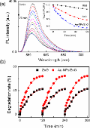
- radicals (e.g., •O2−, •OOH, and •OH) at the surface, which are mainly involved in photocatalytic degradation of dyes into CO2 or harmless compounds [42]. Therefore, to further determine the ability of Au-decorated ZnO and ZnO sub-micrometer spheres in improving irradiation, PL spectra of an aqueous RhB
- time-resolved photoluminescence spectra, which in turn supported our study of the design of efficient NO2 sensing devices and photocatalytic decomposition of organic dyes. The surface decoration of plasmonic Au nanoparticles has been demonstrated as an effective way to enhance the sensitivity and




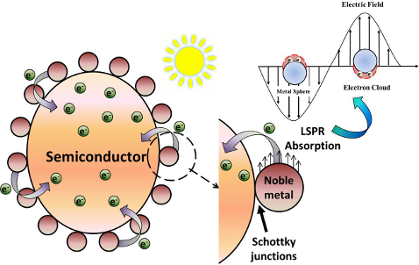
Mechanistic insights into plasmonic photocatalysts in utilizing visible light
Beilstein J. Nanotechnol. 2018, 9, 628–648, doi:10.3762/bjnano.9.59
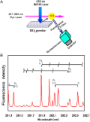
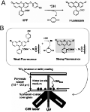
- DMPO–OH radical formation in photocatalysis. Fluorescent probe The fluorescein, 3-(p-hydroxyphenyl)fluorescein (HPF) and 3-(p-aminophenyl)fluorescein (APF) dyes have been used as reagents in photocatalytic reactions [131]. A strongly emissive fluorescein molecule, as shown in Figure 17a, was formed





Fabrication and photoactivity of ionic liquid–TiO2 structures for efficient visible-light-induced photocatalytic decomposition of organic pollutants in aqueous phase
Beilstein J. Nanotechnol. 2018, 9, 580–590, doi:10.3762/bjnano.9.54
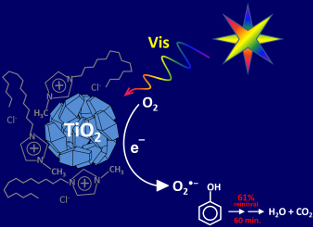
- reactions to ultraviolet (UV) irradiation [6]. To break through the aforementioned drawbacks, semiconductor coupling [7], sensitization by inorganic complexes or organic dyes [8][9], as well as metal nanoparticle (NP) deposition [10] and metal doping [11] have been applied and have revealed potential to


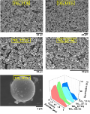


Green synthesis of fluorescent carbon dots from spices for in vitro imaging and tumour cell growth inhibition
Beilstein J. Nanotechnol. 2018, 9, 530–544, doi:10.3762/bjnano.9.51
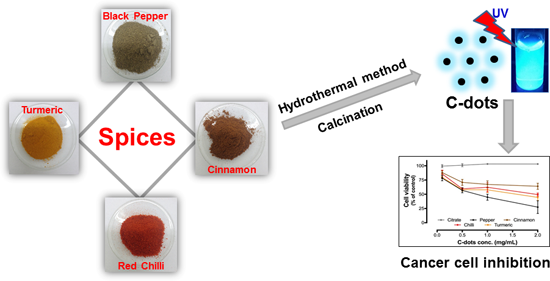
- to a new generation of high-value optical probes that are being exploited in order to overcome the limitations of traditional dyes and fluorophores. Their great potential has allowed for the development of new analytical assays with unprecedented analytical performance, related to sensitivity
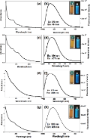


Facile synthesis of ZnFe2O4 photocatalysts for decolourization of organic dyes under solar irradiation
Beilstein J. Nanotechnol. 2018, 9, 436–446, doi:10.3762/bjnano.9.42
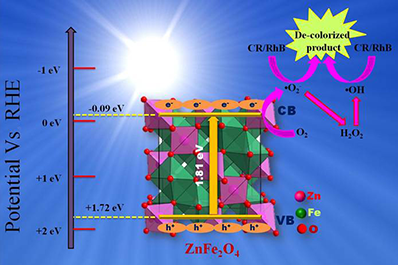
- the organic dyes (i.e., Congo red, Rh B, malachite green methylene blue) to CO2, H2O and the corresponding mineral acids [19][24]. Movahedi et al. have prepared ZnFe2O4 through precipitation tested the photocatalytic activity of ZnFe2O4 in the degradation of 5 ppm Congo red obtaining 64% degradation
- non-aqueous hydrothermal method obtaining 15% degradation of Rh B [25]. The above mentioned reports give an idea about that Rh B and Congo red degradation takes a long time. Hence, our objective is to degrade these harmful organic dyes as fast as possible. In order to obtain the required phase without
- been carried out to investigate the photocatalytic decolourization of organic dyes (Congo red and Rh B) under solar light irradiation. Experimental Fe(NO3)3·9H2O (98%, Merck), Zn(NO3)2·6H2O (98%, Lobachemie) and urea (99.5%, Spectrochem) were used directly without any further purification. Synthesis of


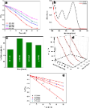


Temperature-tunable lasing from dye-doped chiral microdroplets encapsulated in a thin polymeric film
Beilstein J. Nanotechnol. 2018, 9, 379–383, doi:10.3762/bjnano.9.37

- with fluorescent dyes, 3D omnidirectional laser emission from microdroplets is observed [14][15]. This effect is extremely interesting for those who work in manufacturing micro-optical components and integrated optical circuits. Several techniques are used to prepare CLCs microdroplets for Bragg laser


Photocatalytic and adsorption properties of TiO2-pillared montmorillonite obtained by hydrothermally activated intercalation of titanium polyhydroxo complexes
Beilstein J. Nanotechnol. 2018, 9, 364–378, doi:10.3762/bjnano.9.36

- , and liquefied nitrogen adsorption/desorption. The photocatalytic activity of the TiO2-pillared materials was studied using the degradation of anionic (methyl orange, MO) and cationic (rhodamine B, RhB) dyes in water under UV irradiation. The combined effect of adsorption and photocatalysis resulted in
- processes, including photolysis of organic dyes [6]. The main challenge in obtaining TiO2-pillared MM is the synthesis of intercalants, i.e., large-size multiple charged titanium hydroxo complexes. The structure and formula for polynuclear titanium complexes is still not established exactly. For example
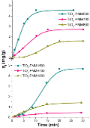
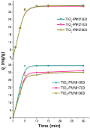
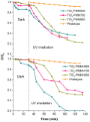
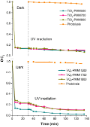
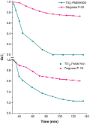
- dyes (anionic type MO and cationic type RhB) was assessed by measuring a decrease in concentration in the dark and under UV irradiation. It is known that the efficiency of dye removal from aqueous solutions on TiO2-pillared MM is determined by the additive process of photolysis, adsorption, and





Sugarcane juice derived carbon dot–graphitic carbon nitride composites for bisphenol A degradation under sunlight irradiation
Beilstein J. Nanotechnol. 2018, 9, 353–363, doi:10.3762/bjnano.9.35
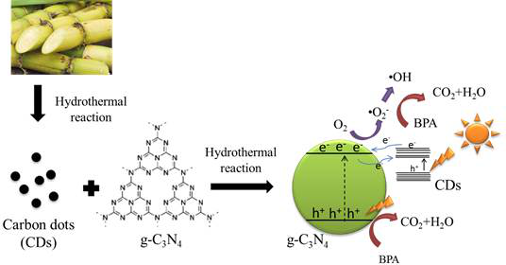
- diffuse reflectance spectra (UV–vis DRS) results. Although the CDs did not display upconversion photoluminescence (UCPL) properties, the π-conjugated CDs served as a photosensitizer (like organic dyes) to sensitize g-C3N4 and injected electrons to the conduction band (CB) of g-C3N4, resulting in the
- display UCPL properties, the π-conjugated CDs served as a photosensitizer (like organic dyes) to sensitize g-C3N4 and injected electrons to the CB of g-C3N4 [37][38][73], resulting in an extended absorption spectrum from the visible to the NIR region. This results in the generation of more electrons for


Co-reductive fabrication of carbon nanodots with high quantum yield for bioimaging of bacteria
Beilstein J. Nanotechnol. 2018, 9, 137–145, doi:10.3762/bjnano.9.16
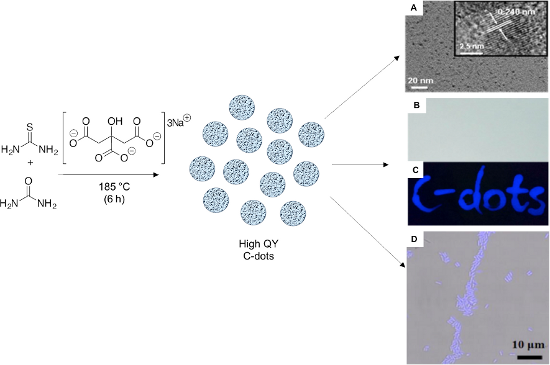
- medicine. Within this class of materials, carbon nanodots (C-dots) are deemed a major breakthrough for the development of fluorescent nanomaterials. They are a promising alternative to fluorescent inorganic semiconductor nanocrystals and organic dyes due to their chemical stability, good dispersibility in
- . Currently, visual detection approaches are based on indirect methods related to bacterially secreted metabolites or imaging of bacterial colonies [4]. Furthermore, the staining techniques use either commercially available fluorescent dyes or semiconductor quantum dots [5]. Fluorescent dyes are expensive


L-Lysine-grafted graphene oxide as an effective adsorbent for the removal of methylene blue and metal ions
Beilstein J. Nanotechnol. 2017, 8, 2680–2688, doi:10.3762/bjnano.8.268
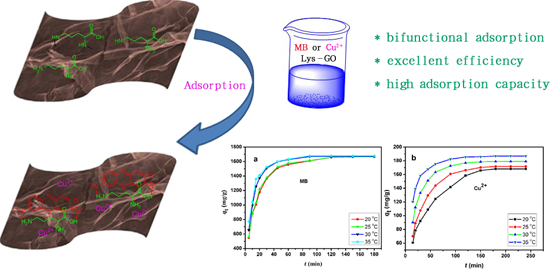
- +) from wastewater. These results showed that Lys-GO is a bifunctional adsorbent for the removal of dyes and metal ions, and excellent adsorption efficiency was obtained. The maximum adsorption capacities for MB dye and Cu2+ were 1679.1 mg/g and 186.9 mg/g at 35 °C, respectively. The kinetics of
- of graphene materials. According to this analysis, we tried to synthesize a novel graphene material for the removal of heavy metal ions and organic dyes from wastewater. In 2013, Gao et al. developed an environmentally friendly approach to reduce GO with L-lysine [10], which showed potential


Patterning of supported gold monolayers via chemical lift-off lithography
Beilstein J. Nanotechnol. 2017, 8, 2648–2661, doi:10.3762/bjnano.8.265

- photobleaching of fluorescent dyes by ambient light. The substrates were rinsed again with deionized water and blown dry with nitrogen gas. The DNA duplexes on Au–alkanethiolate monolayers were imaged at an emission wavelength of 517 nm (AlexaFluor® 488; excitation at 492 nm) with an inverted fluorescence