


Search results
Search for "low temperature" in Full Text gives 389 result(s) in Beilstein Journal of Nanotechnology. Showing first 200.
3D superconducting hollow nanowires with tailored diameters grown by focused He+ beam direct writing
Beilstein J. Nanotechnol. 2020, 11, 1198–1206, doi:10.3762/bjnano.11.104

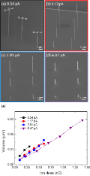
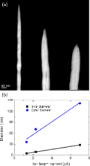
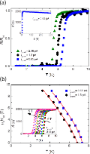
- Ti pads. Finally, we made four-point-probe electrical measurements at low temperature (down to 0.5 K) and under a magnetic field perpendicular to the substrate plane (up to 9 T). The NWs change from the normal to the superconducting state at Tc (0.5RN) values between 5.45 and 6.78 K (Figure 6a and



High permittivity, breakdown strength, and energy storage density of polythiophene-encapsulated BaTiO3 nanoparticles
Beilstein J. Nanotechnol. 2020, 11, 1190–1197, doi:10.3762/bjnano.11.103
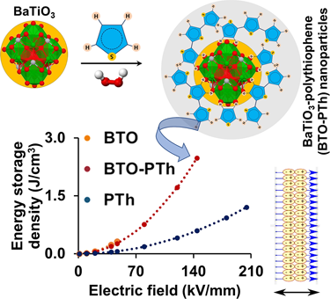
- resonance absorption between two thiophene rings [17]. It demonstrates that PTh is predominantly formed by Cα–Cα conjunction during the low-temperature oxidative polymerization. The transmittance peaks at 1035 cm−1 and 788 cm−1 further prove this point as they indicate the out-of-plane bending (τCβ–H) and




Hybridization vs decoupling: influence of an h-BN interlayer on the physical properties of a lander-type molecule on Ni(111)
Beilstein J. Nanotechnol. 2020, 11, 1168–1177, doi:10.3762/bjnano.11.101
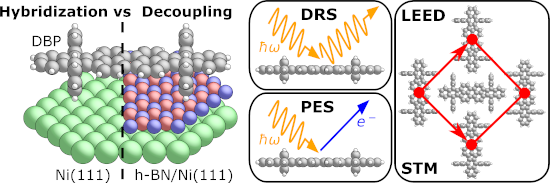
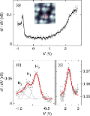
- comprehensive study we utilized differential reflectance spectroscopy (DRS), low-energy electron diffraction (LEED), low-temperature scanning tunneling microscopy (LT-STM), as well as photoelectron spectroscopy (PES). Our results reveal that DBP on h-BN/Ni(111) is well decoupled from the metal substrate Ni(111
- the DBP molecules are well decoupled from the Ni(111) surface. Furthermore, a highly ordered DBP monolayer is obtained on h-BN/Ni(111) by depositing the molecules at a substrate temperature of 170 °C. The structural results are obtained by quantitative low-energy electron diffraction and low
- -temperature scanning tunneling microscopy. Finally, the investigation of the valence band structure by ultraviolet photoelectron spectroscopy shows that the low work function of h-BN/Ni(111) further decreases after the DBP deposition. For this reason, the h-BN-passivated Ni(111) surface may serve as potential


Scanning tunneling microscopy and spectroscopy of rubrene on clean and graphene-covered metal surfaces
Beilstein J. Nanotechnol. 2020, 11, 1157–1167, doi:10.3762/bjnano.11.100
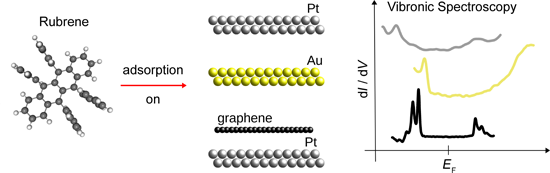
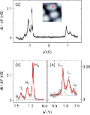
- surface. Experimental The experiments were performed with an STM operated in ultrahigh vacuum (10−9 Pa) and at low temperature (Pt(111) and graphene-covered Pt(111) at 5 K, Au(111) at 78 K). Pt(111) and Au(111) surfaces were cleaned by Ar+ ion bombardment and annealing. Graphene was epitaxially grown on
- backbones were presented in [25][26][27][34] for Au(111) and in [35] for Bi(111). In these reports, the deposition of molecules was performed at 5 K [25][26][27][34] and 100 K [35] with subsequent annealing at room temperature [25][26][27][34] and 350 K [35]. Therefore, deposition at low temperature seems
- of the molecular backbone of C42H28 is not limited to low-temperature depositions. It was likewise observed for room-temperature deposition on low-index Cu surfaces [22][36] and Ag(100) [24]. The STM image in Figure 4c shows the influence of the Au(111) reconstruction on the C42H28 assembly



A new photodetector structure based on graphene nanomeshes: an ab initio study
Beilstein J. Nanotechnol. 2020, 11, 1036–1044, doi:10.3762/bjnano.11.88

- among experimental and theoretical researchers. Electrical properties such as a charge mobility in the range of 105 cm2·V−1·s−1, a minimum conductivity at the Dirac point of 4e2/πh (at low temperature), and remarkable optical properties such as linear dispersion of the Dirac electrons make broadband


Electrochemical nanostructuring of (111) oriented GaAs crystals: from porous structures to nanowires
Beilstein J. Nanotechnol. 2020, 11, 966–975, doi:10.3762/bjnano.11.81
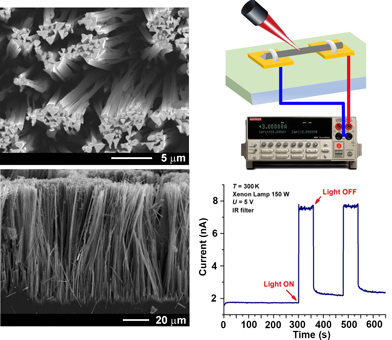
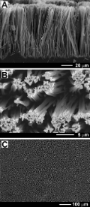
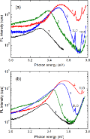
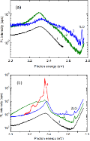
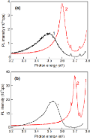
- the nanowires tend to form bundles at the micrometer scale, similar to the results presented in [27]. Figure 5 compares the photoluminescence (PL) spectra of the as-grown and anodized GaAs samples measured at low temperature. One can see that the shapes of the spectra are similar. The only difference





Band tail state related photoluminescence and photoresponse of ZnMgO solid solution nanostructured films
Beilstein J. Nanotechnol. 2020, 11, 899–910, doi:10.3762/bjnano.11.75
- chemicals and substrates, as well as excellent control over stoichiometry. Because the process does not require vacuum conditions and can be performed at low temperature, it is suitable for the fabrication of high quality, large area thin films at a fast rate and low cost. This method also offers the
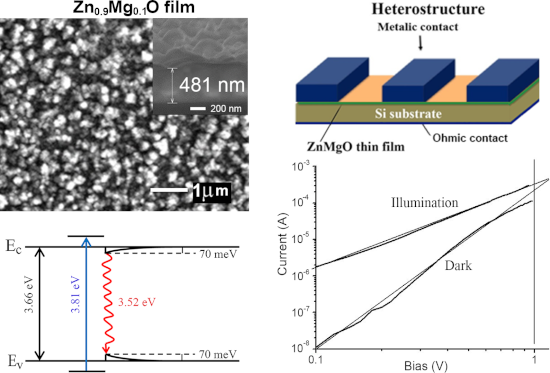
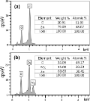
- the alloy. Moreover, the luminescence is excited by the photon energy (3.81 eV) much lower than the bandgap for the thin film with the x value of 0.40 (4.28 eV). The same is true for the luminescence measured at low temperature (Table 2). The bandgap of the alloy at low temperature was recalculated
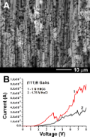
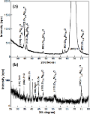
- embedded into the ZnMgO alloy matrix, which is responsible for the high energy broad PL band. To demonstrate that the low energy PL band is related to ZnO crystallites, it is compared to the spectrum of a high quality ZnO crystal measured at low temperature (curve 4 in Figure 5b). One can see that the

A Josephson junction based on a highly disordered superconductor/low-resistivity normal metal bilayer
Beilstein J. Nanotechnol. 2020, 11, 858–865, doi:10.3762/bjnano.11.71

- . The product can reach 0.5Δ(0)/|e| at a low temperature (T = 0.1Tc0) and a = ξc (see Figure 4c) due to use of a superconductor in the constriction area, instead of a normal metal as in [13]. In case of NbN with Tc0 = 10 K one may have Vc = 0.75 mV but according to Equation 12), will be larger than T
- about 5 nm, which is smaller than ξc in NbN, with the help of helium ion beam lithography. The successful implementation of this method could lead to the creation of low-temperature nanoscale Josephson junctions and arrays of them. For example, SN-S-SN junctions can be promising to use in programmable
- voltage standards [1], where a large value of Vc allows for a reduction of the number of junctions and for the use of Shapiro steps of orders higher than one. Nonhysteretic current–voltage characteristics with large Vc at low temperatures allow for the use of these structures for various low-temperature


Adsorption behavior of tin phthalocyanine onto the (110) face of rutile TiO2
Beilstein J. Nanotechnol. 2020, 11, 821–828, doi:10.3762/bjnano.11.67

- , Swiss Federal Laboratories for Materials Science and Technology, Überlandstrasse 129, 8600 Dübendorf, Switzerland 10.3762/bjnano.11.67 Abstract The adsorption behavior of tin phthalocyanine (SnPc) molecules on rutile TiO2(110) was studied by scanning tunneling microscopy (STM). Low-temperature STM
- orientation. To fill this gap in knowledge, here, we report room-temperature (RT) and low-temperature (LT) STM-based studies of the adsorption of nonplanar tin phthalocyanine (SnPc) molecules a rutile (110)-1 × 1 surface of TiO2. SnPc molecules appear on such a surface in two flat-lying geometries defined by
- rate (0.25 ML/min) was determined using a quartz crystal microbalance. Scanning tunneling microscopy (STM) experiments were performed with the use of either a low-temperature STM (LT-STM) operating at ca. 78 K or a room-temperature STM (RT-STM) manufactured by Scienta Omicron installed in a separate


Epitaxial growth and superconducting properties of thin-film PdFe/VN and VN/PdFe bilayers on MgO(001) substrates
Beilstein J. Nanotechnol. 2020, 11, 807–813, doi:10.3762/bjnano.11.65

- heterostructures: (a) full temperature range, (b) low-temperature region. Electrical and superconducting properties of the VN film and the Pd0.96Fe0.04/VN and VN/Pd0.92Fe0.08 heteroepitaxial structures on MgO(001). Acknowledgements The experimental work had been performed with the use of the equipment of the PCR


Hexagonal boron nitride: a review of the emerging material platform for single-photon sources and the spin–photon interface
Beilstein J. Nanotechnol. 2020, 11, 740–769, doi:10.3762/bjnano.11.61
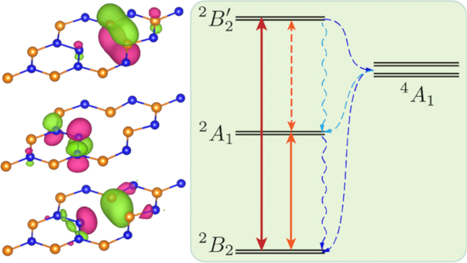
- of some SPEs in h-BN. The µ-PL spectrum reported here, taken at low temperature, discloses multiple ZPLs originating from bright and optically photo-stable SPEs found within the excited h-BN grains. As they are narrow ZPLs frequently observed in h-BN layers, they were here attributed to the presence
- for practical SPEs. As such SPEs in h-BN have been studied from the point of view of spectral line width, ZPLs at low-temperature distribution, and spectral diffusion by several groups. Since the robustness to temperature is crucial for their practical application, and also the temperature
- excitation at room and low temperature was performed, confirming similar results of spectral linewidths of h-BN SPEs in flakes narrower than 1 GHz with an average spectral diffusion time of around 100 ms [133]. h-BN flakes were investigated at liquid helium temperature and using off and on resonance




Atomic-resolution imaging of rutile TiO2(110)-(1 × 2) reconstructed surface by non-contact atomic force microscopy
Beilstein J. Nanotechnol. 2020, 11, 443–449, doi:10.3762/bjnano.11.35
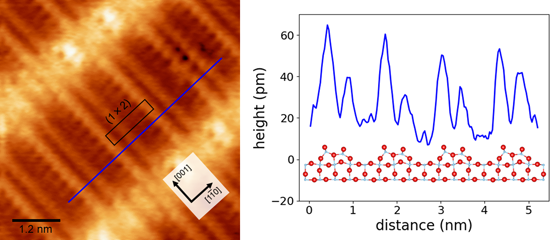
- structure. It is necessary to observe the surface directly in order to find out whether the (1 × 2) structure is formed over a wide area. In real-space analysis at the atomic level, simultaneous NC-AFM and STM measurements in UHV at low temperature have revealed that the (1 × 2) chain on the (1 × 1) surface


Implementation of data-cube pump–probe KPFM on organic solar cells
Beilstein J. Nanotechnol. 2020, 11, 323–337, doi:10.3762/bjnano.11.24
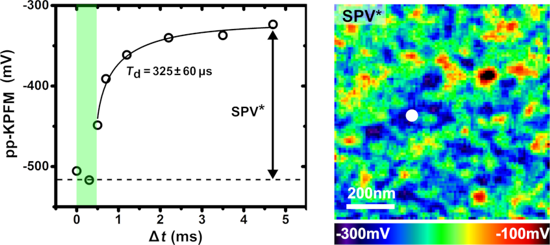
- drain electrode of the transistor. In a later study, Schumacher et al. [24] used optical pumping in a pp-KPFM approach to probe the photocarrier lifetime in GaAs samples grown at low temperature. In organic BHJ solar cells, electron donor and acceptor materials are processed to form two interpenetrated




Anomalous current–voltage characteristics of SFIFS Josephson junctions with weak ferromagnetic interlayers
Beilstein J. Nanotechnol. 2020, 11, 252–262, doi:10.3762/bjnano.11.19

- , e.g., single-flux quantum circuits [46][47], spintronic devices [48], memory elements [49][50][51][52][53][54][55][56][57][58] and spin-valves [59][60][61][62][63][64][65], magnetoelectronics [66][67][68], qubits [69], artificial neural networks [70], microrefrigerators [71][72], and low-temperature


Nonequilibrium Kondo effect in a graphene-coupled quantum dot in the presence of a magnetic field
Beilstein J. Nanotechnol. 2020, 11, 225–239, doi:10.3762/bjnano.11.17

- Kondo temperature. In a recent study, the thermoelectric properties of a noninteracting QD coupled to massless Dirac fermions have been analyzed using the EOM technique [38]. At low temperature, by tuning the voltage of the metallic gate electrode, this QD system reaches large values of thermopower and
- for the gapped graphene electrodes within the massless gap scenario. The systems present a high heat-to-electricity conversion efficiency at low temperature, for which the phonon contribution can be neglected [38][39]. The analytical approaches to Kondo physics of magnetic impurities in graphene
- electrons with spin σ is given by: The occupation number of electrons in the QD has to be calculated self-consistently by applying the spectral theorem. At low temperature and equilibrium, the occupation number is given by: where f(ω) is the equilibrium Fermi function with μα = μ. At low temperature and out


Rational design of block copolymer self-assemblies in photodynamic therapy
Beilstein J. Nanotechnol. 2020, 11, 180–212, doi:10.3762/bjnano.11.15






Internalization mechanisms of cell-penetrating peptides
Beilstein J. Nanotechnol. 2020, 11, 101–123, doi:10.3762/bjnano.11.10

- . Review Direct translocation through the cell membrane The direct translocation of CPPs through the cell membrane as an energy-independent mechanism and an alternative to endocytosis was suggested after internalization of CPPs was observed at low temperature [23]. As a process which requires no energy
- , direct translocation is regarded as a single-step process including mechanisms involving the formation of inverted micelles, pores and the ‘carpet’ model [21]. This process can be tested under specific experimental conditions – low temperature, energy depletion and the use of endocytic inhibitors for
- to be understood. Initial studies indicated a direct translocation across the cellular membrane that bypassed endocytosis and the involvement of specific receptors. Indeed, cationic CPPs were shown to traverse membranes at low temperature and in the presence of metabolic or endocytic inhibitors


Recent progress in perovskite solar cells: the perovskite layer
Beilstein J. Nanotechnol. 2020, 11, 51–60, doi:10.3762/bjnano.11.5

- technology; scalability; Review Introduction During the past decade, organic–inorganic halide perovskites (OIHP) have attracted great interest due to their special merits, including exciting optical properties, outstanding optical tunability and low-temperature solution processability. Recently, OIHPs have


Synthesis and acetone sensing properties of ZnFe2O4/rGO gas sensors
Beilstein J. Nanotechnol. 2019, 10, 2516–2526, doi:10.3762/bjnano.10.242
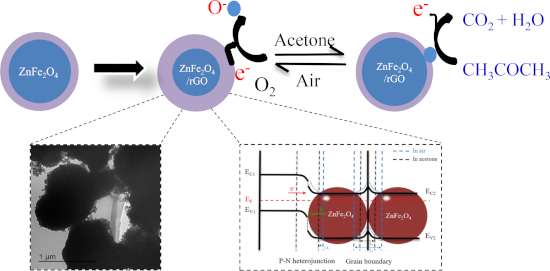
- acetone at low temperature, even at room temperature [32]. Hence, with the aim to fabricate a high-performance acetone gas sensor, we prepared hollow spheres of ZnFe2O4 and ZnFe2O4/rGO composites using a one-pot solvothermal method followed by a high-temperature heat treatment process in an inert




Semitransparent Sb2S3 thin film solar cells by ultrasonic spray pyrolysis for use in solar windows
Beilstein J. Nanotechnol. 2019, 10, 2396–2409, doi:10.3762/bjnano.10.230
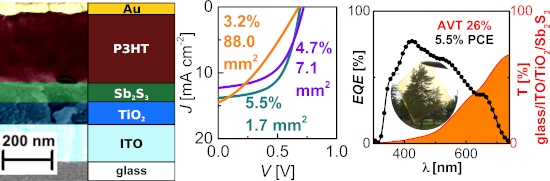
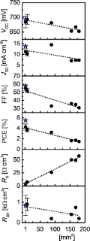
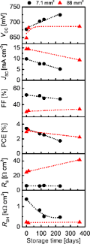
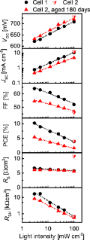
- were fabricated at low temperature using two steps, an initial non-vacuum growth by facile spray pyrolysis (USP) at 200 °C, followed by a low-temperature annealing in a non-oxygen containing environment at 170 °C. This process is compatible with existing window glass manufacturing technology. By



Deterministic placement of ultra-bright near-infrared color centers in arrays of silicon carbide micropillars
Beilstein J. Nanotechnol. 2019, 10, 2383–2395, doi:10.3762/bjnano.10.229
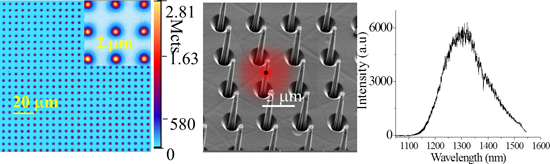
- permitted to achieve coherent coupling to single nuclear spins with ca. 1 kHz resolution [27]. The divacancy in 4H-SiC is a neutral charge state defect with spin S = 1 with 4 ZPLs PL1–PL4, in the range of 1078–1132 nm [34]. The largest PL intensity is 27 kcps [5] at low temperature using a superconducting
- . The low-temperature macroscopic PL spectra show the ZPLs of VSi and VSiVC and an important enhancement of the VSi and VSiVC PL lines in the region where the pillars are present. It is to be noted that the gap region has also been ion-irradiated, because the irradiation was carried out without mask
- after the fabrication of the pillars. For excitation at 940 nm the PL spectra of sample 3 shows the activation of the NCVSi emission at low temperature [35] after annealing at a higher temperature (Figure 3). Only sample 3 at 940 nm excitation is shown here, as it is most exemplary for the formation of


Nontoxic pyrite iron sulfide nanocrystals as second electron acceptor in PTB7:PC71BM-based organic photovoltaic cells
Beilstein J. Nanotechnol. 2019, 10, 2238–2250, doi:10.3762/bjnano.10.216

- an alternative top electrode, which we attached by free vacuum deposition. The FM is composed of 32.5% Bi, 51% In and 16.5% Sn and is characterized by a melting point of around 62 °C. It was deposited on the active layer/PFN by drop casting (or doctor blade) at low temperature (≈95 °C) and


Ion mobility and material transport on KBr in air as a function of the relative humidity
Beilstein J. Nanotechnol. 2019, 10, 2084–2093, doi:10.3762/bjnano.10.203

- range for each experiment. Experimental For the experiments we used a custom-designed AFM equipped with a qPlus sensor. The qPlus sensor is a stiff (k = 1800 N/m) self-sensing quartz sensor with a resonance frequency around f0 = 32 kHz. It has enabled unprecedented results in low-temperature AFM, such


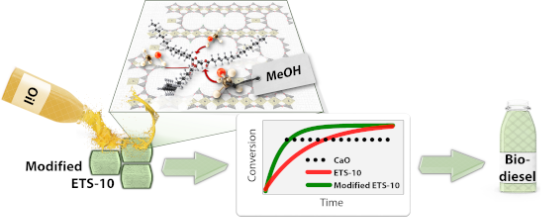
Synthesis of highly active ETS-10-based titanosilicate for heterogeneously catalyzed transesterification of triglycerides
Beilstein J. Nanotechnol. 2019, 10, 2039–2061, doi:10.3762/bjnano.10.200
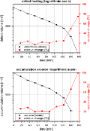
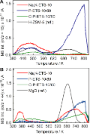
- hand, this temperature difference seems to be large enough to prevent destruction of the framework during the calcination. The low-temperature minimum (first weight loss) is due to dehydration, while the exothermic part in the range 500–900 K can be attributed to the burning-out of the surface hydroxyl
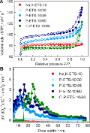
- and above 600 K. The desorption in the low-temperature range is presumably due to Na+ or K+ cations and weakly basic surface hydroxyl groups [46][47], i.e., the H-bridged Ti–OH–Si (see also Figure 3 of [31]). As a result of the post-synthetic treatment by H2O2, a decrease of the desorption peak in
- activity compared to the parent titanosilicate. The basicity probed by CO2-TPD exhibited two peaks for Na,K-ETS-10 that were assigned to the Na,K-cations as weak Lewis bases in the low-temperature region and to the strong Brønsted basic oxygen atoms coordinated as Si–O–Ti in the framework. The application








Improvement of the thermoelectric properties of a MoO3 monolayer through oxygen vacancies
Beilstein J. Nanotechnol. 2019, 10, 2031–2038, doi:10.3762/bjnano.10.199

- immediately, especially in the low-temperature region. However, the behavior in the y-direction is considerably different. In Figure 3b, the ZT values along the y-axis are obviously higher for VO3 than in the other two cases at usual working temperatures of 300–600 K. The conclusion is that inducing the O





