
Search results
Search for "mechanisms" in Full Text gives 873 result(s) in Beilstein Journal of Nanotechnology. Showing first 200.
Colloidal few layered graphene–tannic acid preserves the biocompatibility of periodontal ligament cells
Beilstein J. Nanotechnol. 2025, 16, 664–677, doi:10.3762/bjnano.16.51
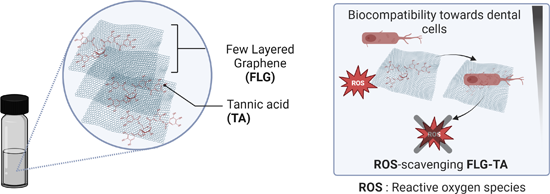
- focused on the adsorption mechanisms [15][16]. To date, no studies have explored how FLG–TA affects the biocompatibility of dental cells. The current research provides new insights into the biocompatibility of FLG–TA with PDL cells. We make the assumption that the cytotoxicity of TA present on the surface
- capabilities through multiple mechanisms, namely, electron transfer, where hydroxy groups donate electrons to neutralize free radicals, and hydrogen atom transfer, where hydrogen atoms from hydroxy groups are donated to stabilize ROS [17][34]. This retained antioxidant activity could play a crucial role in
- research indicating that TA coatings markedly enhanced the adhesion and proliferation of human liver cancer cells, specifically HepG2, on the PDMS substrate when compared to pristine PDMS [37]. TA may possibly play a role in cellular adhesion mechanisms, potentially through surface protein interactions




Nanoscale capacitance spectroscopy based on multifrequency electrostatic force microscopy
Beilstein J. Nanotechnol. 2025, 16, 637–651, doi:10.3762/bjnano.16.49
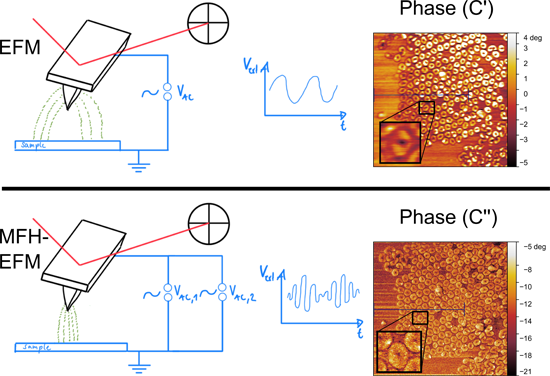
- way for the design of materials with tailored functionalities [1][2][3][4][5][6]. Dielectric properties are fundamental for understanding the behavior and performance of various material systems, as they directly influence charge storage, polarization, and energy dissipation mechanisms. For instance




A formulation containing Cymbopogon flexuosus essential oil: improvement of biochemical parameters and oxidative stress in diabetic rats
Beilstein J. Nanotechnol. 2025, 16, 617–636, doi:10.3762/bjnano.16.48
- difference between the DPPH method and the others can be explained by the different antioxidant mechanisms. DPPH is more useful in apolar surroundings and mainly involves hydrogen donation. ABTS is a method that includes electron and hydrogen donation, in addition to being useful for both nonpolar and polar
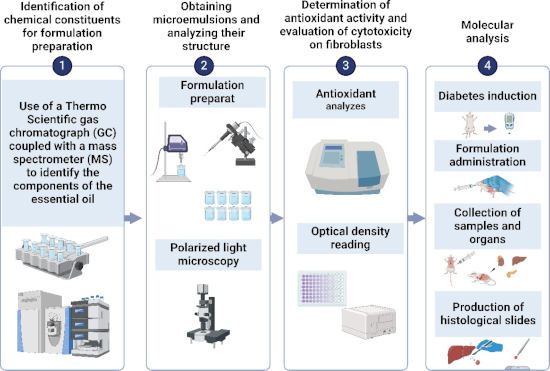
- the molecular mechanisms involved. Conclusion The selected microemulsion containing the essential oil of Cymbopogon flexuosus (M7-EOCF) was obtained using Eumulgin® CO40 and Tween® 80 as the surfactant phase; it presented itself as a transparent, liquid, and isotropic system, with nanometric droplet




Focused ion and electron beams for synthesis and characterization of nanomaterials
Beilstein J. Nanotechnol. 2025, 16, 613–616, doi:10.3762/bjnano.16.47
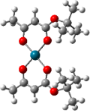
- the fundamental mechanisms underlying precursor fragmentation by low-energy electrons, which remains an ongoing focus of study in the field, see Figure 1. Within the widely studied group of acetylacetonate complexes, which also play a crucial role in chemical vapor deposition and atomic layer
- unrivaled spatial resolution and 3D capabilities, focused ion and electron beams technologies face challenges in reproducibility and scalability, hindering their commercial applications. Hence, these techniques require better understanding of the atomistic mechanisms involving ions, electrons, adsorbates

Polyurethane/silk fibroin-based electrospun membranes for wound healing and skin substitute applications
Beilstein J. Nanotechnol. 2025, 16, 591–612, doi:10.3762/bjnano.16.46
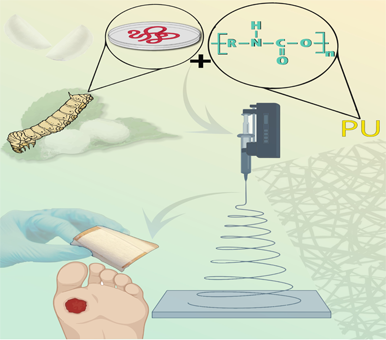
- [143]. Three mechanisms, namely, hydrolysis, enzymatic degradation, and oxidation, are primarily responsible for the extracellular breakdown of synthetic biodegradable polymeric materials in living organisms. Certain aliphatic polyesters are undeniably biodegradable and biocompatible polymers. It is



Nanomaterials in targeting amyloid-β oligomers: current advances and future directions for Alzheimer's disease diagnosis and therapy
Beilstein J. Nanotechnol. 2025, 16, 561–580, doi:10.3762/bjnano.16.44
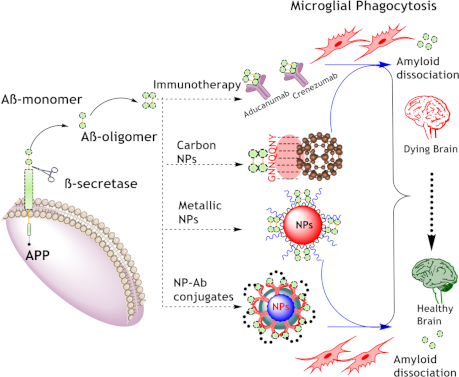
- formation. This review provides an in-depth analysis of various nanochaperones developed to target AβOs, detailing their mechanisms of action and therapeutic potential via focusing on two main strategies, namely, disruption of AβOs through direct interaction and the inhibition of AβO nucleation by binding
- to intermediates of the oligomerization process. Evidence from in vivo studies indicate that NMs hold promise for ameliorating AD symptoms. Additionally, the review explores the different interaction mechanisms through which nanoparticles exhibit their inhibitory effects on AβOs, providing insights
- interactions between n-mers (oligomers formed from a defined number of monomers), or from non-specific interactions, akin to micelles. The precise mechanisms underlying the formation of AβOs during the growth of AβFs remain elusive. However, researchers have identified three main pathways to explain this


Retrieval of B1 phase from high-pressure B2 phase for CdO nanoparticles by electronic excitations in CdxZn1−xO composite thin films
Beilstein J. Nanotechnol. 2025, 16, 551–560, doi:10.3762/bjnano.16.43
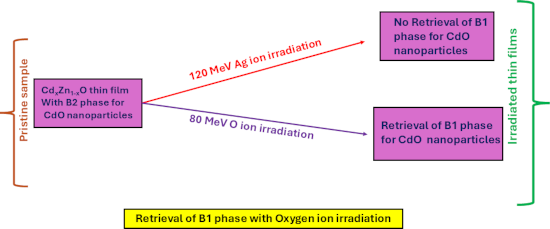
- supported in the literature. Upon penetration in a solid, energetic ions lose energy through two mechanisms: direct energy transfer to target nuclei via elastic collisions (nuclear energy loss (Sn)) and ionization of the target atoms through inelastic collisions (electronic energy loss (Se)). In the present


Electron beam-based direct writing of nanostructures using a palladium β-ketoesterate complex
Beilstein J. Nanotechnol. 2025, 16, 530–539, doi:10.3762/bjnano.16.41
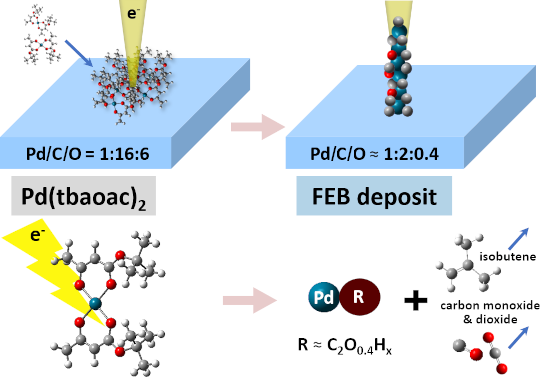
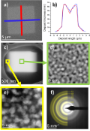
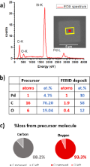
- and desorption mechanisms. Comparison with other precursors confirms that the β-ketoesterate family has the highest ligand removal percentage and constitutes thus an interesting model chemistry for further high-metal-content FEBID studies. The possibility of growing nanopillars makes this complex a
- under electron impact or getting trapped by newly adsorbing precursor molecules or diffusing molecules. The deposition process is governed by dissociation, desorption, adsorption, and diffusion mechanisms, all of which are influenced by experimental parameters [31] such as substrate temperature
- , molecular and electron flux, beam scanning strategies, and the choice of substrate and precursor. Altering any of these parameters can affect multiple deposition mechanisms simultaneously. The dissociation of precursors under electron impact is particularly complex because of the involvement of a broad


N2+-implantation-induced tailoring of structural, morphological, optical, and electrical characteristics of sputtered molybdenum thin films
Beilstein J. Nanotechnol. 2025, 16, 495–509, doi:10.3762/bjnano.16.38
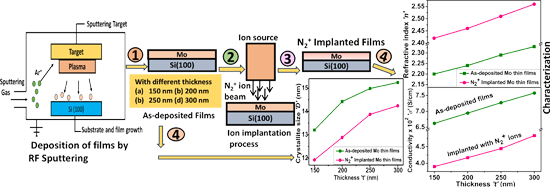
- create damage within the target material, as demonstrated in Figure 1C. These findings highlight the significant interactions between the nitrogen ions and the molybdenum target material during the implantation process, providing valuable insights into the mechanisms that govern ion implantation and the
- microstructure and the interplay of intrinsic and extrinsic stress mechanisms. Figure 4 shows that the tensile stress in as-deposited Mo thin films decreases from 1.25 to 0.31 GPa as the film thickness increases from 150 to 300 nm, attributed to the relaxation of intrinsic stress induced during deposition. At


Performance optimization of a microwave-coupled plasma-based ultralow-energy ECR ion source for silicon nanostructuring
Beilstein J. Nanotechnol. 2025, 16, 484–494, doi:10.3762/bjnano.16.37
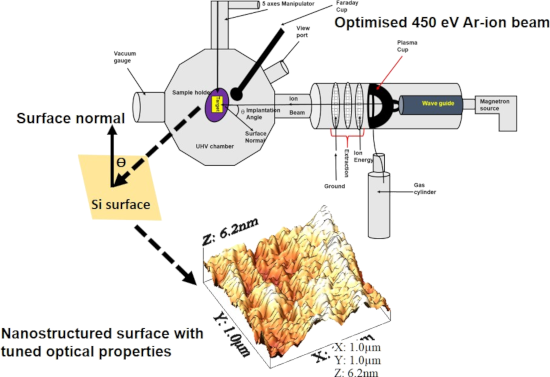
- sources generate enormous possibilities for material modifications both physically and chemically. Further, there are diverse ion production mechanisms. The fundamental process of producing ions is the collision of atoms with ions or electrons, which may be either elastic or inelastic. In elastic


Impact of adsorbate–substrate interaction on nanostructured thin films growth during low-pressure condensation
Beilstein J. Nanotechnol. 2025, 16, 473–483, doi:10.3762/bjnano.16.36
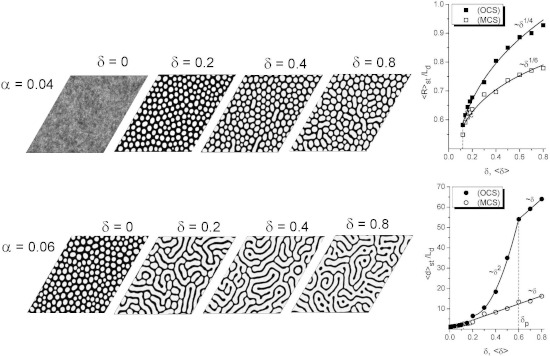
- essential for tailoring thin film properties to meet specific application requirements. Further research efforts focusing on elucidating the underlying mechanisms of adsorbate–substrate interactions and their impact on thin film growth dynamics will continue to drive advancements in materials science and


Effect of additives on the synthesis efficiency of nanoparticles by laser-induced reduction
Beilstein J. Nanotechnol. 2025, 16, 464–472, doi:10.3762/bjnano.16.35
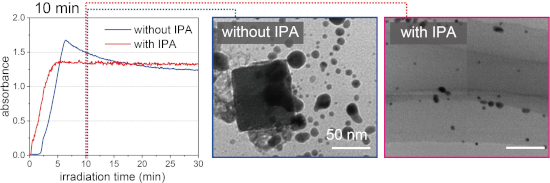
- of various materials [18][19][20][21][22][23][24] using different mechanisms [25][26][27][28] have been conducted via LRL. High-energy ultrashort pulses focused and irradiated into a solution cause the breakdown of solvent molecules. Then, produced solvated electrons among reactive species reduce the


Synthetic-polymer-assisted antisense oligonucleotide delivery: targeted approaches for precision disease treatment
Beilstein J. Nanotechnol. 2025, 16, 435–463, doi:10.3762/bjnano.16.34
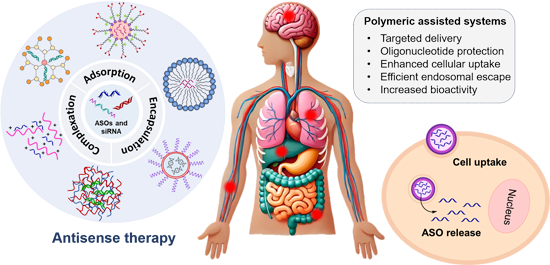


Quantification of lead through rod-shaped silver-doped zinc oxide nanoparticles using an electrochemical approach
Beilstein J. Nanotechnol. 2025, 16, 422–434, doi:10.3762/bjnano.16.33
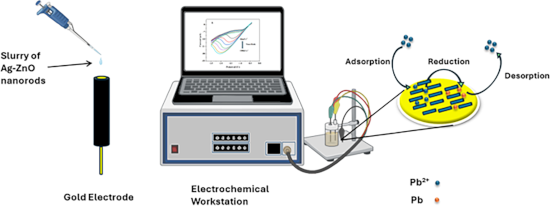
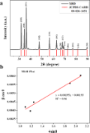
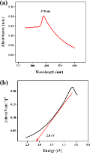
- electrode can provide additional details about the electrochemical process. It can help to understand the kinetics of electron transfer reactions, analyte diffusion, and electrode surface contact mechanisms. A modified Ag@ZnO NRs electrode with greater impedance is more stable and durable. This provides




Biomimetics and bioinspired surfaces: from nature to theory and applications
Beilstein J. Nanotechnol. 2025, 16, 418–421, doi:10.3762/bjnano.16.32
- influence their performance and at drawing inspiration for modern technology from the vast array of solutions found in nature [1]. By examining the multiscale structures and mechanisms in biological systems, innovative and technologically advanced solutions can be developed for practical applications
- and examples for engineers and scientists) [13] or Bionik als Wissenschaft (Biomimetics as a scientific discipline) [14] which remain influential for the scientific community. His book on biological attachment mechanisms and their use in bioengineering has been influential for scientists working on

Size control of nanoparticles synthesized by pulsed laser ablation in liquids using donut-shaped beams
Beilstein J. Nanotechnol. 2025, 16, 407–417, doi:10.3762/bjnano.16.31
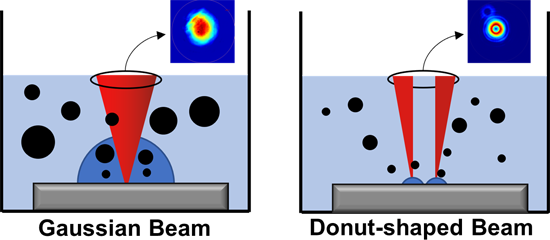
- increase in the radiation absorption efficiency inside transparent materials because of the implosion of the absorbed energy during propagation [39]. It is crucial to understand the early-stage mechanisms of PLAL to correlate them to NP size control. Plasma plume formation and expansion is a critical step
- approach for more precise control over nanoparticle size and shape uniformity, though further studies are needed to fully elucidate the mechanisms involved. (a) Schematic of the experimental setup for beam shaping and PLAL. (b, c) Intensity profiles of the Gaussian and donut-shaped beams, respectively


ReactorAFM/STM – dynamic reactions on surfaces at elevated temperature and atmospheric pressure
Beilstein J. Nanotechnol. 2025, 16, 397–406, doi:10.3762/bjnano.16.30
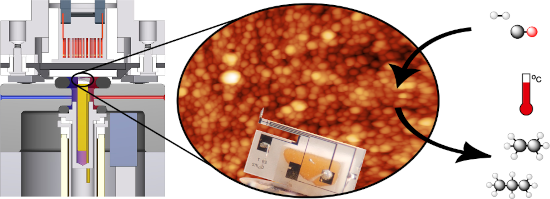
- , a high-pressure ReactorSTM has been developed [10][11]. The pressures in the scanning tunneling microscopy (STM) reactor are orders of magnitude above UHV (up to several bar), rendering gas–catalyst interactions very significant and leading to differences in reaction mechanisms [12][13][14][15


Pulsed laser in liquid grafting of gold nanoparticle–carbon support composites
Beilstein J. Nanotechnol. 2025, 16, 349–361, doi:10.3762/bjnano.16.26
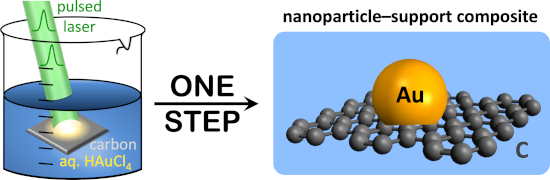
- ]. Alkaline electrolytes can decrease acid-based side reactions but alter Nafion [11][14], impeding ion conductivity and overall performance [5]. Adding binders additionally complicates reaction mechanisms and introduces competing pathways or by-products [5]. Further challenges in traditional nanoparticle


Tailoring of physical properties of RF-sputtered ZnTe films: role of substrate temperature
Beilstein J. Nanotechnol. 2025, 16, 333–348, doi:10.3762/bjnano.16.25
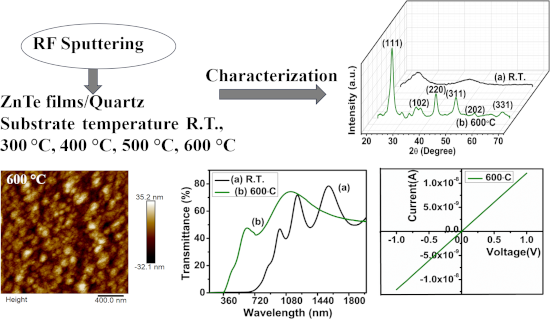
- ). The Rq value only gives information about the vertical fluctuation in height on a surface. To get more insight into possible surface growth mechanisms and variations in surface roughness, both vertically and laterally power spectral density (PSD) analyses were carried out. In PSD analysis, the surface
- accountable for morphological changes on the surface of ZnTe films grown on quartz substrate at different substrate temperatures. Values of b equal to 1, 2, 3, and 4 represent four surface growth mechanisms, that is, viscous flow, evaporation–condensation, volume diffusion, and surface diffusion, respectively




Graphene oxide–chloroquine conjugate induces DNA damage in A549 lung cancer cells through autophagy modulation
Beilstein J. Nanotechnol. 2025, 16, 316–332, doi:10.3762/bjnano.16.24
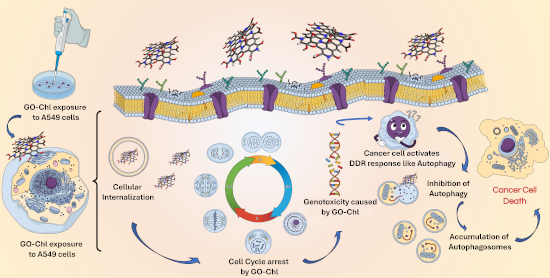
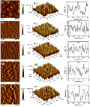
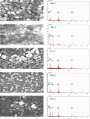
- use autophagy pathways for survival through activation of complex DNA damage repair (DDR) mechanisms. In the present study, we demonstrated the genotoxicity induced in A549 lung cancer cells by exposure to the GO–Chl nanoconjugate and elucidated the role of autophagy modulation in harnessing the DNA
- ; nanoconjugates; SQSTM1/p62; Introduction Despite of advances in basic and clinical research, an increased mortality rate is seen worldwide in cancer-associated deaths [1]. The heterogeneous and complex tumor microenvironment along with intrinsic and/or acquired drug resistance mechanisms, such as increased drug
- genotoxicity in cancer cells in a ROS-dependent manner [59]. The results indicate that induction of DNA damage in GO–Chl-exposed A549 lung cancer cells could possibly be due to alteration in/failure of DNA-damage response mechanisms. Role of autophagy machinery in inducing DNA damage in GO–Chl-exposed A549



Fabrication and evaluation of BerNPs regarding the growth and development of Streptococcus mutans
Beilstein J. Nanotechnol. 2025, 16, 308–315, doi:10.3762/bjnano.16.23
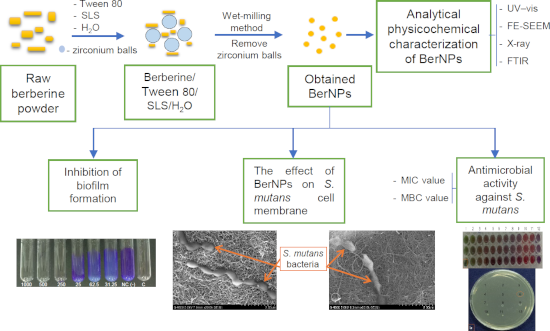
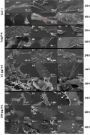
- partial degradation of the proteins [33]. In this study, FE-SEM analysis further confirmed that one of the mechanisms by which BerNPs kill S. mutans involves the disruption and damage of the bacterial membrane. Inhibition of biofilm formation Streptococcus mutans is the primary cause of dental caries [34
- ]. It contributes to tooth damage through two main mechanisms, namely, dental erosion due to acid production and the formation of biofilms that produce plaque on teeth [35]. Berberine has been reported to inhibit biofilm formation of Candida albicans and Staphylococcus aureus [36][37]. In this study




Enhancing mechanical properties of chitosan/PVA electrospun nanofibers: a comprehensive review
Beilstein J. Nanotechnol. 2025, 16, 286–307, doi:10.3762/bjnano.16.22
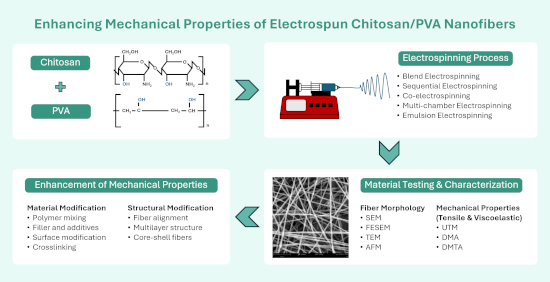
- -linking [176][177], which often employs toxic chemicals. An example of physical cross-linking is heat treatment, which has been extensively used to cross-link PVA [178]. Figure 10 illustrates the mechanisms of cross-linking in chitosan/PVA composites. In one study, electrospun chitosan/PVA nanofibers were
- utilized in various specialized applications, such as scaffolds in tissue engineering [185], controlling drug release mechanisms through the manipulation of core and shell compositions [186], and protecting sensitive biomolecules in food packaging [187]. The combination of core–shell chitosan-based


Emerging strategies in the sustainable removal of antibiotics using semiconductor-based photocatalysts
Beilstein J. Nanotechnol. 2025, 16, 264–285, doi:10.3762/bjnano.16.21
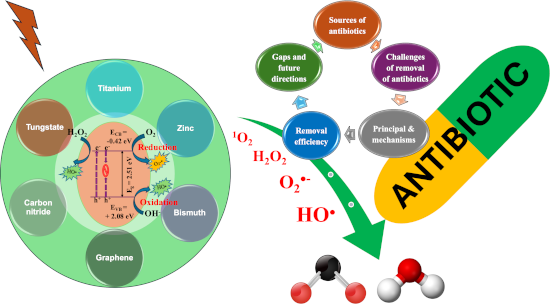
- improve the performance and scalability for wider use in real-world situations. Keywords: antibiotics; degradation pathways; heterojunctions; mechanisms; photocatalysts; semiconductor; Introduction Antibiotics are chemical substances used to treat bacterial infections in humans, animals, aquaculture
- mechanisms of how these materials or processes degrade antibiotics. They do not address the entry of antibiotics into the environment, their adverse impact on human health and the environment, or the effects of each treatment process in relation to established industrial applications. As a result, there is a
- scope includes discussions on antibiotic sources, pollution risks and impacts, removal challenges, and influential factors. This study aims to provide readers with a comprehensive understanding of the principles and mechanisms underlying semiconductor-based photocatalysts and their modification for


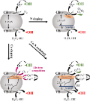

Preferential enrichment and extraction of laser-synthesized nanoparticles in organic phases
Beilstein J. Nanotechnol. 2025, 16, 254–263, doi:10.3762/bjnano.16.20
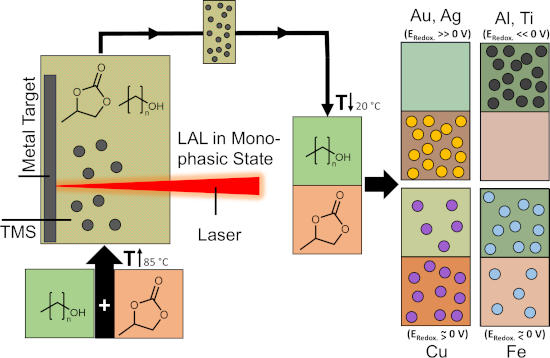
- to the two simultaneously occurring and commonly accepted nanoparticle formation mechanisms happening during the plume phase of LAL (picosecond to longer nanosecond time scale) [57][58]. Recent spatiotemporal, large-scale molecular dynamic simulations show that the thermal history of nanoparticles




Radiosensitizing properties of dual-functionalized carbon nanostructures loaded with temozolomide
Beilstein J. Nanotechnol. 2025, 16, 229–251, doi:10.3762/bjnano.16.18
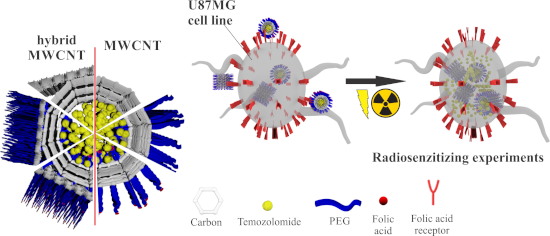
- surrounding, high levels and different mechanisms of drug resistance and radiation tolerance, as well as a blocking effect of the blood–brain–tumor barrier (BBTB) for drug permeation into the brain extracellular matrix lead to high recurrence rates (in up to 90% of patients) even when complete treatment is
- limited efficacy (due to the high level of DNA repair by MGMT and other mechanisms of resistance) [34]. In addition, the high hydrolytic instability of TMZ at pH ≥ 7 limits its efficacy, because the formed MTIC exhibits high systemic toxicity and cannot pass the BBTB and accumulate in the GBM, unlike TMZ
- publications contain information on the potential mechanisms of CNs’ cytotoxicity, pointing to physical destruction, oxidative stress/ROS generation, DNA damage, cell autophagia and lysosomal membrane damage followed by mitochondrial dysfunction, pyroptosis followed by activation of inflammasomes, apoptosis