


Search results
Search for "nanoparticle" in Full Text gives 747 result(s) in Beilstein Journal of Nanotechnology. Showing first 200.
Fabrication of nanocrystal forms of ᴅ-cycloserine and their application for transdermal and enteric drug delivery systems
Beilstein J. Nanotechnol. 2024, 15, 465–474, doi:10.3762/bjnano.15.42
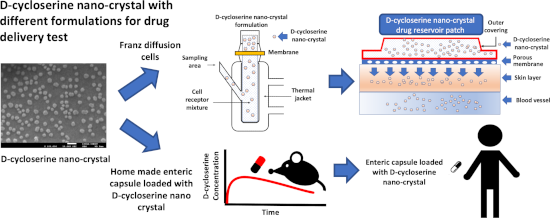
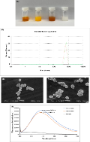
- showed good performance in the Franz diffusion test and rodent pharmacokinetic studies due to the nanoparticle size and faster dissolution as compared with the commercial DCS powder. These DCS nanocrystal formulations could offer a new approach for the development of an advanced drug delivery system for
- vascular endothelial cells are at low frequency, and that the trans-endothelial pathways are the dominant mechanisms for nanoparticle extravasation in tumors (also called enhanced permeability and retention (EPR) effect) [37]. Since the skin has a denser structure than that of tumor vessels, we speculated


Potential of a deep eutectic solvent in silver nanoparticle fabrication for antibiotic residue detection
Beilstein J. Nanotechnol. 2024, 15, 426–434, doi:10.3762/bjnano.15.38
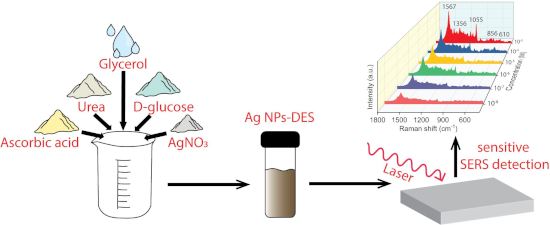
- Institute of Materials Science, Vietnam Academy of Science and Technology, Hanoi, Vietnam 10.3762/bjnano.15.38 Abstract Deep eutectic solvents (DESs) have recently emerged as an alternative solvent for nanoparticle synthesis. There have been numerous advancements in the fabrication of silver nanoparticles


Classification and application of metal-based nanoantioxidants in medicine and healthcare
Beilstein J. Nanotechnol. 2024, 15, 396–415, doi:10.3762/bjnano.15.36
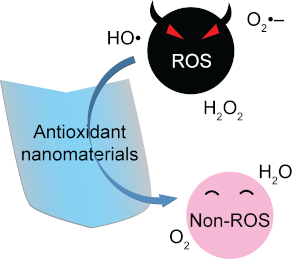
- % DPPH inhibition and exhibit in vivo hepatoprotective properties in laboratory mice [12]. The combination of copper and cerium in nanoparticle structures enhances antioxidant activity through a synergistic effect. CuCe nanoparticles have been demonstrated for therapeutic effects in ischemic vascular
- , which are a cluster of hundreds to thousands atoms aggregated together [135]. The potential of natural antioxidant nanodelivery systems for treating age-related metabolic disorders has been proved in both in vivo and in vitro studies. For example, a nanoparticle-based formulation of curcumin exhibited


Ultrasensitive and ultrastretchable metal crack strain sensor based on helical polydimethylsiloxane
Beilstein J. Nanotechnol. 2024, 15, 270–278, doi:10.3762/bjnano.15.25
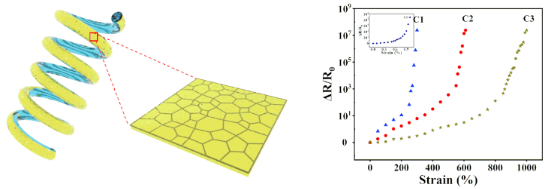
- challenge by focusing on the structural design of sensing materials in order to enhance both sensitivity and sensing range [21][22][23][24][25][26][27][28][29][30][31][32][33][34][35][36]. For instance, Lee et al. successfully developed a strain sensor by utilizing microcracks in a metal nanoparticle thin


Vinorelbine-loaded multifunctional magnetic nanoparticles as anticancer drug delivery systems: synthesis, characterization, and in vitro release study
Beilstein J. Nanotechnol. 2024, 15, 256–269, doi:10.3762/bjnano.15.24
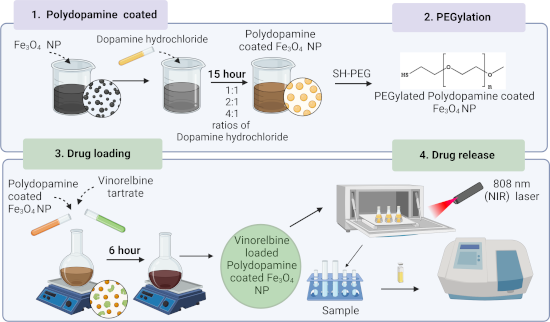
- The chemicals used in nanoparticle synthesis, namely iron(III) chloride hexahydrate (FeCl3·6H2O, Mw = 270.30 g/mol), iron(II) chloride tetrahydrate (FeCl2·4H2O, Mw = 198.81 g/mol), dopamine hydrochloride (Mw = 189.64 g/mol), tris(hydroxymethyl)aminomethane hydrochloride, (Tris-HCl, Mw = 157.60 g/mol


Quantitative wear evaluation of tips based on sharp structures
Beilstein J. Nanotechnol. 2024, 15, 230–241, doi:10.3762/bjnano.15.22
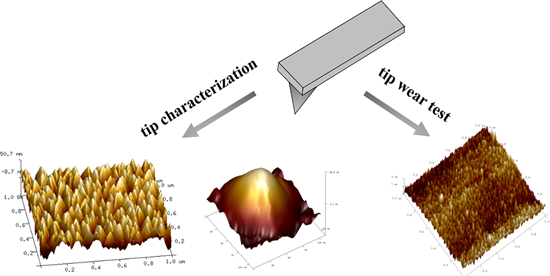
- studies. Another approach involves blind reconstruction based on AFM images. Bellotti et al. [15] introduced a uniquely shaped nanoparticle as a tip characterizer. They conducted tip shape analysis using AFM images centered on a single nanoparticle on a flat substrate to investigate the critical size of
- the reconstructed nanoparticle. Zhang et al. [16] developed a 2 µm lattice sample with uniformity and consistency to reconstruct the AFM tip, thus mitigating the impact of tip effects on measurement results. Onishi et al. [17] proposed a technique to extract the probe shape function from AFM




Ion beam processing of DNA origami nanostructures
Beilstein J. Nanotechnol. 2024, 15, 207–214, doi:10.3762/bjnano.15.20
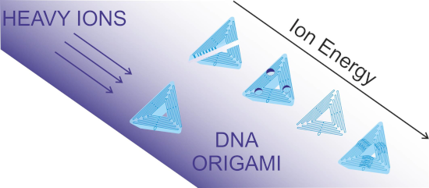
- nanoparticle binding [50][51] can be used to bring metallic materials to the surface at unprecedented resolution. Irradiation of such metal–DNA origami nanostructures with ion beams can be used to manufacture metallic nanostructures with sub-nanometer resolution. Finally, the localized DNA origami height


Nanocarrier systems loaded with IR780, iron oxide nanoparticles and chlorambucil for cancer theragnostics
Beilstein J. Nanotechnol. 2024, 15, 180–189, doi:10.3762/bjnano.15.17
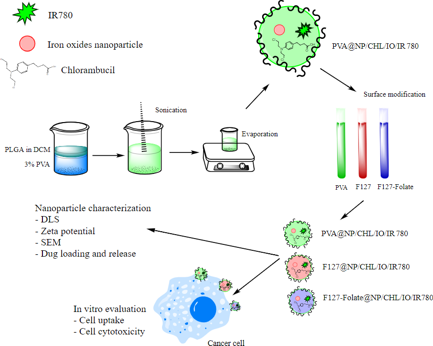
- ]. Particularly, PLGA is widely used for nanoparticle formulation because it is a versatile material that can serve multiple functions, including transporting of therapeutic drugs and imaging agents [2][3]. In addition, PLGA can be altered in numerous ways to increase the half-life of nanoparticles in the blood
- and target efficacy. To increase the blood half-life, stealth materials have been attached to the nanoparticle surface to prevent protein adsorption and immune cell phagocytosis [4]. Most sheath materials are hydrophilic polymers such as poly(vinyl alcohol), poly(ethylene glycol), and poly(ethylene
- cell viability results were observed with F127-folate@NP and F127@NP. Chlorambucil was very toxic to 3T3 cells, with an IC50 of 0.4 µg/mL at 48 h and 0.35 mg/mL at 72 h. At the lowest nanoparticle concentration (0.5 mg/mL), the cell viability was approx. 50% for all NPs tested. At a concentration of


Ferromagnetic resonance spectra of linear magnetosome chains
Beilstein J. Nanotechnol. 2024, 15, 157–167, doi:10.3762/bjnano.15.15
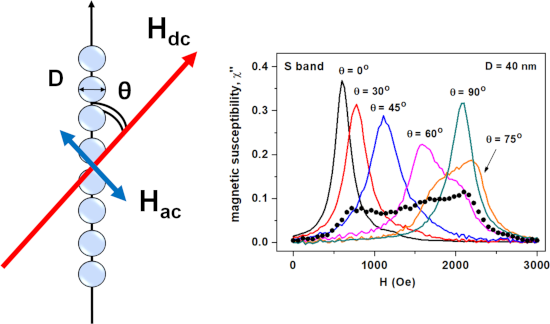
- of magnetic nanoparticle assemblies are often characterized by measuring ferromagnetic resonance (FMR) spectra [14][15]. The analysis of FMR spectra makes it possible to determine the effective magnetic field in the sample under study, which depends on the particle saturation magnetization, the type
- magnetic nanoparticle assemblies can be carried out by solving the stochastic Landau–Lifshitz equation [29][30][31][32][33][34][35]. This approach makes it possible, when calculating the FMR spectra, to take into account all the details of the geometric structure of magnetosome chains, the influence of
- of the i-th single-domain nanoparticle of the chain is governed by the stochastic Landau–Lifshitz equation [29][30][31][32], where γ is the gyromagnetic ratio, γ1 = γ/(1 + κ2), κ is the magnetic damping constant, is the effective magnetic field, and is the thermal field. The effective magnetic


In situ optical sub-wavelength thickness control of porous anodic aluminum oxide
Beilstein J. Nanotechnol. 2024, 15, 126–133, doi:10.3762/bjnano.15.12
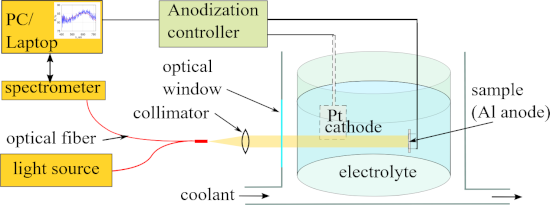
- of templates, including evaporation masks [8][9][10], molds for nanowire array production using the supercritical fluid method [11], electrochemical deposition [12], atomic layer deposition [13], or traps for colloidal nanoparticle assembly [14]. Several applications, for example, color filtering [15


Assessing phytotoxicity and tolerance levels of ZnO nanoparticles on Raphanus sativus: implications for widespread adoptions
Beilstein J. Nanotechnol. 2024, 15, 115–125, doi:10.3762/bjnano.15.11

- nanoparticle uptake, transport, and bioaccumulation in the food chain when ZnO NPs reach the soil, which positively or negatively affects plant growth and productivity [16]. For instance, ZnO NPs at an optimum concentration of 0.13 g/L promoted seed germination and root growth of groundnut (Arachis hypogaea L


Development and characterization of potential larvicidal nanoemulsions against Aedes aegypti
Beilstein J. Nanotechnol. 2024, 15, 104–114, doi:10.3762/bjnano.15.10
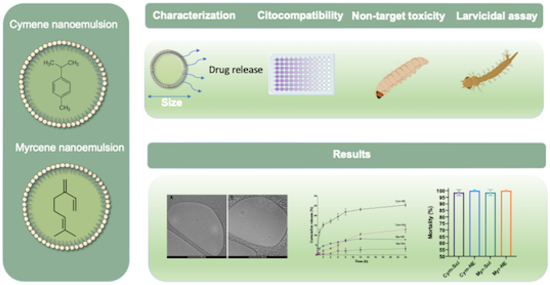
- indication of kinetic stability with an almost monomodal distribution [36]. Thus, considering that in this study the stable formulations had similar size distribution profiles and low polydispersity index, the present study on cymene and myrcene nanoemulsions may be considered promising. Nanoparticle
- tracking analysis From the two results obtained above, the HLB 15 formulation containing cymene and the HLB 16 formulation containing myrcene underwent nanoparticle tracking analysis (NTA). NTA is a technique for direct and real-time visualization, sizing, and counting of nanometric materials suspended in
- analysis was performed in automatic mode. The NEs were diluted in deionized water (1:25) before the analysis. Nanoparticle tracking analysis Nanoparticle tracking analysis was performed in a NanoSight NS300 (Malvern Instruments, United Kingdom) apparatus equipped with a sample chamber and a 638 nm laser


Nanotechnological approaches in the treatment of schistosomiasis: an overview
Beilstein J. Nanotechnol. 2024, 15, 13–25, doi:10.3762/bjnano.15.2

- narrative reviews limited to a specific drug or nanoparticle categories. For instance, some reviews only focus on PZQ [14], while others solely showcase nanosystems for drug delivery [15]. Nonetheless, recent literature reveals several works that employ various drugs and utilize nanoparticles not only as
- scavenge free radicals [27]. After that, many authors related a reduction in oxidative stress markers in vivo after metalic nanoparticle administration and/or amelioration in histopathological characteristics after infection, which corroborates the first hypothesis [27][28][29][30][31][32][33][34]. Solid
- nanoparticles, the author considered the results not good enough since other works showed a more prominent reduction [62]. Regarding egg counts in the liver and intestine, the nanoformulation was more efficient than blank particles which shows the relevance of nanoparticle for drug delivery. The


Fluorescent bioinspired albumin/polydopamine nanoparticles and their interactions with Escherichia coli cells
Beilstein J. Nanotechnol. 2023, 14, 1208–1224, doi:10.3762/bjnano.14.100

- nanoplastics can penetrate and accumulate in bacterial cells [22], thus suggesting that other ONPs may have a similar fate in bacteria. In general, the mechanisms of action of ONPs used as drug nanocarriers in antibacterial applications are expected to vary with the nanoparticle type (e.g., liposomes or PLGA



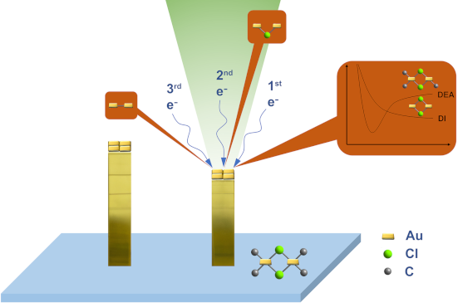
A combined gas-phase dissociative ionization, dissociative electron attachment and deposition study on the potential FEBID precursor [Au(CH3)2Cl]2
Beilstein J. Nanotechnol. 2023, 14, 1178–1199, doi:10.3762/bjnano.14.98
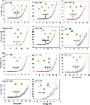
- size lower than 5 nm. Nonuniformly distributed nanoparticles with larger sizes (≈15–20 nm) were also observed. The magnified image of a selected larger nanoparticle from Figure 2a is shown in Figure 2b. The determined fringe spacing of that particle is ≈0.23 nm, which is consistent with the spacing
- between the (111) planes of a face-centered cubic (FCC) gold nanoparticle [39][40]. The crystallinity of the gold nanoparticles was also investigated by using selected area electron diffraction (SAED) pattern shown in Figure 2c. The relatively bright circular patterns indicate polycrystallinity of the



Elasticity, an often-overseen parameter in the development of nanoscale drug delivery systems
Beilstein J. Nanotechnol. 2023, 14, 1149–1156, doi:10.3762/bjnano.14.95

- in vivo and even more to the clinics often fails and only a limited number of products make it to the market. This holds true even though Comirnaty® and Spikevax® were approved during the SARS CoV-2 pandemic using lipid nanoparticle (NPs) formulations underlining their potential [5][6][7]. By
- . However, more complete approaches can be applied [24], which consider the situation of a given system. An example is the Johnson–Kendall–Roberts (JKR) theory, including surface forces, the influence on the adhesion, deformation, and contact behavior between the nanoparticle and the AFM probe suitable for
- well as prone to introducing errors. Overall, the tendency in the results is the same as for the elasticity-based determination of the Young’s modulus. However, not only differences in the measurement methods but also differences in the nanoparticle properties makes it hard to directly compare


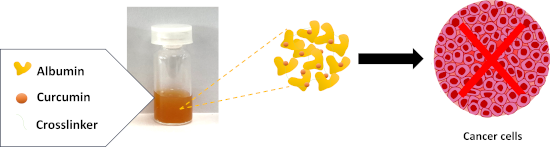
Curcumin-loaded albumin submicron particles with potential as a cancer therapy: an in vitro study
Beilstein J. Nanotechnol. 2023, 14, 1127–1140, doi:10.3762/bjnano.14.93
- , which is a common process in the preparation of nanoparticle formulations, also causes them to agglomerate due to their hydrophobic properties [16]. In the case of silk nanoparticles, the addition of simple functional groups has provided a limited range of options for chemical modification [17]. In




Sulfur nanocomposites with insecticidal effect for the control of Bactericera cockerelli
Beilstein J. Nanotechnol. 2023, 14, 1106–1115, doi:10.3762/bjnano.14.91

- equilibrium (Equation 1). Synthesis of nanocomposites Solutions of ethanol/essential oil were prepared using oil concentrations of 0.25%, 0.5%, and 0.75%. Subsequently, the previously synthesized sulfur nanoparticle solution was added (Table 4). Finally, 1 mL of 1% PEG was added to each solution as



Experimental investigation of usage of POE lubricants with Al2O3, graphene or CNT nanoparticles in a refrigeration compressor
Beilstein J. Nanotechnol. 2023, 14, 1041–1058, doi:10.3762/bjnano.14.86
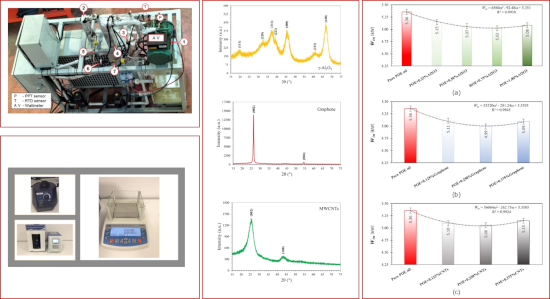
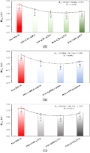
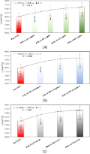
- lubricant to determine the optimum nanoparticle mass fraction for each nanoparticle type. Thus, it was found that the compressor operated safely and efficiently with nanolubricants. Furthermore, the optimum mass fractions were determined to be 0.750% for Al2O3, 0.250% for graphene, and 0.250% for CNTs for
- increasing nanoparticle fraction. In conclusion, nanolubricants containing nanoparticles above the optimum mass fraction increase the required electrical power of the compressor. It is concluded that nanoparticle fractions should not be used above the optimum value in nanolubricant applications. Keywords
- of the optimum mass fractions was based on the lowest mass fraction determined from similar studies in the literature. The nanoparticles were gradually added to the lubricant starting at the lowest fraction, and the optimum mass fraction of each nanoparticle was determined. A two-step method was used





Nanoarchitectonics of photothermal materials to enhance the sensitivity of lateral flow assays
Beilstein J. Nanotechnol. 2023, 14, 988–1003, doi:10.3762/bjnano.14.82
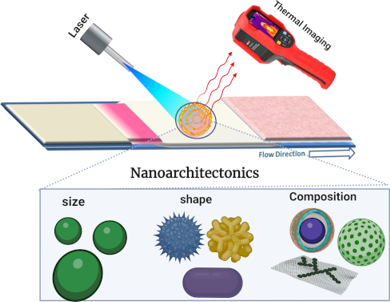
- effect of the gold nanoparticle architecture on the photothermal conversion efficiency in LFAs [90]. Gold nanocages (GNCs) exhibited higher photothermal conversion efficiency than other nanostructures, including gold nanospheres, shells, and stars. Using GNCs, they performed sandwich and competitive LFAs
- -fold higher sensitivity than a conventional gold nanoparticle-based LFA. Further, the developed strips were validated with real-field samples and the recovery rate of samples was found to be 96.7% to 106.7% for the photothermal method, which was equivalent to the recovery rate of the SERS method (98.2


Prediction of cytotoxicity of heavy metals adsorbed on nano-TiO2 with periodic table descriptors using machine learning approaches
Beilstein J. Nanotechnol. 2023, 14, 939–950, doi:10.3762/bjnano.14.77

- have been used in different industries, and the market is developing rapidly [2]. According to a recent analysis, approximately 1300 consumer products containing NPs were marketed in 2012. As a common metal oxide nanoparticle material, nanoscale titanium dioxide (nano-TiO2) has been evaluated for
- living cells, and their cytotoxicity may inhibit cell growth cycles, leading to death of organisms. Considering this fact, the cytotoxicity of TiO2 in combination with other pollutants has been evaluated. TiO2 is the most commonly manufactured nanoparticle material. It is assumed that because of the


Antibody-conjugated nanoparticles for target-specific drug delivery of chemotherapeutics
Beilstein J. Nanotechnol. 2023, 14, 912–926, doi:10.3762/bjnano.14.75

- specifically to the target site and inhibit the cancer progression. Nanoparticle surface decoration strategies Surface functionalization of NPs through conjugation of functional groups with biomolecules is one method to enhance the targeting efficiency (Figure 2b). For effective antibody functionalization, the
- conditions for coupling. Shi et al. developed a polymeric nanoparticle system using biodegradable graft copolymers of (poly(TMCC-co-LA)-g-PEG-furan) to conjugate anti-HER2 antibodies through a Diels–Alder reaction. They used furan groups (diene), which are accessible for reaction with antibodies
- ensures the availability of the Fab region of antibodies through the oriented immobilization via the Fc region. The binding of antibodies on nanoparticle surfaces is much stronger, but it is a reversible binding. Biotin–avidin interaction is the most commonly used binding strategy with adapter molecules



Green SPIONs as a novel highly selective treatment for leishmaniasis: an in vitro study against Leishmania amazonensis intracellular amastigotes
Beilstein J. Nanotechnol. 2023, 14, 893–903, doi:10.3762/bjnano.14.73

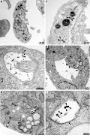
- . It is the first time that superparamagnetic iron oxide nanoparticles SPIONs are observed inside the Leishmania spp and the parasitophorous vacuole. Chemical element mapping analysis by scanning electron microscopy confirmed the ferrous nature of the nanoparticle aggregates. These results prove the




N-Heterocyclic carbene-based gold etchants
Beilstein J. Nanotechnol. 2023, 14, 865–871, doi:10.3762/bjnano.14.71
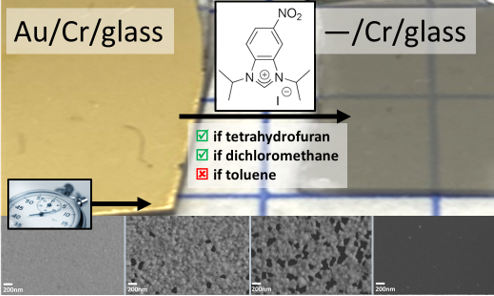
- concentration of 1 and the concentration dependence shown in Figure 3c and Figure 3d. We repeated this test using a 10 μL aliquot of 5.00 × 10⁻³ M of 2 in THF. The constancy of λmax = 530 nm indicated that any change in the nanoparticle size distribution was undetectable on the timescale of the measurement
- . Changes in nanoparticle concentration, however, were readily detected. Within the first hour of exposure, there was a ca. 75% decrease in absorbance, and there was a continued decline over the remaining 5 h. While the complete removal of the 50 nm thick gold coating of the token in Figure 4a occurred
- the present work we show that one must carefully consider the particular NHC-related species, the solvent, the exposure time, and the concentration in order to avoid deleterious effects such as dissolution of the gold film or nanoparticle substrate. At the same time, we introduce a molecular etchant



Nanostructured lipid carriers containing benznidazole: physicochemical, biopharmaceutical and cellular in vitro studies
Beilstein J. Nanotechnol. 2023, 14, 804–818, doi:10.3762/bjnano.14.66
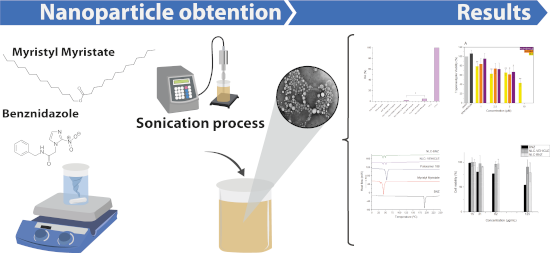
- observed by transmission electron microscopy. Fourier-transform infrared spectroscopy, differential scanning calorimetry, thermogravimetric analysis, and small-angle X-ray scattering analyses of the nanoparticles indicated that BNZ might be dispersed in the nanoparticle matrix in an amorphous state. The
- mean size, zeta potential, polydispersity index, and %EE of the formulation remained stable for at least six months. The hemolytic effect of the nanoparticles was insignificant compared to that of the positive lysis control. The nanoparticle formulation exhibited similar performance in vitro against T
- other researchers working in the field. Results and Discussion Formulation and physicochemical characterization of NLC-BNZ Nanoparticle formulations were prepared by the ultrasonication method and named as NLC-BNZ or NLC-VEHICLE, in that order, depending on whether they contained BNZ or not. Stable





