Search results
Search for "surface energy" in Full Text gives 236 result(s) in Beilstein Journal of Nanotechnology. Showing first 200.
PTFE-based microreactor system for the continuous synthesis of full-visible-spectrum emitting cesium lead halide perovskite nanocrystals
Beilstein J. Nanotechnol. 2017, 8, 2521–2529, doi:10.3762/bjnano.8.252
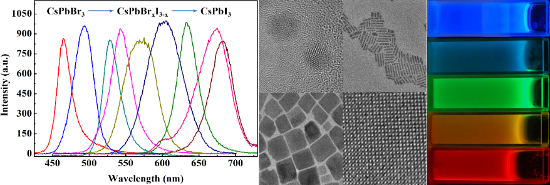
- . The difference in the surface morphology is likely due to the orientation dependence of the specific surface energy on the fraction of halogen elements, since the growth orientation of a crystal is controlled by the minimization of total surface energy. X-ray diffraction (XRD) was used to characterize


Increasing the stability of DNA nanostructure templates by atomic layer deposition of Al2O3 and its application in imprinting lithography
Beilstein J. Nanotechnol. 2017, 8, 2363–2375, doi:10.3762/bjnano.8.236
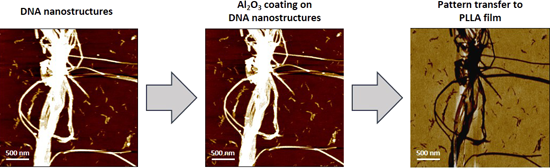
- template relies on using water to lower the adhesion between the film and the template. The key advantage of our method is that any polymer with hydrophobicity and/or low surface energy can be patterned with the DNA nanostructure master template. Furthermore, because the method uses spin-coating instead of


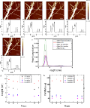


Material property analytical relations for the case of an AFM probe tapping a viscoelastic surface containing multiple characteristic times
Beilstein J. Nanotechnol. 2017, 8, 2230–2244, doi:10.3762/bjnano.8.223

- portion. Instead, the tip remains more time in contact with the sample during the approach than during the retract (see Figure 2). The vdW contribution will thus be referred to as surface energy hysteresis (fifth term on the right-hand side of Equation 30), and is proportional to the mismatch between the
- (surface energy) is also omitted. Although the analytical equations derived here are shown to follow consistently the numerical results for all the cases we have studied, they are still approximations prone to error. The viscoelastic treatment used, based on transformational calculus, carries the intrinsic
- ); the second one is proportional to the loss modulus G″(ω); the third term is related to the transients (associated with the poles of the transfer function); the fourth term relates to the relaxation modulus (G(t)); and the fifth term is related to the adhesion component of the vdW interaction (surface


Au55, a stable glassy cluster: results of ab initio calculations
Beilstein J. Nanotechnol. 2017, 8, 2221–2229, doi:10.3762/bjnano.8.222

- that is close to the melting enthalpy of bulk gold. Additionally, the surface energy of this cluster was calculated using two different theoretical approaches resulting in values close to the surface energy for bulk gold. It shall be emphasized that it is now possible to give a confidence interval for
- the value of the surface energy. Keywords: amorphous; Au55 cluster; glass structure; phase transformation; surface energy; Introduction There is a lot of discussion about the structure and surface energy of small nanoparticles. However, this discussion is rather limited due to the fact that there
- × 10−10 m [30]. Estimation of the surface energy Energetic conditions The most straightforward approach to estimate the surface energy of the nanoparticle is to evaluate it as the difference between the total energy of a particle Eparticle and the cohesive energy of the same number n of atoms in the
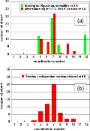


Substrate and Mg doping effects in GaAs nanowires
Beilstein J. Nanotechnol. 2017, 8, 2126–2138, doi:10.3762/bjnano.8.212
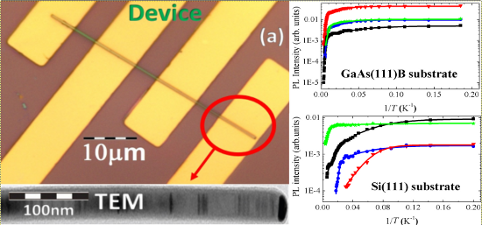
- structure, but when scaled down to the nanowire form, the occurrence of the wurtzite (WZ) crystalline phase is more prevalent due to a high surface-to-volume ratio and a low surface energy [10][11][12]. The WZ phase is more favorable for nanowires with small diameters, whereas for larger diameters, the ZB


In situ controlled rapid growth of novel high activity TiB2/(TiB2–TiN) hierarchical/heterostructured nanocomposites
Beilstein J. Nanotechnol. 2017, 8, 2116–2125, doi:10.3762/bjnano.8.211

- -like short chains (Figure 4d) followed by rods (Figure 4e) in order to satisfy the minimized surface energy [31]. Then the N* and the rest of the Ti* could be co-precipitated on the surface of the TiB2 short rods to generate the TiN outer layers (Figure 4f,g). The different atom deposition rates of the


Coexistence of strongly buckled germanene phases on Al(111)
Beilstein J. Nanotechnol. 2017, 8, 1946–1951, doi:10.3762/bjnano.8.195

- have different signs of the stress, so a coexistence could probably reduce the surface energy. Figure 2a is an atomically resolved STM image showing two rotated domains of the (√7×√7) reconstruction with a measured periodicity of ≈7.5 Å. The orientations of these two domains are indicated by two blue


Enhancement of mechanical and electrical properties of continuous-fiber-reinforced epoxy composites with stacked graphene
Beilstein J. Nanotechnol. 2017, 8, 1909–1918, doi:10.3762/bjnano.8.191

- wetting ability of the modified nanoparticles. The hydrophilic/hydrophobic nature of the SAA dictates the surface energy balance. More hydrophilic SAAs promoted localization of the SG at the Kevlar/epoxy interface, and morphology seems to be driven by thermodynamics, rather than the kinetic effect of
- viscosity. This effect was less obvious with carbon or glass fibers, due to the lower surface energy of the carbon fibers or some incompatibility with the glass-fiber sizing. Proper choice of the surfactant and fine-tuning of the crosslink density at the interphase may provide further enhancements in thermo
- spite of the very low viscosity of GLYMO. The hydrophilic/hydrophobic nature of the SAA dictates the surface energy balance, such that more hydrophilicity (thus, higher surface energies) drives the treated nanoparticles to the fiber/matrix interface, due to the higher surface energy of the Kevlar fibers


Structural model of silicene-like nanoribbons on a Pb-reconstructed Si(111) surface
Beilstein J. Nanotechnol. 2017, 8, 1836–1843, doi:10.3762/bjnano.8.185
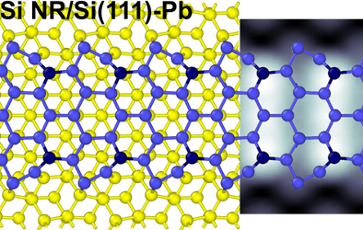
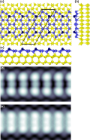
- ) surface is proposed. The model, which is based on first principles density functional theory calculations, features a deformed honeycomb structure directly bonded to the Si(111) surface underneath. Pb atoms stabilize the nanoribbons, as they passivate the uncovered substrate, thus lower the surface energy
- , the DFT calculations reveal the hexagonal structure of the Si nanoribbons, which are directly bonded to the bare Si(111) surface. However, Pb atoms play an important role in stabilizing the structure, as they lower the surface energy. The proposed structural model features a deformed honeycomb
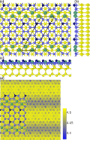
- cell forming a NR. The relative surface energies γNR(Si) and distances between BPs dBP, if available, of some representative structural models are listed in Table 1. The surface energy γNR(Si) is defined as where Etot and Ebare are total energies of the NR on the Si(111) surface and on the Si(111

![[Graphic 9]](/bjnano/content/inline/2190-4286-8-185-i11.png?max-width=637&scale=1.18182) surface. (b) Line profile...
surface. (b) Line profile...

Evaluation of preparation methods for suspended nano-objects on substrates for dimensional measurements by atomic force microscopy
Beilstein J. Nanotechnol. 2017, 8, 1774–1785, doi:10.3762/bjnano.8.179
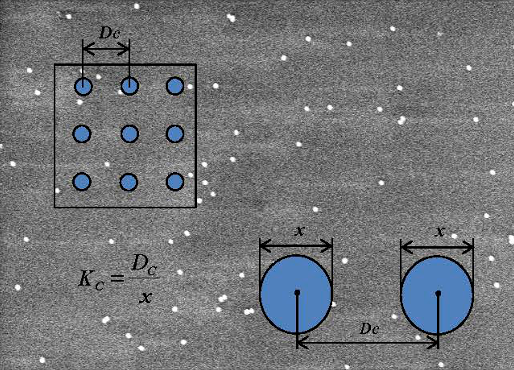
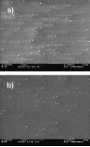
- homogenisation and dispersion, the drop-sampling, as different pipette drop volume or a remaining amount of particles in the pipette. We assumed an inaccuracy in the sampling volume of ±5 vol %. Another cause of the observed difference in drop dissemination was attributed to the different surface energy of the


Collembola cuticles and the three-phase line tension
Beilstein J. Nanotechnol. 2017, 8, 1714–1722, doi:10.3762/bjnano.8.172

- state after the early proposed equation of Cassie and Baxter (Equation 1) based on a surface-energy argument for the case of a droplet resting on a composite surface [15], where θ* is the apparent contact angle, fi is the fraction of the surface i in contact with the water drop and θi is the inherent


![[Graphic 16]](/bjnano/content/inline/2190-4286-8-172-i22.png?max-width=637&scale=1.18182) . A system with θ0 = 105°, S = 0.1 μm a...
. A system with θ0 = 105°, S = 0.1 μm a...

Process-specific mechanisms of vertically oriented graphene growth in plasmas
Beilstein J. Nanotechnol. 2017, 8, 1658–1670, doi:10.3762/bjnano.8.166
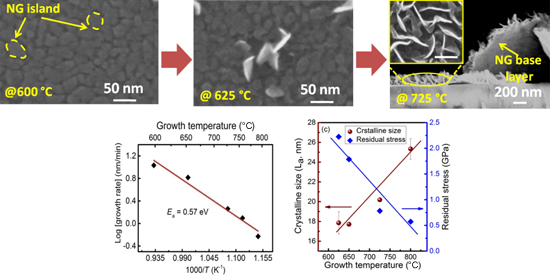
- contribute to the defect band intensity through graphite structure amorphization and growth orientation [27][47]. The substrate properties such as surface energy, thermal conductivity and atomic density play a major role in determining the structure and morphology of substrate-supported VGNs [24]. In general
- maintained constant. Hence, this result is related to the increased mobility of surface atoms such that the rates of adsorption and surface chemical reactions become higher at high temperatures; this reduces the surface energy of the substrate. Similar transformations of islands to VGNs have also been


Uptake and intracellular accumulation of diamond nanoparticles – a metabolic and cytotoxic study
Beilstein J. Nanotechnol. 2017, 8, 1649–1657, doi:10.3762/bjnano.8.165

- and surface energy of the NDs. The presence of photoluminescent N-V centers had no negative effect on cell viability in the concentrations studied (3 µg/cm2 and 30 µg/cm2). Similar to the other HPHT NDs with an oxidized surface, the NDs with N-V optical centers expressed no significant toxicity when


Parylene C as a versatile dielectric material for organic field-effect transistors
Beilstein J. Nanotechnol. 2017, 8, 1532–1545, doi:10.3762/bjnano.8.155
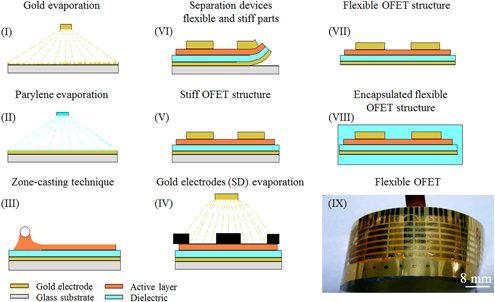
- sufficient paths for charge carrier transport [48]. Roughness is not the only surface parameter that may influence the supramolecular organization of the semiconductor film. The correlation between surface energy and charge transport in organic semiconductors has been discussed for TTF-based transistors
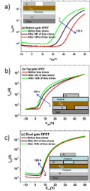
- produced on two different silicon dioxide substrates, characterized by surface energies of 51.8 and 40.1 mN/m, respectively [10]. It was found, that the average charge-carrier mobility was considerably higher (μ = 0.2 cm2/V·s ) when the SiO2 surface energy was lower. The substrate with the higher surface
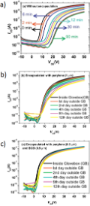
- configuration (0.02 cm2/Vs) [58]. Changes in the surface energy between Parylene C (bottom gate, top contacts) and glass with gold electrodes (top gate, bottom contacts) are the main factor responsible for variations in the organization of semiconductor molecules. Additionally, parameters such as wettability




Low uptake of silica nanoparticles in Caco-2 intestinal epithelial barriers
Beilstein J. Nanotechnol. 2017, 8, 1396–1406, doi:10.3762/bjnano.8.141
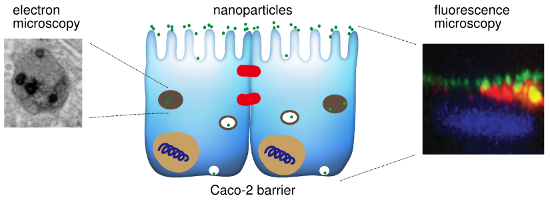
- from the surrounding environment, nanoparticle exposure was performed in the absence and presence of foetal bovine serum as a model biofluid. Indeed, it is crucial to utilize some type of biofluid, because it has been shown that in its absence the high surface energy of the bare nanoparticle surface
- association with cells due to the formation of a biomolecular corona [41] reducing the high surface energy of the bare particle surface [36][38]. We next performed time resolved experiments (Supporting Information File 1, Figure S9) where Caco-2 barriers (cultured for 21 days) were exposed to nanoparticles


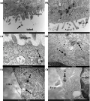

Micro- and nano-surface structures based on vapor-deposited polymers
Beilstein J. Nanotechnol. 2017, 8, 1366–1374, doi:10.3762/bjnano.8.138

- of the high surface energy of the substrate, which neutralizes the reactive monomer species that are adsorbed on the substrate surface and prevents further initiation and propagation of the polymerization reaction. For example, non-substituted p-xylylene and chlorine-substituted p-xylylene (monomers
- functionalized p-xylylenes [81]. The compromised selectivity was recently reactivated by supplying electrical energy to the (conducting) substrates. The deposition selectivity was enhanced by increasing the transition of the surface energy instead of relying on native surface energy of the substrates. In other


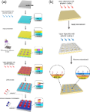
Nanotopographical control of surfaces using chemical vapor deposition processes
Beilstein J. Nanotechnol. 2017, 8, 1250–1256, doi:10.3762/bjnano.8.126

- with PPX derivatives containing nitrogen and oxygen heteroatoms, further work was conducted by Wu et al. [24]. The deposition of various PPX derivatives could be inhibited by electrically charging conducting substrates. Supplying electrical energy to the surface increases the surface energy, which
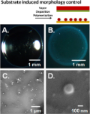
- successfully applied in order to create patterned and structured polymer coatings. Structuring both in two and three dimensions can be achieved by either using masks or taking advantage of selective deposition properties on prepatterned substrates, exploiting substrate properties such as the surface energy
- , monomer partial pressure and substrate temperature. The three-dimensional growth of pillared microstructures was found at low substrate temperatures, while at increased substrate temperatures, web-like growth occurred. The membrane formation could be spatially controlled by patterning of the surface




Preparation of thick silica coatings on carbon fibers with fine-structured silica nanotubes induced by a self-assembly process
Beilstein J. Nanotechnol. 2017, 8, 1145–1155, doi:10.3762/bjnano.8.116
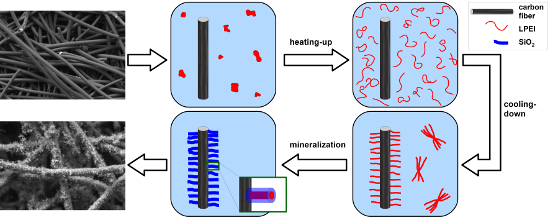
- decomposition of low-surface-energy organic components attached to the nanostructured surface [19]. As will be presented in this work, LPEI shows the ability for complexation of metal ions, e.g., copper, not only leading to a change in the morphology of the silica shell, but also incorporating metal centers


Assembly of metallic nanoparticle arrays on glass via nanoimprinting and thin-film dewetting
Beilstein J. Nanotechnol. 2017, 8, 1049–1055, doi:10.3762/bjnano.8.106

- to a previous report [11], the (100) orientation of Au particles on a Si template with inverted pyramidal pits predominates when the cubic (111) crystal planes, which have the lowest surface energy, become parallel to the facets of the pits. Therefore, we assume that the imprinted facets of the pits


Study of the correlation between sensing performance and surface morphology of inkjet-printed aqueous graphene-based chemiresistors for NO2 detection
Beilstein J. Nanotechnol. 2017, 8, 1023–1031, doi:10.3762/bjnano.8.103

- graphene ink-Si/SiO2 system was very poor inducing a not continuous and not controlled deposition. This is expected since the measured surface energy of the substrate (30.95 mN/m) is comparable with the surface tension of the solution (26.30 mN/m). Hence, an UV–ozone treatment of the substrate was
- necessary to increase its surface energy, allowing for a more uniform deposition of the material. Nonetheless, the macroscopic aspect of the film printed on the treated substrate looks different from the others, with the material distributed over a larger area (Figure 2). In addition, the Si/SiO2-based
- device has not reached exactly the same base resistance value of the other two samples because the drying process redistributes the graphitic material differently, depending on the surface energy but primarily on the roughness of the substrate. All that said, the characterized device (D-SO) has been


Vapor-phase-synthesized fluoroacrylate polymer thin films: thermal stability and structural properties
Beilstein J. Nanotechnol. 2017, 8, 933–942, doi:10.3762/bjnano.8.95

- . Keywords: EGDMA; iCVD; in situ; PFDA; spectroscopic ellipsometry; temperature dependent; X-ray diffraction; Introduction Fluoropolymers, such as polytetrafluoroethylene, are interesting for a variety of different applications due to their low surface energy. The resultant hydrophobic and oleophobic
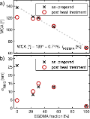
- homopolymer. This behavior reflects the fact that thermal transitions become weaker with increasing EGDMA content and are fully absent for the p-EGDMA homopolymer (in the investigated temperature range). As the WCA (i.e., the surface energy) displayed little dependence on the EGDMA content (below 40% fraction




Investigation of growth dynamics of carbon nanotubes
Beilstein J. Nanotechnol. 2017, 8, 826–856, doi:10.3762/bjnano.8.85
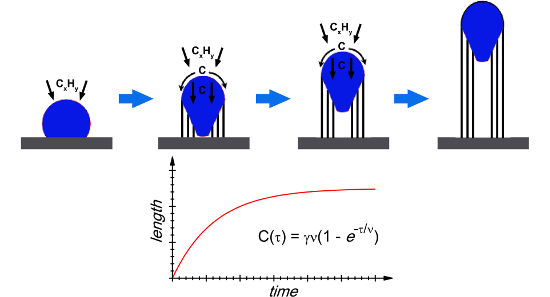
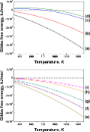
- metal, ΔHfusion is the latent heat of fusion, ρs and ρl are the densities of solid and liquid metal, respectively, σsl is the solid–liquid interfacial energy and σl is the surface energy of the liquid [50][51]. Figure 2 demonstrates the melting temperature of iron, nickel, gold and silver particles as a
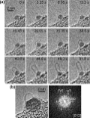
- catalytic particles on Ta had a hemispherical shape, whereas the particles on SiO2 had a bead shape. The contact angles of the Fe catalyst particles with the SiO2 and Ta substrates revealed that the tip-growth was observed when the surface energy of the bare substrate was smaller than that of the catalyst






Vapor deposition routes to conformal polymer thin films
Beilstein J. Nanotechnol. 2017, 8, 723–735, doi:10.3762/bjnano.8.76

- porous materials, including membranes, foams, and textiles, or irregular surface geometries, as well as for encapsulating fibers, nanowires, or particles [1]. For example, tailoring the surface energy of the pore walls of a separation membrane without obstructing the pore can enhance the passage of the




Synthesis of graphene–transition metal oxide hybrid nanoparticles and their application in various fields
Beilstein J. Nanotechnol. 2017, 8, 688–714, doi:10.3762/bjnano.8.74
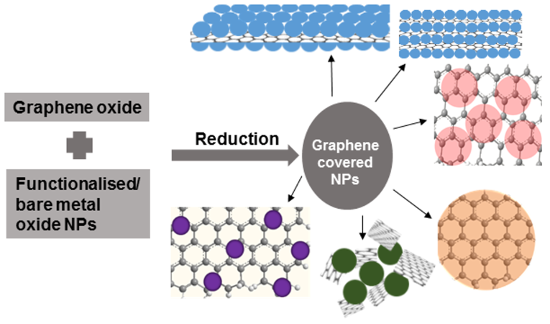
- nanocubes, show higher catalytic activity towards OER in alkaline medium. This is due to the presence of the low surface energy crystal plane of Co3O4 NPs and their synergistic interaction between N-doped because graphene helps to tune the properties of the OER electrocatalyst. Yang et al. fabricated






Modeling of the growth of GaAs–AlGaAs core–shell nanowires
Beilstein J. Nanotechnol. 2017, 8, 506–513, doi:10.3762/bjnano.8.54

- understanding of the mechanisms leading to these heterostructures could be very helpful in controlling the formation of these core–shell nanowires. There are two issues that need to be understood. One is the mechanism responsible for the morphological evolution of the shells. The surface energy density on the
- unit normal vector of the i-th facet and γ(ni) is the surface energy density on the i-th facet. Thus, if there is deposition, the mass conservation around the surface gives the following equations: where ui is the normal velocity of the i-th facet, is the surface diffusion flux along i-th facet and μi
- the surface from below. Similar to the pure-material model, the chemical potentials can be related to the surface energy density (γ) and bulk energy density (gα) in its average sense, as follows: where is the average surface energy density of the i-th facet. In addition, the advancing surface leaves