Search results
Search for "biomedical" in Full Text gives 395 result(s) in Beilstein Journal of Nanotechnology. Showing first 200.
Recent advances in nanoarchitectures of monocrystalline coordination polymers through confined assembly
Beilstein J. Nanotechnol. 2022, 13, 763–777, doi:10.3762/bjnano.13.67

- discuss the properties of the coordination polymer single crystals as well as their performance in energy, environmental, and biomedical applications. Keywords: applications; assembly; coordination polymer; metal-organic frameworks; nanoarchitectonics; Introduction Coordination polymers are hybrid
- +molecules’@crystal, and micro–meso–macroporous crystals. The physiochemical properties of the nanoarchitectures were changed significantly compared with pure coordination polymers, making the coordination polymer suitable for applications such as batteries, sensors, biomedical applications. When the





Zinc oxide nanostructures for fluorescence and Raman signal enhancement: a review
Beilstein J. Nanotechnol. 2022, 13, 472–490, doi:10.3762/bjnano.13.40
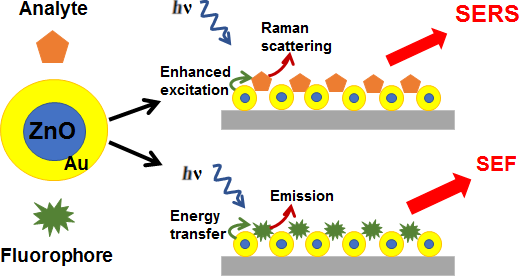
- growing demand for metal–semiconductor-based nanocomposites for industrial and biomedical applications, there is a critical need to develop more facile and versatile synthetic routes for obtaining these nanocomposites [39]. Traditional chemical synthesis methods used for developing semiconductor–noble
- fluorescence based on ZnO nanoscaled films is different from the metal enhancement. The use of ZnO nanosubstrates for enhanced biomedical detection has received great attention due to their optical properties and other great advantages. Early detection of disease markers and the measurement of specific protein
- were successfully used for the detection of relevant biological and biomedical proteins, such as bovine serum albumin and streptavidin, as well as to study the protein–protein interactions by enhanced fluorescence detection [117]. The ZnO nanoplatforms showed several key advantages, such as enhanced




Tubular glassy carbon microneedles with fullerene-like tips for biomedical applications
Beilstein J. Nanotechnol. 2022, 13, 455–461, doi:10.3762/bjnano.13.38
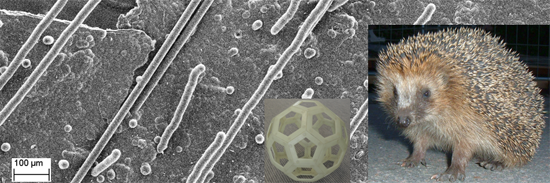
- replacement biomedical material for metallic needles in the field of neural engineering and as acupuncture needles. Keywords: biomedical; glassy carbon; microneedle; neural engineering; COST Action EsSENce CA19118; Introduction Glassy carbon, also known as “glass-like carbon” or “vitreous carbon” is an
- procedure utilising catalytic methane pyrolysis to fabricate glassy carbon microneedle electrodes for biomedical applications. Results and Discussion Growth of glassy carbon microneedles Previously, glassy carbon microneedles have been made by the pyrolysis of commercially available polymers. The polymer
- characterization techniques such as XPS and TEM. Recently, V. Uskoković [30] has pointed out that although glassy carbons have seen numerous application in the last fifty years, biomedical applications have been sporadic. I. Schreiver et al. [31] have shown that allergic reactions can be triggered by nickel and


A non-enzymatic electrochemical hydrogen peroxide sensor based on copper oxide nanostructures
Beilstein J. Nanotechnol. 2022, 13, 424–436, doi:10.3762/bjnano.13.35

- qualitative detection of H2O2 in real samples, as well as for the quantitative determination of its concentration. Keywords: copper oxide; electrochemical sensor; hydrogen peroxide; nanostructures; Introduction Hydrogen peroxide, a strong oxidant and an essential intermediate product in many biomedical




Micro- and nanotechnology in biomedical engineering for cartilage tissue regeneration in osteoarthritis
Beilstein J. Nanotechnol. 2022, 13, 363–389, doi:10.3762/bjnano.13.31
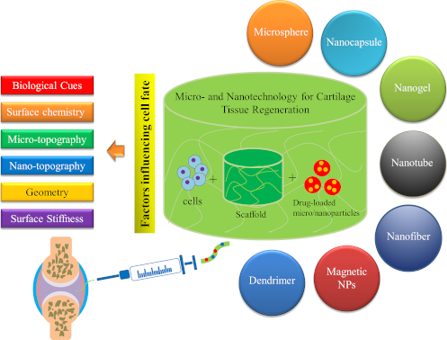
- candidates for biomedical applications (Table 1). Collagen fibril and fibrous proteins are naturally occurring nanofibers whose fiber diameters range between 50 and 150 nm, depending on tissue type and function. Various techniques to fabricate nanofibers include 3D printing, molecular self-assembly
- ratio. CNTs were discovered in 1991 by Sumio Iijima [120] and have been widely used in different biomedical areas including cellular imaging [121], biosensor development [122], bioactive molecular delivery [123], and, in particular, TE. To provide scaffolds with improved mechanical strength and
- TE, there are other nanoscale tube-based compounds, which can potentially be used for biomedical purposes. Among these, silica nanotubes have the greatest potential for integration in biomaterials because of their biocompatibility, photoluminescence activity, and ease of surface modification. Silica


Coordination-assembled myricetin nanoarchitectonics for sustainably scavenging free radicals
Beilstein J. Nanotechnol. 2022, 13, 284–291, doi:10.3762/bjnano.13.23

- signal pathways and, thus, of sustainably scavenging radicals. However, Myr is poorly soluble in water, which limits its bioavailability for biomedical applications, and even its clinical therapeutic potential. The antioxidant peptide glutathione (GSH) plays a role as antioxidant in cells and possesses
- phosphopeptides, exhibited huge therapeutic potential in antioxidant treatments [11][12][13]. Nevertheless, a plenty of disadvantages restrict biomedical applications, namely low biocompatibility of the metal-based nanomaterials, low bioavailability of hydrophobic small-molecule compounds, and easy degradation of
- ]. However, low loading efficiency, systemic toxicity, and tedious preparation processes hinder biomedical applications. Myricetin (Myr), a well-known natural flavonoid, has drawn wide attention because of its high antioxidant, anti-inflammatory, antimicrobial, and anticancer efficacy [16]. Myr is capable of


Systematic studies into uniform synthetic protein nanoparticles
Beilstein J. Nanotechnol. 2022, 13, 274–283, doi:10.3762/bjnano.13.22
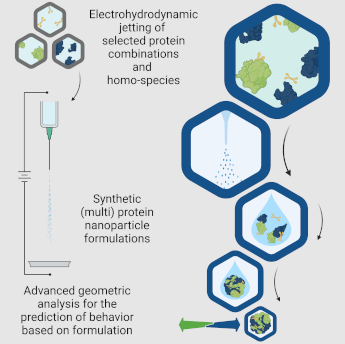
- Nahal Habibi Ava Mauser Jeffery E. Raymond Joerg Lahann Biointerfaces Institute, University of Michigan, Ann Arbor, MI, 48109, USA Department of Chemical Engineering, University of Michigan, Ann Arbor, MI, 48109, USA Department of Biomedical Engineering, University of Michigan, Ann Arbor, MI
- nanoparticle platforms for drug delivery transition from novelties to foundational biomedical technologies [1][2][3], it is critical to augment the existing strategies with precisely engineered nanocarriers that are better equipped to maneuver the host of barriers that exist in clinical translation [4][5


Photothermal ablation of murine melanomas by Fe3O4 nanoparticle clusters
Beilstein J. Nanotechnol. 2022, 13, 255–264, doi:10.3762/bjnano.13.20
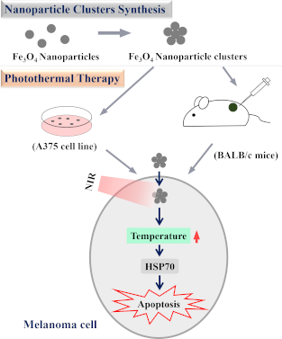
- nanomaterial that has received considerable attention is Fe3O4 core-based nanoparticles, which have been approved by the Food and Drug Administration (FDA) as safe biomaterial with no long-term toxicity [6][7]. The superparamagnetic properties make them ideally suited for many biomedical applications, such as
- , whereas exposure to and subsequent absorption of NIR light by iron oxide nanoparticles promotes NIR-induced hyperthermia [10]. Although magnetic hyperthermia has been widely used in biomedical research, it is subject to several limitations such as the need for sophisticated equipment, cellular confinement


Engineered titania nanomaterials in advanced clinical applications
Beilstein J. Nanotechnol. 2022, 13, 201–218, doi:10.3762/bjnano.13.15
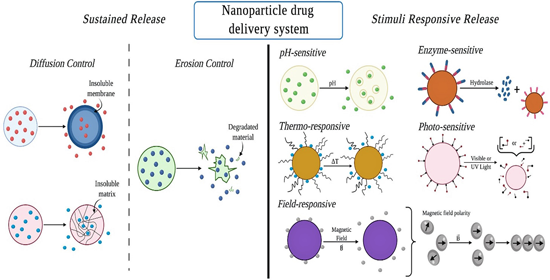
- , and low toxicity [1]. TiO2 nanomaterials can be applied in a host of applications, including biomedical, optical, electronic, mechanical, and chemical fields, amongst other scenarios [2]. The application of titania nanomaterials in the pharmaceutical field has brought revolutionary changes by
- features for a material to be used in the biomedical area. In particular, an appropriate beneficial response should be generated with as low as possible undesirable local or systemic effects in the recipient. To improve the biological performance, TiO2 nanomaterials are often processed, surface
- contact angle, which is reported to be favorable for biomedical applications. Likewise, Gatoo et al. proposed that amorphous titania materials are hydrophilic due to the presence of a higher concentration of hydroxy groups upon their surface and the high polarity of the O–Ti–O bond [23]. The surface


Bacterial safety study of the production process of hemoglobin-based oxygen carriers
Beilstein J. Nanotechnol. 2022, 13, 114–126, doi:10.3762/bjnano.13.8
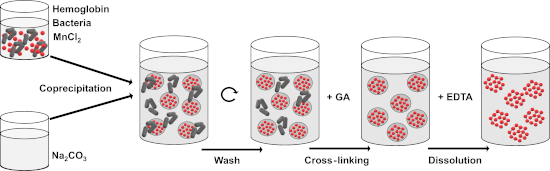
- wide range of biomedical applications, depending on the biopolymer used. The application of HbMP as artificial oxygen carriers came into focus. Initial preclinical studies yielded promising results. In these particles (i.e., HbMP), hemoglobin is used for particle production and EDTA and glutaraldehyde



Biocompatibility and cytotoxicity in vitro of surface-functionalized drug-loaded spinel ferrite nanoparticles
Beilstein J. Nanotechnol. 2021, 12, 1339–1364, doi:10.3762/bjnano.12.99
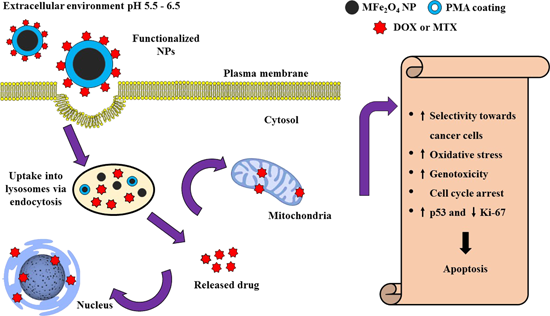
- Sadaf Mushtaq Khuram Shahzad Tariq Saeed Anwar Ul-Hamid Bilal Haider Abbasi Nafees Ahmad Waqas Khalid Muhammad Atif Zulqurnain Ali Rashda Abbasi Institute of Biomedical and Genetic Engineering, G-9/1, Islamabad, Pakistan Department of Biotechnology, Quaid-i-Azam University, Islamabad, Pakistan
- penetration and hemocompatibility which can be useful for biomedical applications [12][17]. Furthermore, in order to be exploited in biomedical applications, NPs need to fulfill certain criteria which include water solubility, excellent colloidal stability, biocompatibility, and high saturation magnetization






Identifying diverse metal oxide nanomaterials with lethal effects on embryonic zebrafish using machine learning
Beilstein J. Nanotechnol. 2021, 12, 1297–1325, doi:10.3762/bjnano.12.97
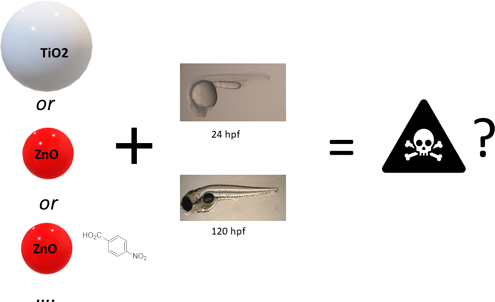
- various biomedical applications [10][11][12], as well as applications in other areas, such as in agriculture [13]. Nonetheless, the possibility that novel metal oxide ENMs developed for applications, such as biomedical applications, could be harmful to human health [8][9], means that there is a real need


Self-assembly of amino acids toward functional biomaterials
Beilstein J. Nanotechnol. 2021, 12, 1140–1150, doi:10.3762/bjnano.12.85
- structure and functional reorganization. Peptides and proteins are attractive candidates for functional biomedical materials [10] due to their extensive existence in nature, easy access, and good biocompatibility [11]. Self-assembly refers to the selective and spontaneous formation of one or more well
- biomedical science. The nanostructure of amino acids can be a good substitute for therapeutic delivery due to its good biocompatibility, functionalization, and ease of design/synthesis. Self-assembled nanostructures have become smart tools in the biomedical field, as demonstrated by the ability of self
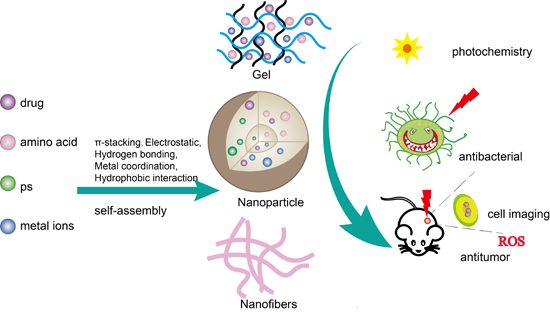
- these nanostructures. Therefore, as a new strategy, amino acid self-assembly needs further research to explore the biomimetic and biomedical applications of micro- and nanomaterials. Schematic diagram of amino acid regulatory self-assembly (amino acid–drugs, amino acid–photosensitizers, amino acid–metal

An overview of microneedle applications, materials, and fabrication methods
Beilstein J. Nanotechnol. 2021, 12, 1034–1046, doi:10.3762/bjnano.12.77
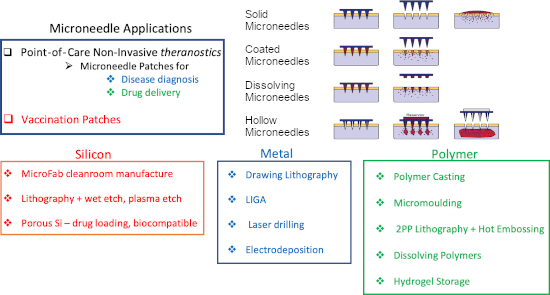
- of microneedle patches to the skin produces microsized pathways for transporting molecules, including biomedical antigens and cells. There have been many studies of microneedles for applications such as drawing blood and interstitial fluid (ISF) or delivering low and high molecular weight
- °, and 15° and an inner diameter of 60 μm for blood extraction [104]. (c) Hollow nickel microneedles with cross sectional views [105]. Figure 5a,b are from [104] and were reprinted by permission from Springer Nature from the journal Biomedical Microdevices (“An optimized hollow microneedle for minimally
- invasive blood extraction” by Li, C. G.; Lee, C. Y.; Lee, K.; Jung, H.), Copyright 2012 Springer Nature. This content is not subject to CC BY 4.0. Figure 5c is from [105] and was reprinted by permission from Springer Nature from the journal Biomedical Microdevices (“A minimally invasive micro sampler for


The role of deep eutectic solvents and carrageenan in synthesizing biocompatible anisotropic metal nanoparticles
Beilstein J. Nanotechnol. 2021, 12, 924–938, doi:10.3762/bjnano.12.69
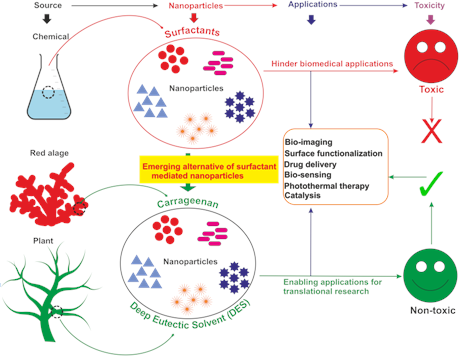
- variations and flexibility of tuning the size and shape of the metal nanoparticles at the nanoscale made them promising candidates for biomedical applications such as therapeutics, diagnostics, and drug delivery. However, safety and risk assessment of the nanomaterials for clinical purposes are yet to be
- utilizing safe nanomaterials for advanced biomedical and clinical applications. Keywords: anisotropic nanoparticles; carrageenan; cytotoxicity; eutectic solvents; surfactants; Review Introduction Plasmonic metals such as gold and silver, upon achieving nanoscale dimensions, exhibit unusual physicochemical
- biocompatible nature. Green synthesis of metal nanoparticles for biomedical applications has gained momentum recently due to their inherent nontoxicity. Although they are biocompatible, these metal nanoparticles lack monodispersity, high yield, and controlled morphology, which are essential criteria for the


The role of convolutional neural networks in scanning probe microscopy: a review
Beilstein J. Nanotechnol. 2021, 12, 878–901, doi:10.3762/bjnano.12.66

- continuous high-speed and blur-free bright-field and two-color fluorescence image acquisition of cells flowing at a rate of 1 m/s [106]. An outstanding CNN for image segmentation is U-Net, developed mainly for biomedical image segmentation [107]. It leads to precise and fast segmentation of images and








Comprehensive review on ultrasound-responsive theranostic nanomaterials: mechanisms, structures and medical applications
Beilstein J. Nanotechnol. 2021, 12, 808–862, doi:10.3762/bjnano.12.64
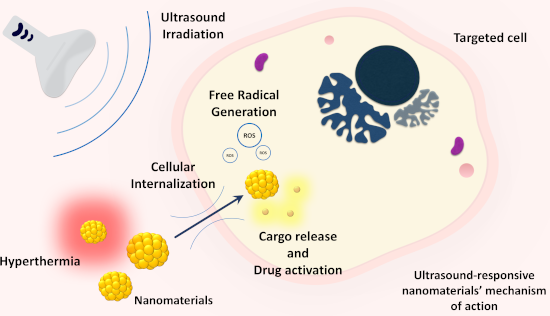
- biomedical interest. In biomedical ultrasound imaging, one has to deal with the radiation force exerted by pulsating gas bubbles and interactions with the components of blood plasma. Changes in the size of a droplet, the distance between the particles, the density of the drop, and the US frequency all affect
- acoustic waves, reflection from inclusions, walls or other interfaces, and spatial variations in the propagation velocity [101]. The biomedical significance of the ARF effect was first demonstrated in 1971 by Pond, Woodward, and Dyson, who discovered that red blood cells in the blood vessels in vivo could
- be collected in standing acoustic waves in a band the size of half a wavelength [101][102]. Microbubbles can be utilized in biomedical applications through synergistic effects they undergo with radiation force effects, both as a contrast agent and as a cargo carrier [103][104][105][106][107][108


Recent progress in actuation technologies of micro/nanorobots
Beilstein J. Nanotechnol. 2021, 12, 756–765, doi:10.3762/bjnano.12.59
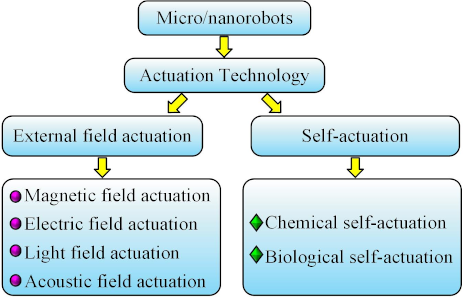
- biomedical fields, such as medical diagnosis, nanoscale surgery, and targeted therapy. In this article, recent progress on micro/nanorobots is reviewed regarding actuation technologies. First, the different actuation mechanisms are divided into two types, external field actuation and self-actuation. Then, a
- this, the new microrobot is expected to be used in targeted drug delivery and other biomedical fields. Si et al. [27] proposed a theoretical concept of a nanorobot consisting of a nanoparticle and four single-stranded DNAs placed on a quad-nanopore device for motion control. When an electric field is
- the speed of the nanoswimmer can be adjusted by the light intensity. Under a laser intensity of 5 W·cm−2, the nanoswimmer can reach a speed of 31.22 μm/s. The potential of this nanoswimmer in biomedical applications and active soft materials provides support for future research. Sato et al. [32


Recent progress in magnetic applications for micro- and nanorobots
Beilstein J. Nanotechnol. 2021, 12, 744–755, doi:10.3762/bjnano.12.58
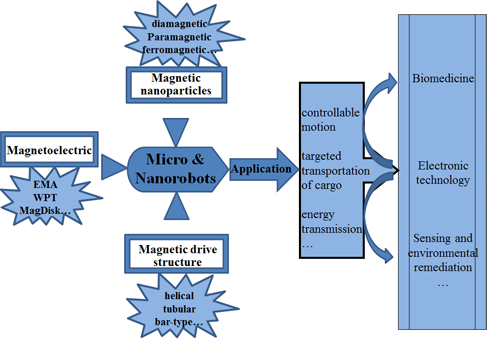
- 500 nm through the lifter magnet, a design suitable for biomedical applications. Magnetic MNRs are a major topic in current research. Researchers continue to explore and apply properties of diamagnetic nanoparticles. Cho et al. [34] carried out research on diamagnetic nanoparticles. They analyzed a
- in low-amplitude rotating magnetic fields. This design represents a further development of miniaturized magnetoelectric platforms for use in the biomedical field. Following Chen et al. [76], Yang et al. [77] developed an automated microrobot platform that could quickly detect toxins. Their team
- ) and (b) adapted from [83], X. Wang et al., “MOFBOTS: Metal-Organic‐Framework‐Based Biomedical Microrobots”, Adv. Mater., with permission from John Wiley and Sons. Copyright © 2019 WILEY-VCH Verlag GmbH & Co. KGaA, Weinheim. This content is not subject to CC BY 4.0. (a) Tubular, (b) helical, and (c


Fate and transformation of silver nanoparticles in different biological conditions
Beilstein J. Nanotechnol. 2021, 12, 665–679, doi:10.3762/bjnano.12.53

- , which listed more than 100 AgNP-containing food products [4]. The biomedical use of AgNPs represents the largest proportion of the market share [1] encompassing antimicrobial coatings on medical devices (catheters, stents, implants), wound dressings, targeted drug delivery, cancer therapy and
- crucial step toward safe biomedical applications. The biotransformation of AgNPs in the human body results in loss of integrity of AgNPs. Changes in AgNPs include aggregation, dissolution, and degradation which lead to the de novo formation of crystals in different tissues (Figure 9). Initially, primary
- possible toxic effects following the biomedical applications. Experimental Chemicals All chemicals were purchased from Merck (Darmstadt, Germany) unless otherwise specified. Ultrapure water (UPW), characterized with conductivity of 18.2 MΩ·cm, was obtained from a GenPure UltraPure water system (GenPure UV




The preparation temperature influences the physicochemical nature and activity of nanoceria
Beilstein J. Nanotechnol. 2021, 12, 525–540, doi:10.3762/bjnano.12.43
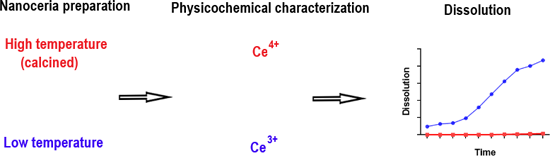
- as the beneficial biological effects and human diseases that could potentially be treated [11], and the physicochemical properties that mediate the effects of nanoceria, its biochemical properties, biosynthesis, and its major biomedical applications, including biosensors [12]. Additional applications




A review on nanostructured silver as a basic ingredient in medicine: physicochemical parameters and characterization
Beilstein J. Nanotechnol. 2021, 12, 440–461, doi:10.3762/bjnano.12.36

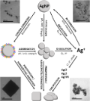
- , triangular plates, hexagonal plates, pyramids, and cubes depending on the synthesis method used, as depicted in Figure 1. Moreover, they all have specific characteristics, both from the physicochemical and biomedical application points of view [33]. The unique chemical and physical properties of AgNPs are
- biomedical applications, such as in therapies that involve magnetic manipulation with photothermal effect promoting a localized bactericidal activity [42][47][48][49]. Properties and oxidative dissolution The oxidative dissolution of AgNPs occurs by the oxidation of silver to silver oxide (Ag2O), with
- nm, as depicted in Figure 5C [65][66]. Biological applications of AgNPs Due to their unique properties, AgNPs have been widely used in household utensils, in food storage, and in various biological and biomedical applications [33]. Several studies have demonstrated the antimicrobial power of AgNPs


Doxorubicin-loaded gold nanorods: a multifunctional chemo-photothermal nanoplatform for cancer management
Beilstein J. Nanotechnol. 2021, 12, 295–303, doi:10.3762/bjnano.12.24
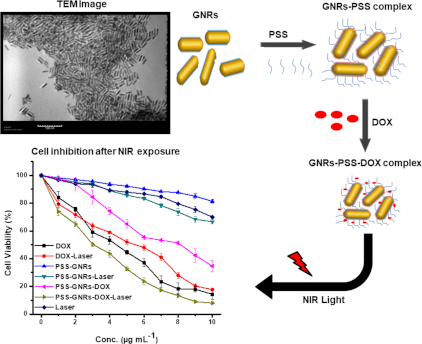
- properties such as significant absorption or scattering in the visible and near-infrared (NIR) regions, tunable aspect ratio, biocompatibility, fluorescence properties, and the ease of biofunctionalization, which makes them ideal in biomedical applications [13]. Gold-based nanomaterials (i.e., nanospheres


Characterization, bio-uptake and toxicity of polymer-coated silver nanoparticles and their interaction with human peripheral blood mononuclear cells
Beilstein J. Nanotechnol. 2021, 12, 282–294, doi:10.3762/bjnano.12.23

- applications [2]. NPs are present in numerous commercial products such as cosmetics, electronics, and textiles. Also, they are widely used in industry, including various biomedical and drug-delivery applications for the treatment of diseases [3][4][5][6]. Silver nanoparticles (AgNPs) are one of the most



Differences in surface chemistry of iron oxide nanoparticles result in different routes of internalization
Beilstein J. Nanotechnol. 2021, 12, 270–281, doi:10.3762/bjnano.12.22

- Barbora Svitkova Vlasta Zavisova Veronika Nemethova Martina Koneracka Miroslava Kretova Filip Razga Monika Ursinyova Alena Gabelova Cancer Research Institute, Biomedical Research Center of the Slovak Academy of Sciences, Dubravska cesta 9, 845 05 Bratislava, Slovakia Institute of Experimental
- easily manufactured and biocompatible. Also, there are physiologically well tolerated as iron is an essential nutrient for almost all life forms [6]. Iron oxide nanoparticles are the only one FDA-approved magnetic nanoparticles for biomedical application (Resovist). Efficient cellular internalization of
- carrier, are the most frequently used materials for biomedical applications [17][18][19][20]. The impact of the surface chemistry on the mechanism of nanoparticle uptake has not been sufficiently clarified yet. MNPs with comparable basic physicochemical characteristics (e.g., particle size, surface charge