


Search results
Search for "morphology" in Full Text gives 1288 result(s) in Beilstein Journal of Nanotechnology. Showing first 200.
Characterization of ZnO nanoparticles synthesized using probiotic Lactiplantibacillus plantarum GP258
Beilstein J. Nanotechnol. 2025, 16, 78–89, doi:10.3762/bjnano.16.8
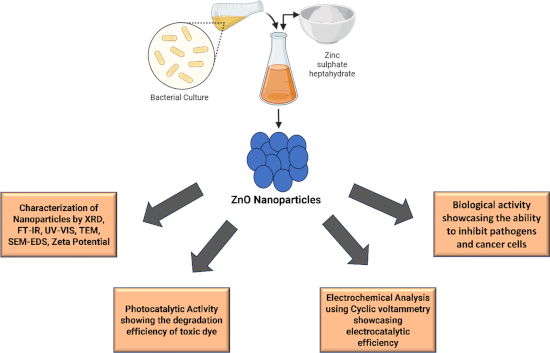
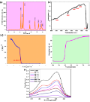
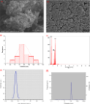
- measurements were employed to analyze the morphology, dimensions, and elemental composition of the generated nanoparticles. The experimental outcomes confirmed the presence of hexagonal wurtzite-structured ZnO NPs with an average size of 10 nm. The colloidal system demonstrated excellent stability with a zeta
- ZnO NPs confirms the XRD results, that is, the hexagonal wurtzite structure (Figure 3). SEM and EDX analysis SEM was used to analyze the surface morphology of a modified nanocomposite film, and the image displays a consistent coverage of a web-like structure. Close-up views revealed a crumpled and
- . Later, bacterial colonies were screened, and pure cultures were maintained at 4 °C. A comprehensive analytical scheme was adopted to identify the most promising bacterial isolates, that is, Gram’s reaction, morphology, catalase activity, endospore staining, and carbohydrate fermentation profiling using



Instance maps as an organising concept for complex experimental workflows as demonstrated for (nano)material safety research
Beilstein J. Nanotechnol. 2025, 16, 57–77, doi:10.3762/bjnano.16.7
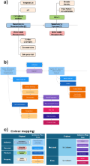
- of the material’s morphology, as well as the nature of the bonds between the surface and core. This level of detail can only be gained by understanding how the nanomaterial is synthesised, which is where instance maps will be a critical tool. Example 2: Monitoring nanomaterial transformation in


Bioinspired nanofilament coatings for scale reduction on steel
Beilstein J. Nanotechnol. 2025, 16, 25–34, doi:10.3762/bjnano.16.3
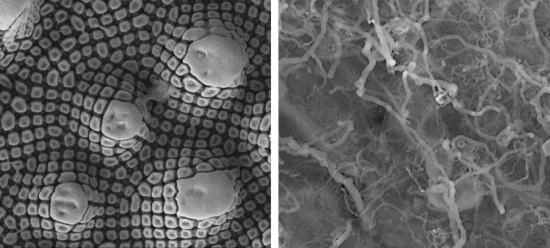
- – we can conclude that nanofilaments can be deposited on steel surfaces and that the grown structures render the steel surface super-hydrophobic [24]. The morphology and function of the SNF steel coatings remain intact during the shear stress test. The SEM image of the SNF coating after shear exposure
- silicone nanofilaments on steel surfaces, a novel application that has not been previously reported. The results indicate that SNF coatings can effectively render steel surfaces super-hydrophobic, as evidenced by high contact angles, high droplet mobility, and stable morphology under shear stress and


Attempts to preserve and visualize protein corona on the surface of biological nanoparticles in blood serum using photomodification
Beilstein J. Nanotechnol. 2024, 15, 1654–1666, doi:10.3762/bjnano.15.130
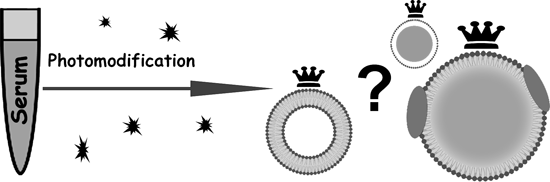
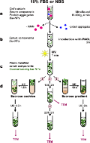
- data regarding their size and morphology [31][32][33][34]. The experiments on isolating bio-NPs from photomodified FBS and NBS did not achieve the goal to isolate protein corona-bearing bio-NPs. However, we revealed a few interesting facts regarding the interaction of bio-NPs with sucrose, as well as



Fabrication of hafnium-based nanoparticles and nanostructures using picosecond laser ablation
Beilstein J. Nanotechnol. 2024, 15, 1639–1653, doi:10.3762/bjnano.15.129
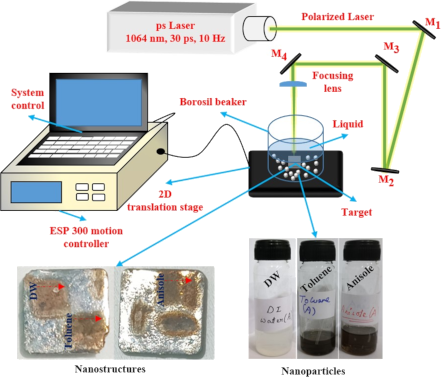
- size and morphology [1]. Recently, interest has risen regarding synthesis and study of Hf-based NPs. Depending on the morphology, chemical composition, and quantum confinement effects, NPs can exhibit novel properties, making them applicable for large-spectrum usage [12][13]. Thus, synthesizing the
- desired morphology is essential for a given application. Generally, practical techniques for obtaining nanomaterials are sol–gel method, chemical and physical vapour deposition, hydrothermal method, ball milling, grinding, lithography, etching, and laser ablation [14][15][16][17][18]. The morphology
- target, from a single pure medium to a mixture of liquid media, with a range of target types such as powder, pellets, and well-defined structures and shapes [16][20]. The choice of the liquid medium can significantly affect morphology and chemical composition of the obtained NPs. The high energy of the




Natural nanofibers embedded in the seed mucilage envelope: composite hydrogels with specific adhesive and frictional properties
Beilstein J. Nanotechnol. 2024, 15, 1603–1618, doi:10.3762/bjnano.15.126
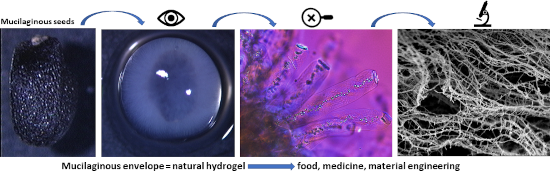
- Agnieszka Kreitschitz Stanislav N. Gorb University of Wrocław, Department of Plant Developmental Biology, ul. Kanonia 6/8, 50-328 Wrocław, Poland Kiel University, Department of Functional Morphology and Biomechanics, Am Botanischen Garten 9, D-24098 Kiel, Germany 10.3762/bjnano.15.126 Abstract


Liver-targeting iron oxide nanoparticles and their complexes with plant extracts for biocompatibility
Beilstein J. Nanotechnol. 2024, 15, 1593–1602, doi:10.3762/bjnano.15.125
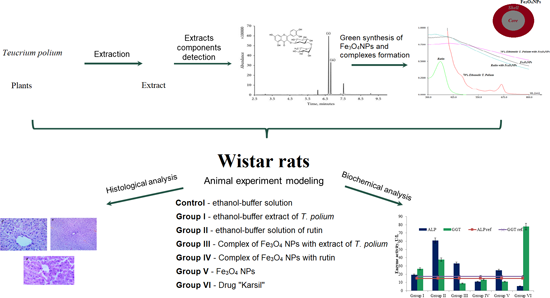
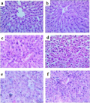
- correlates with literature data on the peroxidase-like enzymatic properties exhibited by Fe3O4 NPs, which is reflected in the preservation of liver tissue morphology, but accompanied by changes in liver function biochemical markers (Figures 1–3, Table 1 and Table 2). Considering the duration of exposure and
- Sonic-150W, MRC, Israel) at 80% power with an on/off cycle of 5/4 s. During the synthesis of the nanoparticles, a black precipitate with paramagnetic properties formed. Nature and morphology of this precipitate were determined using electron diffraction and transmission electron microscopy (TEM, LEO-912


Facile synthesis of size-tunable L-carnosine-capped silver nanoparticles and their role in metal ion sensing and catalytic degradation of p-nitrophenol
Beilstein J. Nanotechnol. 2024, 15, 1576–1592, doi:10.3762/bjnano.15.124
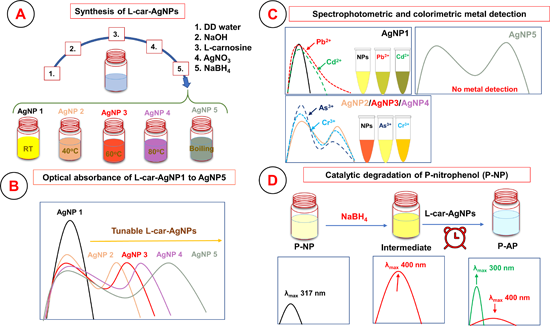
- , Netherlands) for a detailed examination of size and morphology. The crystalline structure of ʟ-car-AgNP1 was determined using X-ray diffraction (XRD, Rigaku Smartlab, Japan) within a 2θ range of 35° to 80°. Nanoparticle solutions were air-dried, and the obtained nanopowders (20 mg) were used for measurements
- pristine silver nanospheres upon interaction. The appearance of the redshifted peak might be due to charge transfer or aggregation [7]. An increased nanoparticle size leads to a further redshift of the plasmonic peak [26]. Hydrodynamic size, zeta potential, and morphology of the ʟ-car-AgNPs are shown in
- towards the positively charged surfaces of silver. The morphology and size of silver nanoparticles capped with ʟ-carnosine were measured using TEM (Figure 3b–f). The TEM micrograph of ʟ-car-AgNP1 (Figure 3b) indicates the formation of spherical particles with high monodispersity and is consistent with the




Green synthesis of silver nanoparticles derived from algae and their larvicidal properties to control Aedes aegypti
Beilstein J. Nanotechnol. 2024, 15, 1566–1575, doi:10.3762/bjnano.15.123
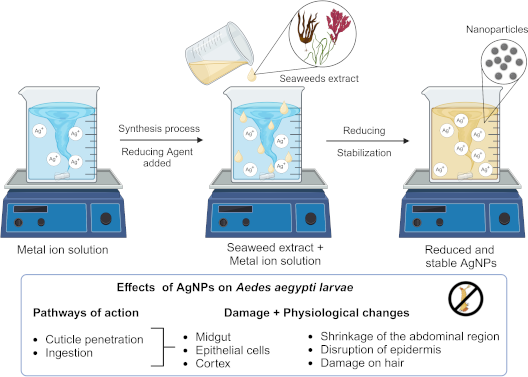
- ][43][44][45][46]. These bioactive compounds associated with metallic nanoparticles increase the specific delivery of drugs to the target and, thus, reduce the required amount of active compounds [47]. In addition, the control of particle size and morphology is essential for applications in


Ultrablack color in velvet ant cuticle
Beilstein J. Nanotechnol. 2024, 15, 1554–1565, doi:10.3762/bjnano.15.122
- Vinicius Marques Lopez Wencke Krings Juliana Reis Machado Stanislav Gorb Rhainer Guillermo-Ferreira Lestes Lab, Federal University of Triângulo Mineiro, Uberaba, Minas Gerais, Brazil Department of Functional Morphology and Biomechanics, Kiel University, Am Botanischen Garten 1–9, 24098 Kiel
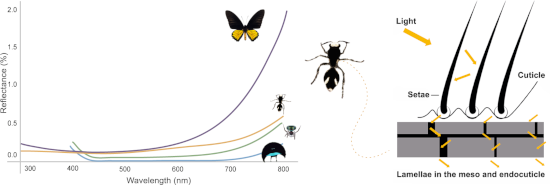
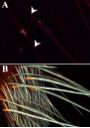
- spectroscopy, we conducted a comprehensive analysis of the cuticle to elucidate its unique optical properties. SEM imaging provided a detailed surface morphology, while TEM provided insights into the internal structure. CLSM showed that the cuticle exhibits no autofluorescence. Our findings reveal a highly
- different magnifications, starting at 15,000× and adjusted as needed. Transmission electron microscopy (TEM) TEM was utilized to examine the internal cuticle morphology at high resolution at a nanometer scale. The apparatus was configured to operate at 50 kV with a minimum vacuum column pressure of 5.10



The round-robin approach applied to nanoinformatics: consensus prediction of nanomaterials zeta potential
Beilstein J. Nanotechnol. 2024, 15, 1536–1553, doi:10.3762/bjnano.15.121
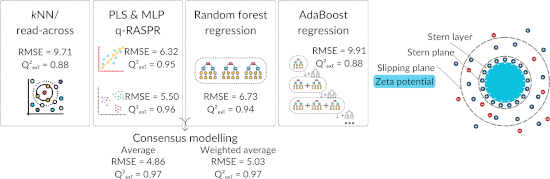
- [36], the following four were included in this study because of the completeness of the data (absence of data gaps): the NMs’ core chemistry, coating, morphology, and hydrodynamic diameter measured using dynamic light scattering (DLS). The ZP of the NMs was measured in water (pH 6.5–8.5). To enrich


Electrochemical nanostructured CuBTC/FeBTC MOF composite sensor for enrofloxacin detection
Beilstein J. Nanotechnol. 2024, 15, 1522–1535, doi:10.3762/bjnano.15.120
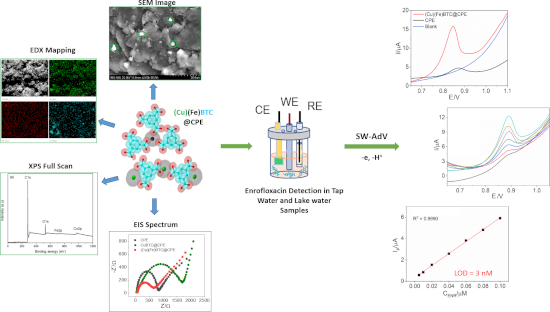
- mixture of CuBTC and FeBTC to modify carbon paste electrodes for the determination of enrofloxacin. The characterization and properties of the fabricated electrode, including molecular structure, morphology, and electrochemical characteristics, were thoroughly investigated using various analytical
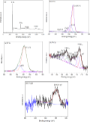
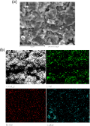
- 2e), the binding energy peak of Cu 2p3/2 (934.9 eV) can be attributed to Cu2+. Characterization of (Cu)(Fe)BTC@CPE Morphology The TEM image of the (Cu)(Fe)BTC sample shows unevenly distributed particles with different particle sizes fluctuating in the range of 40 to 100 nm (Figure 3). After mixing





Integrating high-performance computing, machine learning, data management workflows, and infrastructures for multiscale simulations and nanomaterials technologies
Beilstein J. Nanotechnol. 2024, 15, 1498–1521, doi:10.3762/bjnano.15.119

- materials research by extracting valuable patterns and correlations from vast amounts of experimental and computational data [6][7][8][9]. These approaches enable researchers to uncover hidden relationships between composition, structure, morphology, processing, and properties, accelerating the discovery of
- of a broad range of advanced digital technologies (Figure 1). One significant area where these technologies can have a profound impact is in the design and development of advanced nanomaterials [15][16], where the relationship between structure and morphology at different scales, processing, and


Effect of radiation-induced vacancy saturation on the first-order phase transformation in nanoparticles: insights from a model
Beilstein J. Nanotechnol. 2024, 15, 1453–1472, doi:10.3762/bjnano.15.117
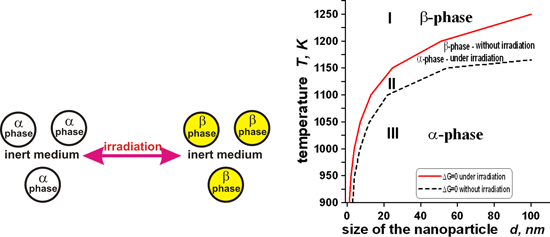
- essential to consider nucleation and the nucleation barrier. To describe nucleation, it is necessary to consider the geometrical morphology of the transforming system and the possible transformation modes (Figure 3). In experiments, nucleation through a cap-type two-phase configuration has been observed
- avoid the complexity of formula expressions accounting for nucleation morphology, we refrain from presenting the mathematical apparatus and detailed geometry descriptions. Similar analyses can be found in our previous work [45]. The energy of point defects, ΔGpd(β+α), can be expressed as follows: Let us
- energy criterion In order to describe nucleation, it is essential to consider the geometrical morphology of the transforming system and the potential transformation modes (Figure 7). Let us now visualize the dependence of ΔGncl ≡ ΔG(Nα) on Nα. The results of the computations are depicted in Figure 8 for


Various CVD-grown ZnO nanostructures for nanodevices and interdisciplinary applications
Beilstein J. Nanotechnol. 2024, 15, 1390–1399, doi:10.3762/bjnano.15.112
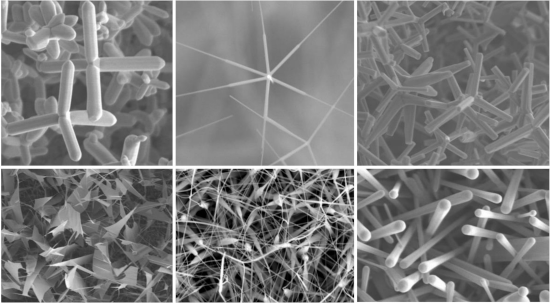
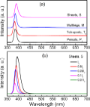
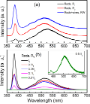
- . Depending on the morphology and crystal quality, their photoluminescence spectra have only a strong UV emission associated with the exciton radiative recombination, or both UV and defect-related visible emissions with their relative intensity ratio varying with the excitation power density. The obtained
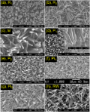
- . They converge at the origin with a size of ≈100 nm. For the second morphology, named T2 in Figure 3b, the tetrapods have long arms of 8–10 μm, where arms are nanorods with diameters of 200–500 nm. Another tetrapod type shown in Figure 3c, named T3, has a morphology similar to that of T2 but with



A biomimetic approach towards a universal slippery liquid infused surface coating
Beilstein J. Nanotechnol. 2024, 15, 1376–1389, doi:10.3762/bjnano.15.111
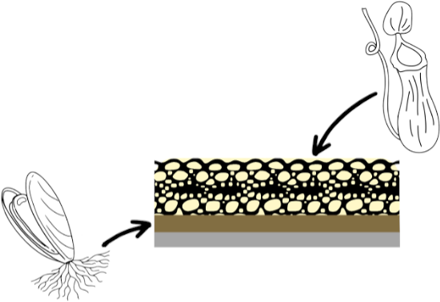
- spectroscopy. Finally, ordering of specific chemical groups within our PDA SLIPS layer was determined via sum frequency generation spectroscopy. The hemocompatibility of our new PDA-based SLIPS coating was then evaluated by tracking FXII activation, fibrin generation time, clot morphology, and platelet
- baseline absorbance value. 5% is a sufficient threshold to overcome the noise floor of the data [33]. Clot morphology Wells of interest of a non-treated 96-well polystyrene were blocked with 300 μL 1% BSA in Milli-Q water for 2 h at 37 °C. After 2 h, wells were rinsed three times with Milli-Q water. Plates
- pathway dominates [47]. Thus, in this investigation we took one of our newly created PDA SLIPS samples (PDA–FDT–PFD on COC) and characterized it in terms of FXII activation, fibrin generation time, clot morphology, and platelet adhesion and activation. Previously, Badv et al. hypothesized that the




Green synthesis of carbon dot structures from Rheum Ribes and Schottky diode fabrication
Beilstein J. Nanotechnol. 2024, 15, 1369–1375, doi:10.3762/bjnano.15.110
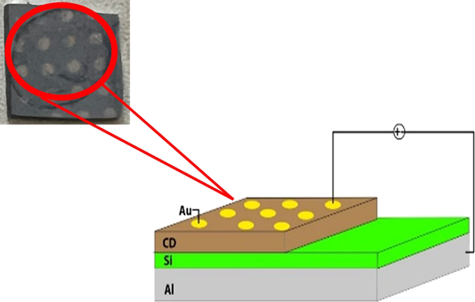
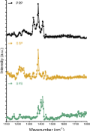
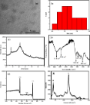
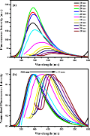
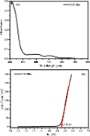
- synthesis, which is commonly used in the literature. TEM and zeta potential measurements were used to determine morphology and sizes of the CDs, and XRD, XPS, and FTIR and micro-Raman spectroscopy were used for structural characterization. Optical characterization of the CDs was done by absorption and
- study, Rheum ribes, which grows wild in the Eastern Anatolia region of Turkey, was used as a carbon source for the first time, and fluorescent carbon dot structures (CDs) were successfully synthesized in a single step by the hydrothermal synthesis method. Morphology, size, and surface charge of these




Hymenoptera and biomimetic surfaces: insights and innovations
Beilstein J. Nanotechnol. 2024, 15, 1333–1352, doi:10.3762/bjnano.15.107
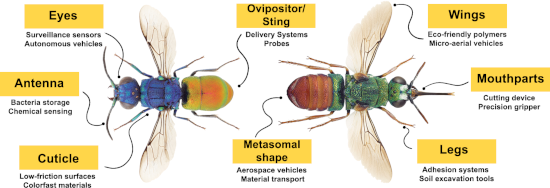
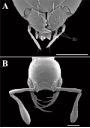
- morphology (triangular cross section with two corrugated surfaces) associated with a strong optical reflection in the visible and near-infrared (NIR) range, while maximizing heat emissivity in the mid-infrared (MIR). This allows the insects to maintain a lower thermal steady state and to cope with high
- , bioabsorbable surgical clamps modeled after the morphology and topography of the A. laevigata mandible, characterized by smooth internal regions and rougher external surfaces, could significantly improve grip and functionality [65]. Furthermore, the unique kinematic features of ant mandibles, such as the mobile
- joint axis and the tilt in the mandibular axis, provide insights for designing more efficient gripping devices [66]. Recently, a commercially available endoscopic needle holder was developed based on the morphology of Formica rufa, resulting in a remarkable increase in force amplification by up to 296




Nanoarchitectonics with cetrimonium bromide on metal nanoparticles for linker-free detection of toxic metal ions and catalytic degradation of 4-nitrophenol
Beilstein J. Nanotechnol. 2024, 15, 1312–1332, doi:10.3762/bjnano.15.106
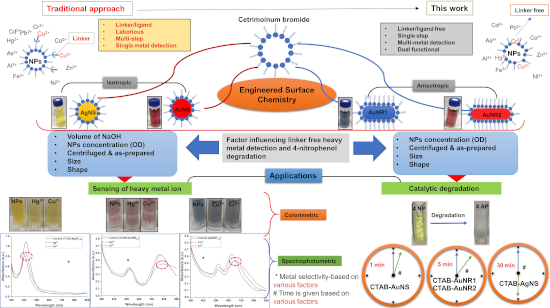
- high strength to nanoparticles, the use of such nanoparticles is limited in sensing, catalysis, and biomedical applications because of post-synthesis functionalization, morphology, and toxicity [6][7][8]. CTAB is a resilient molecule on the nanoparticle surface because of its micellar structure and
- anisotropic metal nanoparticles using zeta cuvettes (DTS0012). The precise size and morphology of CTAB-AgNS, CTAB-AuNS, CTAB-AuNR1, and CTAB-AuNR2 were observed under a transmission electron microscope (TEM, 120 kV; FEI Tecnai). The nanoparticles were placed onto 200-mesh carbon-coated copper grids. The
- is attributed to the CH2 scissoring mode and indicates close-packing of the methylene chains [42]. However, for CTAB-AgNS, CTAB-AuNS, CTAB-AuNR1, and CTAB-AuNR2, the peak splits into two parts with different intensities because of crystallinity loss in the hydrocarbon regions or the morphology of the




Interaction of graphene oxide with tannic acid: computational modeling and toxicity mitigation in C. elegans
Beilstein J. Nanotechnol. 2024, 15, 1297–1311, doi:10.3762/bjnano.15.105
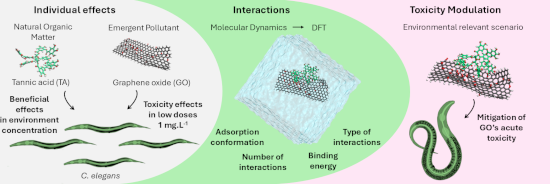
- complete characterization of the GO sample is available in [36]. Atomic force microscopy (AFM), Raman spectroscopy, and X-ray photoelectron spectroscopy (XPS) were used to assess size, morphology, number of layers, and surface chemistry of GO. The GO sample used in this study consists of single layers with
- Agency (EPA), herein named EPA medium, in absence and presence of TA. Atomic force microscopy AFM has been extensively used to characterize the distribution and morphology of biomolecules on the surface of nanomaterials, especially 2D materials [37]. Figure 1a and Figure 1b show AFM images of GO sheets
- spectroscopy (XploRA PLUS, Horiba), FTIR spectroscopy (IRSpirit Shimadzu), and XPS (K-Alpha XPS Thermo Fisher Scientific) were used to assess changes in the morphology and surface chemistry of GO while interacting with TA. For AFM analysis, 10 mg·L−1 GO was incubated in EPA medium for 24 h with and without 10


Mn-doped ZnO nanopowders prepared by sol–gel and microwave-assisted sol–gel methods and their photocatalytic properties
Beilstein J. Nanotechnol. 2024, 15, 1283–1296, doi:10.3762/bjnano.15.104
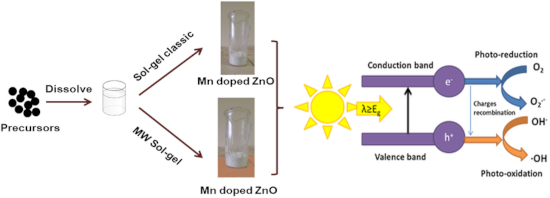
- samples were thermally treated at 350 °C and 500 °C for 1 h each. Scanning electron microscopy The morphology and chemical composition (inset) of the thermally treated samples is illustrated in Figure 4. Homogeneously distributed, quasi-spherical nanoparticles (mean size diameter of 70 nm) are observed in
- role of the ROS in photomineralization of oxalic acid over the two investigated catalysts can be assumed. The authors’ previous photocatalytic studies concerning the photodegradation of oxalic acid emphasized the dependence of photocatalytic activity on catalyst morphology [55]. The importance of the


Functional morphology of cleaning devices in the damselfly Ischnura elegans (Odonata, Coenagrionidae)
Beilstein J. Nanotechnol. 2024, 15, 1260–1272, doi:10.3762/bjnano.15.102
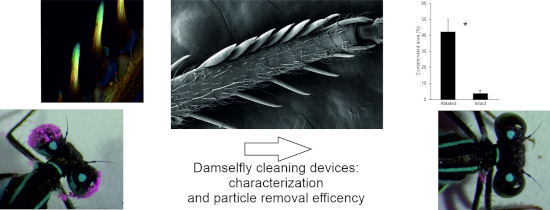
- , 06121 Perugia, Italy Department of Cariology, Endodontology and Periodontology, Universität Leipzig, Liebigstraße 12, 04103 Leipzig, Germany Department of Functional Morphology and Biomechanics, Zoological Institute, Kiel University, Am Botanischen Garten 1–9, 24098 Kiel, Germany 10.3762/bjnano.15.102
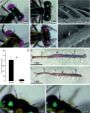
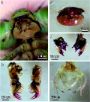
- portion and from the seta to the cuticular lamina. The removal of the grooming devices induces a strong increase in the contaminated areas on the eyes after grooming. Further studies on insect grooming can provide valuable data on the functional morphology of insect micro- and nanostructures and can
- , predominantly using the forelegs, involves grooming the antennae, head, mesosoma, forelegs, and middle legs. The posterior cluster focuses on cleaning the wings, metasoma, middle legs, and hind legs, and primarily uses the hind legs. A similar behavior is reported in ants, where functional morphology and


The role of a tantalum interlayer in enhancing the properties of Fe3O4 thin films
Beilstein J. Nanotechnol. 2024, 15, 1253–1259, doi:10.3762/bjnano.15.101
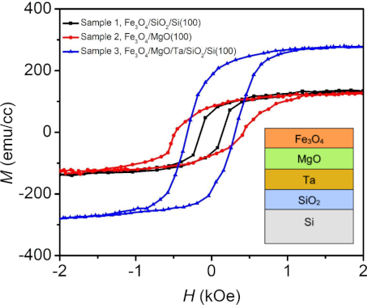
- morphological, structural, and magnetic properties of the deposited samples were characterized with atomic force microscopy, X-ray diffractometry, and vibrating sample magnetometry. The polycrystalline Fe3O4 film grown on MgO/Ta/SiO2/Si(100) presented very interesting morphology and structure characteristics
- indicates the potential to facilitate the development of novel magnetic and spintronic architectures. Results and Discussion AFM and line-cut method were used to examine the surface morphology and grain sizes of the Fe3O4 films that were formed on SiO2/Si(100), MgO(100), and MgO/Ta/SiO2/Si(100) multilayer
- for MgO with Ta buffer layer. The microstructural properties are summarized in Table 2. To characterize the effect of microstructure and morphology on the magnetic properties of Fe3O4 thin films, VSM measurements were conducted in an external field from −10 kOe to 10 kOe at room temperature. Figure 3


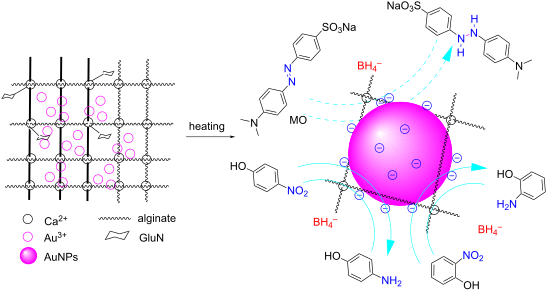
Enhanced catalytic reduction through in situ synthesized gold nanoparticles embedded in glucosamine/alginate nanocomposites
Beilstein J. Nanotechnol. 2024, 15, 1227–1237, doi:10.3762/bjnano.15.99
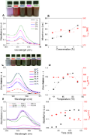
- temperature, and the reaction time, by using UV–vis spectroscopy. Changes in the physicochemical properties, such as morphology and particle size of AuNPs, were monitored through absorbance and the λmax values of the surface plasmon resonance (SPR) band. Figure 2 illustrates the impact of synthesis conditions
- attachment of nanoparticles to form larger aggregates, followed by coalescence [32][33]. Additionally, the morphology of AuNPs changes significantly at higher temperatures, as evidenced by a reduction in the λmax values. The optimization of reaction time was carried out within a range of 0 to 140 min. Figure
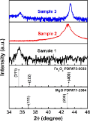
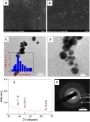
- the initial mass), suggesting the presence of inorganic components within the nanocomposite. SEM and TEM analyses were performed to determine the morphology, and XRD and SAED patterns were used to evaluate the crystalline structure of AuNPs@GluN/Alg, as illustrated in Figure 4. The SEM images show




Synthesis, characterization and anticancer effect of doxorubicin-loaded dual stimuli-responsive smart nanopolymers
Beilstein J. Nanotechnol. 2024, 15, 1189–1196, doi:10.3762/bjnano.15.96
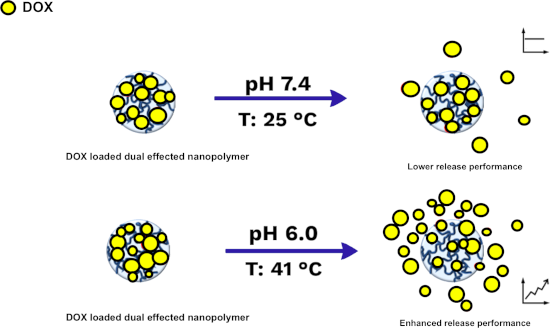
- increasing intensity in DOX-SNPs [33]. The inset in Figure 2 shows DOX-SNPs (red) and pure SNPs (white). Based on these results, the successful incorporation of DOX into SNPs has been demonstrated. Surface morphology and structure of the obtained SNPs were investigated by SEM. As seen in Figure 3, the SNPs





