Search results
Search for "scales" in Full Text gives 404 result(s) in Beilstein Journal of Nanotechnology. Showing first 200.
An investigation on the drag reduction performance of bioinspired pipeline surfaces with transverse microgrooves
Beilstein J. Nanotechnol. 2020, 11, 24–40, doi:10.3762/bjnano.11.3

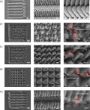
- [35] mimicked fish scales to fabricate a bionic surface through coating technology and obtained a remarkable drag reduction performance in a water tunnel experiment. Feng and co-workers [13] mimicked bird feathers to fabricate a bionic surface with transverse grooves through hot-rolling technology and


Label-free highly sensitive probe detection with novel hierarchical SERS substrates fabricated by nanoindentation and chemical reaction methods
Beilstein J. Nanotechnol. 2019, 10, 2483–2496, doi:10.3762/bjnano.10.239

- form a structure similar to fish scales with fx = 5 μm and fy = 1 μm. Additionally, the inside of the cavities and the surface of the sample are smooth. However, the surface of the sample, the inside of the cavities, and pile-ups of material are roughened when using HCl and AgNO3 solutions. Ag


Air oxidation of sulfur mustard gas simulants using a pyrene-based metal–organic framework photocatalyst
Beilstein J. Nanotechnol. 2019, 10, 2422–2427, doi:10.3762/bjnano.10.232

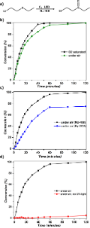
- ) hydrolysis [8][9], 2) oxidation, and 3) dehydrohalogenation [10][11][12] (Scheme 1). The hydrolysis route is limited to small scales because of the hydrophobicity of sulfur mustard gas. The mechanism of degradation by dehydrohalogenation mechanism is still poorly understood and not efficient enough for real




Nitrogen-vacancy centers in diamond for nanoscale magnetic resonance imaging applications
Beilstein J. Nanotechnol. 2019, 10, 2128–2151, doi:10.3762/bjnano.10.207


The importance of design in nanoarchitectonics: multifractality in MACE silicon nanowires
Beilstein J. Nanotechnol. 2019, 10, 2094–2102, doi:10.3762/bjnano.10.204

- self-assembly. Then, we have studied the surfaces of the nanoarchitectures by means of multifractal analysis. We have found that these systems are not simple monofractals, but that the more complex paradigm of multifractality (different fractal dimensions across different scales) has to be applied to
- nanosized dimensions of the basic units. Because the spatial layout is self-driven in contrast to a hetero-directed placement, asymmetric interaction potentials and entropic forces can lead to different aggregation schemes from place to place and across the scales of the generated structures. The control
- from aggregative processes, which are omnipresent in nature, have been characterized by their fractal dimension [21][22][23] that contains information about their geometrical structure at multiple scales. However, sometimes the richness of the organization of shape is such that it is impossible to




Nanostructured and oriented metal–organic framework films enabling extreme surface wetting properties
Beilstein J. Nanotechnol. 2019, 10, 1994–2003, doi:10.3762/bjnano.10.196

- contact with the surface (see Figure S5.7, Supporting Information File 1). These surface properties resemble those of surface designs found in nature. For example, referring to marine life, fish scales in air show an amphiphilic behavior due to their high surface energy, but under water they turn


First principles modeling of pure black phosphorus devices under pressure
Beilstein J. Nanotechnol. 2019, 10, 1943–1951, doi:10.3762/bjnano.10.190
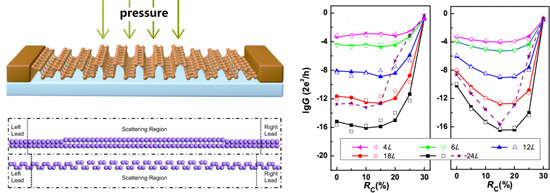
- pressure influence the transport properties of the pure BP devices? 3) How does their length influence the conductance of pure BP devices? 4) Can the conclusions from the system of finite size be transferred to larger scales? To answer these questions, first principles calculations were carried out to
- calculation, we performed an empirical WKB fitting with parameters obtained from the DFT calculations to predict the pressure-dependent conductance of pure BP devices at larger scales. Using the WKB method, the conductance GWKB can be estimated empirically by [46][47][48][49][50] where A and B are two




Remarkable electronic and optical anisotropy of layered 1T’-WTe2 2D materials
Beilstein J. Nanotechnol. 2019, 10, 1745–1753, doi:10.3762/bjnano.10.170

- 6a and 6b. As observed from the two figures, the value scales of the basic current along 30° and 150° are around 4.0 nA and 1.2 μA, respectively, due of the anisotropic absorption of light. Although the basic current induced by daylight illumination turned out to be a non-negligible, the photocurrent


Materials nanoarchitectonics at two-dimensional liquid interfaces
Beilstein J. Nanotechnol. 2019, 10, 1559–1587, doi:10.3762/bjnano.10.153
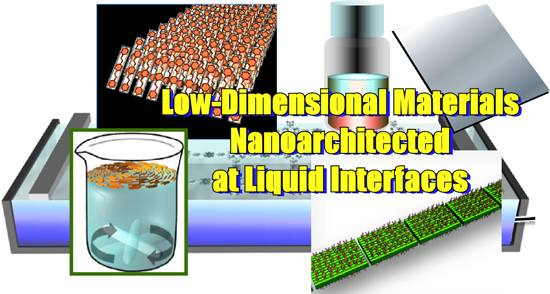
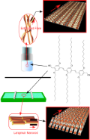
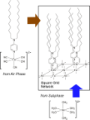
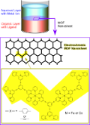
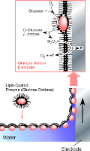
- , molecular motion is virtually inhibited in the vertical direction. Therefore, two significantly different scales of motion, macroscopic lateral motion and nanoscopic vertical motion, are connected at liquid interfaces [163][164][165][166]. For example, motion and function of molecular machines and molecular













Unipolar magnetic field pulses as an advantageous tool for ultrafast operations in superconducting Josephson “atoms”
Beilstein J. Nanotechnol. 2019, 10, 1548–1558, doi:10.3762/bjnano.10.152
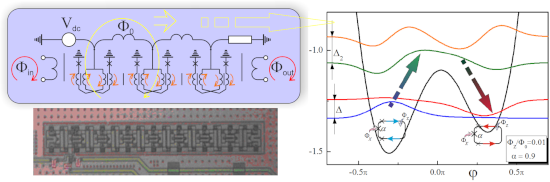
- the increase of the magnetic field strength, compare Figure 2a and Figure 2b), since the carrier oscillations become faster. As a result by increasing the magnetic field strength it is possible to provide the required operations at ultra-short time scales. For example, for μ ≈ 106 arb unit, H ≈ 10−5


Hierarchically structured 3D carbon nanotube electrodes for electrocatalytic applications
Beilstein J. Nanotechnol. 2019, 10, 1475–1487, doi:10.3762/bjnano.10.146

- scan rate of 5 mV s−1 was applied. Note that the oxidation current scales with the square root of the scan rate, while the double-layer charging current linearly scales with scan rate. Thus, the slow scan rate allows for a much more reliable determination of peak potentials and currents. The fifth





Growth of lithium hydride thin films from solutions: Towards solution atomic layer deposition of lithiated films
Beilstein J. Nanotechnol. 2019, 10, 1443–1451, doi:10.3762/bjnano.10.142
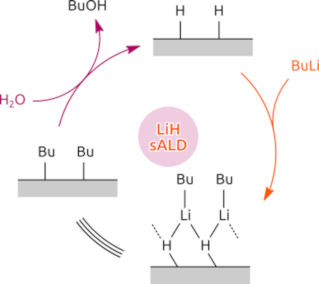
- solid electrolytes. Physical vapour deposition and chemical vapour deposition can be used to deposit lithiated films. However, the issue of conformality on non-planar substrates with large surface area makes them impractical for nanobatteries the capacity of which scales with surface area. Atomic layer


A biomimetic nanofluidic diode based on surface-modified polymeric carbon nitride nanotubes
Beilstein J. Nanotechnol. 2019, 10, 1316–1323, doi:10.3762/bjnano.10.130

- by this approach possess a high nitrogen content with excellent chemical and thermal stability (Figures S2 and S3, Supporting Information File 1). It is also environmentally friendly, sustainable, and can be facilely synthesized on large scales with low cost [28][29]. Figure 2a shows the typical SEM
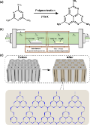


Fabrication of phase masks from amorphous carbon thin films for electron-beam shaping
Beilstein J. Nanotechnol. 2019, 10, 1290–1302, doi:10.3762/bjnano.10.128

- BB. If the argument of the Bessel function is given by kρρ with the radius ρ = √(x2 + y2), the diameter of the central lobe of scales inversely with kρ. Consequently, a larger kρ value results in a smaller central maximum and therefore potentially in a finer electron probe. However, an increase in


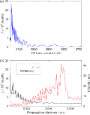

Fe3O4 nanoparticles as a saturable absorber for giant chirped pulse generation
Beilstein J. Nanotechnol. 2019, 10, 1065–1072, doi:10.3762/bjnano.10.107

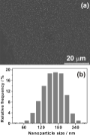
- seen that the diameter of the dispersed nanoparticles is about 100 nm, and the aggregation of the nanoparticles are caused by the magnetic properties of the FNOPs. Figure 4d and 4e show the results observed under a transmission electron microscope (TEM), and the measurement scales are 200 and 100 nm


Correlation of surface-enhanced Raman scattering (SERS) with the surface density of gold nanoparticles: evaluation of the critical number of SERS tags for a detectable signal
Beilstein J. Nanotechnol. 2019, 10, 1016–1023, doi:10.3762/bjnano.10.102

- level at 1 s acquisition, but in most cases it is still higher than the noise level for 10 s of acquisition (the noise level scales as the square of the acquisition time) [57]. Considering the spot size of the laser beam on the sample, it is possible to evaluate the mean value and relative standard


Structural and optical properties of penicillamine-protected gold nanocluster fractions separated by sequential size-selective fractionation
Beilstein J. Nanotechnol. 2019, 10, 955–966, doi:10.3762/bjnano.10.96
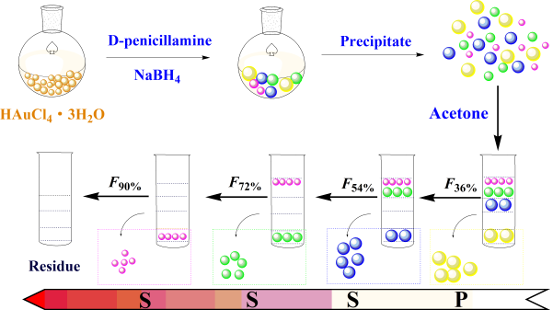
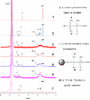
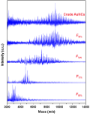
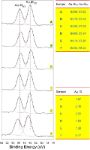
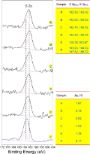
- high precision, facilitating easy evaluation of structure–function relationships in their toxicological studies, as well as improving the repeatability in AuNC self-assembly. Further optimization of SSSP fractionation can result in fractionation of AuNCs to specific sizes at gram scales, which is


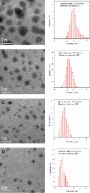


In situ AFM visualization of Li–O2 battery discharge products during redox cycling in an atmospherically controlled sample cell
Beilstein J. Nanotechnol. 2019, 10, 930–940, doi:10.3762/bjnano.10.94

- these redox materials at the micrometer and nanometer scales. Gewirth et al. [2] reviewed the use of scanning tunneling microscopy (STM) and atomic force microscopy (AFM) investigations of phenomena such as reconstructions, restructuring and adsorption of ions. Phenomena such as under-potential


Nanoscale optical and structural characterisation of silk
Beilstein J. Nanotechnol. 2019, 10, 922–929, doi:10.3762/bjnano.10.93

- , which was in the range of tens of nanometers [8]. This defines the range of the spatial resolution required for structural and chemical analyses that are typically carried out using X-ray and IR-based techniques at larger scales. Real and imaginary parts of the refractive index, , together with the


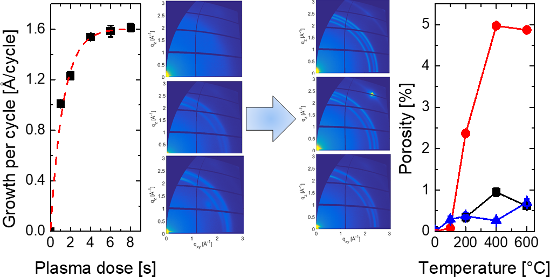
On the transformation of “zincone”-like into porous ZnO thin films from sub-saturated plasma enhanced atomic layer deposition
Beilstein J. Nanotechnol. 2019, 10, 746–759, doi:10.3762/bjnano.10.74
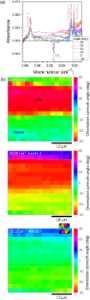
- reported using the same color scales [55]. For chemical analysis of the obtained thin films, Fourier-transform infrared (FTIR) and X-ray photoelectron spectroscopy (XPS) were performed. For the FTIR analysis, a Bruker IFS 66v/S was adopted. For each spectrum, 1000 scans were recorded in transmission mode


An iridescent film of porous anodic aluminum oxide with alternatingly electrodeposited Cu and SiO2 nanoparticles
Beilstein J. Nanotechnol. 2019, 10, 735–745, doi:10.3762/bjnano.10.73
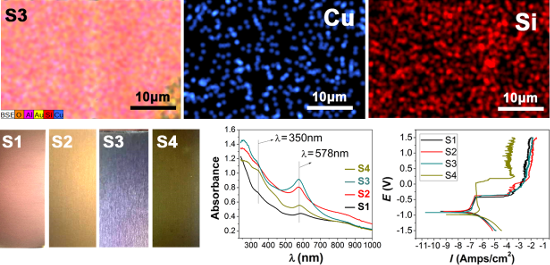
- electrodeposition [18]. The former involves the simultaneous assembly of the basic structural units such as molecules, nanomaterials, and the materials on the microscale or even larger scales to form an ordered structure. During the self-assembly process, the basic structural units organize or aggregate, in a


Deposition of metal particles onto semiconductor nanorods using an ionic liquid
Beilstein J. Nanotechnol. 2019, 10, 718–724, doi:10.3762/bjnano.10.71
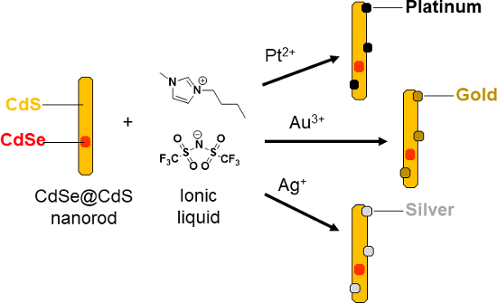
- the underlying nanoparticle surface which complicates using these materials in device applications where the particles are coated onto a substrate [12]. A key feature of these well-defined nanorod systems is control of particle size and uniformity at small length scales; nanorods having at least two
- associated with strongly-bound organic ligands. In principle, it should be possible to prepare metal/semiconductor nanoparticle catalysts on sub-10 nm length scales using ionic liquids and benefit from increased performance due to the absence of strongly bound surface ligands. A literature search for using
- and diameters smaller than 10 nm. This is important for the field of chalcogenide nanomaterials where 1D (nanorod) and 0D (quantum dot) materials are interfaced with metals on sub-10 nm length scales to facilitate charge transfer and photocatalysis [26]. Herein, we demonstrate that an ionic liquid may


Review of time-resolved non-contact electrostatic force microscopy techniques with applications to ionic transport measurements
Beilstein J. Nanotechnol. 2019, 10, 617–633, doi:10.3762/bjnano.10.62
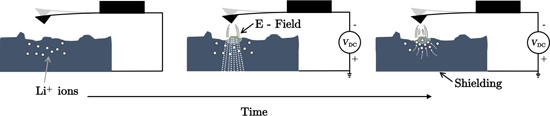
- allow for the measurement of time-varying forces arising from phenomena such as ion transport in battery materials or charge separation in photovoltaic systems. These forces reveal information about dynamic processes happening over nanometer length scales due to the nanometer-sized probe tips used in
- understanding local charge dynamics and composition of numerous materials with applications across many fields including energy generation and storage. Capturing time-resolved dynamic processes at ever-decreasing time and length scales has become of increased interest in recent years due to the importance of
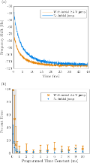
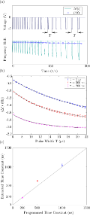
- sample. In this case, the electric field follows the applied voltage instantaneously on the relevant time scales. For each programmed time constant (from 0.1 to 10 ms), the voltage was varied from 0 V initially to 5 V; the measured response is shown in Figure 2a where the blue curve is the result of the





Hydrophilicity and carbon chain length effects on the gas sensing properties of chemoresistive, self-assembled monolayer carbon nanotube sensors
Beilstein J. Nanotechnol. 2019, 10, 565–577, doi:10.3762/bjnano.10.58

- laser irradiation. The chemical composition and, particularly, the presence of the Au–S bond were evaluated using a Versaprobe Phi 5000 instrument from Physical Electronics equipped with a monochromatic Al Kα X-ray source. The binding energy (BE) scales were referenced by setting the Au 4f7/2 to 84.0 eV


Quantification and coupling of the electromagnetic and chemical contributions in surface-enhanced Raman scattering
Beilstein J. Nanotechnol. 2019, 10, 549–556, doi:10.3762/bjnano.10.56

- metal substrate [11][12]. Depending on the degree of EM enhancement the signal simply scales linearly in intensity. In contrast, CE in addition can give rise to changes in the spectral response in terms of peak position and line shape due to modifications in molecular structure when the molecule