Search results
Search for "staining" in Full Text gives 142 result(s) in Beilstein Journal of Nanotechnology.
Influence of surface-modified maghemite nanoparticles on in vitro survival of human stem cells
Beilstein J. Nanotechnol. 2014, 5, 1732–1737, doi:10.3762/bjnano.5.183

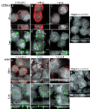
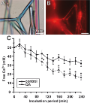
- medium. Confocal micrographs of 4BL human stem cells treated with (a, b) D-mannose-coated γ-Fe2O3, (c, d) PDMAAm-coated γ-Fe2O3 and (e, f) non-coated γ-Fe2O3 nanoparticles. Staining with DAPI and ThR. Scale bars: 10 μm. Acknowledgements Financial support of Ministry of Education, Youth and Sports of the


In vitro and in vivo interactions of selected nanoparticles with rodent serum proteins and their consequences in biokinetics
Beilstein J. Nanotechnol. 2014, 5, 1699–1711, doi:10.3762/bjnano.5.180

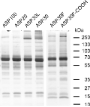
- protein densitometry. Only predominantly binding serum proteins could be analyzed by this quantitative approach. A typical electrophoresis gel visualized by Coomassie staining is given in Figure 2, which shows a variety of proteins present in the corona of the three differently sized AuNP. Proteins cover


Different endocytotic uptake mechanisms for nanoparticles in epithelial cells and macrophages
Beilstein J. Nanotechnol. 2014, 5, 1625–1636, doi:10.3762/bjnano.5.174
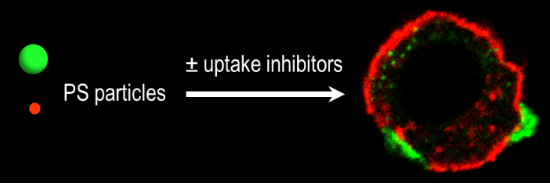
- dehydrogenase (LDH) assay (see Figure S1, Supporting Information File 1). Trypan blue staining marked the integrity of the cell membrane for cells which were impaired by the inhibitor (red insets, Figure 3) and revealed the following percentage of dead cells for J774A.1 cells (n = 3): negative control 20% (SD
- affected the cells are summarized in Table 1 and the images in Figure 3 are presented with either red (impairment by inhibitor) or green (no effect by inhibitor) letter insets. Trypan blue staining demonstrated the same outcome. The percentage of dead cells which were treated with cytochalasin D was not as
- , flotillin-1 and caveolin-1 (all fluorescently labelled with Alexa Fluor 488, antibodies-online GmbH, Aachen, Germany) were used at a final dilution of 1:20 in 1× PBS on fixed cells. After 1 hour of staining (in a dark room at room temperature) and three washing cycles with 1× PBS, the cells were mounted



Protein-coated pH-responsive gold nanoparticles: Microwave-assisted synthesis and surface charge-dependent anticancer activity
Beilstein J. Nanotechnol. 2014, 5, 1452–1462, doi:10.3762/bjnano.5.158
- ). The BSA-AuNP sample was mixed with 2× sample buffer (Sigma) and heated at 80 °C for 15 min. Further protein was separated through a 4% stacking gel and 12% separation gel. To determine the amount of protein in the sample, the gels were stained with Coomassie blue (Sigma) staining solution for 2 h. The


Near-field photochemical and radiation-induced chemical fabrication of nanopatterns of a self-assembled silane monolayer
Beilstein J. Nanotechnol. 2014, 5, 1441–1449, doi:10.3762/bjnano.5.156

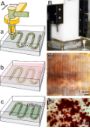
- , respectively. The 1.2 µm structure is clearly resolved in the fluorescence image, but due to the diffraction limit the 0.22 µm pattern cannot be resolved. Only the defect structures of the periodic nanopatterns are recognized. In addition to the staining of the chemical nanostructures with fluorescein
- (a) 1.2 µm latex beads and of (b) 220 nm latex beads after staining of the chemically functionalized areas with fluorescein molecules. Optically only the larger hexagonal nanopattern can be resolved, whereas the fluorescence image of the 220 nm pattern is characterized by defect structures. (c) AFM


The protein corona protects against size- and dose-dependent toxicity of amorphous silica nanoparticles
Beilstein J. Nanotechnol. 2014, 5, 1380–1392, doi:10.3762/bjnano.5.151
- bromophenol blue) to the pellet and incubation at 95 °C for 5 min. 1D SDS-PAGE Discontinuous SDS-polyacrylamide gel electrophoresis (PAGE) was carried out according to standard procedures [51]. Proteins were visualized by staining with Coomassie brilliant blue R-250 as described [52]. All experiments were
- cells). Nuclei were stained by addition of Hoechst 33342 at a final concentration of 40 µM for 10 min. Images were acquired and analyzed on the Cellomics ArrayScan® VTI Imaging Platform as described in [31]. Briefly, for every cell a binary image mask was created from the Hoechst 33342 staining signal
- with Hoechst 33342. To quantify the amount of cell-associated nanoparticles, images were analysed by using Target Activation V4 assay [56]. For every cell, a binary image mask was created from the Hoechst 33342 staining signal to define the region of interest, marking the nucleus. In the second channel




Mimicking exposures to acute and lifetime concentrations of inhaled silver nanoparticles by two different in vitro approaches
Beilstein J. Nanotechnol. 2014, 5, 1357–1370, doi:10.3762/bjnano.5.149
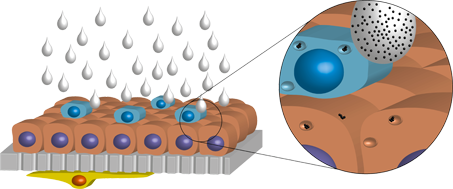
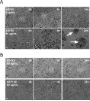
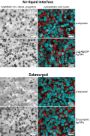
- ). The exposure to Ag NPs (i.e., either ALI or submerged) did not alter the morphology shown by staining F-actin with phalloidin rhodamine (red), nor could any DNA alterations be observed as visualized with DAPI (blue). Minimum intensity projections of z-stack phase contrast images revealed NPs either
- layer of the triple cell co-culture model, which is a similar pattern as we have observed for Ag NPs exposed to cells at the ALI [44]. To reduce misinterpretation due to staining artefacts [48], samples were treated with uranyl acetate only, without lead citrate. Cytotoxicity As described in [44], we
- and then treated with 0.1 M glycine in PBS for 10 min. Before staining, the cells were permeabilised with 0.2% Triton X-100 in PBS for 15 min at room temperature. The cytoskeleton (i.e., F-actin-filaments of all cells) was stained with rhodamine phalloidin 1:100 (R-415; Molecular Probes, Life



PEGylated versus non-PEGylated magnetic nanoparticles as camptothecin delivery system
Beilstein J. Nanotechnol. 2014, 5, 1312–1319, doi:10.3762/bjnano.5.144
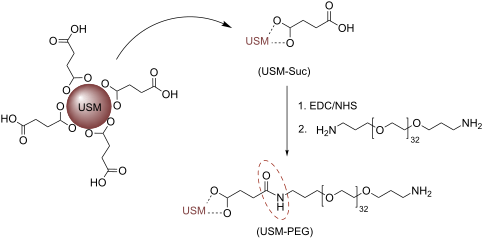
- for their efficiency in inducing apoptosis. Apoptosis was assessed by the occurrence of cells with nuclear condensation and fragmentation by Hoechst staining [46]. In order to compare the apoptotic activity of USM[CPT] and USM-PEG[CPT] formulations, stock solutions were prepared, and suitable amounts


Model systems for studying cell adhesion and biomimetic actin networks
Beilstein J. Nanotechnol. 2014, 5, 1193–1202, doi:10.3762/bjnano.5.131
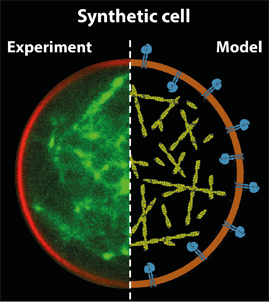
- this detergent removal method for reconstituting integrin αIIbβ3 from blood platelets and α1β1 from chicken gizzard into lipid vesicles. Successful integrin incorporation into liposomes of 100 to 200 nm in diameter was confirmed by negative staining in cryoelectron microscopy (Figure 2


Molecular biology approaches in bioadhesion research
Beilstein J. Nanotechnol. 2014, 5, 983–993, doi:10.3762/bjnano.5.112

- and should not have significant similarities to other endogenous transcripts (BLAST search). The size of the probes should range between 500 and 1000 nucleotides. Shorter probes can lead to weak staining results and/or less specificity. cDNA is used as a template for a standard PCR reaction with the
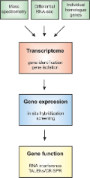
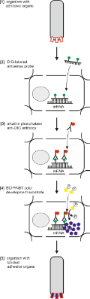
- a blue precipitate when it is dephosphorylated. When added to the samples NBT/BCIP leads to a stable blue staining in cells where the anti-digoxigenin antibody is bound (Figure 4). Endogenous phosphatase activity can lead to a false-positive staining. Therefore, it is essential to inhibit
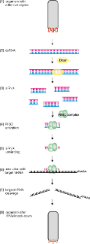
- phosphatase. (4) The former colorless substrate becomes dephosphorylated and turns blue. (5) The staining reveals the cells with target gene expression, in this case the adhesive organs. Functional analyses of an adhesion-related gene by RNAi. After the application of dsRNA the mRNA gets degraded. The lack of
Biocalcite, a multifunctional inorganic polymer: Building block for calcareous sponge spicules and bioseed for the synthesis of calcium phosphate-based bone
Beilstein J. Nanotechnol. 2014, 5, 610–621, doi:10.3762/bjnano.5.72

- a staining procedure with alizarin red S [7]. The MAC supplement (ascorbic acid, β-glycerophosphate and dexamethasone) stimulates cellular differentiation processes. Importantly, it had been measured that this process is paralleled by an enhanced expression of the CA-II gene, suggesting its
- which the alginate/cell matrix is extruded. (C) Completed 4 mm high blocks into which the cells have been embedded into the alginate. (D) The cells retain the capacity to form crystallites, which can be visualized after staining with Alizarin Red S. Acknowledgements W. E. G. M. is a holder of an ERC



Morphological characterization of fullerene–androsterone conjugates
Beilstein J. Nanotechnol. 2014, 5, 374–379, doi:10.3762/bjnano.5.43

- aggregates were visualized using uranyl acetate negative staining. One drop of the clear solution was transferred to a TEM grid (copper grid, 3.0 mm, 200 mesh, coated with Formvar film), together with a drop of uranyl acetate (2% water solution) for 1 min, and allowed to dry. Analysis of stained grids was


Nanoscopic surfactant behavior of the porin MspA in aqueous media
Beilstein J. Nanotechnol. 2013, 4, 278–284, doi:10.3762/bjnano.4.30

- microscopy (TEM). The TEM were prepared by immersing carbon-coated 200-mesh copper grids in aqueous liposome-containing solutions, followed by counter-staining by 2% aqueous uranyl acetate solution, and overnight drying in a desiccator. The dried grids were analyzed by using a HRTEM FEI Tecnai F20 XT Field




Nanolesions induced by heavy ions in human tissues: Experimental and theoretical studies
Beilstein J. Nanotechnol. 2012, 3, 556–563, doi:10.3762/bjnano.3.64

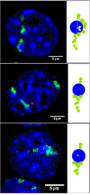
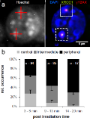
- . DNA-damage-induced foci of the repair factor XRCC1 (green) and γH2AX (red) are clearly visualized at the sites of ion traversal. Both proteins colocalize within each of the targeted chromo centers (blue: DAPI DNA staining). (b) Analysis of the time-dependent localization of XRCC1 and γH2AX radiation
- fibroblasts. Cells were irradiated with Au ions (energy: 8 MeV/n, linear energy transfer (LET): 13000 keV/μm; fluence: 3·106 ions/cm2) at a low angle and fixed after 1 h. H4K16ac (green) is increased at damage sites. DNA damage is shown by γH2AX staining (red). DNA is counterstained with ToPro3 (blue). From



Macromolecular shape and interactions in layer-by-layer assemblies within cylindrical nanopores
Beilstein J. Nanotechnol. 2012, 3, 475–484, doi:10.3762/bjnano.3.54

- was adsorbed on the unfunctionalized surface. AAO substrates were O2 plasma cleaned for 2 min immediately prior to gas-phase silanization to increase the surface density of OH groups. The glass slide substrates to be silanized were inserted into a glass staining jar and 50 µL of APTES were added in a




Magnetic-Fe/Fe3O4-nanoparticle-bound SN38 as carboxylesterase-cleavable prodrug for the delivery to tumors within monocytes/macrophages
Beilstein J. Nanotechnol. 2012, 3, 444–455, doi:10.3762/bjnano.3.51
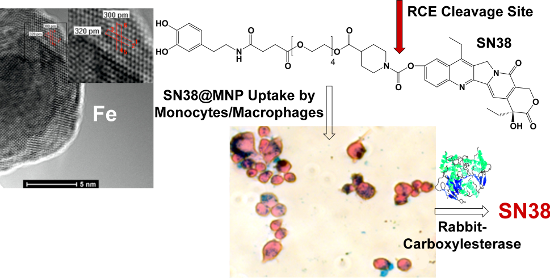
- interested in the long term toxicity without activating the prodrug and changing cell morphology after loading. We have found that these nanoparticles showed no further toxicity even after five days (Figure 5). The successful loading of MNP-SN38 was confirmed by Prussian blue staining [53]. Nanoparticle
- : Prussian blue staining and counter stained by nuclear fast red 20×; b: 40×; c: control double-stable Mo/Ma Prussian blue stained and counter stained by nuclear fast red 20× (all images were taken in bright field). Flow cytometry of MNP-SN38 loaded double-stable Mo/Ma after 24 h. Side scatter was used to


Functional morphology, biomechanics and biomimetic potential of stem–branch connections in Dracaena reflexa and Freycinetia insignis
Beilstein J. Nanotechnol. 2011, 2, 173–185, doi:10.3762/bjnano.2.21

- may not yet have reached a fully lignified state. This is indicated by staining experiments for lignin in which young axes of Dracaena reflexa (3–5 mm) are less stained than older axes (above 7 mm). Comparison with data of branchings of dicotyledonous trees No comparative data for maximal force or
- anatomical analysis were obtained via microtome sectioning and staining with the Fuchsin-Chrysoidin-Astrablue staining method according to Etzold [32] (Figure 2). Additionally, the three-dimensional arrangement and the course of the fibrous bundles was analysed by superimposing photographs of serial sections