
Search results
Search for "technology" in Full Text gives 1467 result(s) in Beilstein Journal of Nanotechnology. Showing first 200.
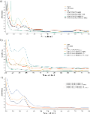
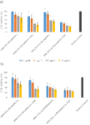
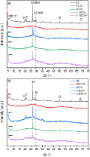
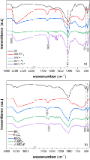
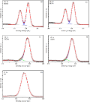
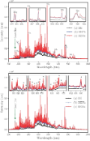
Radiosensitizing properties of dual-functionalized carbon nanostructures loaded with temozolomide
Beilstein J. Nanotechnol. 2025, 16, 229–251, doi:10.3762/bjnano.16.18
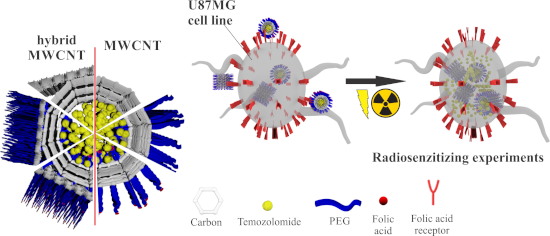
- Radmila Milenkovska Nikola Geskovski Dushko Shalabalija Ljubica Mihailova Petre Makreski Dushko Lukarski Igor Stojkovski Maja Simonoska Crcarevska Kristina Mladenovska Institute of Pharmaceutical Technology, Faculty of Pharmacy, Ss. Cyril and Methodius University in Skopje, Blv. Mother Theresa No




Synthesis and the impact of hydroxyapatite nanoparticles on the viability and activity of rhizobacteria
Beilstein J. Nanotechnol. 2025, 16, 216–228, doi:10.3762/bjnano.16.17
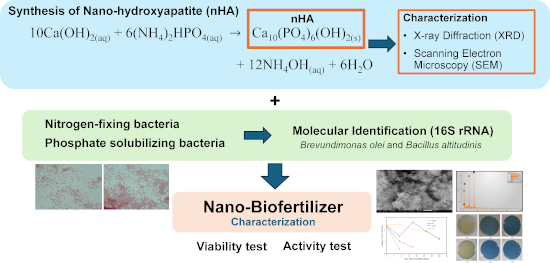
- Natural Science Faculty, Padjadjaran University, Jatinangor, Indonesia Research Center for Mining Technology, National Research and Innovation Agency, Lampung, Indonesia Chemical Engineering Department, University of Indonesia, Depok, Indonesia 10.3762/bjnano.16.17 Abstract Preserving the viability of


Recent advances in photothermal nanomaterials for ophthalmic applications
Beilstein J. Nanotechnol. 2025, 16, 195–215, doi:10.3762/bjnano.16.16
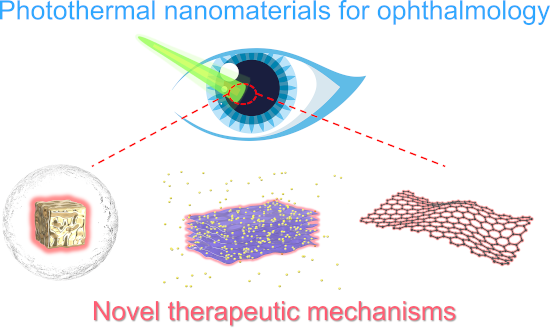
- -throughput testing techniques are expected to make substantial contributions to the advancement of ophthalmic photothermal nanomaterial development [221]. The evolution of photothermal nanomaterial technology represents just one facet of the multifaceted challenge posed by ophthalmic diseases. Comprehensive


A review of metal-organic frameworks and polymers in mixed matrix membranes for CO2 capture
Beilstein J. Nanotechnol. 2025, 16, 155–186, doi:10.3762/bjnano.16.14
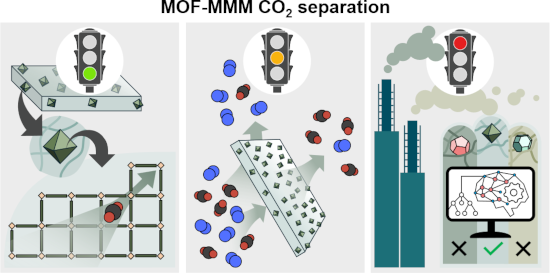
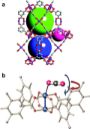
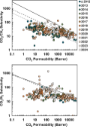
- Charlotte Skjold Qvist Christensen Nicholas Hansen Mahboubeh Motadayen Nina Lock Martin Lahn Henriksen Jonathan Quinson Department of Biological and Chemical Engineering, Aarhus University, Ole Worms Allé 3, 8000 Aarhus C, Denmark Centre for Water Technology (WATEC), Aarhus University, Ole Worms
- , including regenerative solvent-based absorption [2][6], fixed-bed adsorption [7], cryogenic separation techniques [8], and membrane separation methods [9][10][11][12]. Of these, membrane technology offers advantages such as exceptional stability, high efficiency, low energy consumption, and ease of




Clays enhanced with niobium: potential in wastewater treatment and reuse as pigment with antibacterial activity
Beilstein J. Nanotechnol. 2025, 16, 141–154, doi:10.3762/bjnano.16.13
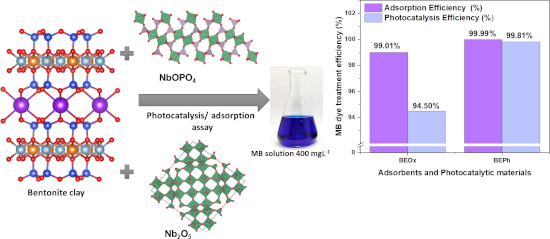
- Silvia Jaerger Patricia Appelt Mario Antonio Alves da Cunha Fabian Ccahuana Ayma Ricardo Schneider Carla Bittencourt Fauze Jaco Anaissi Federal University of Technology - Paraná - UTFPR, Campus Toledo, Rua Cristo Rei, 19. 85902-490, Toledo, Brazil Chemistry Department, Universidade Estadual do



Comparison of organic and inorganic hole transport layers in double perovskite material-based solar cell
Beilstein J. Nanotechnol. 2025, 16, 119–127, doi:10.3762/bjnano.16.11
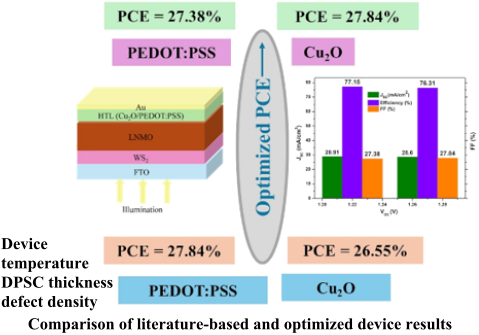
- , extended carrier diffusion lengths, and adjustable direct bandgaps. Also, there are well-established fabrication techniques that have positioned PSCs as a solution-processable photovoltaic technology [4]. Over the past few years, a significant improvement in the PCE of the PSCs was reported, from 3.8% in
- and 1.22 V, JSC values of 28.60 and 28.91 mA/cm2, and FFs of 76.31% and 77.15%, respectively. These findings underscore the potential of these HTLs to drive advancements in perovskite solar cell technology. The optimum result is obtained for the planar n-i-p FTO/WS2/LNMO/HTL/Au device structure at 300


Modeling and simulation of carbon-nanocomposite-based gas sensors
Beilstein J. Nanotechnol. 2025, 16, 90–96, doi:10.3762/bjnano.16.9
- Roopa Hegde Punya Prabha V Shipra Upadhyay Krishna S B Electronics and Communication Engineering, Ramaiah Institute of Technology, MSRIT Post, M S Ramaiah Nagar, MSR Nagar, Bengaluru, Karnataka 560054, India 10.3762/bjnano.16.9 Abstract This paper reports simulation of a carbon monoxide gas
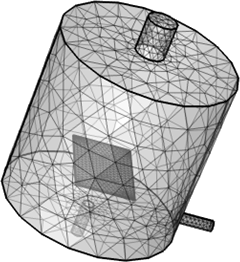
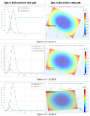
- advancing CO gas sensor technology, promising more effective solutions for environmental and industrial safety applications. Steps followed in implementing the sensor. The gas chamber with a sensor. Meshing of the gas chamber with a sensor. Surface concentration and surface coverage (θ) at 1 ppm of CO gas



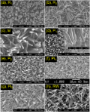
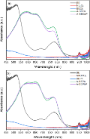
Characterization of ZnO nanoparticles synthesized using probiotic Lactiplantibacillus plantarum GP258
Beilstein J. Nanotechnol. 2025, 16, 78–89, doi:10.3762/bjnano.16.8
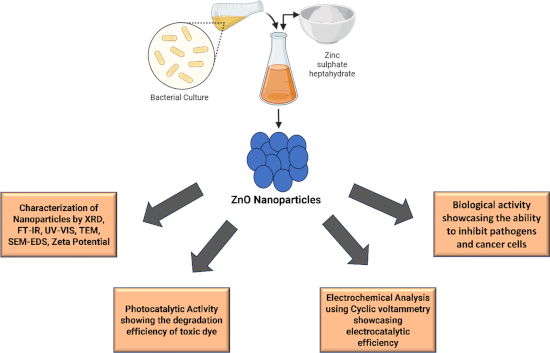
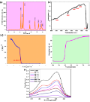
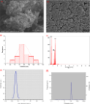
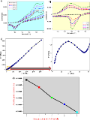
- , Shri Dharmasthala Manjunatheshwara University, Dharwad, Karnataka, India Research Centre, Department of Science, East West Institute of Technology, Bangalore, 560091, India 10.3762/bjnano.16.8 Abstract The fundamental goal of our investigation is to employ a sustainable synthesis method for zinc oxide
- abstract was created in BioRender. Hasan, S. (2024) https://BioRender.com/s21n461. Funding The authors gratefully acknowledge the generous financial support provided by 'KSTePS, DST, Govt. of Karnataka' (Karnataka Science and Technology Promotion Society, Department of Science and Technology) Vision Group
- on Science and Technology (VGST), for sponsoring this project (VGST/GRD-1017/CISEE) and fellowship support was provided by Vision Group on Science and Technology (VGST), Karnataka Science and Technology Promotion Society (KSTePS), Department of Science and Technology, Government of Karnataka (Award



Instance maps as an organising concept for complex experimental workflows as demonstrated for (nano)material safety research
Beilstein J. Nanotechnol. 2025, 16, 57–77, doi:10.3762/bjnano.16.7

- Lynch Thomas E. Exner Department of Biosciences & Medical Biology, Paris Lodron University of Salzburg, Hellbrunnerstrasse 34, 5020 Salzburg, Austria Seven Past Nine d.o.o., Hribljane 10, 1380 Cerknica, Slovenia Center for the Environmental Implications of Nano Technology (CEINT), Civil & Environmental
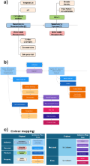
- properties can be tailored by changing their size, shape, surface chemistry, and functionality, have led to the designation of nanomaterials as a key enabling technology and to their subsequent inclusion in the broader categorisation of advanced materials [1][2]. Applications of nanomaterials derive in many


Theoretical study of the electronic and optical properties of a composite formed by the zeolite NaA and a magnetite cluster
Beilstein J. Nanotechnol. 2025, 16, 44–53, doi:10.3762/bjnano.16.5
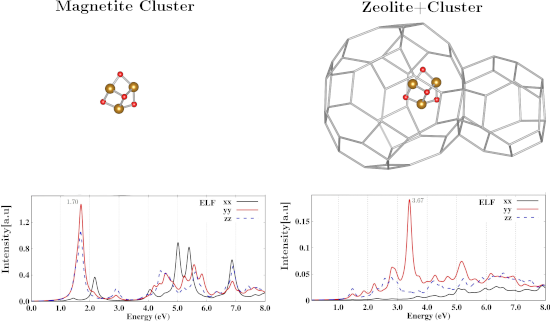
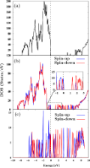
- Technology Advanced Institute, Van Lang University, Ho Chi Minh City, Vietnam Faculty of Applied Technology, School of Technology, Van Lang University, Ho Chi Minh City, Vietnam Universidad Politécnica de Baja California, Ingeniería Mecatrónica, Mexicali, Baja California 21376, México Instituto Potosino de




Bioinspired nanofilament coatings for scale reduction on steel
Beilstein J. Nanotechnol. 2025, 16, 25–34, doi:10.3762/bjnano.16.3
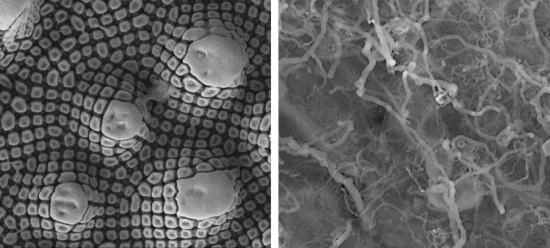
- Siad Dahir Ali Mette Heidemann Rasmussen Jacopo Catalano Christian Husum Frederiksen Tobias Weidner Department of Chemistry, Aarhus University, 8000 Aarhus C, Denmark Department of Biological and Chemical Engineering, Aarhus University, 8000 Aarhus C, Denmark Danish Offshore Technology Centre
- coat stainless steel (Type 316) with nanofilaments, discuss stability test of the coatings, and the results of scaling experiments. Results and Discussion Nanofilamant performance and stability on steel Shear stress test of SNF coatings on steel Previous applications of SNF technology have been focused
- for funding of the TESCAN CLARA SEM. We thank the Innovation Foundation Denmark for funding within the INNO-CCUS consortium (project grant CORROPro). The DTU Offshore Technology Center is gratefully acknowledged for funding (DTU/AU_CSP.3.D.02_CA_298).


A nanocarrier containing carboxylic and histamine groups with dual action: acetylcholine hydrolysis and antidote atropine delivery
Beilstein J. Nanotechnol. 2025, 16, 11–24, doi:10.3762/bjnano.16.2
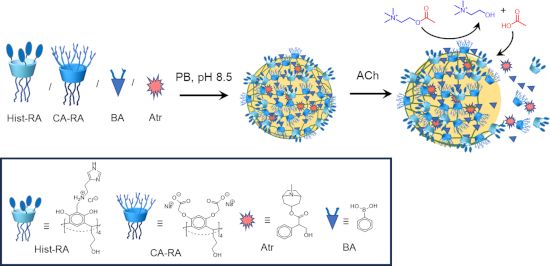
- . Analysis was performed using Malvern dispersion technology software version 5.10. A Perkin-Elmer Lambda 25 UV–visible spectrometer was utilized for UV spectra collection. Fluorescence spectra were recorded on a HITACHI F 7100 spectrofluorometer. Measurements were conducted at 37 °C using a quartz cuvette


Orientation-dependent photonic bandgaps in gold-dust weevil scales and their titania bioreplicates
Beilstein J. Nanotechnol. 2025, 16, 1–10, doi:10.3762/bjnano.16.1
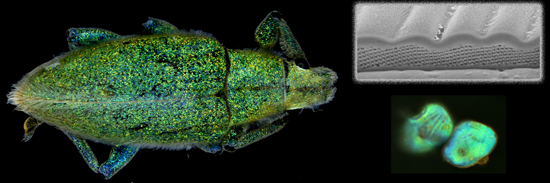
- Norma Salvadores Farran Limin Wang Primoz Pirih Bodo D. Wilts Department for Chemistry and Physics of Materials, University of Salzburg, Jakob-Haringer-Str. 2a, 5020 Salzburg, Austria Current address: Institute of Materials Science and Technology, Vienna Technical University, 1060 Vienna, Austria


Fabrication of hafnium-based nanoparticles and nanostructures using picosecond laser ablation
Beilstein J. Nanotechnol. 2024, 15, 1639–1653, doi:10.3762/bjnano.15.129
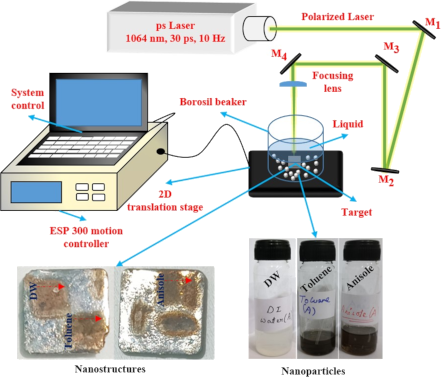
- University, Varanasi 221005, Uttar Pradesh, India Advanced Centre of Research in High Energy Materials (ACRHEM), DRDO Industry Academia – Centre of Excellence (DIA-COE), University of Hyderabad, Hyderabad 500046, Telangana, India Centre for Materials for Electronics Technology (C-MET), IDA Phase III
- , Cherlapalli, HCL (P.O.), Hyderabad 500 051, Telangana, India Institute of Electronics, Bulgarian Academy of Sciences, 72, Tzarigradsko Shosse, 1784, Sofia, Bulgaria Centre for Advanced Studies in Electronics Science and Technology (CASEST), University of Hyderabad, Hyderabad 500046, Telangana, India 10.3762
- mbar) using an electron beam melting furnace having a beam power of 60 kW (ELIT 60) at an accelerating voltage of 24 kV in a water-cooled crucible with feeding mechanism and an extraction system [32]. All operations were conducted at the Centre for Materials for Electronics Technology (CMET), Hyderabad




Heterogeneous reactions in a HFCVD reactor: simulation using a 2D model
Beilstein J. Nanotechnol. 2024, 15, 1627–1638, doi:10.3762/bjnano.15.128
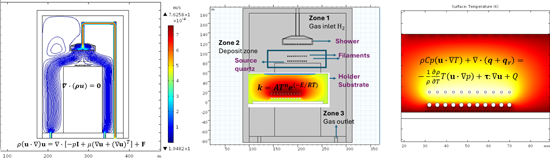
- for the subsequent growth of the SiOx films. These SiOx films have interesting properties and embedded nanostructures, which make them excellent dielectric, optoelectronic, and electroacoustic materials for the fabrication of devices compatible with silicon-based technology. Keywords: 2D model


Liver-targeting iron oxide nanoparticles and their complexes with plant extracts for biocompatibility
Beilstein J. Nanotechnol. 2024, 15, 1593–1602, doi:10.3762/bjnano.15.125
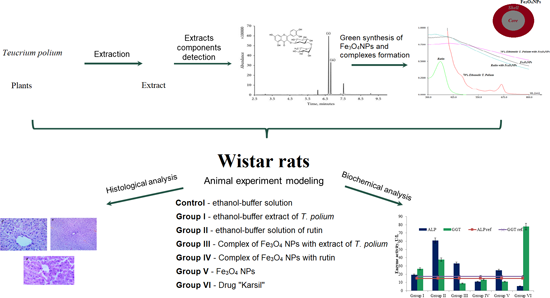
- challenges associated with human health. Nanotechnology offers great opportunities in medicine because of the physicochemical properties at the nanoscale. There are efforts to apply unique quantum phenomena at the nanoscale in the fields of medicine, biomedical sciences, bioengineering, food technology


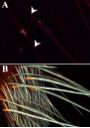
Ultrablack color in velvet ant cuticle
Beilstein J. Nanotechnol. 2024, 15, 1554–1565, doi:10.3762/bjnano.15.122
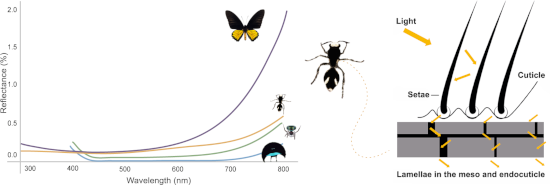
- pigment absorption that results in these remarkably absorptive surface. Especially, this kind of wasp-inspired technology may have its application in increasing efficiency of solar panels [20]. Further research is needed to uncover the mechanisms and functional roles of ultrablack coloration in velvet



The round-robin approach applied to nanoinformatics: consensus prediction of nanomaterials zeta potential
Beilstein J. Nanotechnol. 2024, 15, 1536–1553, doi:10.3762/bjnano.15.121
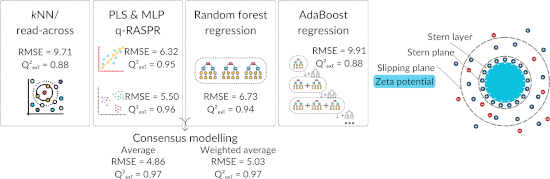
- Cheminformatics (DTC) Lab, Department of Pharmaceutical Technology, Jadavpur University, Kolkata 700 032, India School of Chemical Engineering, National Technical University of Athens, 9 Iroon Polytechniou, 15780, Athens, Greece QSAR Lab, Trzy Lipy 3, 80-172 Gdańsk, Poland University of Gdańsk, Faculty of


Electrochemical nanostructured CuBTC/FeBTC MOF composite sensor for enrofloxacin detection
Beilstein J. Nanotechnol. 2024, 15, 1522–1535, doi:10.3762/bjnano.15.120
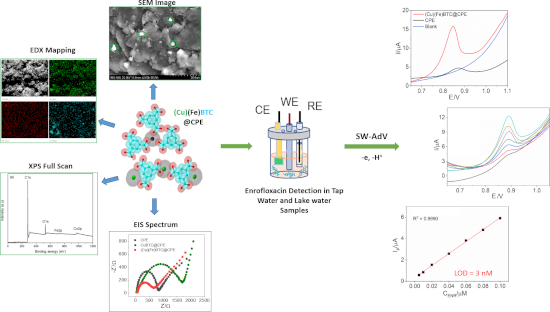
- Thi Kim Ngan Nguyen Tien Dat Doan Huy Hieu Luu Hoang Anh Nguyen Thi Thu Ha Vu Quang Hai Tran Ha Tran Nguyen Thanh Binh Dang Thi Hai Yen Pham Mai Ha Hoang Graduate University of Science and Technology, Viet Nam Academy of Science and Technology, Ha Noi, Vietnam Faculty of Chemistry, TNU-University
- of Sciences, Tan Thinh Ward, Thai Nguyen City, Vietnam Institute of Chemistry, Vietnam Academy of Science and Technology, 18 Hoang Quoc Viet Street, Cau Giay District, Ha Noi, Vietnam Hanoi University of Industry, 298 Cau Dien Street, Bac Tu Liem District, Ha Noi, Vietnam National Key Laboratory of
- Polymer and Composite Materials, Ho Chi Minh City University of Technology, Vietnam National University, Ho Chi Minh City, 70000, Vietnam Center for High Technology Research and Development, Vietnam Academy of Science and Technology, 18 Hoang Quoc Viet Street, Cau Giay District, Ha Noi, Vietnam 10.3762





Integrating high-performance computing, machine learning, data management workflows, and infrastructures for multiscale simulations and nanomaterials technologies
Beilstein J. Nanotechnol. 2024, 15, 1498–1521, doi:10.3762/bjnano.15.119
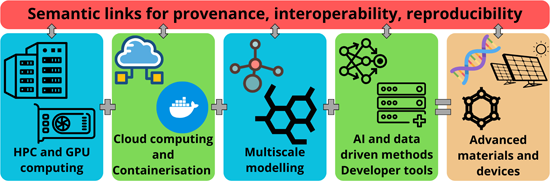
- , GPUs are nowadays considered the most efficient technological platform for performing AI and data-intensive tasks [13][25]. This has enabled the development of complex models that can process vast amounts of materials data. Another consumer-driven technology that has boosted the digitalization of
- horizontal technologies to a vertical integration to the materials science domain see Figure 3. The successful implementation of digital strategies for materials/nanomaterials development relies on the crucial role of “translators” who bridge the gap between domain-specific researchers and digital technology
- role in identifying the specific needs and challenges of the research domain and articulating them to digital technology experts, supporting the translation of domain-specific requirements into technical specifications, and enabling the development of tailored digital solutions. Likewise, translators


Polymer lipid hybrid nanoparticles for phytochemical delivery: challenges, progress, and future prospects
Beilstein J. Nanotechnol. 2024, 15, 1473–1497, doi:10.3762/bjnano.15.118
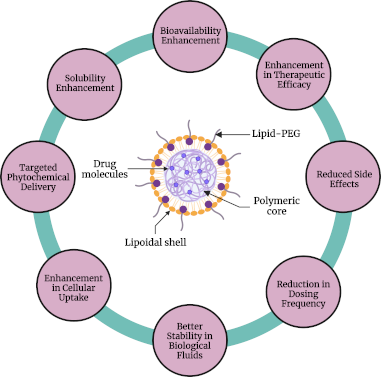
- Iqra Rahat Pooja Yadav Aditi Singhal Mohammad Fareed Jaganathan Raja Purushothaman Mohammed Aslam Raju Balaji Sonali Patil-Shinde Md. Rizwanullah Department of Pharmaceutical Technology, Meerut Institute of Engineering and Technology, Meerut-250005, Uttar Pradesh, India Department of Basic Medical


Strain-induced bandgap engineering in 2D ψ-graphene materials: a first-principles study
Beilstein J. Nanotechnol. 2024, 15, 1440–1452, doi:10.3762/bjnano.15.116
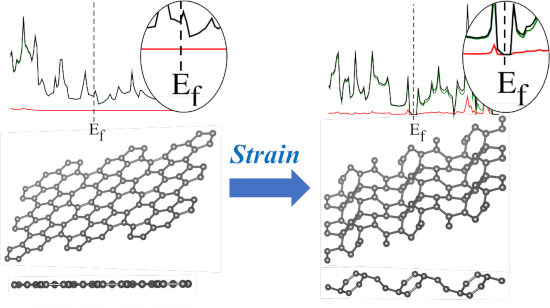
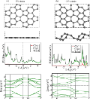
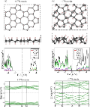
- Interdisciplinary Nanostructure Science and Technology, University of Kassel, Heinrich-Plett-Straße 40, 34132 Kassel, Germany 10.3762/bjnano.15.116 Abstract High mechanical strength, excellent thermal and electrical conductivity, and tunable properties make two-dimensional (2D) materials attractive for various


Lithium niobate on insulator: an emerging nanophotonic crystal for optimized light control
Beilstein J. Nanotechnol. 2024, 15, 1415–1426, doi:10.3762/bjnano.15.114
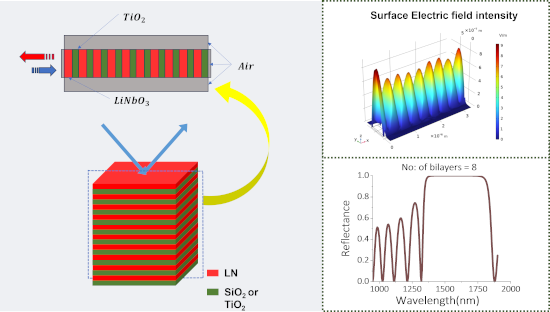
- Midhun Murali Amit Banerjee Tanmoy Basu Centre for Quantum Engineering, Research and Education (CQuERE), TCG-Centres for Research and Education in Science and Technology (TCG-CREST), Sector V, Salt Lake, Kolkata-700091, India Academy of Scientific and Innovative Research (AcSIR), Ghaziabad- 201002
- potential as a next-generation photovoltaic technology [41][42]. These cells offer a compelling alternative to traditional silicon solar cells because of the low manufacturing cost. Additionally, CQDs possess a unique property – their bandgap can be tuned by adjusting the size of the dots. This allows them
- layer to absorb four times more near-infrared light [43]. Flip-chip micro light-emitting diodes (micro-LEDs) are a revolutionary technology with the potential to create next-generation HDR displays due to their tiny size, exceptional brightness, wide color gamut, and energy efficiency [44][45][46


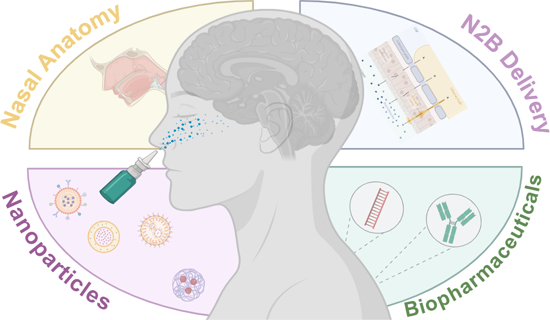
Nanotechnological approaches for efficient N2B delivery: from small-molecule drugs to biopharmaceuticals
Beilstein J. Nanotechnol. 2024, 15, 1400–1414, doi:10.3762/bjnano.15.113
- Selin Akpinar Adscheid Akif E. Tureli Nazende Gunday-Tureli Marc Schneider MyBiotech GmbH; Industriestraße 1B, 66802 Überherrn, Germany Department of Pharmacy, Biopharmaceutics and Pharmaceutical Technology, PharmaScienceHub, Saarland University, Campus C4 1, Saarbrücken D-66123, Germany 10.3762


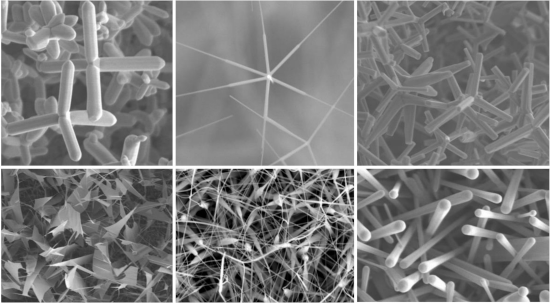
Various CVD-grown ZnO nanostructures for nanodevices and interdisciplinary applications
Beilstein J. Nanotechnol. 2024, 15, 1390–1399, doi:10.3762/bjnano.15.112
- The-Long Phan Le Viet Cuong Vu Dinh Lam Ngoc Toan Dang Faculty of Engineering Physics and Nanotechnology, VNU University of Engineering and Technology, 144 Xuan Thuy, Cau Giay, Hanoi, Vietnam Graduate University of Science and Technology, Vietnam Academy of Science and Technology, Hanoi, Vietnam
- comparison to other compounds [4][5][6]. Specifically, its large bandgap energy Eg ≈ 3.4 eV is comparable to GaN – a typical material for blue-light-emitting diode (LED) technology [7][8]. Also, its exciton binding energy is higher than the thermal energy at 300 K, and it has high-quality optical