Search results
Search for "adhesive" in Full Text gives 246 result(s) in Beilstein Journal of Nanotechnology. Showing first 200.
Nano- and microstructured materials for in vitro studies of the physiology of vascular cells
Beilstein J. Nanotechnol. 2016, 7, 1620–1641, doi:10.3762/bjnano.7.155
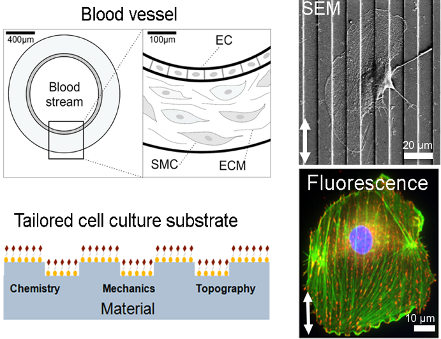
- different physical and chemical properties of an adhesive surface may lead to a better understanding of their biology and the origin of vascular diseases and malfunctions. Additionally, such knowledge will be supportive for the adequate and successful design and development of medical implants, e.g., stents
- in its surface chemistry since biological cell adhesion via integrins or other adhesion molecules will generally not directly occur to inorganic or organic polymeric materials. Thus, further modification of the surface with adhesive molecules, for example with proteins from the extra cellular matrix
- desired to have a predictable influence on cell behavior. Moreover, some synthetic materials are not promoting cell adhesion; a functionalization of the surface prior of cell contact becomes necessary to render it cell-adhesive. There are numerous methods and strategies for chemical surface

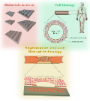


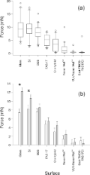
Surface roughness rather than surface chemistry essentially affects insect adhesion
Beilstein J. Nanotechnol. 2016, 7, 1471–1479, doi:10.3762/bjnano.7.139

- to identify the most important parameters influencing insect attachment. Many insects, including beetles, can attach to inverted surfaces using specific hairy adhesive pads, covered with tenent setae, which secrete an adhesive fluid which typically consists of a mixture of alcohols, fatty acids, and
- hydrocarbons [26][27][28][29][30][31][32]. Several hypotheses exist on how plant surfaces prevent insect attachment. These are typically based on (1) the reduction of the contact area between the substrate and the insect adhesive pad through surface micro-roughness, (2) a decrease in substrate surface energy
- be dissolved by the pad fluid) [22]. These mechanisms are to some extent conventional strategies utilized in functional surface design that gives us a unique chance to develop artificial surfaces with such properties, and test their anti-adhesive effects on insects [5][6][7][8][10][11][12][13][15



Influence of ambient humidity on the attachment ability of ladybird beetles (Coccinella septempunctata)
Beilstein J. Nanotechnol. 2016, 7, 1322–1329, doi:10.3762/bjnano.7.123
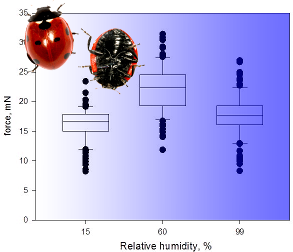
- , Macquarie University, Sydney, NSW 2109, Australia 10.3762/bjnano.7.123 Abstract Many insects possess adhesive foot pads, which enable them to scale smooth vertical surfaces. The function of these organs may be highly affected by environmental conditions. Ladybird beetles (Coccinellidae) possess dense
- tarsal soles of tenent setae, supplemented with an adhesive fluid. We studied the attachment ability of the seven-spotted ladybird beetle (Coccinella septempunctata) at different humidities by horizontal traction experiments. We found that both low (15%) and high (99%) relative humidities lead to a
- decrease of attachment ability. The significantly highest attachment forces were revealed at 60% humidity. This relationship was found both in female and male beetles, despite of a deviating structure of adhesive setae and a significant difference in forces between sexes. These findings demonstrate that


Functional diversity of resilin in Arthropoda
Beilstein J. Nanotechnol. 2016, 7, 1241–1259, doi:10.3762/bjnano.7.115
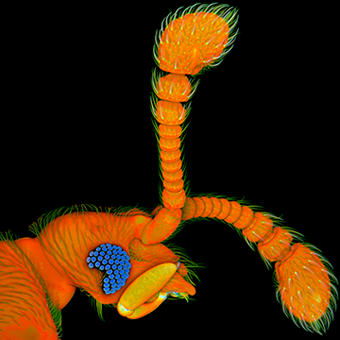
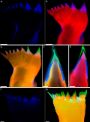
- reflected by gradients of the mechanical properties of the respective resilin-containing composites. The material composition of adhesive tarsal setae of beetles (Figure 2B) represents a good example for such gradients. Recently, the Young’s modulus of such setae was measured along the longitudinal axis of
- fresh adhesive tarsal setae. While the material of the tip features only elastic deformation, both elastic and, to some extent, plastic deformation are observed in the material of the base [48]. This means that the purely elastic response of the tip is due to the presence of resilin, whereas the
- partially plastic deformation at the base is mainly due to the presence of stiffer tanned exoskeleton. It is very likely that effects similar to those observed in beetle adhesive tarsal setae exist in other exoskeleton structures with comparable gradients of the resilin proportion. Occurrence and functions




Generalized Hertz model for bimodal nanomechanical mapping
Beilstein J. Nanotechnol. 2016, 7, 970–982, doi:10.3762/bjnano.7.89
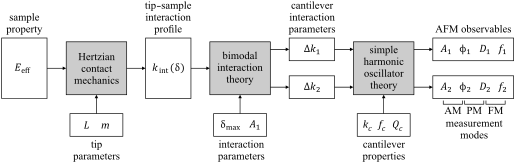
- derived in the context of Hertzian contact mechanics where only repulsive interactions are considered, only data where A1/Ar1 < 0.75 were analyzed to ensure that repulsive forces dominate over attractive and adhesive forces. This criterion is somewhat arbitrary and specific to the current dataset; other


![[Graphic 4]](/bjnano/content/inline/2190-4286-7-89-i40.png?max-width=637&scale=1.18182) approximation applied to Equation 6 i...
approximation applied to Equation 6 i...


Frog tongue surface microstructures: functional and evolutionary patterns
Beilstein J. Nanotechnol. 2016, 7, 893–903, doi:10.3762/bjnano.7.81

- Thomas Kleinteich Stanislav N. Gorb Functional Morphology and Biomechanics, Zoology Department, Kiel University, 24118 Kiel, Germany 10.3762/bjnano.7.81 Abstract Frogs (Lissamphibia: Anura) use adhesive tongues to capture fast moving, elusive prey. For this, the tongues are moved quickly and
- adhere instantaneously to various prey surfaces. Recently, the functional morphology of frog tongues was discussed in context of their adhesive performance. It was suggested that the interaction between the tongue surface and the mucus coating is important for generating strong pull-off forces. However
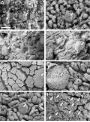
- comprise hair-like protrusions (Megophryidae and Ranidae), microridges (Bufonidae and Dendrobatidae), or can be irregularly shaped or absent as observed in the remaining taxa examined herein. Some of this variation might be related to different degrees of adhesive performance and may point to differences
Assembling semiconducting molecules by covalent attachment to a lamellar crystalline polymer substrate
Beilstein J. Nanotechnol. 2016, 7, 784–798, doi:10.3762/bjnano.7.70

- particles to stack was much higher than for spherical particles, probably due to the larger area of contact between disk shaped particles resulting in a larger adhesive van der Waals energy. Thirdly, we found that the carboxyl groups on the surfaces of CPE45 nanocrystals were only partly accessible for


Correlative infrared nanospectroscopic and nanomechanical imaging of block copolymer microdomains
Beilstein J. Nanotechnol. 2016, 7, 605–612, doi:10.3762/bjnano.7.53
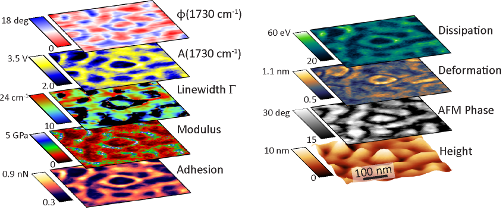
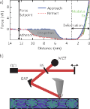
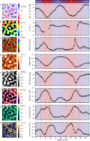
- measure a dissipation (Figure 3g) of 25 eV over PMMA, and 45 eV over PS. The dissipation channel measures the integrated hysteresis between approach and retract and thus directly measures the energy lost to the sample. For purely elastic behavior, the energy loss is dominated by adhesive forces associated
- and adhesion suggests that energy loss is dominated by surface-sensitive adhesive forces. Our deformation map (Figure 3h) does not correlate directly with chemical composition (e.g., dissipation), as indicated by the dotted lines in the corresponding profile. Instead, it shows larger values, 0.9 nm
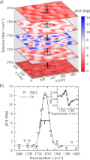


![[Graphic 9]](/bjnano/content/inline/2190-4286-7-53-i10.png?max-width=637&scale=1.18182) (1730 ...
(1730 ...
Length-extension resonator as a force sensor for high-resolution frequency-modulation atomic force microscopy in air
Beilstein J. Nanotechnol. 2016, 7, 432–438, doi:10.3762/bjnano.7.38
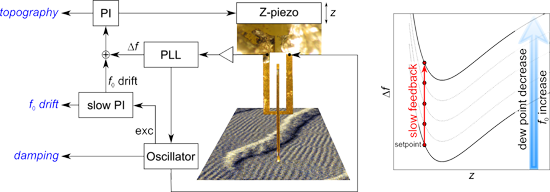
- stiffness of the LER. Depending on the sample and its preparation larger attractive forces have also been observed. To prove the feasibility of scanning with small forces a surface decorated by adsorbates was chosen. For this purpose we rinsed a freshly exfoliated (adhesive tape, BT-150E-AT, Nitto Denko



Chemical bath deposition of textured and compact zinc oxide thin films on vinyl-terminated polystyrene brushes
Beilstein J. Nanotechnol. 2016, 7, 102–110, doi:10.3762/bjnano.7.12
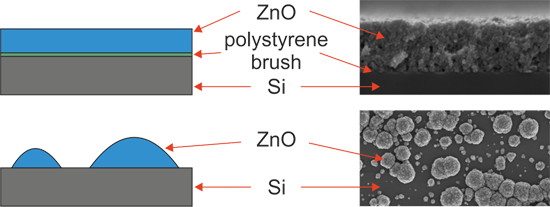
- signal-to-noise ratio, PS brushes grafted to a Si-wafer coated with 10 nm SiO2, 100 nm Au and 5 nm Ti as adhesive layer between Au and Si were prepared [46]. For the sample measurement between 900 and 1300 scans have been cumulated, the spectra were recorded until no water bands could be observed in the


Controlled graphene oxide assembly on silver nanocube monolayers for SERS detection: dependence on nanocube packing procedure
Beilstein J. Nanotechnol. 2016, 7, 9–21, doi:10.3762/bjnano.7.2
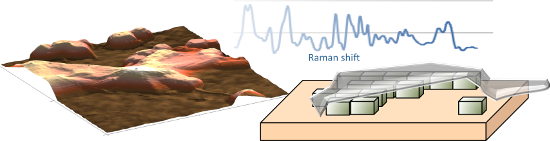
- ] proposed to assemble silver nanoparticles to graphene oxide sheets employing electrostatic interactions and a polymer, as adhesive agent, to impart greater stability against aggregation of AgNPs. Previous investigations are generally focused on spherical nanoparticles and only recently Fan et al. reported


Self-organization of gold nanoparticles on silanated surfaces
Beilstein J. Nanotechnol. 2015, 6, 2345–2353, doi:10.3762/bjnano.6.242

- various surfaces in which the stability of AuNPs, interface layer and the support surface are important for the self-organization. Han et al. have demonstrated the growth of a single layer AuNPs film deposited on indium tin oxide (ITO) substrate without using an adhesive layer by utilizing diblock


Nanoscale rippling on polymer surfaces induced by AFM manipulation
Beilstein J. Nanotechnol. 2015, 6, 2278–2289, doi:10.3762/bjnano.6.234
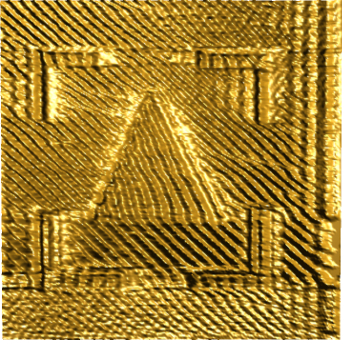
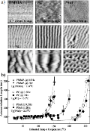
- compressive loads. It is attributed to buckling, i.e., waves of detachment driven by a tangential stress gradient along the contact zone of the sliding interface due to the breaking of adhesive bonds between the two surfaces [28]. On the nanoscale, however, ripples do not relax to their initial smooth shape
- the tip during the stage movement. A hole forms where the tip resides and a mound forms in front of the tip hindering the sliding motion [20]. The tip can slip over when the cantilever exerts a lateral force larger than the tip–sample adhesive interaction. Then the tip forms a new pair of hole and




A simple and efficient quasi 3-dimensional viscoelastic model and software for simulation of tapping-mode atomic force microscopy
Beilstein J. Nanotechnol. 2015, 6, 2233–2241, doi:10.3762/bjnano.6.229
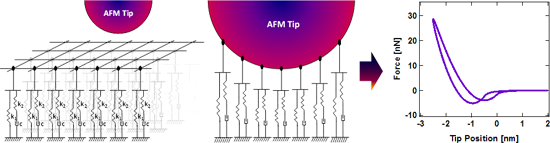
- analyze the depth dependence of the contact stiffness by performing a fit to appropriate models of elastic, viscous and adhesive forces, as is demonstrated in [13] for polymer blends. This approach is associated with small tip oscillations and is sensitive to the speed at which the base of the cantilever
- forces (such as dispersion, electrostatic, magnetic), adhesive forces (such as chemical, capillary), viscoelastic forces, plastic forces, etc. For the case of viscoelasticity, in the most elaborate case one would need to solve the relaxation of the surface in 3D with the appropriate constitutive relation



Electrochemical coating of dental implants with anodic porous titania for enhanced osteointegration
Beilstein J. Nanotechnol. 2015, 6, 2183–2192, doi:10.3762/bjnano.6.224
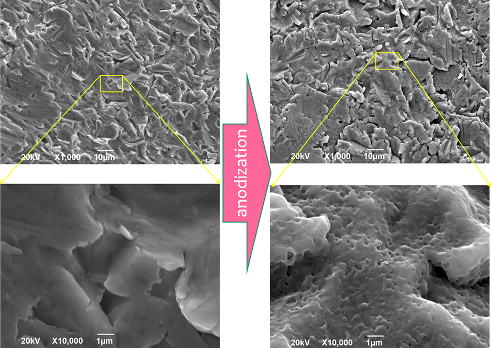
- anodization by SEM. They were mounted on Al stubs by means of double-sided adhesive carbon tape and overcoated with a ≈10 nm thick layer of sputtered gold before inserting into the SEM chamber. We used a JSM-6490LA (JEOL, Japan) instrument equipped with energy dispersive spectroscopy (EDS) for the chemical


Surface engineering of nanoporous substrate for solid oxide fuel cells with atomic layer-deposited electrolyte
Beilstein J. Nanotechnol. 2015, 6, 1805–1810, doi:10.3762/bjnano.6.184
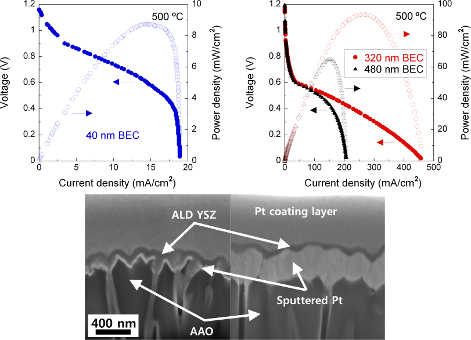
- ceramic adhesive (CP4010, Aremco Products, USA), which were heated to 500 °C with a ramping rate of 10 °C/min using halogen heaters. 50 sccm dry H2 gas was supplied to the anode side and the cathode was exposed to the atmospheric environment. The anode was connected with a combination of silver paste


Template-controlled mineralization: Determining film granularity and structure by surface functionality patterns
Beilstein J. Nanotechnol. 2015, 6, 1763–1768, doi:10.3762/bjnano.6.180
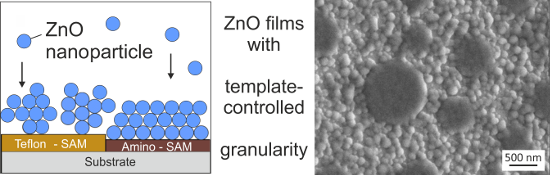
- , adhesive, tribological, catalytic activity [19] or properties connected with the granularity of the film [20][21][22][23]. Additionally, the reflectivity or light scattering properties may be controlled – the latter of which are highly relevant for the fields of optical data storage [24][25] and

Atomic force microscopy as analytical tool to study physico-mechanical properties of intestinal cells
Beilstein J. Nanotechnol. 2015, 6, 1457–1466, doi:10.3762/bjnano.6.151
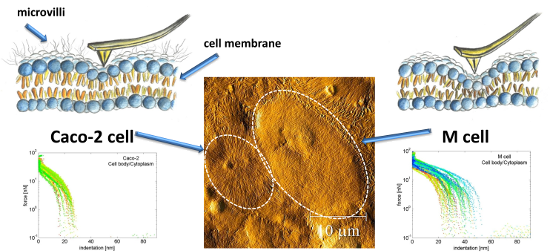
- can be directly linked to cell adhesion, since indentation also determines the number of adhesive bonds which are formed between cells and a surface. Hence, a smaller indentation and a consequent reduced contact area leads to a decrease in cellular adhesion [54]. Thus, we zoomed into the region, where
- elastic surface due to the absence of microvilli, resulting in a significantly higher adhesion ability compared to rough Caco-2 cells [55]. Apart from surface nature, adhesive interactions of cells with other surfaces available in the (intestinal) environment are usually mediated by adhesion complexes
- secreted by goblet cells and forms an efficient acellular barrier that strongly impacts adhesive interactions between intestinal epithelial cells and diverse substances/antigens. Due to intake of food, differences in the pH occur, which leads to changes in the viscoelastic properties of the mucus layer


Electron-stimulated purification of platinum nanostructures grown via focused electron beam induced deposition
Beilstein J. Nanotechnol. 2015, 6, 907–918, doi:10.3762/bjnano.6.94

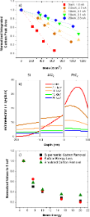
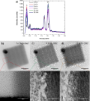
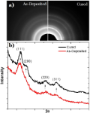
- copper tape adhesive. Figure 6b–d shows plane-view TEM images of the EBID structures at different purification times. A comparison of the TEM images reveals that the platinum grains coarsen and densify with increasing purification time. The estimated grain sizes were 1.97 nm (±0.34 nm), 3.36 nm (±0.69 nm




Stiffness of sphere–plate contacts at MHz frequencies: dependence on normal load, oscillation amplitude, and ambient medium
Beilstein J. Nanotechnol. 2015, 6, 845–856, doi:10.3762/bjnano.6.87

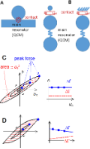
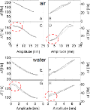
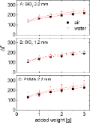
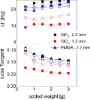
- removing the spheres from the resonator. An increased stiffness in water contradicts intuition insofar, as one would expect the liquid to lower the effective van der Waals attraction. With lowered adhesive forces, the contact area should decrease and the contact stiffness should decrease, in consequence




Applications of three-dimensional carbon nanotube networks
Beilstein J. Nanotechnol. 2015, 6, 792–798, doi:10.3762/bjnano.6.82

- Figure 4b, with no observable roll-off angle, even when the substrate is turned upside down, see Figure 5a. Therefore, we infer that the contact angle hysteresis is sufficiently high to pin the water droplet on the MWCNT surface. It is possible to estimate the adhesive force in length units of a surface


Electroburning of few-layer graphene flakes, epitaxial graphene, and turbostratic graphene discs in air and under vacuum
Beilstein J. Nanotechnol. 2015, 6, 711–719, doi:10.3762/bjnano.6.72
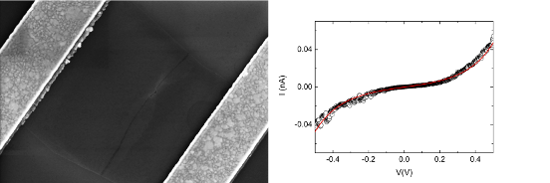
- adhesive tape. After rinsing with acetone and isopropanol, hundreds of discs were left on the surface. Typical Raman spectra of the as-deposited discs are shown in the Supporting Information File 1. The discs were located by an optical microscope and then patterned in the hour-glass geometry by oxygen



In situ observation of biotite (001) surface dissolution at pH 1 and 9.5 by advanced optical microscopy
Beilstein J. Nanotechnol. 2015, 6, 665–673, doi:10.3762/bjnano.6.67

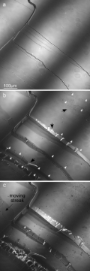
- of a custom-made Teflon flow-through cell by a silicone adhesive. The flow cell was a rectangular prism with a volume of 0.08 cm3 (Figure 6c). A small channel on each side of the cell allowed the reacting solution to circulate at a constant flow rate (0.03–0.07 mL·min−1), yielding a residence time of




Self-assembled anchor layers/polysaccharide coatings on titanium surfaces: a study of functionalization and stability
Beilstein J. Nanotechnol. 2015, 6, 617–631, doi:10.3762/bjnano.6.63

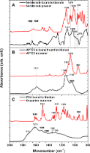
- bearing phosphonate [14][26][27] and bisphosphonate (BP) [28][29] groups. Upon hydrolysis, these form strong mono- and bi-dentate coordination bonds with metal surfaces [30]. Inspired by the composition of mussel adhesive proteins, Messersmith et al. [31] proposed the formation of poly(dopamine) (PDA



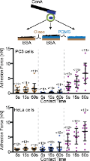
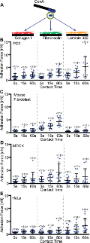
Increasing throughput of AFM-based single cell adhesion measurements through multisubstrate surfaces
Beilstein J. Nanotechnol. 2015, 6, 157–166, doi:10.3762/bjnano.6.15

- adhere to surfaces they encounter, and if so, how strong and for how long [7][8][9][10]. Extracellular cues and intracellular signaling tightly regulate cell adhesion. Furthermore, the outside-in signaling of CAMs regulate cellular processes including the adhesive properties of the cell [11]. Among CAMs
- adherence to various ECM proteins, necessitating the investigation of the adhesive properties of the cells. Atomic force microscopy (AFM)-based single-cell force spectroscopy (SCFS) provides a versatile tool to quantify the adhesion of single cells in near-physiological conditions [14][15][16]. In AFM-based
- SCFS, a single cell is attached to a cantilever (Figure 1A,B), commonly facilitated by an adhesive coating (e.g., concanavalin A, poly-L-lysine or CellTak) [17][18][19][20][21][22]. The attached cell is lowered (approach) onto a substrate (Figure 1A(i)), which is a protein-coated surface, another cell