Search results
Search for "high sensitivity" in Full Text gives 206 result(s) in Beilstein Journal of Nanotechnology. Showing first 200.
Voltammetric determination of polyphenolic content in pomegranate juice using a poly(gallic acid)/multiwalled carbon nanotube modified electrode
Beilstein J. Nanotechnol. 2016, 7, 1104–1112, doi:10.3762/bjnano.7.103
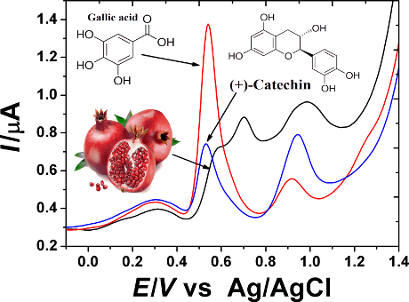
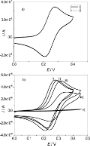
- transfer on bare GCE or MWCNT/GCE. Thus the modification enhances the redox peak current and could be used with high sensitivity. Recently, the use of nanomaterials for electrode modification has grown exponentially, owing to their advantageous electrochemical properties. Carbon nanotubes are the main


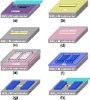
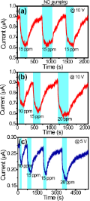
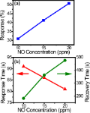
NO gas sensing at room temperature using single titanium oxide nanodot sensors created by atomic force microscopy nanolithography
Beilstein J. Nanotechnol. 2016, 7, 1044–1051, doi:10.3762/bjnano.7.97

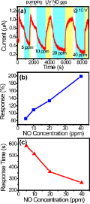
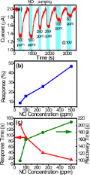
- attractive than conventional devices [9]. The advantages include high sensitivity, high stability, fast detection and recovery, low power consumption, relatively low cost, and small size [9][10]. These advantages enable semiconducting metal oxide sensors to be implemented on integrated circuits for portable

Signal enhancement in cantilever magnetometry based on a co-resonantly coupled sensor
Beilstein J. Nanotechnol. 2016, 7, 1033–1043, doi:10.3762/bjnano.7.96

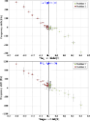
- where the latter allows for very high sensitivity and the micrometer size part for an easy detection [9]. We will only briefly review the theoretical considerations regarding the sensor concept since it is discussed in depth elsewhere [9]. The main focus of this publication is to demonstrate the
- the co-resonant coupling this changes the resonance frequencies of the coupled system and can be detected at the cantilever. Small interactions result in rather large frequency shifts due to the low stiffness, i.e., high sensitivity of the nanoscale oscillator, and can be measured with a rather



![[Graphic 11]](/bjnano/content/inline/2190-4286-7-96-i21.png?max-width=637&scale=1.18182) on the interaction spring constant k3. Th...
on the interaction spring constant k3. Th...
Generalized Hertz model for bimodal nanomechanical mapping
Beilstein J. Nanotechnol. 2016, 7, 970–982, doi:10.3762/bjnano.7.89
- results in independent measures of nanomechanical properties by both eigenmodes while imaging. Notably, the fact that the weight function of the second eigenmode increases drastically as the tip approaches the sample, as seen in Figure 3f, explains the high sensitivity and increased spatial resolution of
- held fixed by the AGC. The fact that all three configurations lead to the same extracted Eeff suggests that the small-amplitude limit for the second mode was fulfilled. Sensitivity of bimodal AFM The high sensitivity of bimodal AFM was predicted in the theory described in Section ‘Bimodal interaction
- a small-amplitude second eigenmode into the measurement: it provides a high-sensitivity channel of information, without disrupting the measurement as explained in the previous section. Error from binomial approximation The error introduced by the approximation that allowed the analytical closed

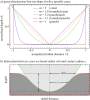
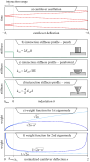

![[Graphic 4]](/bjnano/content/inline/2190-4286-7-89-i40.png?max-width=637&scale=1.18182) approximation applied to Equation 6 i...
approximation applied to Equation 6 i...


Understanding interferometry for micro-cantilever displacement detection
Beilstein J. Nanotechnol. 2016, 7, 841–851, doi:10.3762/bjnano.7.76

- smallest fiber–cantilever gap allows for displacement detection with a very low detection-system noise floor of promising a high sensitivity in force detection even for the relatively stiff cantilevers used in the present study. Apparently, the system noise is affected by opto-mechanical coupling and we


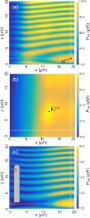


![[Graphic 27]](/bjnano/content/inline/2190-4286-7-76-i36.png?max-width=637&scale=1.18182) of the noise floor of the interferometer signal as a function of the...
of the noise floor of the interferometer signal as a function of the...
Highly compact refractive index sensor based on stripe waveguides for lab-on-a-chip sensing applications
Beilstein J. Nanotechnol. 2016, 7, 751–757, doi:10.3762/bjnano.7.66

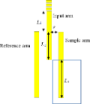
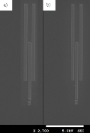
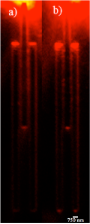
- ] are widely used techniques utilising plasmons to measure refractive index changes. SPR is the most widely used sensing technique. It provides high sensitivity with label-free detection. Most commercially available SPR sensors employ a prism configuration to excite SPs on a metal surface which makes



Gold nanoparticles covalently assembled onto vesicle structures as possible biosensing platform
Beilstein J. Nanotechnol. 2016, 7, 655–663, doi:10.3762/bjnano.7.58

- fulfil performance criteria such as high sensitivity and low limit of detection. In this context, vesicles can be used in the construction of biosensors as supporting film to coat Au or Ag electrodes [3]. Self-assembly of nanoparticles onto organised systems combines the advantages of nanomaterials





Early breast cancer screening using iron/iron oxide-based nanoplatforms with sub-femtomolar limits of detection
Beilstein J. Nanotechnol. 2016, 7, 364–373, doi:10.3762/bjnano.7.33

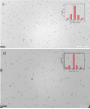
- the use of dextran as anticoagulant [42]. The requirement of only a very low volume of serum for performing meaningful enzyme activity measurements is a definite advantage of the very high sensitivity of the nanoplatforms for protease detection, which originates from the concurrent utilization of SEM


Mismatch detection in DNA monolayers by atomic force microscopy and electrochemical impedance spectroscopy
Beilstein J. Nanotechnol. 2016, 7, 220–227, doi:10.3762/bjnano.7.20
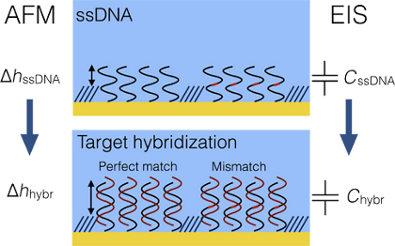
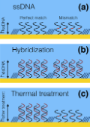
- strategies [22] might improve sensitivity further possibly circumventing the annealing step. Electrochemical impedance spectroscopy-based assay Despite the high sensitivity, the AFM assay does not allow, at the moment, for a real-time investigation of binding events. In order to overcome such limitations, we
- multiplexing. Ultimate sensitivity has been demonstrated for these arrays (100 pM, [41]), making them overall amenable to less invasive diagnostic analysis with a sensible reduction of the volume of the analyte till single cell [26]. Finally, our electrochemical measurements combine high sensitivity with real


Evaluation of gas-sensing properties of ZnO nanostructures electrochemically doped with Au nanophases
Beilstein J. Nanotechnol. 2016, 7, 22–31, doi:10.3762/bjnano.7.3
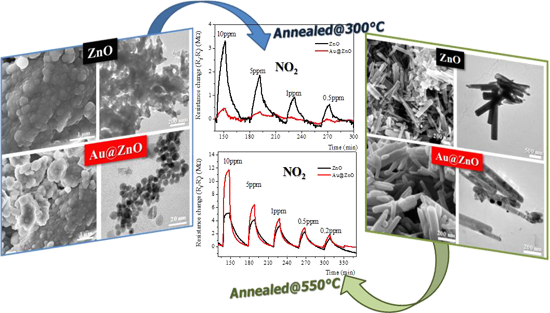
- active layer in low-cost chemiresistive gas sensors, due to their high sensitivity to gaseous analytes and easy production. The gas-sensing mechanism of MOS-based gas sensors is based on receptor and transducer functions [3]. Specifically, the first regards the recognition of a gaseous analyte by an




Blue and white light emission from zinc oxide nanoforests
Beilstein J. Nanotechnol. 2015, 6, 2463–2469, doi:10.3762/bjnano.6.255
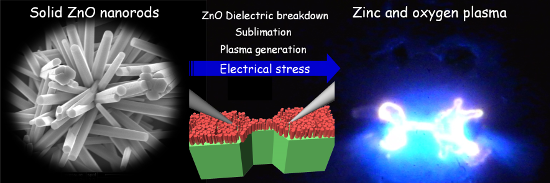
- electrical contact (Figure 1c). The probe separation for all electrical measurements was ≈10–15 µm. Either a high-sensitivity 1080p HD camcorder with a frame rate of 60 fps (Sony, HDR-CX160) or a high-speed camera with a maximum of 1200 fps (Casio, EX-F1) was connected to the microscope head for imaging


Green and energy-efficient methods for the production of metallic nanoparticles
Beilstein J. Nanotechnol. 2015, 6, 2354–2376, doi:10.3762/bjnano.6.243
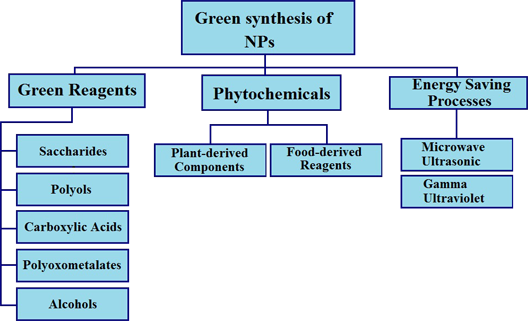
- [136][137]. In the field of nanotechnology, the real-time monitoring of size and shapes of nanostructures is of high importance even though it is very challenging. There are reports on developing innovative systems, such as grazing-incidence small-angle X-ray scattering setup that showed a high
- sensitivity to control the required parameters of the production of NPs [138]. Inherently safer chemistry: All types of required substances for a chemical process should be selected so that the all hazards and risks of the system, such as toxicity, flammability and explosivity are minimized to prevent


Possibilities and limitations of advanced transmission electron microscopy for carbon-based nanomaterials
Beilstein J. Nanotechnol. 2015, 6, 1541–1557, doi:10.3762/bjnano.6.158
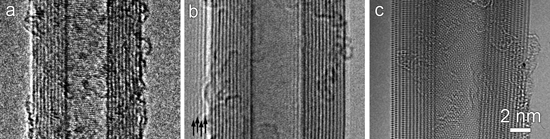
- metal-oxide semiconductor) sensor up to 1600 fps [50]. The high sensitivity and fast acquisition in detecting has made possible the automated and ultra-fast acquisition of a series of under-exposed images from the same region. After drift correction, the images of such a sequence are stacked and can


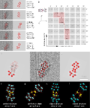
Electronic interaction in composites of a conjugated polymer and carbon nanotubes: first-principles calculation and photophysical approaches
Beilstein J. Nanotechnol. 2015, 6, 1138–1144, doi:10.3762/bjnano.6.115

- at 4.64 eV with a 100 fs pulsed laser at low photon density (below 1017 cm−3) and PL images were recorded with a streak camera [16][17]. Steady-state PL spectra and quantum yields Q were measured at 3.1 eV excitation energy [18]. Photoconductivity measurements were performed at 2.54 eV with a high
- sensitivity Keithley electrometer. Figure 1 compares photoconductivity (PC) data and quantum yield estimates for the composite PPV/SWNT series x = 0–32%. We observe that the quantum yield decreases from a value of 19% (x = 0, standard PPV) in good agreement with the literature [19][20] down to 4% for x = 32


High sensitivity and high resolution element 3D analysis by a combined SIMS–SPM instrument
Beilstein J. Nanotechnol. 2015, 6, 1091–1099, doi:10.3762/bjnano.6.110

- has increased during the last decade [1]. In particular, nano-analytical techniques and instruments providing both excellent spatial resolution and high-sensitivity chemical information are of utmost importance for investigations at the nanoscale. Secondary ion mass spectrometry (SIMS) is a method of
- choice for high sensitivity analysis, including isotopic ratio measurements [2][3]. State-of-the-art SIMS imaging instruments can provide chemical 2D and 3D maps with a lateral resolution of around 50 nm [4][5]. However, several important artefacts result from the fact that conventional 3D image


Tunable magnetism on the lateral mesoscale by post-processing of Co/Pt heterostructures
Beilstein J. Nanotechnol. 2015, 6, 1082–1090, doi:10.3762/bjnano.6.109

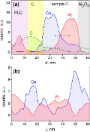
- with a CS probe corrector (DCOR) was used. The TEM was equipped with a X-FEG high-brightness electron gun, the high-end post-column electron energy filter Quantum ERSTM from Gatan, and four high sensitivity SDD X-ray detectors from Bruker (Super-X). The measurements were performed at an accelerating




Synergic combination of the sol–gel method with dip coating for plasmonic devices
Beilstein J. Nanotechnol. 2015, 6, 500–507, doi:10.3762/bjnano.6.52

- 10.3762/bjnano.6.52 Abstract Biosensing technologies based on plasmonic nanostructures have recently attracted significant attention due to their small dimensions, low-cost and high sensitivity but are often limited in terms of affinity, selectivity and stability. Consequently, several methods have been


Hollow plasmonic antennas for broadband SERS spectroscopy
Beilstein J. Nanotechnol. 2015, 6, 492–498, doi:10.3762/bjnano.6.50

- be considered that some of the biomolecules of interest are present in very low concentrations. Therefore, monitoring such an environment requires techniques that can offer both flexibility and high sensitivity for all cases. In other words, the investigation of the biological functions of living
- cells requires the acquisition of information from many different cell parts. For example, considering the most common investigation method in biology, namely fluorescence spectroscopy, it offers very high sensitivity, but at the cost of being sensitive only to those molecules for which the label has


Overview about the localization of nanoparticles in tissue and cellular context by different imaging techniques
Beilstein J. Nanotechnol. 2015, 6, 263–280, doi:10.3762/bjnano.6.25
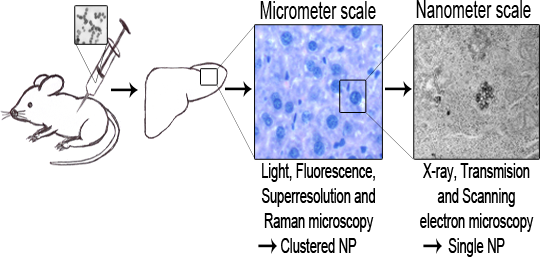
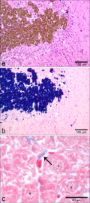
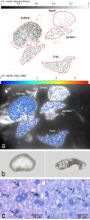
- sensitivities [71]. Both LMA and EMA offer high sensitivity due to the possibility of long exposure times with even small amounts of radioactive decay being detectable [56][58][72]. Importantly, after counterstaining the same slides with standard histostains, such as HE, routine pathohistologic examination of


Mechanical properties of MDCK II cells exposed to gold nanorods
Beilstein J. Nanotechnol. 2015, 6, 223–231, doi:10.3762/bjnano.6.21

- in the context of human exposure to nanoparticles. Hence, biosensors with high sensitivity, selectivity, fast real-time readout, and non-invasiveness are desirable design criteria for screening toxicity of nanoparticles varying in size, shape, and surface functionalization. Most cytotoxicity assays


The distribution and degradation of radiolabeled superparamagnetic iron oxide nanoparticles and quantum dots in mice
Beilstein J. Nanotechnol. 2015, 6, 111–123, doi:10.3762/bjnano.6.11

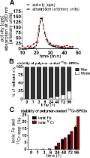
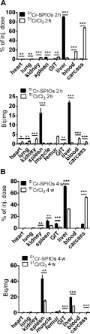
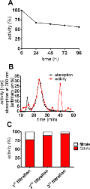
- respective trace element homeostasis, it can also limit the relevance of such trace material-based approaches in nanobioscience. By monitoring 51Cr-SPIOs after oral gavage, the gastrointestinal non-absorption of intact SPIOs in a hydrophilic or lipophilic surrounding was measured in mice with such high
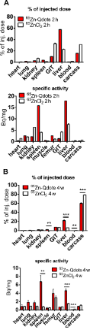
- sensitivity for the first time. After intravenous injection, polymer-coated, 65Zn-Qdots were mainly taken up by the liver and spleen, which was different from that of ionic 65ZnCl2. Following the label for 4 weeks, an indication of substantial degradation of the nanoparticles and the release of the label into





Localized surface plasmon resonances in nanostructures to enhance nonlinear vibrational spectroscopies: towards an astonishing molecular sensitivity
Beilstein J. Nanotechnol. 2014, 5, 2275–2292, doi:10.3762/bjnano.5.237

- molecule detection. Furthermore, this weak molecular contribution was still higher than the non-resonant contributions of water and silver particles. The authors confirmed the high sensitivity of the system with the peptide angiotensin I, as testified by the 40 times higher signal than that of SERS, while
- metallic nanoshells could be used as well for accurate imaging with SE-CARS (Figure 9). They showed the high sensitivity of the method to selectively image basal cell proteins p63 in normal prostate tissues. The authors also underlined the key advantages of immuno-SE-CARS microscopy: it enables to get very






Sequence-dependent electrical response of ssDNA-decorated carbon nanotube, field-effect transistors to dopamine
Beilstein J. Nanotechnol. 2014, 5, 2113–2121, doi:10.3762/bjnano.5.220
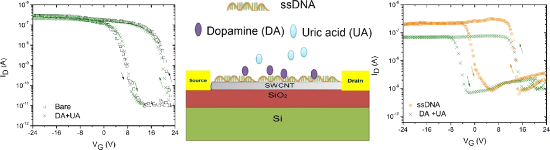
- : carbon nanotube; deoxyribonucleic acid; dopamine; field-effect transistor; uric acid; Introduction Single-walled carbon nanotubes (SWCNTs) are excellent chemical/biological sensing materials because of their ultra-high sensitivity, fast response, and size compatibility, as compared to traditional


Effect of channel length on the electrical response of carbon nanotube field-effect transistors to deoxyribonucleic acid hybridization
Beilstein J. Nanotechnol. 2014, 5, 2081–2091, doi:10.3762/bjnano.5.217
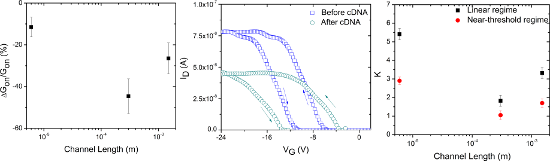
- comparable to the size of single biomolecules, and to the electrostatic screening length in physiological solutions, which offers high sensitivity because of their large specific area; ii) their tubular structure allows fabrication of ultrasensitive, single nanotube-based devices; and iii) their excellent


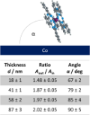
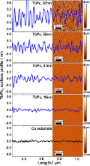
Optical properties and electrical transport of thin films of terbium(III) bis(phthalocyanine) on cobalt
Beilstein J. Nanotechnol. 2014, 5, 2070–2078, doi:10.3762/bjnano.5.215

- performed in AC tapping mode, which guarantees minimal contact between the AFM probe and the organic film. Ultra sharp (4–10 nm radius) Olympus cantilevers allowed high sensitivity measurements. cs-AFM measurements were performed in contact mode using special Pt-coated Si cantilevers with a spring constant