Search results
Search for "Raman spectroscopy" in Full Text gives 358 result(s) in Beilstein Journal of Nanotechnology. Showing first 200.
Defect formation in multiwalled carbon nanotubes under low-energy He and Ne ion irradiation
Beilstein J. Nanotechnol. 2018, 9, 1951–1963, doi:10.3762/bjnano.9.186
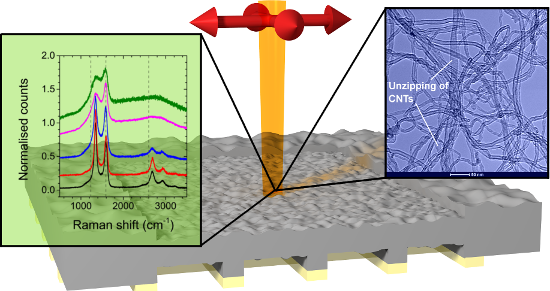
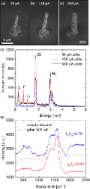
- irradiation to study the influence of fluence and sample thickness on the irradiation-induced damage of multiwalled carbon nanotubes (MWCNTs). The irradiated areas have been characterised by correlative Raman spectroscopy and TEM imaging. In order to preclude the Raman contribution coming from the amorphous
- ][21], C+ [21][22], N+ [22], Si+ [22], Kr+ [23], and Ar+ irradiation [21][22]. The same is true for defects produced by electron irradiation [24]. Electron diffraction pattern can be used to quantify the degree of amorphisation [13]. Raman spectroscopy has also been widely used to investigate different
- modifications of MWCNTs by low energy He+ and Ne+ ion irradiation for fluences of 1014 to 1018 ions/cm2, i.e., for imaging conditions found on the HIM [44][45][46]. We present a correlative approach in which ion-irradiation-induced modifications are characterised by Raman spectroscopy and TEM imaging, and the



Synthesis of carbon nanowalls from a single-source metal-organic precursor
Beilstein J. Nanotechnol. 2018, 9, 1895–1905, doi:10.3762/bjnano.9.181
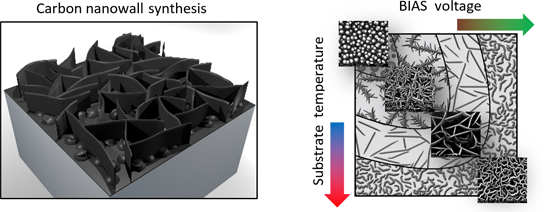
- the various deposition parameters on the growth. Silicon, stainless steel, nickel and copper are used as substrate materials. The CNWs deposited are characterized by scanning electron microscopy (SEM), Raman spectroscopy and Auger electron spectroscopy (AES). The combination of bias voltage, the
- the wall length and height from the SEM images an open-source software (ImageJ, National Institute of Health) was used. A scanning Auger Nanoprobe (Ulvac-Phi 710) was used to perform chemical mappings of the cross sections of the films. Raman spectroscopy is used as a non-destructive analytical tool
- described before that defects in initial graphene and graphite layers can lead to grain boundaries and defects that fold up and can be seen as additional nucleation sites for the growth of CNWs [21]. This model of increasing defects in the CNWs is also backed by Raman spectroscopy measurements as shown


SO2 gas adsorption on carbon nanomaterials: a comparative study
Beilstein J. Nanotechnol. 2018, 9, 1782–1792, doi:10.3762/bjnano.9.169

- evaluation by N2 adsorption isotherm measurement and a detailed XPS analysis of their surface functionalities. Finally, the gas adsorption studies of all materials are presented and compared comprehensively. Raman spectroscopy is one of the few meaningful characterization techniques that are able to



Uniform cobalt nanoparticles embedded in hexagonal mesoporous nanoplates as a magnetically separable, recyclable adsorbent
Beilstein J. Nanotechnol. 2018, 9, 1770–1781, doi:10.3762/bjnano.9.168

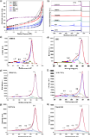
- adsorption spectra were recorded on a UV-2550 (Shimadzu, Japan) instrument. X-ray photoelectron spectroscopy (XPS) was conducted on a PHA-5400 (SPECS, America) spectrometer. Raman spectra were performed on an In-Via Raman spectroscopy system (Renishaw, England) with excitation laser wavelengths of 532 nm


Multimodal noncontact atomic force microscopy and Kelvin probe force microscopy investigations of organolead tribromide perovskite single crystals
Beilstein J. Nanotechnol. 2018, 9, 1695–1704, doi:10.3762/bjnano.9.161
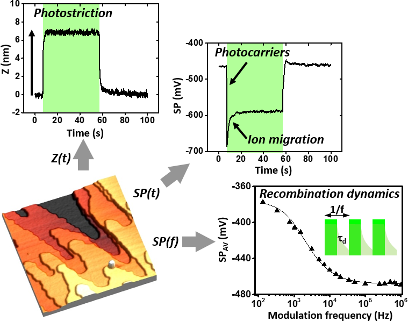
- ). Equally remarkable is the simultaneous observation of a photostrictive response very similar to the one reported from AFM measurements performed on MAPbI3 single crystals [16]. In particular, contrary to the conclusions of recent work based on Raman spectroscopy measurements [17], our data demonstrate


Toward the use of CVD-grown MoS2 nanosheets as field-emission source
Beilstein J. Nanotechnol. 2018, 9, 1686–1694, doi:10.3762/bjnano.9.160
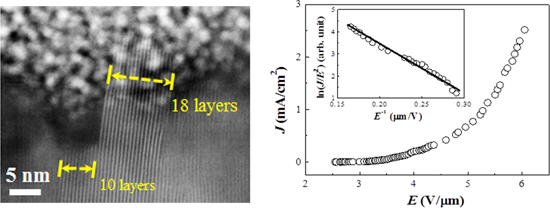
- tip radius below 10 nm) with a resonant frequency of 312 kHz. To confirm the layer number of the NSs, micro-Raman spectroscopy was performed using a 473 nm laser at room temperature. X-ray photoelectron spectroscopy (XPS) measurements were performed using a Thermo Fisher Scientific K-alpha
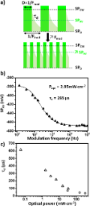
- SEM (Figure 5c) and Raman spectroscopy (not shown as it is identical to the as-grown NSs). It was thus confirmed that they are of similar quality to that of as-grown NSs. The Fowler–Nordheim (F–N) equation [28] was modified for a cathode with nanometric field emitters as follows: E = U/d, where U is



Sheet-on-belt branched TiO2(B)/rGO powders with enhanced photocatalytic activity
Beilstein J. Nanotechnol. 2018, 9, 1550–1557, doi:10.3762/bjnano.9.146

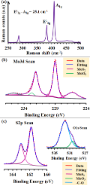
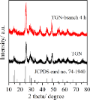
- 72.2° is in good agreement with the theoretical value between (200) and (110) planes of monoclinic TiO2(B). The phase composition of samples TGN and TGN-branch 4 h was further investigated by Raman spectroscopy (Figure 4). The Raman peaks observed over the 100–1000 cm−1 range can be attributed to the


Optical near-field mapping of plasmonic nanostructures prepared by nanosphere lithography
Beilstein J. Nanotechnol. 2018, 9, 1536–1543, doi:10.3762/bjnano.9.144

- analysis with the high spatial resolution of scanning probe microscopy [3][4][5]. This method has been applied to various fields of research such as plasmonic analysis [6][7], Raman spectroscopy (tip-enhanced Raman spectroscopy, TERS) [8][9], or infrared analysis [10]. In this microscopy technique, a laser
- [23]. The resulting local melting reveals the hot spots, but at the cost of the sample destruction. Other methods use surface enhanced Raman spectroscopy (SERS) [28][29]. In these cases, a Raman active molecule is deposited on the surface of the sample. Its Raman signal is only visible on the hot




Cr(VI) remediation from aqueous environment through modified-TiO2-mediated photocatalytic reduction
Beilstein J. Nanotechnol. 2018, 9, 1448–1470, doi:10.3762/bjnano.9.137


Formation mechanisms of boron oxide films fabricated by large-area electron beam-induced deposition of trimethyl borate
Beilstein J. Nanotechnol. 2018, 9, 1282–1287, doi:10.3762/bjnano.9.120
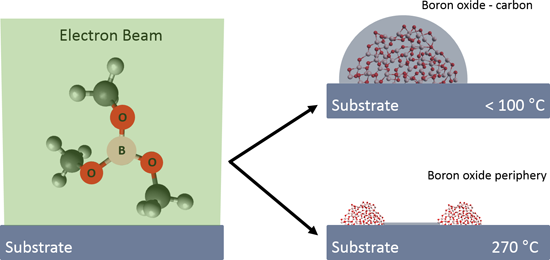
- . LCSM images of all deposits are presented in Supporting Information File 1. Material deposited at 26 °C does not display any signs of cracking (Figure 2b,c), but is susceptible to laser-induced heating damage (see Raman spectroscopy discussion in Supporting Information File 1). The decrease in



Surface characterization of nanoparticles using near-field light scattering
Beilstein J. Nanotechnol. 2018, 9, 1228–1238, doi:10.3762/bjnano.9.114
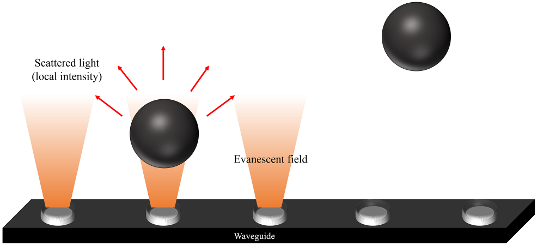
- force microscopy combined with surface enhanced Raman spectroscopy (SERS) to enable trapping and chemical characterization of individual metallic nanoparticles [38]. Although not done in the present study, a combined approach using our methods and those of Kong et al. may be a powerful tool for dynamic




A novel copper precursor for electron beam induced deposition
Beilstein J. Nanotechnol. 2018, 9, 1220–1227, doi:10.3762/bjnano.9.113

- precursor shows the first evidence for conductivity of the deposits without post-treatment in case of copper [2][10]. For a better understanding of the material configuration and change during deposition, Raman spectroscopy measurements were performed on the precursor before deposition as well as on the


Electrodeposition of reduced graphene oxide with chitosan based on the coordination deposition method
Beilstein J. Nanotechnol. 2018, 9, 1200–1210, doi:10.3762/bjnano.9.111
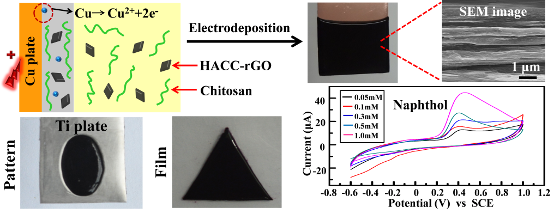
- intensity ratio of the D to G-band can be employed to evaluate the structure disorder of carbon materials [30][31]. Thus, the Raman spectroscopy analysis of HACC-rGO suggests that there exist some structural defects in HACC-rGO. Particularly, the resulting HACC-rGO disperses well in aqueous solutions, and


Electrostatic force spectroscopy revealing the degree of reduction of individual graphene oxide sheets
Beilstein J. Nanotechnol. 2018, 9, 1146–1155, doi:10.3762/bjnano.9.106

- methods, such as X-ray photoelectron spectroscopy (XPS) [8][9], Raman spectroscopy [10], and UV–vis absorption spectra [11][12], reflect the average information of rGO materials. However, they cannot characterize an isolated rGO sheet at the nanoscale. Optical observation [13] and transmission electron


Electro-optical interfacial effects on a graphene/π-conjugated organic semiconductor hybrid system
Beilstein J. Nanotechnol. 2018, 9, 963–974, doi:10.3762/bjnano.9.90

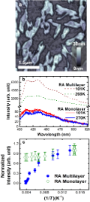
- of the RA SAM, even at room temperature. Additionally, photo-assisted electrical force microscopy, photo-assisted scanning Kelvin probe microscopy and Raman spectroscopy indicate a RA-induced graphene doping and photo-charge generation. Finally, the optical excitation of the RA monolayer generates
- potential histograms in dark from a pristine graphite microplate surface (G) – green line – and a thick amorphous retinoic acid layer (a-RA) – orange line – are also shown. Raman spectroscopy data. Raman spectra obtained from the same region of a graphene monolayer before (black) and after (blue) deposition
- photoelectrical characterization may shed some light on the dominant mechanisms. Finally, the charge transfer within the graphene/RA hybrid has also been investigated via Raman scattering experiments. Monolayer graphene, instead of graphite microplate, was chosen for this analysis due to the sensitivity of Raman




Cyclodextrin inhibits zinc corrosion by destabilizing point defect formation in the oxide layer
Beilstein J. Nanotechnol. 2018, 9, 936–944, doi:10.3762/bjnano.9.86

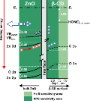
- detected with a hemispherical electron energy analyzer (SPECS PHOIBOS 150) with TOA = 50°. This configuration gives an information depth of ≈1.5 nm [43]. Raman spectroscopy was performed on samples prepared in the same manner as for SEM. Spectra were recorded using a Witec alpha300M confocal Raman


Facile chemical routes to mesoporous silver substrates for SERS analysis
Beilstein J. Nanotechnol. 2018, 9, 880–889, doi:10.3762/bjnano.9.82
- (meldonium; enhancement factor of ≈102) that is known for its ability to increase the endurance performance of athletes. Keywords: meldonium; mesoporous silver substrates; silver oxide; surface-enhanced Raman spectroscopy; Introduction Nowadays one of the largest sectors of the global chemical industry is
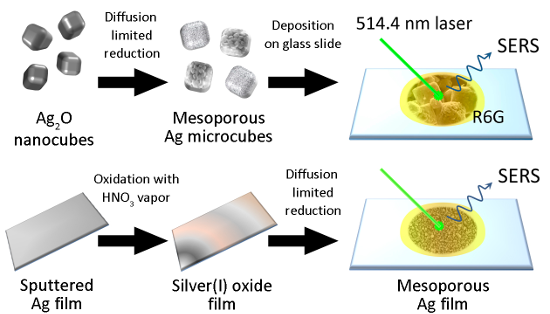
- 4b) [33]. The enhancement factor (EF) for the system was calculated as described according to the standard equation, namely, where ISERS and IRS are the corresponding SERS and Raman spectroscopy signal intensities and nSERS and nRS are the molar quantities of R6G in SERS and Raman experiments. As
- Foundation of Basic Research and Department of Science, Industrial Policy and Entrepreneurship of Moscow Government (15-33-70050-mol_a_mos) and Lomonosov Moscow State University Program of Development. The XRD and Raman spectroscopy experiments were performed using equipment of the Collective Scientific


Towards the third dimension in direct electron beam writing of silver
Beilstein J. Nanotechnol. 2018, 9, 842–849, doi:10.3762/bjnano.9.78

- software Gwyddion 2.49. Confocal Raman spectroscopy was performed using an upright ND-MDT NTEGRA Raman microscope featuring a laser source with a wavelength of 532 nm and a 100× objective lens with a numerical aperture of 0.95. Spectra were recorded at a spectral resolution of 2.7 cm−1 with 5 s exposure


Graphene composites with dental and biomedical applicability
Beilstein J. Nanotechnol. 2018, 9, 801–808, doi:10.3762/bjnano.9.73
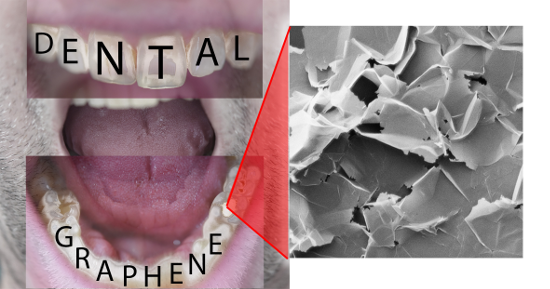
- ). Characterization The MLG and FLG material was characterized by Raman spectroscopy (Renishaw at 514 nm) and the AFM measurements were performed on a MultiMode V AFM (Veeco) in tapping mode under ambient conditions. RTESP silicon probes (Veeco) were used with a nominal tip radius of 10 nm and nominal spring constant
- 30 kV). In addition, FLG-polymer A and E were characterized by Raman Spectroscopy (JY T6400 at 514 nm) and SEM (Zeiss Ultra-Plus at 3 kV, EsB grid at 503 V). a) Raman spectra of MLG (ca. 10 layers, lower) and FLG (1–6 layers, upper) – both at 514 nm. b) Helium ion microscope (HeIM) overview of FLG, c


Heavy-metal detectors based on modified ferrite nanoparticles
Beilstein J. Nanotechnol. 2018, 9, 762–770, doi:10.3762/bjnano.9.69

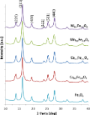
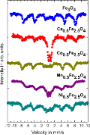
- [15]. Therefore, the origin of these signals is most probable due to heavy ion adsorption. However, due to a lack of reference information, it is the only speculation on the origin of appearing new signals. Raman spectroscopy After every step (synthesis, surface modification, and heavy metal
- attachment) powdered samples of nanoparticles were analyzed using Raman spectroscopy giving additional information to IR spectroscopy. In Figure 5 selected spectra are presented. The Raman spectra show a set of peaks that are typical for inorganic cores (magnetite, maghemite/hematite) with accordingly
- adsorption was reported previously [15]. Figure 5C shows the modulation of Raman spectra by different compounds at the surface. A number of additional bands seen in case of PA are due to its specific chemical structure (Table 3). Considering all above-mentioned findings, Raman spectroscopy confirms the





The effect of atmospheric doping on pressure-dependent Raman scattering in supported graphene
Beilstein J. Nanotechnol. 2018, 9, 704–710, doi:10.3762/bjnano.9.65

- . Keywords: adsorption; doping; graphene; pressure; Raman spectroscopy; substrate; Introduction Graphene is a promising material for a variety of applications due to its unique physical properties [1]. Among its other outstanding features, one can distinguish its strong sensitivity to adsorbates, leading to
- adsorption properties of supported graphene. Raman spectroscopy is a versatile tool for studying graphene and graphene-based nanomaterials [9][10][11][12]. Several different parameters of graphene’s Raman spectra are affected by charge carrier density variations, such as the G and 2D peak positions and the
- Raman spectroscopy is a convenient tool for probing atmosphere-induced doping in graphene. Low-pressure behavior of adsorbates present on the graphene surface and concomitant charge carrier properties strongly depend on the substrate material, as well as graphene doping and number of layers. These


Anchoring Fe3O4 nanoparticles in a reduced graphene oxide aerogel matrix via polydopamine coating
Beilstein J. Nanotechnol. 2018, 9, 591–601, doi:10.3762/bjnano.9.55

- nanoparticles are present in agglomerated form. The vibrational properties of the prepared aerogel samples were analyzed by Raman spectroscopy. The typical rGO spectrum is featured by the presence of four main vibrational modes, namely: D, G, 2D and D+G (D+D’) [43]. In graphite-like materials, the G mode is
- , NovaNanoSEM 650). The diameter distribution of magnetite nanoparticles was determined using transmission electron microscopy (TEM) (Jeol, 1400, 120 kV). The vibrational properties of the investigated samples were examined by micro-Raman spectroscopy (Renishaw, inVia Raman microscope) operating at λ = 785 nm


Single-step process to improve the mechanical properties of carbon nanotube yarn
Beilstein J. Nanotechnol. 2018, 9, 545–554, doi:10.3762/bjnano.9.52

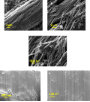
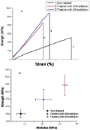
- by X-ray photoelectron spectroscopy (XPS), Raman spectroscopy and scanning electron microscopy (SEM). The best improvement in mechanical properties was achieved on a sample treated with an aqueous solution of AA and subsequent irradiation. CNT yarn treatment with AA enhanced the strength (444.5
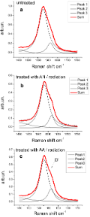
- composed of angled graphite sheets. In addition, VGCFs are different from CNTs in the method of production and they have few functional groups at the edges [35]. CNT yarns functionalized with AN and AA irradiated at 108 kGy Raman spectroscopy is a useful method to investigate the covalent sidewall
- to 21.5 ± 0.65 GPa. Deconvoluted XPS C 1s spectra of (a) pristine MWNT, (b) MWNT soaked in aqueous solution of 20% AN without irradiation, and (c) MWNT soaked in aqueous solution of 20% AN and irradiated at 27 kGy (c). Raman spectroscopy results for CNT yarn treated with aqueous solutions of 80% AN




Green synthesis of fluorescent carbon dots from spices for in vitro imaging and tumour cell growth inhibition
Beilstein J. Nanotechnol. 2018, 9, 530–544, doi:10.3762/bjnano.9.51
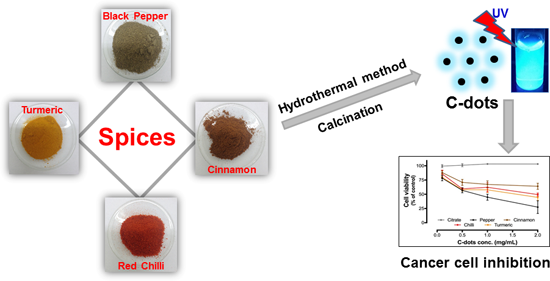
- characterized by means of UV–vis, fluorescence, Fourier transform infrared and Raman spectroscopy, dynamic light scattering and transmission electron microscopy. The optical performance showed an outstanding ability for imaging purposes, with quantum yields up to 43.6%. Thus, the cytotoxicity of the above
- compounds present in the spices will partially remain inside or at the surface of the C-dots after the hydrothermal process, leading to different photoluminescent and biomedical properties. The synthesized C-dots have been extensively characterized with UV–vis, fluorescence, FTIR and Raman spectroscopy, DLS
- (PanAnalytical B.V, EA Almelo, The Netherlands) and Cu Kα radiation (λ = 0.15418 nm), and the samples were prepared on a Si substrate. Raman spectroscopy measurements were performed in Witec Alpha 300R confocal Raman Microscopy system with a 50× objective (WITec Wissenschaftliche Instrumente and Technologie GmbH


Ultralight super-hydrophobic carbon aerogels based on cellulose nanofibers/poly(vinyl alcohol)/graphene oxide (CNFs/PVA/GO) for highly effective oil–water separation
Beilstein J. Nanotechnol. 2018, 9, 508–519, doi:10.3762/bjnano.9.49

- previous studies [19][29], which is in agreement with the SEM results. FTIR can only be used to detect signals from molecules with infrared activity. Therefore, Raman spectroscopy analysis was studied to detect the stretching vibration characteristic peak of homonuclear diatomic pairs. The Raman spectrum