

Search results
Search for "composites" in Full Text gives 355 result(s) in Beilstein Journal of Nanotechnology. Showing first 200.
Electrostatic force microscopy for the accurate characterization of interphases in nanocomposites
Beilstein J. Nanotechnol. 2018, 9, 2999–3012, doi:10.3762/bjnano.9.279
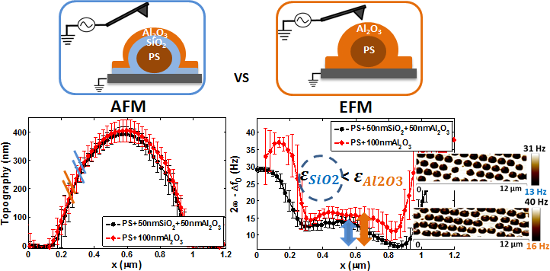
- electron beam bombardment can irreversibly electrically charge the material [20][21]. Moreover, while in the case of composites with 1D or 2D inclusions, the interphase can be directly accessed after cross-sectioning [20][21]; interphase characterization is more difficult for nanoparticle-filled materials




Co-intercalated layered double hydroxides as thermal and photo-oxidation stabilizers for polypropylene
Beilstein J. Nanotechnol. 2018, 9, 2980–2988, doi:10.3762/bjnano.9.277
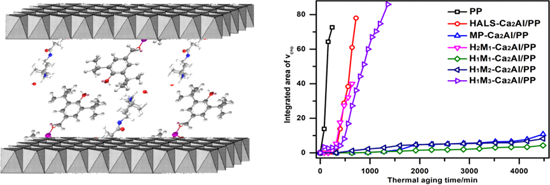
- various techniques. The results show that the powdered HnMn′-Ca2Al-LDHs hybrid materials have a much higher thermal stability than MP-Ca and HALS before intercalation. In addition, the HnMn′-Ca2Al/PP composites exhibit a higher overall resistance against thermal degradation and photo-oxidation compared to
- LDHs intercalated with only HALS or MP. This underlines the benefit of the co-intercalation. The co-intercalated LDH materials pave a new way in designing and fabricating high-performance multifunctional additives for polymers. Keywords: co-intercalation; composites; layered double hydroxides; photo
- functional additives have attracted increasing attention for their wide applications in polymers [7]. Organic anti-aging species have been immobilized onto inorganic supports (e.g., carbon nanotubes, SiO2, graphene oxide) to produce inorganic–organic composites with higher migration resistance [8][9][10


The nanoscaled metal-organic framework ICR-2 as a carrier of porphyrins for photodynamic therapy
Beilstein J. Nanotechnol. 2018, 9, 2960–2967, doi:10.3762/bjnano.9.275

- these porphyrins allows for superior loading of the nanoparticles when compared with commonly used 5,10,15,20-tetrakis(4-carboxyphenyl)porphyrin. The nanoICR-2/porphyrin composites retain part of the free porphyrins photophysical properties, while the photodynamic efficacy is strongly affected by the R
- retain their photophysical properties including O2(1∆g) generation. We demonstrate the photodynamic activity of these nanoICR-2/porphyrin composites on HeLa cells. Results and Discussion Preparation and characterisation Various organic solvents and temperatures were screened for the successful
- by powder XRD, TEM, DLS, and UV–vis and fluorescence spectroscopy. The powder XRD patterns of all composites, depicted in Figure 4 and Figure S5 (Supporting Information File 1), do not show significant changes in comparison with that of the parent nanoICR-2. Also, the coherent diffraction domain of


Ternary nanocomposites of reduced graphene oxide, polyaniline and hexaniobate: hierarchical architecture and high polaron formation
Beilstein J. Nanotechnol. 2018, 9, 2936–2946, doi:10.3762/bjnano.9.272

- of the ternary nanocomposite is higher compared to the binary composites. Such results are attributed to cooperative effects of PANI chains with rGO flakes and hexNb nanoscrolls promoted by the nanostructured architecture, resulting in a high doping degree of polymeric chains. The interesting



Layered calcium phenylphosphonate: a hybrid material for a new generation of nanofillers
Beilstein J. Nanotechnol. 2018, 9, 2906–2915, doi:10.3762/bjnano.9.269
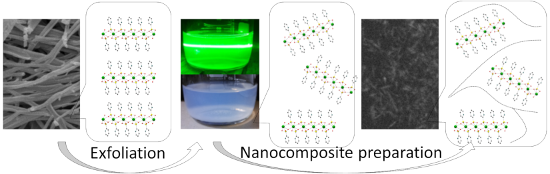
- the exfoliation of CaPhP in an amount sufficient for incorporation into polymers involved using propan-2-ol with a strong shear force generated in a high-shear disperser. The filler was tested both in its unexfoliated and exfoliated forms for the preparation of polymer composites, for which a low
- . The addition of the nanofiller was found to influence the composite properties – the exfoliated particles were found to have a higher impact on the properties of the prepared composites than the unexfoliated particles of the same loading Keywords: exfoliation; layered phenylphosphonate; nanomaterial
- forces. The main advantage is that a ready-to-use dispersion of nanoplatelets is obtained, so the step of dispersing dry nanoparticles in a polymer matrix is avoided, which is usually challenging, and thus simplifies the preparation of the polymer composites. In this work, layered calcium


Graphene-enhanced metal oxide gas sensors at room temperature: a review
Beilstein J. Nanotechnol. 2018, 9, 2832–2844, doi:10.3762/bjnano.9.264
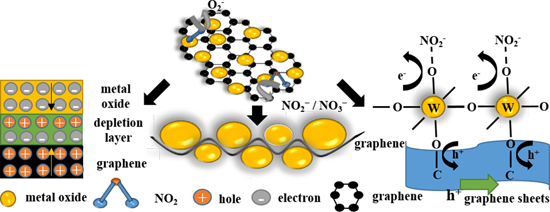
- of MOS gas sensors. Modifications of composition and surface, and light illumination of MOS are effective ways to improve their gas-sensing performance. MOS composites with graphene or its derivatives can reduce the operating temperature and yield outstanding sensing performance surpassing that of
- the single components. The mechanisms through which graphene enhances the sensing performance of MOS sensors will be interpreted in the following sections. Wang et al. [35] reported that a formaldehyde (HCHO) sensor based on SnO2–GO composites, fabricated via electrospinning, exhibited a three times
- of semiconductor interfaces Reduced graphene oxide (rGO), which plays the role of a p-type semiconductor, can form heterojunctions when forming composites with most metal-oxide semiconductors. In the example of a SnO2–rGO sensor [45], SnO2 and rGO formed p–n heterojunctions. The enhancement mechanism



Nanocellulose: Recent advances and its prospects in environmental remediation
Beilstein J. Nanotechnol. 2018, 9, 2479–2498, doi:10.3762/bjnano.9.232
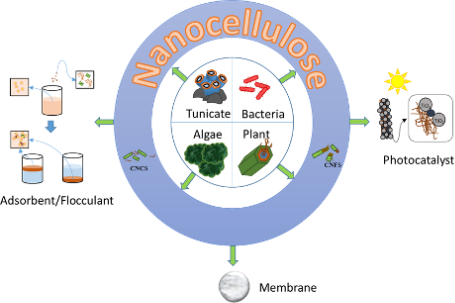
- -based composites as adsorbents, photocatalysts, flocculants, and membranes in the field of environmental remediation will be reviewed. Nanocellulose-based adsorbents Wastewater purification using cellulose-based adsorbents materials has been developed as an alternative to the energy intensive and
- −), phosphate (PO43−), fluoride (F−), and sulphate (SO42−). Cationic CNFs exhibited higher selectivity towards multivalent ions (PO43− and SO42−) than monovalent ions (F− and NO3−). On the other hand, the development of nanocellulose composites as adsorbents with numerous supportive properties, magnetic
- nanostructured composites have emerged as new types of photocatalysts with remarkable optical, electrical, mechanical, and thermal properties. The gravitation from petrochemical-based feedstock to environmentally friendly biomaterials such as cellulose-based materials is making headway for a cleaner and more


Evidence of friction reduction in laterally graded materials
Beilstein J. Nanotechnol. 2018, 9, 2443–2456, doi:10.3762/bjnano.9.229

- the FET Proactive “Neurofibres” grant No. 732344 and by the project “Metapp” (n. CSTO160004), funded by Fondazione San Paolo. NMP is supported by the European Commission under the Graphene Flagship Core 2 grant No. 785219 (WP14 “Composites”) and FET Proactive “Neurofibres” grant No. 732344 as well as


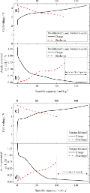
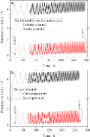
![[Graphic 5]](/bjnano/content/inline/2190-4286-9-229-i10.svg?max-width=637&scale=1.18182) as function of time for the non-graded material: SBM solution for dif...
as function of time for the non-graded material: SBM solution for dif...


SERS active Ag–SiO2 nanoparticles obtained by laser ablation of silver in colloidal silica
Beilstein J. Nanotechnol. 2018, 9, 2396–2404, doi:10.3762/bjnano.9.224
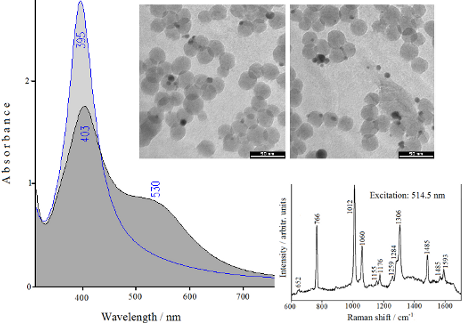
- , 41125 Modena, Italy Center for Molecular Modeling, Ghent University, Technologiepark 903, 9052 Zwijnaarde, Belgium 10.3762/bjnano.9.224 Abstract Highly stable Ag–SiO2 nanoparticle composites were first obtained by laser ablation of a silver target in an aqueous colloidal dispersion of silica and



Hydrothermal-derived carbon as a stabilizing matrix for improved cycling performance of silicon-based anodes for lithium-ion full cells
Beilstein J. Nanotechnol. 2018, 9, 2381–2395, doi:10.3762/bjnano.9.223
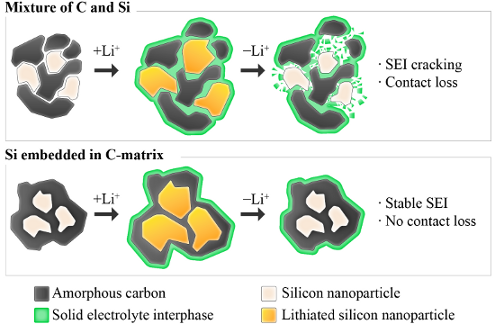
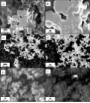
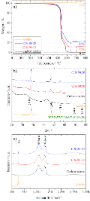
- 46, 48149 Münster, Germany 10.3762/bjnano.9.223 Abstract In this work, silicon/carbon composites are synthesized by forming an amorphous carbon matrix around silicon nanoparticles (Si-NPs) in a hydrothermal process. The intention of this material design is to combine the beneficial properties of
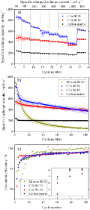
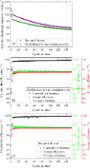
- synthesized composites show a strong improvement in long-term cycling performance (capacity retention after 103 cycles: ≈55% (20 wt % Si composite) and ≈75% (10 wt % Si composite)), indicating that a homogeneous embedding of Si into the amorphous carbon matrix has a highly beneficial effect. The most
- composites (Si/C), dealing with the incorporation of Si into a variety of different carbon materials, such as graphite, graphene sheets [46][47], porous carbon structures [37][38][48] or the coating of Si using different precursors as carbon sources [49][50][51]. One simple method to form amorphous carbon

Lead-free hybrid perovskites for photovoltaics
Beilstein J. Nanotechnol. 2018, 9, 2209–2235, doi:10.3762/bjnano.9.207
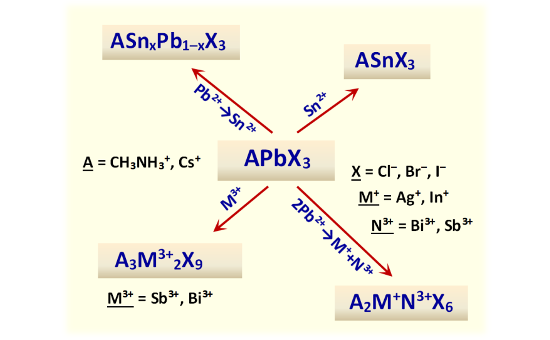
- dominates in the studies of HPs with the typical ETLs being titania and various TiO2-based composites [27]. The most efficient and frequently used HTLs are among the derivatives of spirobifluorene (Spiro-OMeTAD, see Table 1) and polythiophenes (PEDOT:PSS). Recently, very good prospects were recognized for
- the morphology of the scaffold, varying from island-like for the compact TiO2 layers to a more homogeneous MABI deposit on the mesoporous TiO2 [157]. The TiO2/MABI composites can be produced by a double-step interdiffusion method including sequential deposition of BiI3 and CH3NH3I layers followed by


Electrospun one-dimensional nanostructures: a new horizon for gas sensing materials
Beilstein J. Nanotechnol. 2018, 9, 2128–2170, doi:10.3762/bjnano.9.202
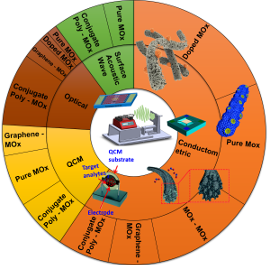
- materials used as an active sensing layer, including polymers, metal oxide semiconductors, graphene, and their composites or their functionalized forms. The material properties of these electrospun fibers and their sensing performance toward different analytes are explained in detail and correlated to the
- composites, are fabricated in various assemblies (e.g., as mixed nanocomposites, double-layers, core–shell or hollow forms) using the electrospinning technique [37]. These electrospun nanofibers exhibit enhanced specific surface area, superior mechanical properties, nanoporosity and improved surface
- review and summarize the fabrication of electrospun 1D nanostructures based on diverse range of materials (including polymers, metal oxide semiconductors, graphene, and their composites or their functionalized forms) and their gas sensing performance in all available sensing architectures (including








Synthesis of a MnO2/Fe3O4/diatomite nanocomposite as an efficient heterogeneous Fenton-like catalyst for methylene blue degradation
Beilstein J. Nanotechnol. 2018, 9, 1940–1950, doi:10.3762/bjnano.9.185
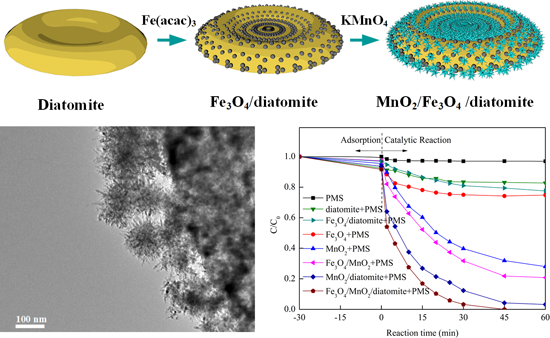
- support of carriers, the prepared composites possess a much higher specific surface area, which further enhances the adsorption and the consecutive degradation performance of the catalysts. Diatomite, a natural porous mineral originating from the fossilization of diatom shells, is composed of amorphous
- assembly of composites and their application in wastewater treatments. Then, the as-prepared Fe3O4/diatomite shows a slightly rough surface and a part of the pores are blocked by the attachments, indicating the evenly loading of the tiny Fe3O4 nanoparticles. For the MnO2/Fe3O4/diatomite, a rather rough
- indicates that both of the samples show superparamagnetic behavior at room temperature [31]. The maximum saturation magnetizations of Fe3O4/diatomite and MnO2/Fe3O4/diatomite were measured to be 16.57 and 10.61 emu/g, respectively, which make the composites very easy to be separated by an external magnetic


Uniform cobalt nanoparticles embedded in hexagonal mesoporous nanoplates as a magnetically separable, recyclable adsorbent
Beilstein J. Nanotechnol. 2018, 9, 1770–1781, doi:10.3762/bjnano.9.168

- of the as-prepared NPLs, including the good distribution of metal nanoparticles, strong magnetic response, fast adsorption rate, high adsorption capacity, and easy regeneration, provide opportunities for designing new composites with enhanced sorption behavior. This hexagonal magnetic mesoporous NPL
- conditions. (C) and (D) Corresponding pore size distributions derived from the adsorption branches using the NLDFT method. (A) Magnetization curves of the nanoplate samples prepared by carbonization of LDH@PDA at (a–c) 800 and °C (d) 650 °C for 2 h. LDH@PDA composites were prepared with different initial


Nitrogen-doped carbon nanotubes coated with zinc oxide nanoparticles as sulfur encapsulator for high-performance lithium/sulfur batteries
Beilstein J. Nanotechnol. 2018, 9, 1677–1685, doi:10.3762/bjnano.9.159
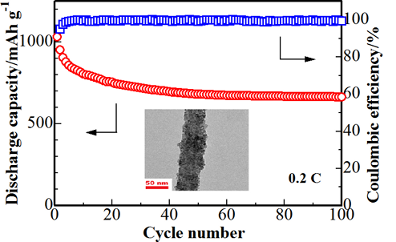
- shuttling effect [10]. In addition, metal oxides can be easily synthesized in various morphologies, e.g., hollow structures, to “hold” S [11]. Similar to S, metal oxides are, however, not conductive [12]. Therefore, an efficient approach is to use hybrids/composites of carbon materials and metal oxides, as
- conductivity and the ability of active nitrogen sites to enhance the electrochemical performances of Li/S batteries [13][16]. To the best of our knowledge, such uniquely structured S/ZnO@NCNT composites have been rarely reported as cathode material for Li/S battery in the literature. Here, we present a


Free-radical gases on two-dimensional transition-metal disulfides (XS2, X = Mo/W): robust half-metallicity for efficient nitrogen oxide sensors
Beilstein J. Nanotechnol. 2018, 9, 1641–1646, doi:10.3762/bjnano.9.156
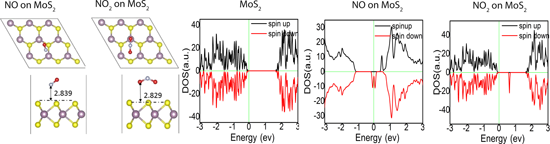
- ], composites of nanoflower-like CuxO and multilayer graphene (CuMGCs) [5] have been successfully synthesized as new types of room-temperature NO gas sensors. Compared with 3D materials [6], two-dimensional (2D) materials (sheets with thickness of on atom) [7][8][9][10][11][12][13][14][15] such as graphene [8




Nanoscale electrochemical response of lithium-ion cathodes: a combined study using C-AFM and SIMS
Beilstein J. Nanotechnol. 2018, 9, 1623–1628, doi:10.3762/bjnano.9.154

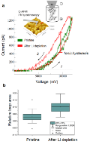
- established nanoscale analysis techniques namely conductive atomic force microscopy (C-AFM) and secondary ion mass spectrometry (SIMS). We present a platform to study Li-ion composites with nanometer resolution that allows one to sense a multitude of key characteristics including structural, electrical and
- the reproducibility and quantitative interpretation of C-AFM [17]. At the same time, we do not expect the high-vacuum environment to be completely free from humidity. Therefore, in these measurements the formation of any Li composites such as Li2O and Li2CO3 cannot be excluded as also considered by


Cr(VI) remediation from aqueous environment through modified-TiO2-mediated photocatalytic reduction
Beilstein J. Nanotechnol. 2018, 9, 1448–1470, doi:10.3762/bjnano.9.137
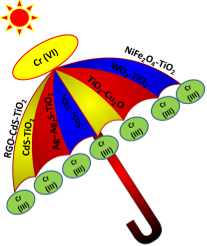
- electrons from TiO2 are efficiently transported to graphene, leading to enhanced photocatalytic activity (Figure 7). Liu et al. reported that TiO2–RGO composites exhibited enhanced photocatalytic performance for the reduction of Cr(VI) by UV light illumination as compared to pure TiO2 and commercial P25
- recombination of electron–hole pairs instead of providing an electron pathway [129][130] and maximizes the light harvesting competition between TiO2 and RGO [128]. Zhao et al. prepared TiO2–RGO composites with large specific surface area (104.9 m2/g) [131]. At low pH, the large surface of the composite becomes
- (visible region) for generation of photoelectrons as well as favors the effective transfer of these photoinduced electrons for enhanced photocatalytic activity towards reduction of Cr(VI). About 86.5% of Cr(VI) was photoreduced by TiO2–RGO composites, while TiO2 photoreduced only 54.2% of Cr(VI). They


New 2D graphene hybrid composites as an effective base element of optical nanodevices
Beilstein J. Nanotechnol. 2018, 9, 1321–1327, doi:10.3762/bjnano.9.125

- absorbed by the film induces electron transport of 105 electrons, and the response time amounts to ca. 100 microseconds [9]. It should be noted that modern synthesis technologies for such composites have allowed us to provide “cross-linking” between CNTs and graphene during synthesis without further
- -mechanical SCC DFTB method [12][13] The 2D CNT–graphene hybrid film was modelled by two graphene monolayers between which single-walled CNTs with different diameters were regularly arranged at different distances from each other. As was shown earlier [14], the composites with zigzag tubes (n, 0) (n = 10, 12


Ag2WO4 nanorods decorated with AgI nanoparticles: Novel and efficient visible-light-driven photocatalysts for the degradation of water pollutants
Beilstein J. Nanotechnol. 2018, 9, 1308–1316, doi:10.3762/bjnano.9.123
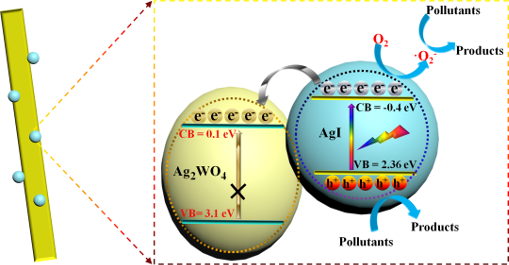
- these disadvantages [38][39][40][41][42]. The integration of VLD components with wide bandgap semiconductors having well-matched energy bands has provided a new opportunity for the development of VLD photocatalysts [12]. As a consequence, some Ag2WO4-based composites containing VLD components such as
- indexed to (002), (231), (400), (402), (361) and (333) diffraction planes, respectively [31][41]. The diffraction peaks of pure AgI match well with those of the standard hexagonal phase (JCPS no 29-1154) [43]. It can be seen that all the AgI/Ag2WO4 composites display both Ag2WO4 and AgI phases. Of note is
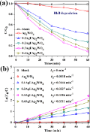
- /Ag2WO4, 0.3AgI/Ag2WO4, and 0.4AgI/Ag2WO4) show greatly improved photocatalytic activity compared with pure Ag2WO4, and their degradation efficiency (within 60 min of reaction) are 56.8%, 72.7%, 91.3% and 85.6%, respectively. Among these composites, 0.3AgI/Ag2WO4 shows the highest performance. Apparently





The electrical conductivity of CNT/graphene composites: a new method for accelerating transmission function calculations
Beilstein J. Nanotechnol. 2018, 9, 1254–1262, doi:10.3762/bjnano.9.117
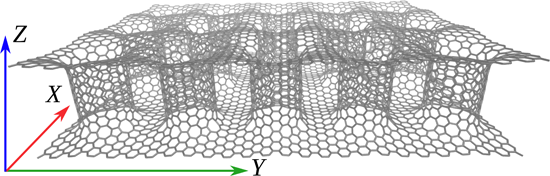
- (CNTs)/graphene. The electrical conductance of different models of this material was calculated in two mutually perpendicular directions. Regularities in resistance values were found. Keywords: carbon composites; electronic properties; interpolation; quantum transport; transmission function
- ; Introduction The development of technologies for the synthesis of graphene nanomaterials has led to an expansion of the scope of their application. One of the graphene composites that have been actively studied in the last few years is pillared graphene [1]. It is a graphene layer, connected seamlessly by
- graphene/CNT composites Using the developed method for calculating the transmission function we investigated the transmission functions and electrical conductance of 2D graphene/CNT composites. The investigated film was modelled by two layers of graphene connected by single-layer armchair tubes (9,9) with


Review on nanoparticles and nanostructured materials: history, sources, toxicity and regulations
Beilstein J. Nanotechnol. 2018, 9, 1050–1074, doi:10.3762/bjnano.9.98

- nanofibers) or more complicated structures, such as a metal-organic frameworks. The composites may be any combinations of carbon-based, metal-based, or organic-based NMs with any form of metal, ceramic, or polymer bulk materials. NMs are synthesized in different morphologies as mentioned in Figure 1
- , the Gleiter scheme was not fully complete because the dimensionality of the NPs and NSMs was not considered [17]. In 2007, Pokropivny and Skorokhod made a new scheme of classification for NMs which included the recently developed composites such as 0D, 1D, 2D and 3D NMs, as shown in Figure 1 [18
- drugs that can inhibit the growth of these harmful bacteria in its early stage. Nanoparticles and nanostructures in plants Wood is made of natural fibers that are considered as cellular hierarchical bio-composites. Natural fibers are composites of cellulosic-fibrils at the nanoscale level. The simplest



Bioinspired self-healing materials: lessons from nature
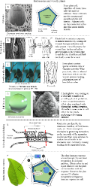
Beilstein J. Nanotechnol. 2018, 9, 907–935, doi:10.3762/bjnano.9.85









Comparative study of antibacterial properties of polystyrene films with TiOx and Cu nanoparticles fabricated using cluster beam technique
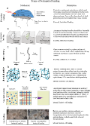
Beilstein J. Nanotechnol. 2018, 9, 861–869, doi:10.3762/bjnano.9.80

- affecting in a destructive way the cell components but rendering innocuous products (mechanism ii) [5][6]. Thus, both Cu and TiO2 nanoparticles are excellent candidates for the formation of composites with antibacterial and antimicrobial properties. For more convenience in use and extended applications, NPs
- can be embedded into polymer films. Polymers have a clear advantage as cheap and plastic materials that can be easily fabricated in shapes and forms convenient for practical and simple use. Hence, metal–polymer composites have become very attractive, for example, in food packaging or the fabrication
- resistant against washing out in procedures. It has recently been shown that the deposition of metal NPs using the cluster beam technique is an efficient approach in the formation of polymer composite films with antibacterial properties. The composites can be formed by either incorporation of particles




Effect of ferroelectric BaTiO3 particles on the threshold voltage of a smectic A liquid crystal
Beilstein J. Nanotechnol. 2018, 9, 824–828, doi:10.3762/bjnano.9.76

- of other functional materials. In polymer-dispersed LCs used in flexible displays, small drops of LC are distributed in a polymer medium [5]. In colloidal LC composites, vice versa, micrometer- or submicrometer-sized particles of various nature (e.g., ferromagnetic or ferroelectric) are dispersed in